Ohio Last Will and Testament Package
Overview of this form package
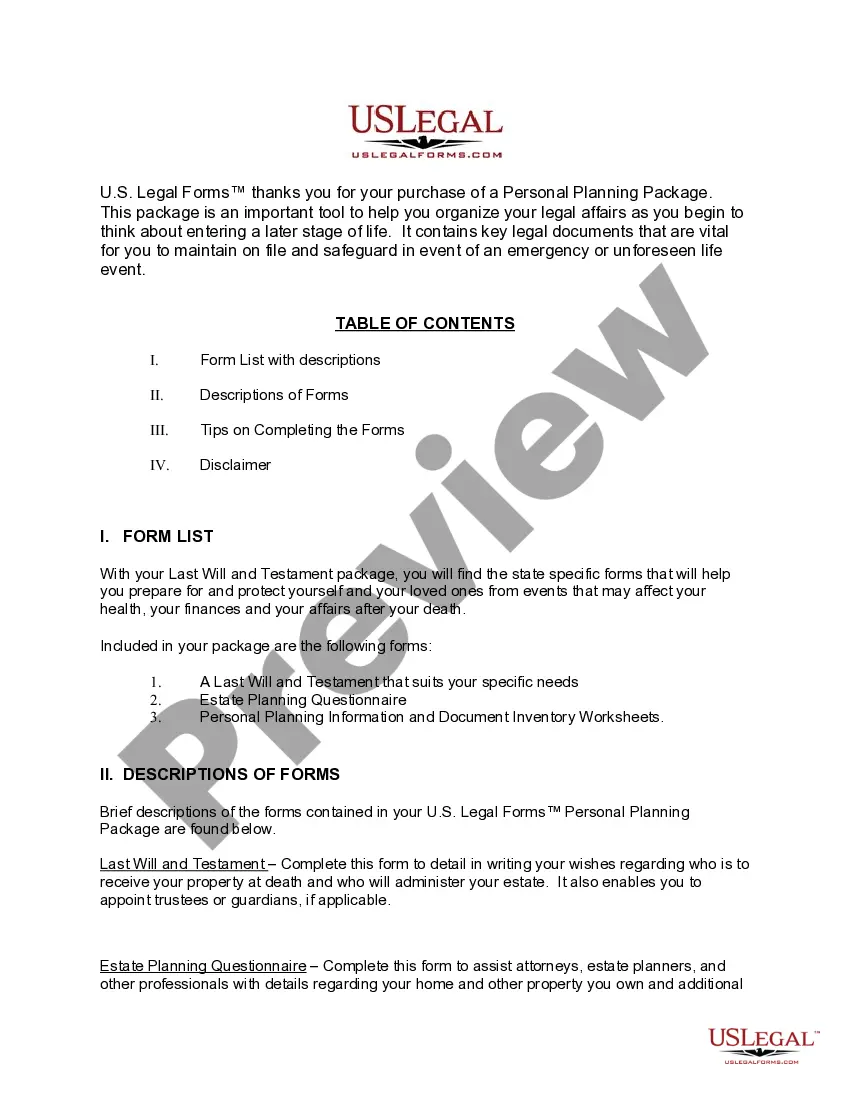
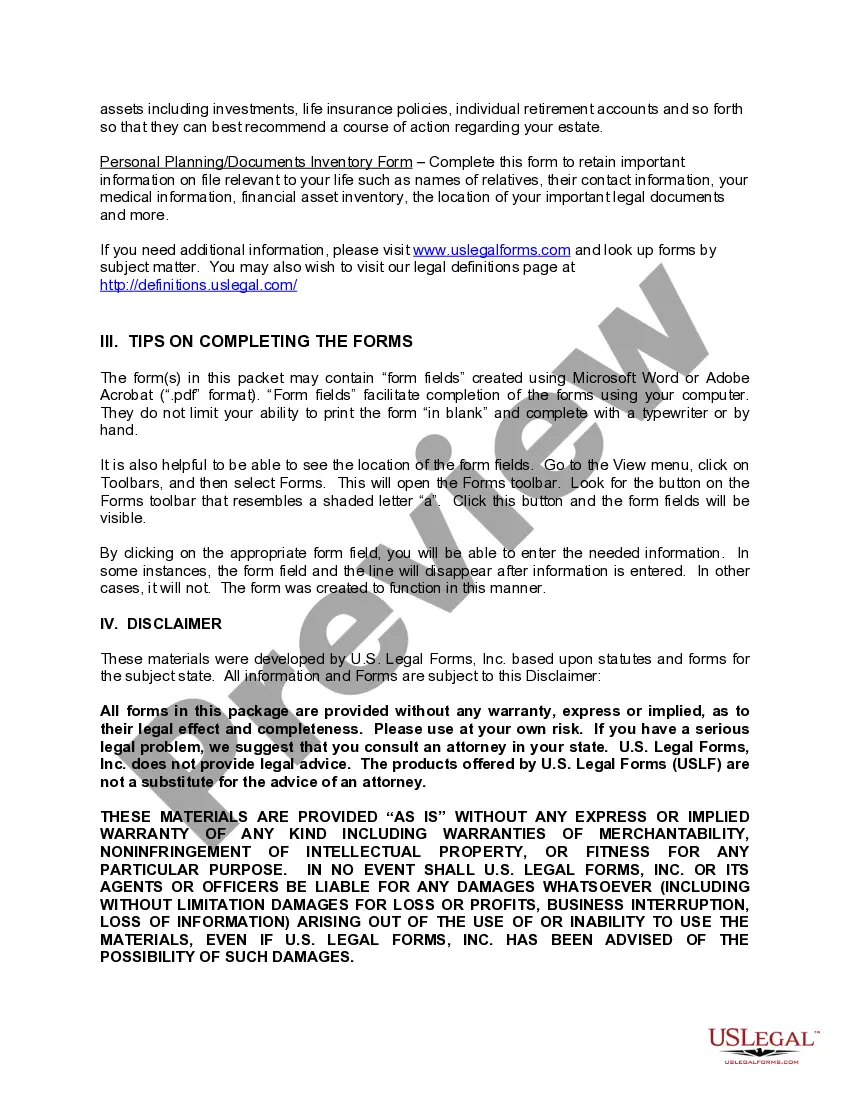
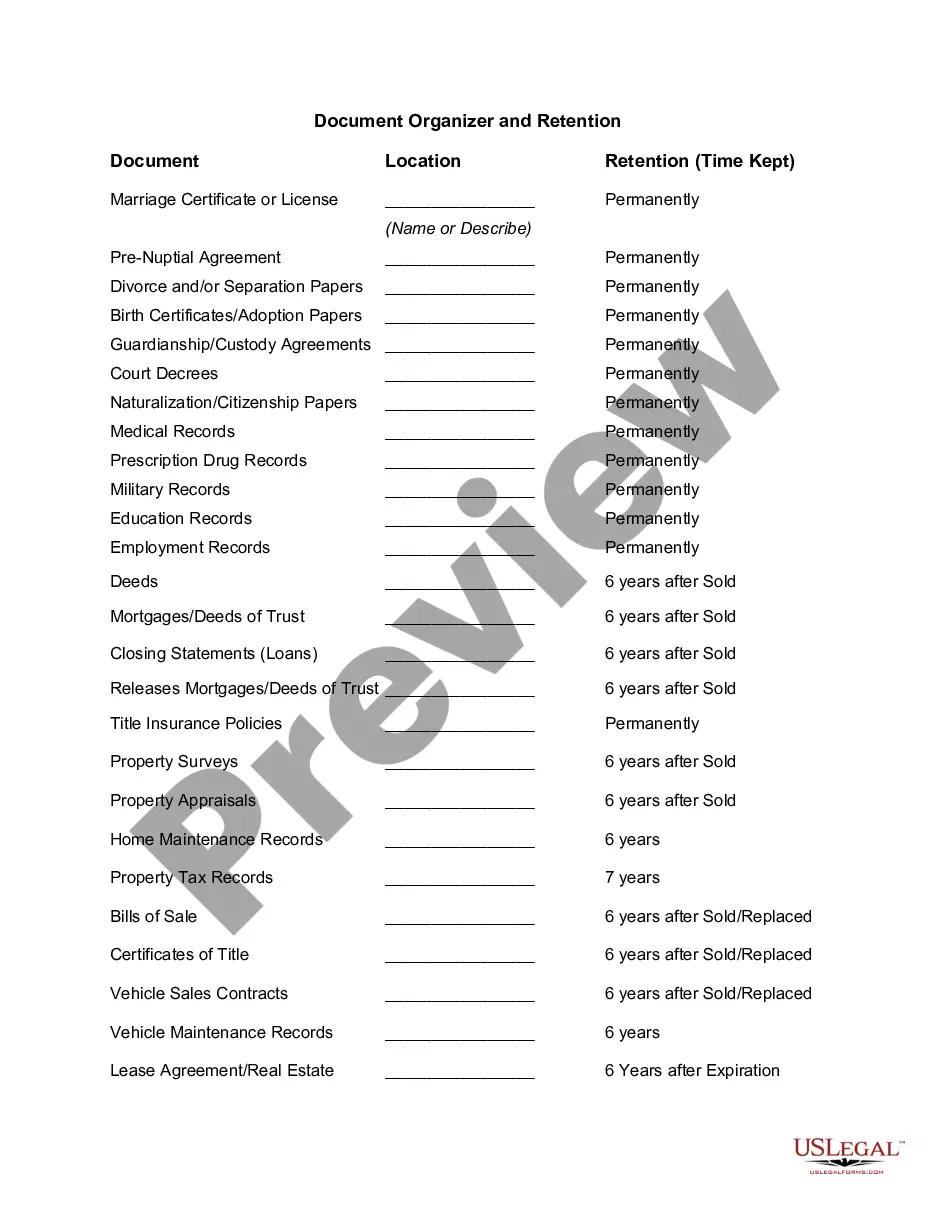
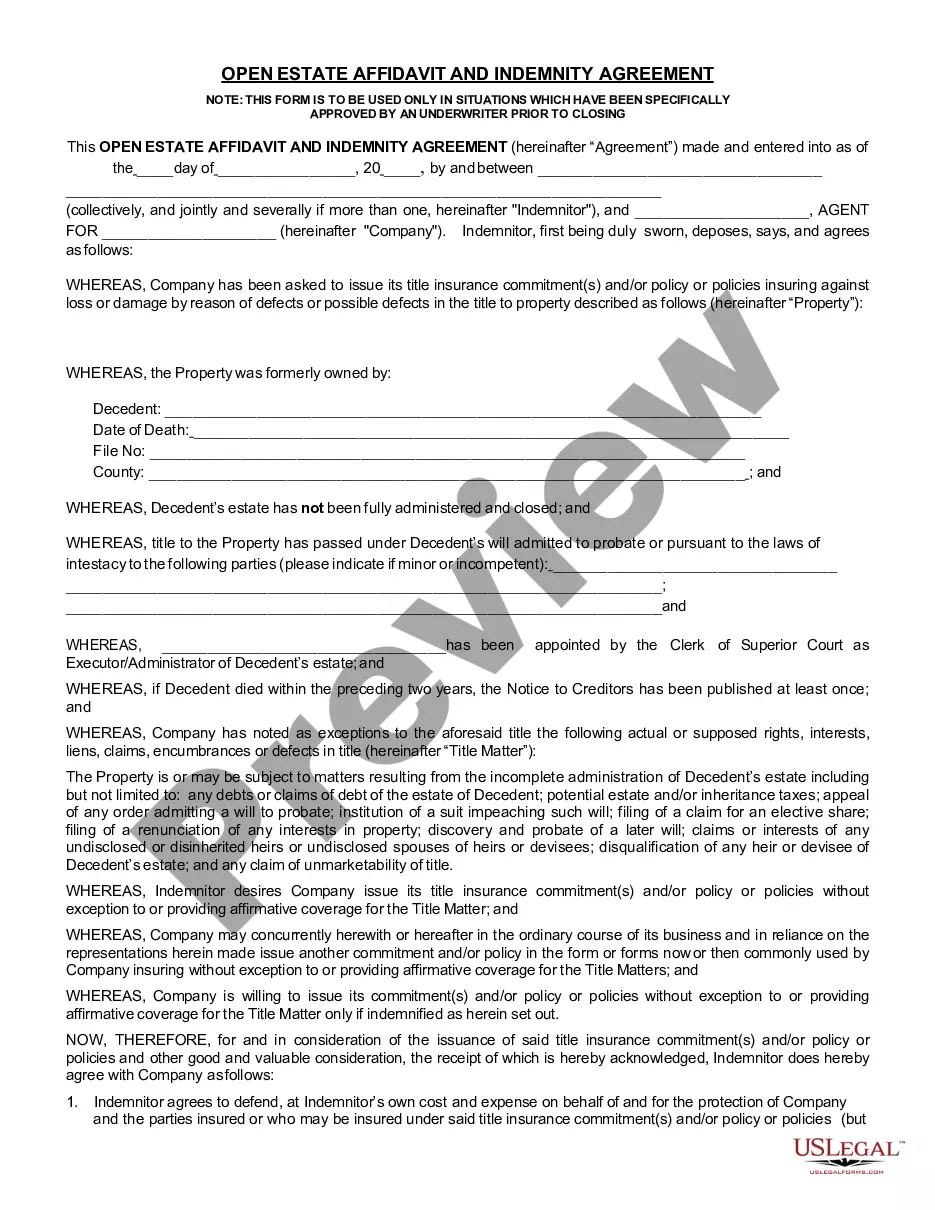
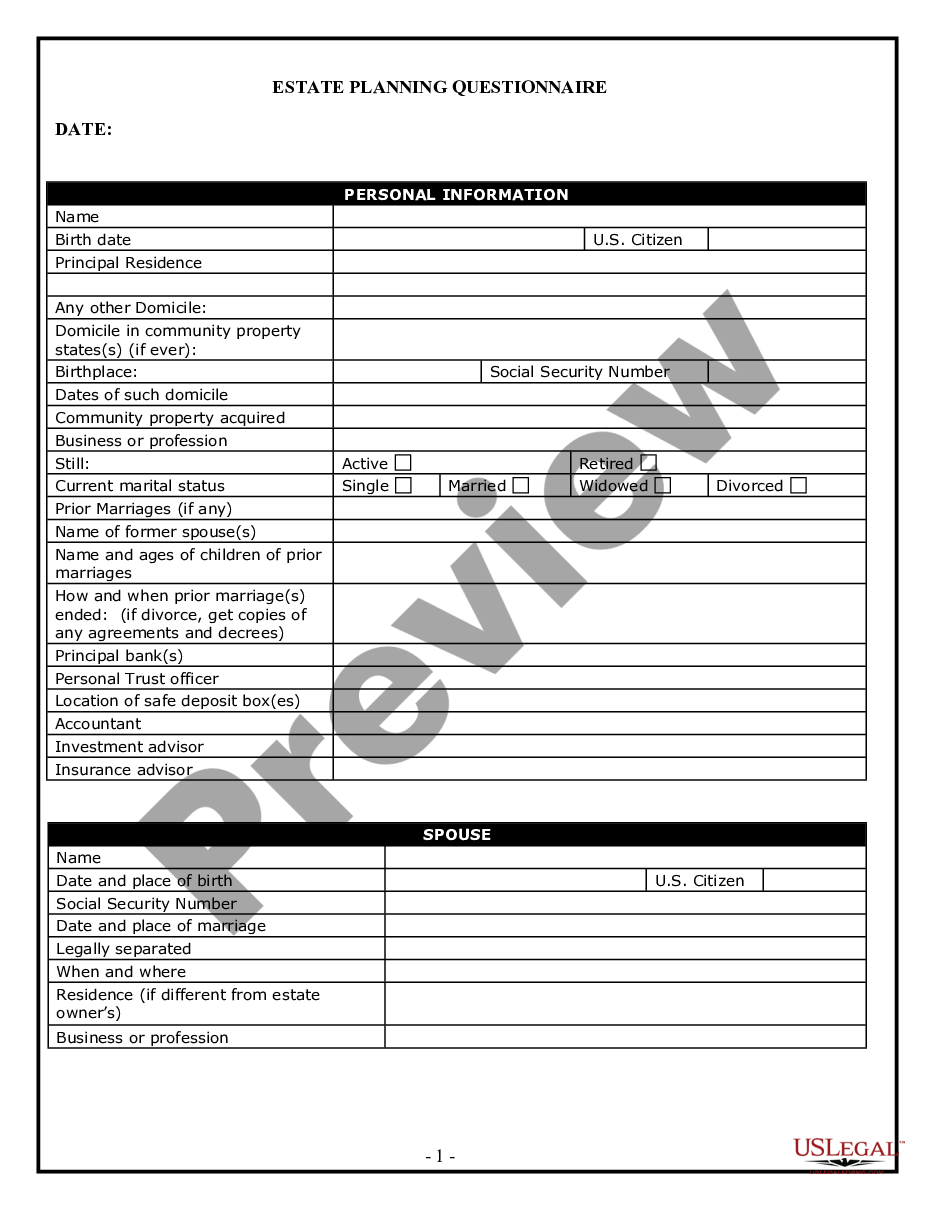
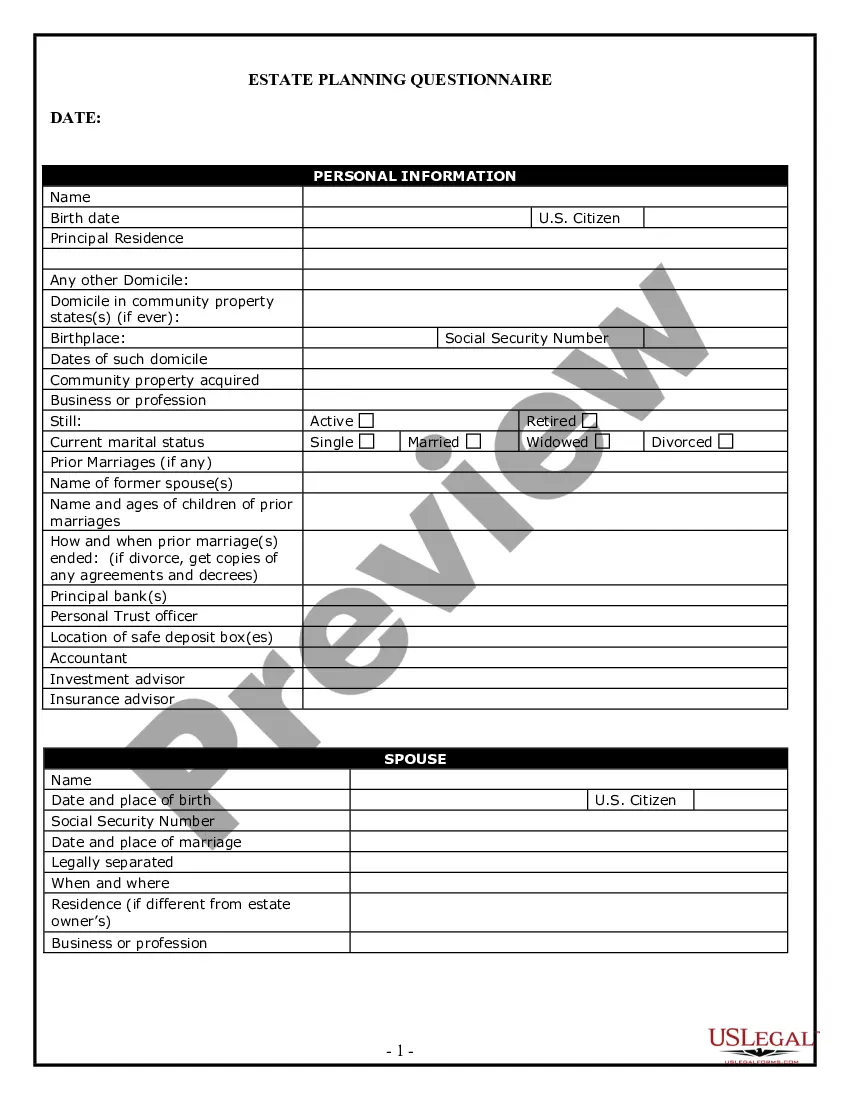
The Ohio Last Will and Testament Package is a comprehensive collection of legal forms designed to help you create a valid and personalized last will. This package includes a customizable Last Will and Testament, along with essential supporting documents such as an Estate Planning Questionnaire and Personal Planning Information and Document Inventory Worksheets. Unlike generic forms, this package is specifically tailored to meet Ohio state requirements, ensuring your will is enforceable and meets your unique needs.
Forms included in this package

Common use cases
This form package is ideal for individuals who want to ensure their wishes are honored after they pass away. You should consider using this package if:
- You are a resident of Ohio and need a valid Last Will and Testament.
- You have specific wishes regarding the distribution of your assets.
- You want to appoint a guardian for your children or pets.
- You want to ensure that your funeral and burial wishes are clearly stated.
Who should use this form package
- Ohio residents seeking to create a legally binding last will.
- Individuals with families needing guardianship provisions.
- Anyone wishing to clarify their healthcare and asset management preferences.
- Single, married, or divorced individuals needing a tailored will.
Instructions for completing these forms
- Review the included forms in your package carefully.
- Complete the Estate Planning Questionnaire to gather necessary details about your assets and wishes.
- Fill out the Personal Planning Information and Document Inventory Worksheets to track important documents.
- Choose the Last Will and Testament that fits your needs and fill in any required information.
- Make copies of all completed forms for your records.
- Consult an attorney if you have questions about the finalization of your will.
Do documents in this package require notarization?
Some included forms must be notarized to ensure validity. US Legal Forms provides secure online notarization powered by Notarize, allowing you to complete the process through a verified video call anytime.
Get your form ready online
Our built-in tools help you complete, sign, share, and store your documents in one place.
Make edits, fill in missing information, and update formatting in US Legal Forms—just like you would in MS Word.
Download a copy, print it, send it by email, or mail it via USPS—whatever works best for your next step.
Sign and collect signatures with our SignNow integration. Send to multiple recipients, set reminders, and more. Go Premium to unlock E-Sign.
If this form requires notarization, complete it online through a secure video call—no need to meet a notary in person or wait for an appointment.
We protect your documents and personal data by following strict security and privacy standards.

Make edits, fill in missing information, and update formatting in US Legal Forms—just like you would in MS Word.

Download a copy, print it, send it by email, or mail it via USPS—whatever works best for your next step.

Sign and collect signatures with our SignNow integration. Send to multiple recipients, set reminders, and more. Go Premium to unlock E-Sign.

If this form requires notarization, complete it online through a secure video call—no need to meet a notary in person or wait for an appointment.

We protect your documents and personal data by following strict security and privacy standards.
Common mistakes
- Forgetting to sign the will, which can result in it being deemed invalid.
- Not being specific about asset distribution.
- Neglecting to update the will after major life changes such as marriage or divorce.
- Failing to keep the will in a safe and accessible location.
Why complete this package online
- Conveniently download and complete forms from home.
- Access to professionally drafted legal documents that cater to Ohio laws.
- Edit and customize the forms as needed to reflect your personal wishes.
- Immediate access to a completed sample will to guide you through the process.
Quick recap
- The Ohio Last Will and Testament Package provides all necessary forms to create a personalized will.
- It is designed to meet the specific legal requirements of Ohio.
- Includes additional resources to assist in tracking important information.
- Support is available to guide you through the form completion process.
Looking for another form?
Form popularity
FAQ
In Ohio, with very few exceptions, all wills need to be in writing. Ohio does allow holographic wills, which means you can actually handwrite your own will in the state. As long as your handwritten will meets the other requirements, it will be valid.
Bank accounts. Brokerage or investment accounts. Retirement accounts and pension plans. A life insurance policy.
A person's last will and testament outlines what to do with possessions, whether the deceased will leave them to another person, a group or donate them to charity, and what happens to other things that they are responsible for, such as custody of dependents and management of accounts and financial interests.
The will must be in writing handwritten or typewritten. The will must be signed by the testator. 2 or more competent witnesses must watch the testator sign the will or hear the testator acknowledge his/her signature and subscribe the will.
Step 1: Find and File the Decedent's Will. Step 2: Order Decedent's Death Certificate. Step 3: Petition for Probate. Step 4: The Probate Is Opened and Letters of Authority Are Issued. Step 5: Administration, Creditors, and Inventory of the Estate.
According to Ohio law and case history, a will is valid if it meets the following requirements: The testator (the person who is leaving the will) must be 18 years of age or older. The testator must be of sound mind. The testator must not otherwise be under restraint or under the undue influence of another person.
A handwritten will, sometimes referred to as a holographic will, is lawful in a majority of states, including Ohio.As with typewritten wills, the will must be signed by the person making the will (the testator) or by some other person in the testator's conscious presence and at the testator's express direction.
Does a will have to be notarized in Ohio? A will does not need to be notarized in order for it to be a valid legal document.