Ohio Affidavit of Surviving Spouse or Joint Survivor
About this form
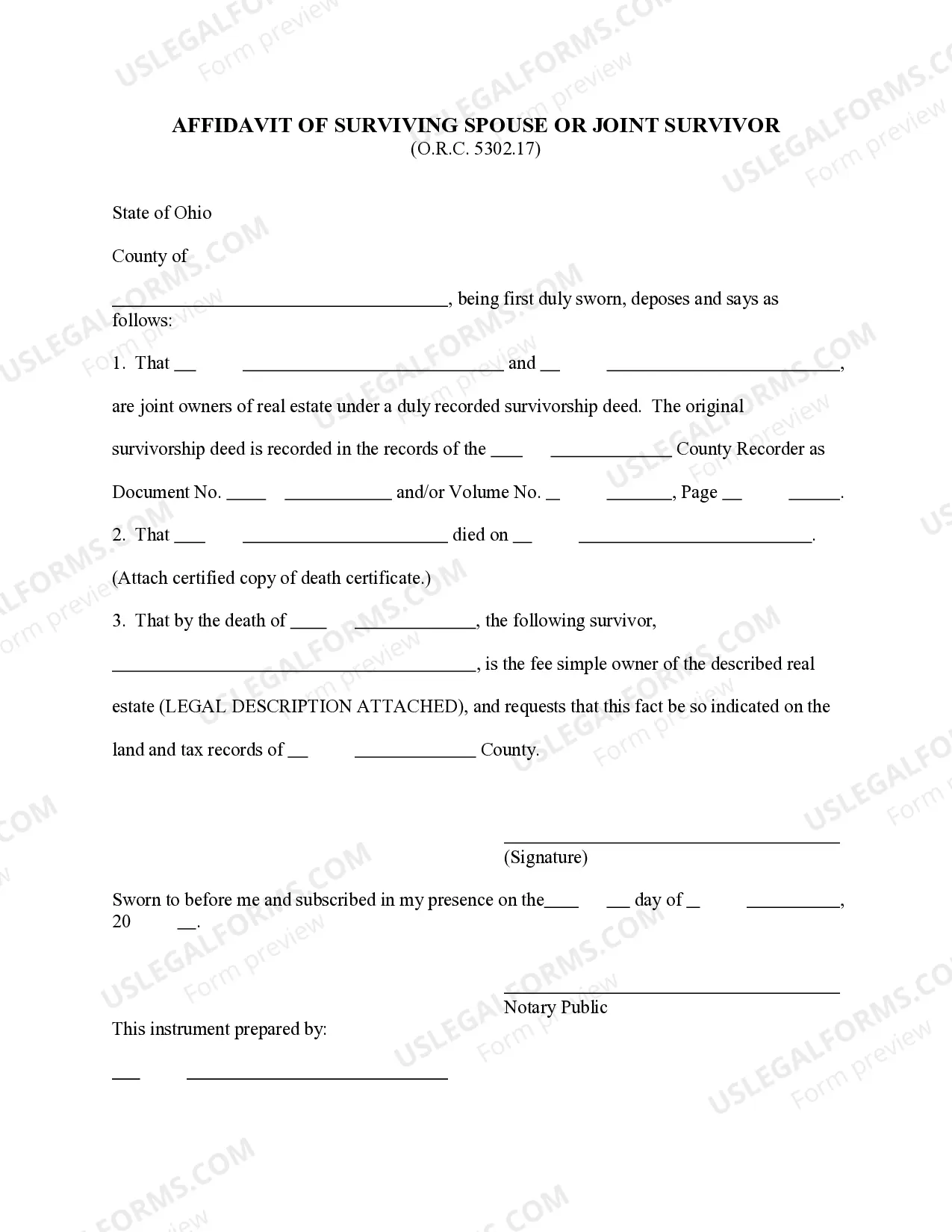
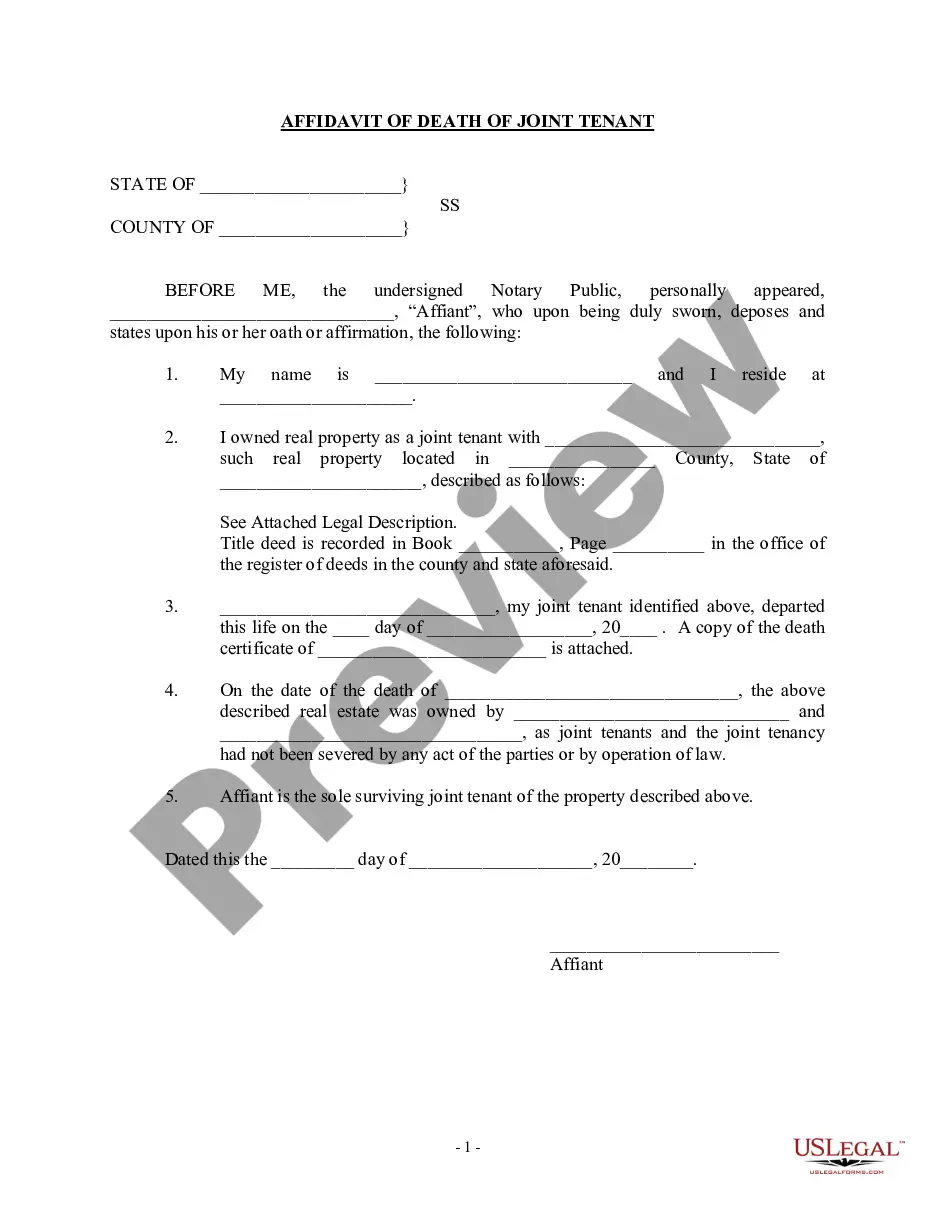
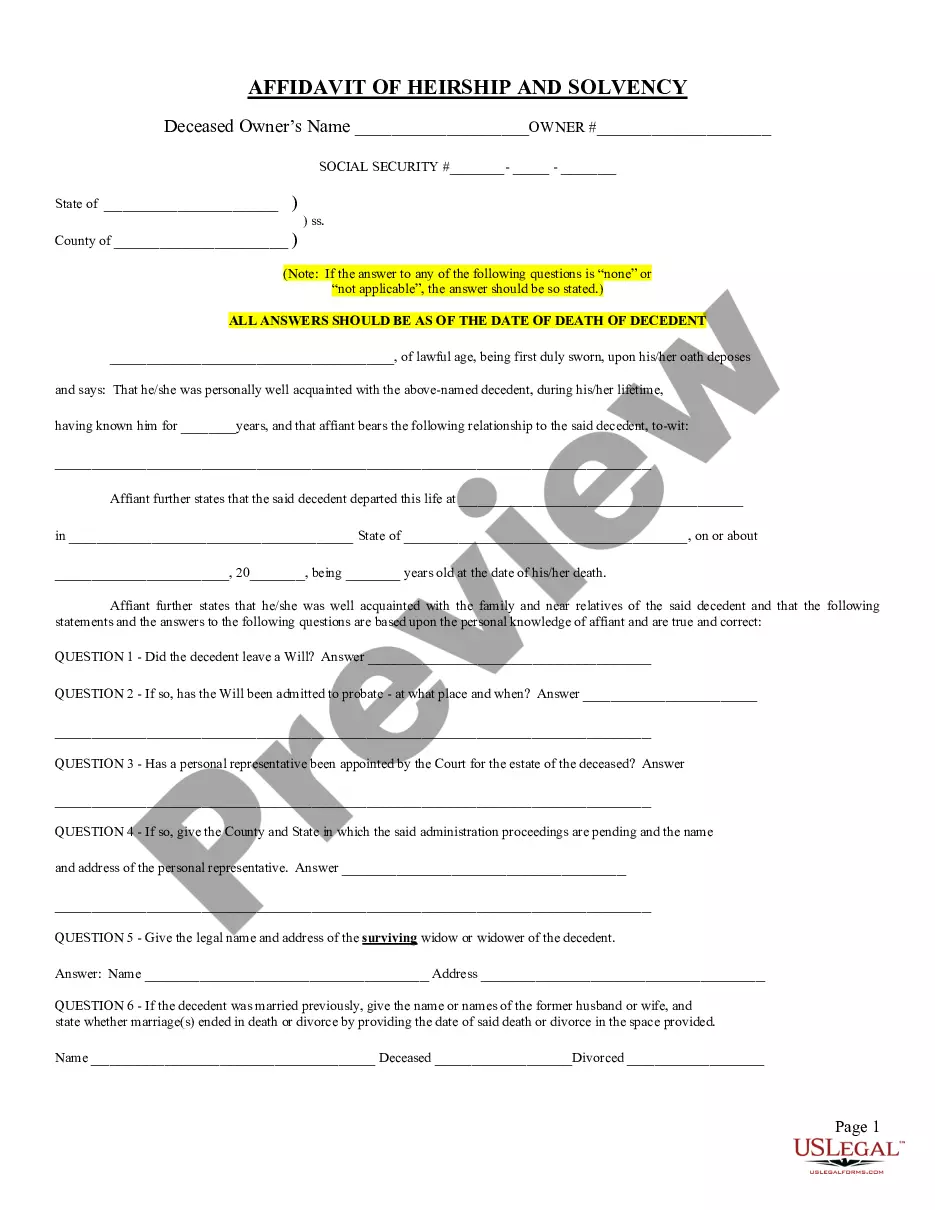
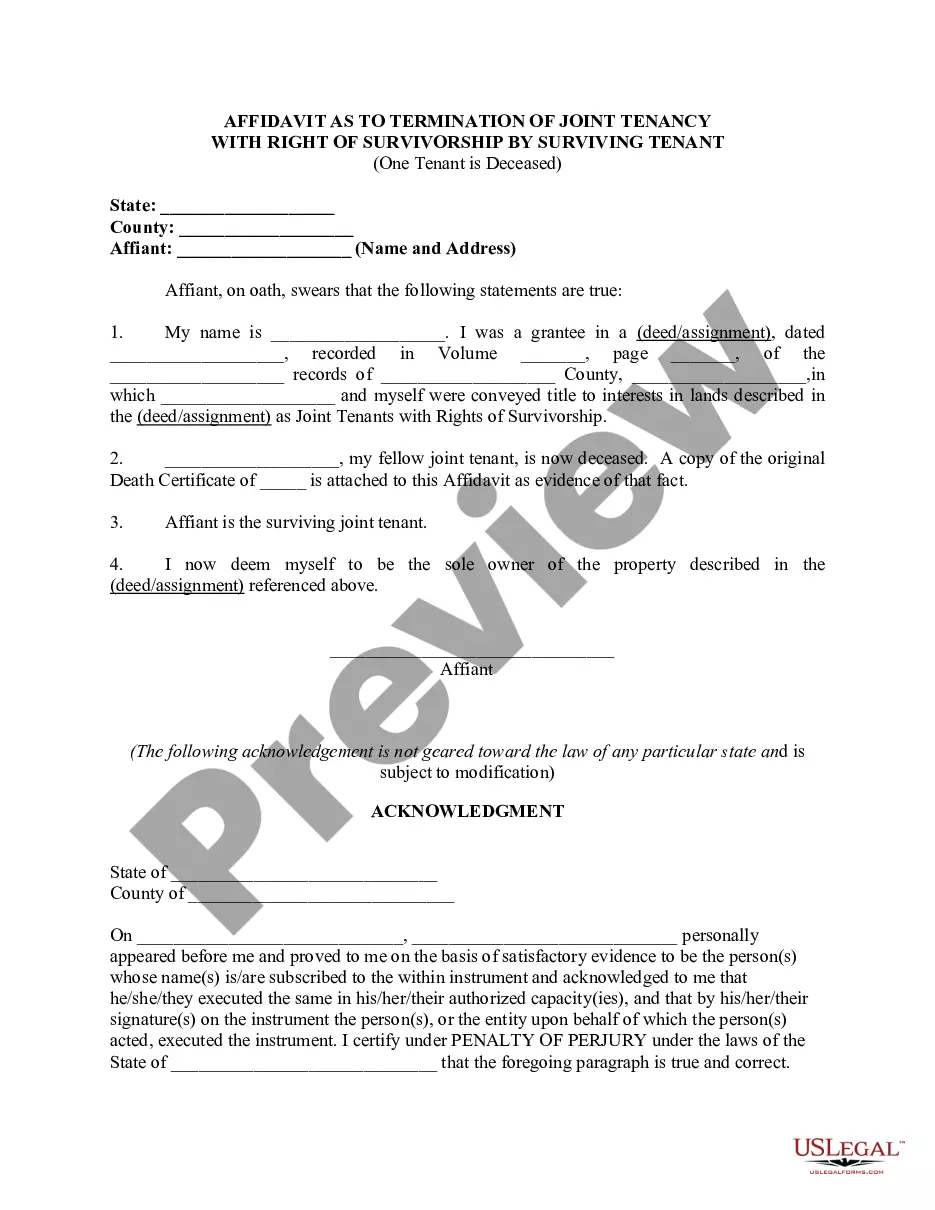
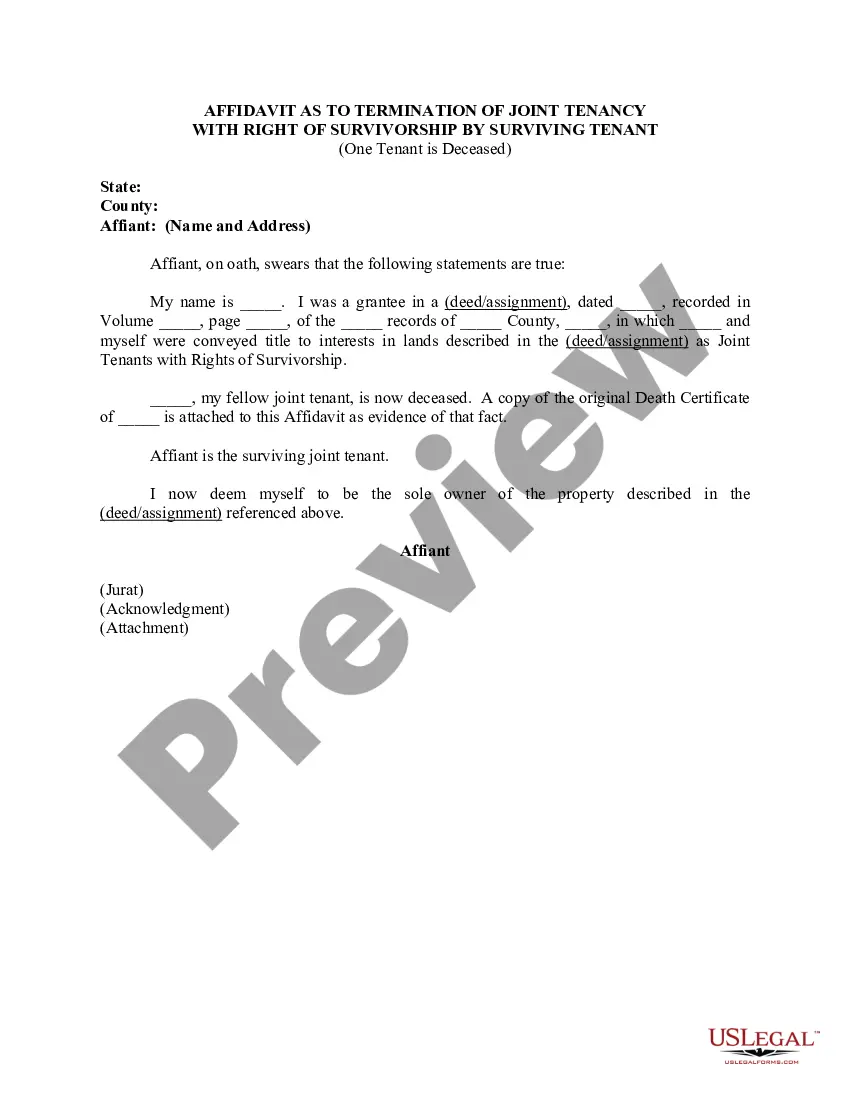
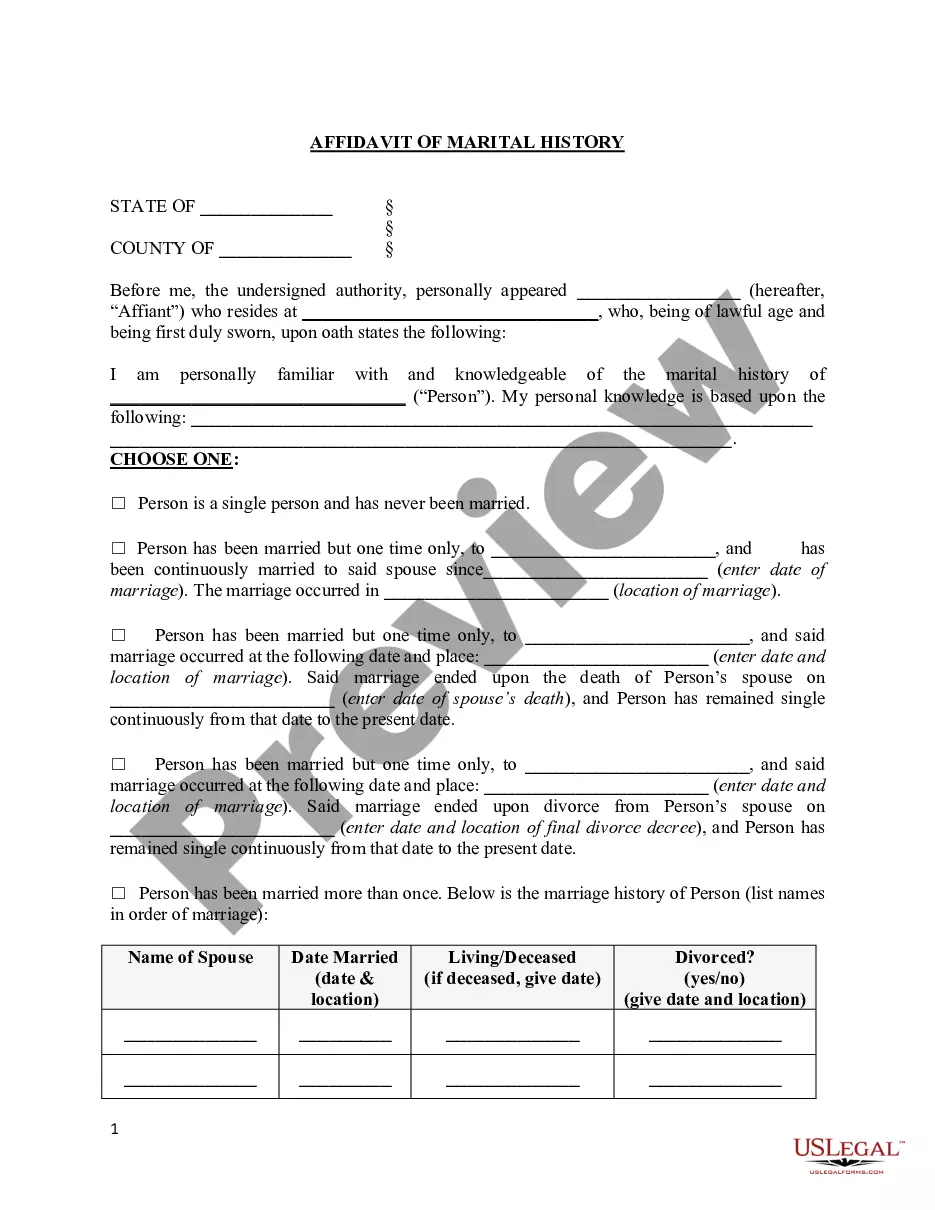
The Affidavit of Surviving Spouse or Joint Survivor is a legal document used to confirm the death of a decedent and establish the surviving spouse's or joint survivor's entitlement to the decedent's interest in property held in joint tenancy or tenancy by the entireties. This form is critical for transferring ownership rights without going through probate, distinguishing it from other forms related to estate management.
Main sections of this form
- Affiant's information: Details about the surviving spouse or joint survivor.
- Decedent's information: Relevant details about the deceased individual.
- Property description: Clear identification of the property in question.
- Statement of survivorship: Declaration confirming the affiant's right to the property.
- Signature block: Space for the affiant's signature and date.
Common use cases
This form is necessary when a spouse or joint tenant needs to assert their rights to property ownership following the death of their partner. It is commonly used in situations such as transferring real estate into the name of a surviving spouse or to facilitate the distribution of shared assets after one owner has passed away.
Who this form is for
- Surviving spouses seeking to establish their rights to jointly owned property.
- Joint tenants affected by the death of another tenant, requiring ownership transfer.
- Individuals handling the estate of a deceased partner where joint tenancy is involved.
Completing this form step by step
- Identify the parties: Enter the names and addresses of the surviving spouse or joint survivor and the decedent.
- Specify the property: Clearly describe the property subject to the joint tenancy.
- Confirm the decedent's death: Include the date of death and any relevant documentation.
- Sign the affidavit: The affiant must sign and date the form in the designated area.
- Consider notarization: Determine if notarization is necessary based on local law.
Is notarization required?
This form needs to be notarized to ensure legal validity. US Legal Forms provides secure online notarization powered by Notarize, allowing you to complete the process through a verified video call, available anytime.
Typical mistakes to avoid
- Omitting the property description, leading to ambiguity.
- Failing to sign the affidavit, rendering it invalid.
- Incorrectly stating the decedent's date of death.
- Not consulting local laws about survivorship rights, leading to legal discrepancies.
Benefits of using this form online
- Convenience of immediate access and download from any location.
- Editability allows users to fill out the form at their own pace.
- Reliable templates drafted by licensed attorneys, ensuring legal accuracy.
State-specific requirements
This form is crafted to comply with Ohio law, ensuring it meets the specific statutes governing joint tenancy and property succession in the state. Users in Ohio should consult local statutes to confirm its applicability and completeness.
Quick recap
- The Affidavit of Surviving Spouse or Joint Survivor is essential for transferring property ownership after death.
- Complete the form accurately to avoid mistakes that could delay property succession.
- Always consult local laws to ensure compliance with specific requirements in your state.

Form popularity
FAQ
The right of survivorship is an attribute of several types of joint ownership of property, most notably joint tenancy and tenancy in common. When jointly owned property includes a right of survivorship, the surviving owner automatically absorbs a dying owner's share of the property.
With a Survivorship Deed in place, when one of the parties in a joint tenancy dies, the other party (or parties) takes over the deceased party's interest in the property instead of it passing to the deceased's heirs or beneficiaries.
What Is the Difference Between a Warranty Deed & a Survivorship Deed?A warranty deed is the most comprehensive and provides the most guarantees. Survivorship isn't so much a deed as a title. It's a way to co-own property where, upon the death of one owner, ownership automatically passes to the survivor.
Survivorship rights take precedence over any contrary terms in a person's will because property subject to rights of survivorship is not legally part of their estate at death and so cannot be distributed through a will.
A survivorship deed is a deed conveying title to real estate into the names of two or more persons as joint tenants with rights of survivorship. Upon the death of one owner, the property passes to and vests in the name of the surviving owner or owners.
In Ohio, a Survivorship Deed is used to convey title to real estate to two or more people as joint tenants with rights of survivorship. Upon the death of an owner, the property passes to the surviving owner(s). A Survivorship Deed is commonly utilized to convey property to spouses.