Ohio Special Warranty Deed - Individual to Individual
Understanding this form
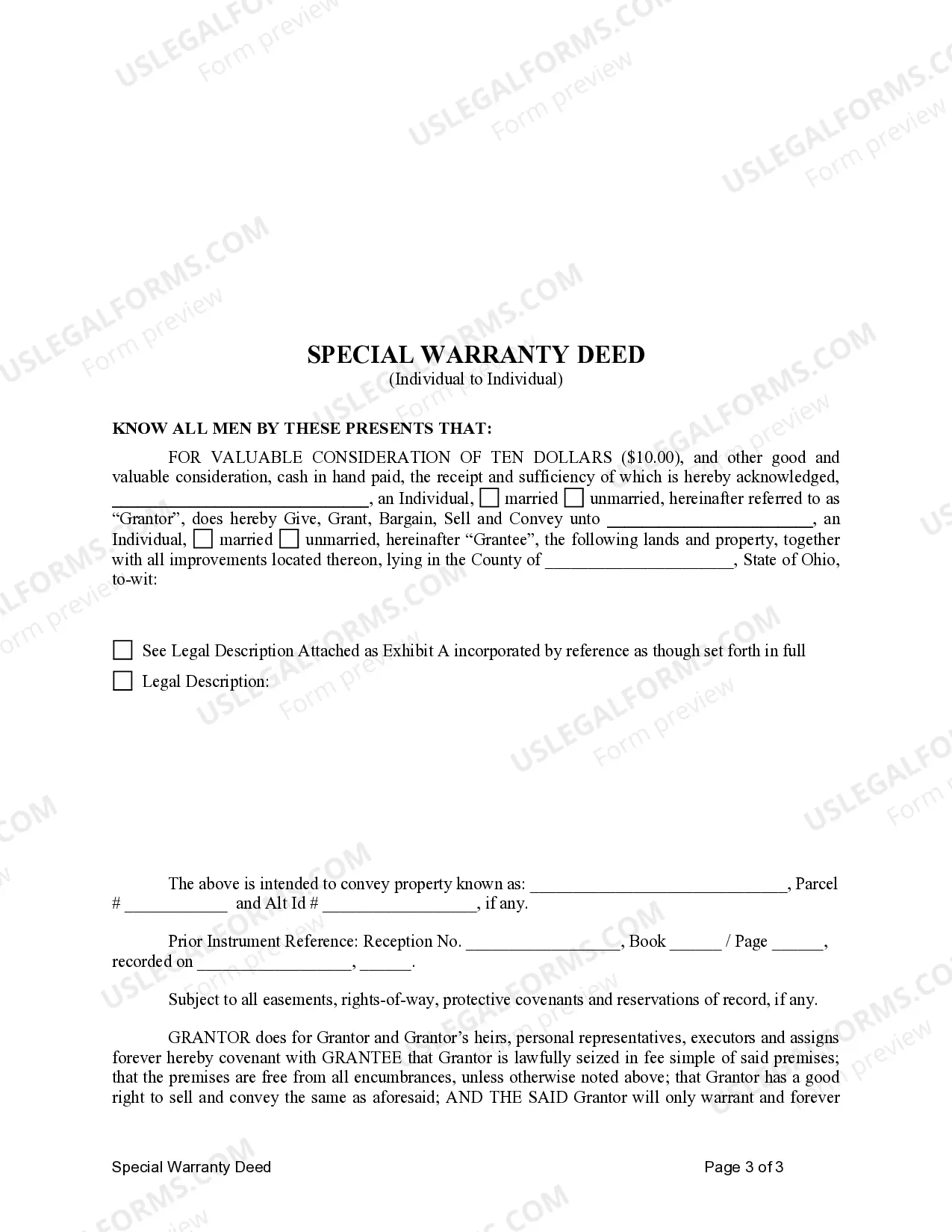
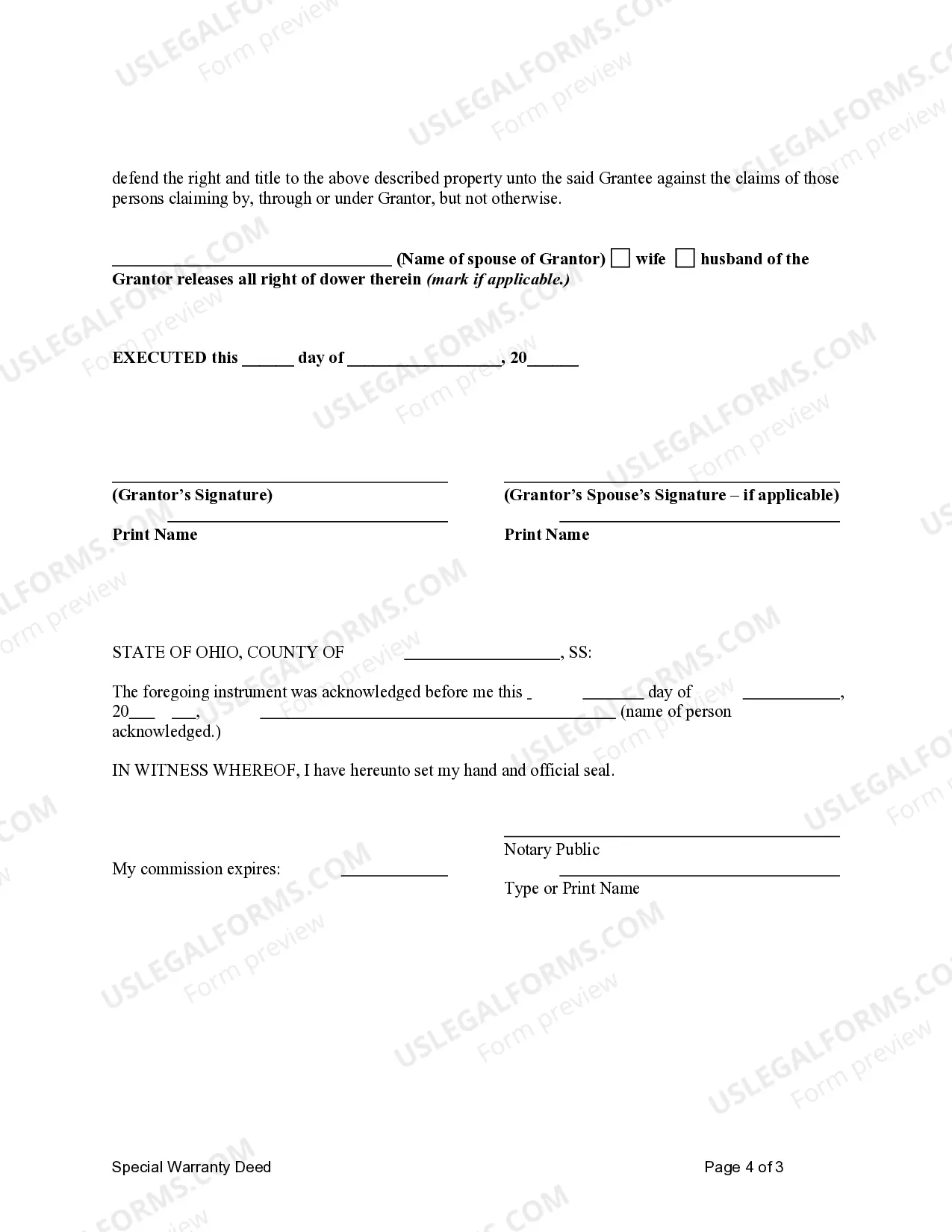
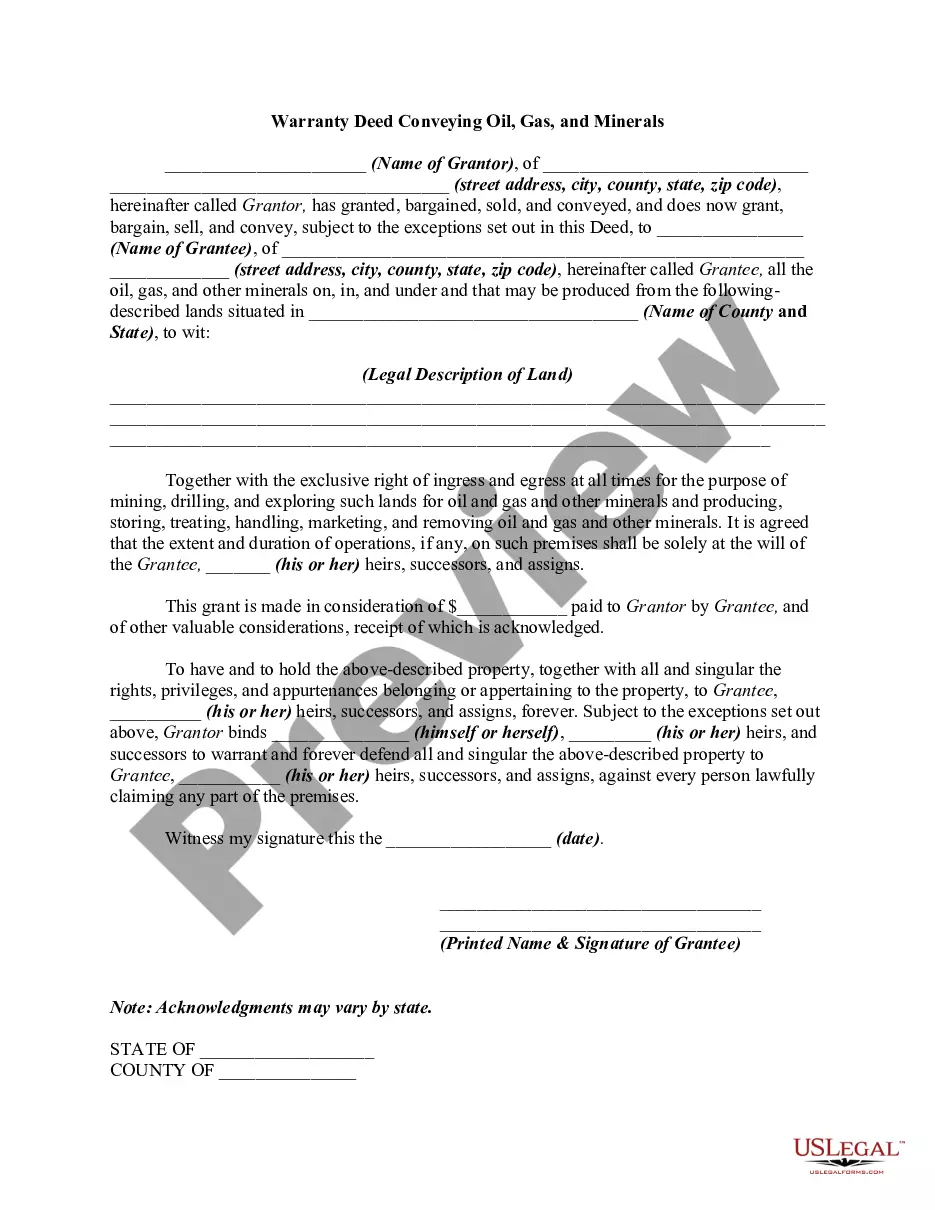
The Special Warranty Deed is a legal document used when one individual (the grantor) conveys real property to another individual (the grantee). This form specifically offers limited warranties regarding the property. Unlike a general warranty deed, which guarantees a full claim to the property, the special warranty deed only warrants against claims made by persons who claim under the grantor. This form complies with all applicable state laws, making it an essential tool for private real estate transactions between individuals.
Main sections of this form
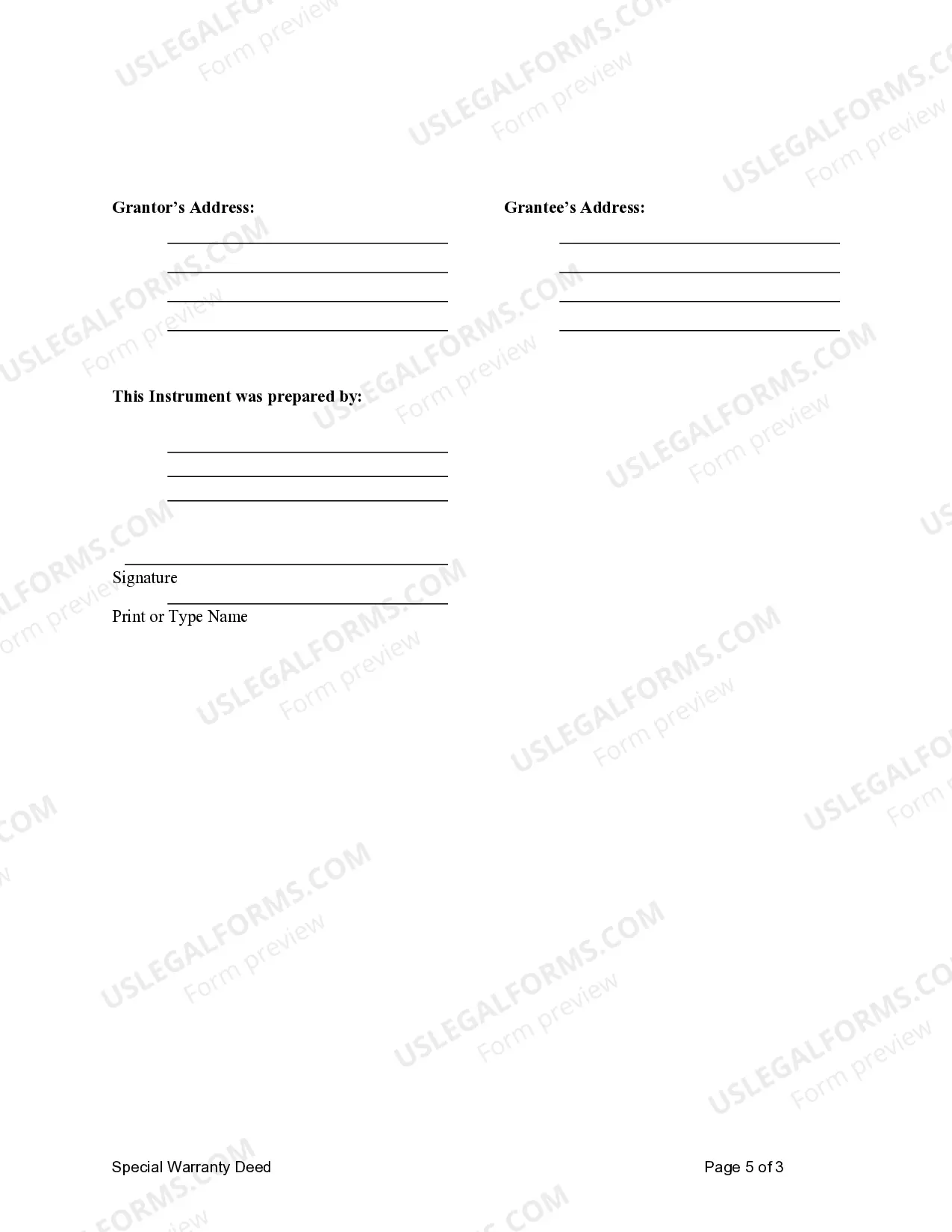
- Identification of the grantor and grantee: Names and details of both parties involved in the transfer.
- Description of the property: Clear identification of the property being transferred.
- Warranty clause: Statement of the grantorâs limited warranty regarding the property's title.
- Signatures: Required signatures of the grantor and potentially the grantee.
- Date of the transfer: The date the deed is signed and executed.

When to use this form
This form should be used in situations where an individual is transferring ownership of property to another individual. It is particularly suitable for sales between friends, family members, or other personal arrangements, where the grantor wants to limit liability for any claims against the property that may arise from previous transactions or owners.
Who can use this document
- Individuals selling or transferring real property to another individual.
- Grantors looking for a deed that limits their warranty on the title.
- Grantees who want assurance the grantor is only responsible for claims originating from themselves.
Instructions for completing this form
- Identify the parties: Fill in the names and addresses of both the grantor and grantee.
- Specify the property: Clearly describe the property, including the legal description and any identifying details.
- Complete the warranty clause: Review and incorporate the limited warranty language as specified in the form.
- Gather signatures: Have the grantor sign the deed; the grantee may also sign to acknowledge receipt.
- Enter the date of execution: Ensure the date of signing is clearly marked on the document.
Notarization requirements for this form
This form does not typically require notarization unless specified by local law. However, having it notarized can add a layer of authenticity to the transaction, making it easier to validate in legal contexts.
Get your form ready online
Our built-in tools help you complete, sign, share, and store your documents in one place.
Make edits, fill in missing information, and update formatting in US Legal Forms—just like you would in MS Word.
Download a copy, print it, send it by email, or mail it via USPS—whatever works best for your next step.
Sign and collect signatures with our SignNow integration. Send to multiple recipients, set reminders, and more. Go Premium to unlock E-Sign.
If this form requires notarization, complete it online through a secure video call—no need to meet a notary in person or wait for an appointment.
We protect your documents and personal data by following strict security and privacy standards.

Make edits, fill in missing information, and update formatting in US Legal Forms—just like you would in MS Word.

Download a copy, print it, send it by email, or mail it via USPS—whatever works best for your next step.

Sign and collect signatures with our SignNow integration. Send to multiple recipients, set reminders, and more. Go Premium to unlock E-Sign.

If this form requires notarization, complete it online through a secure video call—no need to meet a notary in person or wait for an appointment.

We protect your documents and personal data by following strict security and privacy standards.
Common mistakes
- Failing to provide accurate property descriptions which can lead to disputes.
- Omitting signatures from either party, rendering the deed invalid.
- Not dating the document, which can complicate the legality of the transfer.
Benefits of completing this form online
- Convenient access: Download the form anytime from anywhere.
- Editability: Easily fill out the form digitally before printing.
- Reliability: Ensure your form conforms to current legal standards and formatting requirements.
Looking for another form?

Form popularity
FAQ
It will not protect against title issues that arose prior to the time the seller took occupancy. Consequently, it offers less protection to buyers, and more protection to sellers, than a general warranty deed, which is the most common option for selling or buying a property.
Special warranties allow the transfer of property title between seller and buyer. The purchase of title insurance can mitigate the risk of prior claims to the special warranty deed.
In order to make the Warranty Deed legally binding, the Seller needs to sign it front of a notary public. Then signed and notarized deed must be filed at the city or county office for recording property documents. Before filing with this office all previously billed property taxes must be paid in full.
To add a spouse to a deed, all you have to do is literally fill out, sign and record a new deed in your county recorder's office.
A special warranty deed to real estate offers protection to the buyer through the seller's guarantee that the title has been free and clear of encumbrances during their ownership of the property. It does not guarantee clear title beyond their ownership.
It's important to note that a warranty deed does not actually prove the grantor has ownership (a title search is the best way to prove that), but it is a promise by the grantor that they are transferring ownership and if it turns out they don't actually own the property, the grantor will be responsible for compensating
A warranty deed guarantees that: The grantor is the rightful owner of the property and has the legal right to transfer the title.The title would withstand third-party claims to ownership of the property. The grantor will do anything to ensure the grantee's title to the property.
Typically, the lender will provide you with a copy of the deed of trust after the closing. The original warranty deeds are often mailed to the grantee after they are recorded. These are your original copies and should be kept in a safe place, such as a fireproof lockbox or a safe deposit box at a financial institution.
To sign over property ownership to another person, you'll use one of two deeds: a quitclaim deed or a warranty deed.