Ohio Electrical Contract for Contractor
About this form
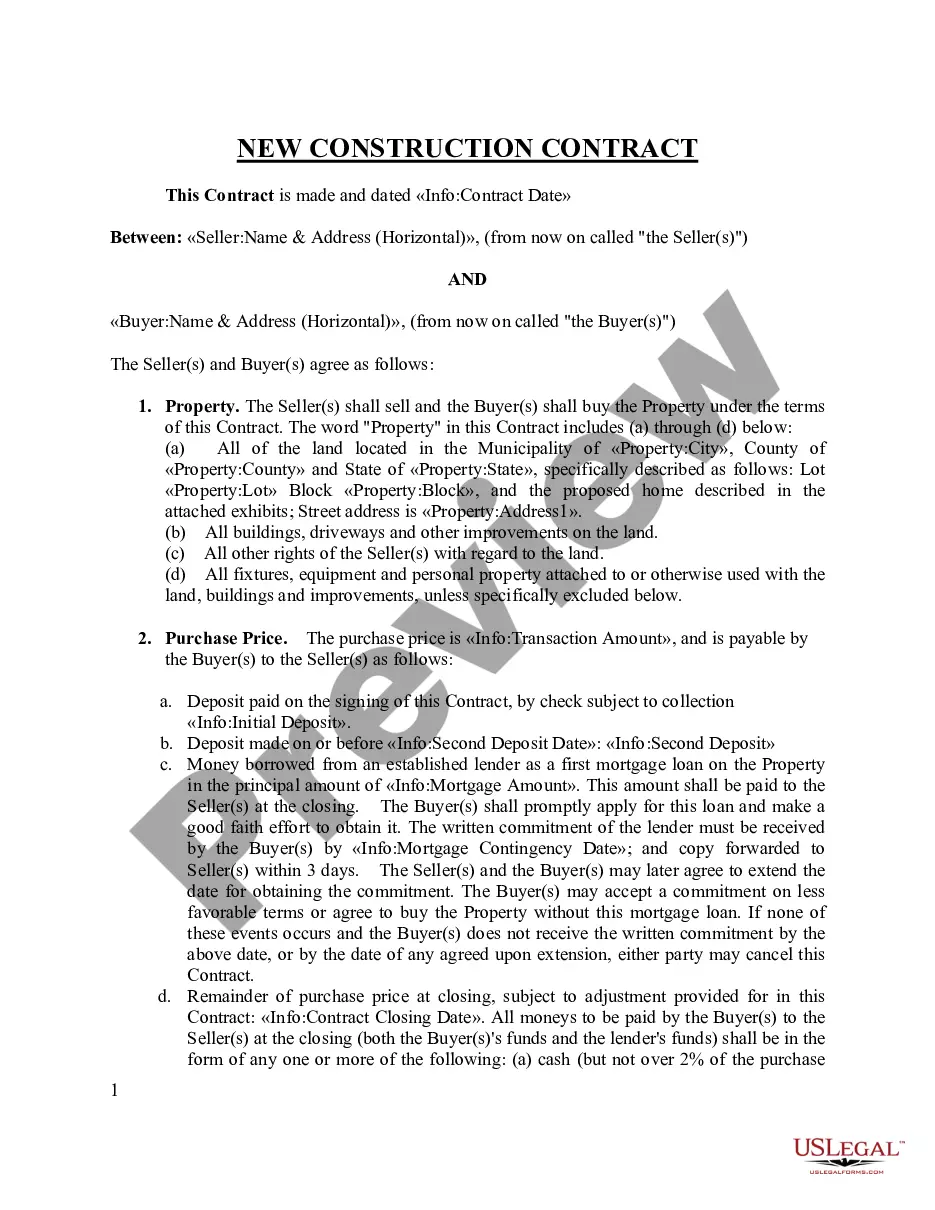
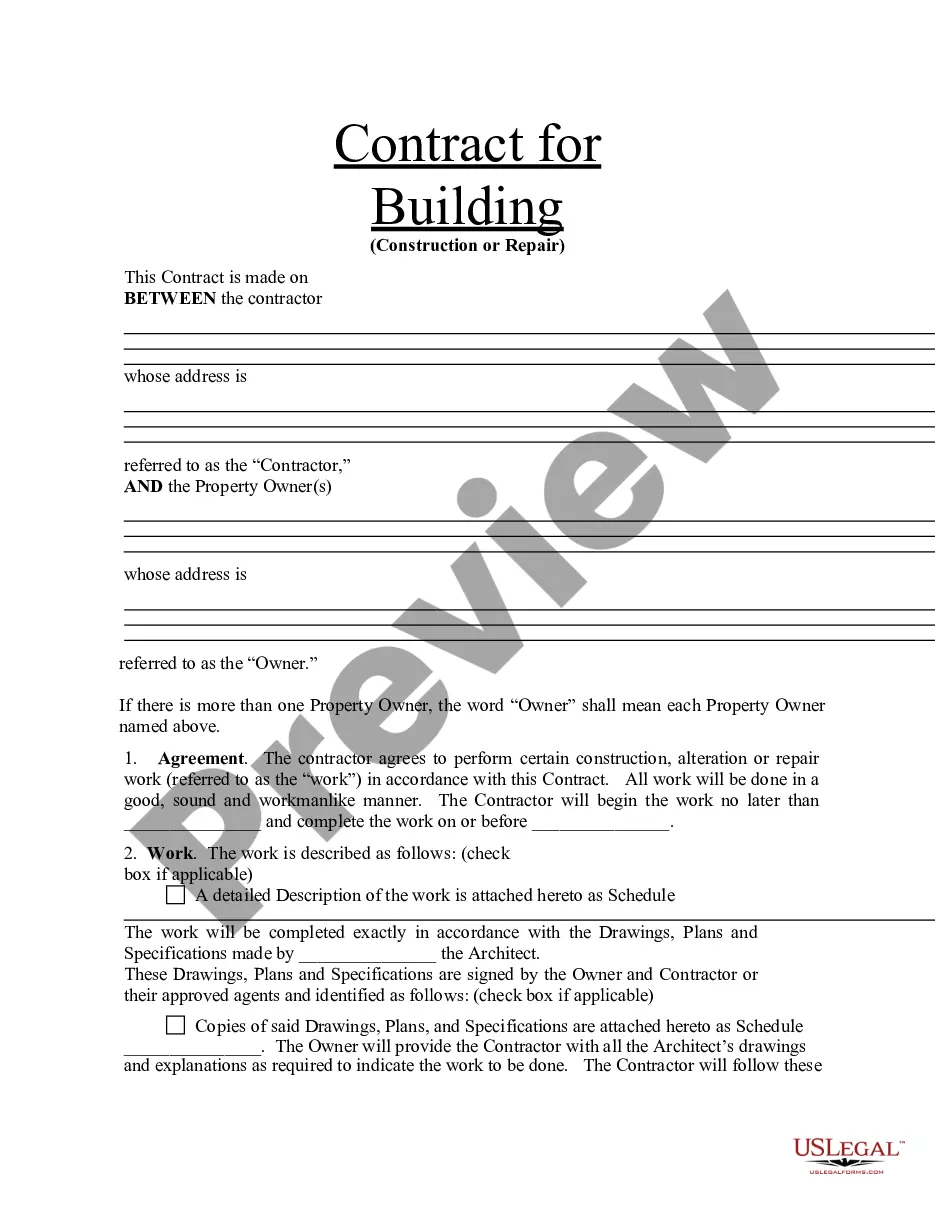
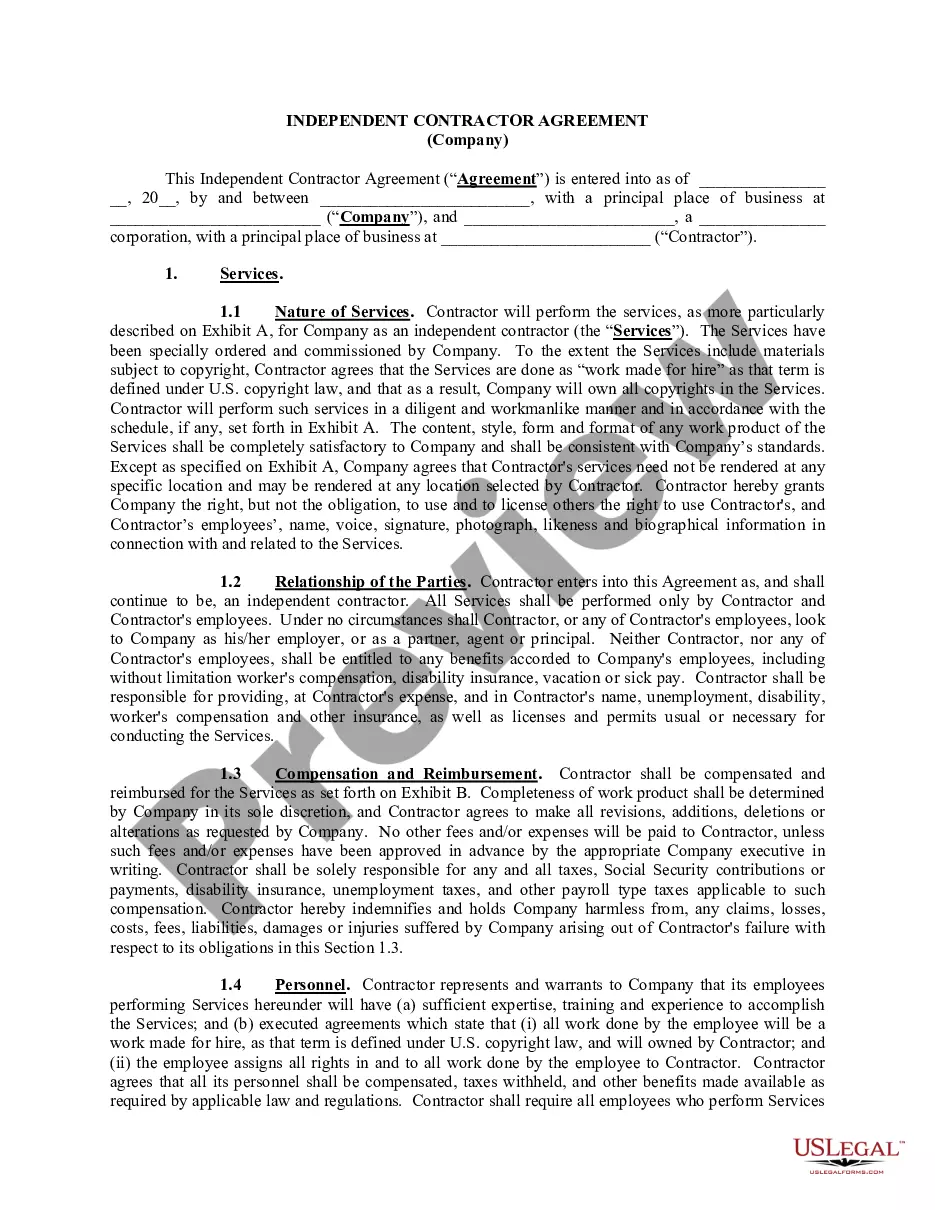
The Electrical Contract for Contractor establishes a formal agreement between electrical contractors and property owners. This contract is tailored for Ohio, distinguishing it from generic contracts by addressing specific state laws. It outlines essential aspects such as payment arrangements, change orders, permits, and insurance requirements, ensuring both partiesâ responsibilities and protections are clearly defined.
Key components of this form
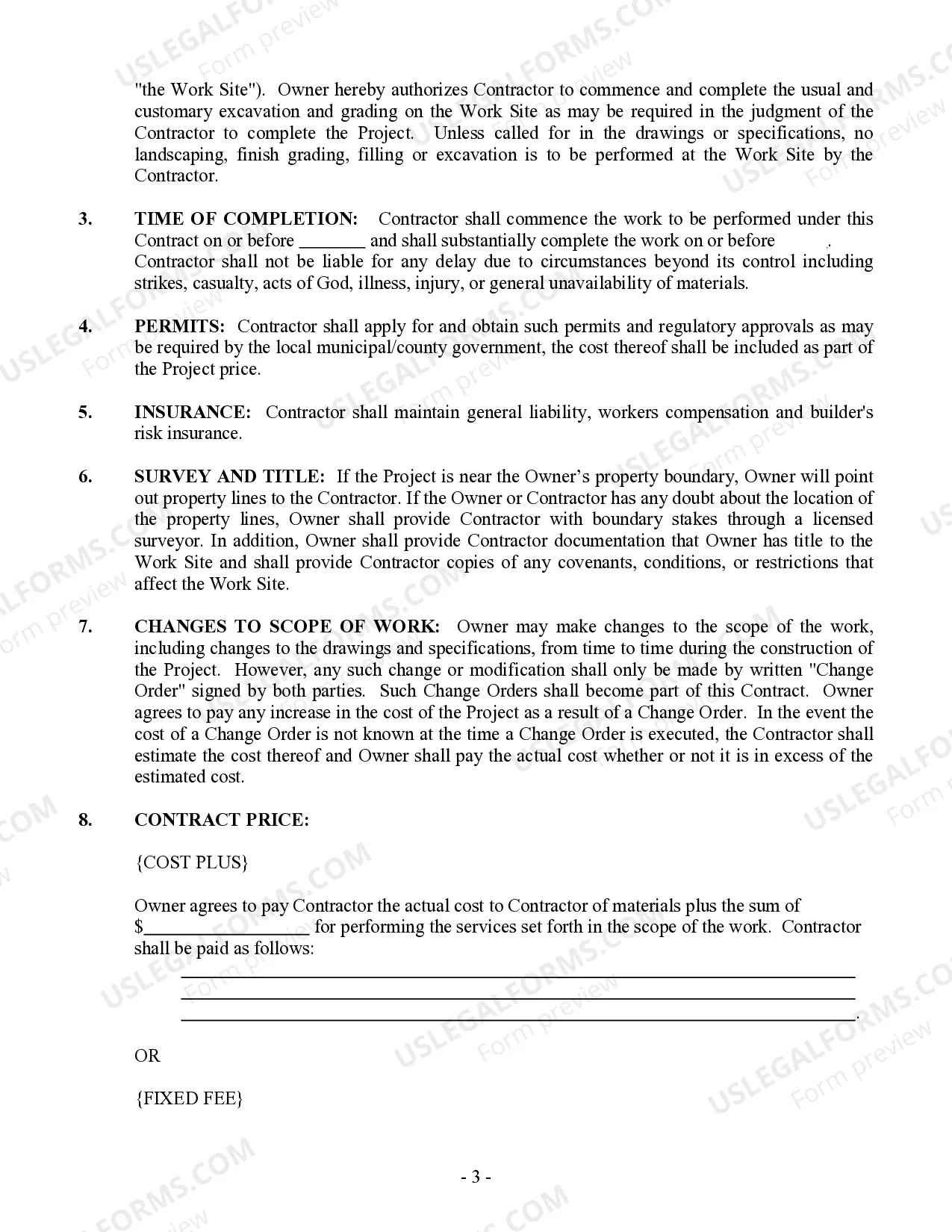
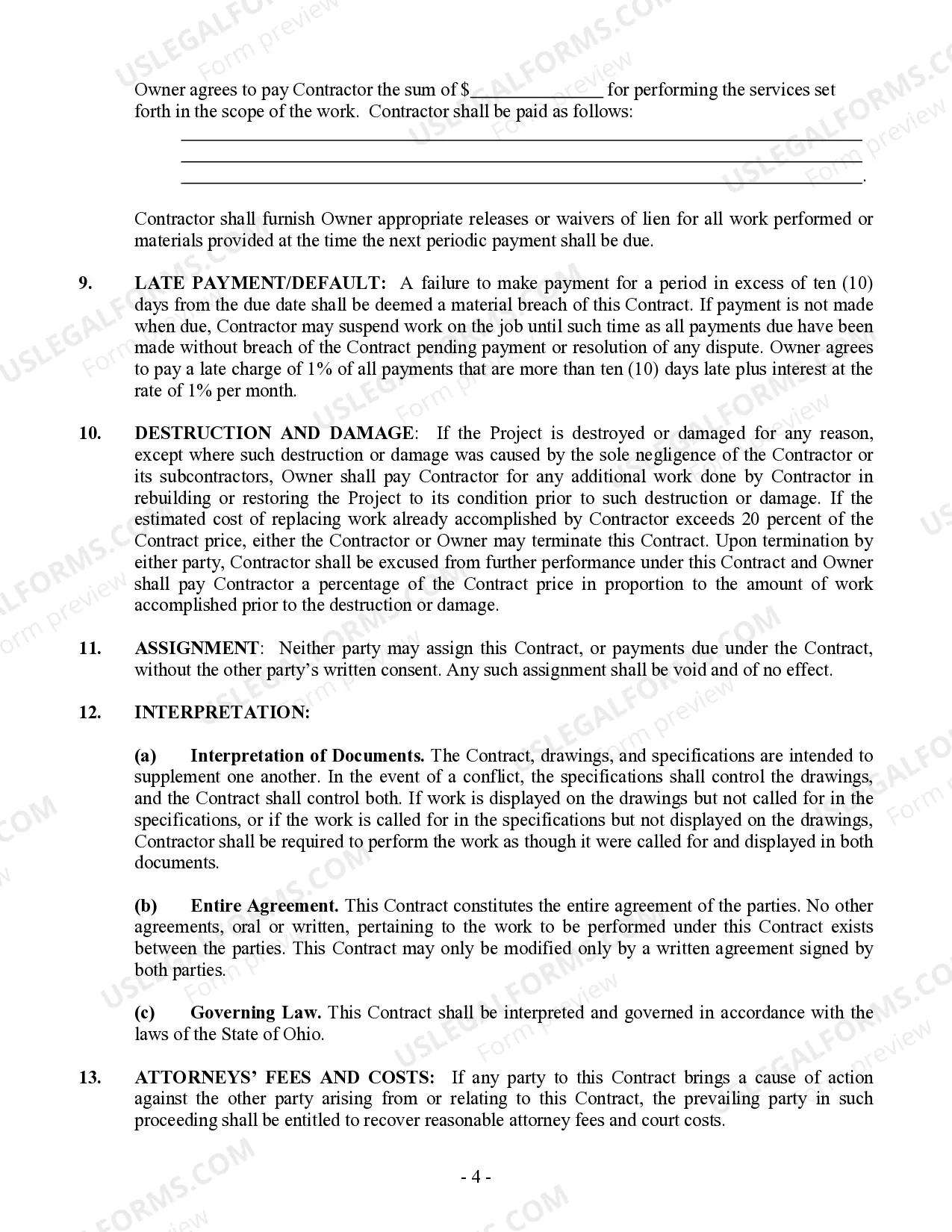
- Permits: Specifies that the contractor is responsible for obtaining necessary local permits.
- Insurance: Requires the contractor to maintain general liability, workers' compensation, and builder's risk insurance.
- Changes to scope of work: Details how changes must be documented through written change orders.
- Destruction and damage: Outlines procedures and responsibilities if the project is damaged.
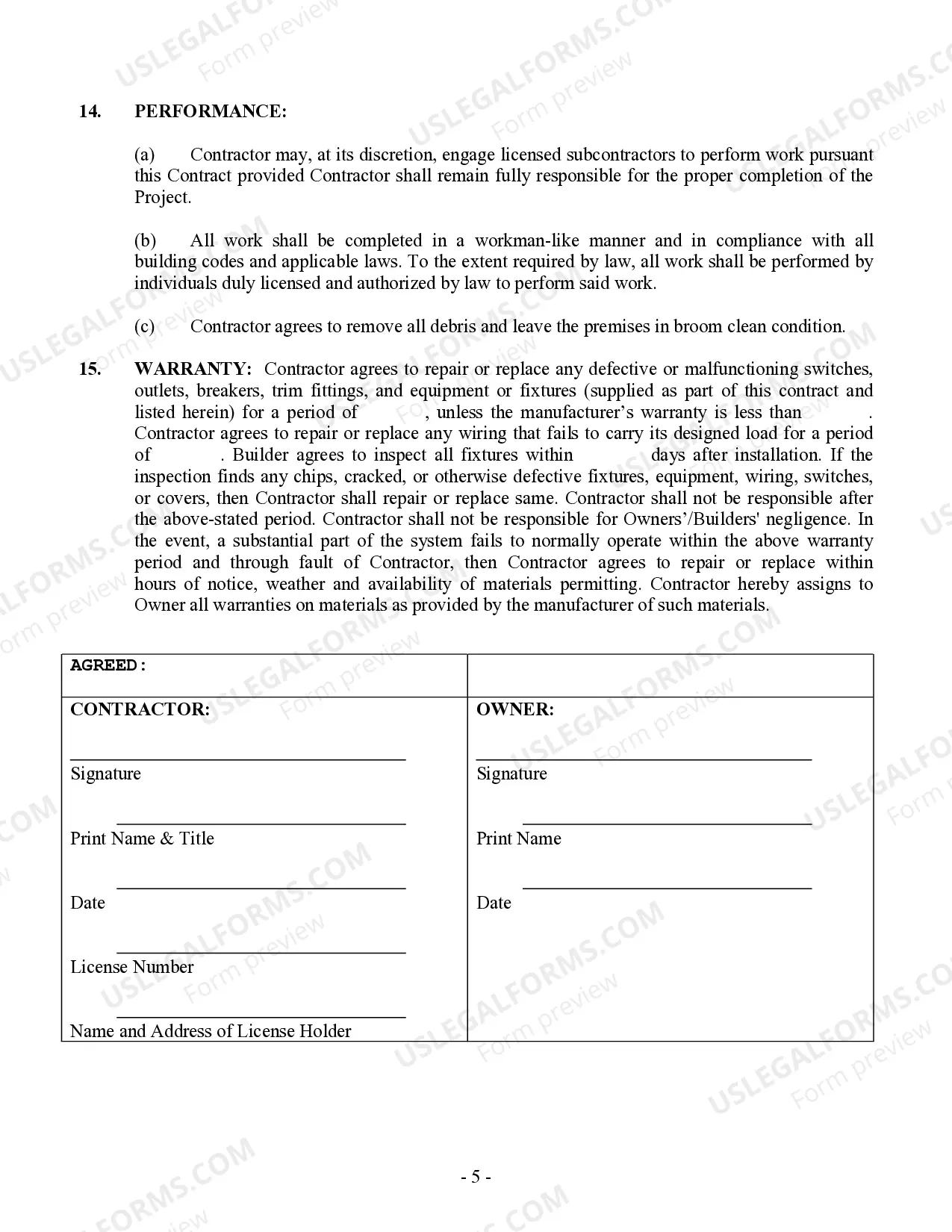
- Assignment: Prohibits assignment of the contract without consent from both parties.
- Entire agreement: Affirms that this contract is the complete agreement governing the work to be performed.


When to use this form
This contract should be used whenever an electrical contractor is hired to perform work on a property in Ohio. It is particularly useful for jobs that involve significant changes to the electrical system, require local permits, or have a clear scope of work that could change during the project. Utilizing this form can help prevent disputes by clarifying expectations and responsibilities upfront.
Who needs this form
This form is intended for:
- Electrical contractors engaging in projects in Ohio.
- Property owners looking to hire electrical contractors for residential or commercial work.
- Business owners requiring electrical installation or maintenance services.
- Individuals or organizations entering into agreements for electrical services.
Completing this form step by step
- Identify the parties: Enter the legal names and addresses of both the contractor and the property owner.
- Specify the project: Provide a clear description of the work to be done and the property details.
- Define payment terms: Choose between cost plus or fixed fee arrangements based on your agreement.
- Outline insurance requirements: Indicate the types of insurance the contractor is required to maintain.
- Detail change order procedures: Ensure both parties understand how changes to the scope of work will be documented and approved.
Is notarization required?
This form does not typically require notarization unless specified by local law. It is recommended to check state requirements for additional validation under Ohio law.
Get your form ready online
Our built-in tools help you complete, sign, share, and store your documents in one place.
Make edits, fill in missing information, and update formatting in US Legal Forms—just like you would in MS Word.
Download a copy, print it, send it by email, or mail it via USPS—whatever works best for your next step.
Sign and collect signatures with our SignNow integration. Send to multiple recipients, set reminders, and more. Go Premium to unlock E-Sign.
If this form requires notarization, complete it online through a secure video call—no need to meet a notary in person or wait for an appointment.
We protect your documents and personal data by following strict security and privacy standards.

Make edits, fill in missing information, and update formatting in US Legal Forms—just like you would in MS Word.

Download a copy, print it, send it by email, or mail it via USPS—whatever works best for your next step.

Sign and collect signatures with our SignNow integration. Send to multiple recipients, set reminders, and more. Go Premium to unlock E-Sign.

If this form requires notarization, complete it online through a secure video call—no need to meet a notary in person or wait for an appointment.

We protect your documents and personal data by following strict security and privacy standards.
Mistakes to watch out for
- Failing to specify the payment terms clearly, leading to confusion over costs.
- Not documenting changes to the scope of work with a signed change order.
- Neglecting to review and comply with state-specific laws that may affect contract terms.
- Assuming verbal agreements are sufficient; all changes must be written.
Why complete this form online
- Convenience: Download and fill out the form at your own pace, without the need for in-person meetings.
- Editability: Easily modify sections to fit your specific project requirements.
- Reliability: Ensure your contract meets legal standards established by licensed attorneys.
Legal use & context
- The contract is enforceable as a legally binding agreement, provided both parties comply with its terms.
- In case of disputes, the contract outlines the resolution process, including attorney fees for the prevailing party.
- Ensure all required permits and licenses are obtained to make the contract compliant with local regulations.
Quick recap
- The Electrical Contract for Contractor is vital for ensuring clarity and protection in construction projects.
- Using this form helps mitigate legal disputes by clearly outlining responsibilities.
- Complete the form carefully, including all relevant details to avoid misunderstandings.
Looking for another form?





Form popularity
FAQ
You will need an Ohio electrical license to run your own electrician business. However, general electrical work in Ohio does not require licensing. Specifically, only commercial contractors in Ohio need a license to work.
A: It's not uncommon for contractors to ask for a down payment up front to secure your spot on their schedule or purchase some of the job materials in advance. Asking for more than half of the project cost up front, though, is a big red flag.I recommend tying payments to progress made during the job.
Payment Schedule In Your Contract Before any work begins, a contractor will ask a homeowner to secure the job with a down payment. It shouldn't be more than 10-20 percent of the total cost of the job. Homeowners should never pay a contractor more than 10-20% before they've even stepped foot in their home.
Unless there are custom or specialty orders for materials, the contractor cannot ask for more than 10% upfront before work starts.
Most general contractors are looking at about a 35% margin and so they need to a mark-up of 54%, or 1.54. Subs can often get a profit margin of 50%, so they need a mark-up of 100% or 2x, as the table on the right makes clear.
The Simple Differences Between an Electrician and a General Contractor. And there is a difference. While both can perform some of the same functions, the essential difference is that when you hire a general contractor you're hiring someone who is a licensed electrician, but not a master electrician.
(Most municipalities allow you to do your own electrical work, though you're never allowed to wire someone else's home.) Also, get the proper permits from your local building department before starting.Electrical work isn't difficult, but the consequences for not doing it right can be serious.
You shouldn't pay more than 10 percent of the estimated contract price upfront, according to the Contractors State License Board.
The state of Ohio does not require a specific handyman license to perform minor repair work on residential property. However, you must possess a contractor specialty license to perform work in specialized trades such as refrigeration, hydronic, electrical, HVAC, and plumbing.