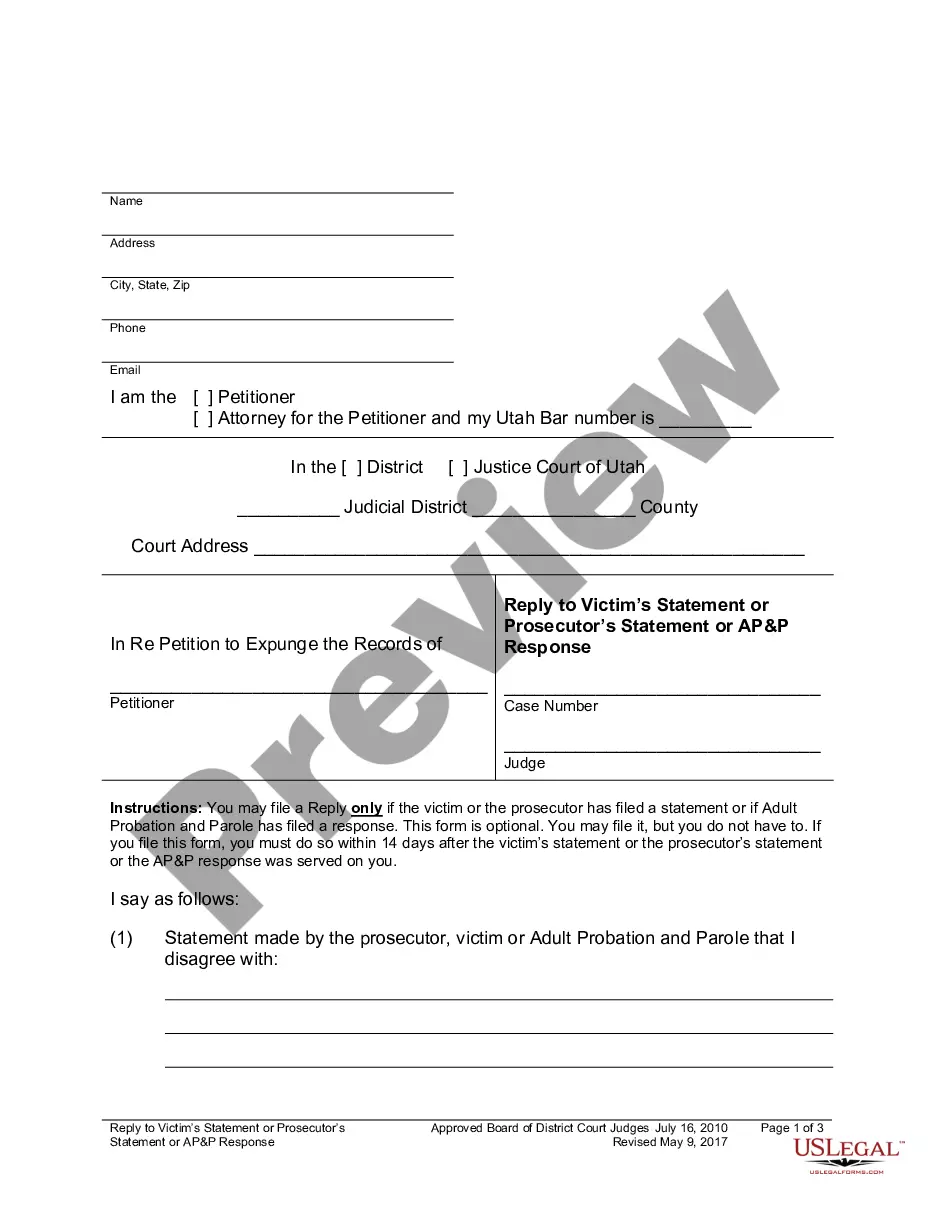
New York Notice of Option for Recording
Understanding this form
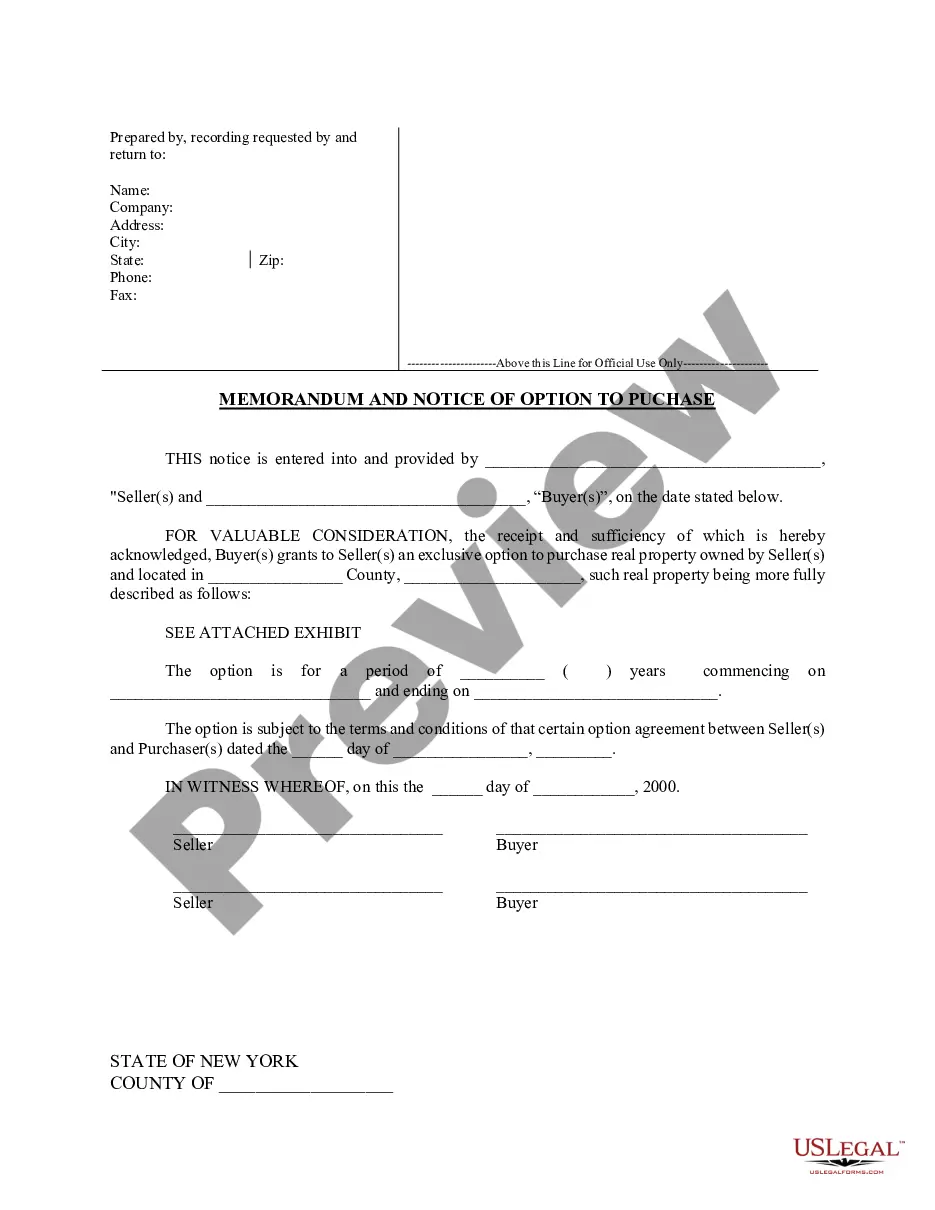
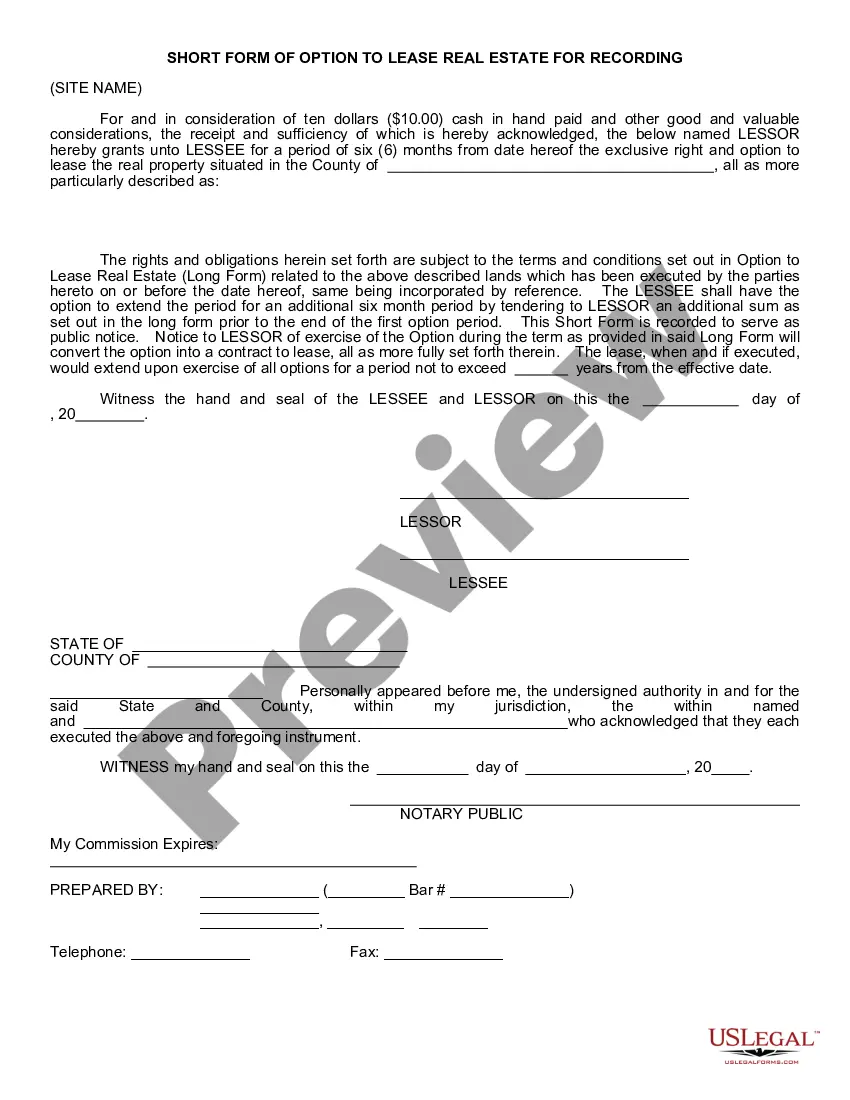
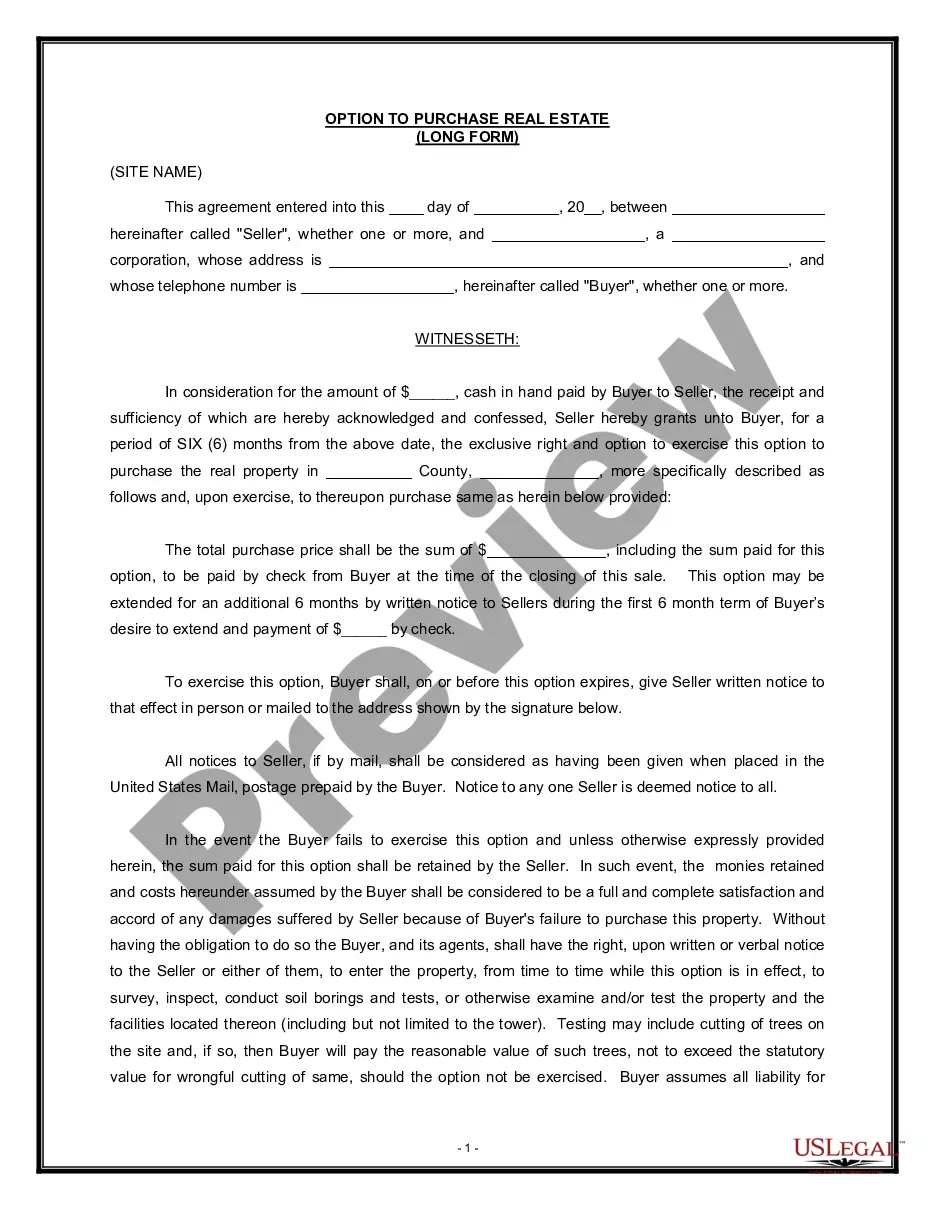
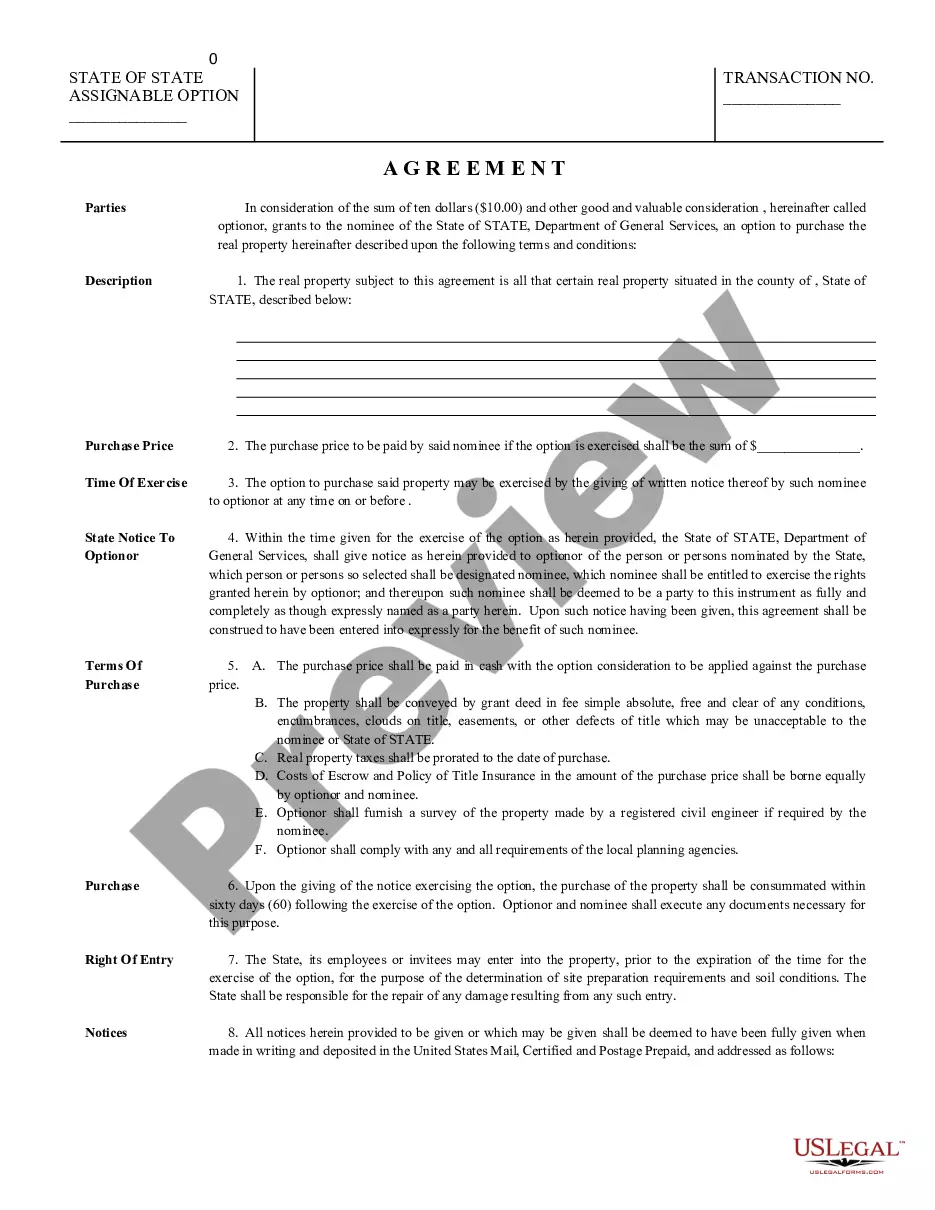
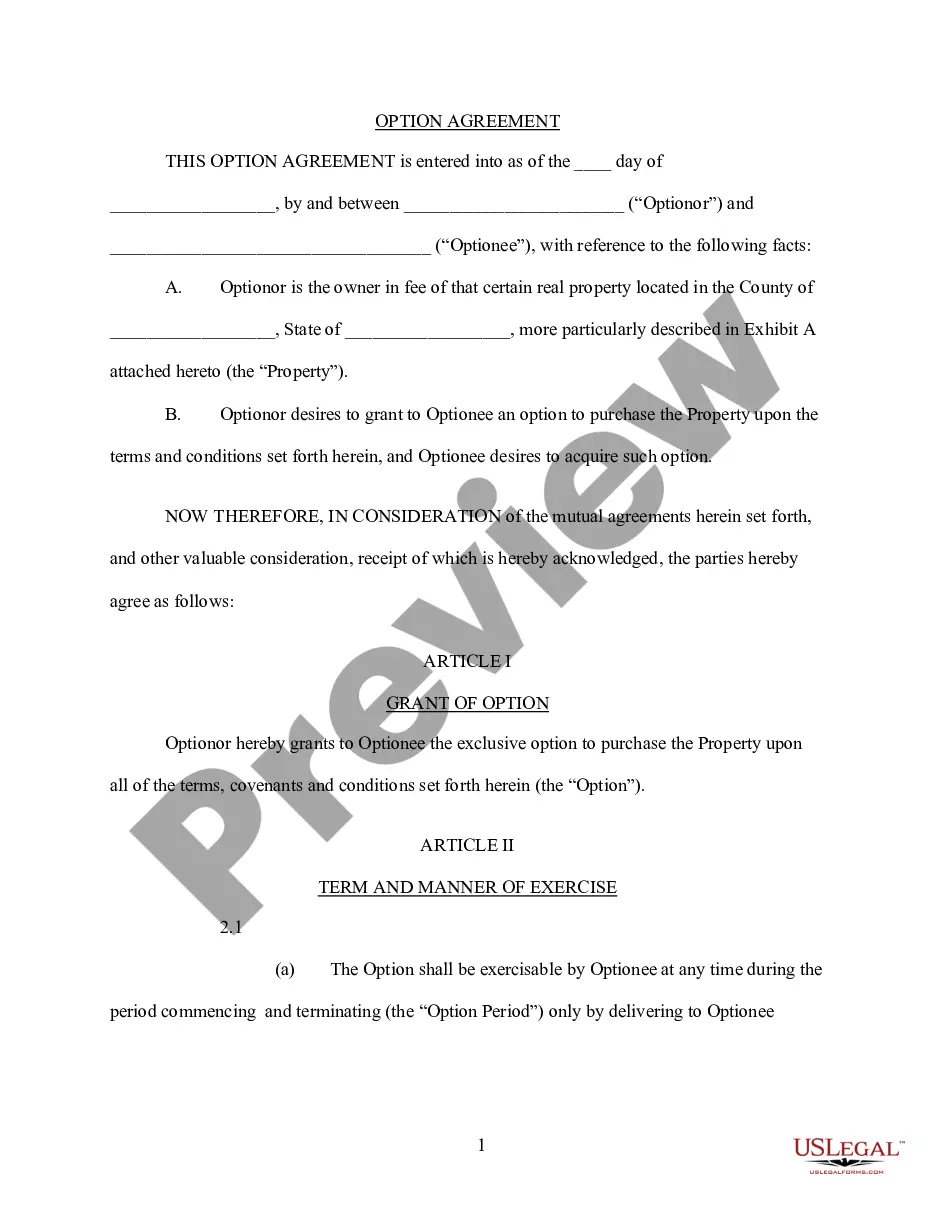
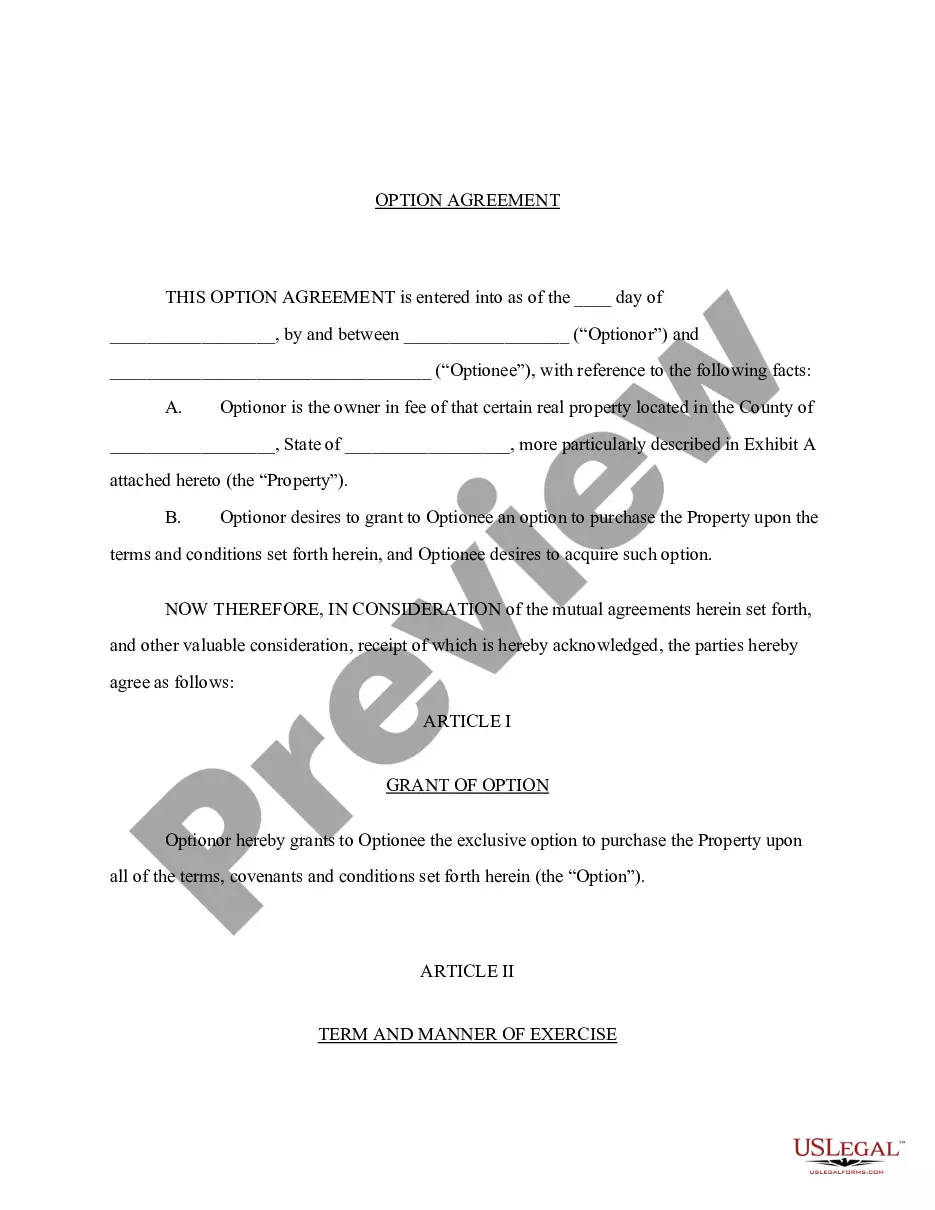
The Notice of Option for Recording is a legal document that notifies interested parties that an option to purchase a specific parcel of real estate exists. This form provides a summary of the agreement without requiring the entire Option Agreement to be recorded, making it a practical choice for buyers and sellers in real estate transactions.
What’s included in this form
- Parties involved: Identification of sellers and buyers.
- Property description: Detailed identification of the real estate in question.
- Option duration: Specifies the time frame during which the option to purchase is valid.
- Reference to the original option agreement: Linking to the underlying document containing detailed terms.
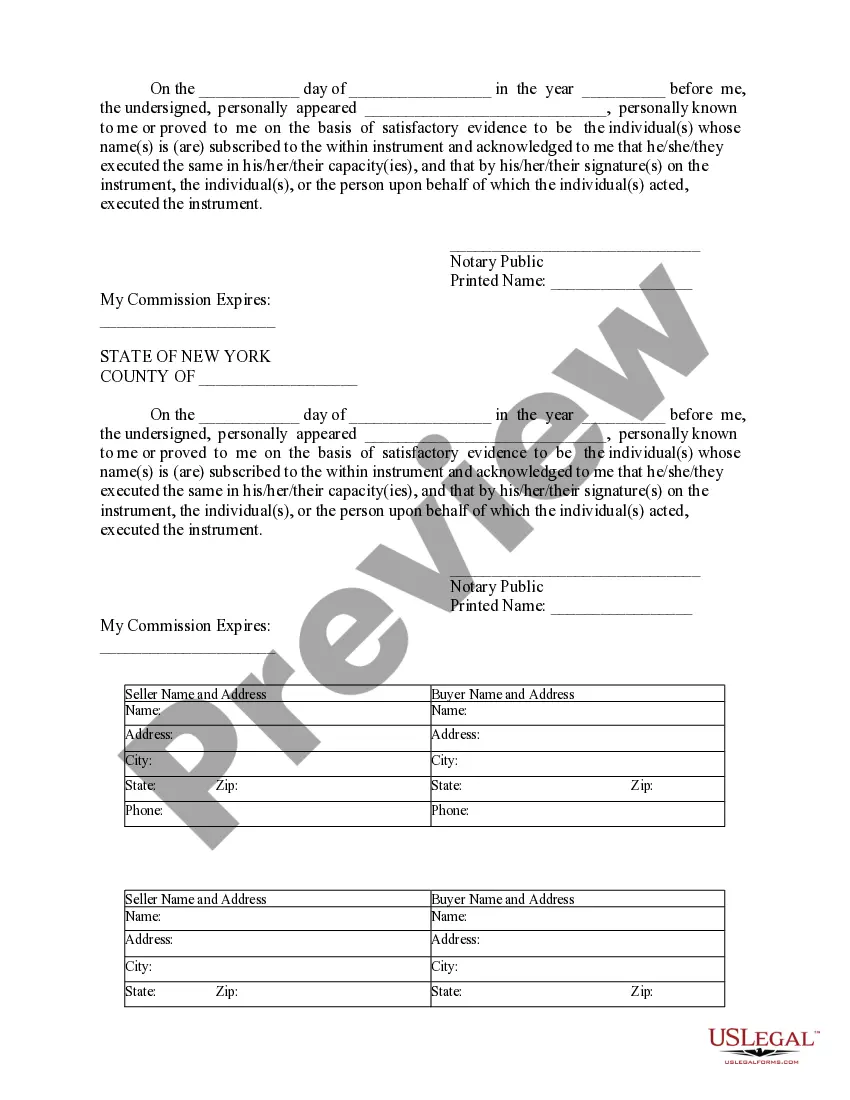
- Execution details: Signatures of all relevant parties and acknowledgment by a notary public.
When to use this document
This form should be used when a seller grants a buyer an exclusive option to purchase real estate. It is useful when the parties want to ensure public notice of the option without disclosing all terms in the original agreement. This is often applicable in scenarios where buyers wish to reserve property while finalizing financing or conducting due diligence.
Who should use this form
- Real estate sellers who want to secure their interest in a property.
- Potential buyers looking to establish a formal option to purchase real estate.
- Real estate agents or brokers assisting buyers and sellers in formalizing their agreements.
- Parties involved in real estate contracts who need an effective way to file notice of their agreements.
Instructions for completing this form
- Identify the parties: Enter the names of the sellers and buyers involved.
- Specify the property: Provide a detailed description of the real estate, referencing any attached exhibits.
- Enter the option duration: Fill in the start and end dates for the option period.
- Link to the option agreement: Include the date of the original option agreement for reference.
- Gather signatures: All parties must sign the document in the presence of a notary public.
Is notarization required?
Yes, this form must be notarized to be legally valid. Each signature must be acknowledged by a notary public to ensure authenticity and enforceability of the agreement.
Get your form ready online
Our built-in tools help you complete, sign, share, and store your documents in one place.
Make edits, fill in missing information, and update formatting in US Legal Forms—just like you would in MS Word.
Download a copy, print it, send it by email, or mail it via USPS—whatever works best for your next step.
Sign and collect signatures with our SignNow integration. Send to multiple recipients, set reminders, and more. Go Premium to unlock E-Sign.
If this form requires notarization, complete it online through a secure video call—no need to meet a notary in person or wait for an appointment.
We protect your documents and personal data by following strict security and privacy standards.

Make edits, fill in missing information, and update formatting in US Legal Forms—just like you would in MS Word.

Download a copy, print it, send it by email, or mail it via USPS—whatever works best for your next step.

Sign and collect signatures with our SignNow integration. Send to multiple recipients, set reminders, and more. Go Premium to unlock E-Sign.

If this form requires notarization, complete it online through a secure video call—no need to meet a notary in person or wait for an appointment.

We protect your documents and personal data by following strict security and privacy standards.
Common mistakes
- Failing to accurately describe the property can lead to confusion or disputes.
- Not specifying the duration of the option may render the agreement ineffective.
- Omitting signatures or notary acknowledgments can invalidate the form.
Advantages of online completion
- Convenience: Download and complete the form anytime, from anywhere.
- Editability: Easy to modify details as necessary before finalization.
- Reliability: Templates are prepared by licensed attorneys, ensuring legal compliance.
Looking for another form?


Form popularity
FAQ
1. C Explanation: Recording an instrument provides constructive notice to the public of the interest set forth in the recorded instrument. 2. A Explanation: A corporate seal may be added where a corporation is grantor, in order to indicate that the person who signed had authority to sign on behalf of the corporation.
Fill in the deed form. Print it out. Have the grantor(s) sign and get the signature(s) notarized. Complete a transfer tax form, Form TP-584. Complete and print out Form RP-5217 (or, if you are in New York City, Form RP-5217NYC).
For a quitclaim deed to be valid, it has to be recorded at the county recorder's office in the county where the property is located. If you're using an attorney, paralegal or title company to handle the transaction for you, they will take care of this.
Record New Document You can record property-related documents in person or online. To register a document, you must create a cover page in ACRIS, and submit document, supporting documents, and pay fees and taxes (if necessary). Learn more about recording documents, including required documentation and fees online.
Q: Is it required in New York for a deed to be recorded in order it should be valid? A: An unrecorded deed is valid between the parties in it, but third parties are not bound, and any recording done before the deed is recorded has priority.
TheLaw.com Law Dictionary & Black's Law Dictionary 2nd Ed. Publicly taking note or acknowledging the claim of another person with regard to real estate, such as the filing and recording of a deed.
V. Nicholas,1 the Appellate Division, Second Department reaffirmed that the state of New York is a race-notice jurisdiction, in which the deed or mortgage recorded first, without notice of any other deed or mortgage, will obtain priority (Real Property Law §291).
Failure to record a deed effectively makes it impossible for the public to know about the transfer of a property. That means the legal owner of the property appears to be someone other than the buyer, a situation that can generate serious ramifications.
New York Wiretapping LawNew York's wiretapping law is a "one-party consent" law. New York makes it a crime to record to record or eavesdrop on an in-person or telephone conversation unless one party to the conversation consents. N.Y.