Revocation of HIPAA Authorization
Overview of this form
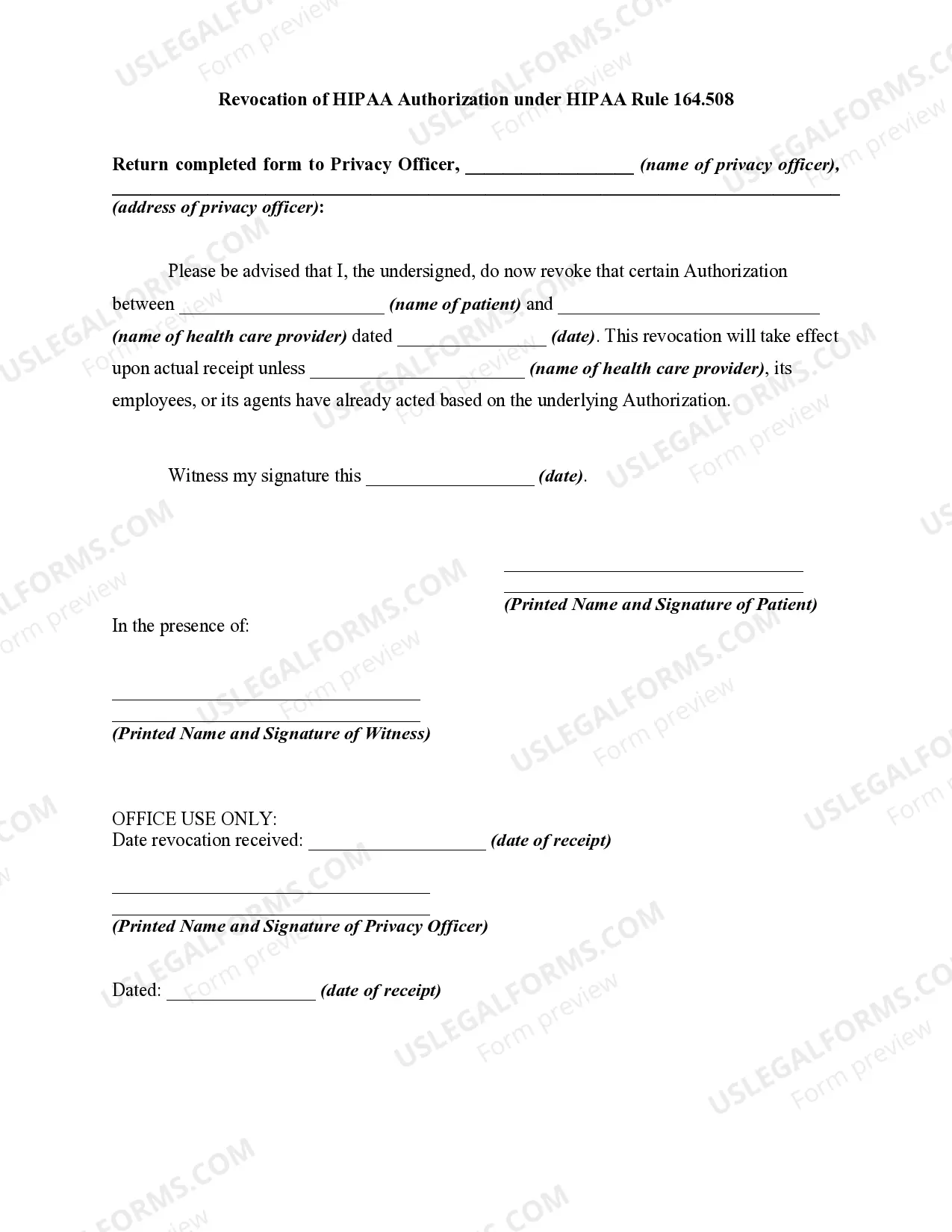
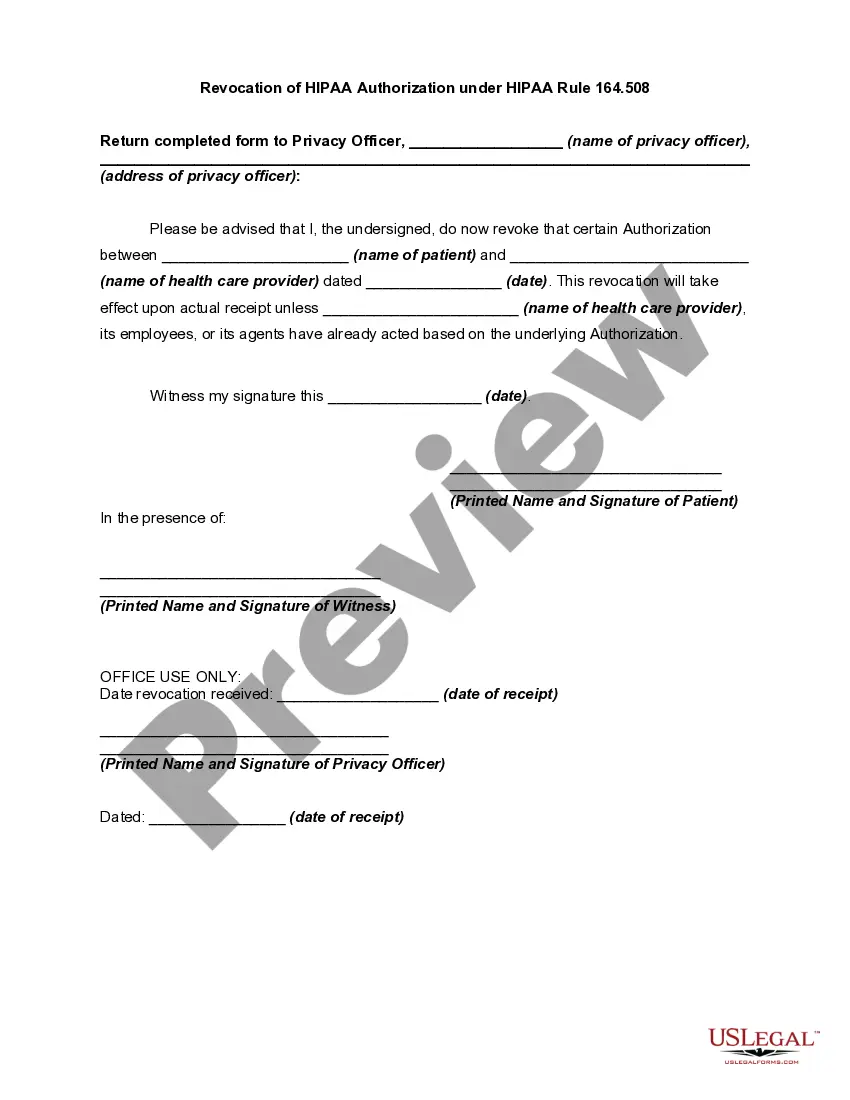
The Revocation of HIPAA Authorization is a legal document that allows individuals to officially revoke permission they previously granted for their health care provider to access or disclose their protected health information. This form is crucial for individuals who wish to ensure their personal health information is no longer shared, differentiating it from an initial authorization form. It is important to complete this revocation properly to avoid any unintended disclosures of sensitive health information.
Main sections of this form
- Name of the individual revoking authorization.
- Name of the health care provider who originally received authorization.
- Date the original authorization was signed.
- Date the revocation takes effect.
When to use this document
This form should be used when an individual decides to withdraw their consent for a health care provider to share their health information. Common scenarios include changing providers, concerns about privacy, or wanting to limit information sharing for any reason. It is also applicable if the individual feels their health information is no longer needed to be shared or if they wish to ensure their preferences are respected.
Who should use this form
- Patients who have previously authorized a health care provider to access their health information.
- Individuals concerned about the privacy of their medical records.
- Anyone who wants to limit the disclosures of their health information under HIPAA.
- Patients changing their health care provider.
How to complete this form
- Enter the name of the patient who is revoking the authorization.
- Specify the name of the health care provider from whom the authorization is being revoked.
- Write the date on which the original authorization was signed.
- Provide the date the revocation will take effect.
- Sign the form and print the name of the individual revoking authorization.
- Obtain the signature and printed name of a witness to the revocation.
Does this form need to be notarized?
This form does not typically require notarization to be legally valid. However, some jurisdictions or document types may still require it. US Legal Forms provides secure online notarization powered by Notarize, available 24/7 for added convenience.
Get your form ready online
Our built-in tools help you complete, sign, share, and store your documents in one place.
Make edits, fill in missing information, and update formatting in US Legal Forms—just like you would in MS Word.
Download a copy, print it, send it by email, or mail it via USPS—whatever works best for your next step.
Sign and collect signatures with our SignNow integration. Send to multiple recipients, set reminders, and more. Go Premium to unlock E-Sign.
If this form requires notarization, complete it online through a secure video call—no need to meet a notary in person or wait for an appointment.
We protect your documents and personal data by following strict security and privacy standards.

Make edits, fill in missing information, and update formatting in US Legal Forms—just like you would in MS Word.

Download a copy, print it, send it by email, or mail it via USPS—whatever works best for your next step.

Sign and collect signatures with our SignNow integration. Send to multiple recipients, set reminders, and more. Go Premium to unlock E-Sign.

If this form requires notarization, complete it online through a secure video call—no need to meet a notary in person or wait for an appointment.

We protect your documents and personal data by following strict security and privacy standards.
Avoid these common issues
- Failing to provide the correct name of the health care provider.
- Not including the date of the original authorization.
- Leaving fields blank, especially the date on which the revocation takes effect.
- Not obtaining a witness signature, if required.
Benefits of using this form online
- Convenience of immediate access and download.
- Editable templates allow customization to meet individual needs.
- Peace of mind knowing the form is drafted by licensed attorneys.
- Fast and secure process from completion to submission.
Legal use & context
- This revocation form must be delivered to the designated Privacy Officer to ensure proper processing.
- The revocation takes effect upon the health care provider's receipt, unless the provider has already acted based on the prior authorization.
Quick recap
- The Revocation of HIPAA Authorization is essential for controlling the flow of sensitive health information.
- Correctly completing the form protects your privacy rights under HIPAA regulations.
- Always confirm the specific submission requirements of your health care provider.
Looking for another form?
Form popularity
FAQ
When revocation happens, a privilege, title, or status is removed from someone. If the library revokes your library card, you can no longer take out library books ? that's a type of revocation. If a restaurant is dirty, that could result in the revocation of its health license.
Yes. The Privacy Rule gives individuals the right to revoke, at any time, an Authorization they have given. The revocation must be in writing, and is not effective until the covered entity receives it.
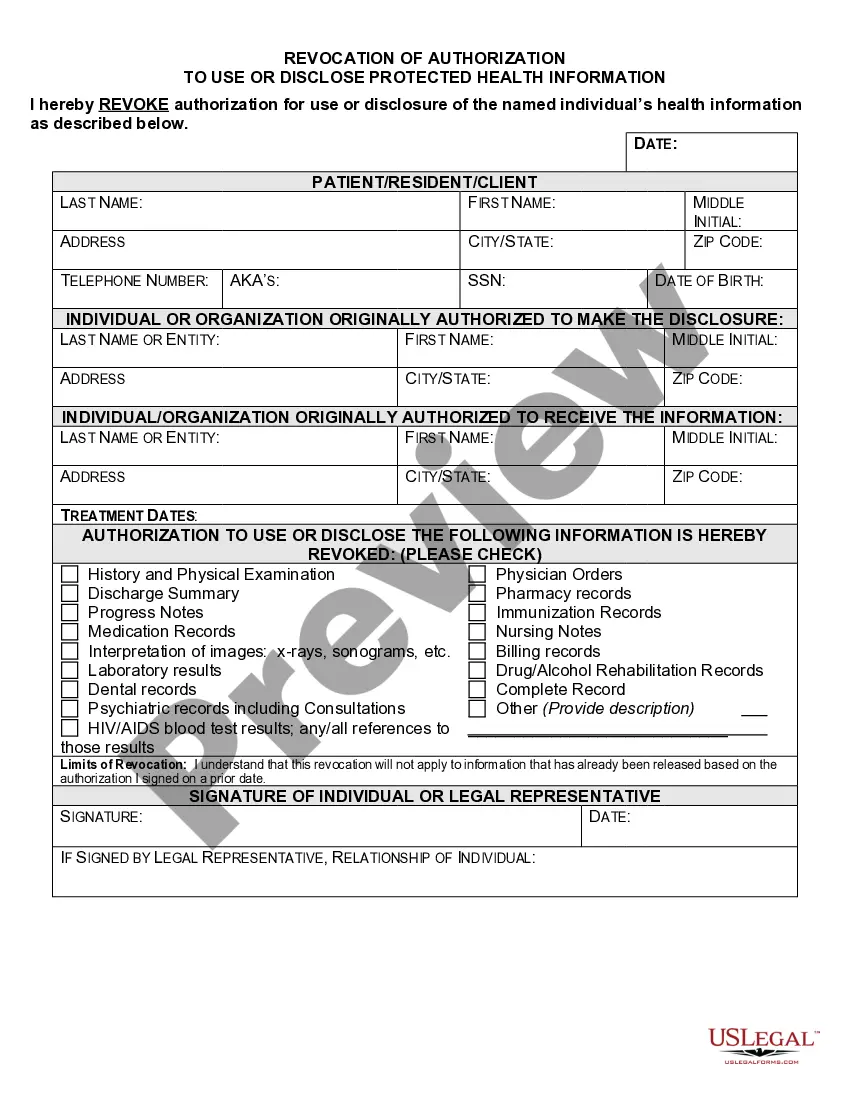
Related Definitions Revoke this consent means that the client must write a statement stating he/she revokes an individual item or the entire consent, then sign and date it. This may be done right on the consent form. The date is important so information already disclosed about an item is covered.
The Privacy Rule gives individuals the right to revoke, at any time, an Authorization they have given. The revocation must be in writing, and is not effective until the covered entity receives it.
Refusing to sign the acknowledgement does not prevent a provider or plan from using or disclosing health information as HIPAA permits. If you refuse to sign the acknowledgement, the provider must keep a record of this fact.
Employers and medical examiners should remember that the Privacy Rule requires that all Authorizations must clearly state the individual's right to revoke; and the process for revocation must either be set forth clearly on the Authorization itself, or if the covered entity creates the Authorization, and its Notice of
Tell the company that you are taking away your permission for the company to take automatic payments out of your bank account. This is called ?revoking authorization.? If you decide to call, be sure to send the letter after you call and keep a copy for your records.
The revocation, however, cannot be accepted verbally, but must be in writing. In addition, the written revocation is not effective until the covered entity receives it.