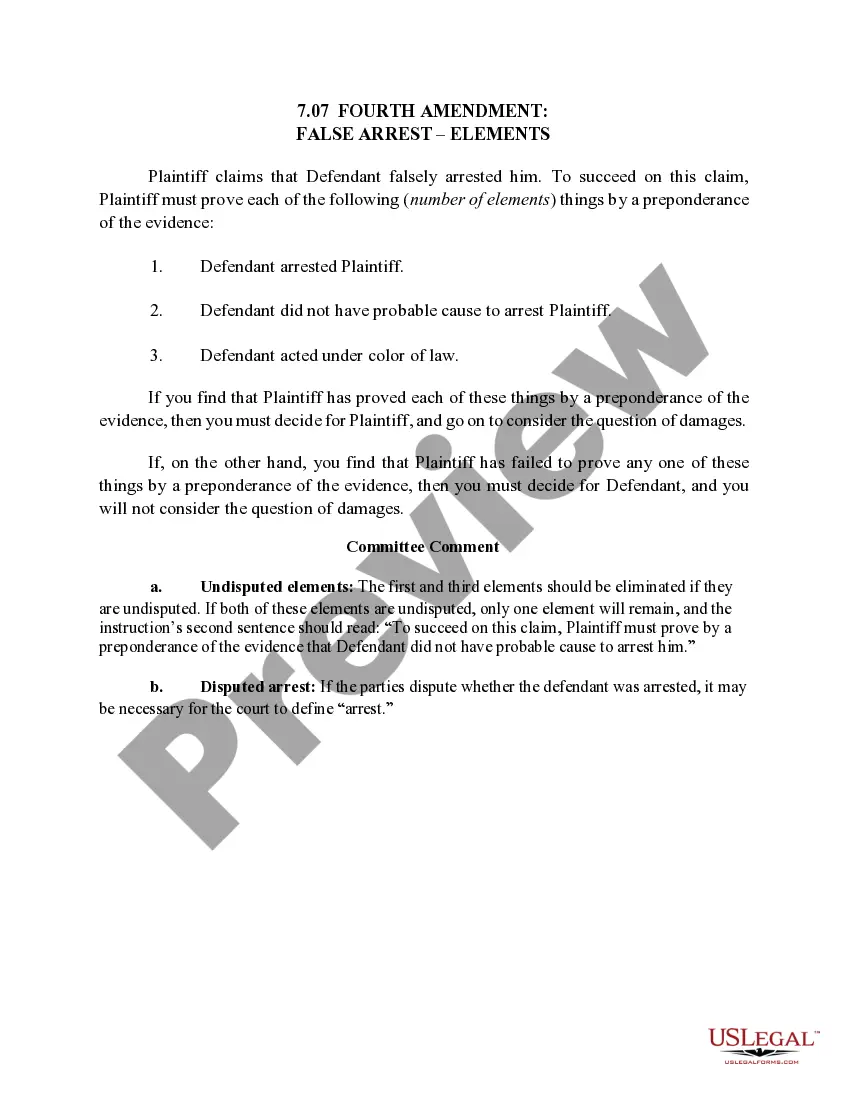
New York Revocable Living Trust for Husband and Wife with No Children
What is this form?
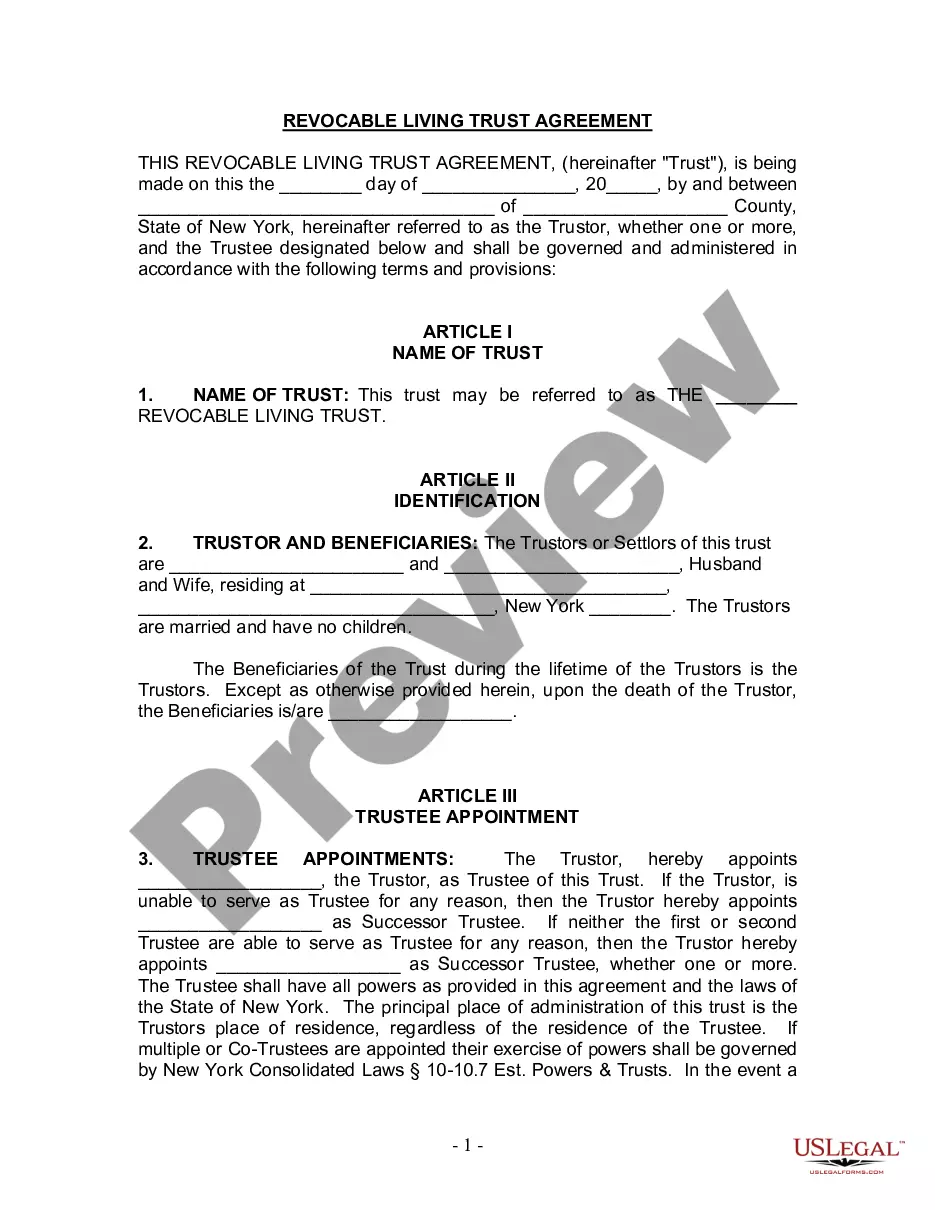
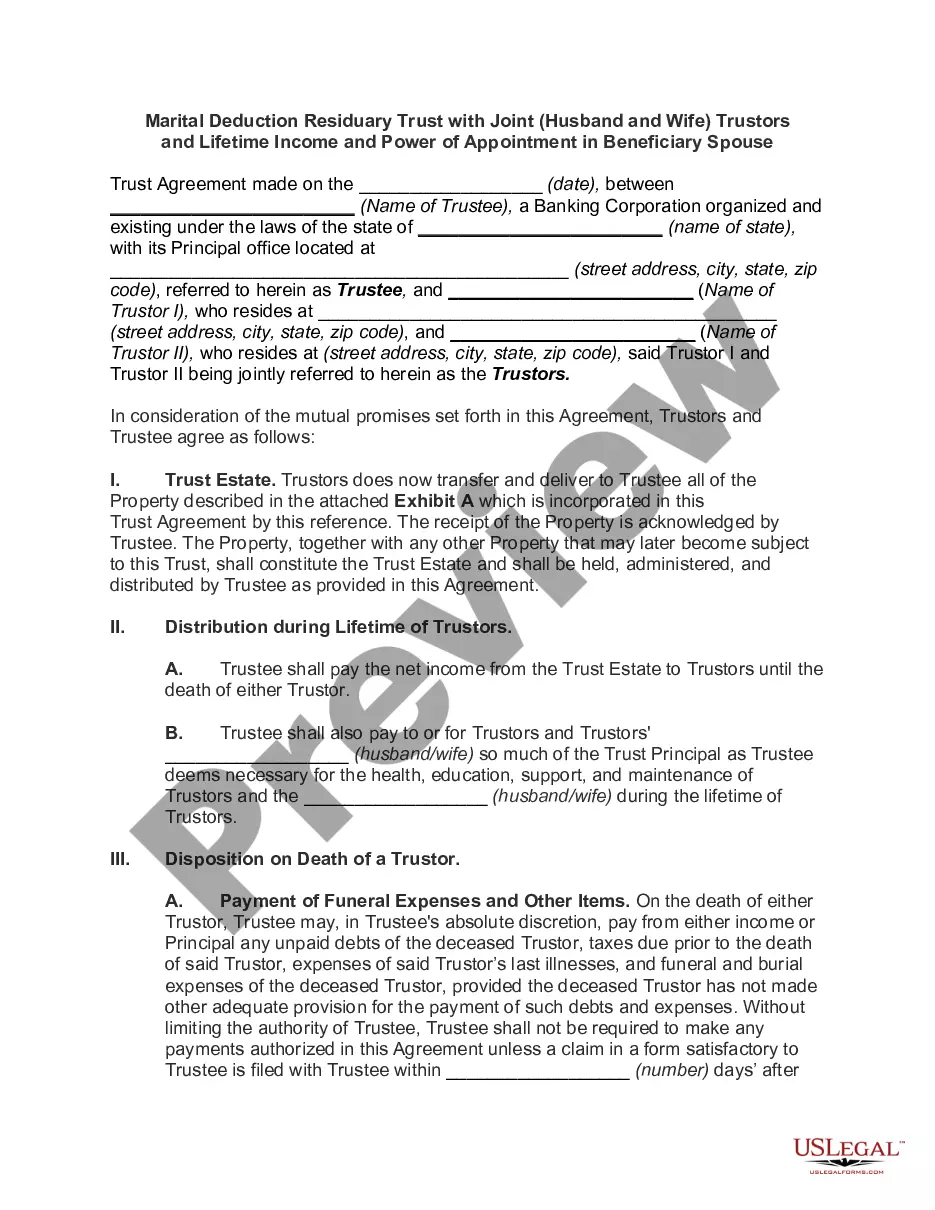
The Revocable Living Trust for Husband and Wife with No Children is a legal document that creates a living trust specifically designed for married couples without children. This trust allows the couple to manage their assets during their lifetime and ensures that their assets are distributed according to their wishes after death, bypassing the probate process. Unlike other trusts, this document caters specifically to the needs of spouses who do not have children, simplifying estate planning while maintaining control over their assets.
What’s included in this form
- Trustor and Trustee Information: Identifies the husband and wife as the trustors and appoints a trustee to manage the trust.
- Name of Trust: Specifies the title of the trust.
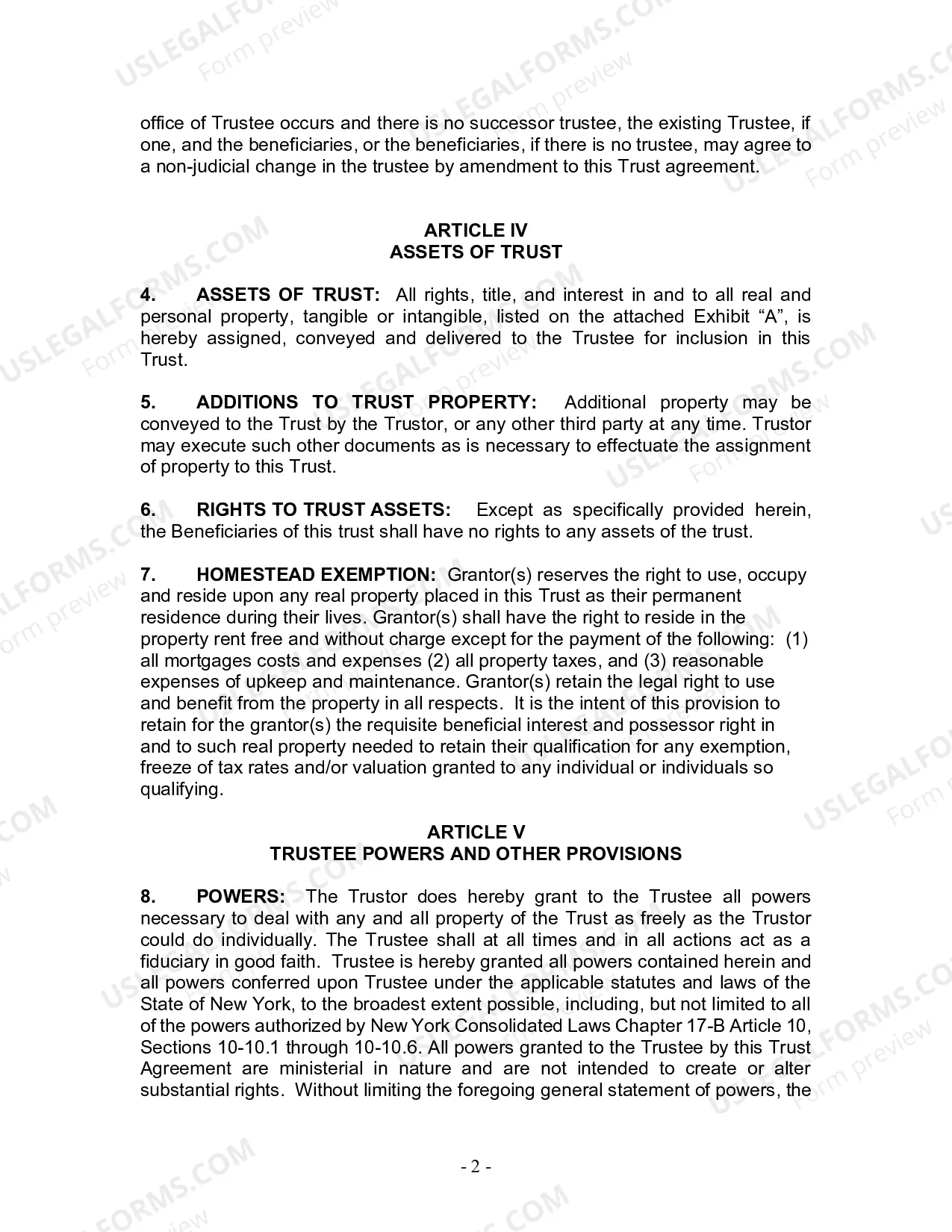
- Assets of the Trust: Details the property being placed into the trust and the rights associated with it.
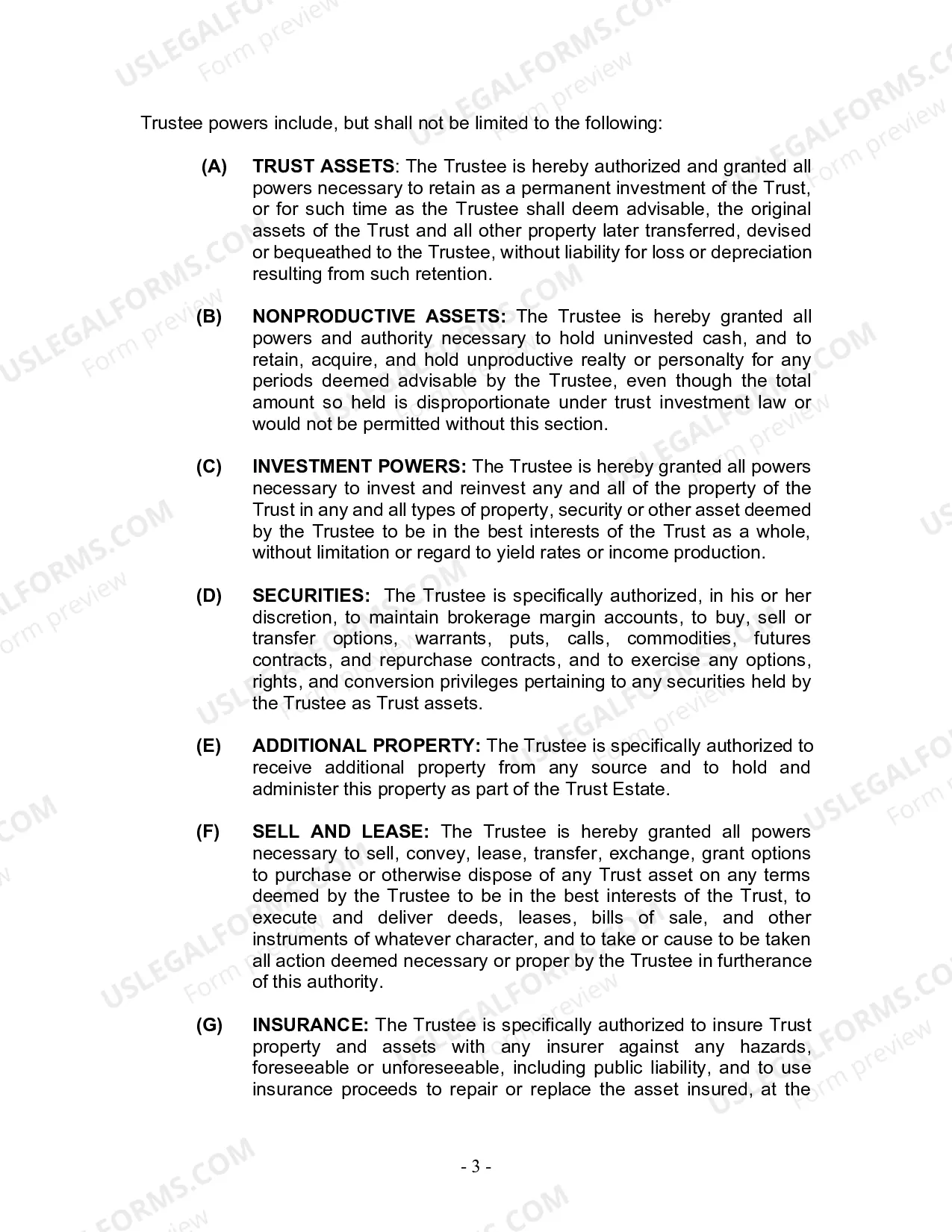
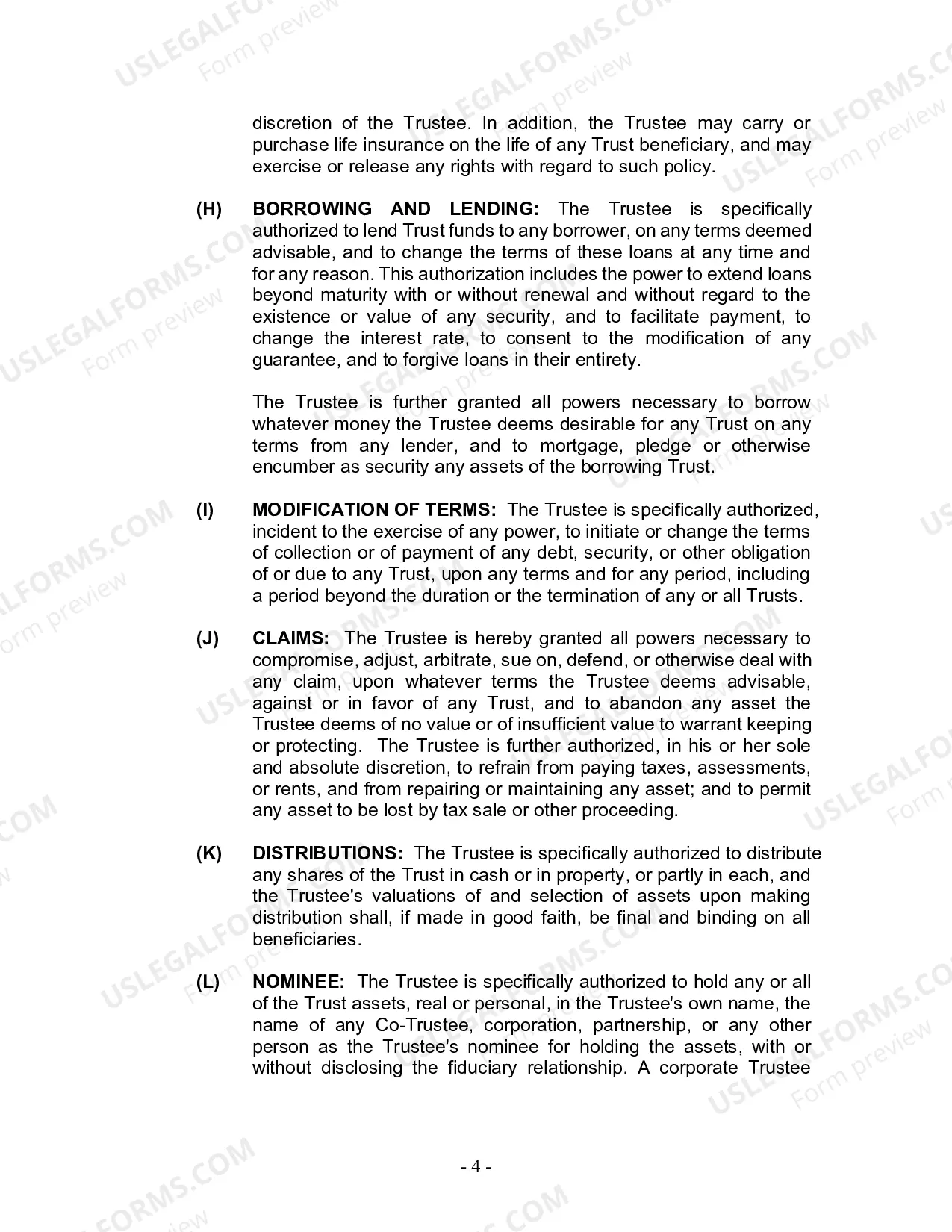
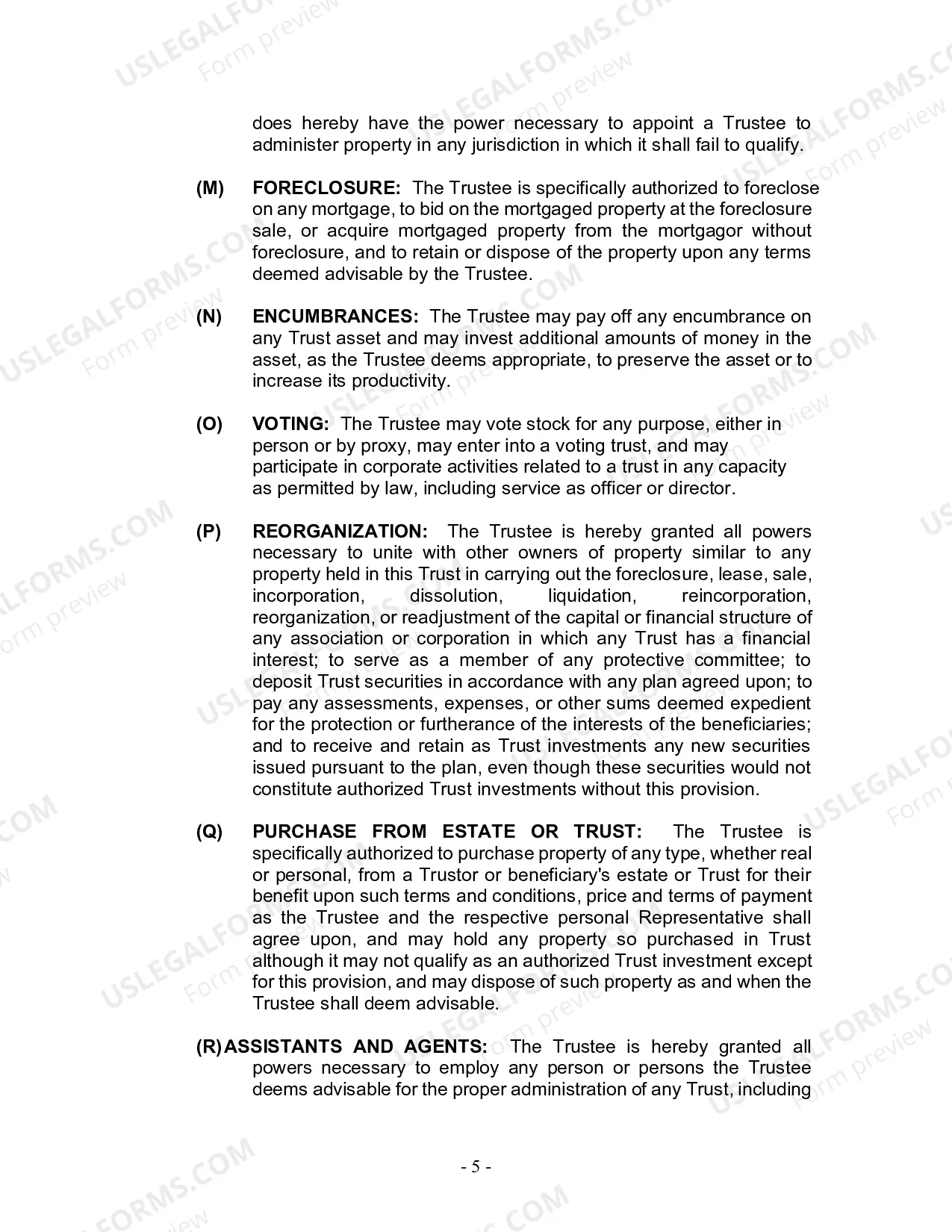
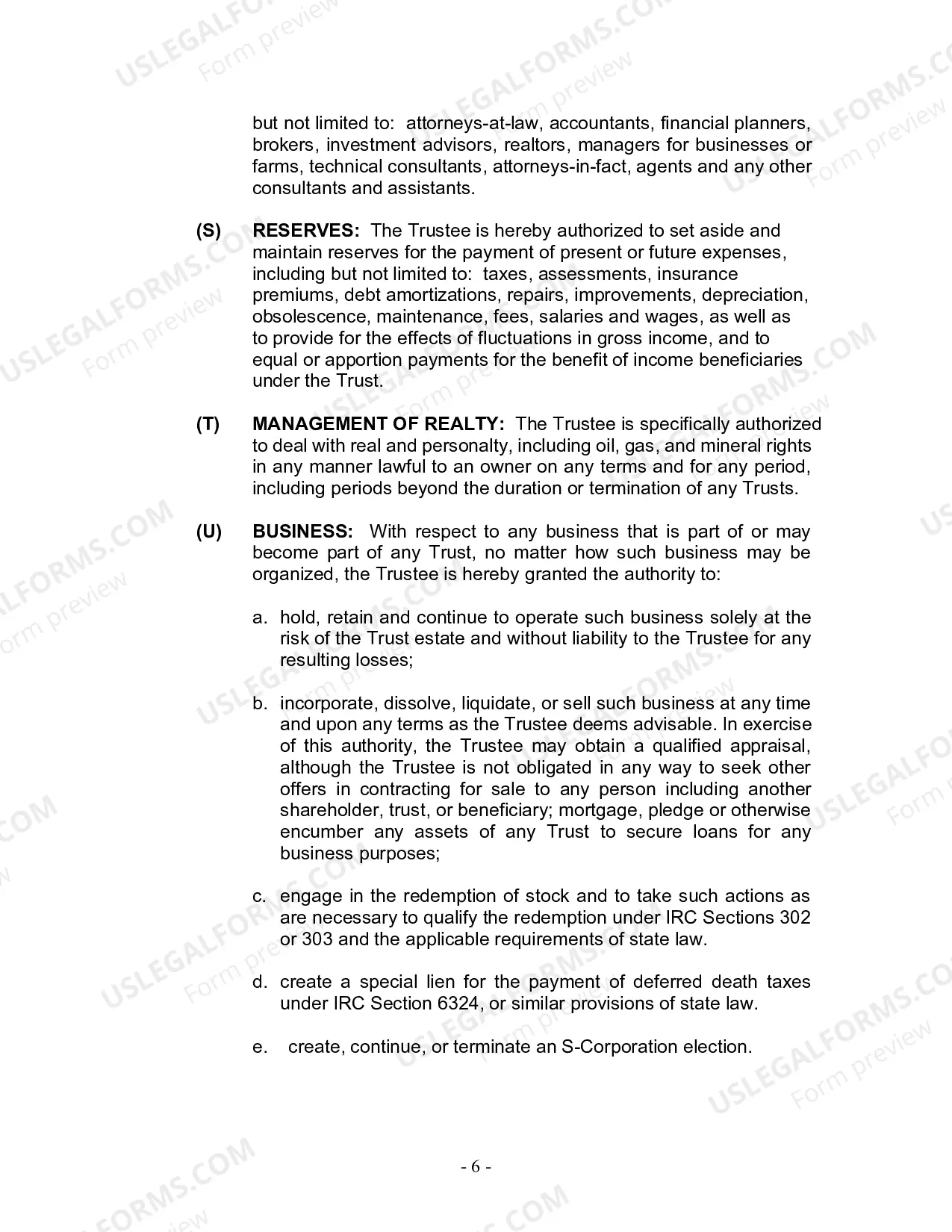
- Trustee Powers: Outlines the powers granted to the trustee to manage trust assets effectively.
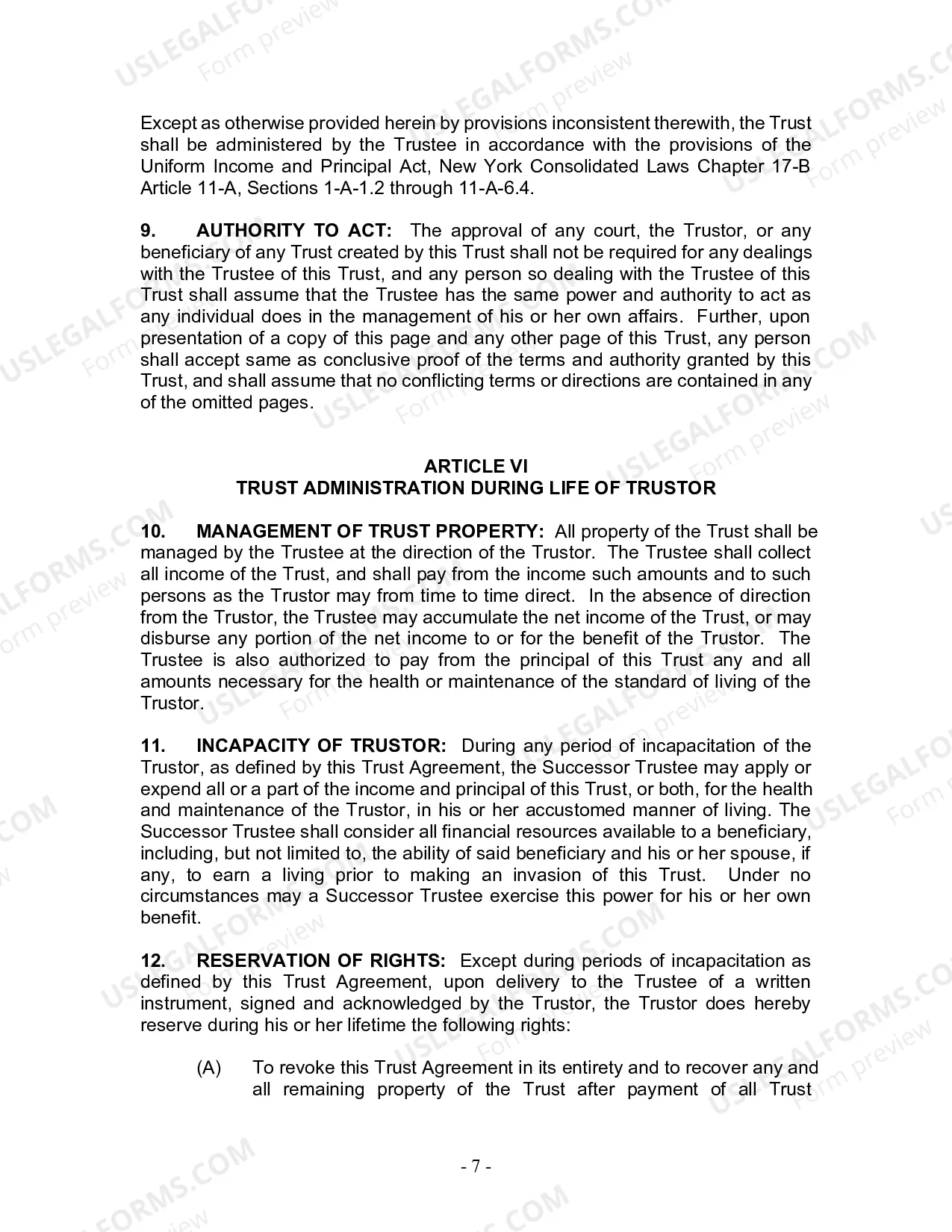
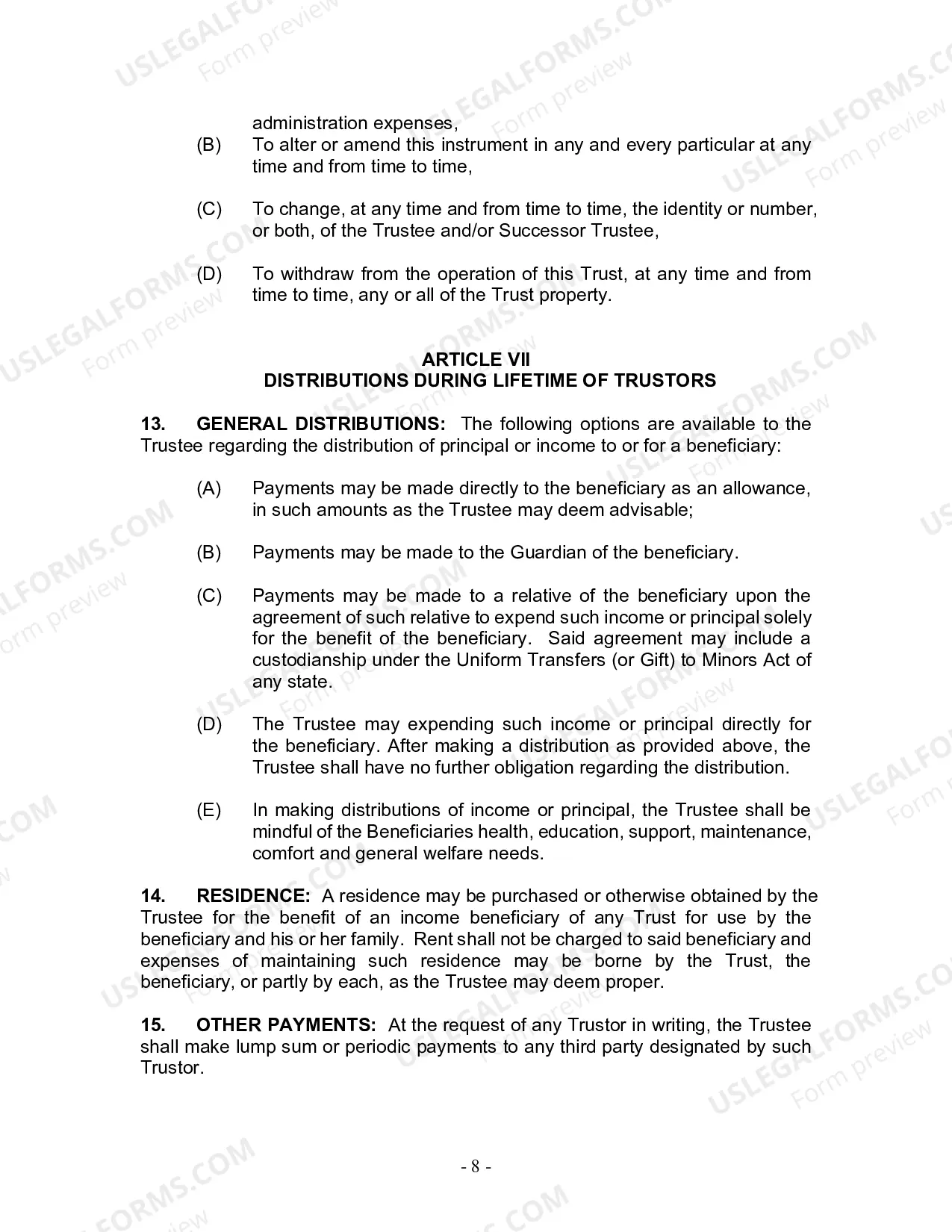
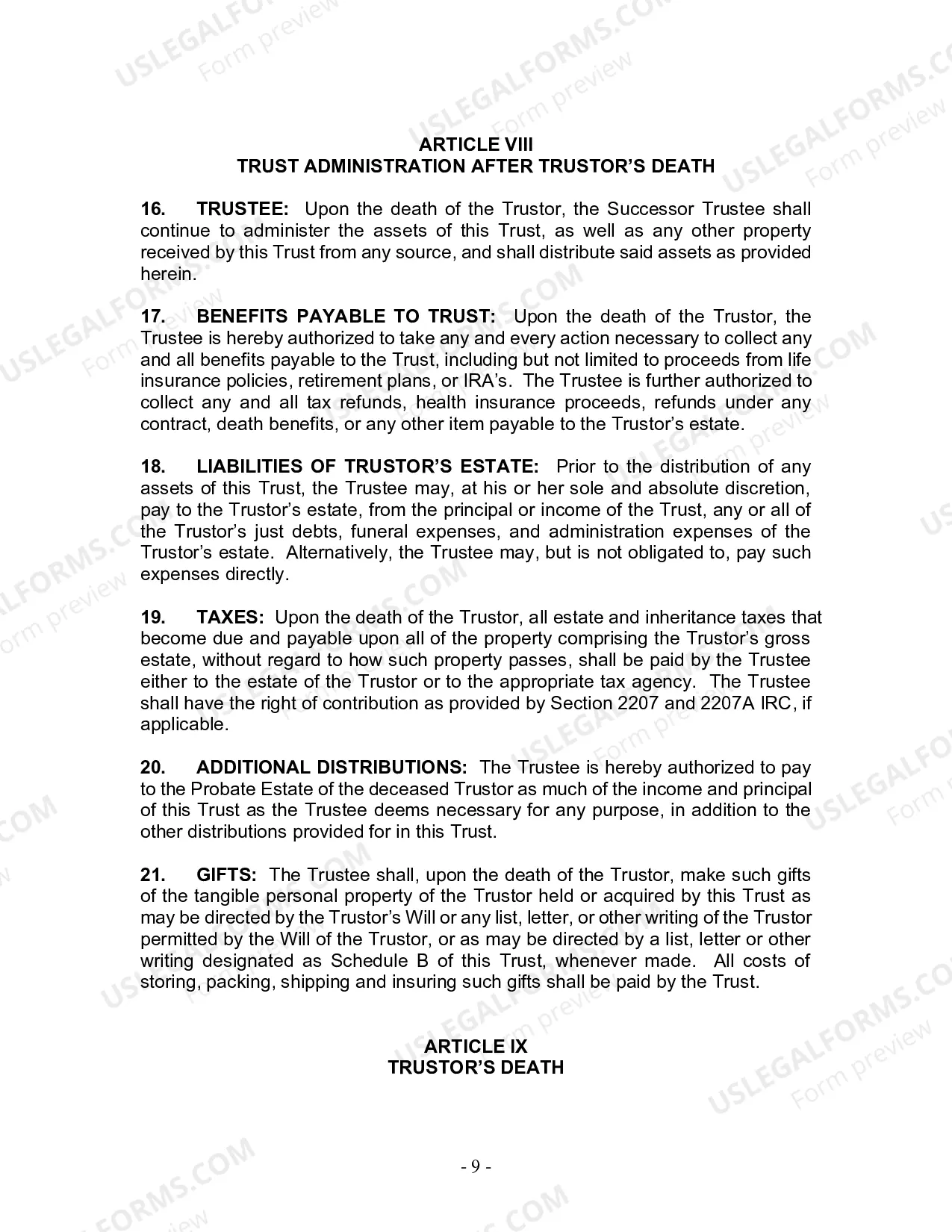
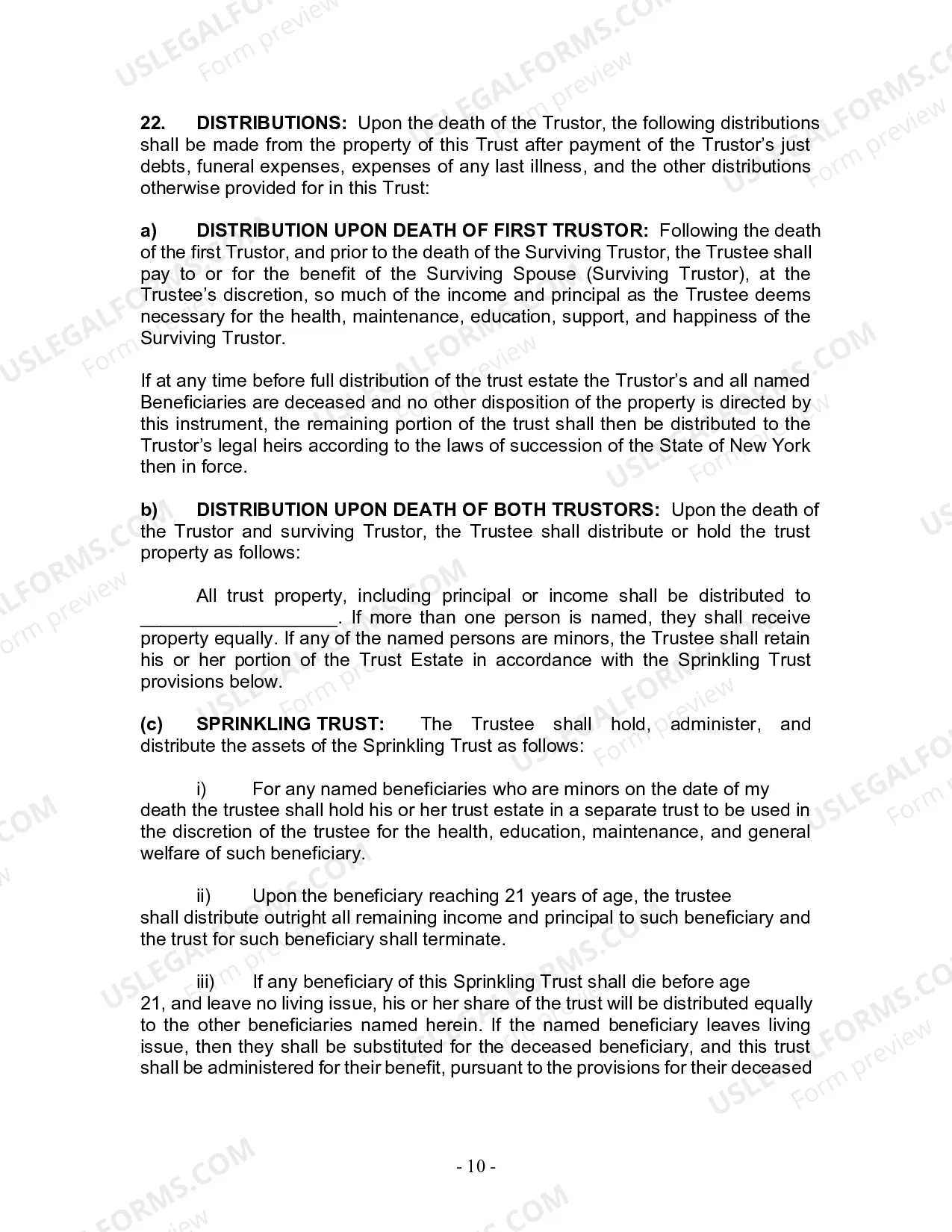
- Distribution of Assets: Describes how assets will be handled during the lifetime and after the death of the trustors.





When to use this document
This form is ideal when a married couple wishes to establish a straightforward estate plan that allows them to manage their assets during their lifetime and ensures that these assets are passed on smoothly after their passing. It is particularly suitable for couples who want to avoid the complexities and delays associated with probate, and it provides clarity regarding the distribution of their assets.
Who can use this document
This form is intended for:
- Married couples without children who want to create a living trust.
- Couples who wish to manage their assets during their lives and outline the distribution of their estates after death.
- Individuals looking to simplify their estate planning process and avoid probate.
Instructions for completing this form
To complete this form, follow these steps:
- Identify and list the names of both trustors (husband and wife) and their residency information.
- Name the trust and other essential information, including the date of creation.
- Specify the assets to be included in the trust and attach an exhibit detailing these assets.
- Designate a trustee to manage the trust and outline successor trustees if necessary.
- Sign and date the document in the presence of a notary public (if required by state law).
Does this form need to be notarized?
This form does not typically require notarization unless specified by local law.
Get your form ready online
Our built-in tools help you complete, sign, share, and store your documents in one place.
Make edits, fill in missing information, and update formatting in US Legal Forms—just like you would in MS Word.
Download a copy, print it, send it by email, or mail it via USPS—whatever works best for your next step.
Sign and collect signatures with our SignNow integration. Send to multiple recipients, set reminders, and more. Go Premium to unlock E-Sign.
If this form requires notarization, complete it online through a secure video call—no need to meet a notary in person or wait for an appointment.
We protect your documents and personal data by following strict security and privacy standards.

Make edits, fill in missing information, and update formatting in US Legal Forms—just like you would in MS Word.

Download a copy, print it, send it by email, or mail it via USPS—whatever works best for your next step.

Sign and collect signatures with our SignNow integration. Send to multiple recipients, set reminders, and more. Go Premium to unlock E-Sign.

If this form requires notarization, complete it online through a secure video call—no need to meet a notary in person or wait for an appointment.

We protect your documents and personal data by following strict security and privacy standards.
Common mistakes
- Failing to properly list all assets that should be included in the trust.
- Not designating a successor trustee, which can lead to complications later.
- Overlooking the need for signatures or notarization.
- Not reviewing the trust periodically to ensure it reflects current wishes and circumstances.
Advantages of online completion
- Convenient online access allows for easy completion from the comfort of home.
- Document templates are drafted by licensed attorneys to ensure legal validity.
- Downloadable and editable formats make it easy to customize to specific needs.
- Time-efficient as it eliminates the need for attorney consultations for straightforward trusts.
Legal use & context
- This form provides a legally binding method for asset management and distribution.
- The trust becomes effective immediately upon signing, allowing control over assets during the trustors' lifetimes.
- Upon death, the assets avoid probate, leading to a smoother transition to beneficiaries.
What to keep in mind
- A revocable living trust allows married couples to manage their assets and outline how those assets are handled after death.
- It bypasses probate, offering a streamlined process for asset distribution.
- Proper completion and signing of the trust are essential to uphold its validity.
Looking for another form?

Form popularity
FAQ
How Is Next of Kin Determined? To determine next of kin in California, go down the list until someone exists in the category listed.For example, if decedent had no surviving spouse or registered domestic partner, but was survived by adult children, then the adult children would be next of kin.
For a New York resident without a will, a surviving spouse inherits the entire probate estate if there are no children or other descendants. If there are descendants, the surviving spouse gets the first $50,000 and the balance is divided one-half to the spouse and one-half to the decedent's descendants.
New York attorneys commonly charge an individual between $2,000 and $5,000 for a revocable trust, which tends to be simpler than an irrevocable trust.
Typically, when a married couple utilizes a Revocable Living Trust based estate plan, each spouse creates and funds his or her own separate Revocable Living Trust. This results in two trusts. However, in the right circumstances, a married couple may be better served by creating a single Joint Trust.
The term usually means your nearest blood relative. In the case of a married couple or a civil partnership it usually means their husband or wife. Next of kin is a title that can be given, by you, to anyone from your partner to blood relatives and even friends.
When someone dies without a will, their property is distributed according to the New York Estates, Powers and Trusts Law (EPTL).If there is a spouse and no children, the spouse receives 100 percent of the estate. If there is a spouse and children, the spouse receives $50,000 plus half of the balance of the estate.
New York law lists surviving spouses as the first next of kin, followed by surviving children. If the spouse exists without children, then the spouse receives everything. However, if a person dies with a surviving spouse and children, then the spouse inherits the first $50,000 and half of the remaining property.
Joint trusts are easier to fund and maintain.In a joint trust, after the death of the first spouse, the surviving spouse has complete control of the assets. When separate trusts are used, the deceased spouses' trust becomes irrevocable and the surviving spouse has limited control over assets.