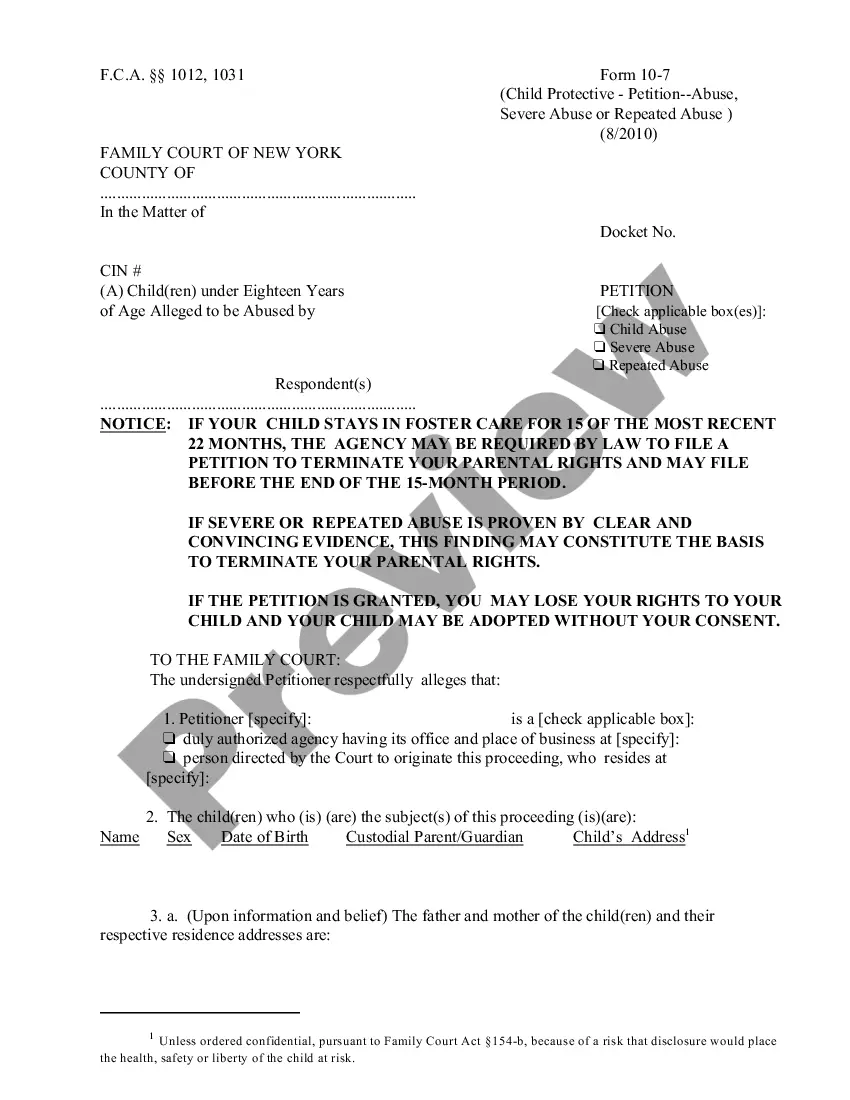
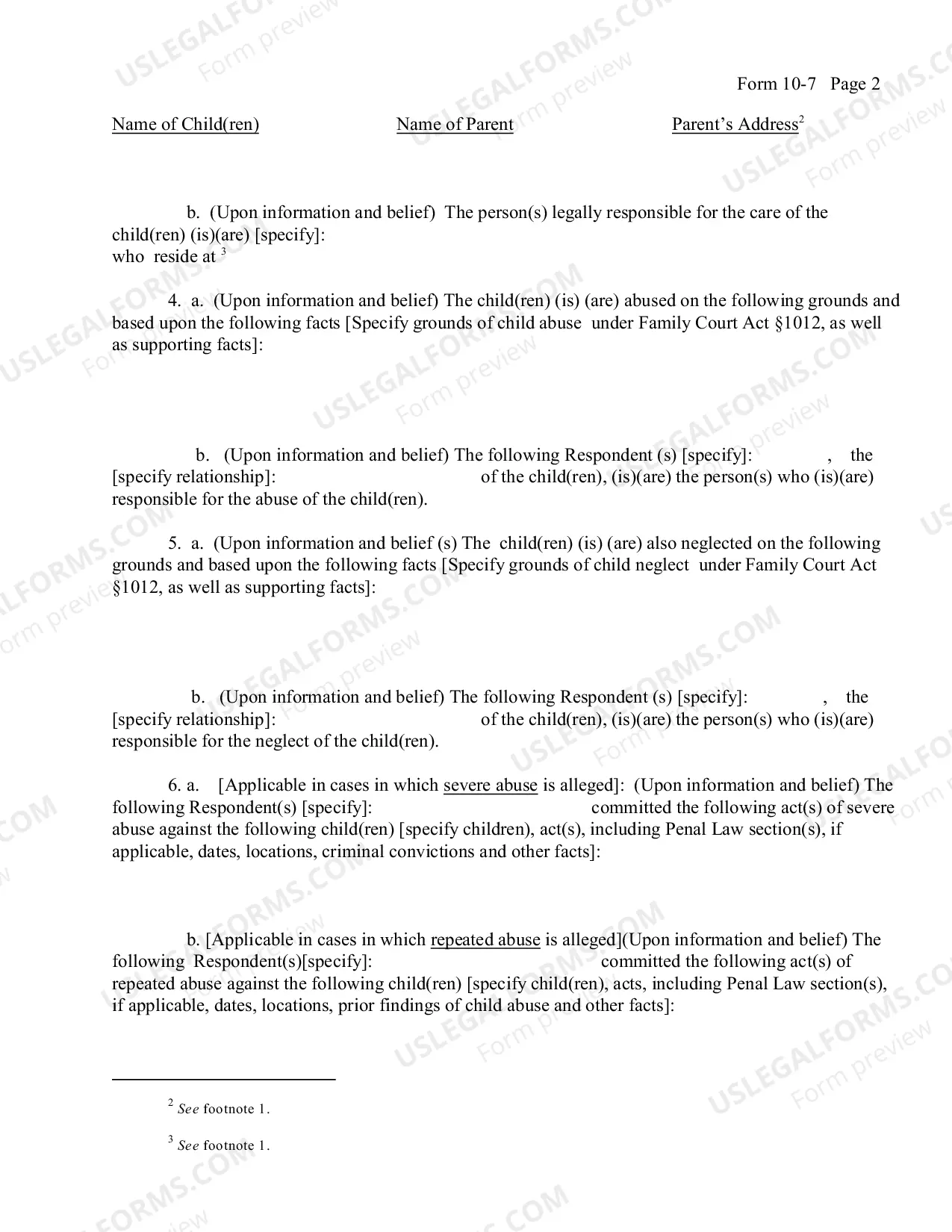
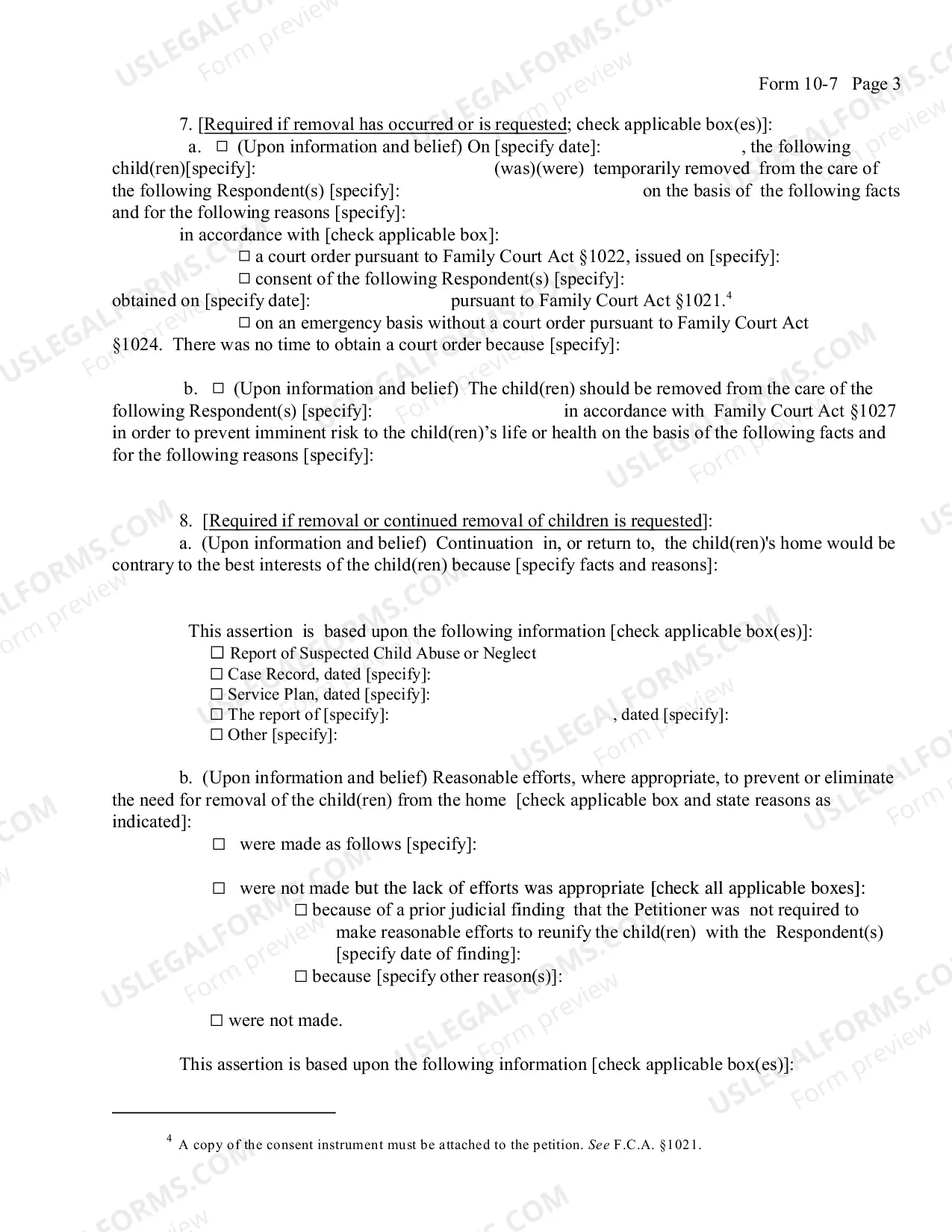
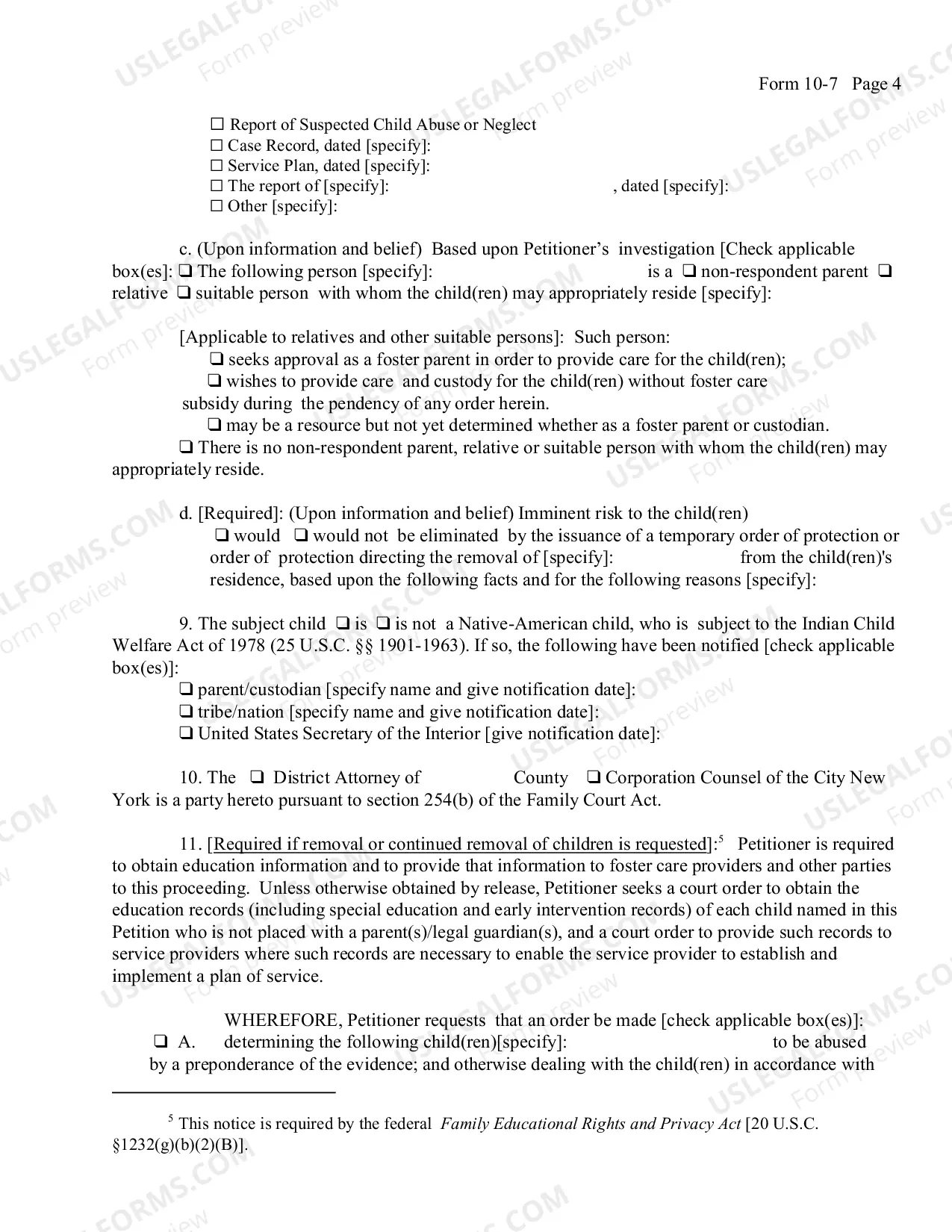
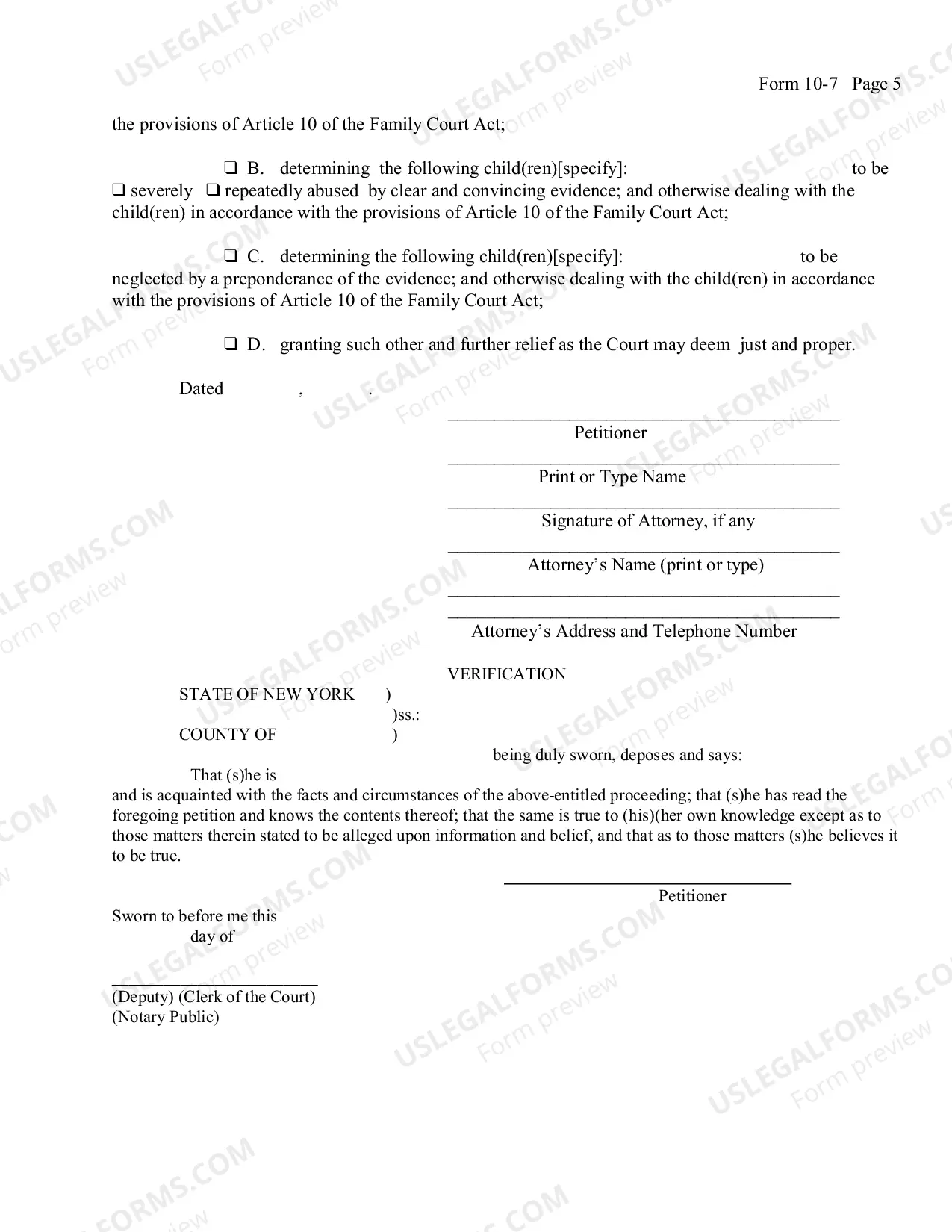
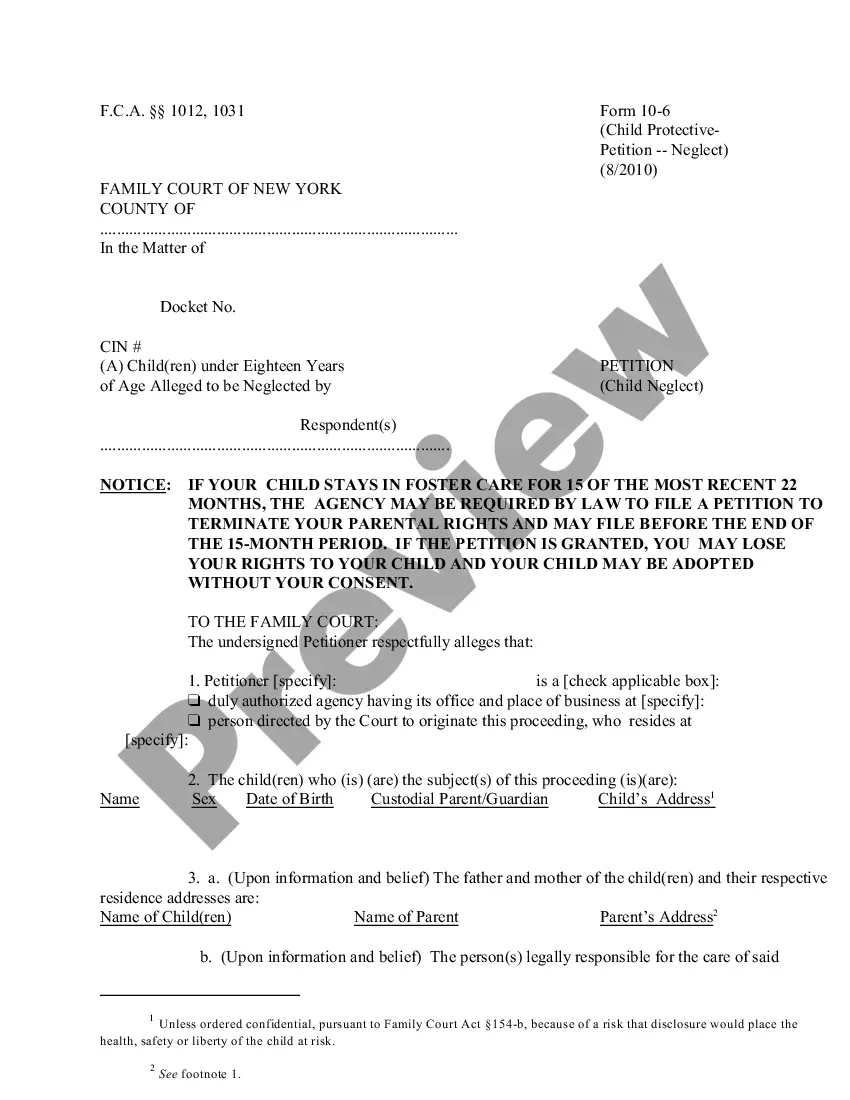
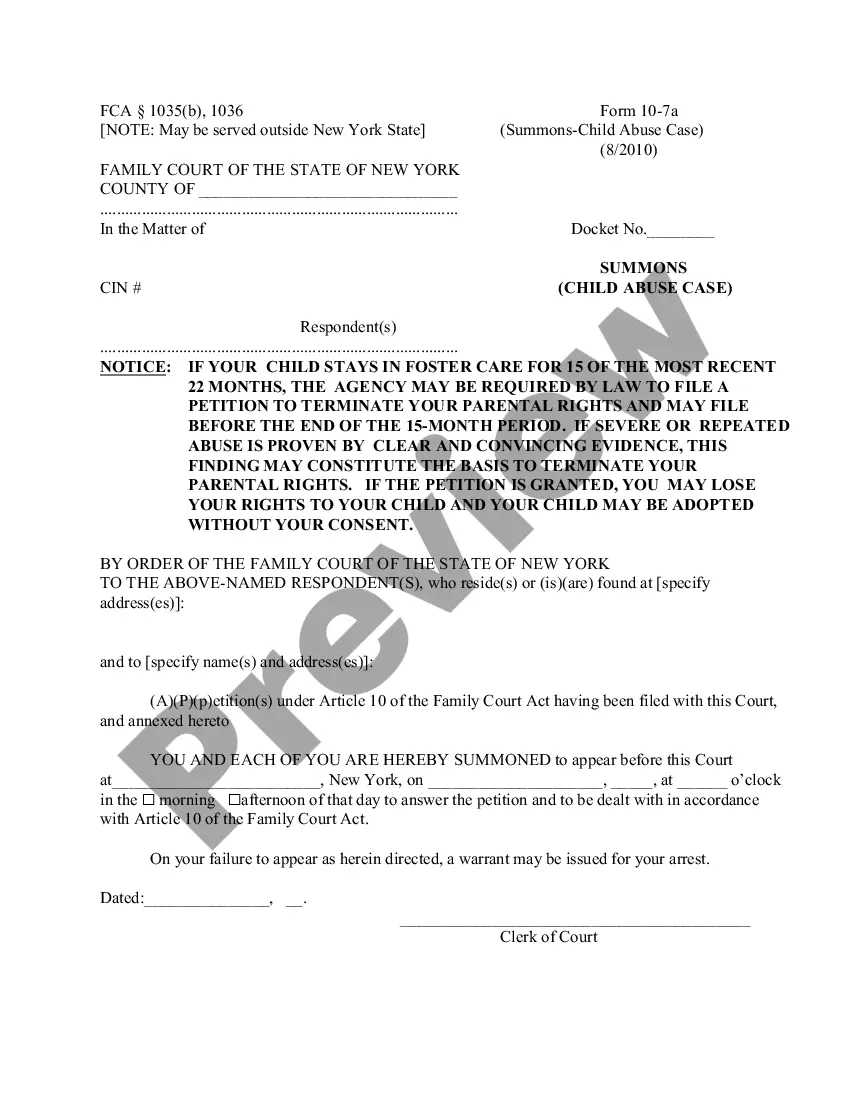
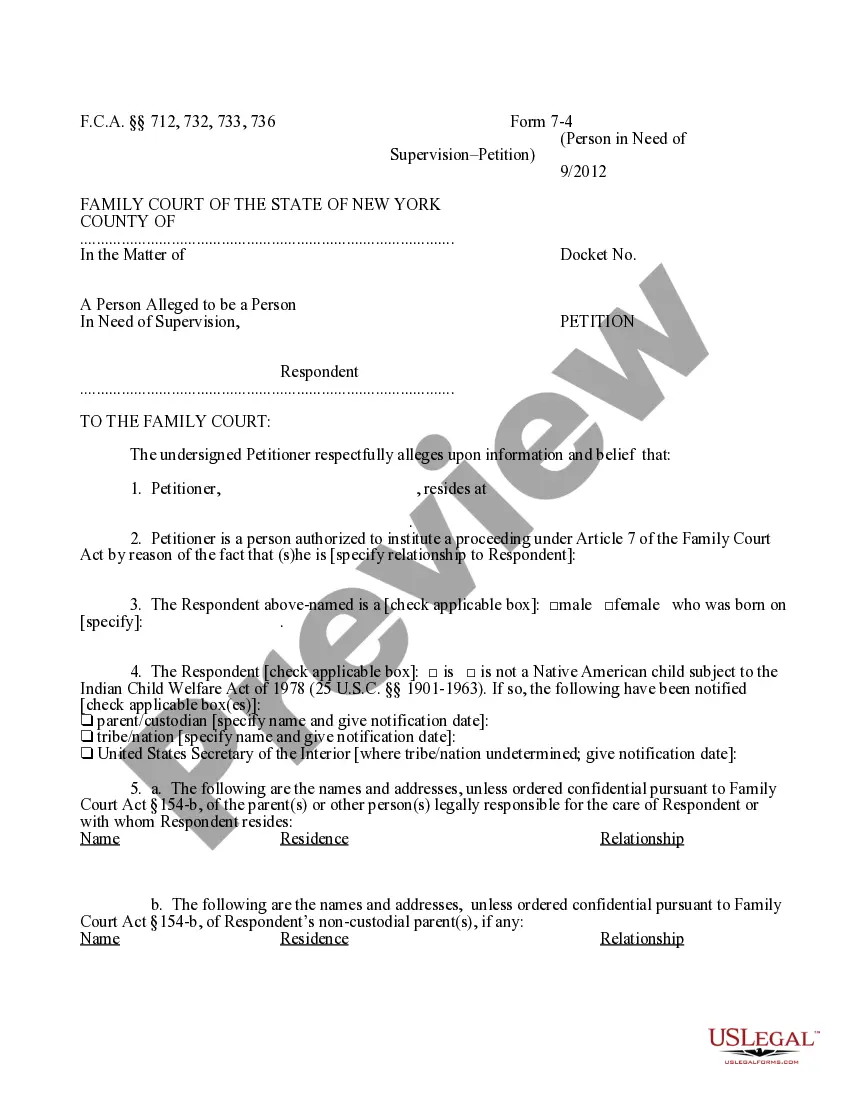
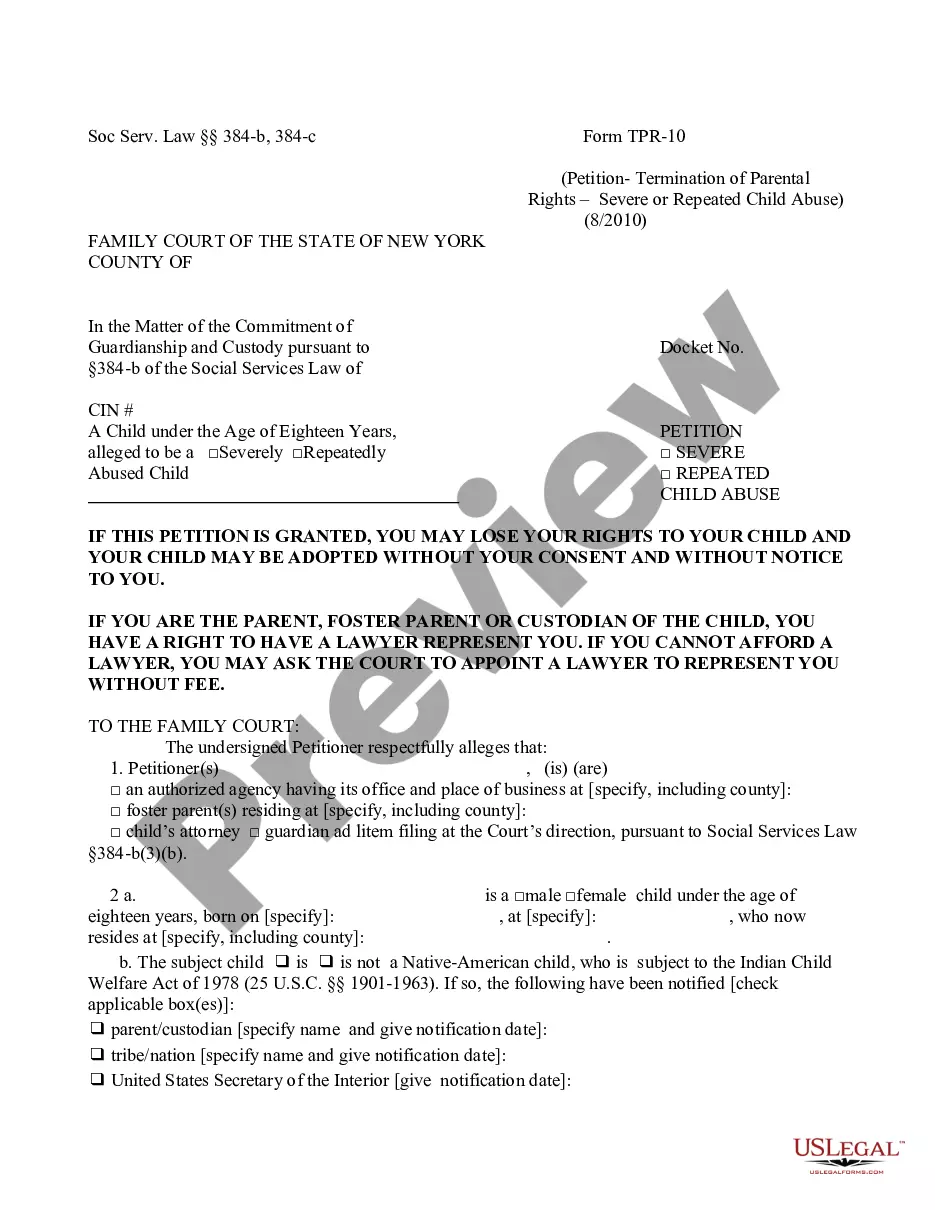
New York Petition Child Abuse Severe Abuse Repeated Abuse
Description
Get your form ready online
Our built-in tools help you complete, sign, share, and store your documents in one place.
Make edits, fill in missing information, and update formatting in US Legal Forms—just like you would in MS Word.
Download a copy, print it, send it by email, or mail it via USPS—whatever works best for your next step.
Sign and collect signatures with our SignNow integration. Send to multiple recipients, set reminders, and more. Go Premium to unlock E-Sign.
If this form requires notarization, complete it online through a secure video call—no need to meet a notary in person or wait for an appointment.
We protect your documents and personal data by following strict security and privacy standards.

Make edits, fill in missing information, and update formatting in US Legal Forms—just like you would in MS Word.

Download a copy, print it, send it by email, or mail it via USPS—whatever works best for your next step.

Sign and collect signatures with our SignNow integration. Send to multiple recipients, set reminders, and more. Go Premium to unlock E-Sign.

If this form requires notarization, complete it online through a secure video call—no need to meet a notary in person or wait for an appointment.

We protect your documents and personal data by following strict security and privacy standards.
Looking for another form?

How to fill out New York Petition Child Abuse Severe Abuse Repeated Abuse?
US Legal Forms is really a special platform where you can find any legal or tax template for filling out, including New York Child Protective Petition - Child Abuse, Severe Abuse, Repeated Abuse. If you’re tired of wasting time looking for perfect samples and paying money on file preparation/legal professional charges, then US Legal Forms is exactly what you’re searching for.
To enjoy all of the service’s advantages, you don't have to install any software but just select a subscription plan and create an account. If you already have one, just log in and get a suitable sample, download it, and fill it out. Saved files are kept in the My Forms folder.
If you don't have a subscription but need to have New York Child Protective Petition - Child Abuse, Severe Abuse, Repeated Abuse, check out the recommendations listed below:
- Double-check that the form you’re taking a look at applies in the state you need it in.
- Preview the example and read its description.
- Click Buy Now to get to the sign up page.
- Select a pricing plan and keep on registering by providing some info.
- Choose a payment method to finish the registration.
- Save the document by selecting your preferred file format (.docx or .pdf)
Now, complete the file online or print it. If you feel uncertain regarding your New York Child Protective Petition - Child Abuse, Severe Abuse, Repeated Abuse sample, speak to a legal professional to check it before you send out or file it. Get started hassle-free!
Form popularity
FAQ
Emotional abuse is the most common form of abuse and yet least talked about.
Abuse can be physical, emotional, or sexual. Physical abuse means any form of violence, such as hitting, punching, pulling hair, and kicking. Abuse can happen in both dating relationships and friendships.
The four main types of domestic abuse are often listed as physical, sexual, emotional, and neglect.
Mental abuse means any willful action or inaction of mental or verbal abuse. Mental abuse includes, but is not limited to, coercion, harassment, inappropriately isolating a vulnerable adult from family, friends, or regular activity, and verbal assault that includes ridiculing, intimidating, yelling, or swearing.
The National Center on Elder Abuse distinguishes between seven different types of elder abuse. These include physical abuse, sexual abuse, emotional abuse, financial/material exploitation, neglect, abandonment, and self-neglect.
Emotional abuse is the most common form of abuse and yet least talked about.
Physical abuse. Domestic violence or abuse. Sexual abuse. Psychological or emotional abuse. Financial or material abuse. Modern slavery. Discriminatory abuse. Organisational or institutional abuse.
Abuse is defined as any action that intentionally harms or injures another person. In short, someone who purposefully harms another in any way is committing abuse.
Physical. This is the type of abuse that many people think of when they hear the word 'abuse. Sexual. Verbal/Emotional. Mental/Psychological. Financial/Economic. Cultural/Identity.
Verbal abuse is the use of words to cause harm to the person being spoken to. Verbal abuse may consist of shouting, insulting, intimidating, threatening, shaming, demeaning, or derogatory language, among other forms of communication.