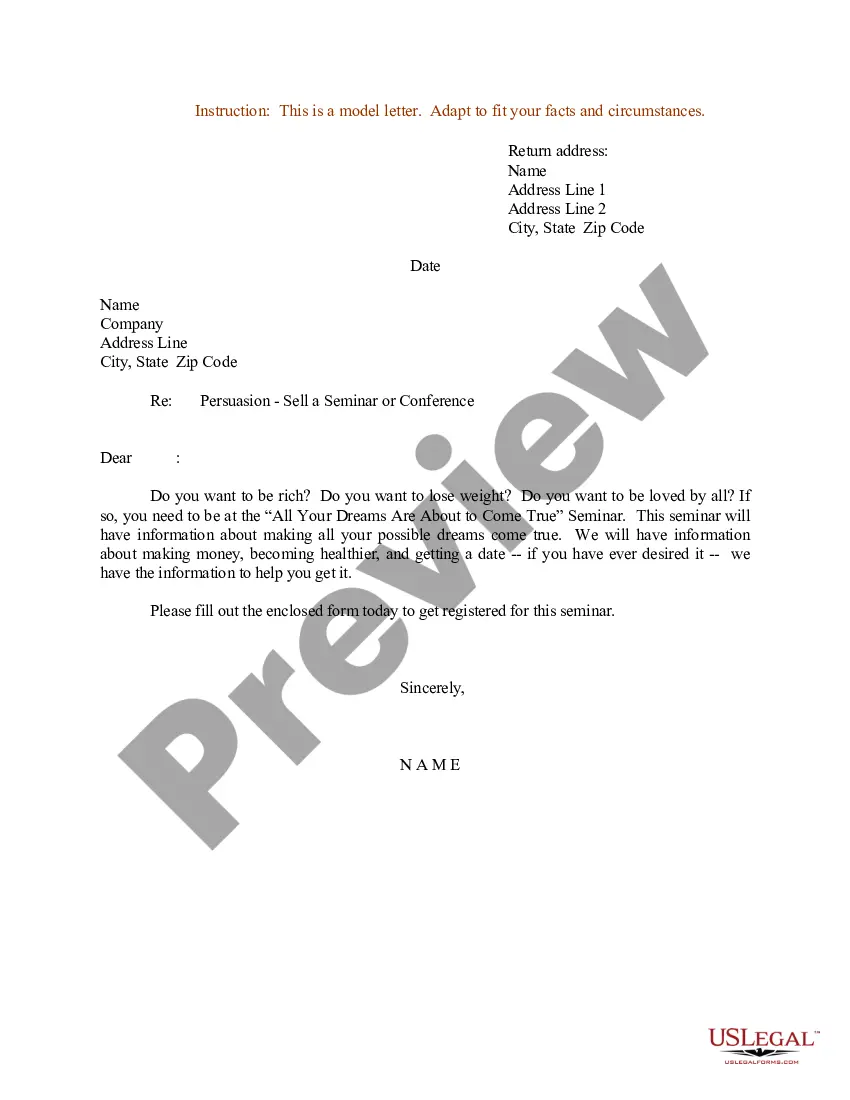
New York Child Protective - Petition for Release of Responsibility Under Order of Placement
What this document covers
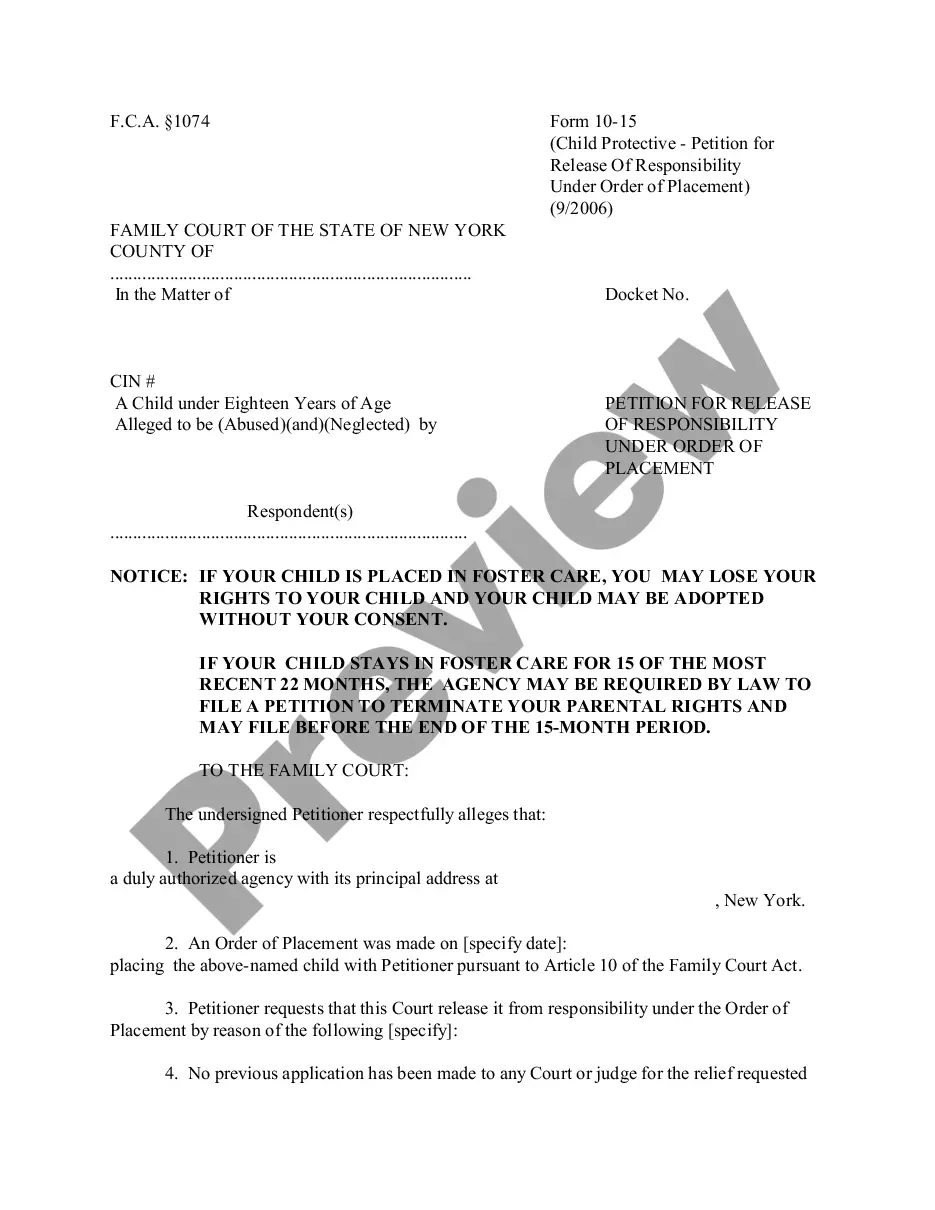
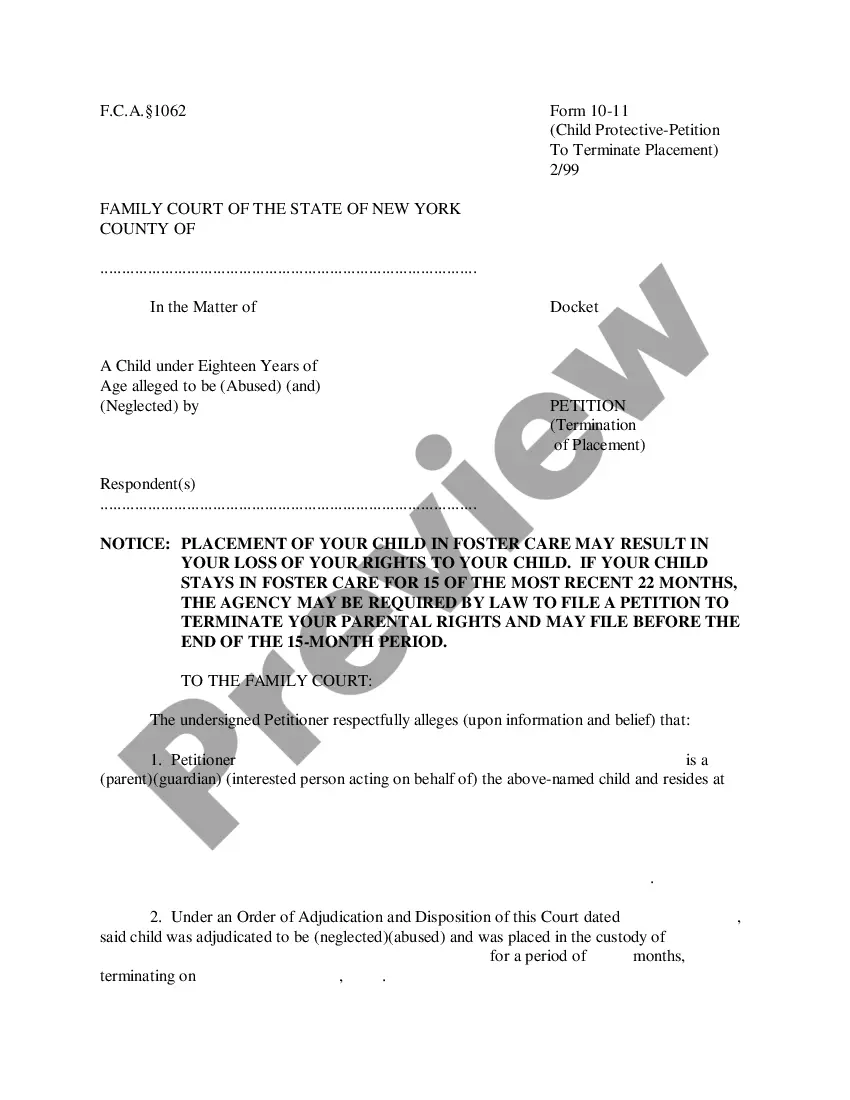
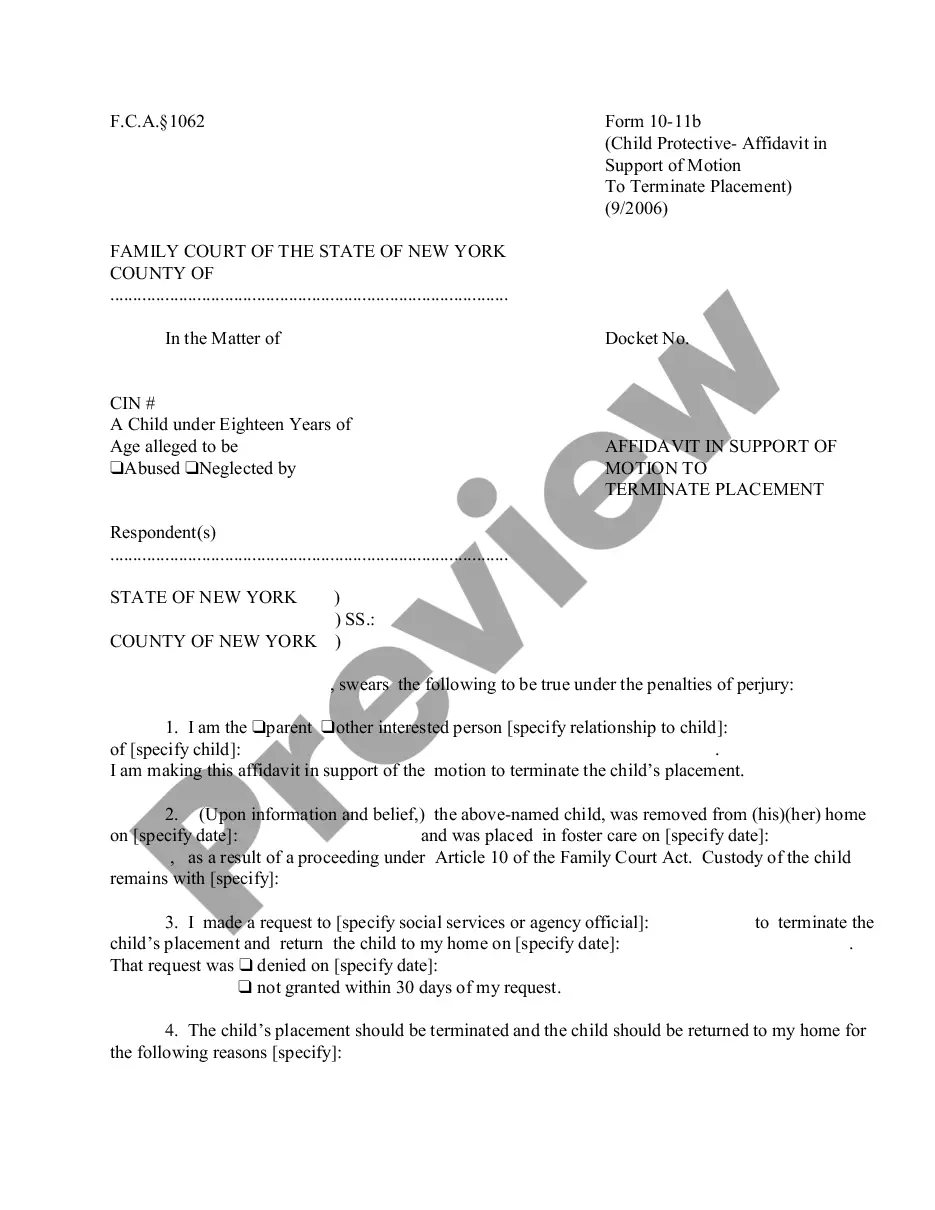
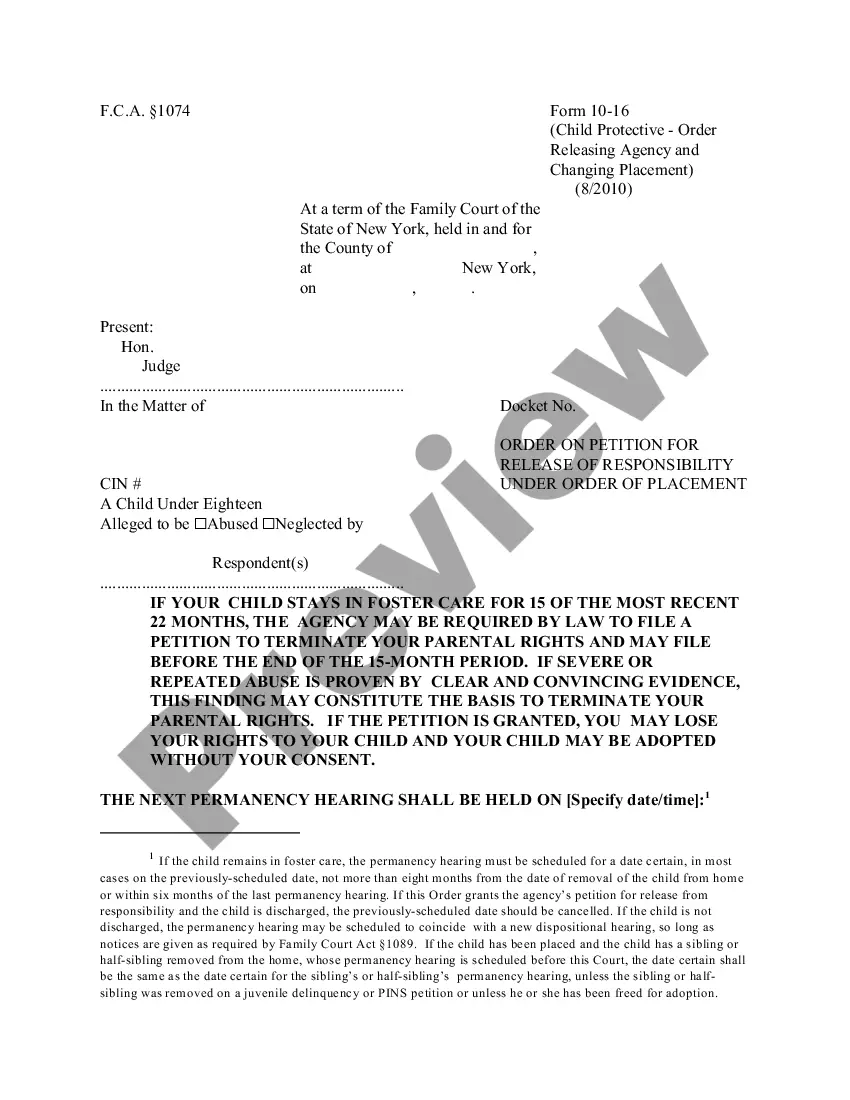
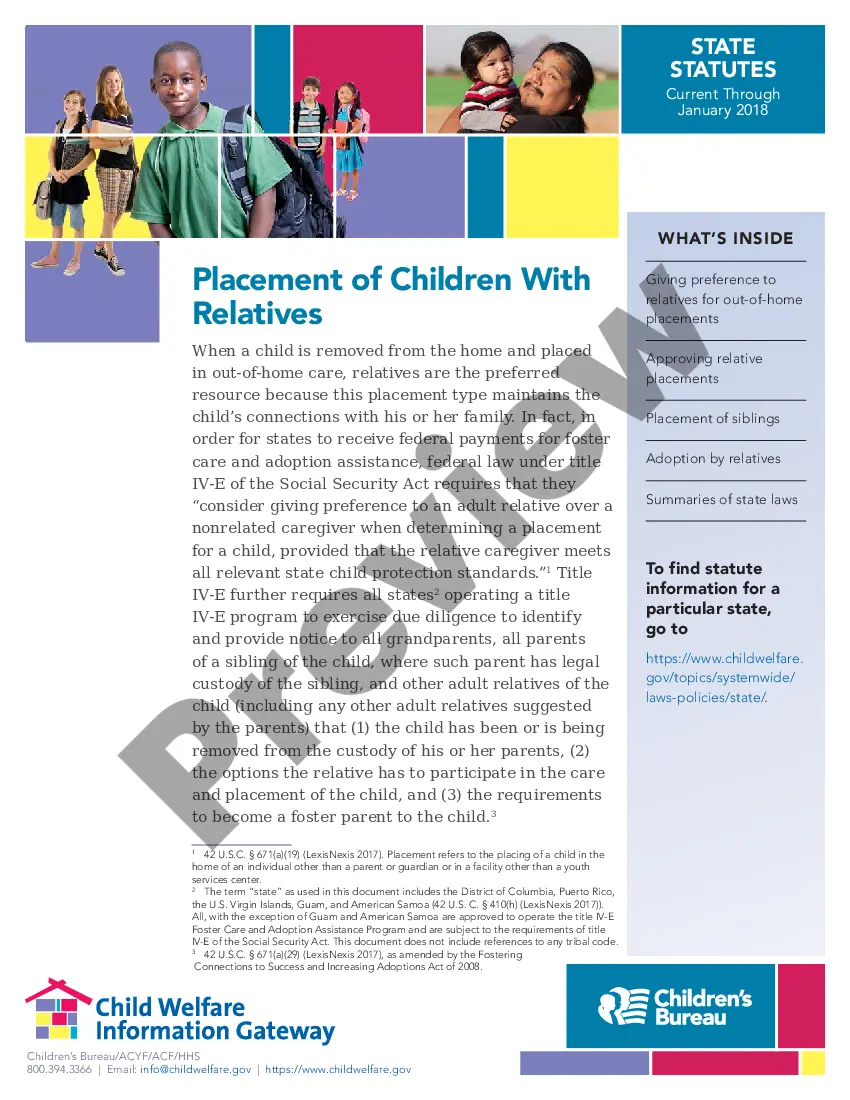
The Child Protective - Petition for Release of Responsibility Under Order of Placement is a legal document used in New York's Family Court. It allows authorized agencies to request the court to release them from their responsibilities concerning a child placed under their care. This form is crucial when a child has been placed in foster care and the agency believes it can no longer provide adequate support or must return the child to the court. This request differs from other forms mainly involved in termination of parental rights as it focuses on the agency's responsibilities rather than the parents'.
What’s included in this form
- Petitioner Identification: Details about the agency filing the petition.
- Order of Placement: Date and context of the order placing the child with the agency.
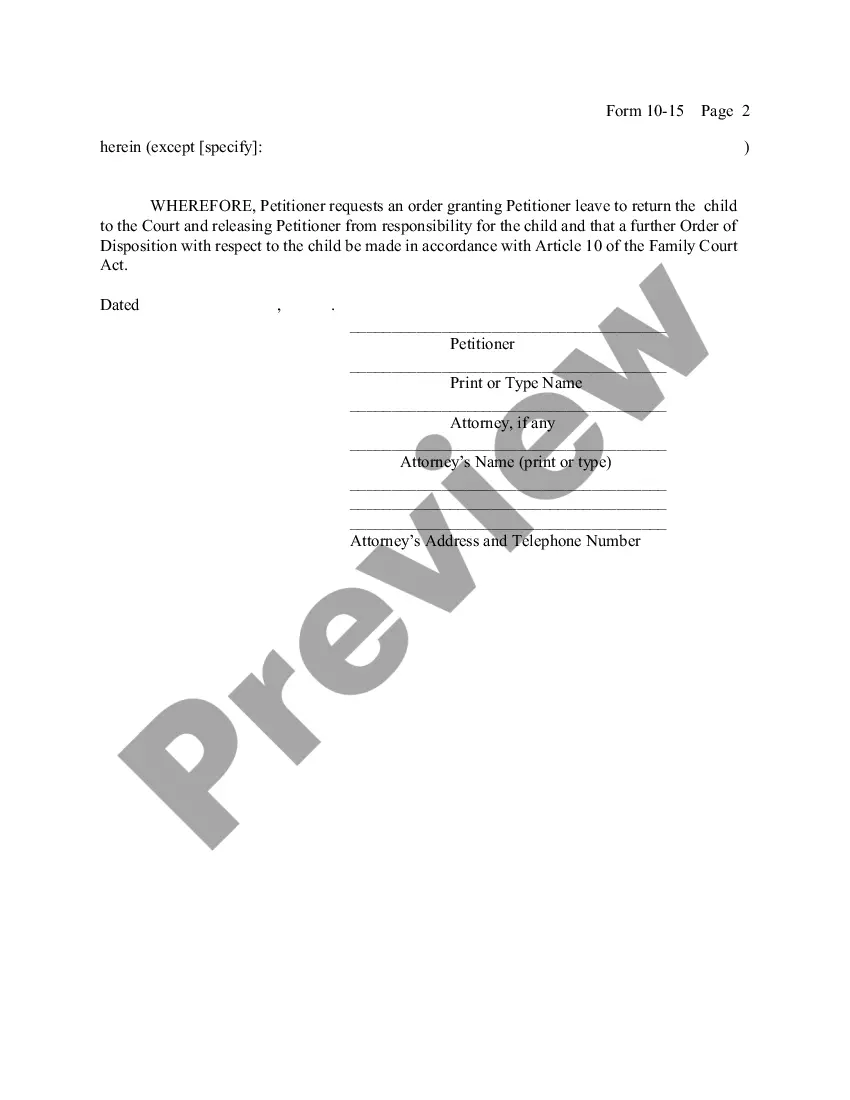
- Basis for Request: A section for stating the reasons for requesting the release from responsibility.
- Previous Applications: Disclosure of any prior applications regarding the same issue to any court.
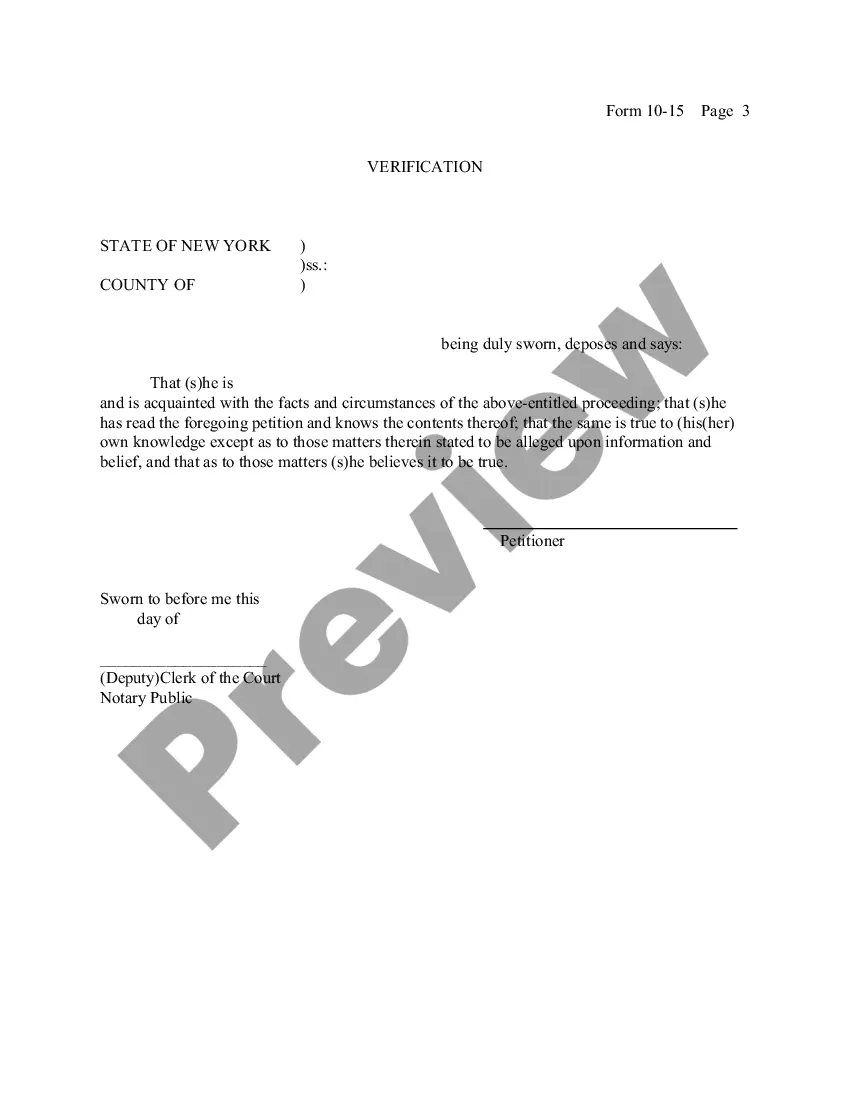
- Verification: A sworn statement confirming the integrity of the information provided.
When this form is needed
This form should be used when a child under eighteen years of age has been placed in a care order and the responsible agency seeks to terminate its role. Scenarios may include when the agency believes it can no longer fulfill its obligation to the child or if the agency wishes to return the child to the court for further decisions regarding custody or placement.
Intended users of this form
- A licensed child welfare agency seeking to release its responsibility for a child.
- Legal representatives acting on behalf of a child welfare agency.
- Case managers involved in child protective services and foster care placement.
How to complete this form
- Identify the petitioner, including the agency's name and address.
- Specify the date when the original Order of Placement was made.
- Clearly outline the reasons for the request to release the agency from responsibility.
- Confirm whether any prior applications have been made regarding this matter.
- Collect signatures from the petitioner and any involved legal representatives.
- Ensure that the form is verified and sworn before a notary public, if required.
Notarization guidance
This form must be notarized to be legally valid. The petitioner and any legal representatives must sign the document in the presence of a notary public. US Legal Forms offers integrated online notarization services available 24/7 through secure video calls, ensuring convenience and compliance without the need for travel.
Get your form ready online
Our built-in tools help you complete, sign, share, and store your documents in one place.
Make edits, fill in missing information, and update formatting in US Legal Forms—just like you would in MS Word.
Download a copy, print it, send it by email, or mail it via USPS—whatever works best for your next step.
Sign and collect signatures with our SignNow integration. Send to multiple recipients, set reminders, and more. Go Premium to unlock E-Sign.
If this form requires notarization, complete it online through a secure video call—no need to meet a notary in person or wait for an appointment.
We protect your documents and personal data by following strict security and privacy standards.

Make edits, fill in missing information, and update formatting in US Legal Forms—just like you would in MS Word.

Download a copy, print it, send it by email, or mail it via USPS—whatever works best for your next step.

Sign and collect signatures with our SignNow integration. Send to multiple recipients, set reminders, and more. Go Premium to unlock E-Sign.

If this form requires notarization, complete it online through a secure video call—no need to meet a notary in person or wait for an appointment.

We protect your documents and personal data by following strict security and privacy standards.
Avoid these common issues
- Failing to provide accurate identification details of the agency.
- Not specifying the date of the Order of Placement.
- Omitting important reasons for the requested release of responsibility.
- Neglecting to disclose previous applications made to the court on the same issue.
- Inadequate verification of the petitioner's information before filing.
Benefits of completing this form online
- Convenience: Easily access and fill out the form from anywhere.
- Editability: Make necessary changes quickly and without hassle.
- Reliability: Get access to forms drafted by licensed attorneys to ensure compliance with legal standards.
Looking for another form?

Form popularity
FAQ
Family courts have the power to make orders to protect children from harm caused by abuse or neglect. In most cases, this will be a care order, placing the child in the care of the local authority.
An Order of Protection is a document issued by a court and signed by a judge to help protect you from harassment or abuse. In an Order of Protection, a judge can set limits on your partner's behavior. Among other things, a judge can: Order your partner to stop abusing you and your children.
Under Virginia law, a CPS worker CANNOT REQUIRE you to give up the care of your child to a friend or relative. However, the worker CAN SUGGEST you find a friend or relative to care for your child outside of your home if she believes your child cannot safely stay with you. child to live with you.
A child protection order is a direction from a court requiring or authorising someone to do or not do something, such as giving Child Safety Services the custody or guardianship of a child and authority to place a child in out-of-home care.
Children's courts.The Children's Court of New South Wales, for example, may make an order under s 90A of the Children and Young Persons (Care and Protection) Act 1998 (NSW), prohibiting a person from doing anything that a parent could do in carrying out their parental responsibility.
A Child Protection Order is a court order granted by a Sheriff when it is believed a child is likely to be harmed or has suffered significant harm and needs to be immediately moved to keep them safe.You also have the right to apply to the Sheriff to have the order recalled or varied.