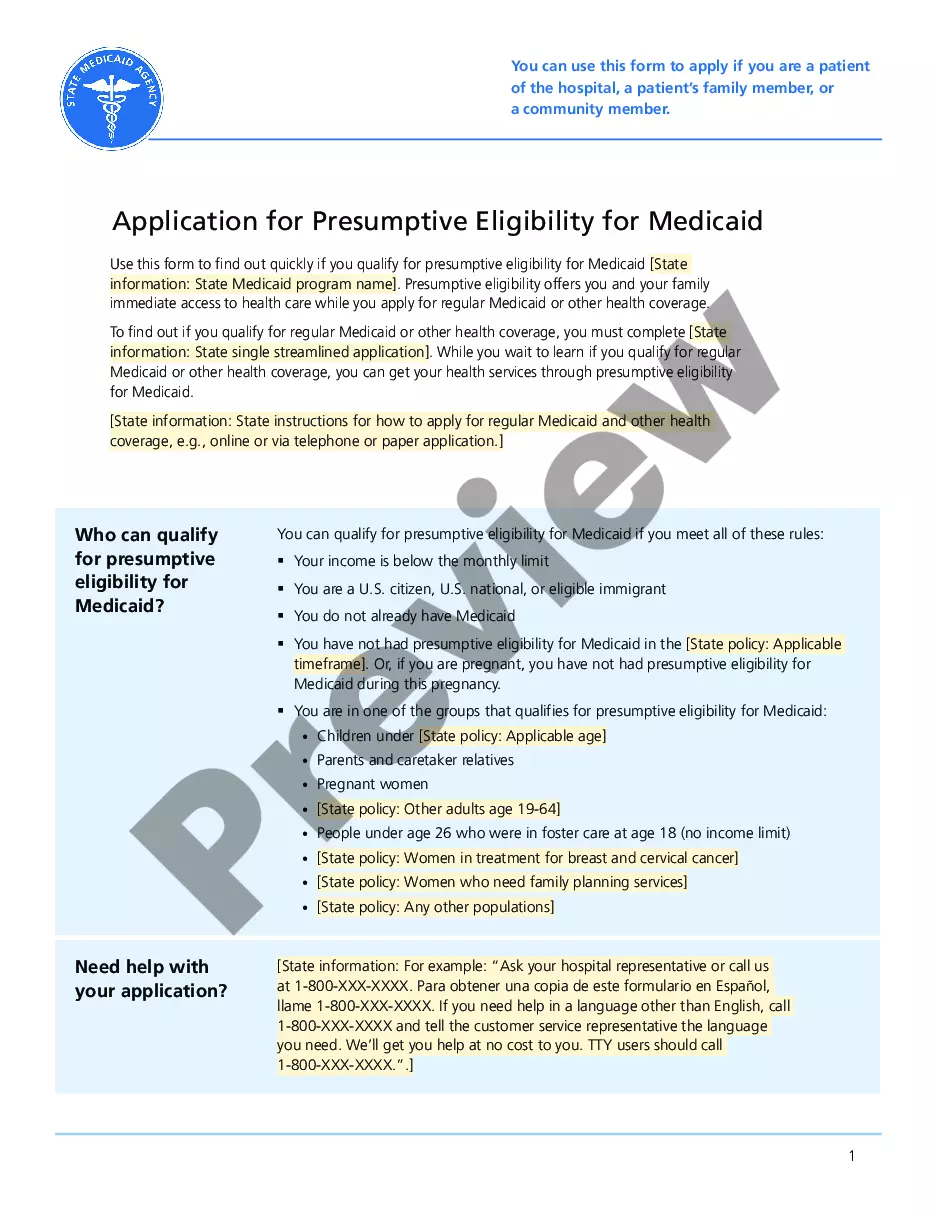
New York Warranty Deed from a Joint Trust (H&W) two an Individual Trust
About this form
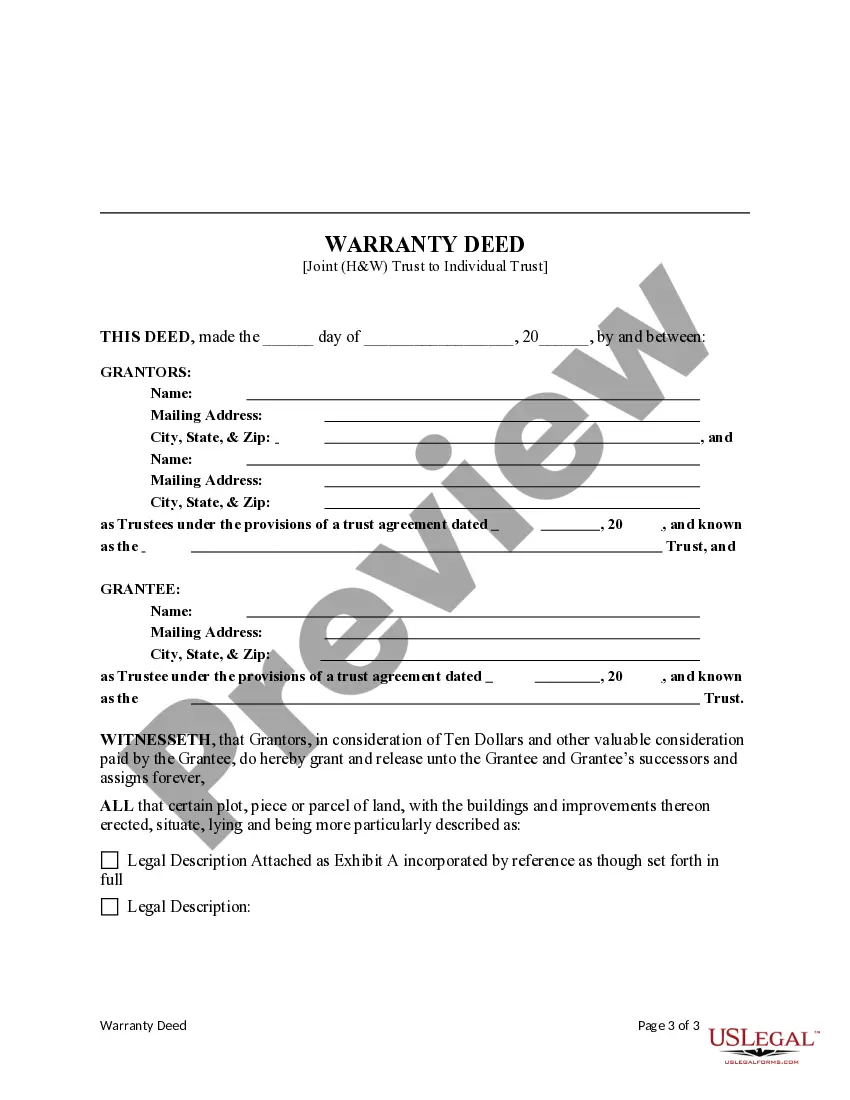
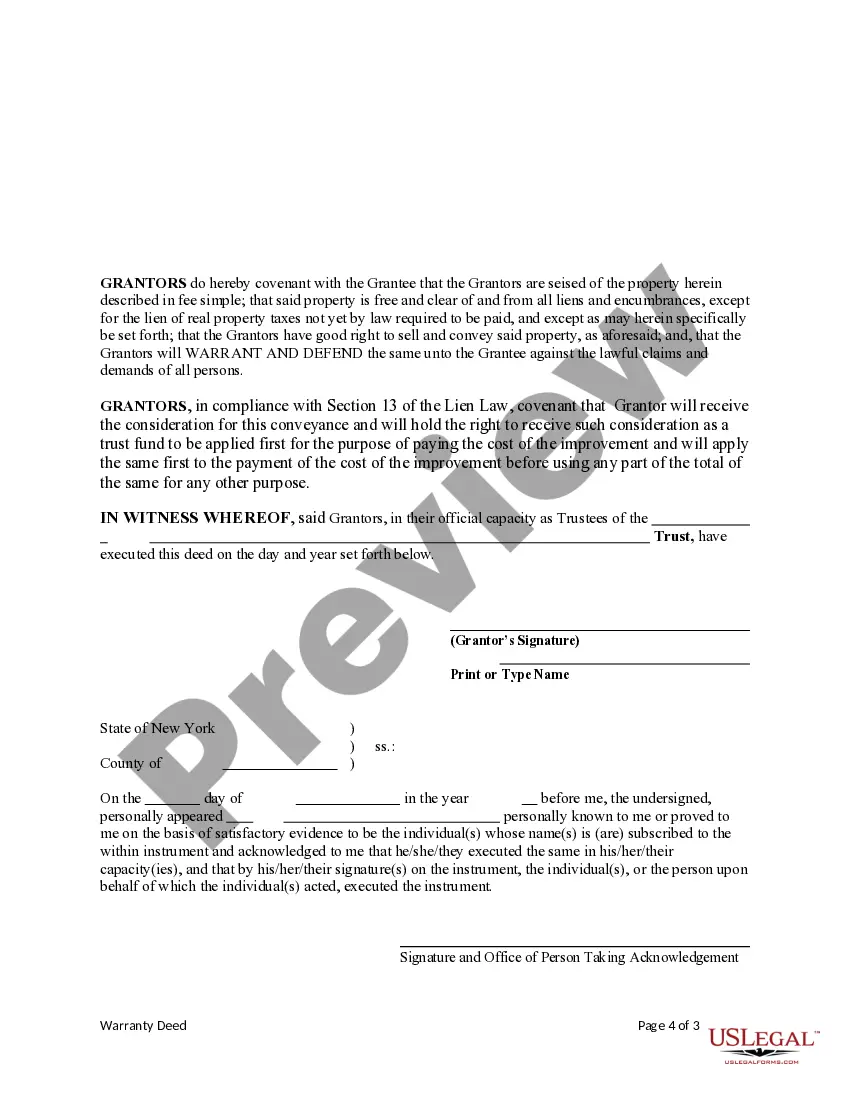
The Warranty Deed from a Joint Trust (H&W) to an Individual Trust is a legal document used to formally transfer ownership of property. In this type of warranty deed, the Grantors are trustees of a Joint Trust, and the Grantee is the trustee of an individual trust. This deed not only conveys the described property but also includes warranties from the Grantors about the title, ensuring that the property is transferred without any claims against it. It differs from other deed types in that it specifically involves the transfer of property held in joint trust, which may involve more complex trust arrangements.
What’s included in this form
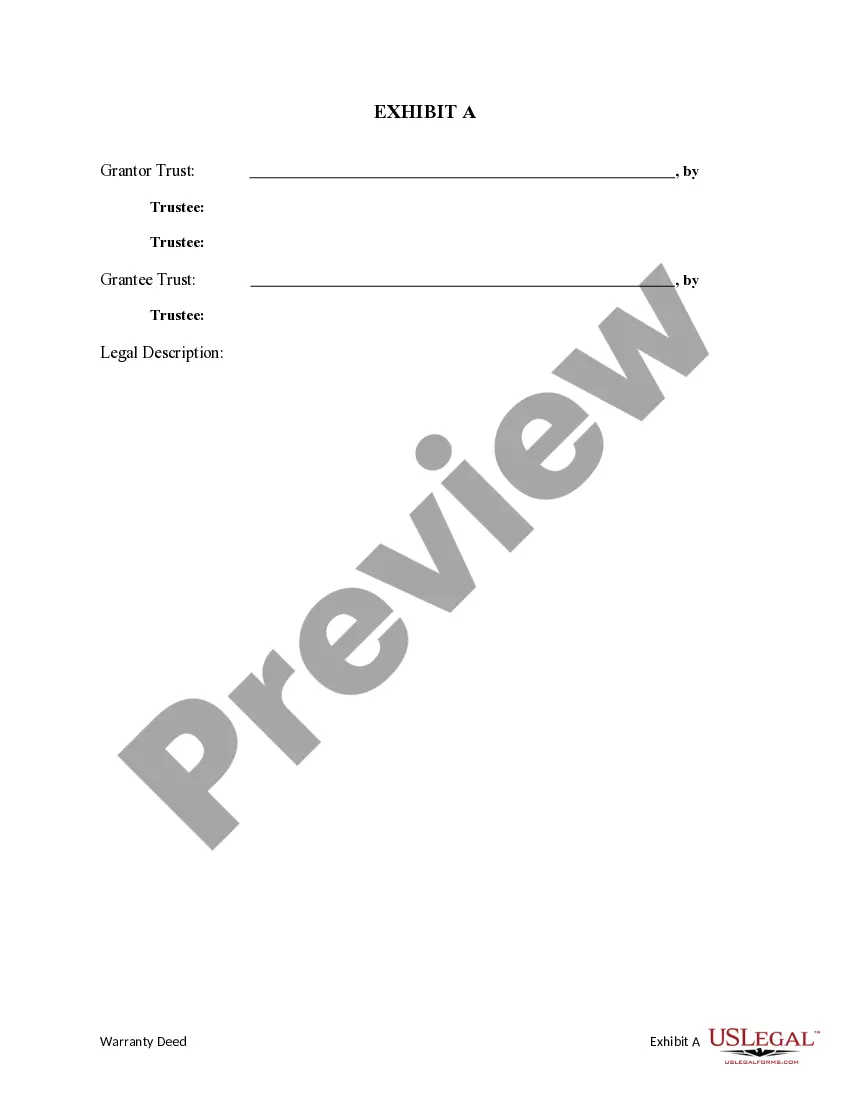
- Identification of Grantors and Grantee, including roles as trustees.
- Legal description of the property being transferred.
- Warranties provided by the Grantors regarding the property title.
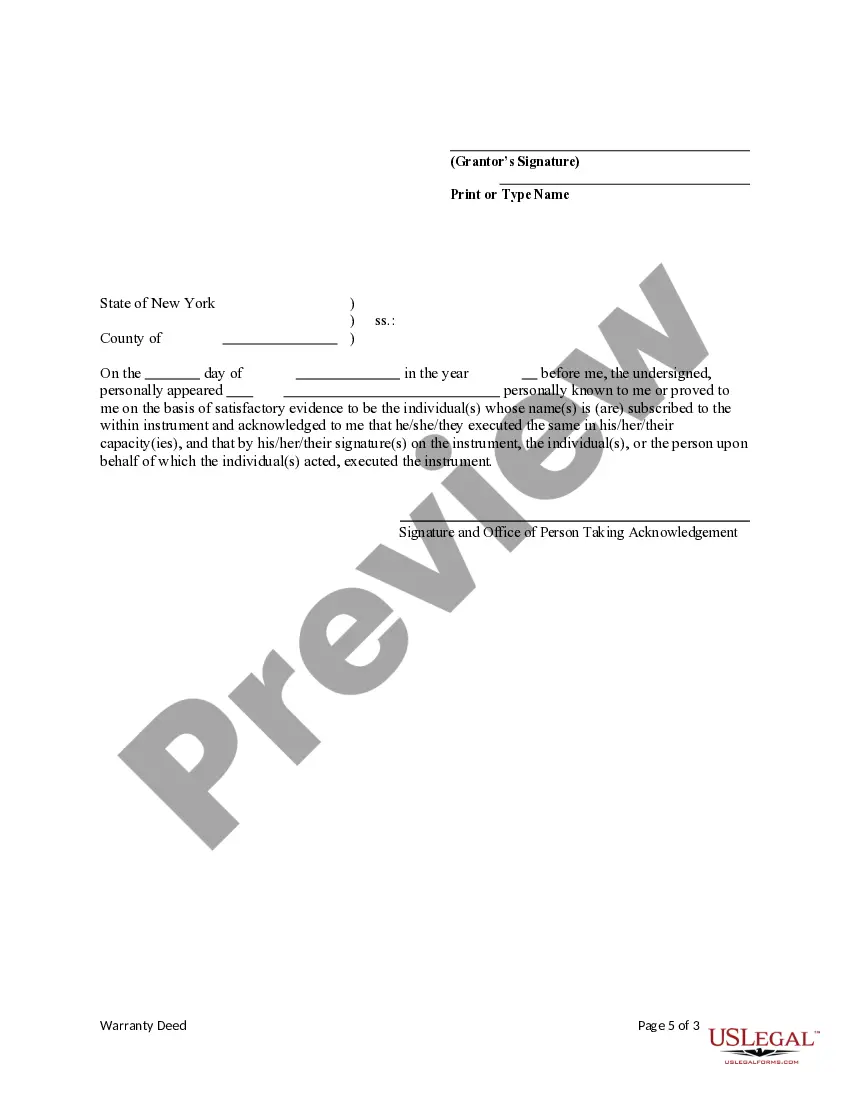
- Signatures of the Grantors in their official capacity.
- Notary acknowledgment, if required.




When to use this document
This form is used when the trustees of a Joint Trust wish to transfer property to an Individual Trust. It is ideal in scenarios such as the separation of property from a joint trust to ensure that the individual trust is clearly defined and holds the property independently. This may occur during estate planning, changes in family circumstances, or when adjusting trust arrangements for tax or inheritance considerations.
Who needs this form
- Individuals acting as trustees of a Joint Trust seeking to transfer property to another trust.
- Estate planners managing the division of assets within trust structures.
- Attorneys assisting clients with property transfers involving trusts.
- Beneficiaries who are also trustees and need to manage property transfers effectively.
Instructions for completing this form
- Identify the parties involved by entering the names of the Grantors and Grantee.
- Provide the legal description of the property in detail, ensuring accuracy.
- Fill in the consideration amount, which reflects what is being exchanged for the property.
- Ensure all Grantors sign the form in their capacity as trustees.
- Include a notarization section if required by local regulations.
Notarization requirements for this form
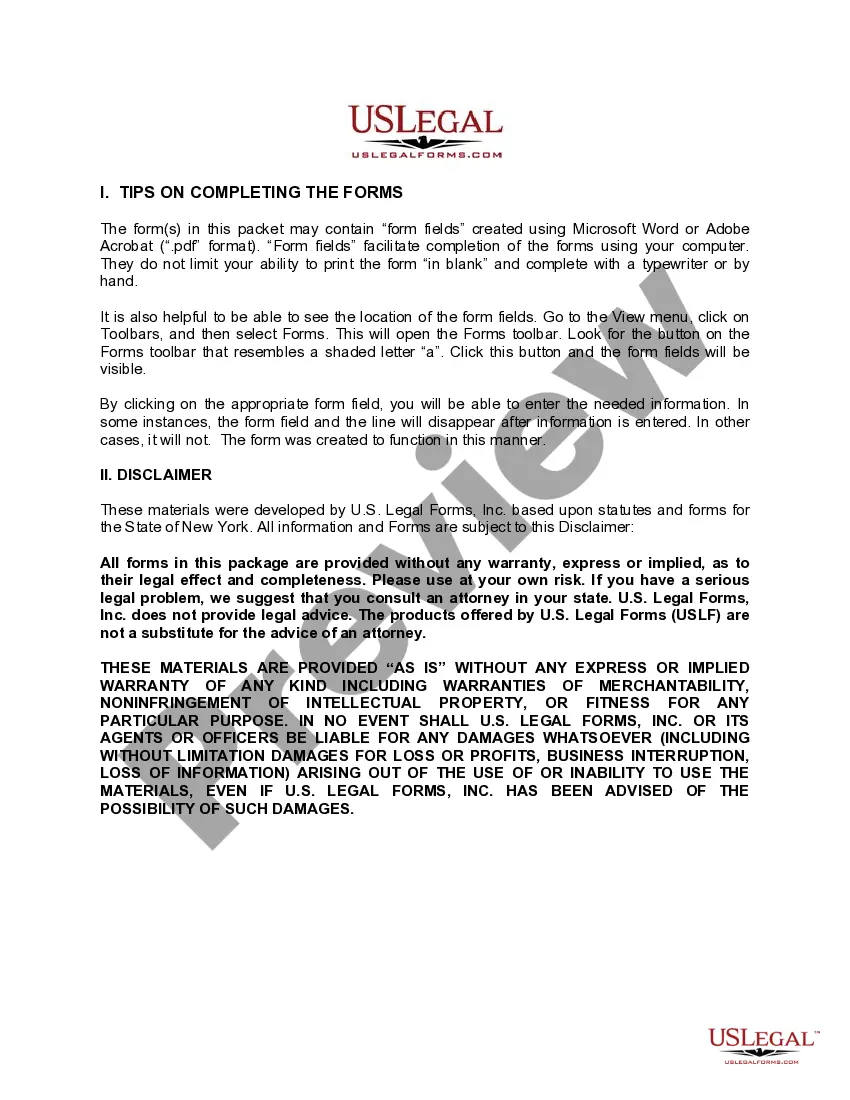
This document requires notarization to meet legal standards. US Legal Forms provides secure online notarization powered by Notarize, allowing you to complete the process through a verified video call, available 24/7.
Get your form ready online
Our built-in tools help you complete, sign, share, and store your documents in one place.
Make edits, fill in missing information, and update formatting in US Legal Forms—just like you would in MS Word.
Download a copy, print it, send it by email, or mail it via USPS—whatever works best for your next step.
Sign and collect signatures with our SignNow integration. Send to multiple recipients, set reminders, and more. Go Premium to unlock E-Sign.
If this form requires notarization, complete it online through a secure video call—no need to meet a notary in person or wait for an appointment.
We protect your documents and personal data by following strict security and privacy standards.

Make edits, fill in missing information, and update formatting in US Legal Forms—just like you would in MS Word.

Download a copy, print it, send it by email, or mail it via USPS—whatever works best for your next step.

Sign and collect signatures with our SignNow integration. Send to multiple recipients, set reminders, and more. Go Premium to unlock E-Sign.

If this form requires notarization, complete it online through a secure video call—no need to meet a notary in person or wait for an appointment.

We protect your documents and personal data by following strict security and privacy standards.
Mistakes to watch out for
- Failing to include a complete legal description of the property.
- Improperly identifying the roles of the Grantors and Grantee.
- Leaving the form unsigned or not dated by the Grantors.
- Not obtaining necessary notarization when required.
Benefits of completing this form online
- Immediate access to legally compliant documents that can be printed or saved.
- Editability ensures you can customize the form to your specific needs.
- Reliable templates drafted by licensed attorneys to ensure legal accuracy.
Summary of main points
- This Warranty Deed facilitates the transfer of property from a Joint Trust to an Individual Trust.
- Ensure all necessary details are accurately filled out to avoid legal complications.
- Consider the need for notarization to enhance the form's validity.
Looking for another form?
Form popularity
FAQ
When you're ready to transfer trust real estate to the beneficiary who is named in the trust document to receive it, you'll need to prepare, sign, and record a deed. That's the document that transfers title to the property from you, the trustee, to the new owner.
In the context of a California mortgage transaction, a trust deed also transfer ownership. Only this time, the title is being placed in the hands of a third-party trustee, who holds the property on behalf of the lender and the homeowner-borrower until the mortgage is paid.
Either draft or have an attorney draft a Trustee's Deed transferring ownership of the real estate out of the trust to the beneficiary. After it is signed, you and the beneficiary must go to the clerk of the court to have the deed recorded in the public records.
Trustees aren't allowed to sell trust property to themselves unless the trust agreement has explicitly allowed them to do so. They also shouldn't sell the trust property to another trust that they manage, or borrow trust funds for personal use.
California Property TaxesTransferring real property to yourself as trustee of your own revocable living trust -- or back to yourself -- does not trigger a reassessment for property tax purposes. (Cal. Rev. & Tax Code § 62(d).)
Locate the deed that's in trust. Use the proper deed. Check with your title insurance company and lender. Prepare a new deed. Sign in the presence of a notary. Record the deed in the county clerk's office.
A quitclaim deed can be used to transfer property from a trust, but a Special Warranty Deed seems to be a more common way to do this.