New York Gift Deed for Individual to Individual

About this form
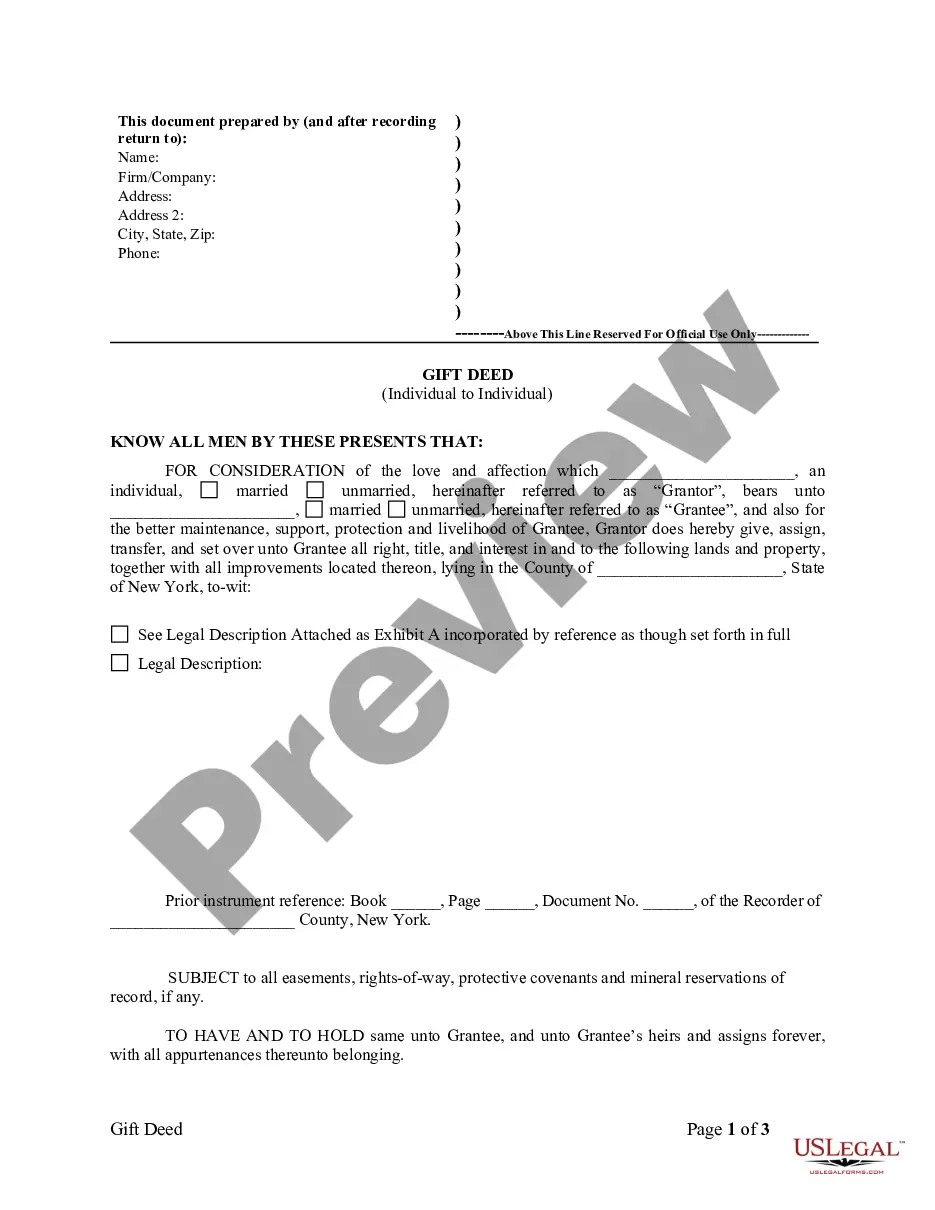
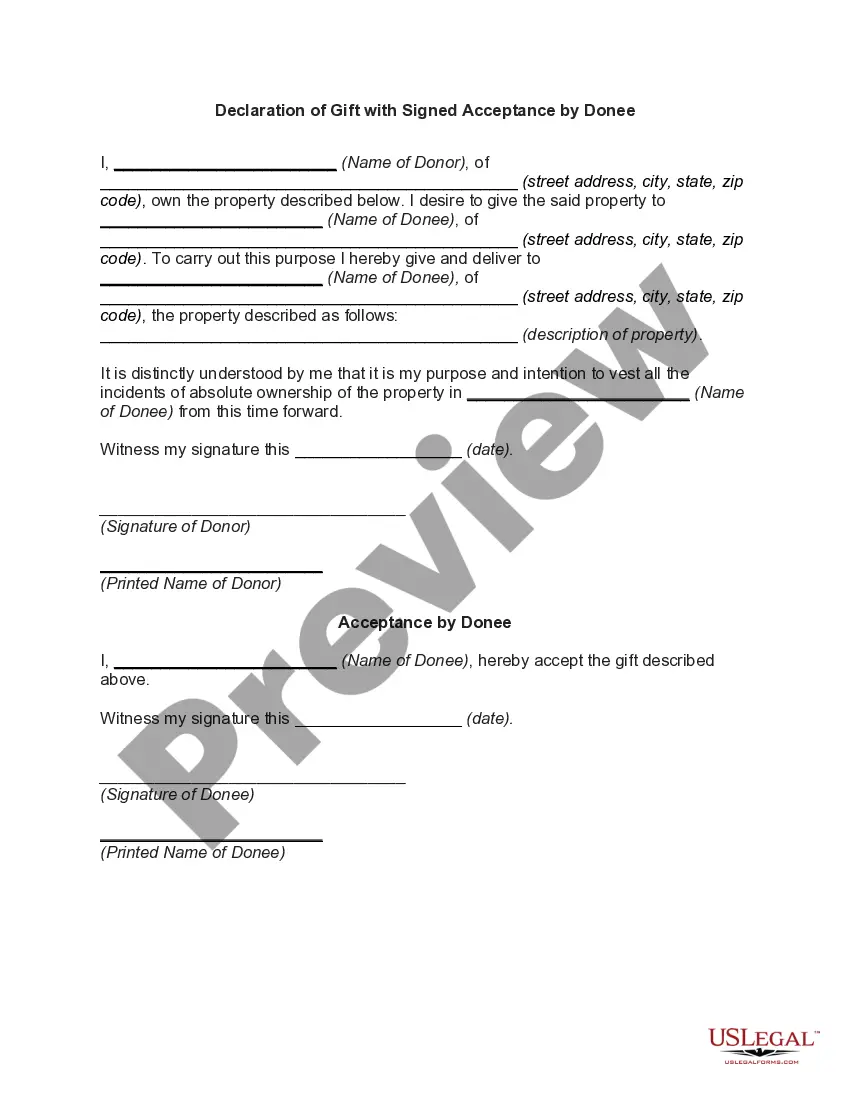
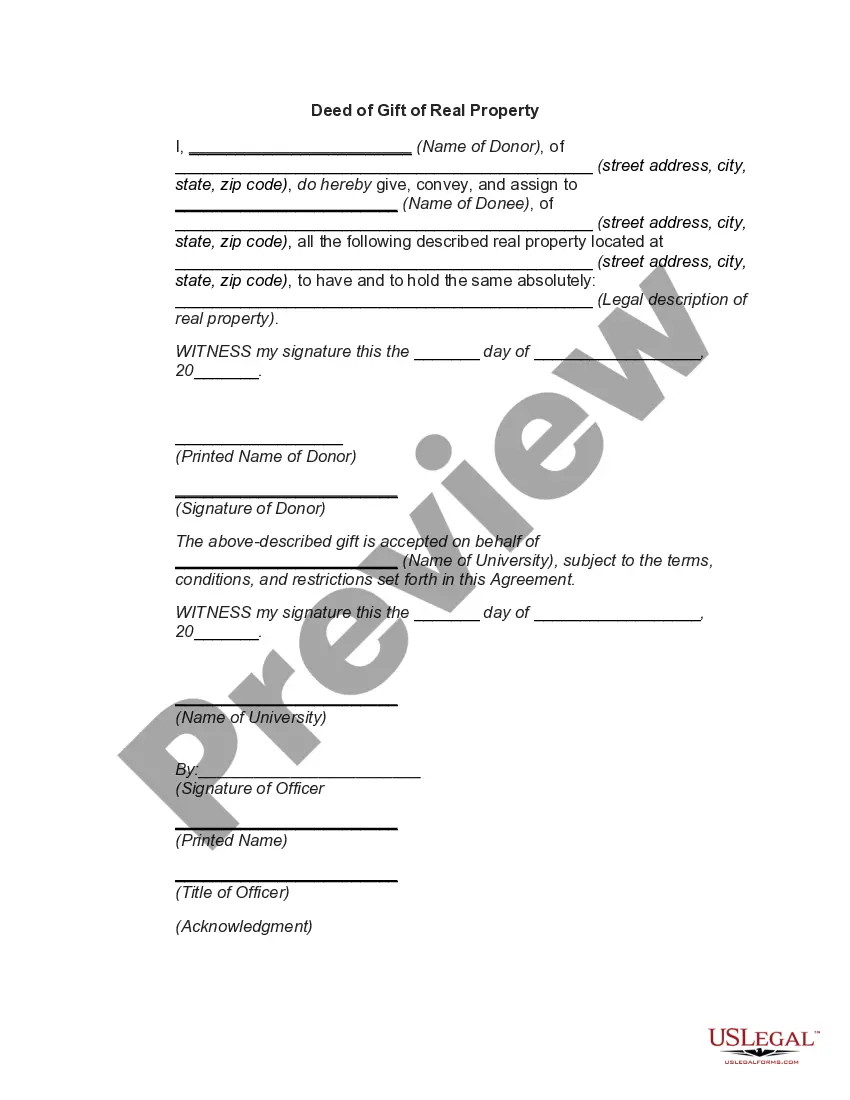
The New York Gift Deed for Individual to Individual is a legal document that allows one individual to transfer ownership of real property as a gift to another individual. This form is designed specifically for use in New York and differs from other property transfer forms, such as a sale deed, as it does not require payment in exchange for the property. By executing this deed, the grantor conveys the property without expecting remuneration, making this a simple and effective way to gift real estate.
Key components of this form
- Legal description of the property being transferred.
- Name and contact information of the grantor (the person giving the gift).
- Name and contact information of the grantee (the person receiving the gift).
- Statement affirming the grant is a gift with no consideration involved.
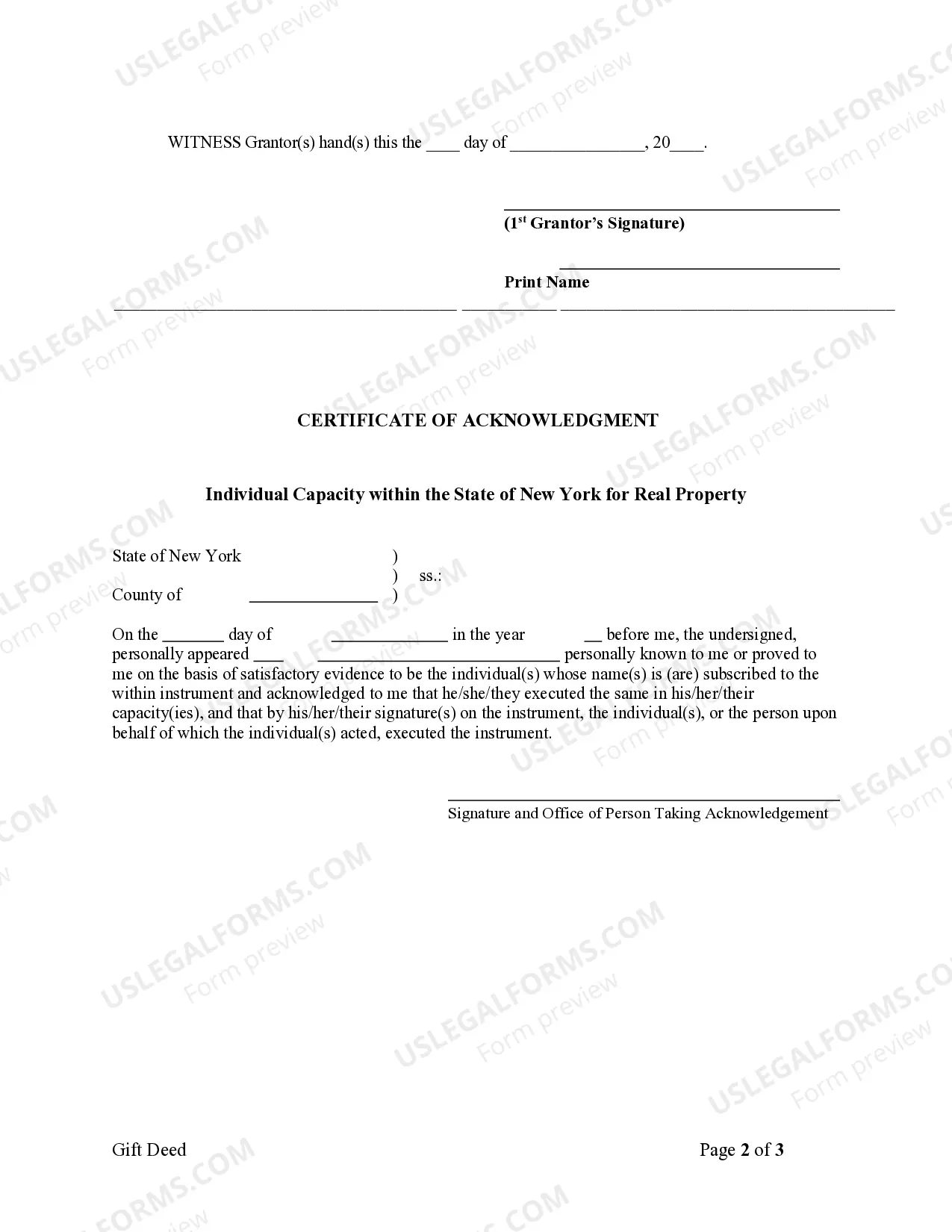
- Signatures of the grantor and witnesses, if required.
- Date of execution for legal reference.

Common use cases
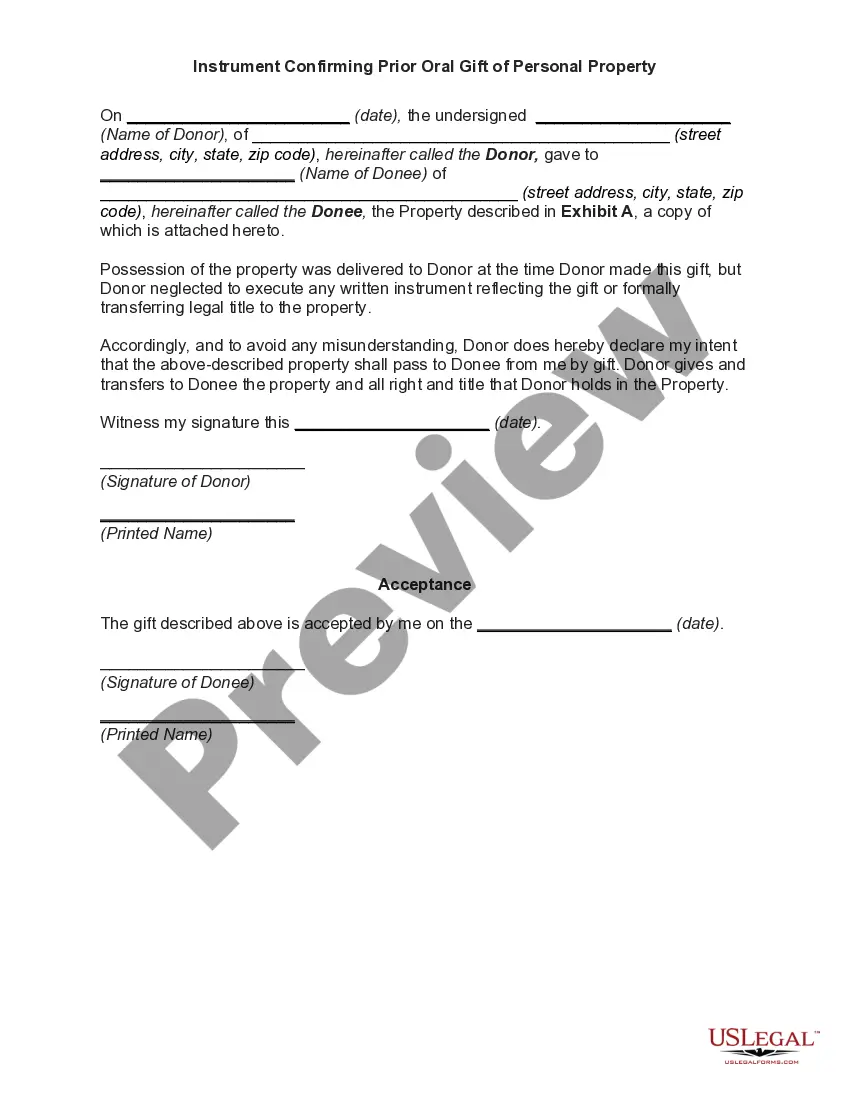
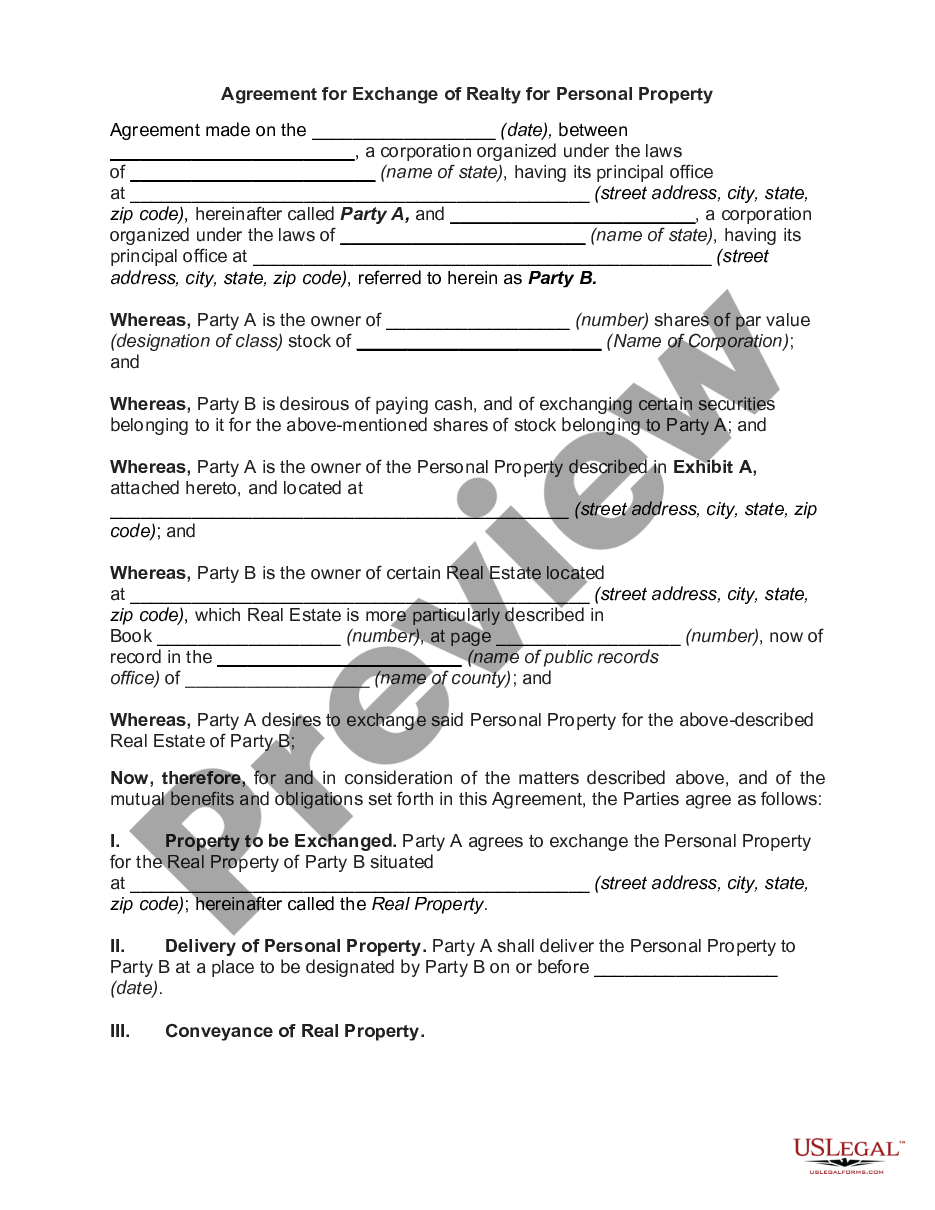
This form should be used when an individual wishes to transfer property ownership to another person without any payment or exchange involved. Common scenarios include gifting property to family members, friends, or charitable organizations. It is essential to have this form in place to ensure that the transfer is legally recognized and to prevent future disputes regarding ownership.
Who should use this form
- Individuals looking to gift real estate to another person.
- Family members wanting to transfer property ownership without a sale.
- Property owners not involved in commercial transactions.
Instructions for completing this form
- Identify the grantor and grantee by entering their full names and contact information.
- Specify the property being transferred by including the legal description as required.
- Clearly state that the transfer is a gift and that no payment is involved.
- Include the date of execution for the document.
- Ensure that the grantor signs the form, and have it witnessed if necessary.
Notarization guidance
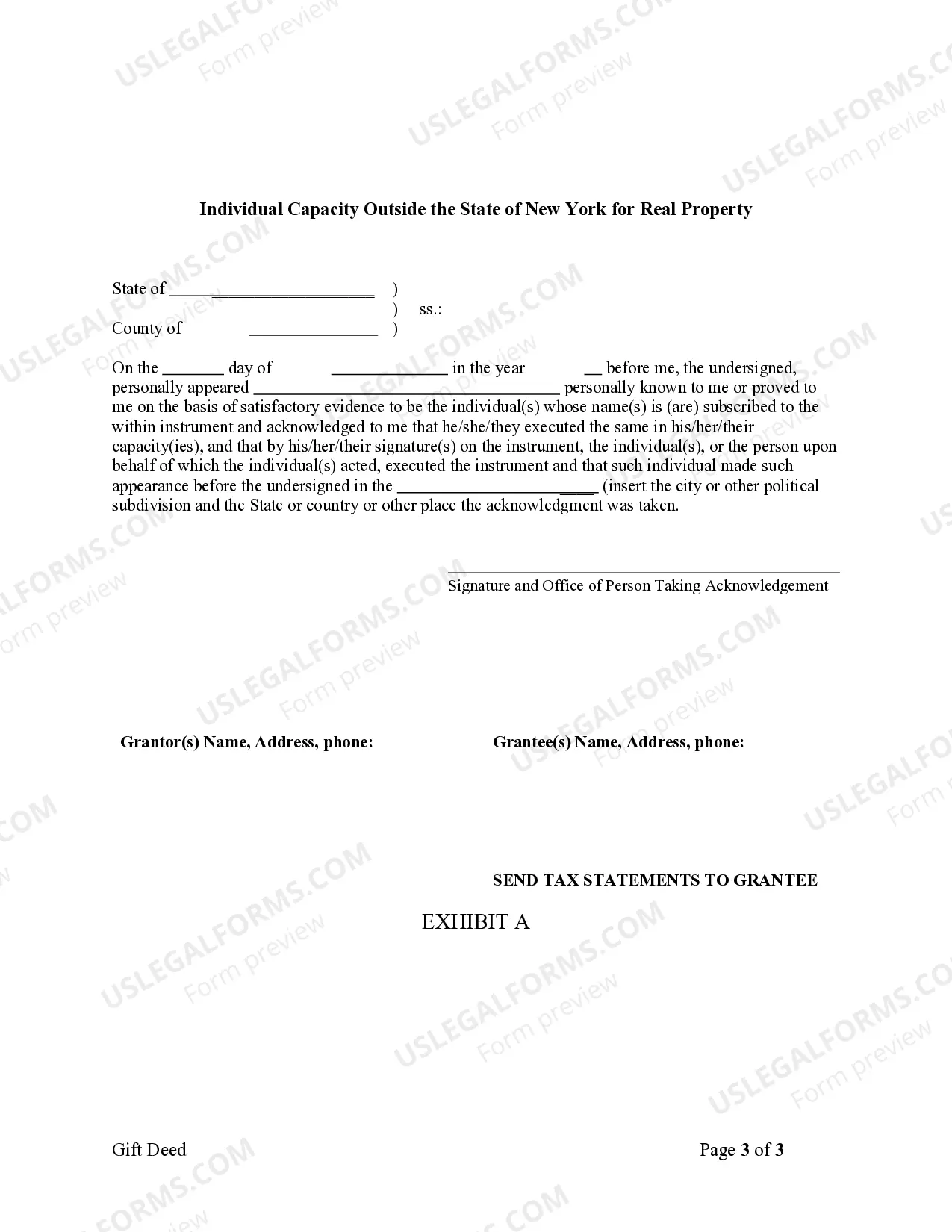
This form must be notarized to be legally valid. US Legal Forms provides secure online notarization powered by Notarize, allowing you to complete the process through a verified video call.
Get your form ready online
Our built-in tools help you complete, sign, share, and store your documents in one place.
Make edits, fill in missing information, and update formatting in US Legal Forms—just like you would in MS Word.
Download a copy, print it, send it by email, or mail it via USPS—whatever works best for your next step.
Sign and collect signatures with our SignNow integration. Send to multiple recipients, set reminders, and more. Go Premium to unlock E-Sign.
If this form requires notarization, complete it online through a secure video call—no need to meet a notary in person or wait for an appointment.
We protect your documents and personal data by following strict security and privacy standards.

Make edits, fill in missing information, and update formatting in US Legal Forms—just like you would in MS Word.

Download a copy, print it, send it by email, or mail it via USPS—whatever works best for your next step.

Sign and collect signatures with our SignNow integration. Send to multiple recipients, set reminders, and more. Go Premium to unlock E-Sign.

If this form requires notarization, complete it online through a secure video call—no need to meet a notary in person or wait for an appointment.

We protect your documents and personal data by following strict security and privacy standards.
Avoid these common issues
- Failing to include a complete legal description of the property.
- Not signing the deed in the presence of a witness when required.
- Leaving out the date of the transaction, which can affect legal validity.
- Incorrectly identifying the grantor or grantee's details.
Benefits of using this form online
- Convenient downloading allows for immediate access to the form.
- Editable format lets you tailor the form to fit specific circumstances.
- Legal assurance from templates drafted by licensed attorneys.
Looking for another form?
Form popularity
FAQ
The New York Gift Deed for Individual to Individual is a legal document that lets one person transfer property to another as a gift in New York. It shows there is no payment involved and that the grantor conveys the property without remuneration. The deed should include property’s description, grantor’s and grantee’s names, a gift statement, and signatures. Use it to gift property to family, friends, or others without sale.
Not required, but advisable for real estate transfers. The form provides space for the grantor’s signature and, if required, witnesses. Because recording and title implications can affect validity, consider consulting a licensed attorney to ensure proper execution and successful recording in New York.
Yes. The form is designed to transfer ownership of property as a gift from one individual to another in New York, with no consideration. It requires the property's legal description, the grantor’s and grantee’s names, a gift statement, and the date of execution.
Tax obligations aren’t set by the deed itself. Under federal law, gifts may trigger a federal gift tax for the grantor if the value exceeds annual exclusions or lifetime thresholds. The form doesn’t address taxes; consult a tax professional to understand implications for this New York gift.
Timing varies by county and process. After signing and delivering the gift deed, it typically must be recorded with the county clerk to finalize the transfer. While the form outlines the required elements (property description, grantor/grantee, gift statement, dates, and signatures), timelines depend on local recording offices and workloads.
This form transfers property as a gift with no consideration between individuals, explicitly stating the transfer is a gift. It includes the property’s legal description, grantor and grantee, a gift statement, and execution particulars. In contrast, a sale deed involves payment and a purchase price.