Nevada Motion & Declaration for Judgment by Default
What is this form?
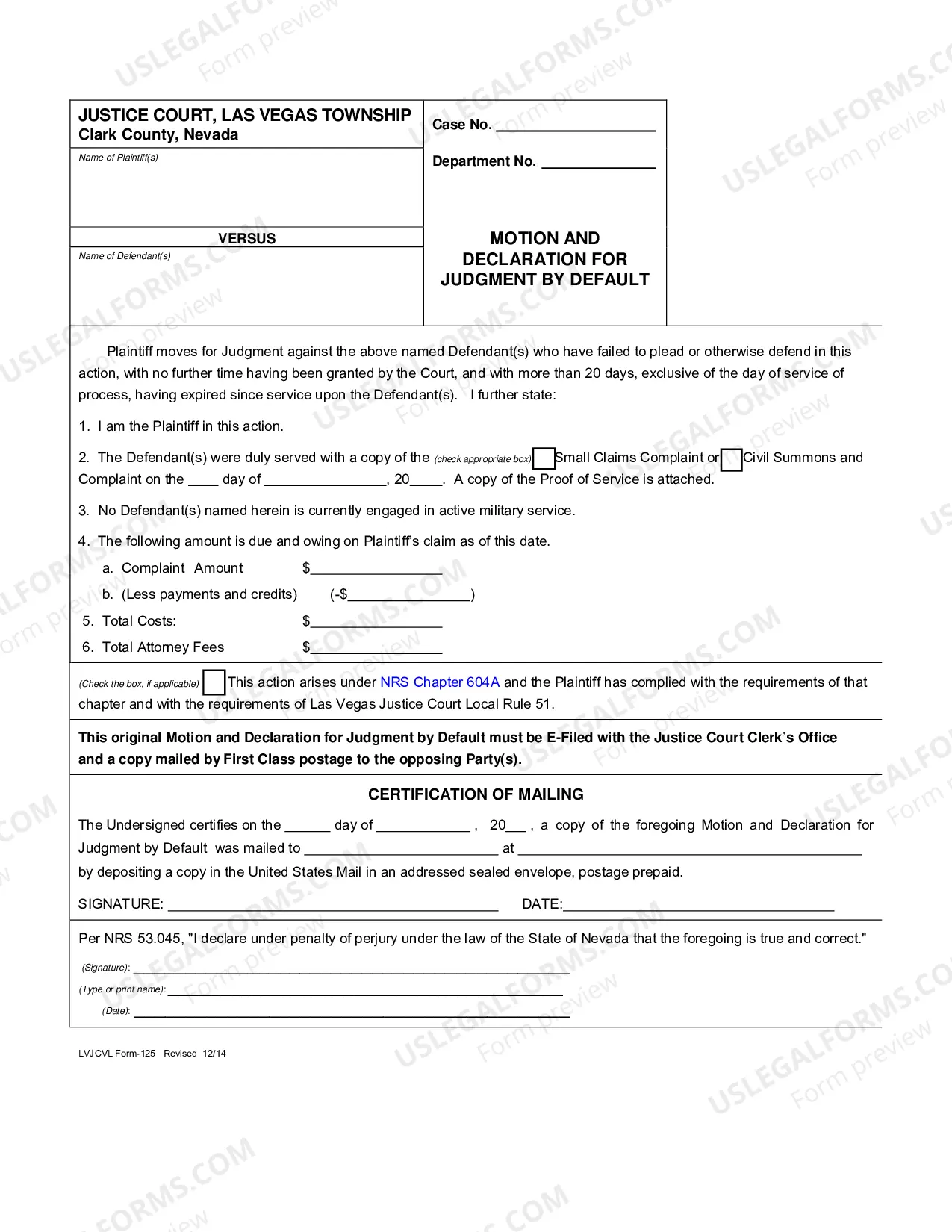
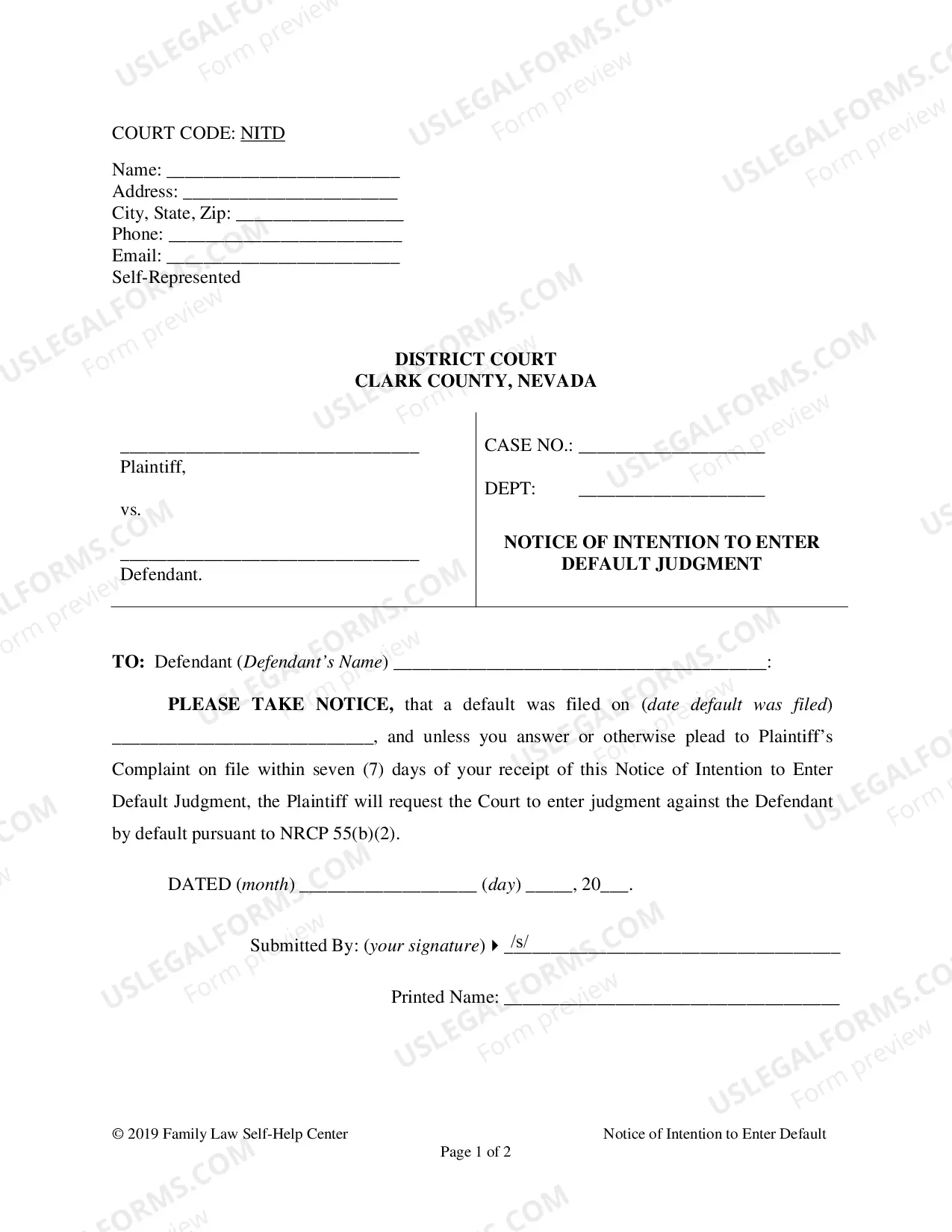
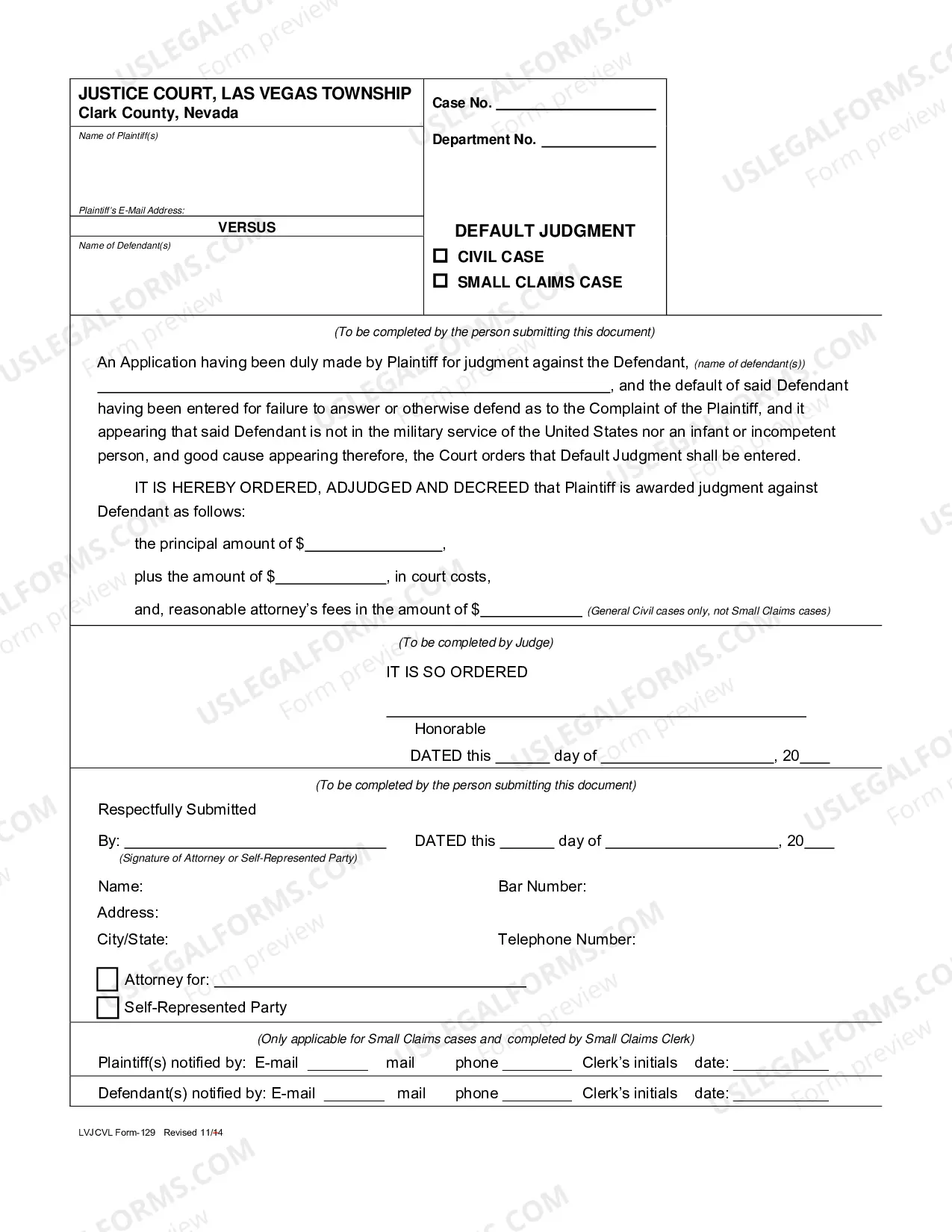
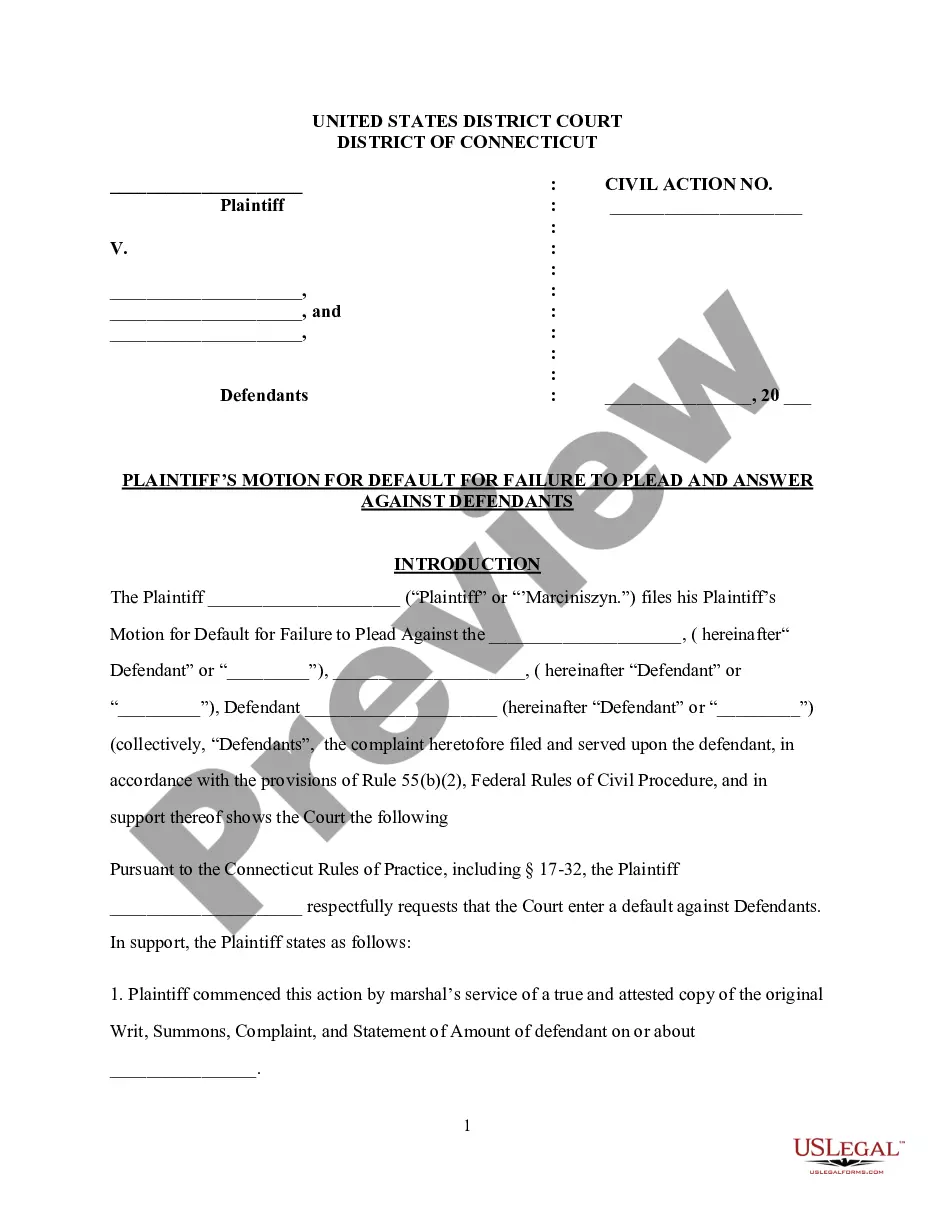
The Motion & Declaration for Judgment by Default is a legal document used in lawsuits when a defendant does not respond or defend against a plaintiff's claims within the specified timeframe. This form requests the court to issue a judgment in favor of the plaintiff based on the defendant's failure to appear or respond. Unlike other legal motions, this form focuses specifically on seeking a default judgment when there has been no action from the defendant.
Form components explained
- Case details, including case and department numbers.
- Name of plaintiff(s) and defendant(s).
- Proof of service indicating the defendant was served with the complaint.
- Statement of whether the defendant is in active military service.
- Details of the amount due to the plaintiff, including costs and attorney fees.
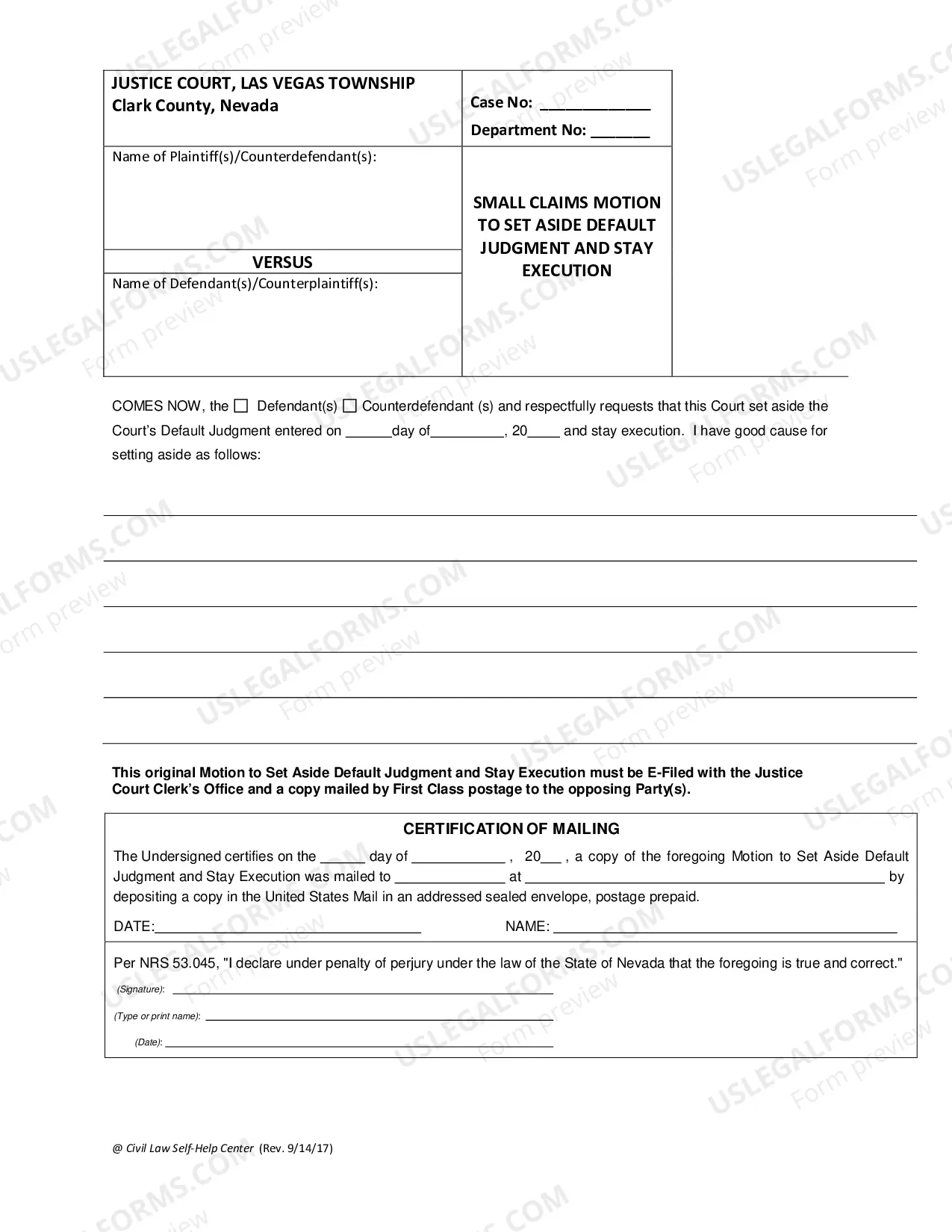
- Certification of mailing procedure for the motion.
When this form is needed
This form should be used when you have filed a lawsuit against a defendant who has failed to respond or defend against your claims. If you have waited more than 20 days since serving the defendant and no further time has been granted by the court, you may file this motion to request a judgment by default. Common scenarios include cases where debts are owed, disputes over property, or action in small claims court.
Who should use this form
This form is intended for:
- Individuals or businesses acting as plaintiffs in legal actions.
- Anyone seeking a default judgment against a non-responsive defendant.
- People who wish to resolve their claim efficiently after the defendant's failure to respond.
How to complete this form
- Enter the case number and department number at the top of the form.
- Fill in the names of the plaintiff(s) and defendant(s).
- Indicate the date the defendant was served and check the appropriate box for the type of complaint.
- Provide details regarding the amount due, including any relevant deductions for payments or credits.
- Complete the certification of mailing section to confirm that the defendant has been notified of the motion.
- Sign and date the form, including any required notarization or unsworn declaration.
Notarization guidance
Notarization is not commonly needed for this form. However, certain documents or local rules may make it necessary. Our notarization service, powered by Notarize, allows you to finalize it securely online anytime, day or night.
Get your form ready online
Our built-in tools help you complete, sign, share, and store your documents in one place.
Make edits, fill in missing information, and update formatting in US Legal Forms—just like you would in MS Word.
Download a copy, print it, send it by email, or mail it via USPS—whatever works best for your next step.
Sign and collect signatures with our SignNow integration. Send to multiple recipients, set reminders, and more. Go Premium to unlock E-Sign.
If this form requires notarization, complete it online through a secure video call—no need to meet a notary in person or wait for an appointment.
We protect your documents and personal data by following strict security and privacy standards.

Make edits, fill in missing information, and update formatting in US Legal Forms—just like you would in MS Word.

Download a copy, print it, send it by email, or mail it via USPS—whatever works best for your next step.

Sign and collect signatures with our SignNow integration. Send to multiple recipients, set reminders, and more. Go Premium to unlock E-Sign.

If this form requires notarization, complete it online through a secure video call—no need to meet a notary in person or wait for an appointment.

We protect your documents and personal data by following strict security and privacy standards.
Avoid these common issues
- Failing to provide proof of service with the motion.
- Not checking whether the defendant is in active military service, which can affect the filing process.
- Incorrectly calculating the amounts due, leading to disputes over the judgment.
- Forgetting to sign or date the document, which can render the motion invalid.
Advantages of online completion
- Convenience: Easily access and complete the form from home.
- Editability: Make changes and customize the form to fit your specific case.
- Reliability: Utilize professionally drafted templates to ensure legal compliance.
Looking for another form?


Form popularity
FAQ
(B) The court must dismiss an action for want of prosecution if a plaintiff fails to bring the action to trial within 5 years after the action was filed.
Regular Motions: You have only 14 days to respond to a regular motion. The time to respond runs from the date the motion was filed. Check the certificate of service, which should be included with the Motion papers.
CHECKLIST: HOW TO PREPARE A MOTION Complete the Declaration. A ?declaration? is a statement of facts signed under penalty of perjury.Complete the Motion. Fill in the case caption.Complete the Proposed Order. You may submit a proposed order with your motion.Prepare the Certificate of Service.Mark your calendar.
Within 14 days after the service of the motion, the opposing party shall serve and file a written opposition thereto, together with a memorandum of points and authorities and supporting affidavits, if any, stating facts showing why the motion should be denied.
Case law and field research indicate that the primary goals of sanctions imposed under Rule 11 include deterrence and compensation. Satellite litigation occurred primarily in cases involving large compensatory sanction awards, not in those involving modest monetary or nonmonetary sanctions.
Rule 11 - Signing Pleadings, Motions, and Other Papers; Representations to the Court; Sanctions (a) Signature. Every pleading, written motion, and other paper must be signed by at least one attorney of record in the attorney's name-or by a party personally if the party is unrepresented.
Federal Rule of Civil Procedure 11 provides that a district court may sanction attorneys or parties who submit pleadings for an improper purpose or that contain frivolous arguments or arguments that have no evidentiary support.
A defendant may plead guilty, not guilty, or, with the consent of the court, nolo contendere. If the defendant refuses to plead, or if a defendant corporation fails to appear, the court must enter a plea of not guilty.