Nevada Quitclaim Deed - Husband and Wife to Two Individuals
What is this form?
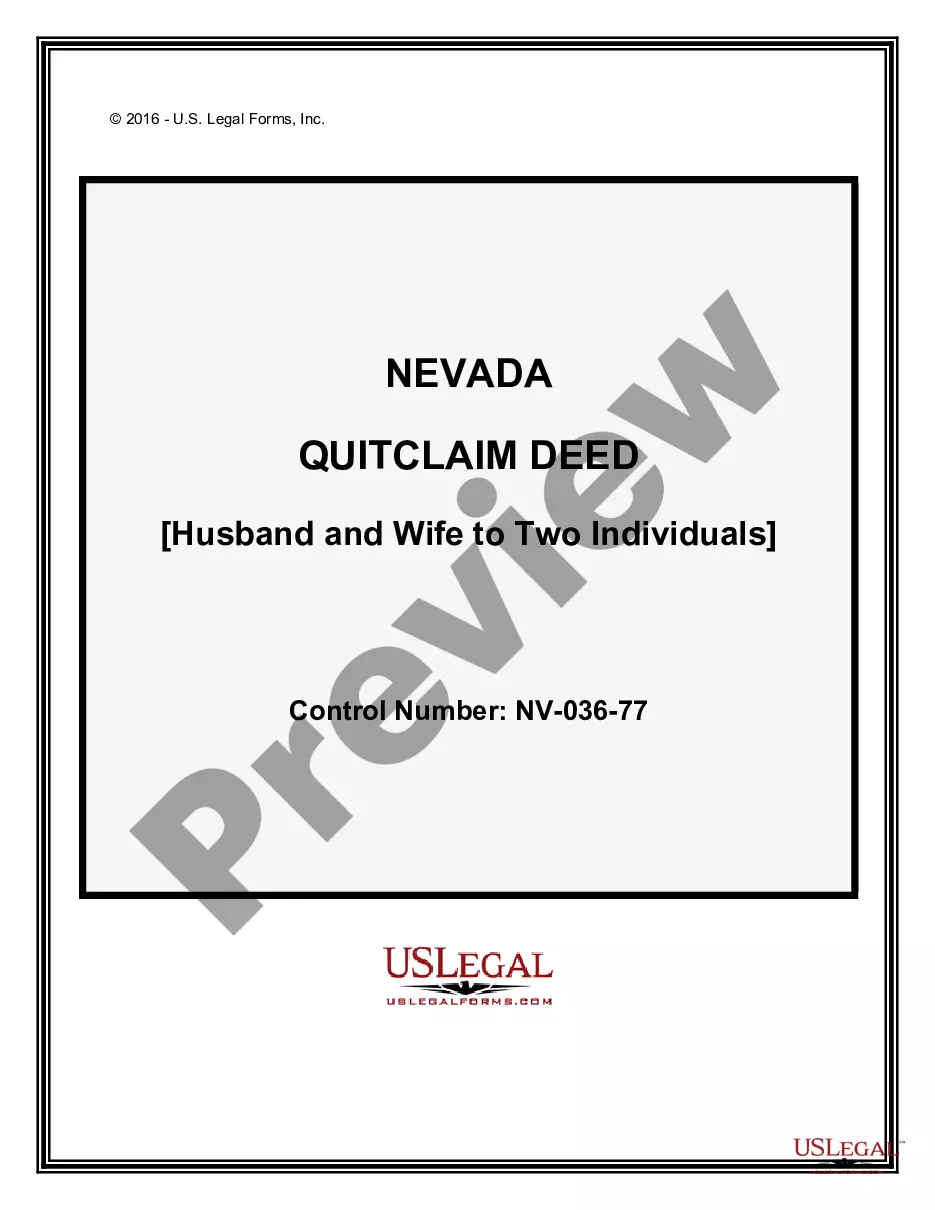
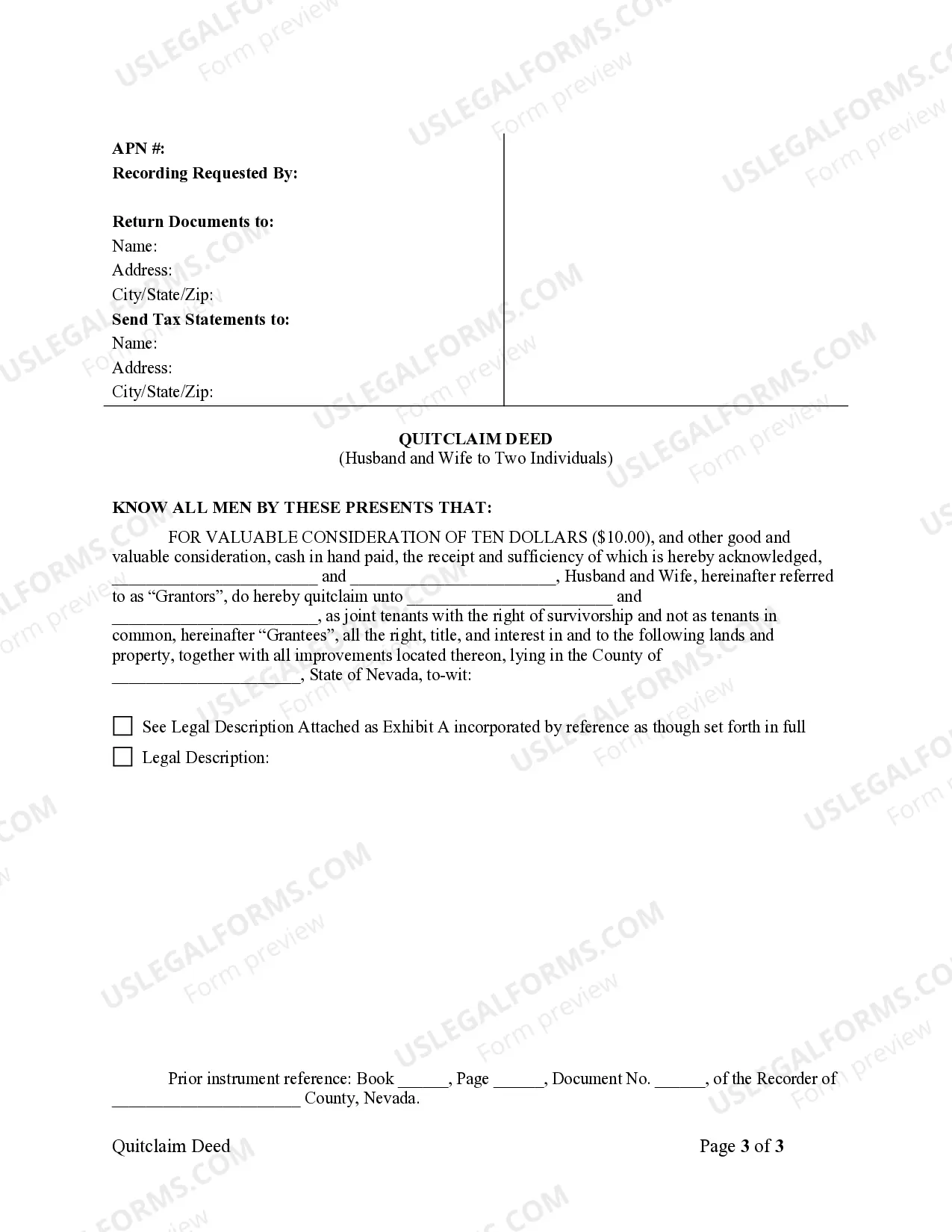
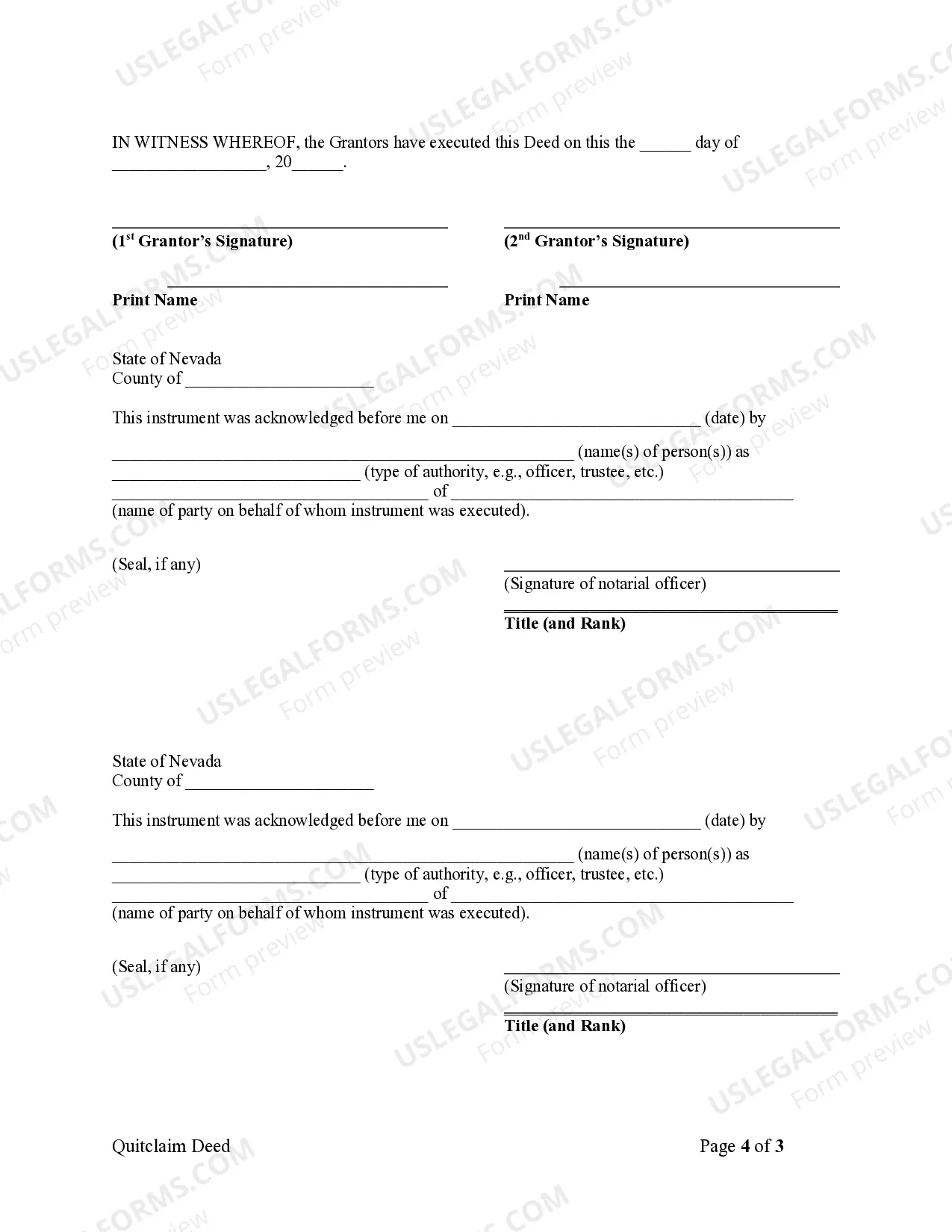
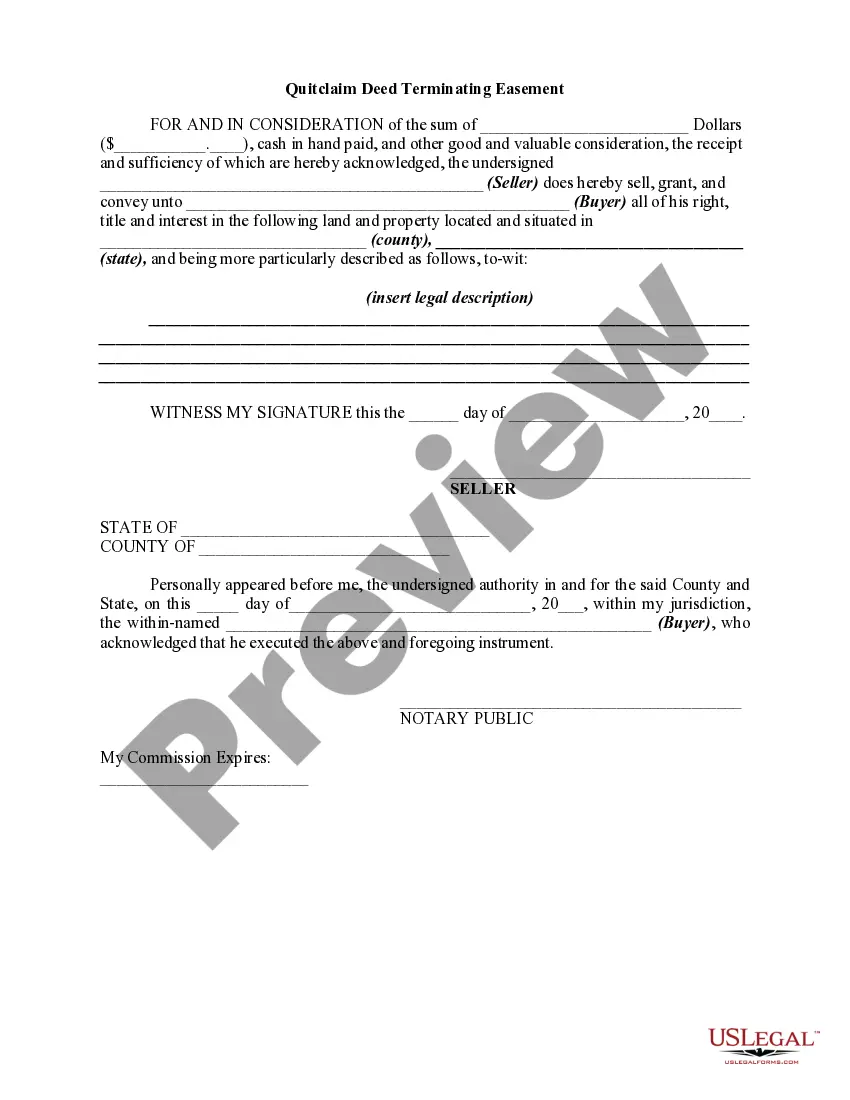
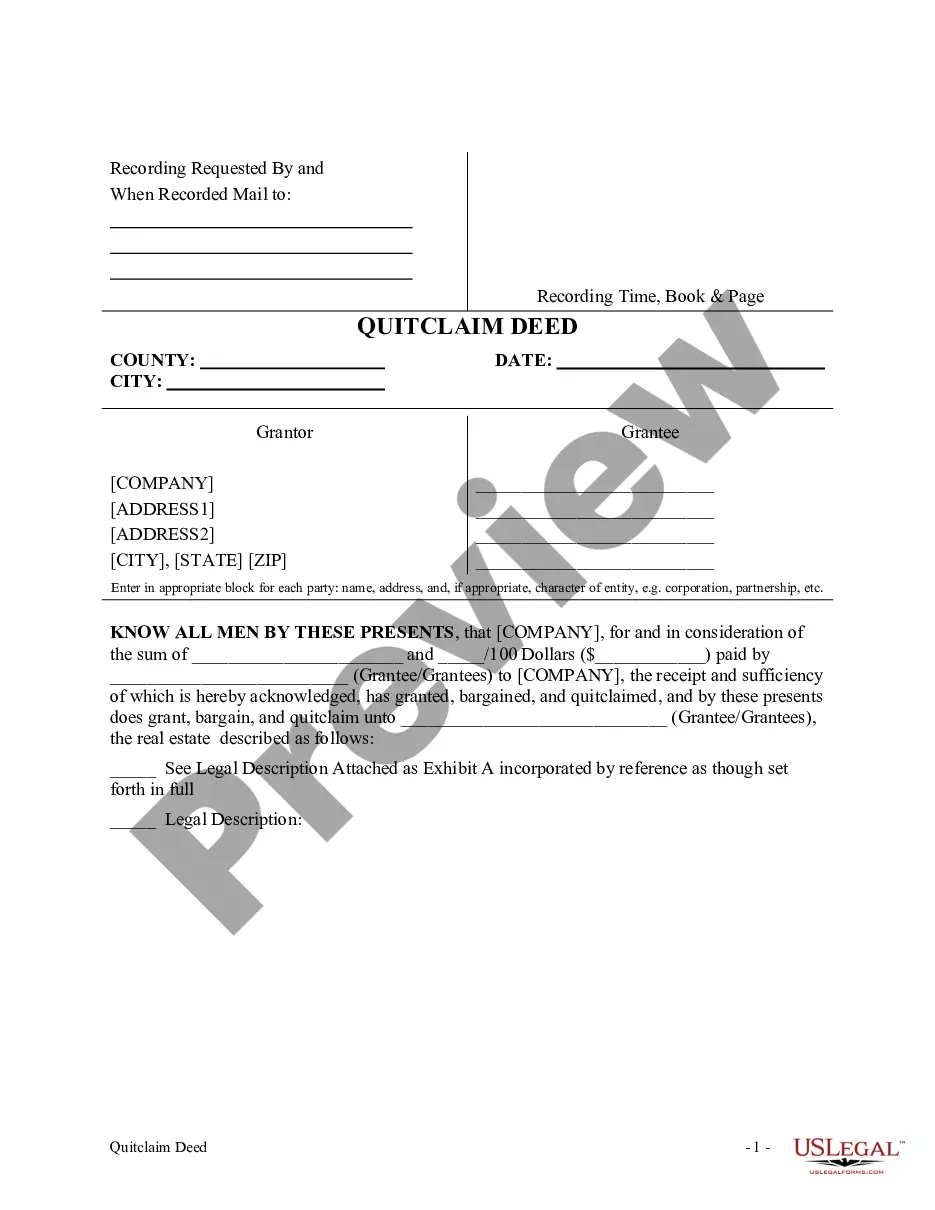
The Quitclaim Deed - Husband and Wife to Two Individuals is a legal document that enables a married couple (the Grantors) to transfer their interest in a property to two individuals (the Grantees) as joint tenants with the right of survivorship. This deed ensures that the Grantees share ownership equally, and if one passes away, the other automatically inherits their interest in the property. This form is distinct from other types of deeds, such as warranty deeds, as it does not guarantee that the Grantors hold clear title to the property being conveyed.
Form components explained
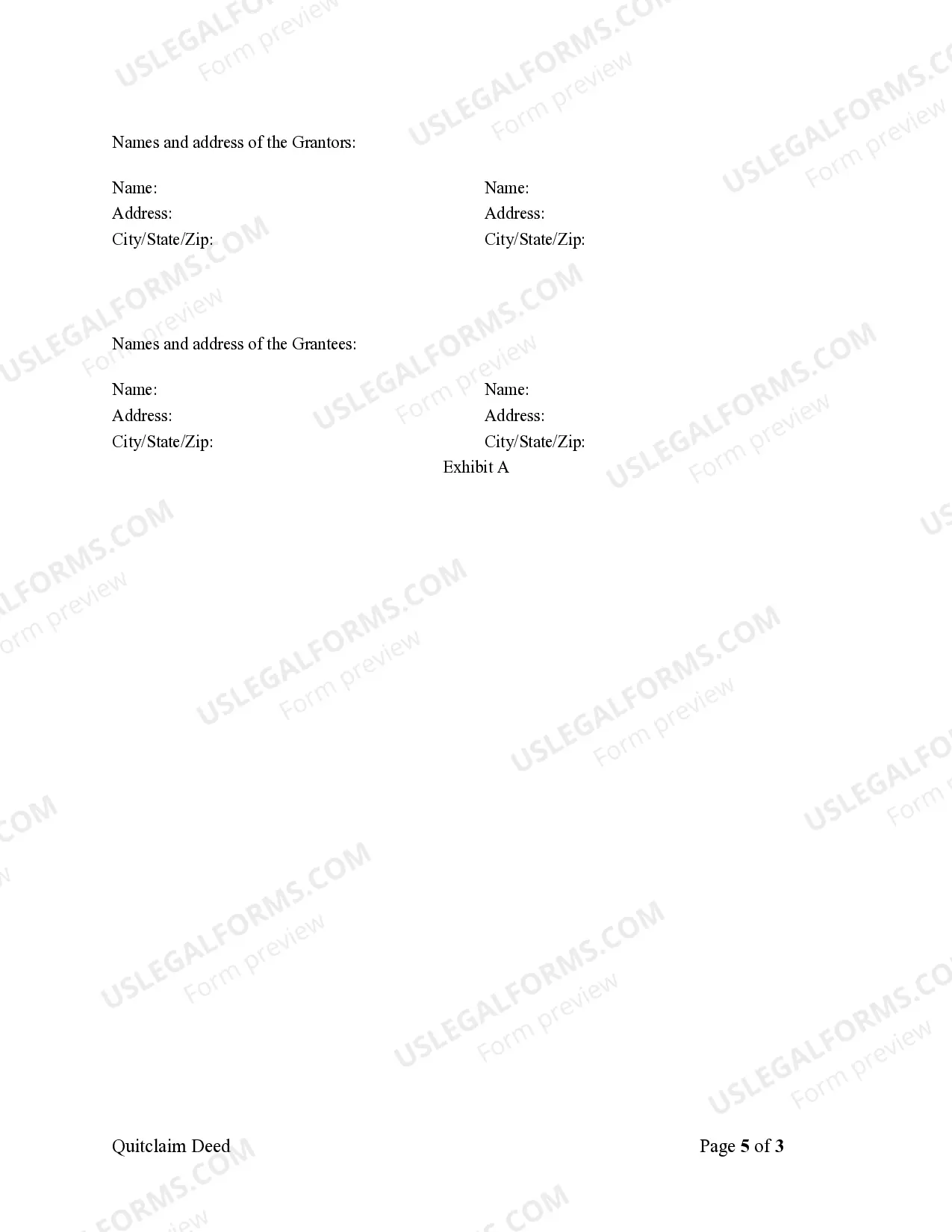
- Identifying information of the Grantors (Husband and Wife).
- Names of the Grantees (two individuals receiving the property).
- Property description detailing the real estate being transferred.
- Joint tenancy clause stating the right of survivorship.
- Signatures of the Grantors to confirm the transfer of interest.

When this form is needed
This Quitclaim Deed is typically used when a married couple wants to transfer property ownership to two individuals, such as family members or friends. It is commonly utilized in situations like estate planning, dissolution of marriage, or when the couple wishes to give a property as a gift to loved ones. This deed helps simplify the transfer process and clarifies ownership rights, especially in cases involving joint tenants.
Who should use this form
- Married couples looking to transfer property ownership.
- Individuals wanting to establish joint tenancy with rights of survivorship.
- Those involved in estate planning or property division.
- Anyone seeking to clarify property interests without warranty guarantees.
How to prepare this document
- Identify the Grantors by providing their full names.
- List the names of the Grantees who will receive the property.
- Provide a detailed description of the property being transferred, including legal descriptions if necessary.
- Include any language confirming that the property is held as joint tenants with right of survivorship.
- Sign and date the document to finalize the deed transfer.
Does this document require notarization?
This form needs to be notarized to ensure legal validity. US Legal Forms provides secure online notarization powered by Notarize, allowing you to complete the process through a verified video call, available anytime.
Get your form ready online
Our built-in tools help you complete, sign, share, and store your documents in one place.
Make edits, fill in missing information, and update formatting in US Legal Forms—just like you would in MS Word.
Download a copy, print it, send it by email, or mail it via USPS—whatever works best for your next step.
Sign and collect signatures with our SignNow integration. Send to multiple recipients, set reminders, and more. Go Premium to unlock E-Sign.
If this form requires notarization, complete it online through a secure video call—no need to meet a notary in person or wait for an appointment.
We protect your documents and personal data by following strict security and privacy standards.

Make edits, fill in missing information, and update formatting in US Legal Forms—just like you would in MS Word.

Download a copy, print it, send it by email, or mail it via USPS—whatever works best for your next step.

Sign and collect signatures with our SignNow integration. Send to multiple recipients, set reminders, and more. Go Premium to unlock E-Sign.

If this form requires notarization, complete it online through a secure video call—no need to meet a notary in person or wait for an appointment.

We protect your documents and personal data by following strict security and privacy standards.
Common mistakes to avoid
- Failing to accurately describe the property can lead to disputes.
- Not including the right of survivorship clause when joint tenancy is intended.
- Inadequate signatures or dates may invalidate the deed.
- Not checking local requirements for filings and records.
Benefits of using this form online
- Convenience of accessing and downloading the form from anywhere at any time.
- Editable fields allow for easy completion on a computer.
- Secure document storage and retrieval for future reference.
- Assurance that the form complies with current legal standards.
Looking for another form?
Form popularity
FAQ
Before adding your spouse to the deed, speak with your attorney. The easiest way to grant your spouse title to your home is via a quitclaim deed (Californians generally use an interspousal grant deed). With a quitclaim deed, you can name your spouse as the property's joint owner.
Discuss property ownership interests. Access a copy of your title deed. Complete, review and sign the quitclaim or warranty form. Submit the quitclaim or warranty form. Request a certified copy of your quitclaim or warranty deed.
A person who signs a quitclaim deed to transfer property they do not own results in no title at all being transferred since there is no actual ownership interest. The quitclaim deed only transfers the type of title you own.
It's often easier to qualify for a joint mortgage, because both spouses can contribute income and assets to the application. However, if one spouse can qualify for a mortgage based on his own income and credit, the mortgage does not need to be in both spouses' names unless you live in a community property state.
To use a Quitclaim Deed to add someone to a property deed or title, you would need to create a Quitclaim Deed and list all of the current owners in the grantor section. In the grantee section, you would list all of the current owners as well as the person you would like to add.
The names on the mortgage show who's responsible for paying back the loan, while the title shows who owns the property. You can put your spouse on the title without putting them on the mortgage; this would mean that they share ownership of the home but aren't legally responsible for making mortgage payments.
California married couples generally have three options to take title to their community (vs separate) property real estate: community property, joint tenancy or Community Property with Right of Survivorship. The latter coming into play in California July of 2001.
In California, all property bought during the marriage with income that was earned during the marriage is deemed "community property." The law implies that both spouses own this property equally, regardless of which name is on the title deed.
In cases where a couple shares a home but only one spouse's name is on it, the home will not automatically pass to the surviving pass, if his or her name is not on the title.