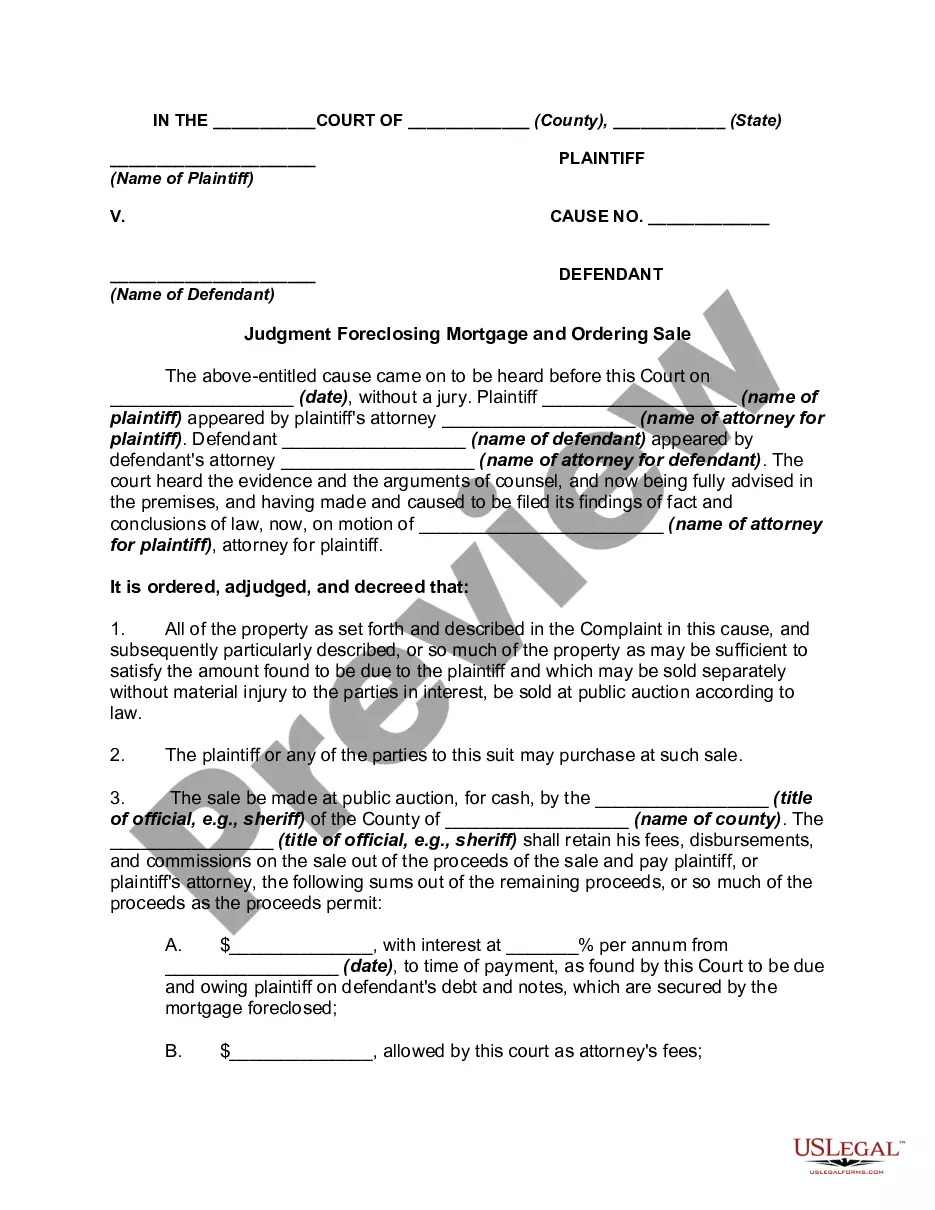
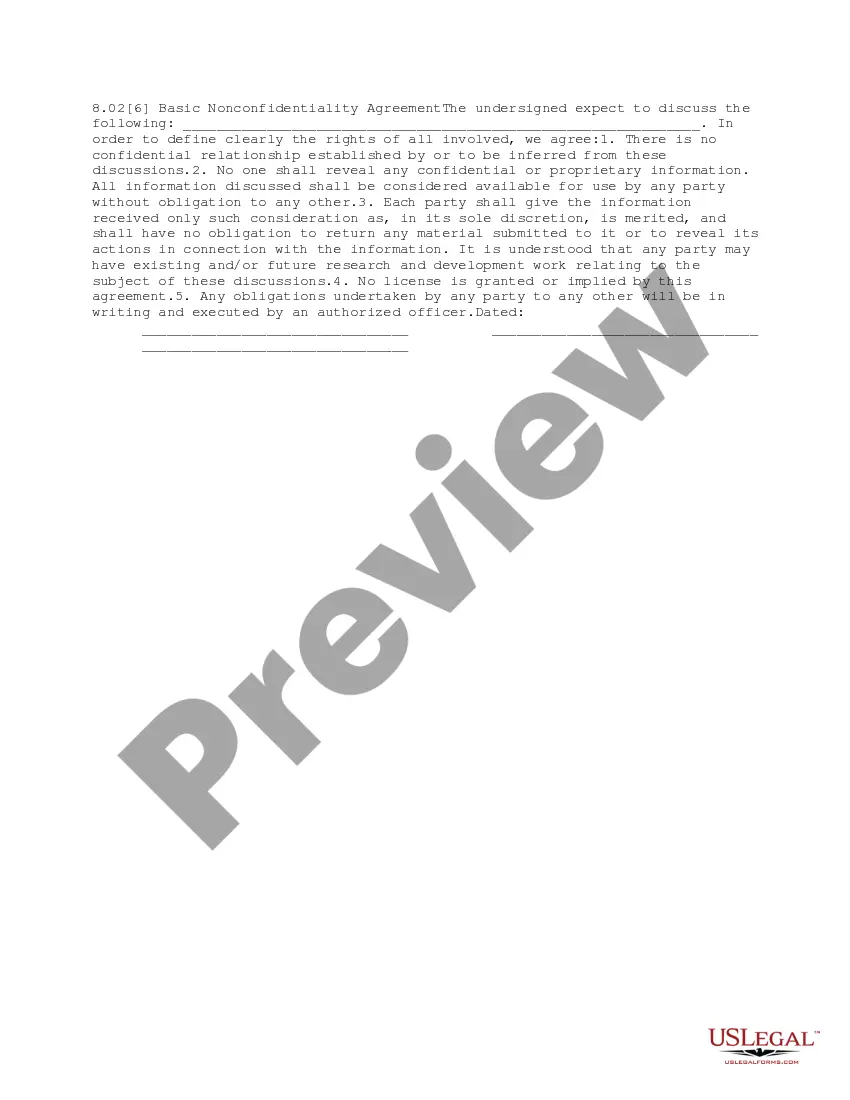
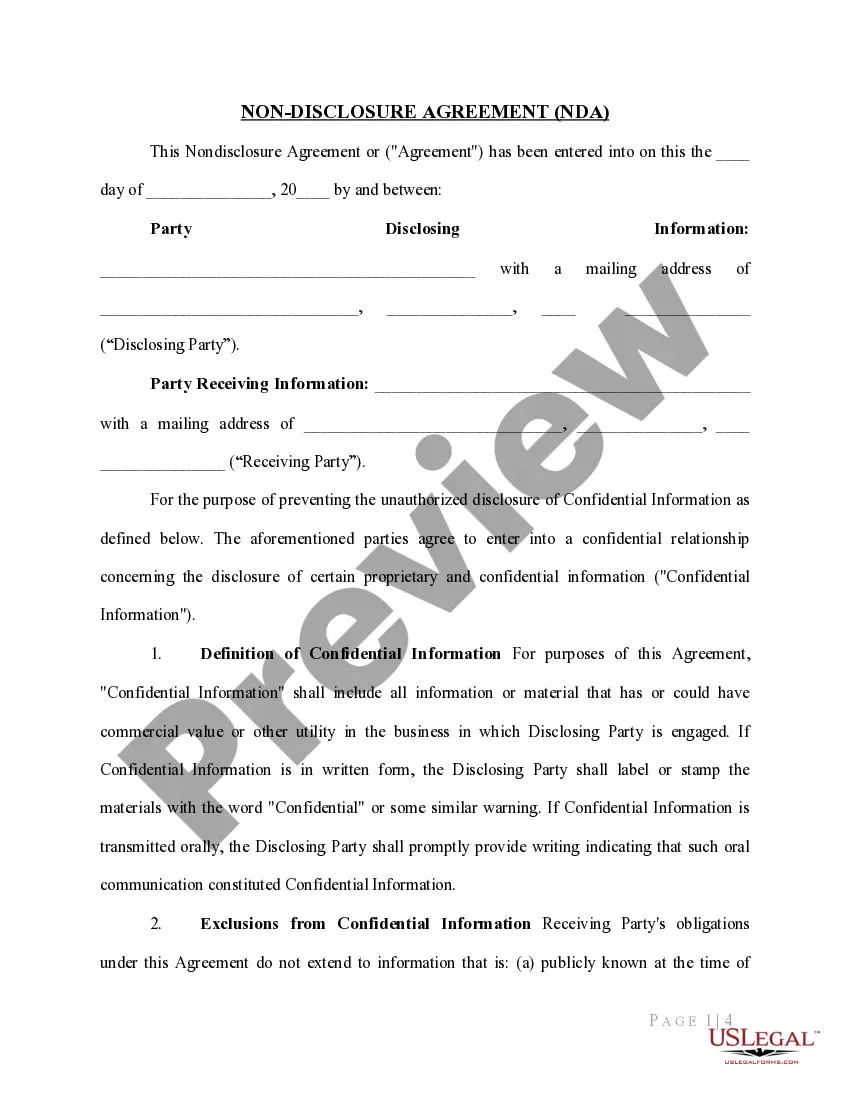
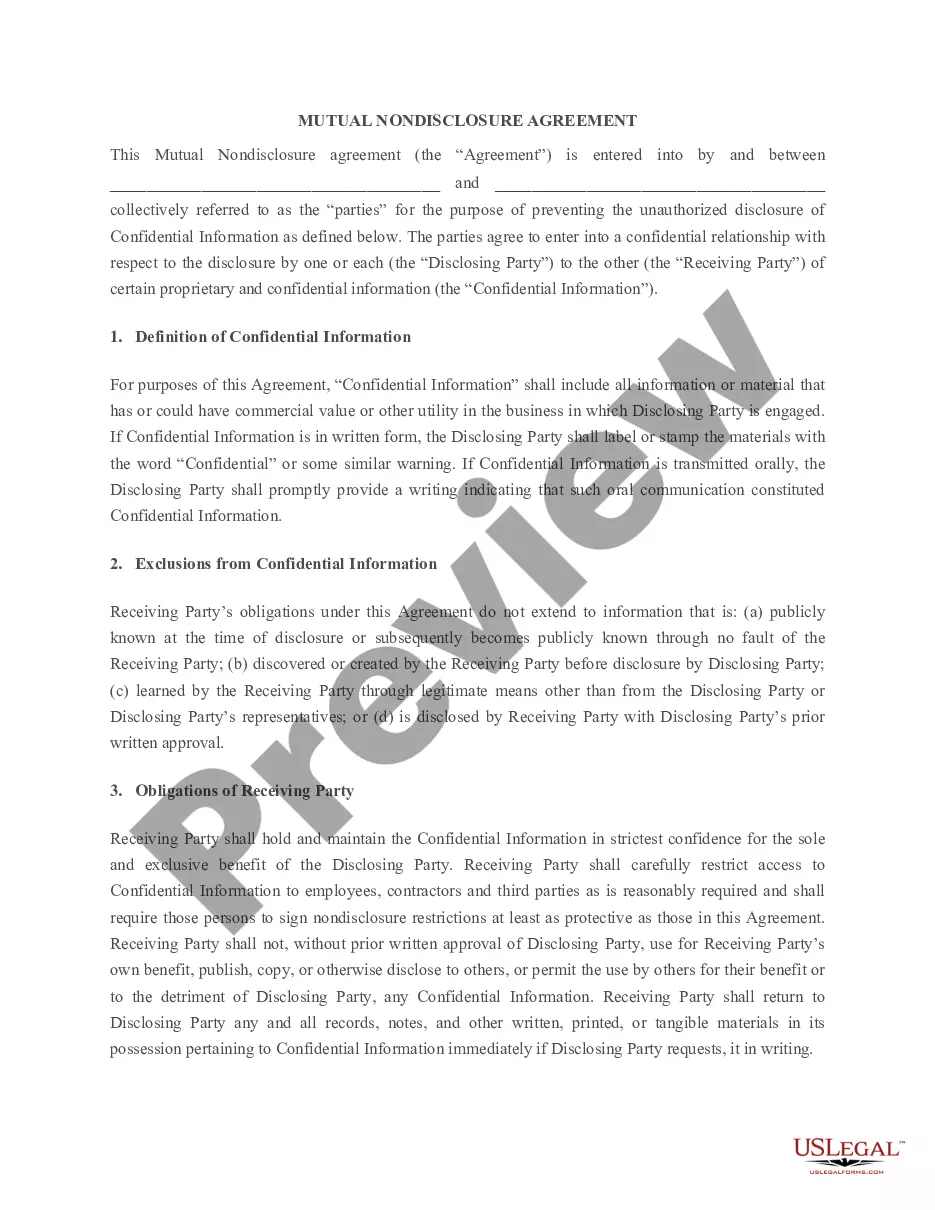
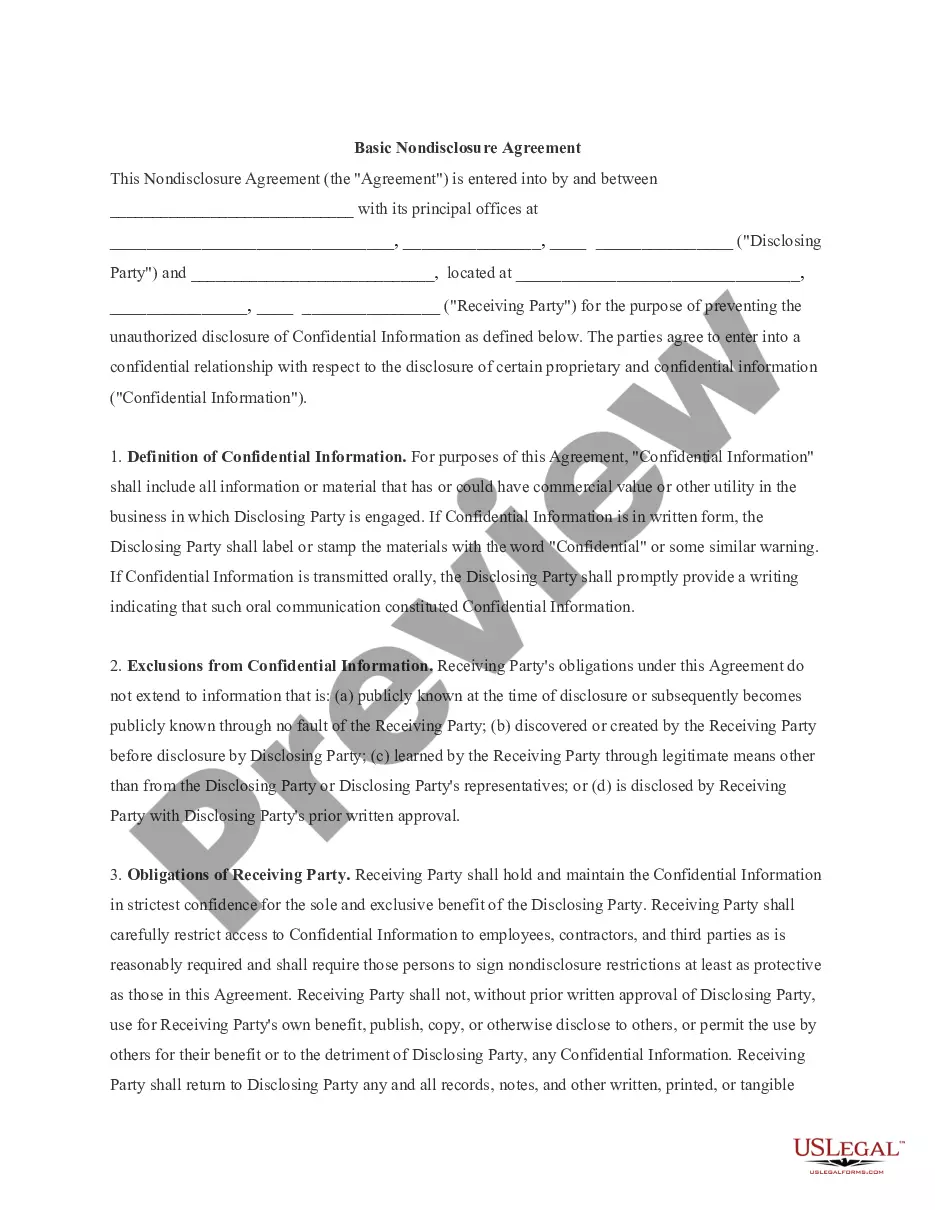
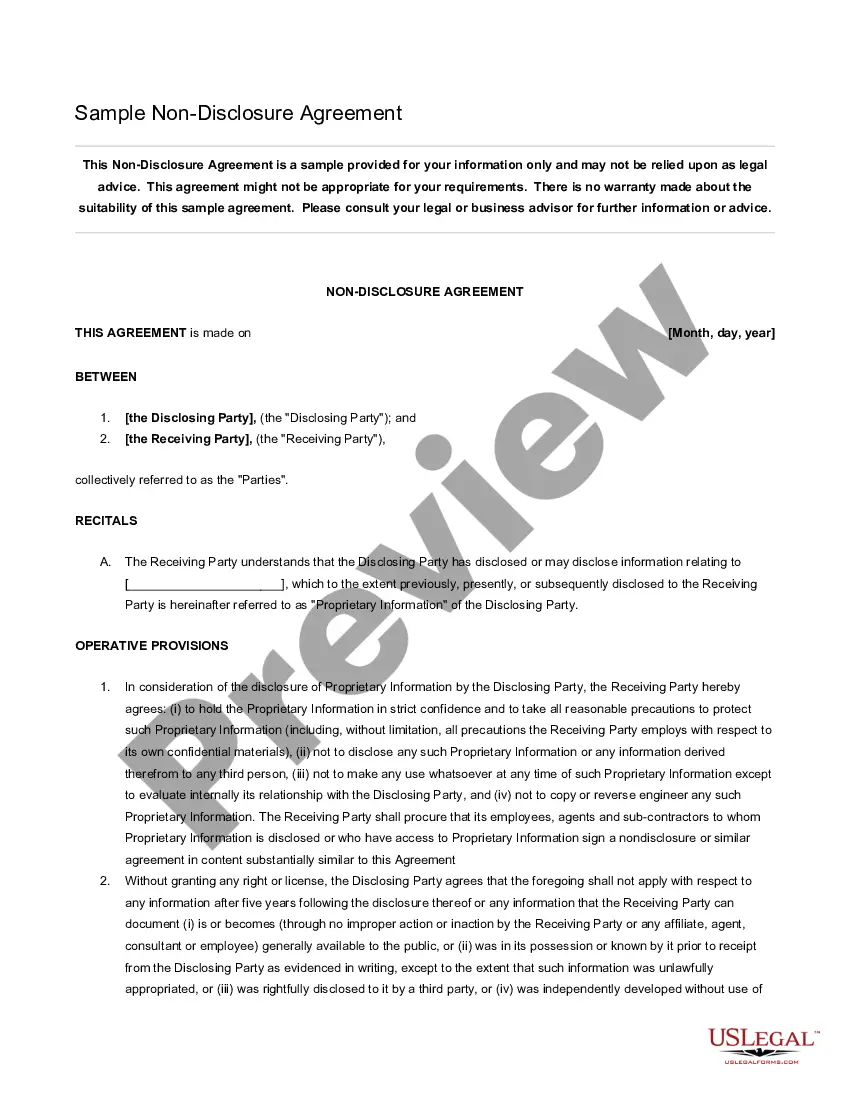
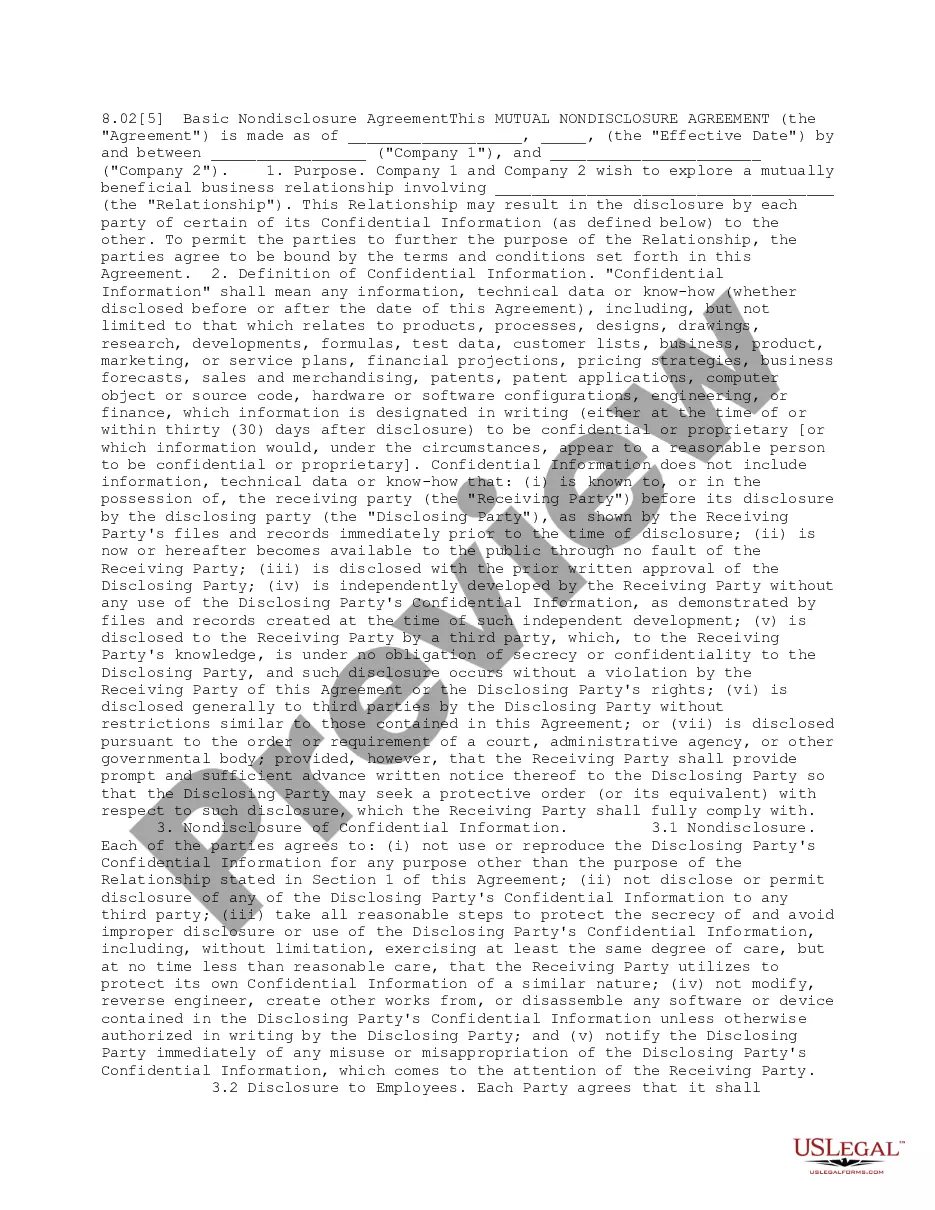
This form is a Basic Nonconfidentiality Agreement for use in negotiations or discussions where possible disclosure of licensing, patents, or commercial trade secrets is a factor.
New Mexico Basic Nonconfidentiality Agreement
State:
Multi-State
Control #:
US-TS8026
Format:
Word;
PDF;
Rich Text
Instant download
Description
Get your form ready online
Our built-in tools help you complete, sign, share, and store your documents in one place.
Built-in online Word editor
Make edits, fill in missing information, and update formatting in US Legal Forms—just like you would in MS Word.
Export easily
Download a copy, print it, send it by email, or mail it via USPS—whatever works best for your next step.
E-sign your document
Sign and collect signatures with our SignNow integration. Send to multiple recipients, set reminders, and more. Go Premium to unlock E-Sign.
Notarize online 24/7
If this form requires notarization, complete it online through a secure video call—no need to meet a notary in person or wait for an appointment.
Store your document securely
We protect your documents and personal data by following strict security and privacy standards.

Make edits, fill in missing information, and update formatting in US Legal Forms—just like you would in MS Word.

Download a copy, print it, send it by email, or mail it via USPS—whatever works best for your next step.

Sign and collect signatures with our SignNow integration. Send to multiple recipients, set reminders, and more. Go Premium to unlock E-Sign.

If this form requires notarization, complete it online through a secure video call—no need to meet a notary in person or wait for an appointment.

We protect your documents and personal data by following strict security and privacy standards.
Looking for another form?

How to fill out Basic Nonconfidentiality Agreement?
US Legal Forms - among the greatest libraries of legal varieties in America - provides a wide range of legal file themes you may acquire or print. Using the internet site, you may get 1000s of varieties for organization and personal functions, categorized by categories, says, or key phrases.You will find the latest versions of varieties much like the New Mexico Basic Nonconfidentiality Agreement within minutes.
If you already have a monthly subscription, log in and acquire New Mexico Basic Nonconfidentiality Agreement from the US Legal Forms catalogue. The Acquire option will show up on each type you perspective. You gain access to all previously saved varieties in the My Forms tab of your own account.
If you would like use US Legal Forms the first time, listed here are straightforward instructions to help you get started:
- Ensure you have picked the best type for your metropolis/county. Click on the Preview option to analyze the form`s information. See the type outline to ensure that you have chosen the right type.
- In case the type doesn`t fit your requirements, take advantage of the Look for area towards the top of the display to find the one that does.
- If you are happy with the shape, affirm your option by simply clicking the Get now option. Then, select the pricing strategy you want and supply your references to sign up to have an account.
- Process the transaction. Utilize your Visa or Mastercard or PayPal account to finish the transaction.
- Find the file format and acquire the shape in your system.
- Make modifications. Fill up, revise and print and indication the saved New Mexico Basic Nonconfidentiality Agreement.
Each template you included with your bank account does not have an expiration day and is the one you have permanently. So, if you wish to acquire or print one more copy, just proceed to the My Forms portion and then click on the type you will need.
Get access to the New Mexico Basic Nonconfidentiality Agreement with US Legal Forms, one of the most considerable catalogue of legal file themes. Use 1000s of specialist and state-particular themes that satisfy your small business or personal requires and requirements.
Form popularity
FAQ
Some companies also require that new employees sign an NDA If the employee has access to sensitive information about the company. For some companies, all employees will be required to sign the agreement; for others, only select departments or types of employees will be subject to the agreement.
Whereas NDAs are often used in business and legal settings to protect trade secrets, client lists, and financial data, confidentiality agreements are typically devised in employment or personal situations to protect sensitive information.
Businesses use employee confidentiality agreements to protect their innovative ideas, effective processes, unique products, or customer information. With a confidentiality agreement, you can train employees on the ins and outs of your business and still protect your company's most private information.
In general, NDAs are used when there is a unilateral flow of classified data, while confidentiality agreements are designed to be used when two or more parties share proprietary information.
To add further confusion, some non-disclosure states may have counties that are full disclosure. The current list of non-disclosure states includes Alaska, Idaho, Kansas, Louisiana, Mississippi, Missouri (some counties), Montana, New Mexico, North Dakota, Texas, Utah, and Wyoming.
The red flag of misuse is when you ask for an NDA for a pitch meeting, a meet and greet, or a job interview. If your idea can be stolen after meeting someone for an hour for the first time, causing you irreparable harm in market, it's probably not a very good idea, or you're a terrible business person.
The Purpose of a Non-Disclosure Agreement An NDA creates the legal framework to protect ideas and information from being stolen or shared with competitors or third parties. Breaking an NDA agreement triggers a host of legal ramifications, including lawsuits, financial penalties, and even criminal charges.
When is a confidentiality agreement needed? A range of commercial transactions and relationships involve either the disclosure of confidential information by one party to the other or a reciprocal exchange of information. In both cases, the parties should have a confidentiality agreement in place.