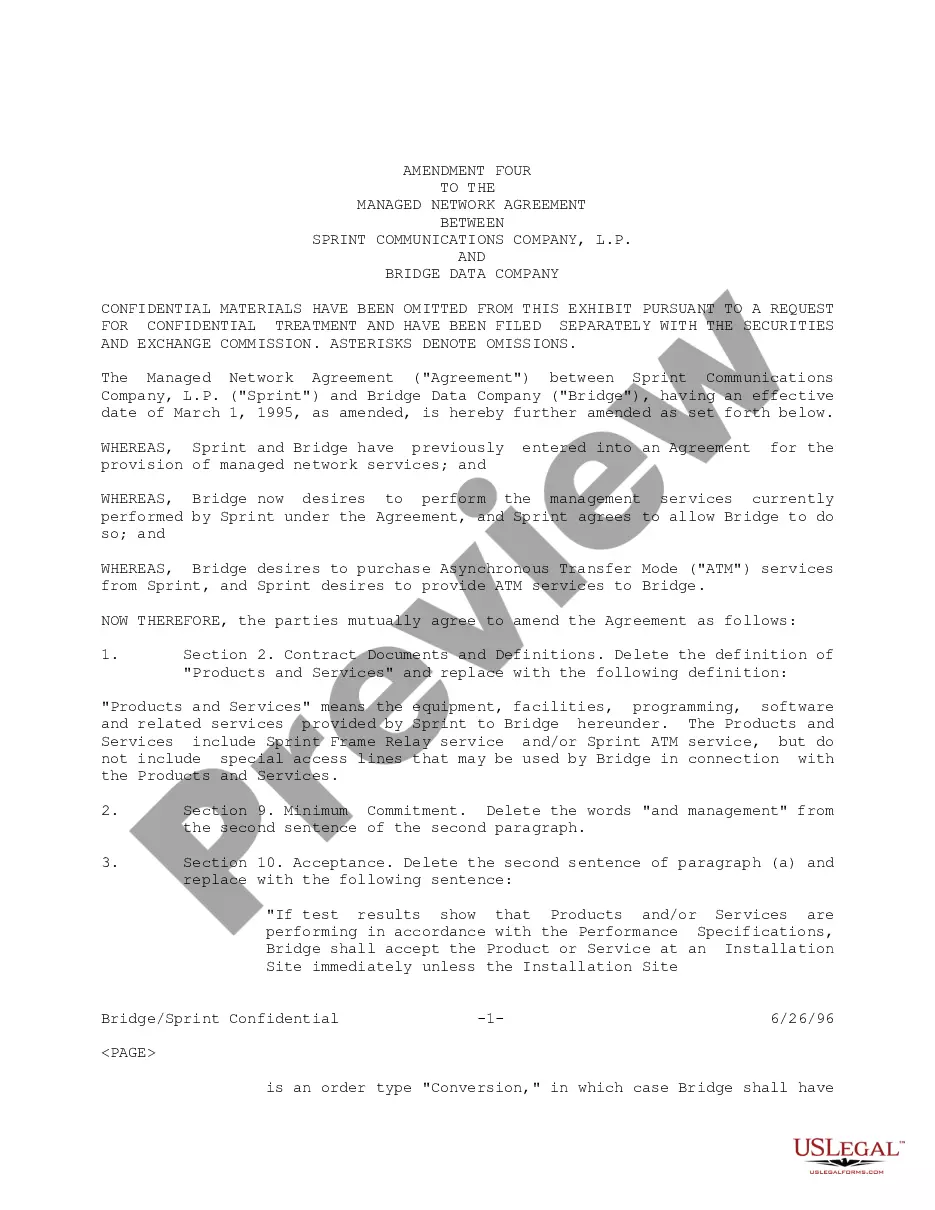
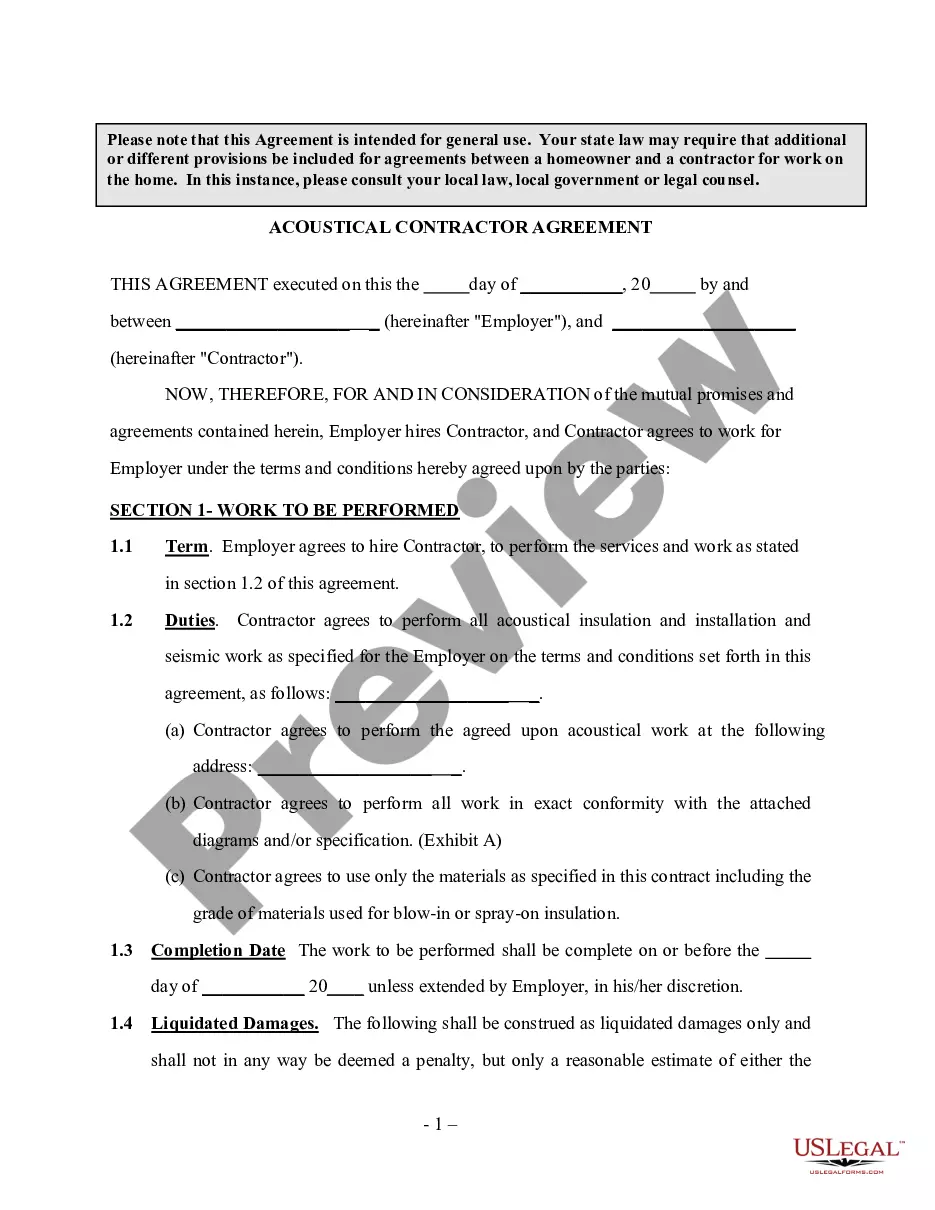
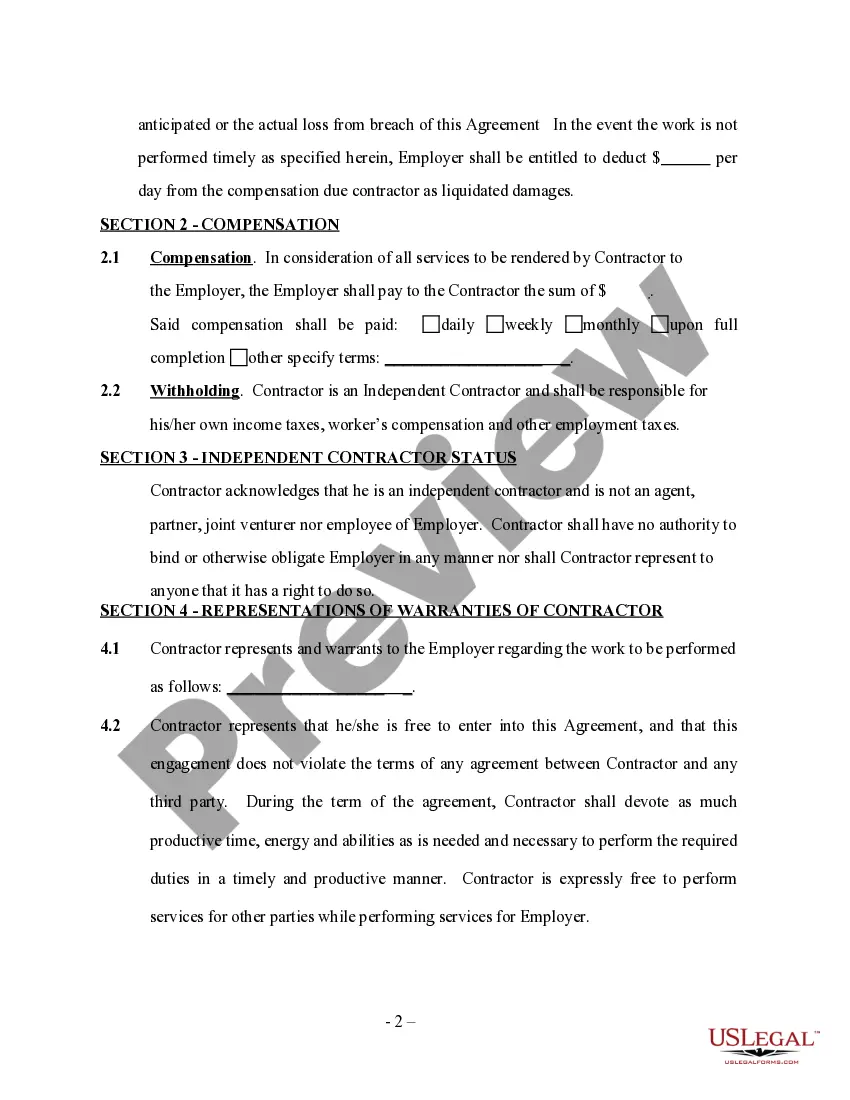
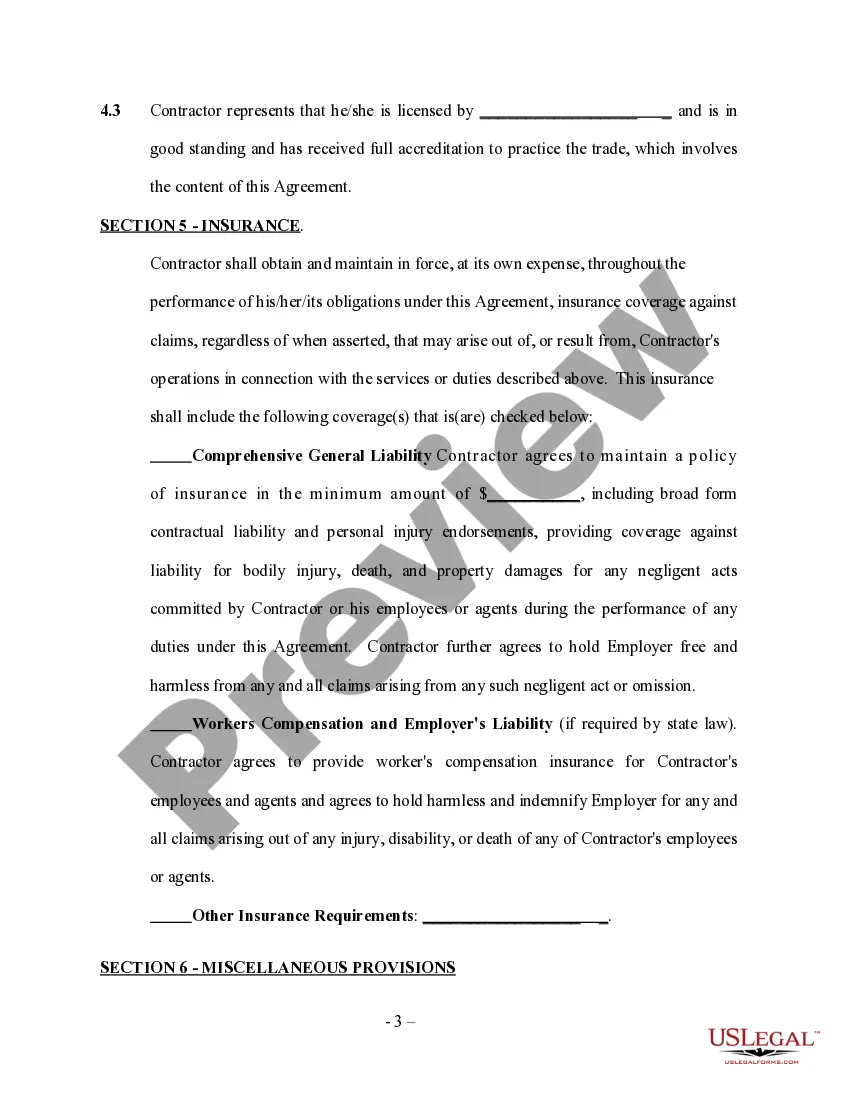
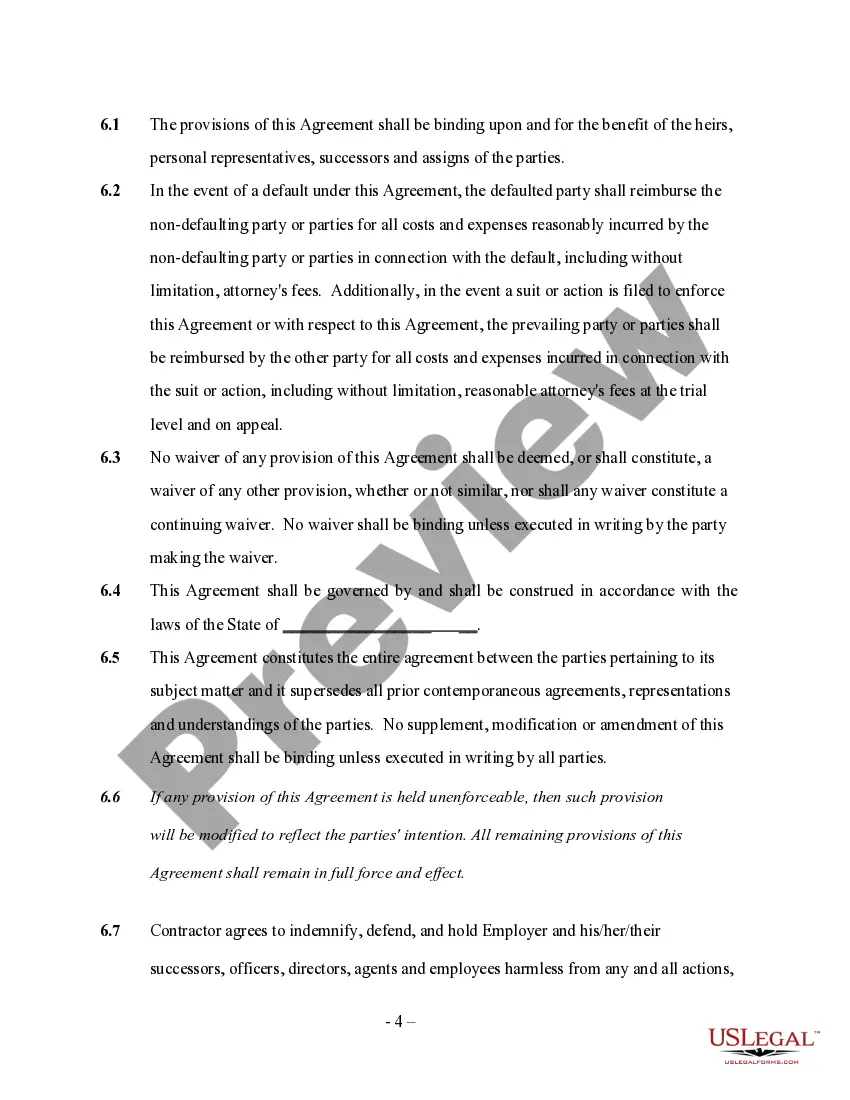
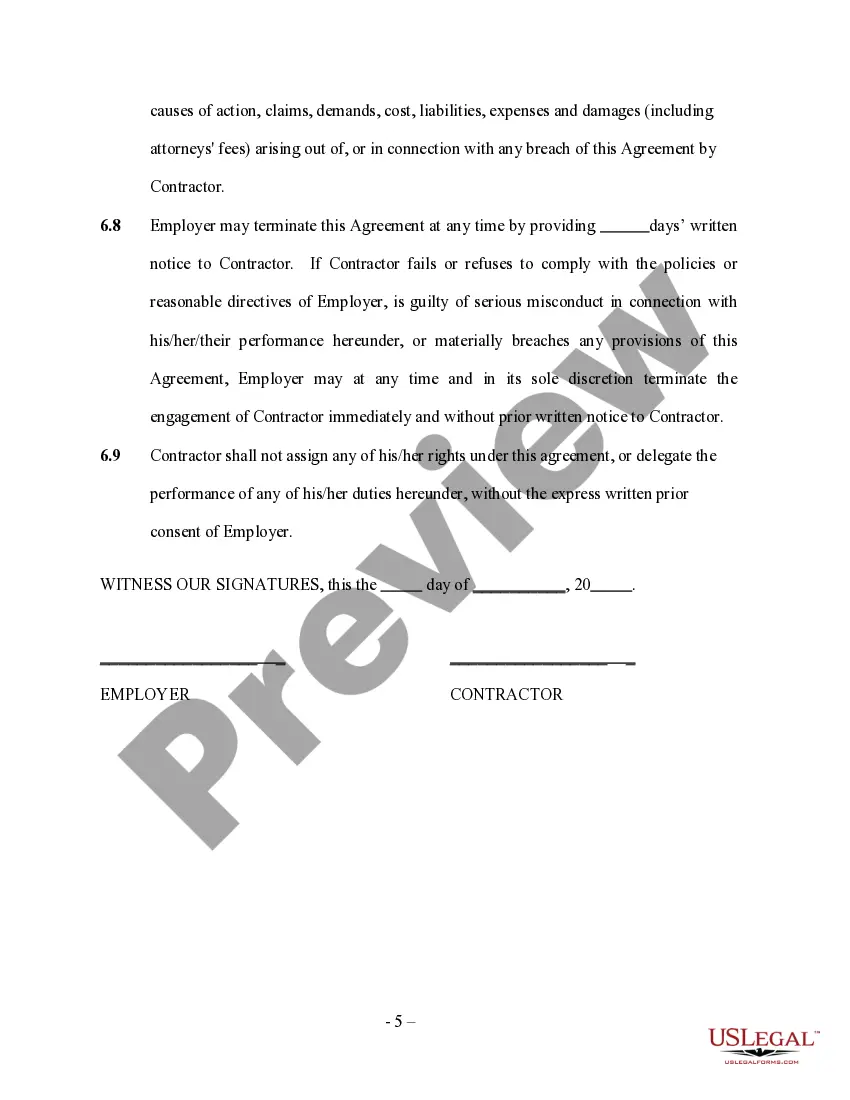
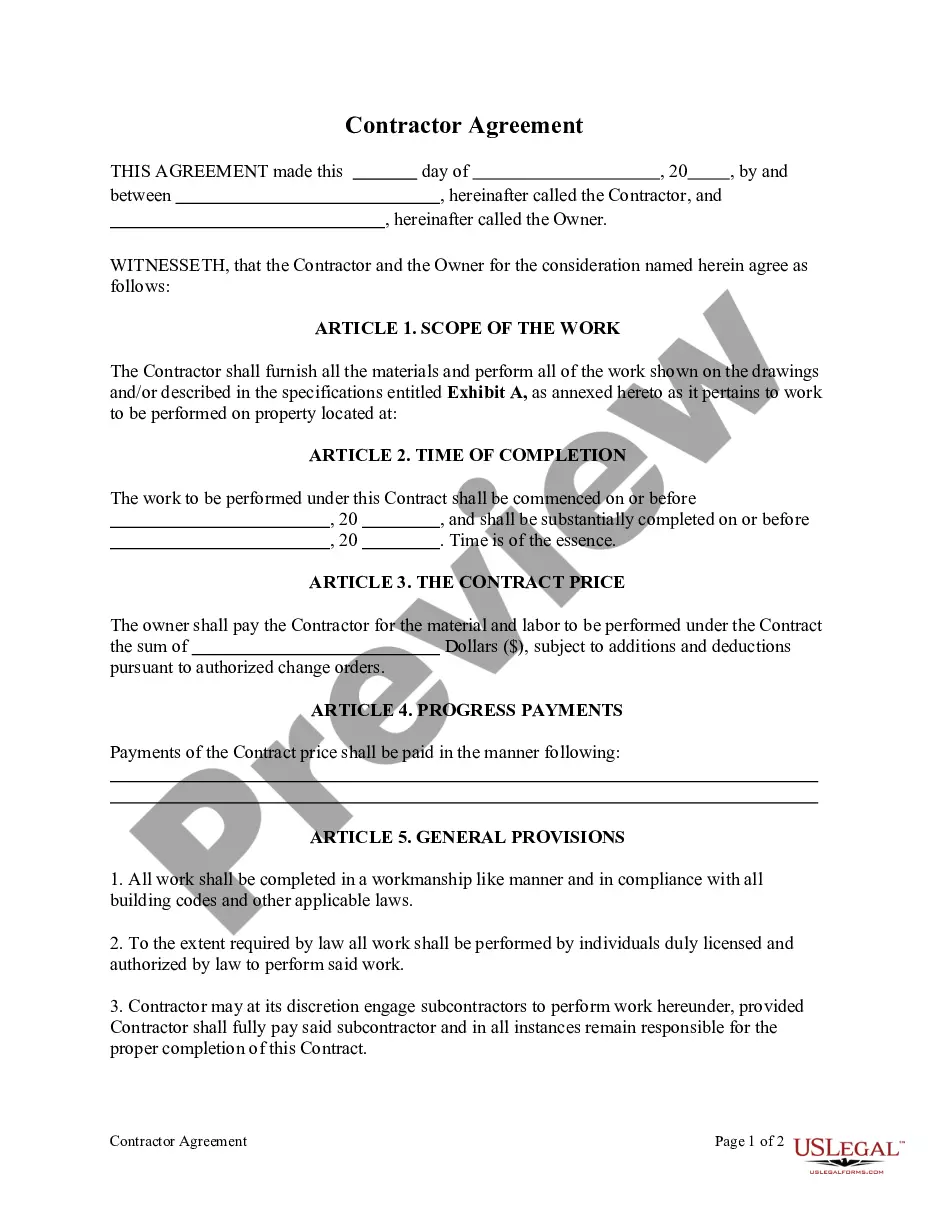
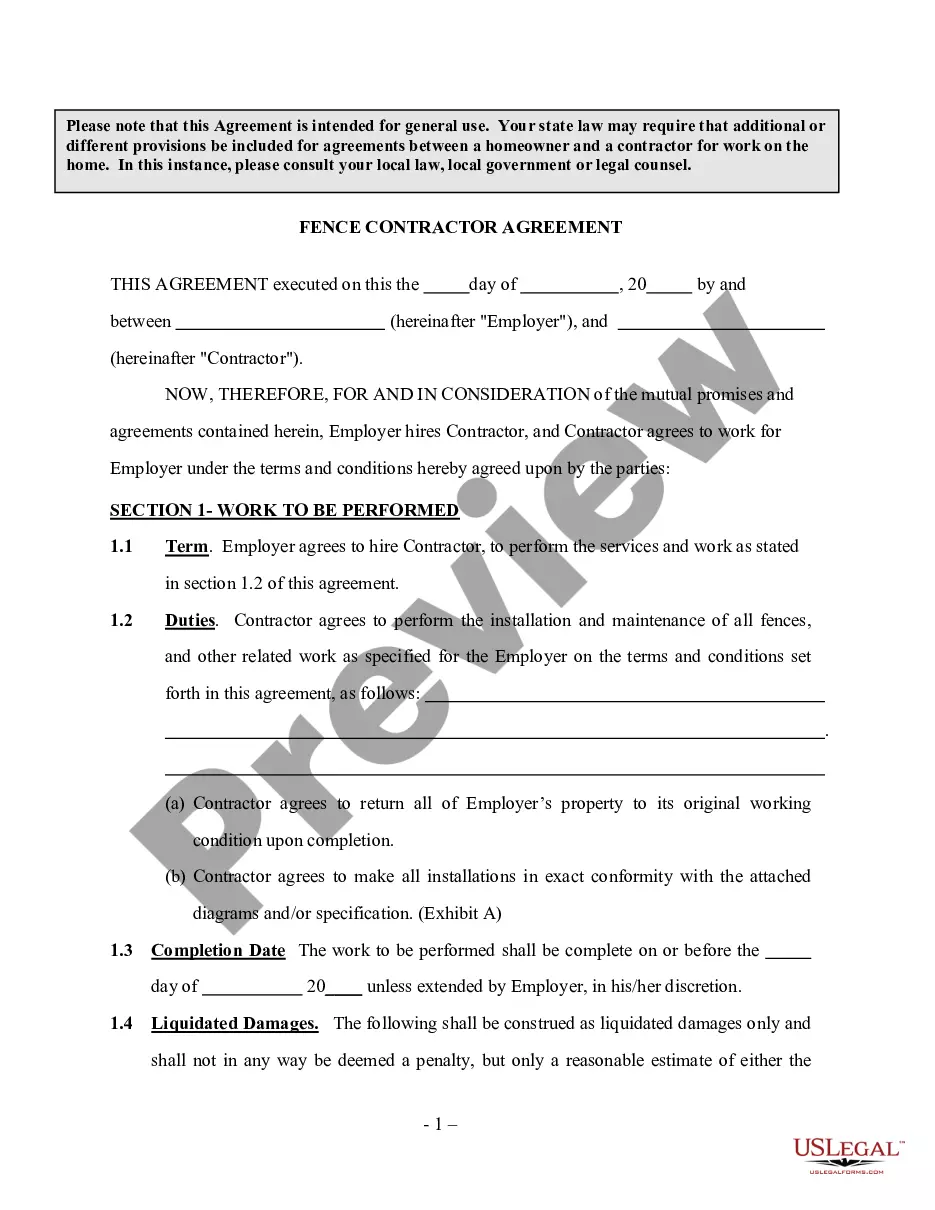
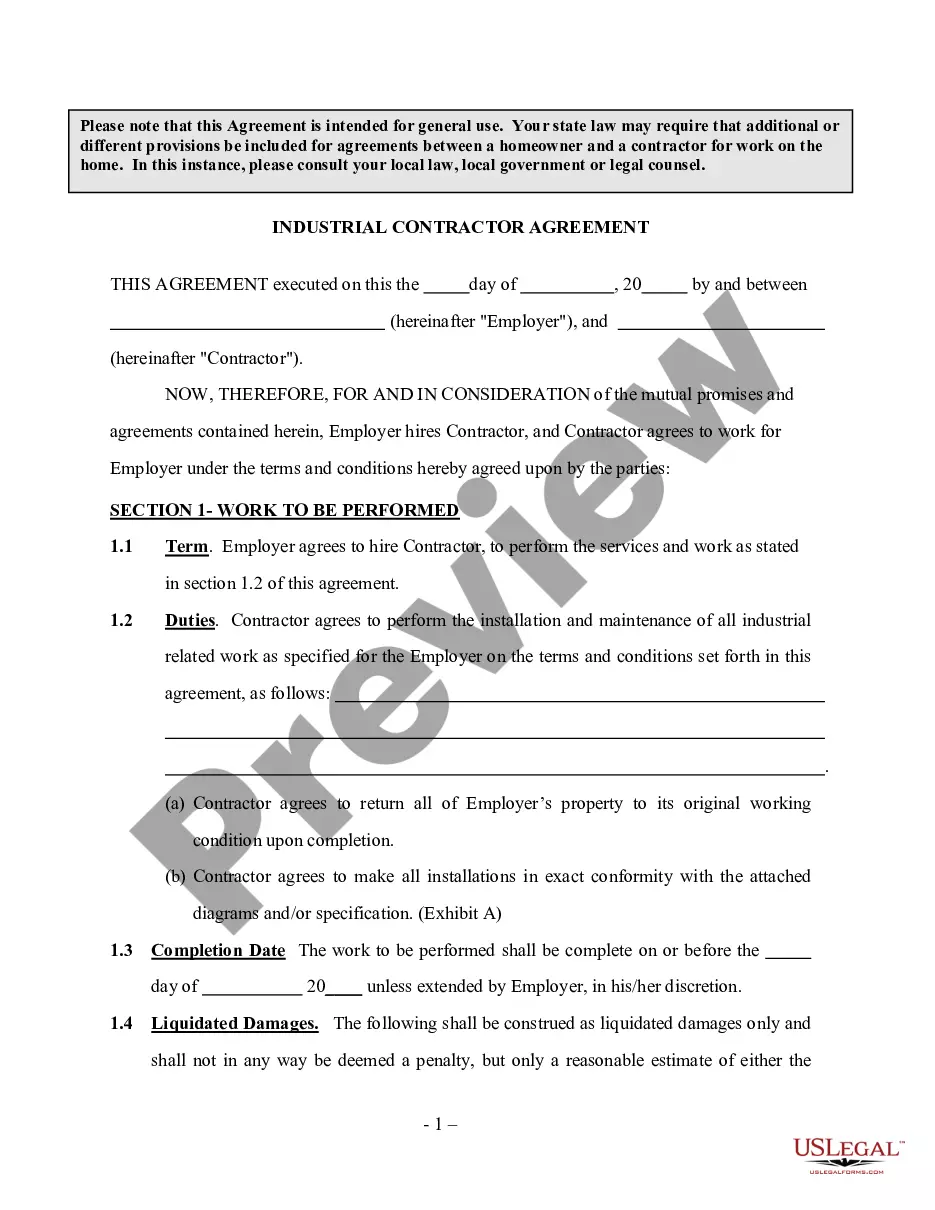
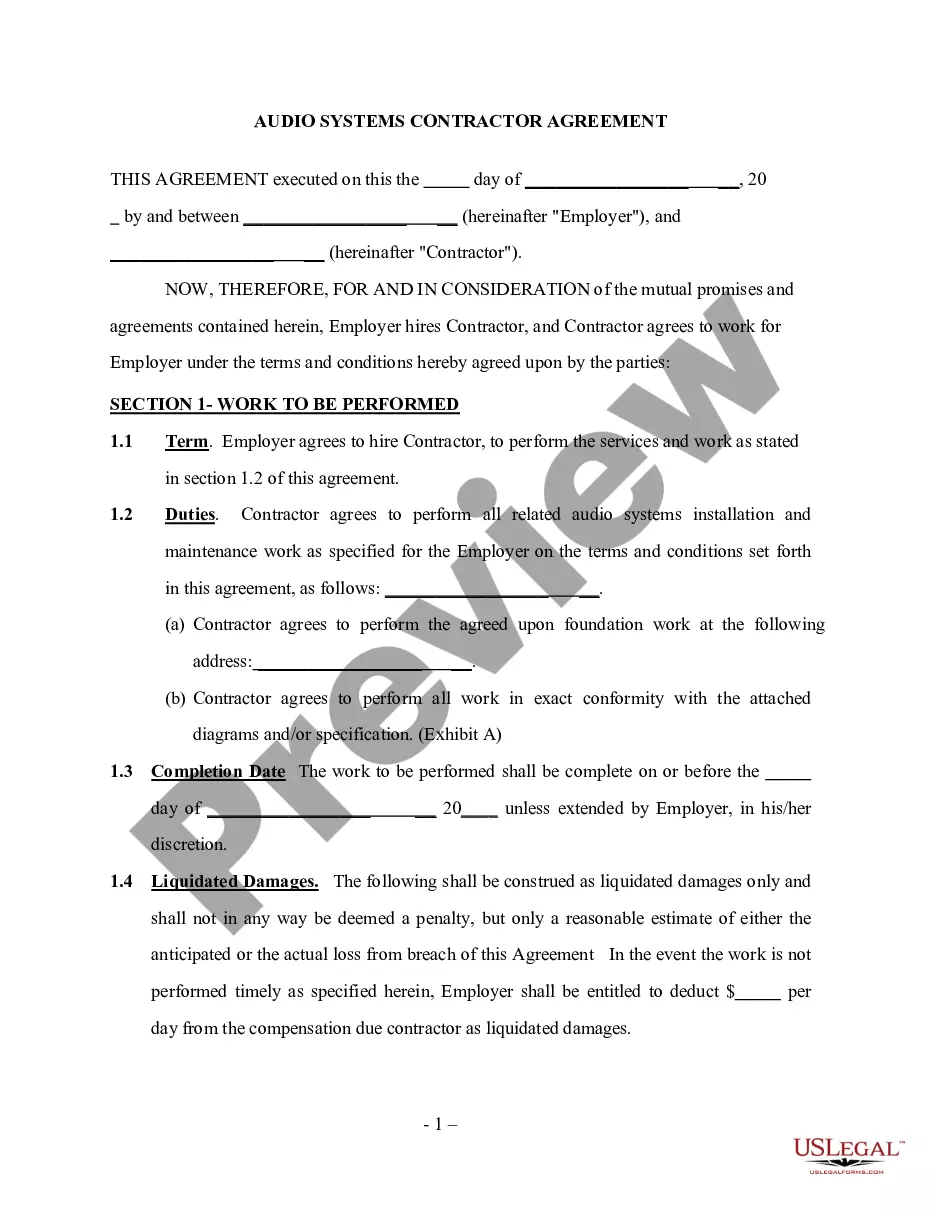
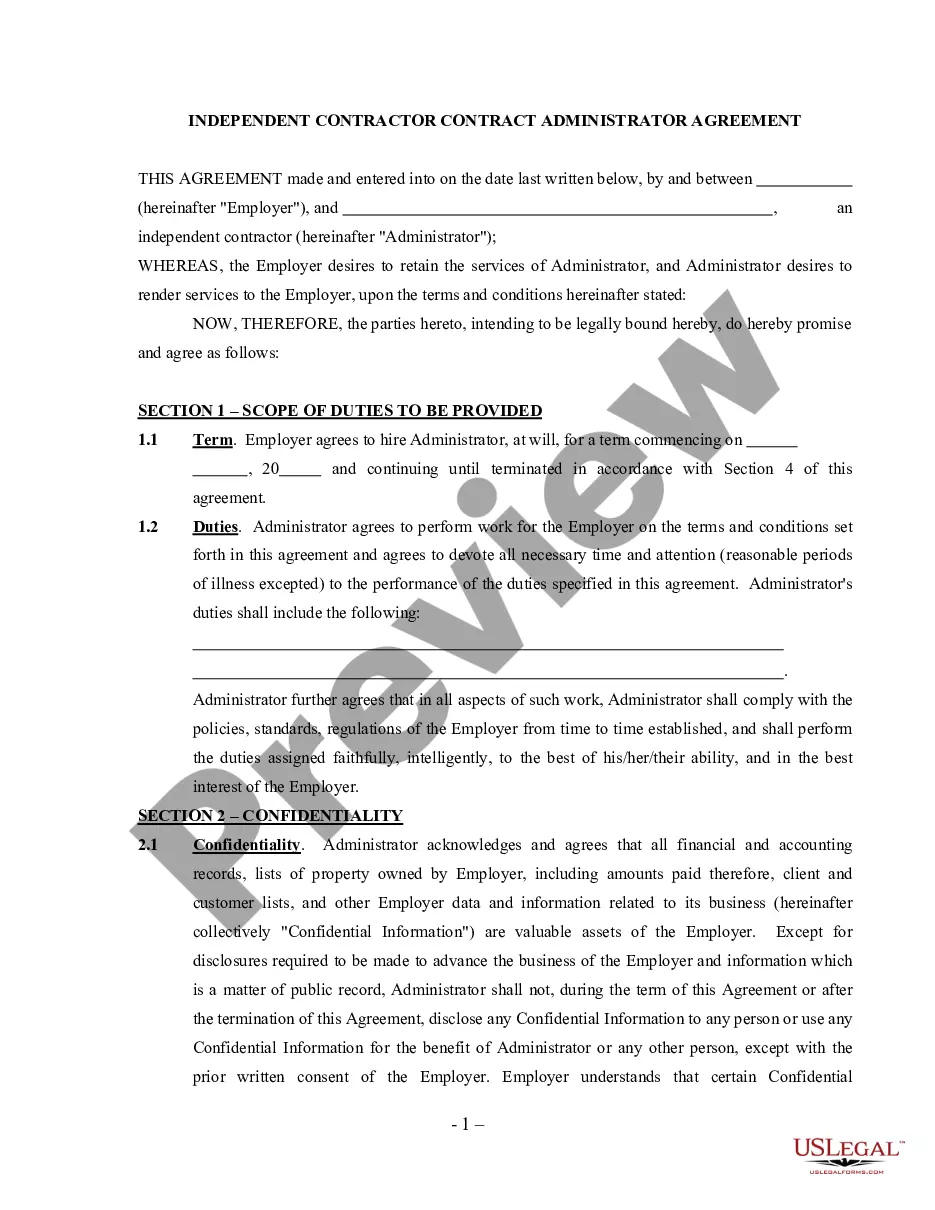
Employer contracts with an independent contractor to provide an acoustical area or building as specified and agreed upon in the contract. Please note that this Agreement is intended for general use. Your state law may require that additional or different provisions be included for agreements between a homeowner and a contractor for work on the home. In this instance, please consult your local law, local government or legal counsel.
New Mexico Acoustical Contractor Agreement - Self-Employed
State:
Multi-State
Control #:
US-INDC-115
Format:
Word;
Rich Text
Instant download
Description
Free preview
Get your form ready online
Our built-in tools help you complete, sign, share, and store your documents in one place.
Built-in online Word editor
Make edits, fill in missing information, and update formatting in US Legal Forms—just like you would in MS Word.
Export easily
Download a copy, print it, send it by email, or mail it via USPS—whatever works best for your next step.
E-sign your document
Sign and collect signatures with our SignNow integration. Send to multiple recipients, set reminders, and more. Go Premium to unlock E-Sign.
Notarize online 24/7
If this form requires notarization, complete it online through a secure video call—no need to meet a notary in person or wait for an appointment.
Store your document securely
We protect your documents and personal data by following strict security and privacy standards.

Make edits, fill in missing information, and update formatting in US Legal Forms—just like you would in MS Word.

Download a copy, print it, send it by email, or mail it via USPS—whatever works best for your next step.

Sign and collect signatures with our SignNow integration. Send to multiple recipients, set reminders, and more. Go Premium to unlock E-Sign.

If this form requires notarization, complete it online through a secure video call—no need to meet a notary in person or wait for an appointment.

We protect your documents and personal data by following strict security and privacy standards.
Looking for another form?


How to fill out Acoustical Contractor Agreement - Self-Employed?
Locating the appropriate legal document template can be a challenge.
Of course, there are numerous templates accessible online, but how do you find the legal form you need.
Utilize the US Legal Forms platform.
First, ensure you have chosen the correct form for your city/state. You can review the form using the Preview button and read the form description to make sure it is suitable for you.
- The service offers thousands of templates, including the New Mexico Acoustical Contractor Agreement - Self-Employed, which can serve both business and personal purposes.
- All of the documents are reviewed by experts and comply with state and federal regulations.
- If you are already registered, Log In to your account and click on the Obtain button to locate the New Mexico Acoustical Contractor Agreement - Self-Employed.
- Use your account to browse through the legal forms you have previously purchased.
- Go to the My documents tab in your account and download another copy of the document you need.
- If you are a new user of US Legal Forms, here are simple steps to follow.
Form popularity
FAQ
Indeed, an independent contractor is classified as self-employed. This status allows you the freedom to choose your clients and work arrangements. By utilizing a New Mexico Acoustical Contractor Agreement - Self-Employed, you can protect your rights while operating your business independently.
Yes, an independent contractor is considered self-employed. This designation means they run their own business and are responsible for their taxes and work decisions. If you are an independent contractor entering a New Mexico Acoustical Contractor Agreement - Self-Employed, you embrace the independence that comes with self-employment status.
To write an independent contractor agreement, begin by outlining the scope of work clearly and concisely. Include essential details like compensation, deadlines, and payment terms. Utilizing a New Mexico Acoustical Contractor Agreement - Self-Employed template from uslegalforms can simplify this process and ensure that you include all necessary elements.
To qualify as self-employed, an individual must operate their business independently and control their work environment. This means you set your own hours and decide how to complete tasks. If you enter into a New Mexico Acoustical Contractor Agreement - Self-Employed, you gain the flexibility to manage your projects without the constraints of traditional employment.
To write a solid independent contractor agreement, begin by outlining the project's scope and deliverables clearly. Include payment details, deadlines, and the expectations of both parties in the New Mexico Acoustical Contractor Agreement - Self-Employed. It's also wise to add terms regarding ownership of work products, confidentiality, and termination conditions. Using a template can save time and ensure you cover all necessary elements, which platforms like uslegalforms can conveniently provide.
Yes, a contractor is often considered self-employed, particularly when they operate independently and manage their own business. This setup means that they have greater control over their work and income, but also carry the responsibility for taxes and benefits. Understanding this distinction is crucial for those involved in a New Mexico Acoustical Contractor Agreement - Self-Employed. It helps clarify the legal expectations and obligations between the contractor and their clients.
A New Mexico Acoustical Contractor Agreement - Self-Employed should include essential elements such as payment terms, project scope, deadlines, and responsibilities. It's important to specify the nature of the work, including any materials or equipment required. Additionally, consider outlining confidentiality terms and dispute resolution processes to protect both parties. Ensuring clarity in these areas can prevent misunderstandings and support a smoother working relationship.
Yes, in New Mexico, a contractor license is often required to operate legally. This requirement ensures that contractors meet the state's standards for work. If you’re working as a self-employed acoustical contractor, you may need to obtain the appropriate license. To simplify the process, check with local regulations and seek guidance on the New Mexico Acoustical Contractor Agreement - Self-Employed through uslegalforms.
Both terms are valid, but they can mean slightly different things. 'Self-employed' generally describes anyone who works for themselves, while 'independent contractor' refers specifically to those providing services under a contract. Utilizing a New Mexico Acoustical Contractor Agreement - Self-Employed can clarify your role and help you communicate your status effectively.
Yes, independent contractors file taxes as self-employed individuals. They report their earnings on Schedule C of their tax return, which allows them to deduct valid business expenses. The New Mexico Acoustical Contractor Agreement - Self-Employed can help ensure accurate reporting by clearly defining income and expenses associated with your work.