New Mexico Complaint for Unlawful Detainer for Breach of Lease and on Guaranty
Understanding this form
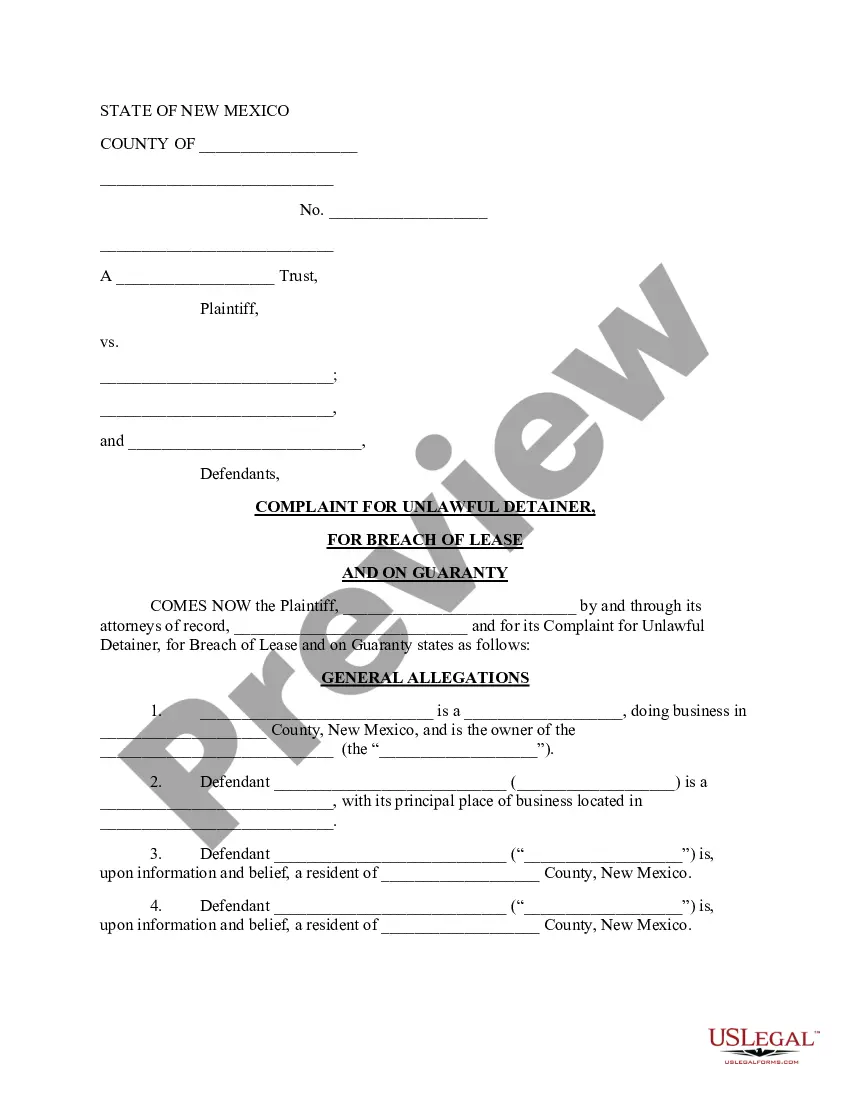
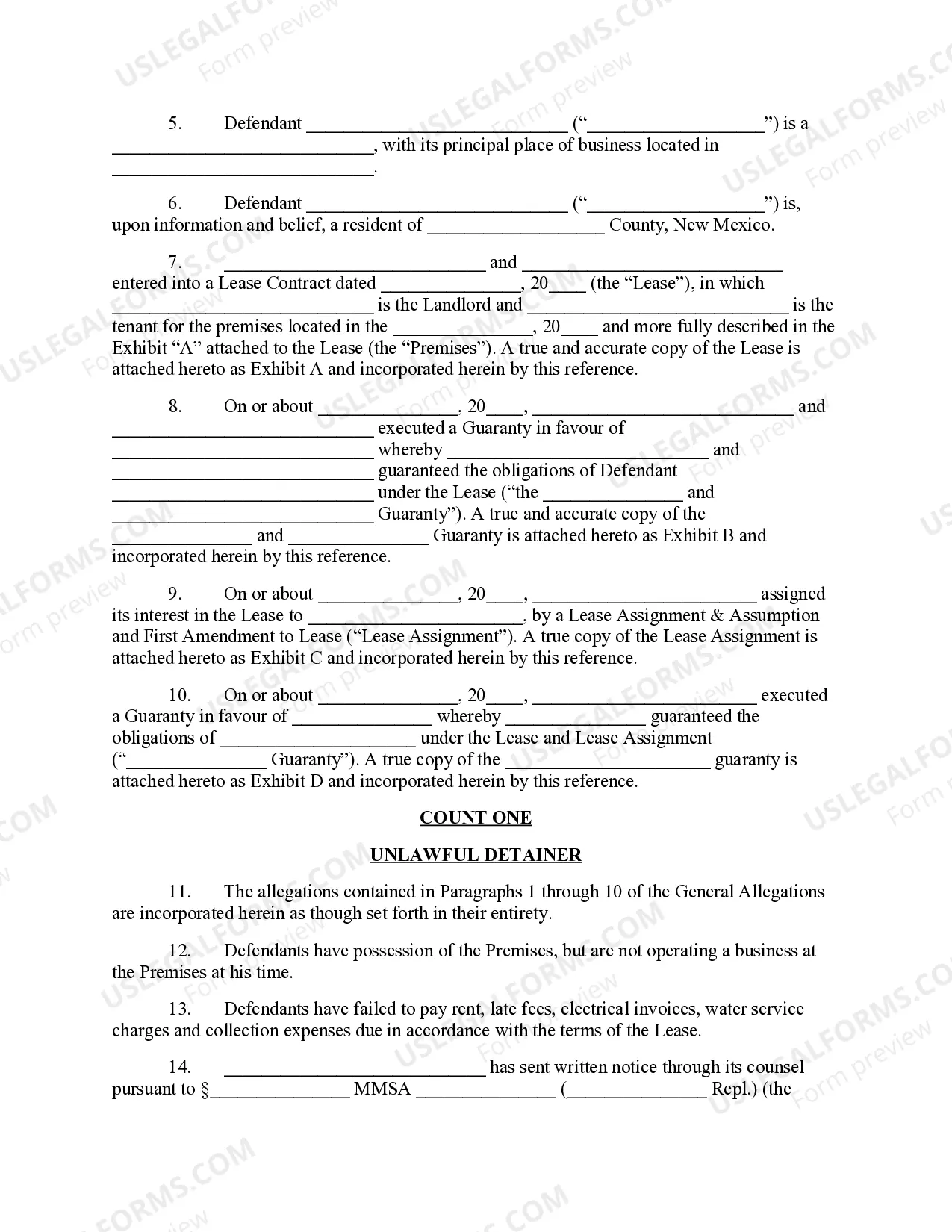
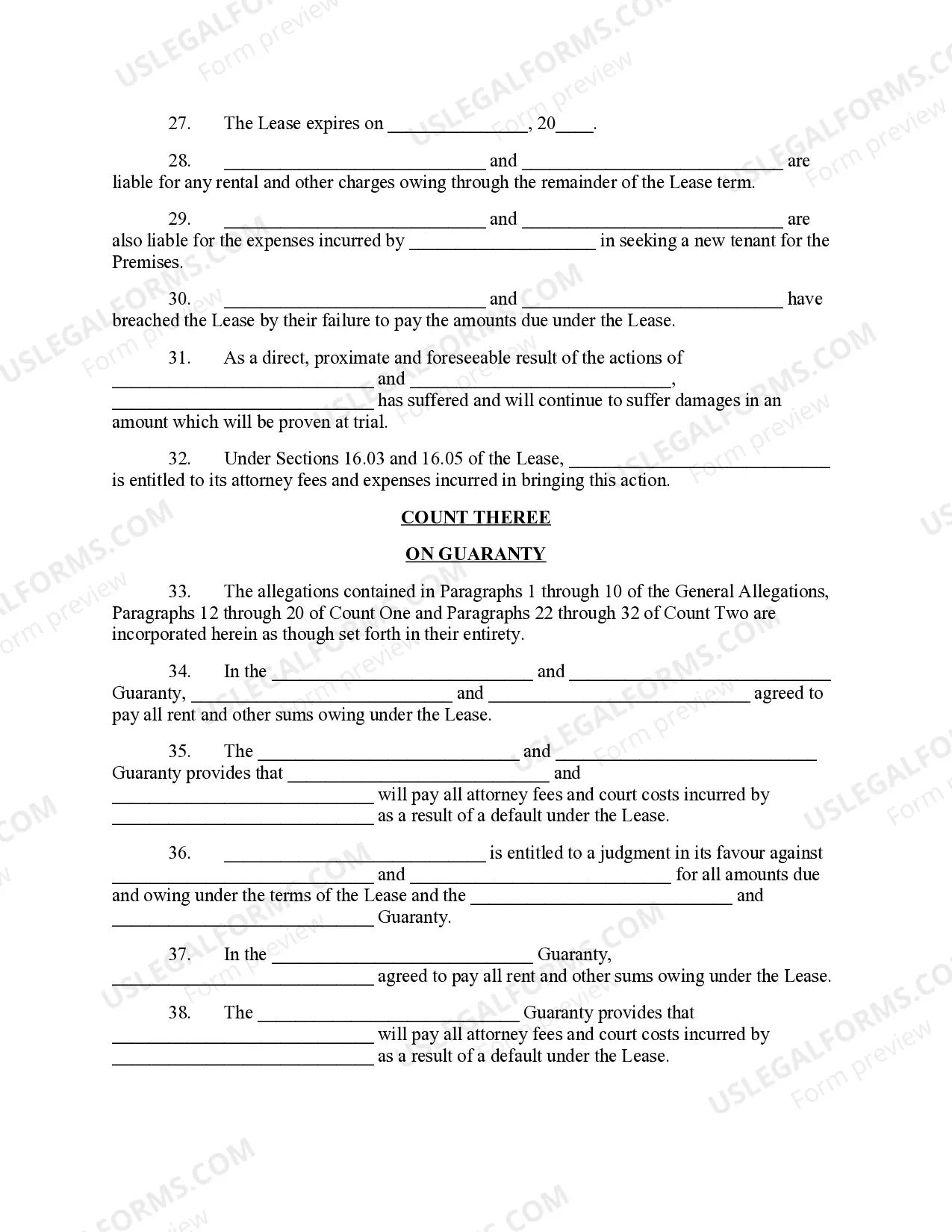
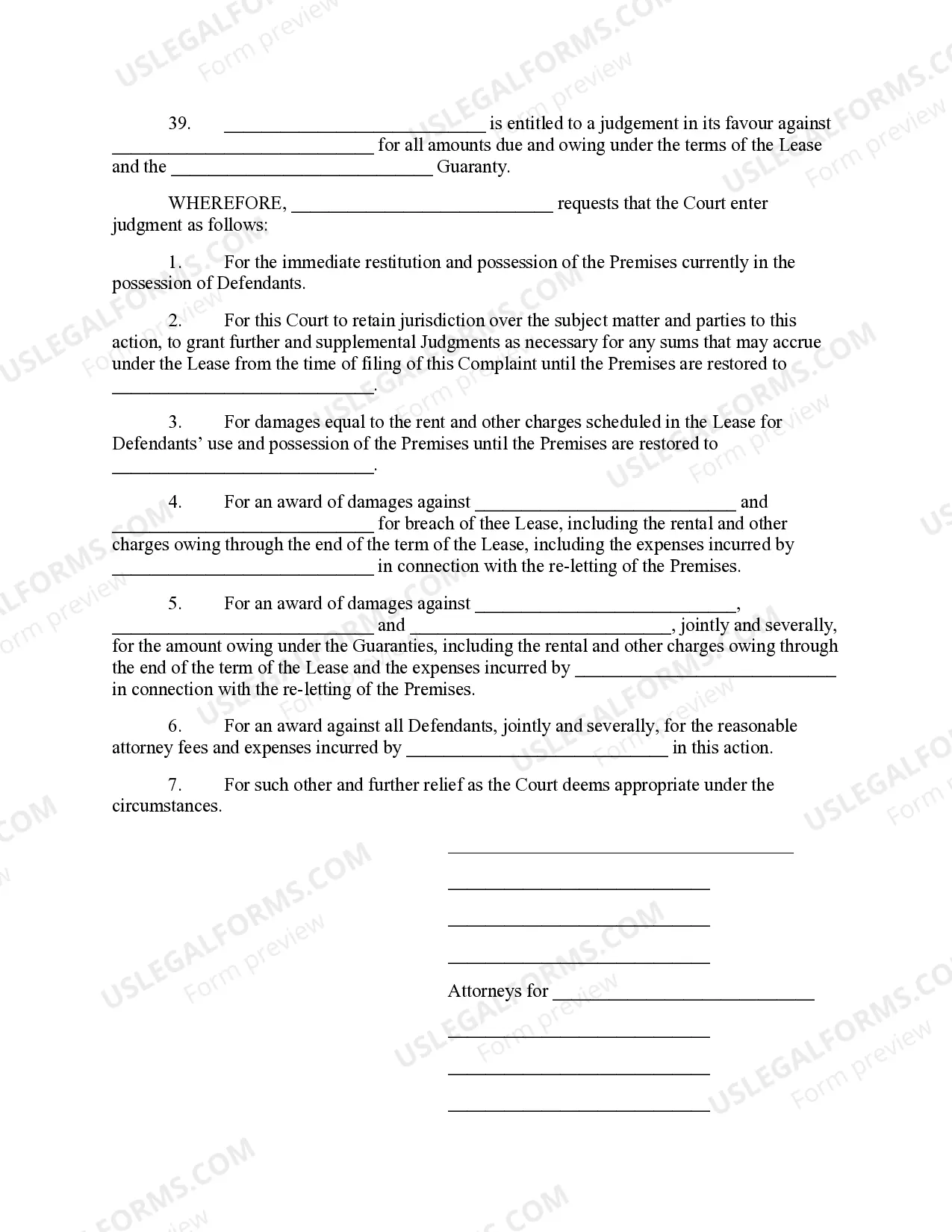
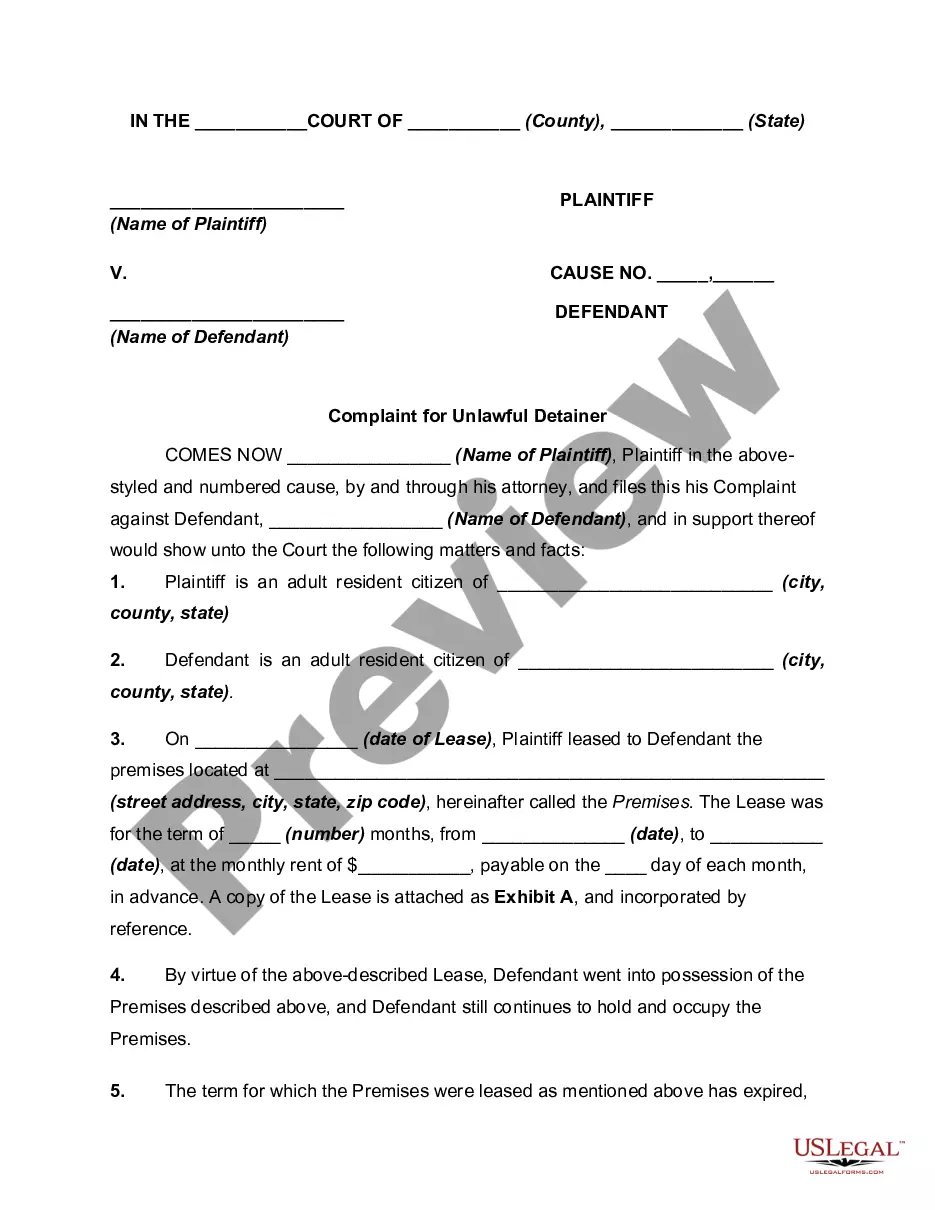
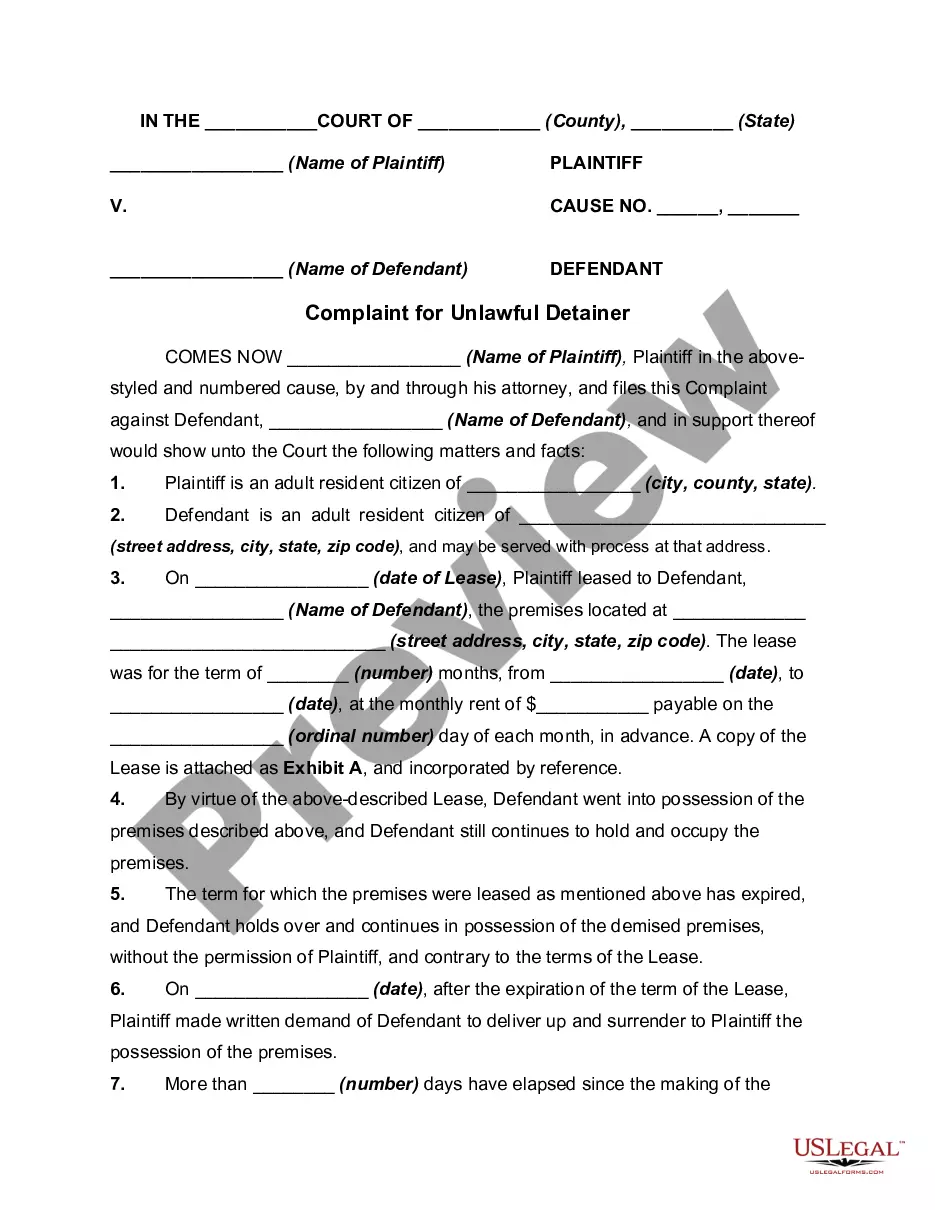
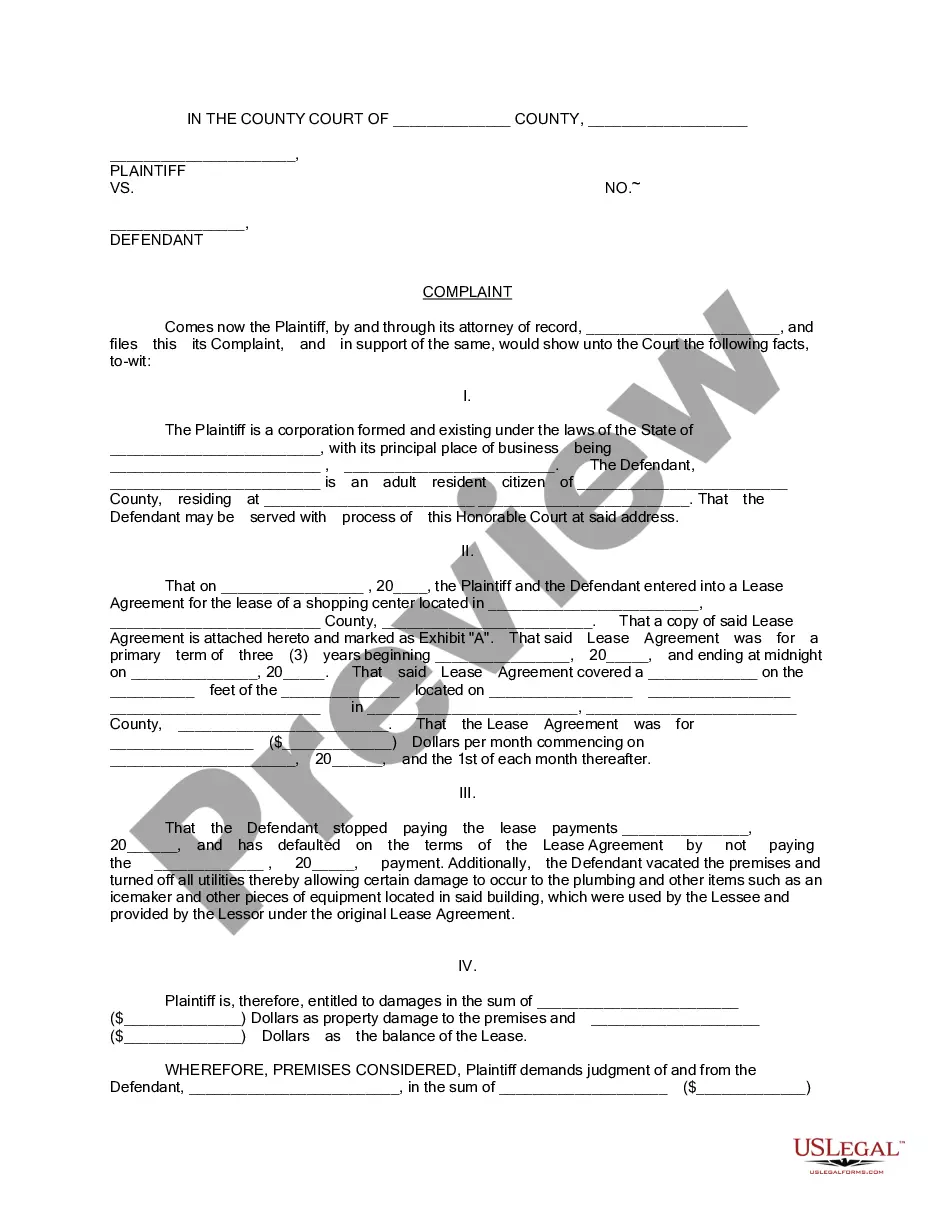
The Complaint for Unlawful Detainer for Breach of Lease and on Guaranty is a legal document filed by a landlord seeking possession of rental property due to a tenant's breach of lease, specifically for non-payment of rent. This form distinguishes itself from other eviction notices by also seeking damages from guarantors who may have signed for the tenantâs obligations, making it multifaceted in its approach to recovery of owed amounts and regaining property possession.
Form components explained
- General allegations outlining the lease agreement and parties involved.
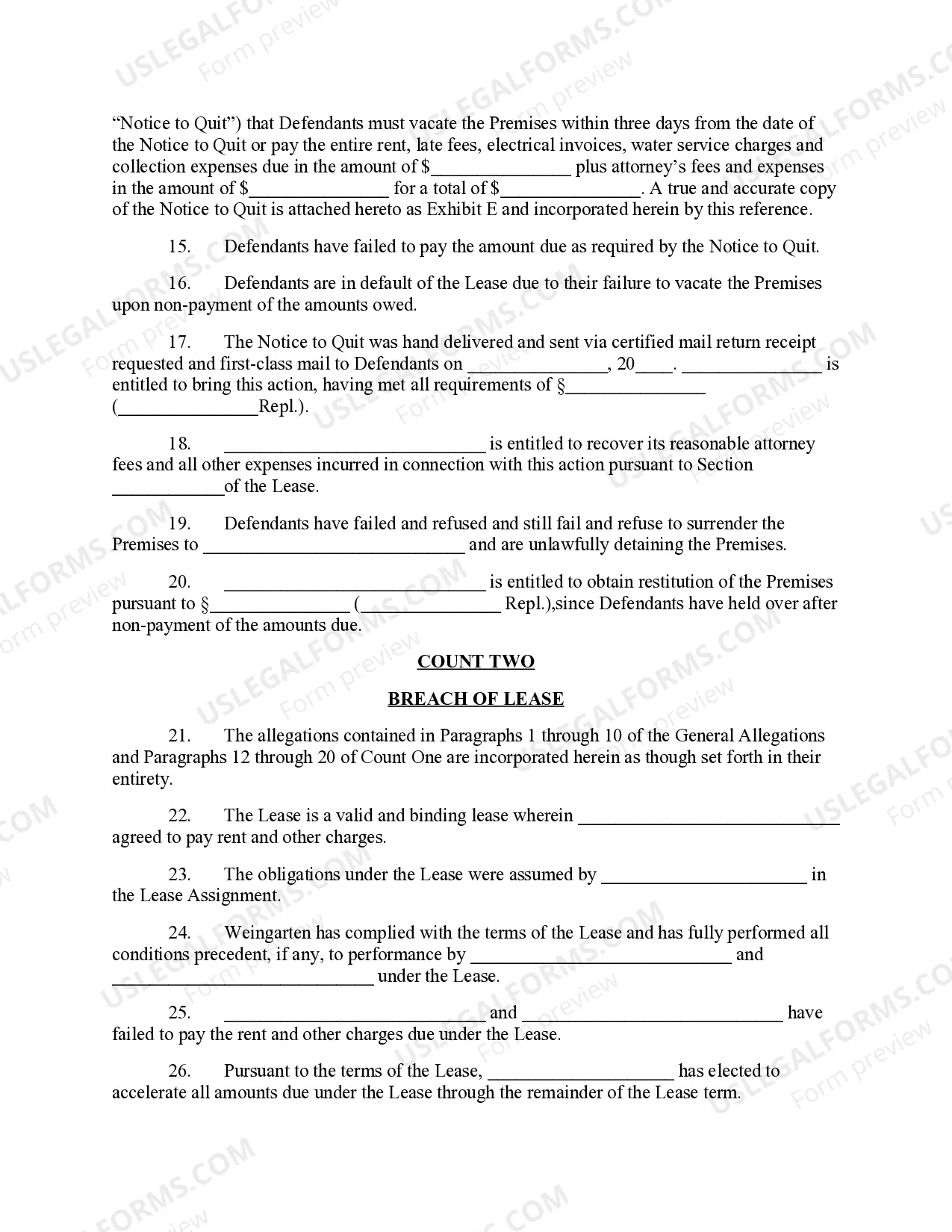
- Details of the non-payment of rent, late fees, and other charges.
- Notice to Quit served to tenants, including specific requirements and response times.
- Unlawful detainer claim for immediate possession of the premises.
- Breach of lease claim detailing obligations and defaults by the tenant.
- Guaranty claims for accountability of guarantors for the tenant's obligations.
Situations where this form applies
This form is used when a landlord needs to initiate legal proceedings against a tenant who has violated the lease agreement, typically due to failing to pay rent or other associated fees. It is crucial when the landlord seeks not only to regain possession of the property but also to recover financial damages from both the tenant and any guarantors involved.
Who this form is for
- Landlords seeking possession of rental property due to tenant defaults.
- Property management companies acting on behalf of owners.
- Real estate attorneys filing on behalf of landlords.
Completing this form step by step
- Identify and fill in the names of the landlord (plaintiff) and tenant (defendants).
- Enter the details of the lease agreement, including dates and property descriptions.
- Document the breach, detailing the amounts owed and any communications sent to the tenant regarding payment.
- Attach relevant exhibits, such as the lease agreement and any notices served to tenants.
- Review for accuracy and sign the complaint before filing with the appropriate court.
Notarization guidance
This form does not typically require notarization unless specified by local law. Always check your jurisdiction's regulations to ensure compliance with any notarization requirements.
Get your form ready online
Our built-in tools help you complete, sign, share, and store your documents in one place.
Make edits, fill in missing information, and update formatting in US Legal Forms—just like you would in MS Word.
Download a copy, print it, send it by email, or mail it via USPS—whatever works best for your next step.
Sign and collect signatures with our SignNow integration. Send to multiple recipients, set reminders, and more. Go Premium to unlock E-Sign.
If this form requires notarization, complete it online through a secure video call—no need to meet a notary in person or wait for an appointment.
We protect your documents and personal data by following strict security and privacy standards.

Make edits, fill in missing information, and update formatting in US Legal Forms—just like you would in MS Word.

Download a copy, print it, send it by email, or mail it via USPS—whatever works best for your next step.

Sign and collect signatures with our SignNow integration. Send to multiple recipients, set reminders, and more. Go Premium to unlock E-Sign.

If this form requires notarization, complete it online through a secure video call—no need to meet a notary in person or wait for an appointment.

We protect your documents and personal data by following strict security and privacy standards.
Common mistakes
- Failing to include all necessary parties in the complaint.
- Not properly documenting the notice requirements prior to filing.
- Omitting important details regarding the breach of lease.
- Neglecting to attach relevant exhibits that support the claim.
Why use this form online
- Convenience of filling out the form from anywhere at any time.
- Editable fields allow for easy customization to specific situations.
- Access to forms drafted and reviewed by licensed attorneys for accuracy.
- Easy download and printing options for court submission.
Looking for another form?


Form popularity
FAQ
State law regulates several rent-related issues, including late fees, the amount of notice (at least 30 days in New Mexico) landlords must give tenants to raise the rent, and how much time (three days in New Mexico) a tenant has to pay overdue rent or move before a landlord can file for eviction.
You can remove your eviction from your public record by petitioning the court, winning your case or disputing an inaccurately reported eviction. While the process is more difficult, it's not impossible.
If you file an eviction (unlawful detainer) case and you decide you do not want to move forward, you can ask the court to dismiss the case.You included more than one tenant in your eviction case but have decided you only want to evict one or some of them, so you dismiss the case as to the others.
Injury at Rental Property: You could have a case for a lawsuit against your landlord if you are injured at the rental property due to a landlord's neglect. Filing an Illegal Eviction: You can countersue your landlord if you feel your landlord is trying to evict you illegally.
1-800-340-9771. Se habla espanol. Hours: a.m. to p.m. Landlord & Tenant Hotline.
Know Your Rights. It goes without saying, but take some time to know your rights as a tenant. Keep Good Records. Make Sure Notice is Proper. Service of the Unlawful Detainer. Talking to an Attorney. Managing Partner Lipton Legal Group, A PC Beverly Hills, CA.
Landlord must give notice to terminate the tenancy: Month-to-month: 30 days. Week-to-week: seven days. Eviction: three days for failure to pay rent; seven days for noncompliance with rental agreement.
Courts commonly refer to eviction actions as "forcible entry and detainer" or "unlawful detainer" actions. The legal theory is that the landlord alleges the tenant unlawfully continues to have use and possession of the rental property, and the landlord seeks the assistance of the court to have the tenant removed.