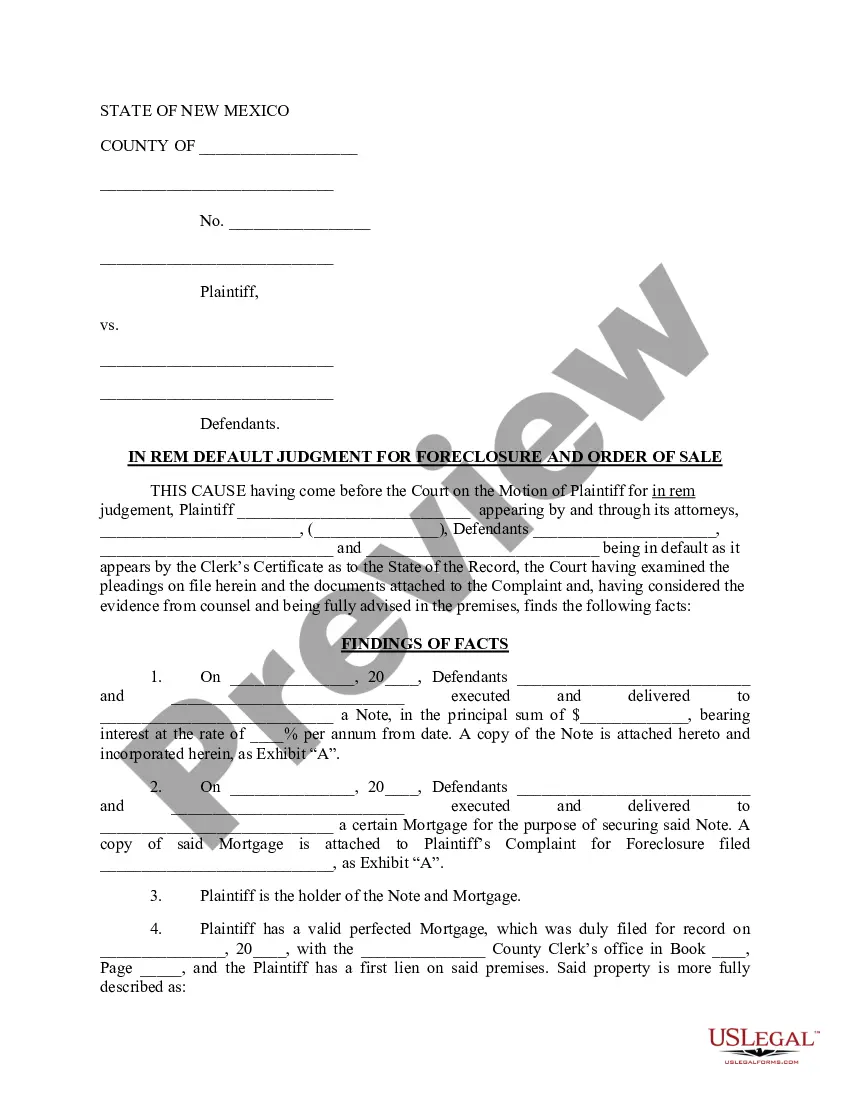
New Mexico In Rem Default Judgment for Foreclosure and Order of Sale
What is this form?
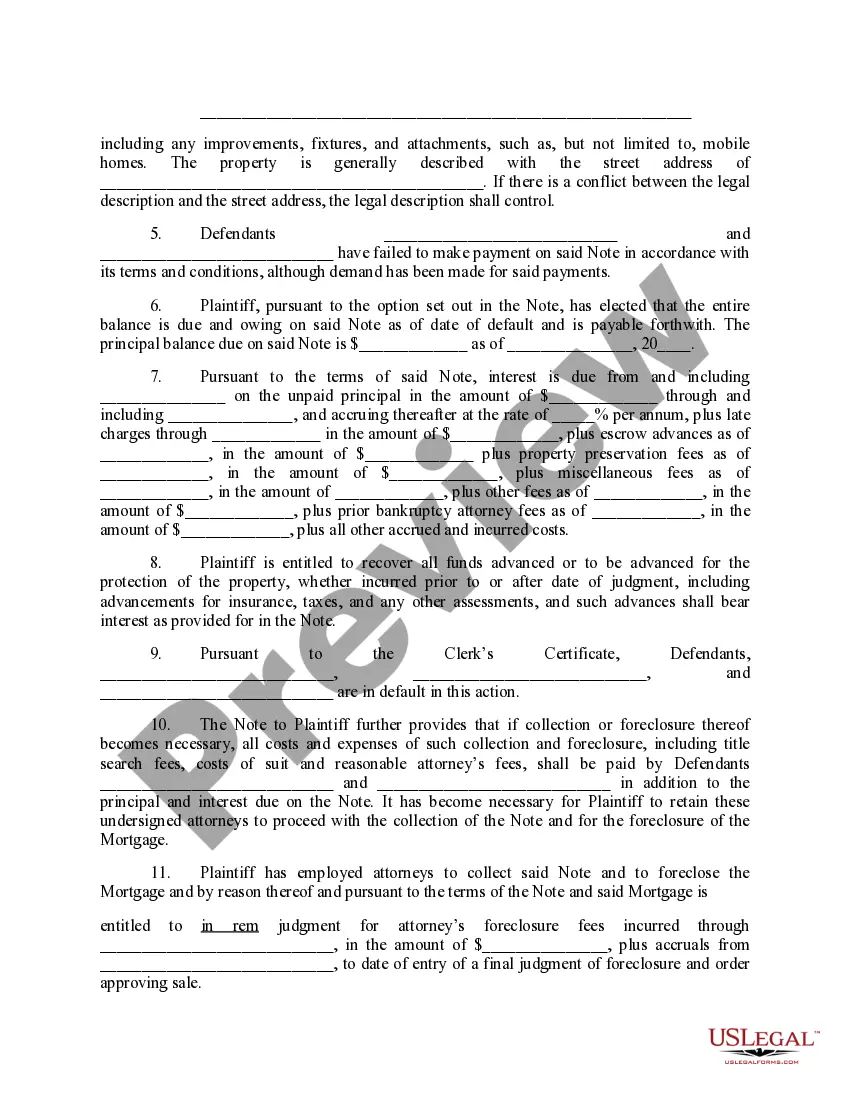
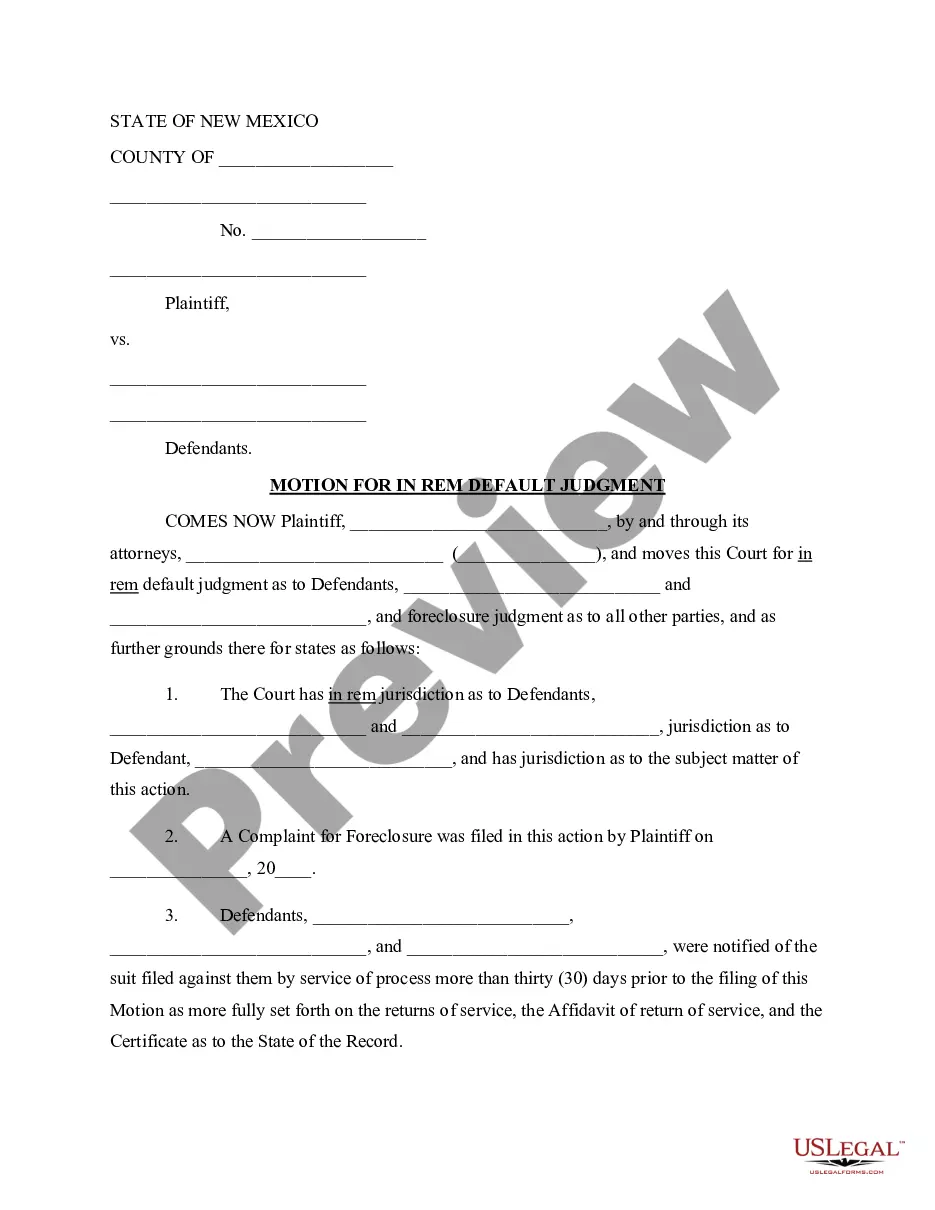
The In Rem Default Judgment for Foreclosure and Order of Sale is a legal document used when a mortgage secured by a promissory note is in default. This form allows the court to grant foreclosure of the property and order its sale, typically by a Special Master. It differs from other foreclosure forms by focusing on in rem judgment, establishing the plaintiff's rights to the property without requiring the defendants to respond actively.
Key parts of this document
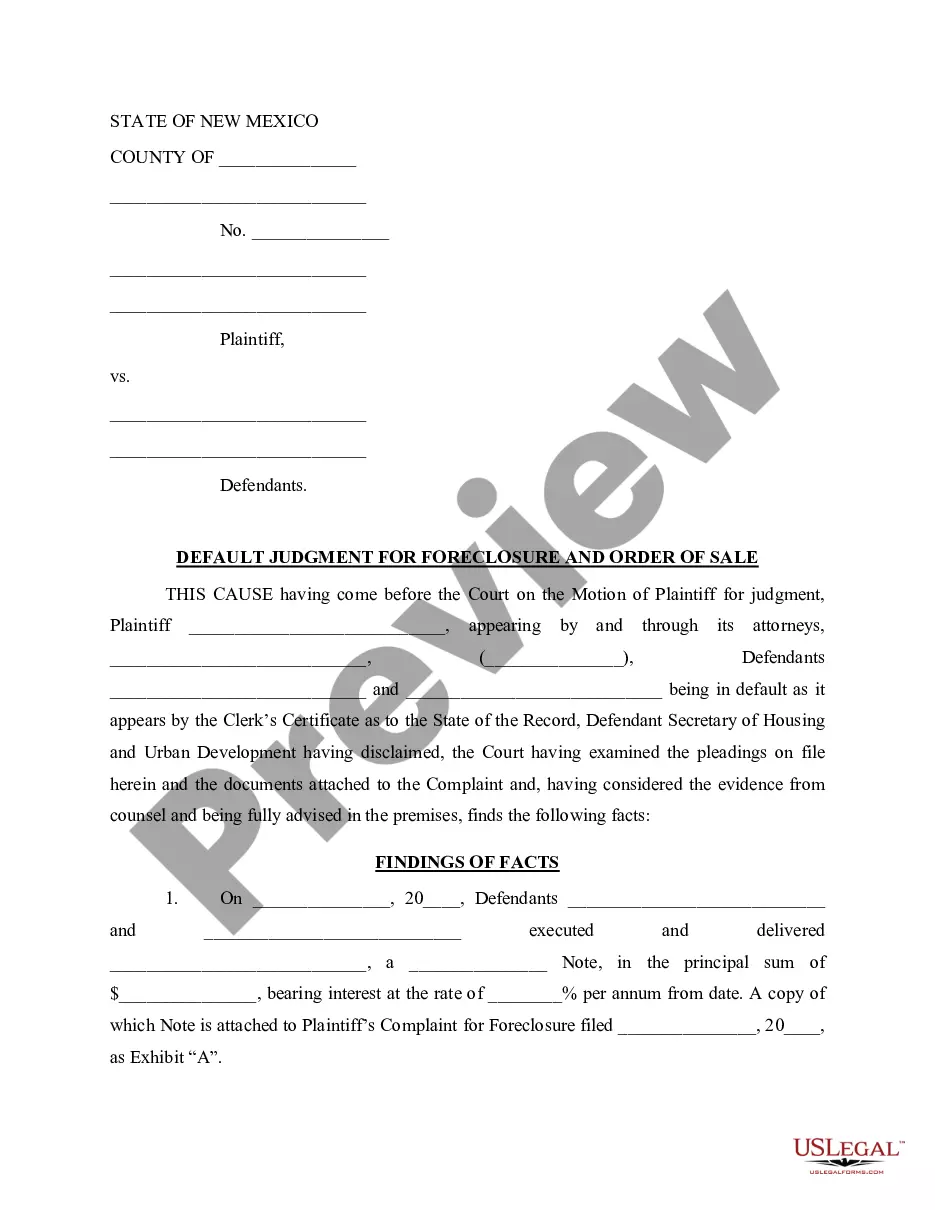
- Motion for in rem judgment and representation by attorneys
- Details of the promissory note and mortgage agreements
- Findings of fact related to the defaults and amounts due
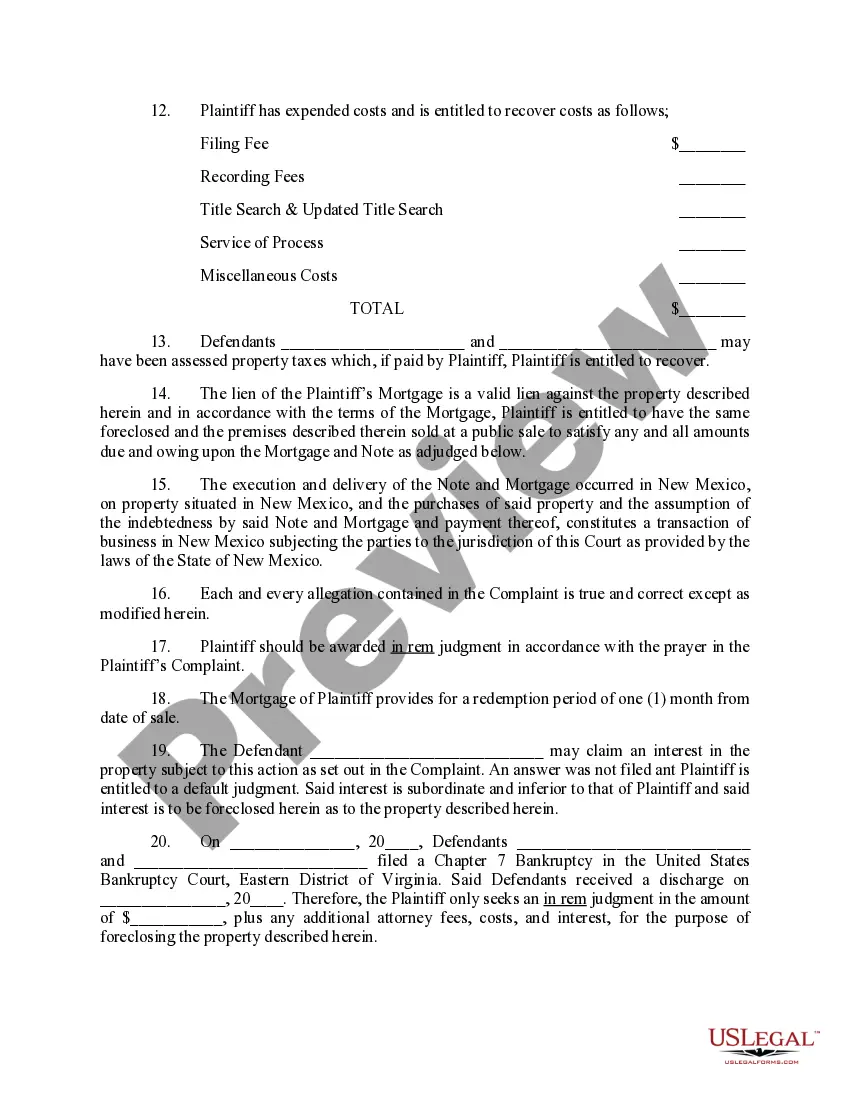
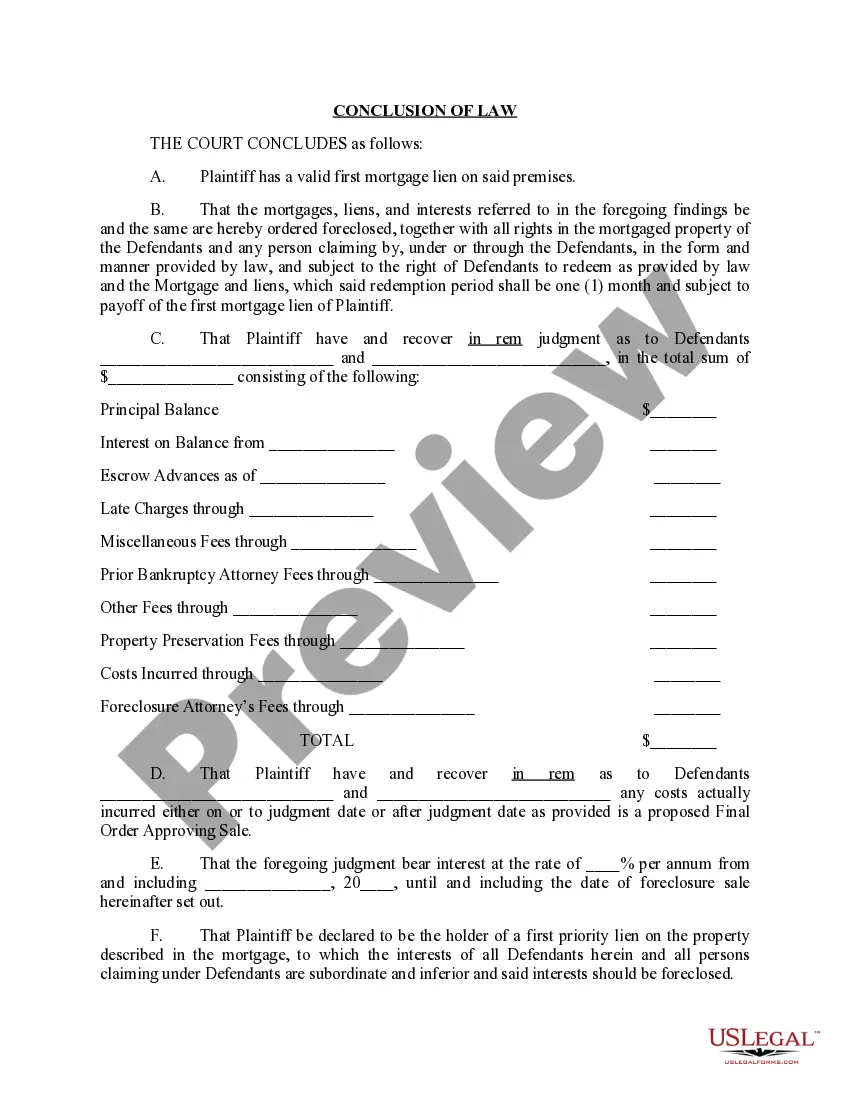
- Conclusion of law affirming the plaintiffâs mortgage lien and rights
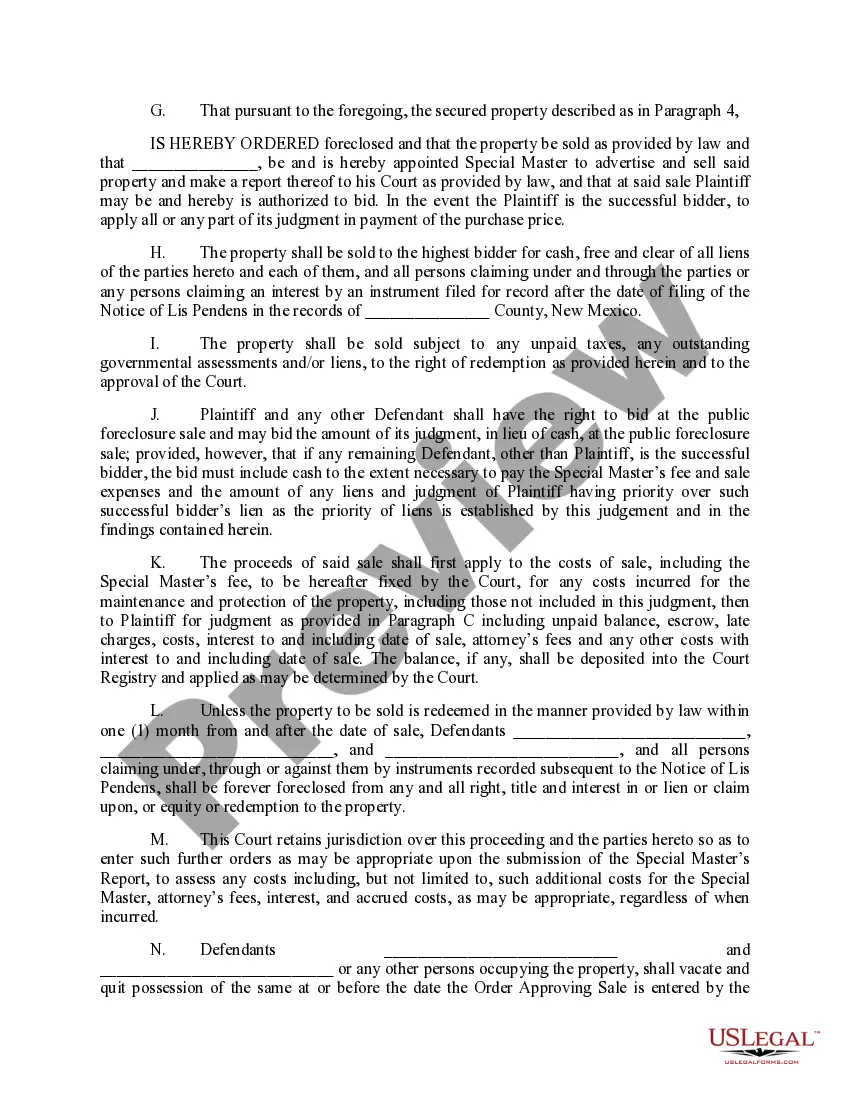
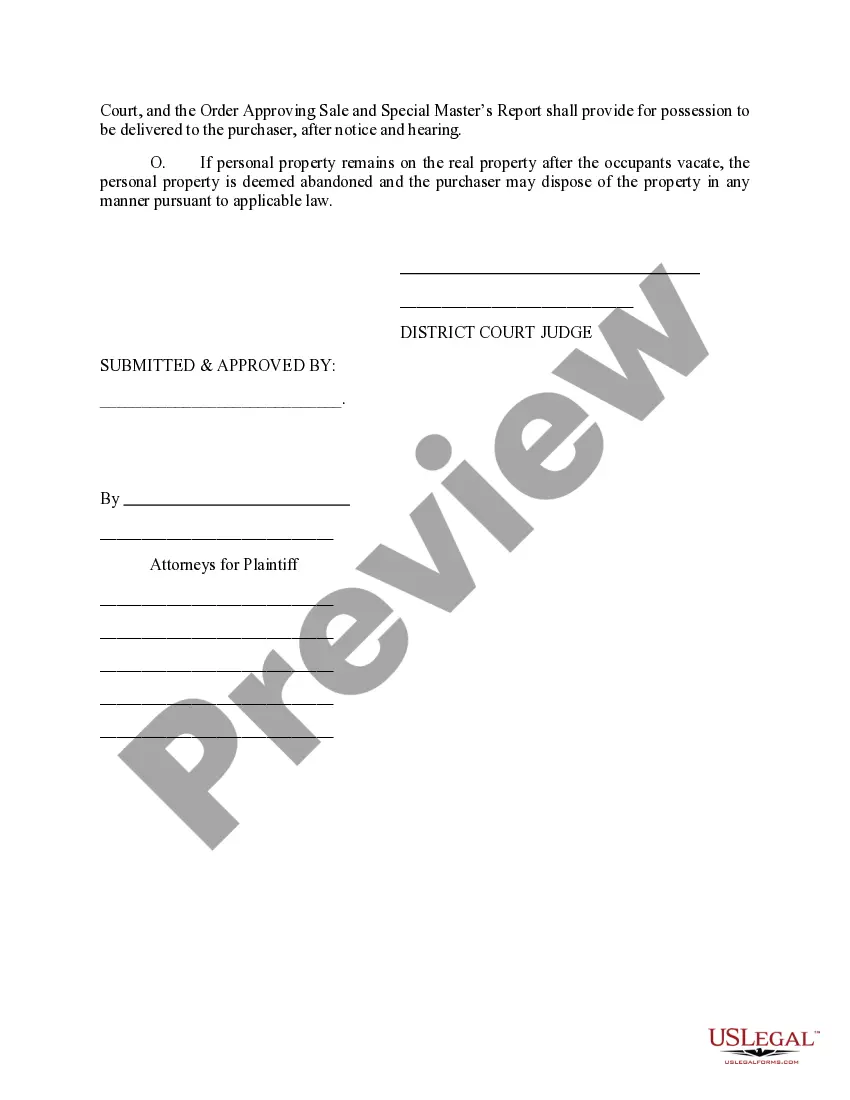
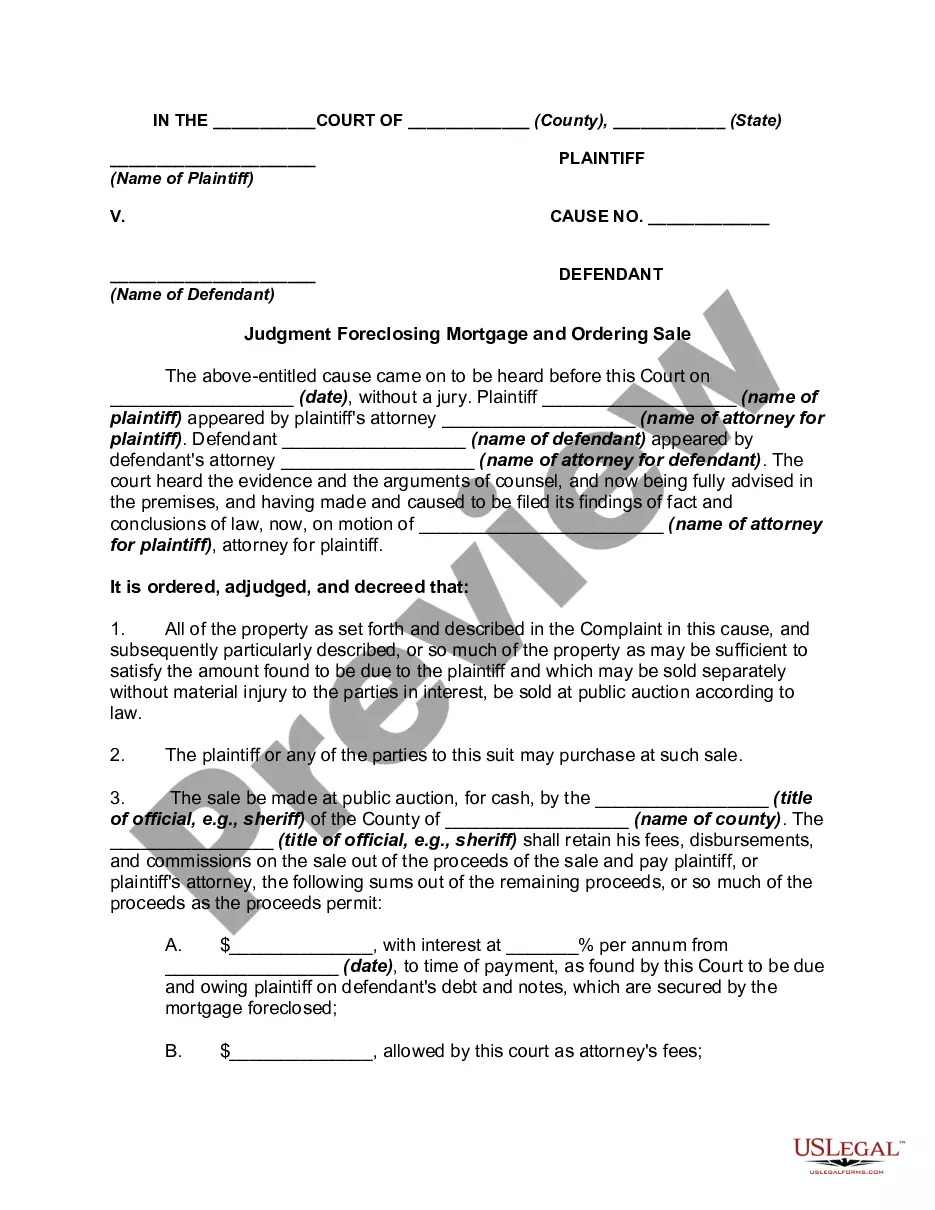
- Order for the property sale and appointment of a Special Master
Situations where this form applies
This form is used when a lender seeks to foreclose on a property due to the borrowerâs default on a mortgage loan. It is applicable in situations where the borrower has failed to meet the payment obligations set in the promissory note, and the lender wishes to reclaim their secured interest in the property through the legal system.
Intended users of this form
- Mortgage lenders or holders seeking to enforce their rights against defaulting borrowers
- Legal representatives of lenders who are navigating the foreclosure process
- Homeowners facing foreclosure who need to understand the procedural implications
How to complete this form
- Identify the parties involved: plaintiff (lender) and defendants (borrowers).
- Provide details of the promissory note and the mortgage, including dates and amounts.
- Specify the legal description of the property and its street address.
- Fill in the required findings of fact regarding defaults and amounts owed.
- Complete the conclusions of law and the order for property sale.
Notarization guidance
This form does not typically require notarization unless specified by local law. However, it is advisable to check New Mexico state regulations for any specific requirements related to the filing of court documents.
Get your form ready online
Our built-in tools help you complete, sign, share, and store your documents in one place.
Make edits, fill in missing information, and update formatting in US Legal Forms—just like you would in MS Word.
Download a copy, print it, send it by email, or mail it via USPS—whatever works best for your next step.
Sign and collect signatures with our SignNow integration. Send to multiple recipients, set reminders, and more. Go Premium to unlock E-Sign.
If this form requires notarization, complete it online through a secure video call—no need to meet a notary in person or wait for an appointment.
We protect your documents and personal data by following strict security and privacy standards.

Make edits, fill in missing information, and update formatting in US Legal Forms—just like you would in MS Word.

Download a copy, print it, send it by email, or mail it via USPS—whatever works best for your next step.

Sign and collect signatures with our SignNow integration. Send to multiple recipients, set reminders, and more. Go Premium to unlock E-Sign.

If this form requires notarization, complete it online through a secure video call—no need to meet a notary in person or wait for an appointment.

We protect your documents and personal data by following strict security and privacy standards.
Avoid these common issues
- Failing to accurately describe the property, leading to legal challenges.
- Not providing all required facts or documentation supporting the default.
- Overlooking defendant's rights to redeem or contest the foreclosure.
Why complete this form online
- Convenient access to legal forms that can be downloaded and printed.
- Editability allows users to customize the form to their specific situation.
- Reliability stems from templates drafted by licensed attorneys, ensuring legal compliance.
Legal use & context
- This form is recognized in New Mexico courts for initiating foreclosure proceedings.
- It provides a legal framework for lenders to protect their interests in default scenarios.
- The ordered sale of property is subject to state laws on foreclosure and redemption rights.
Looking for another form?

Form popularity
FAQ
Phase 1: Payment Default. Phase 2: Notice of Default. Phase 3: Notice of Trustee's Sale. Phase 4: Trustee's Sale. Phase 5: Real Estate Owned (REO) Phase 6: Eviction. The Bottom Line.
Foreclosures are usually nonjudicial in the following states: Alabama, Alaska, Arizona, Arkansas, California, Colorado, District of Columbia (sometimes), Georgia, Idaho, Maryland, Massachusetts, Michigan, Minnesota, Mississippi, Missouri, Montana, Nebraska, Nevada, New Hampshire, New Mexico (sometimes), North Carolina,
What Is the Foreclosure Process in New Mexico? If you default on your mortgage payments for your home in New Mexico, the foreclosure will most likely be judicial. (A nonjudicial foreclosure is allowed in New Mexico if the loan contract is a deed of trust.
New Mexico is known primarily as a lien theory state where the property acts as security for the underlying loan. The document that places the lien on the property is called a mortgage.
First, the costs and expenses of conducting the foreclosure sale are paid. Second, the lien that was foreclosed on is paid off. Third, if there is any money remaining after the foreclosed lien is paid, then any liens junior to the foreclosed lien are paid in their order of priority.
Foreclosures are generally judicial in the following states: Connecticut, Delaware, District of Columbia (sometimes), Florida, Hawaii, Illinois, Indiana, Iowa, Kansas, Kentucky, Louisiana (executory proceeding), Maine, Nebraska (sometimes), New Jersey, New Mexico, New York, North Dakota, Ohio, Oklahoma (if the
Essentially, a judicial foreclosure means that the lender goes to court to get a judgment to foreclose on your home, while a non-judicial foreclosure means that the lender does not need to go to court.
Step 1 Notice of Default. Record a Notice of Default with the county recorder. Step 2 Notice of Sale. If the borrower does not pay the balance stated in the Notice of Default within the deadline, the lender can go ahead with recording a Notice of Sale. Step 3 Auction. Step 4 Obtain Possession of Property.