New Mexico Transfer on Death Deed or TOD - Beneficiary Deed for Husband and Wife to Individual
Understanding this form
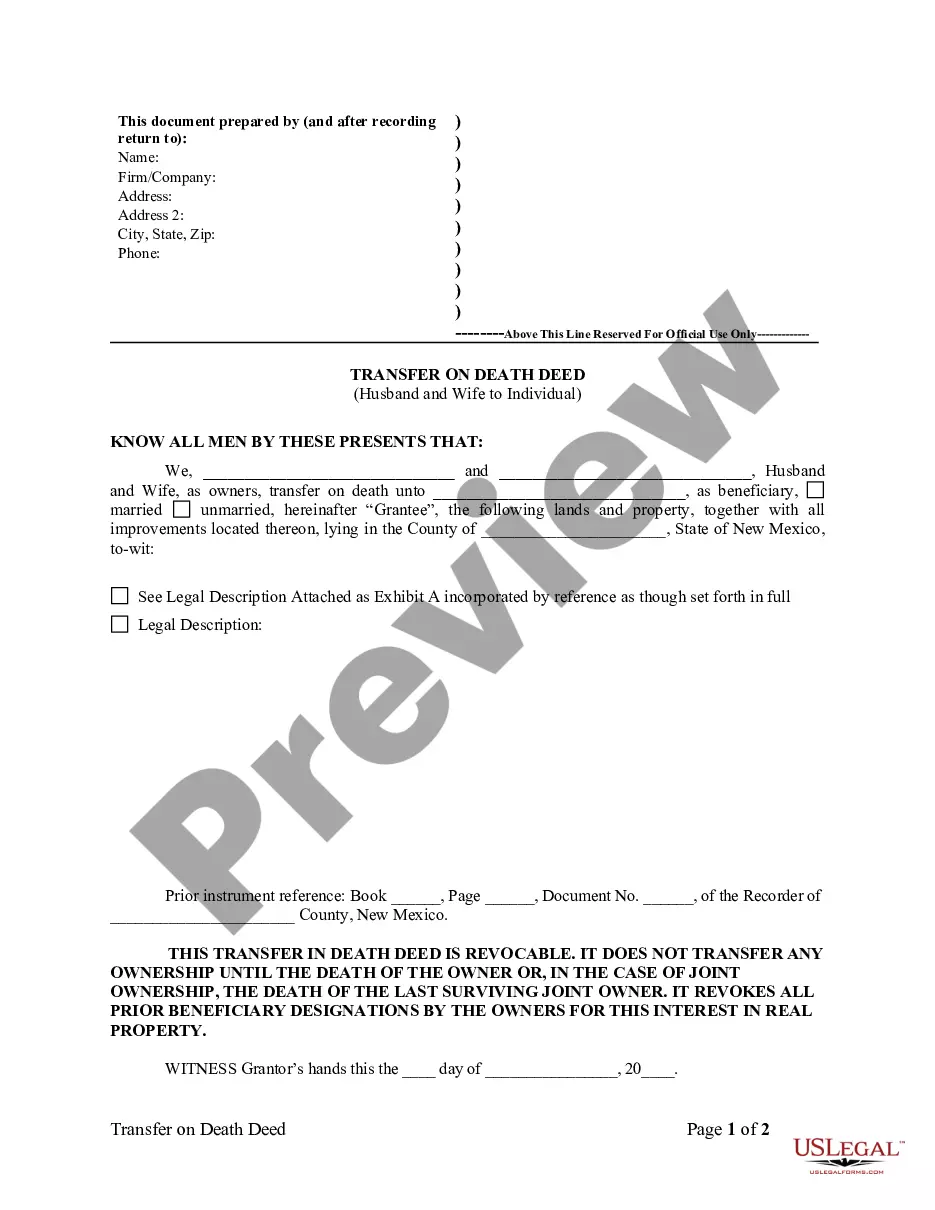
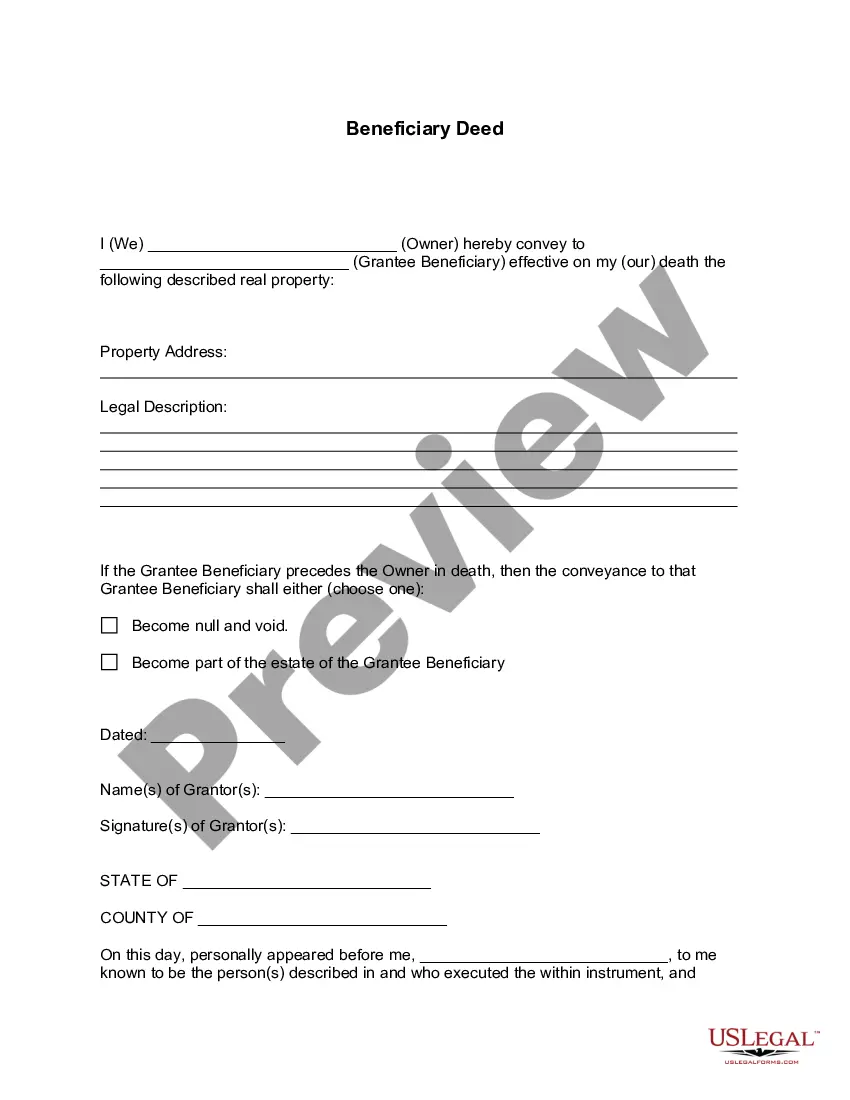
The Transfer on Death Deed (TOD) is a legal document that allows married couples to designate a single individual as the beneficiary of their real property. Unlike a will, this deed does not transfer ownership during the grantors' lives and remains revocable until the death of the last surviving grantor. This ensures that the property passes directly to the beneficiary upon the death of the last owner, simplifying the transfer process and avoiding the probate court.
Main sections of this form
- Identification of the grantors: The husband and wife who are transferring ownership.
- Identification of the grantee: The individual designated to receive the property upon the last grantor's passing.
- Revocability clause: States that either grantor can revoke the deed until death.
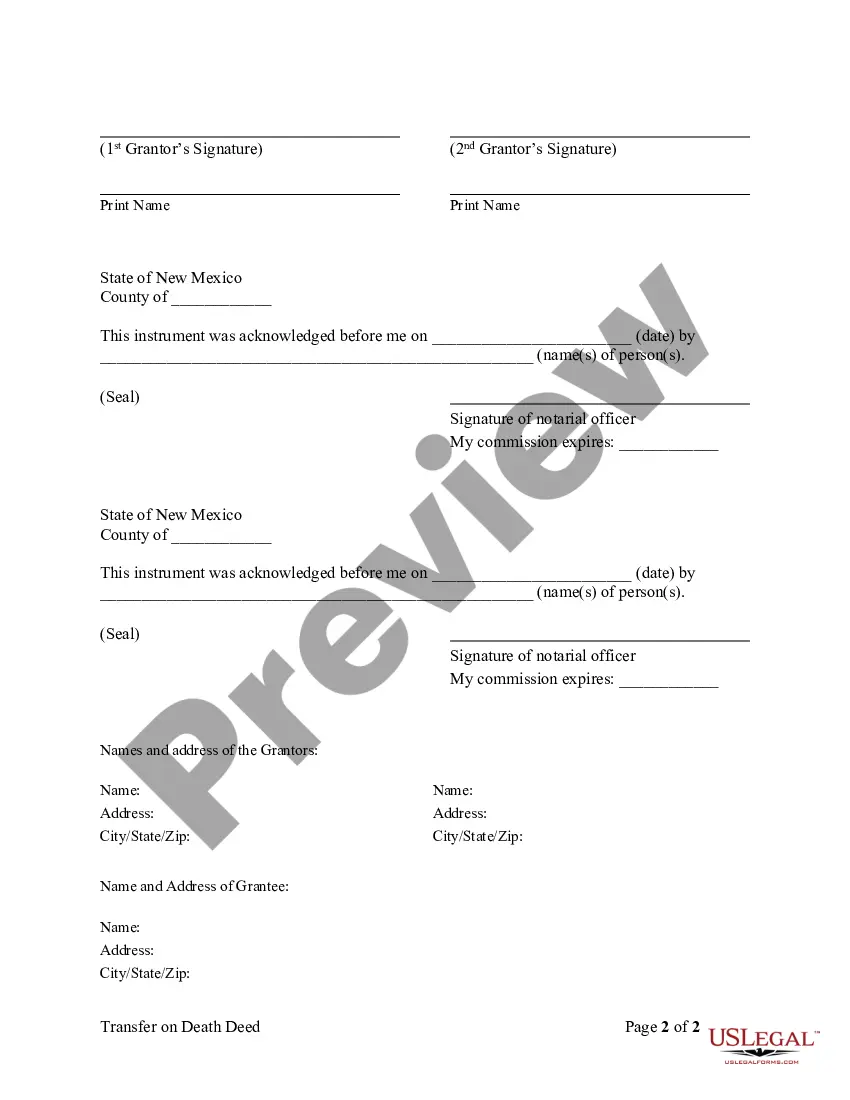
- Execution details: Space for grantors' signatures and date of signing.



When to use this form
This form is useful for married couples looking to ensure a seamless transfer of ownership of their real estate property to a designated individual after their death. It may be particularly relevant for those who want to avoid probate or simplify estate planning by directly assigning property rights to their chosen beneficiary.
Who can use this document
Eligible users include:
- Married couples wishing to assign property to one individual upon death.
- Individuals wanting to simplify the estate transfer process.
- Persons seeking to avoid the costs and complexities of probate for their property.
How to complete this form
- Identify the parties: Clearly state the names of both grantors (husband and wife).
- Specify the property: Include a detailed description of the real property being transferred.
- Designate the beneficiary: Enter the full name of the individual receiving the property upon the last grantor's death.
- Provide signatures: Both grantors must sign and date the form in the designated areas.
- Keep records: Retain a copy of the completed deed for your records and provide a copy to the beneficiary if appropriate.
Notarization requirements for this form
This form needs to be notarized to ensure legal validity. US Legal Forms provides secure online notarization powered by Notarize, allowing you to complete the process through a verified video call, available anytime.
Get your form ready online
Our built-in tools help you complete, sign, share, and store your documents in one place.
Make edits, fill in missing information, and update formatting in US Legal Forms—just like you would in MS Word.
Download a copy, print it, send it by email, or mail it via USPS—whatever works best for your next step.
Sign and collect signatures with our SignNow integration. Send to multiple recipients, set reminders, and more. Go Premium to unlock E-Sign.
If this form requires notarization, complete it online through a secure video call—no need to meet a notary in person or wait for an appointment.
We protect your documents and personal data by following strict security and privacy standards.

Make edits, fill in missing information, and update formatting in US Legal Forms—just like you would in MS Word.

Download a copy, print it, send it by email, or mail it via USPS—whatever works best for your next step.

Sign and collect signatures with our SignNow integration. Send to multiple recipients, set reminders, and more. Go Premium to unlock E-Sign.

If this form requires notarization, complete it online through a secure video call—no need to meet a notary in person or wait for an appointment.

We protect your documents and personal data by following strict security and privacy standards.
Mistakes to watch out for
- Failing to provide complete property descriptions, which can lead to ambiguity.
- Not having both grantors sign the deed, rendering it invalid.
- Overlooking state-specific requirements, which may affect its validity.
Why complete this form online
- Convenience: Access and complete the deed from anywhere at any time.
- Editability: Make necessary modifications easily to ensure accuracy.
- Reliability: Forms are drafted by licensed attorneys, ensuring compliance with legal standards.
Looking for another form?
Form popularity
FAQ
In most cases, the surviving owner or heir obtains the title to the home, the former owner's death certificate, a notarized affidavit of death, and a preliminary change of ownership report form. When all these are gathered, the transfer gets recorded, the fees are paid, and the county issues a new title deed.
Overall, New Mexico's statutory transfer on death deed is a flexible estate planning tool that allows owners of real property in the state to convey a potential future interest in real property to one or more beneficiaries.
Get a Deed Form or Prepare Your Own. You can buy a state-specific TOD deed form for your state or type up your own document. Name the Beneficiary. Describe the Property. Sign the Deed. Record the Deed.
In most cases, the surviving owner or heir obtains the title to the home, the former owner's death certificate, a notarized affidavit of death, and a preliminary change of ownership report form. When all these are gathered, the transfer gets recorded, the fees are paid, and the county issues a new title deed.
All you need to do is fill out a simple form, provided by the bank, naming the person you want to inherit the money in the account at your death. As long as you are alive, the person you named to inherit the money in a payable-on-death (POD) account has no rights to it.
To transfer it, you will have to get a succession certificate (for moveable property) and a letter of administration (for Immoveable property). While doing so, get the son and daughter to give no objections in court that they have no objection if all the property is transferred to the widow.
The California TOD deed form allows property to be automatically transferred to a new owner when the current owner dies, without the need to go through probate. It also gives the current owner retained control over the property, including the right to change his or her mind about the transfer.
If you'd like to avoid having your property going through the probate process, it's a good idea to look into a transfer on death deed. A transfer on death deed allows you to select a beneficiary who will receive your property, but only when you've passed away.