New Jersey Amendment of Lease Package
What is this form package?
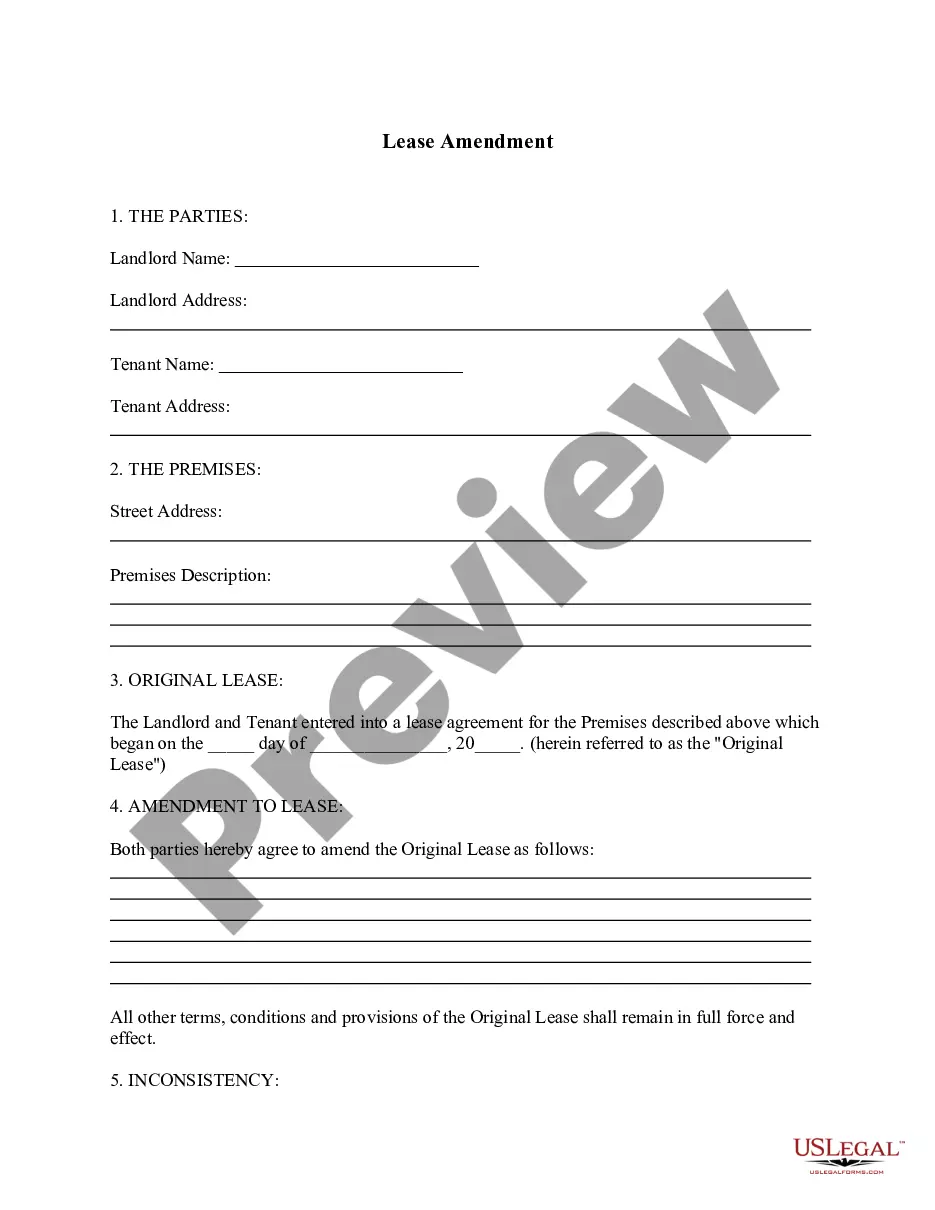
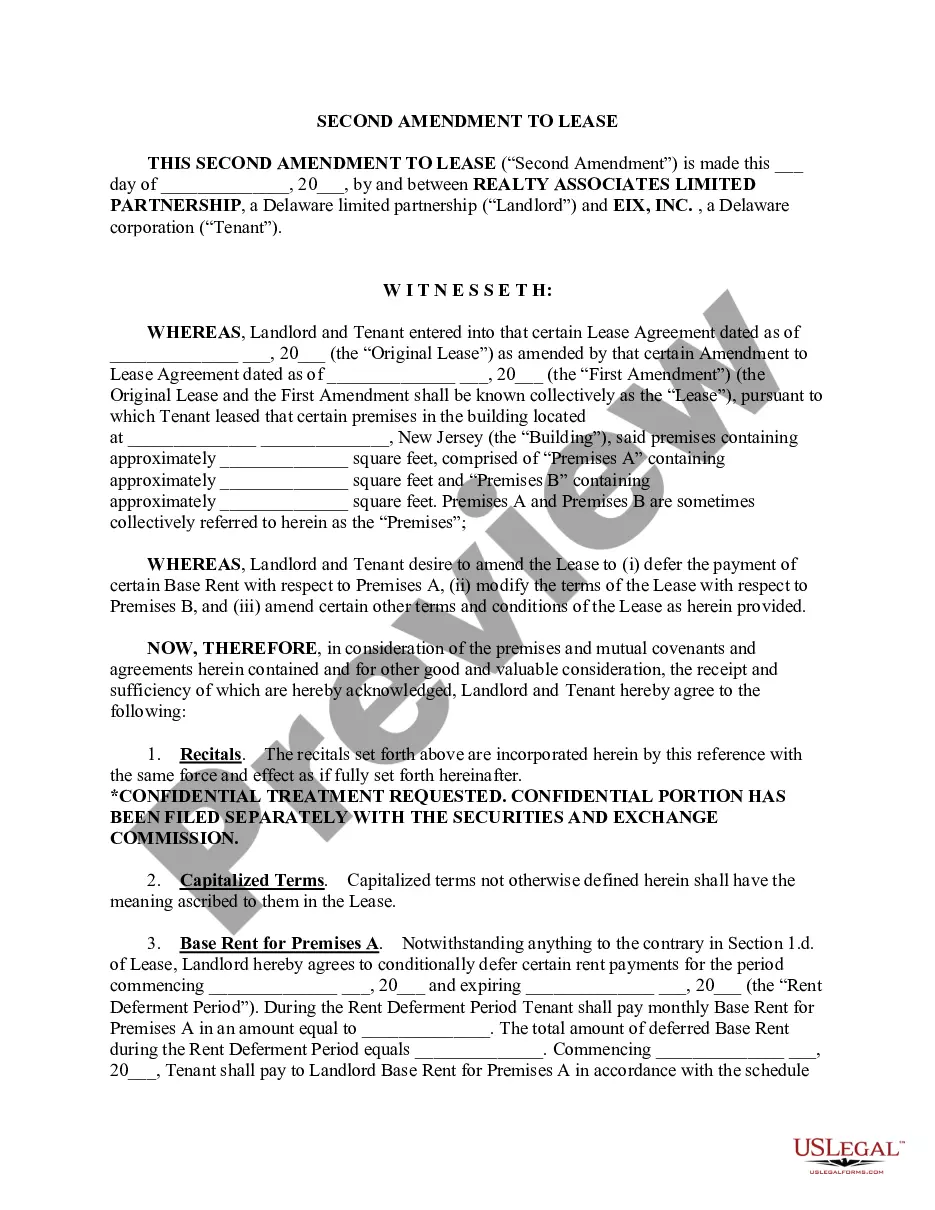
The New Jersey Amendment of Lease Package includes essential forms designed to modify the terms of an existing lease agreement. This package is tailored to ensure compliance with New Jersey state regulations, making it a reliable choice for landlords and tenants looking to formalize changes to their lease without the risk of disputes. Unlike other generic lease amendment forms, this package covers specific modifications relevant to New Jersey law, ensuring you have all necessary documents in one place.
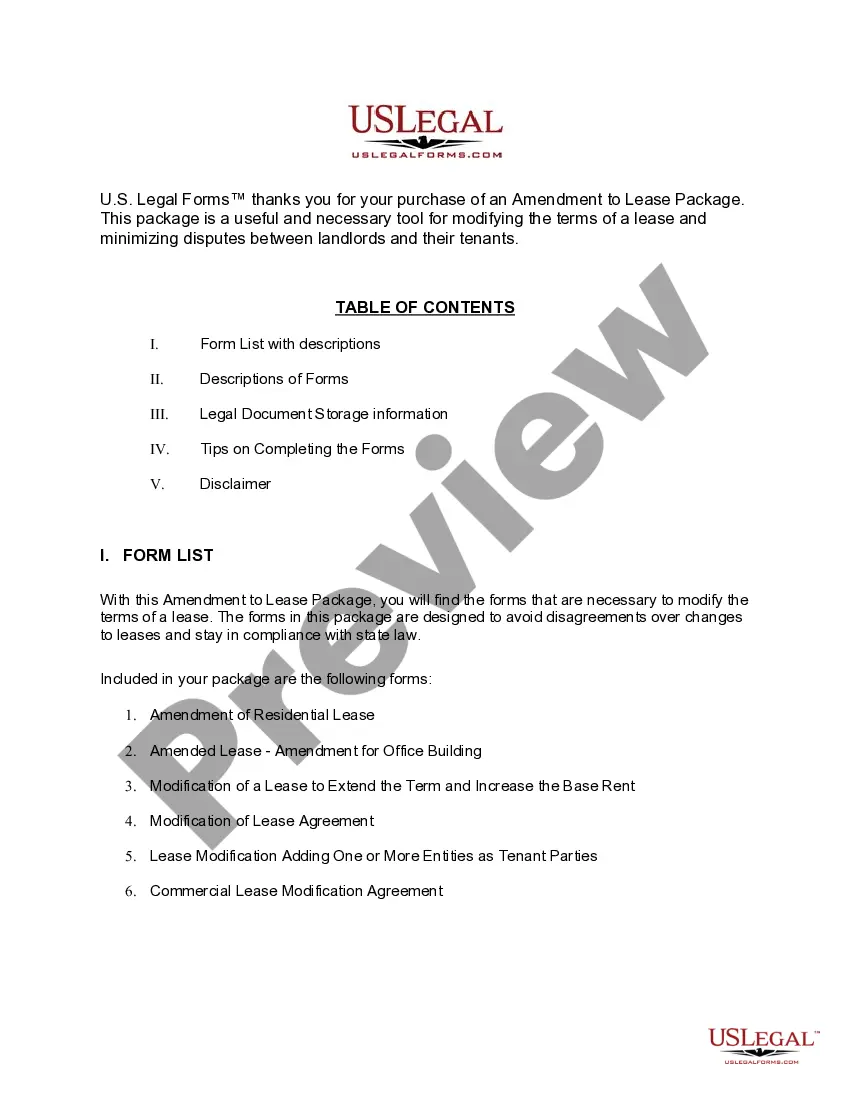
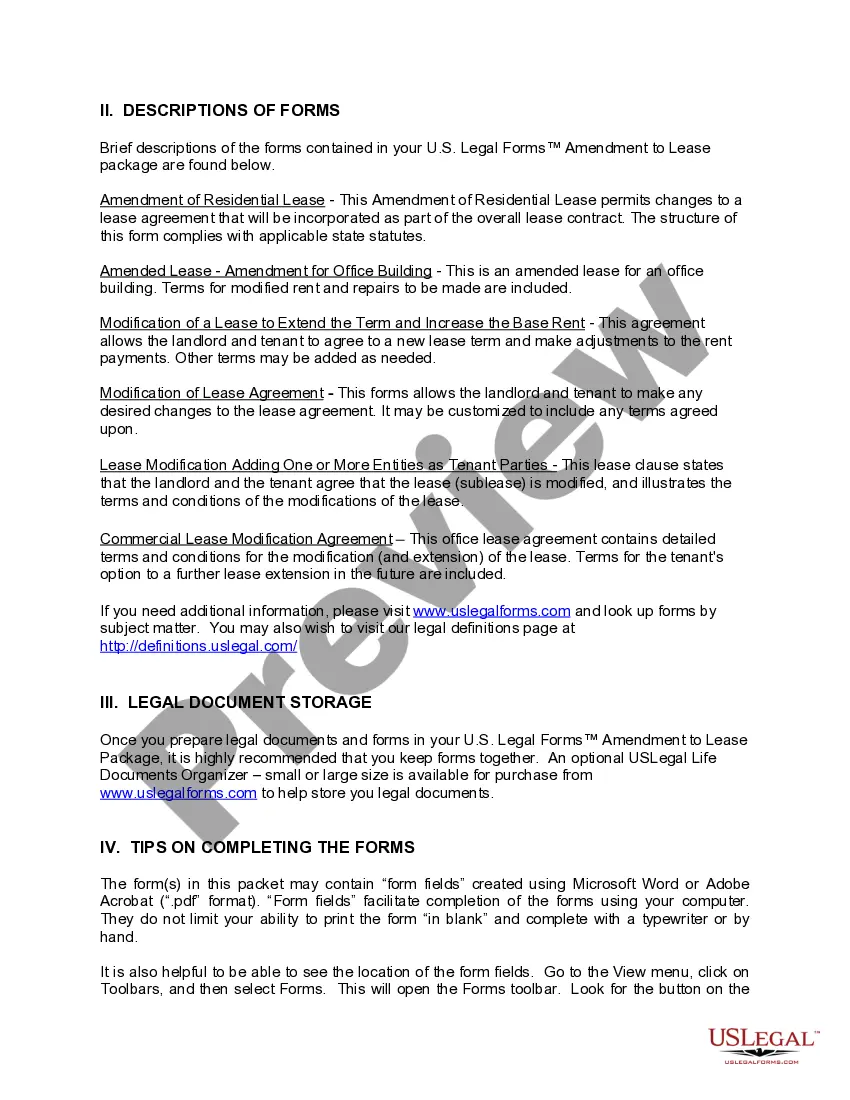
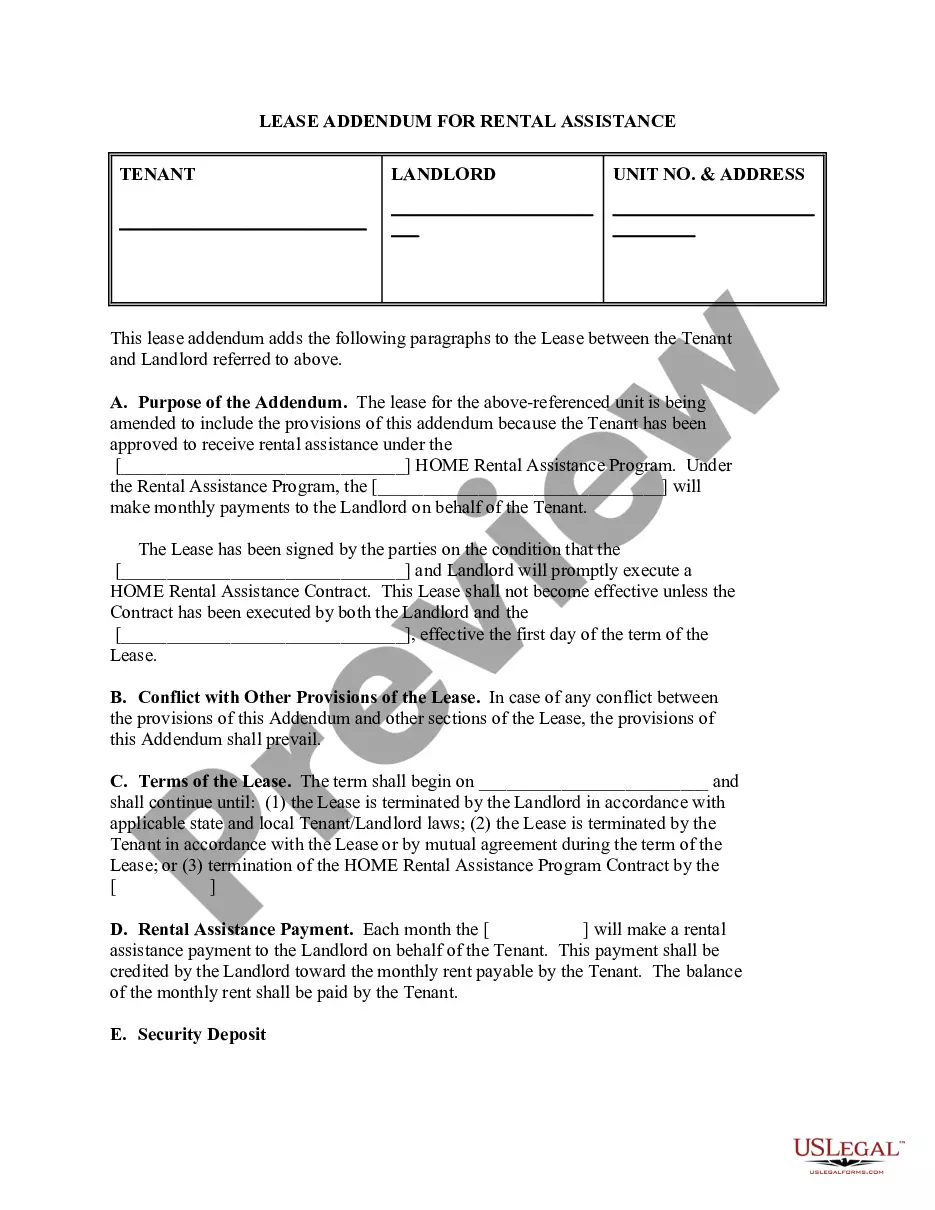
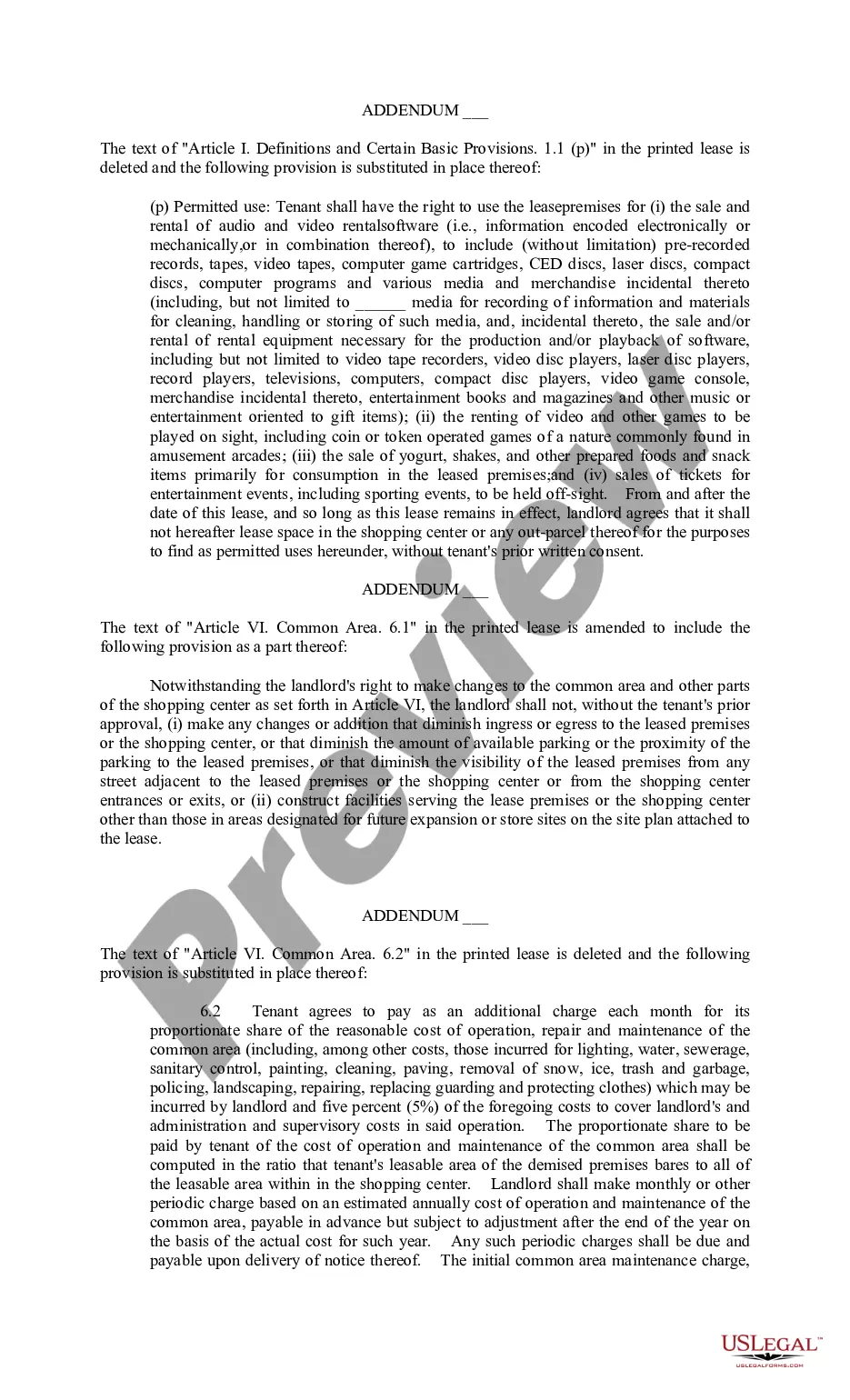
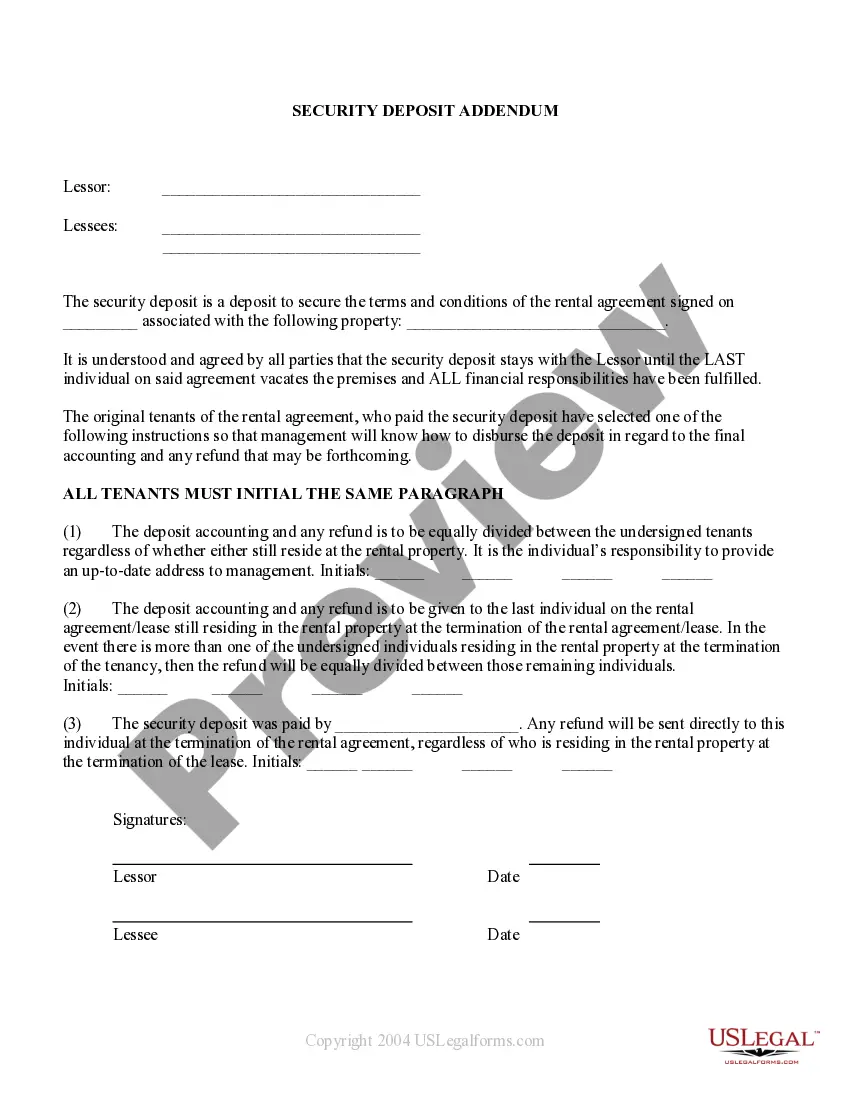
Forms included in this package
When to use this form package
This form package is useful in various situations, including:
- When you need to change lease terms due to tenant requests or changing circumstances.
- When financial challenges require temporary rent deferrals for tenants.
- When the lease is approaching expiration and changes to terms are necessary before renewal.
- When additional tenants will be added to an existing lease.
Intended users of this form package
- Landlords looking to update lease agreements while maintaining legal compliance.
- Tenants who need to negotiate amendments to their leases.
- Property managers responsible for managing rental agreements.
- Real estate professionals assisting clients with lease modifications.
Steps to complete these forms
- Review all included forms to understand their purposes.
- Clearly identify the parties involved in the lease agreement.
- Fill out all necessary information, including dates and specific amendments.
- Have both parties review the changes and sign the forms as required.
- Keep copies of all signed documents for your records.
Notarization details for included forms
Forms in this package typically do not require notarization unless required by local law. Each form is structured to comply with New Jersey legal standards, so it is essential to check local regulations for any specific requirements regarding notarization.
Get your form ready online
Our built-in tools help you complete, sign, share, and store your documents in one place.
Make edits, fill in missing information, and update formatting in US Legal Forms—just like you would in MS Word.
Download a copy, print it, send it by email, or mail it via USPS—whatever works best for your next step.
Sign and collect signatures with our SignNow integration. Send to multiple recipients, set reminders, and more. Go Premium to unlock E-Sign.
If this form requires notarization, complete it online through a secure video call—no need to meet a notary in person or wait for an appointment.
We protect your documents and personal data by following strict security and privacy standards.

Make edits, fill in missing information, and update formatting in US Legal Forms—just like you would in MS Word.

Download a copy, print it, send it by email, or mail it via USPS—whatever works best for your next step.

Sign and collect signatures with our SignNow integration. Send to multiple recipients, set reminders, and more. Go Premium to unlock E-Sign.

If this form requires notarization, complete it online through a secure video call—no need to meet a notary in person or wait for an appointment.

We protect your documents and personal data by following strict security and privacy standards.
Mistakes to watch out for
- Failing to provide all required signatures on the amendment forms.
- Not specifying the effective date of changes in the lease amendment.
- Forgetting to properly notify tenants before making lease modifications.
- Using outdated language or format that does not comply with current New Jersey regulations.
Why complete this package online
- Convenience of downloading forms anytime, anywhere.
- Editability allows for customization to fit specific needs.
- Reliability in using attorney-drafted forms that comply with state law.
Summary of main points
- This form package provides essential tools for modifying a lease in New Jersey.
- Utilizing these forms helps prevent disputes and ensures compliance with local laws.
- Identifying and documenting changes clearly is crucial for both landlords and tenants.
Looking for another form?
Form popularity
FAQ
The early termination is complete upon Landlord's receipt of written notice, payment of the early termination fee and all other rent owed, and Tenant vacating the property. Should the tenant fail to give property notice, pay the early termination fee, or pay outstanding rent, the early termination is deemed void.
If you are a leaseholder, you cannot change the lease terms without agreeing such change with your landlord. The reason for this is that as the lease is a contract between two parties, the leaseholder and the landlord, both parties must agree to change (referred to also as variation) of the terms of the lease.
The Lease Must be in Writing It does not matter if the lease is handwritten or typed. If the lease is for more than one year, it must be in written form and contain the following terms.
Lease Renewal A landlord must allow the tenant to renew the lease unless the landlord has good cause for an eviction under the Anti-Eviction Act. (This does not apply to two or three-family owner occupied dwellings, motels, hotels, transients or seasonal tenants).
In some circumstances, a tenant can break a fixed-term agreement early without penalty. A tenant can give 14 days' written notice to end an agreement early without penalty if: they have accepted an offer of social housing (e.g. from DCJ Housing)
The law provides that landlords cannot simply evict a tenant.Essentially, a landlord does have the right to place a unit for sale. In order to have cause for eviction, the buyer of the home must personally occupy the unit and the contract must call for the unit to be vacant at the time of closing.
Changing the lease You can negotiate certain changes to the lease, sometimes known as 'varying the lease'. Speak to your landlord first. If you can't agree, you may be able to apply to a tribunal - contact Leasehold Advisory Service for advice.
When creating your Lease Amendment, you'll want to include information such as: the names of the landlord(s) and the tenant(s); the effective date of the original lease; the date of the lease amendment; the address and nature of the leased property; whether the original lease was recorded with the county; which
A lease is automatically void when it is against the law, such as a lease for an illegal purpose. In other circumstances, like fraud or duress, a lease can be declared void at the request of one party but not the other.