New Jersey Complaint to Foreclose Residential Mortgage
About this form
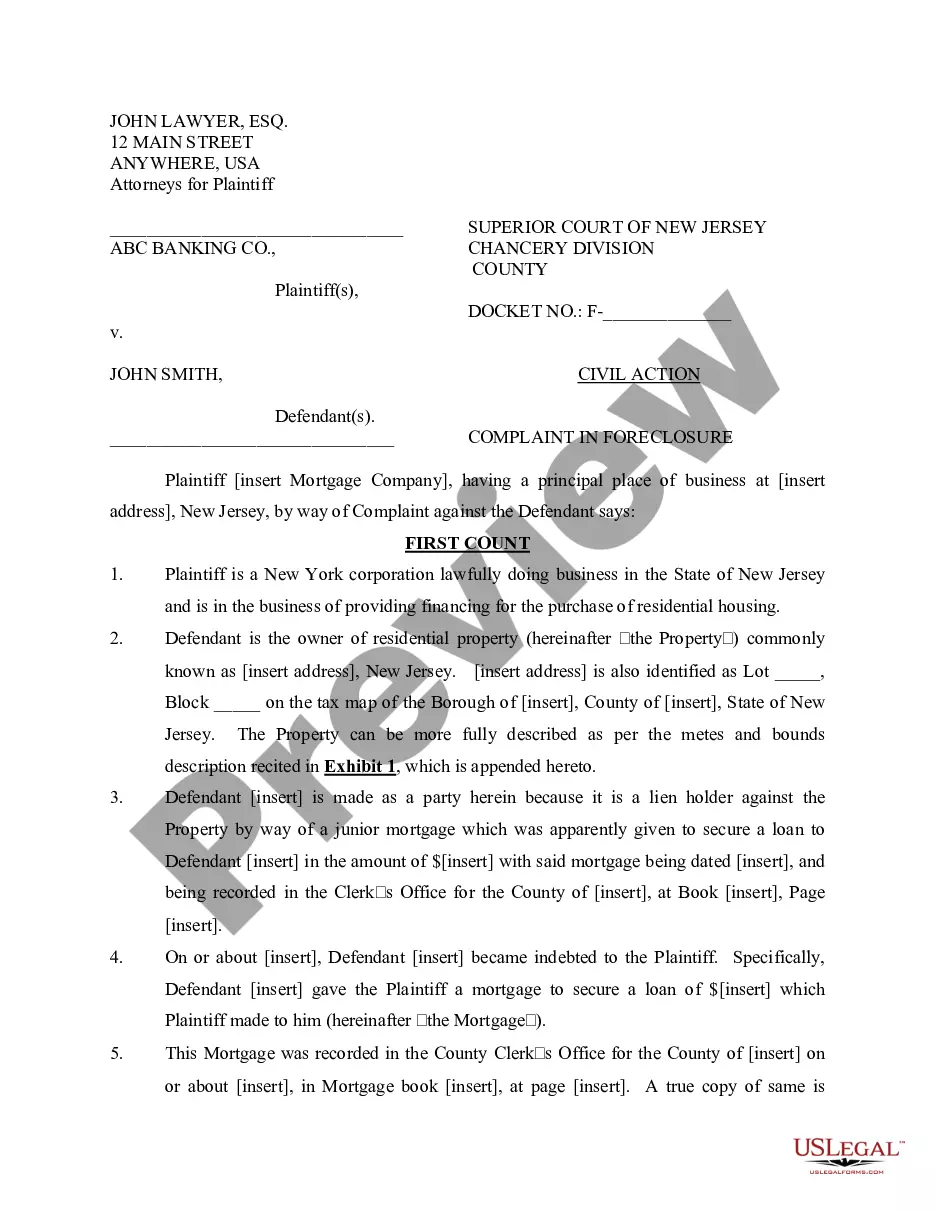
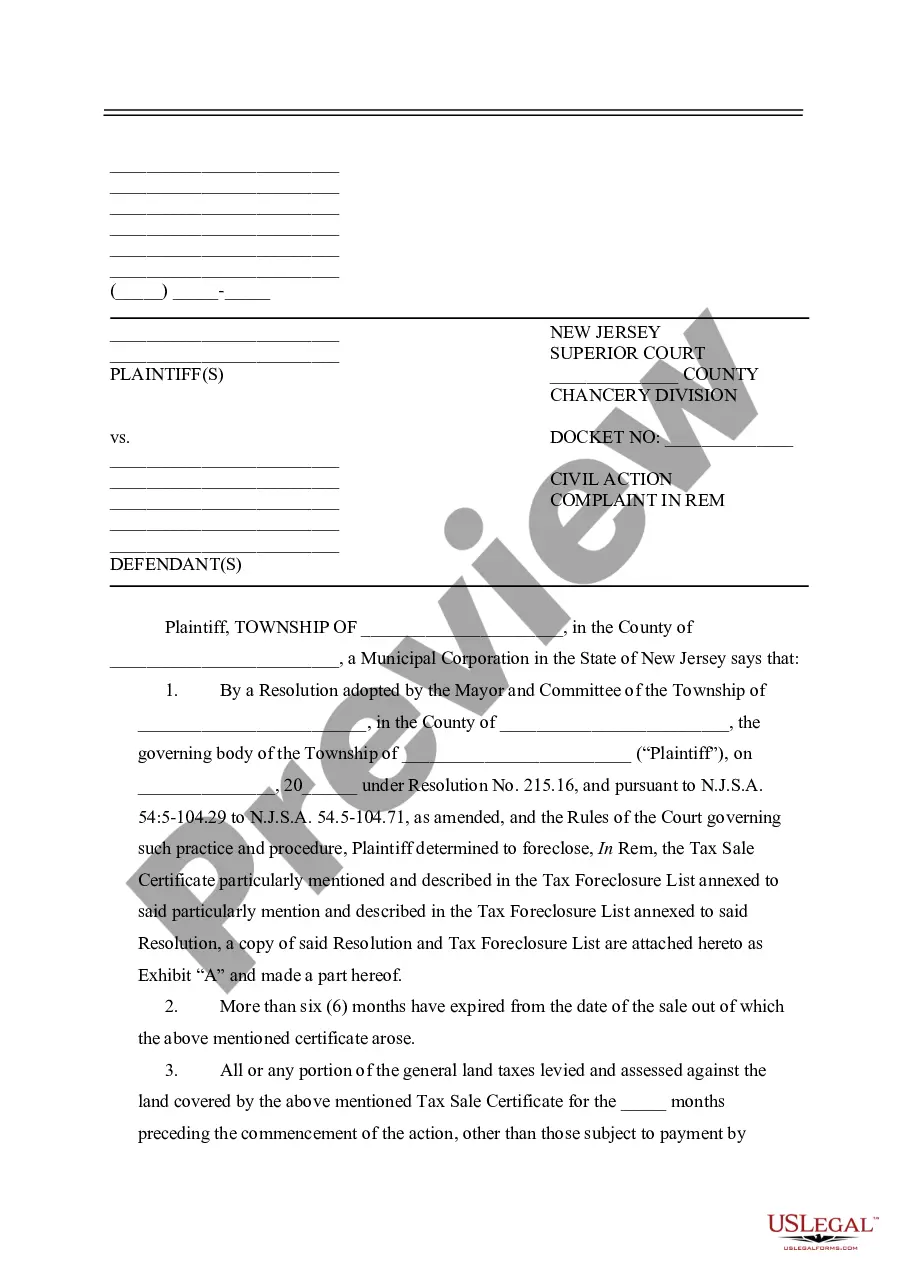
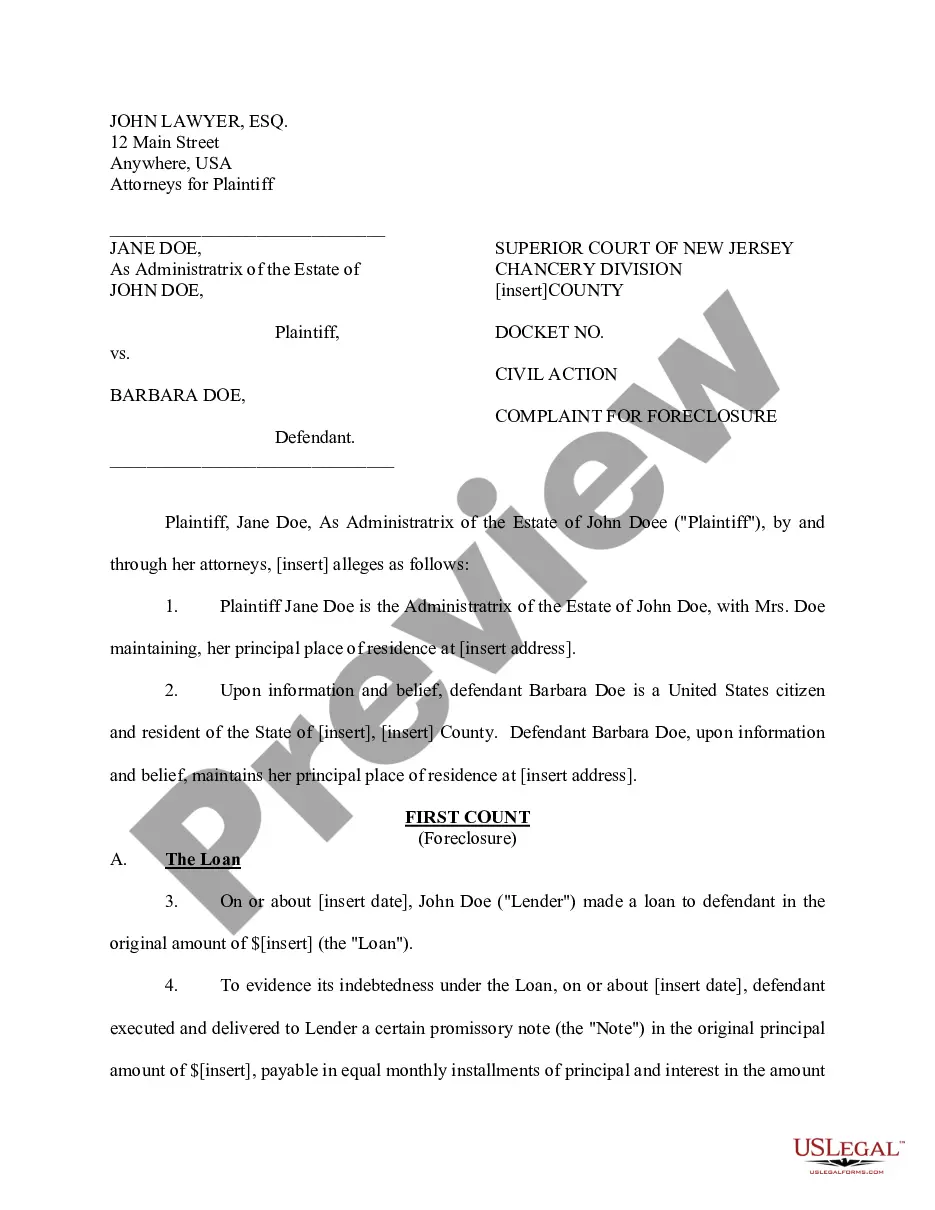
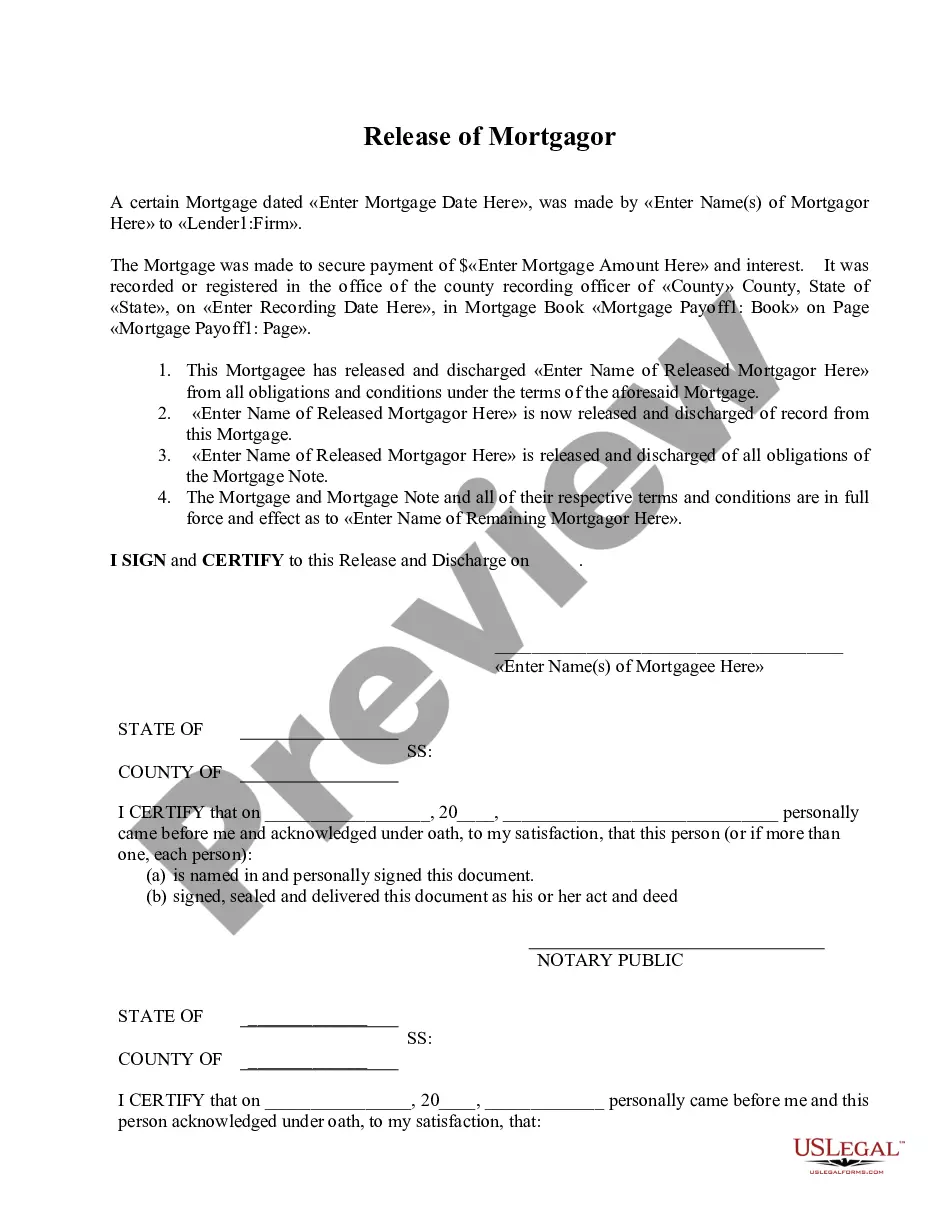
The Complaint to Foreclose Residential Mortgage is a legal document used in New Jersey to initiate foreclosure proceedings on a residential mortgage. This form allows a lender, typically a bank or mortgage company, to take legal action against a borrower who has defaulted on their mortgage payments. It differs from similar forms by being specifically tailored for the state of New Jersey, adhering to its legal standards and requirements for foreclosure actions.
Key parts of this document
- Identification of the parties: Names and addresses of the Plaintiff (Mortgage Company) and Defendant (Borrower).
- Property details: Description of the property in question, including its address and tax map identification.
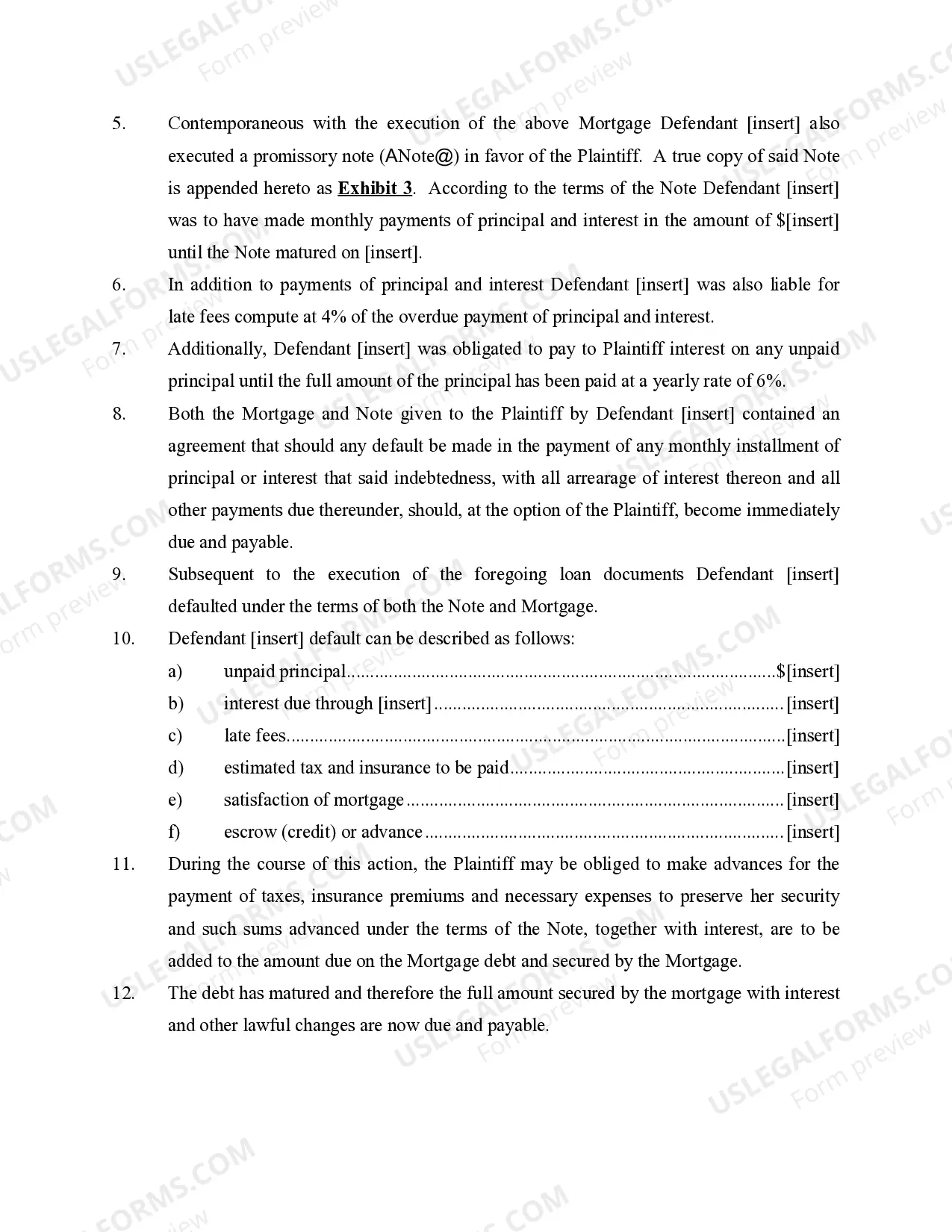
- Loan information: Details of the mortgage agreement, including the loan amount, interest rate, and payment terms.
- Default description: Account of the borrower's failure to make required payments and resulting liabilities.
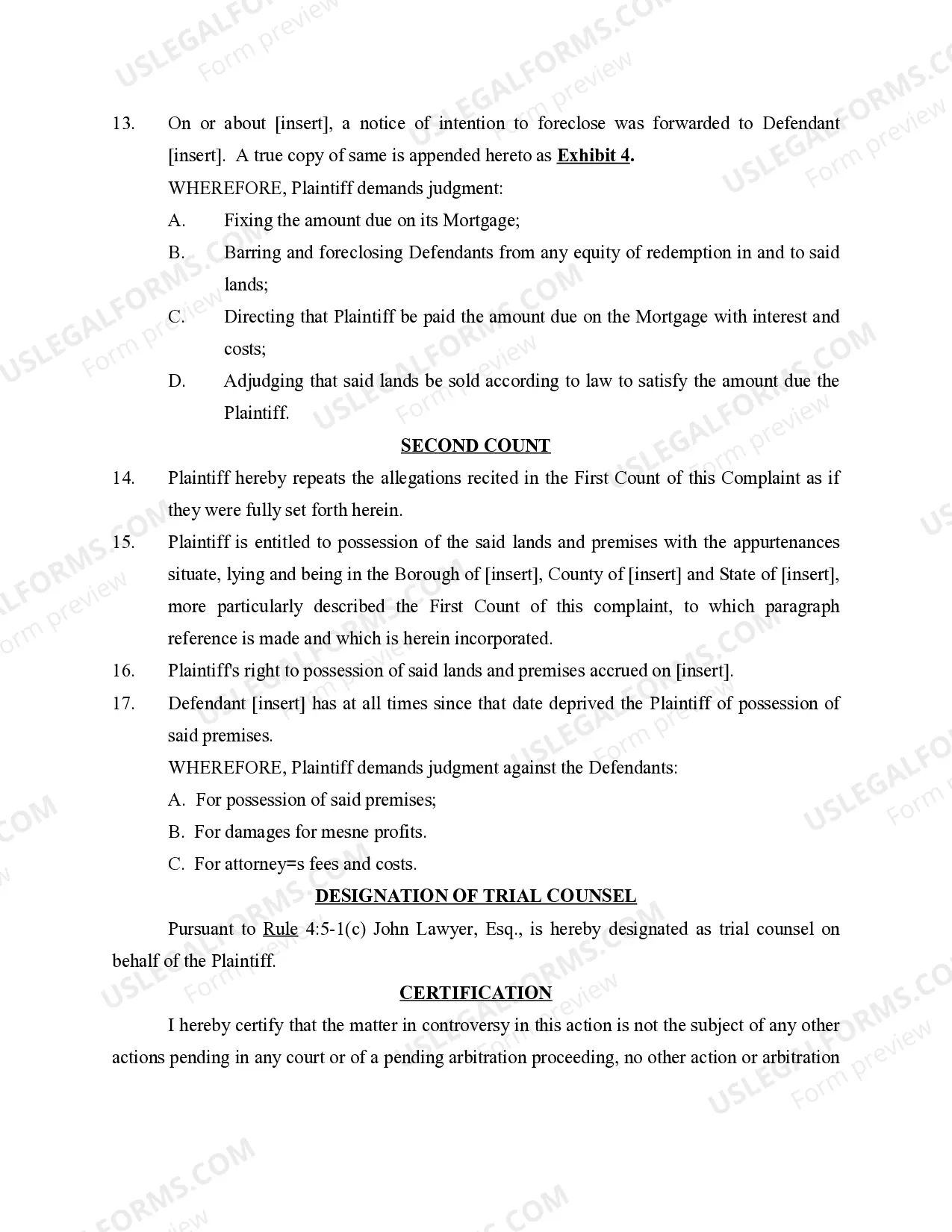
- Relief sought: Specific demands for judgment by the Plaintiff, including the request for possession and foreclosure of the property.
When this form is needed
This form is used when a mortgage lender needs to foreclose on a residential property due to the borrower's default on the mortgage payments. Common scenarios include situations where the borrower has missed multiple payments, is unable to negotiate a repayment plan, or has failed to comply with the mortgage terms. By filing this complaint, the lender seeks to reclaim the property and recover the outstanding debt.
Intended users of this form
- Lenders or mortgage companies that hold a mortgage against residential property.
- Legal representatives acting on behalf of banks or financial institutions.
- Individuals or entities seeking to enforce their rights in foreclosure proceedings.
- Borrowers who understand the foreclosure process and need to respond to a complaint.
How to prepare this document
- Identify the parties: Fill in the names and addresses of the Plaintiff and Defendant.
- Specify the property: Provide the address and tax identification details of the property being foreclosed.
- Enter loan details: Include the loan amount, interest rate, and terms of the mortgage and promissory note.
- Describe the default: Accurately reflect the circumstances of the payment defaults and any unpaid amounts.
- State your claims: Clearly outline what the Plaintiff is seeking from the court, including requests for possession and foreclosure.
Is notarization required?
This form does not typically require notarization unless specified by local law. However, parties involved may want to consult with legal counsel to ensure all procedural requirements are met.
Get your form ready online
Our built-in tools help you complete, sign, share, and store your documents in one place.
Make edits, fill in missing information, and update formatting in US Legal Forms—just like you would in MS Word.
Download a copy, print it, send it by email, or mail it via USPS—whatever works best for your next step.
Sign and collect signatures with our SignNow integration. Send to multiple recipients, set reminders, and more. Go Premium to unlock E-Sign.
If this form requires notarization, complete it online through a secure video call—no need to meet a notary in person or wait for an appointment.
We protect your documents and personal data by following strict security and privacy standards.

Make edits, fill in missing information, and update formatting in US Legal Forms—just like you would in MS Word.

Download a copy, print it, send it by email, or mail it via USPS—whatever works best for your next step.

Sign and collect signatures with our SignNow integration. Send to multiple recipients, set reminders, and more. Go Premium to unlock E-Sign.

If this form requires notarization, complete it online through a secure video call—no need to meet a notary in person or wait for an appointment.

We protect your documents and personal data by following strict security and privacy standards.
Avoid these common issues
- Failing to include complete and accurate property descriptions.
- Not providing sufficient evidence of the borrower's default.
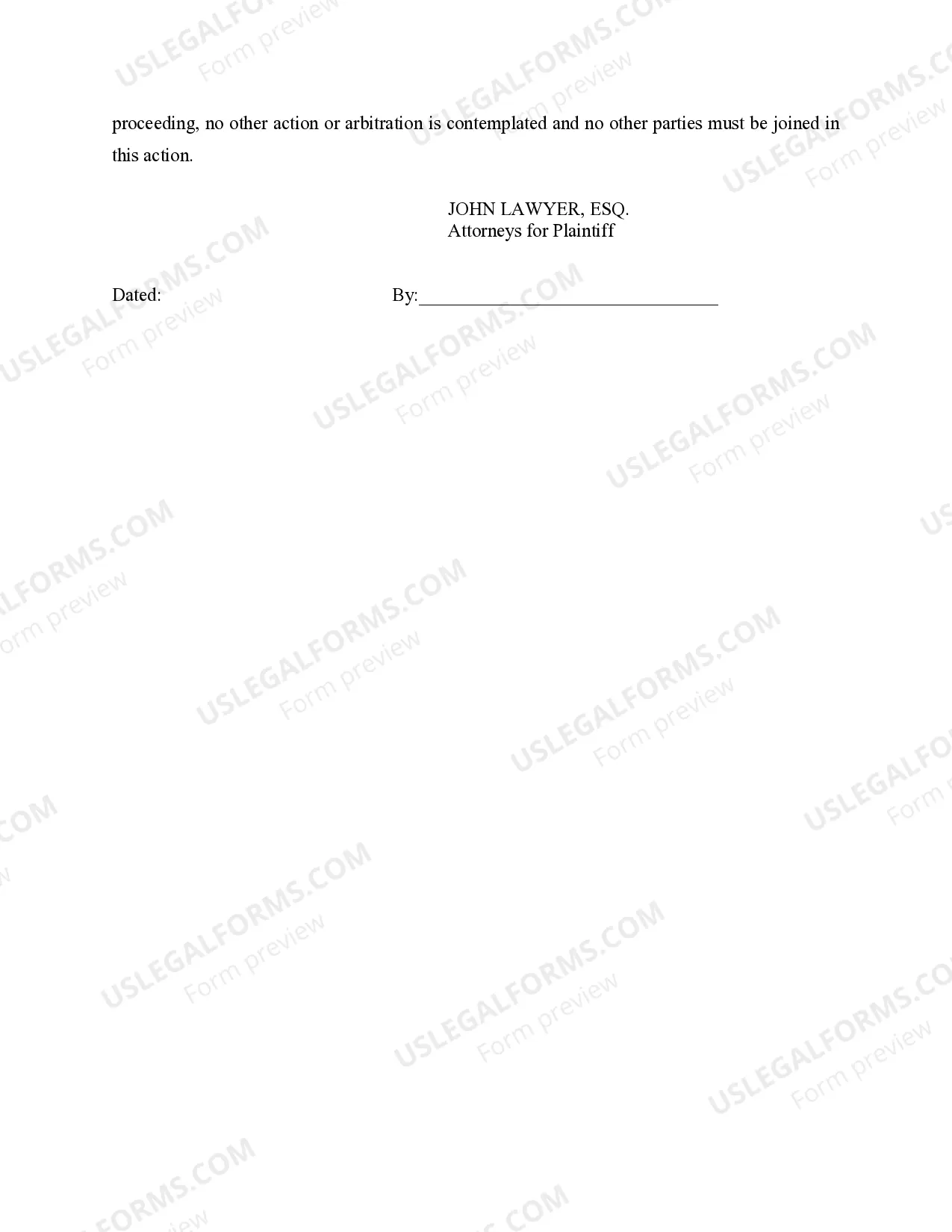
- Forgetting to sign the complaint or verify the information included.
- Incorrectly naming the parties involved in the action.
Advantages of online completion
- Easy access to legal forms from the comfort of your home.
- Editable templates allow for personalization based on specific case details.
- Instant download and printing options for quick access to necessary documents.
- Confidence in the reliability of forms drafted by licensed attorneys familiar with state laws.
Looking for another form?
Form popularity
FAQ
If the lender is successful at the end of foreclosure proceedings, it will obtain a final judgment approving the foreclosure and a Writ of Execution.Once the Writ has been received, the Sheriff must schedule an auction for the property within 120 days.
It is a lengthy process with strict rules for mortgage lenders and multiple opportunities for you to save your home (or arrange the most favorable alternative). According to Nolo.com, New Jersey has the third-longest foreclosure timeline. The average is 1,161 days (38 months) from that first foreclosure notice.
If you choose to file an answer, you must do so within 35 days from the date that you receive the summons and complaint; and you must include a completed Foreclosure Case Information Statement, a Certification Pursuant to Court Rule 4:5-1 and the $175.00 filing fee ($250 for Answers with Counter-Claim, Cross-Claim and/
Although lenders in New Jersey will usually initiate foreclosure proceeding after three missed payments, legally, a lender may consider a mortgage delinquent as soon as one payment is missed.
Notice of Intention to Foreclose The lender must send the notice at least 30 daysbut not more than 180 daysbefore filing a complaint. The notice notifies you that you are behind in your mortgage payments and gives you 30 days to cure the default.
Phase 1: Payment Default. Phase 2: Notice of Default. Phase 3: Notice of Trustee's Sale. Phase 4: Trustee's Sale. Phase 5: Real Estate Owned (REO) Phase 6: Eviction. The Bottom Line.
You can file an answer to respond to the plaintiff's Complaint. An answer is a formal statement, in writing, of your defense to the lawsuit. You can say that what the plaintiff claims is not true. Or you can say it is true but give more information and reasons to defend your actions or explain the situation.
As of around mid-2019, New Jersey law requires the sheriff to conduct the foreclosure sale within 150 days, instead of within 120 days, of the sheriff's receipt of a writ of execution.