New Jersey Complaint for Foreclosure Commercial
Understanding this form
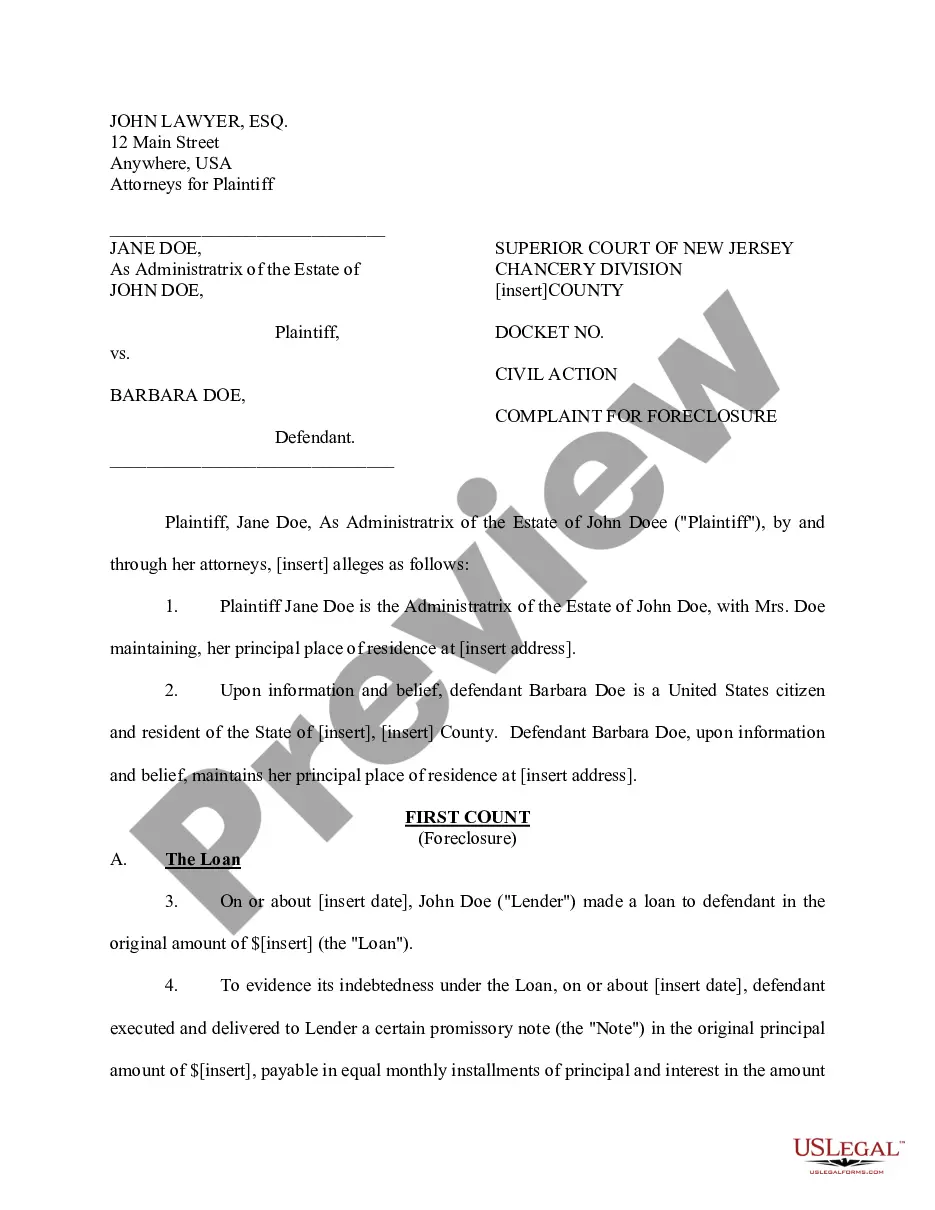
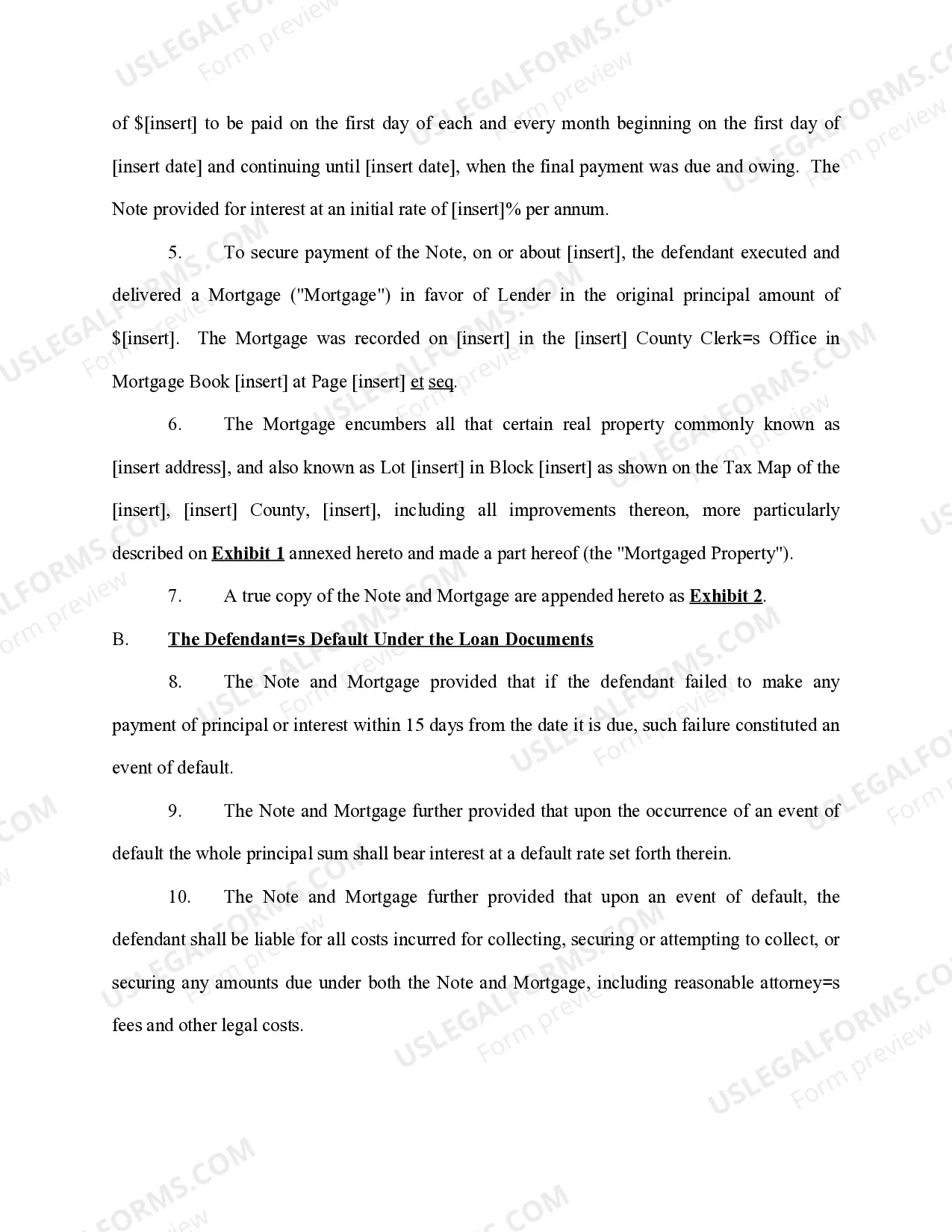
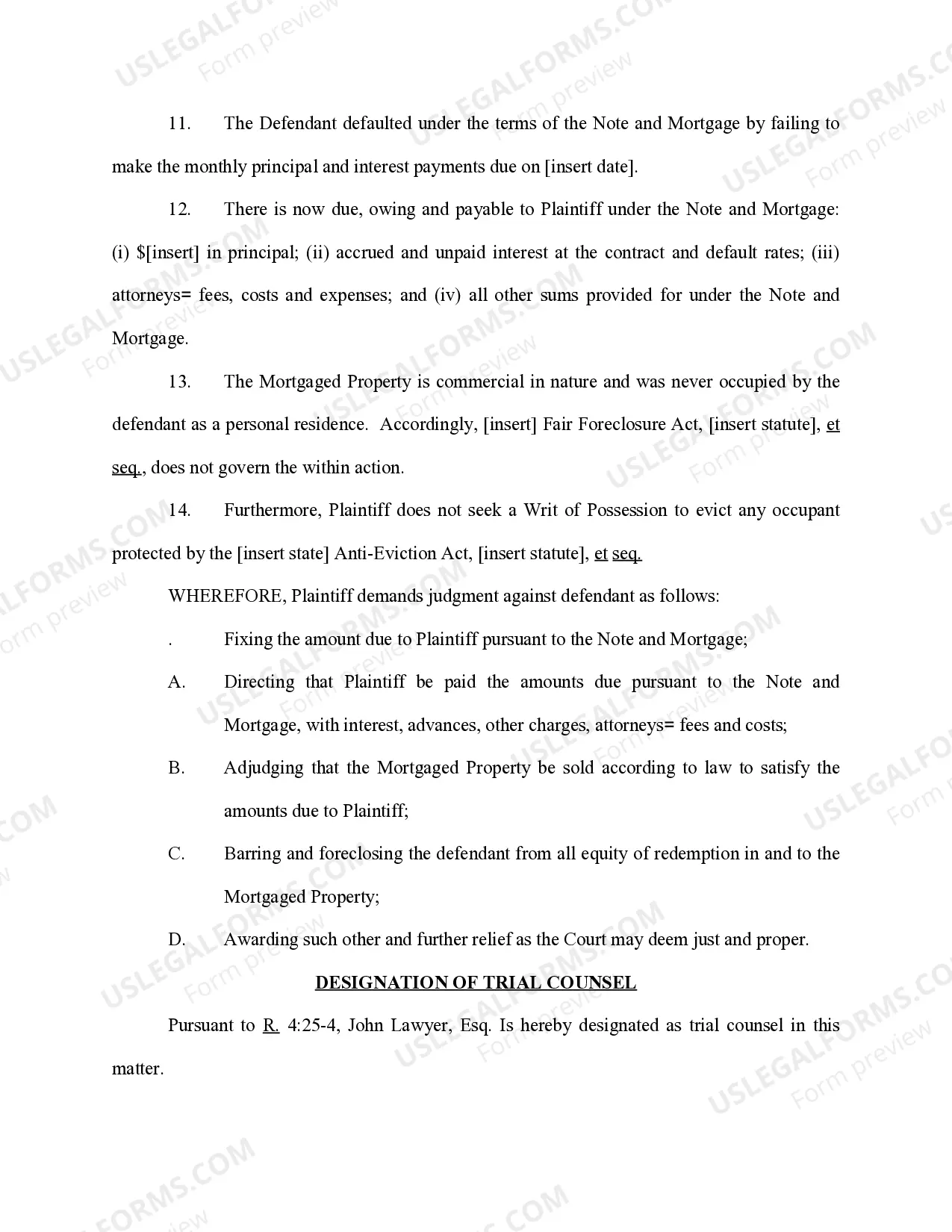
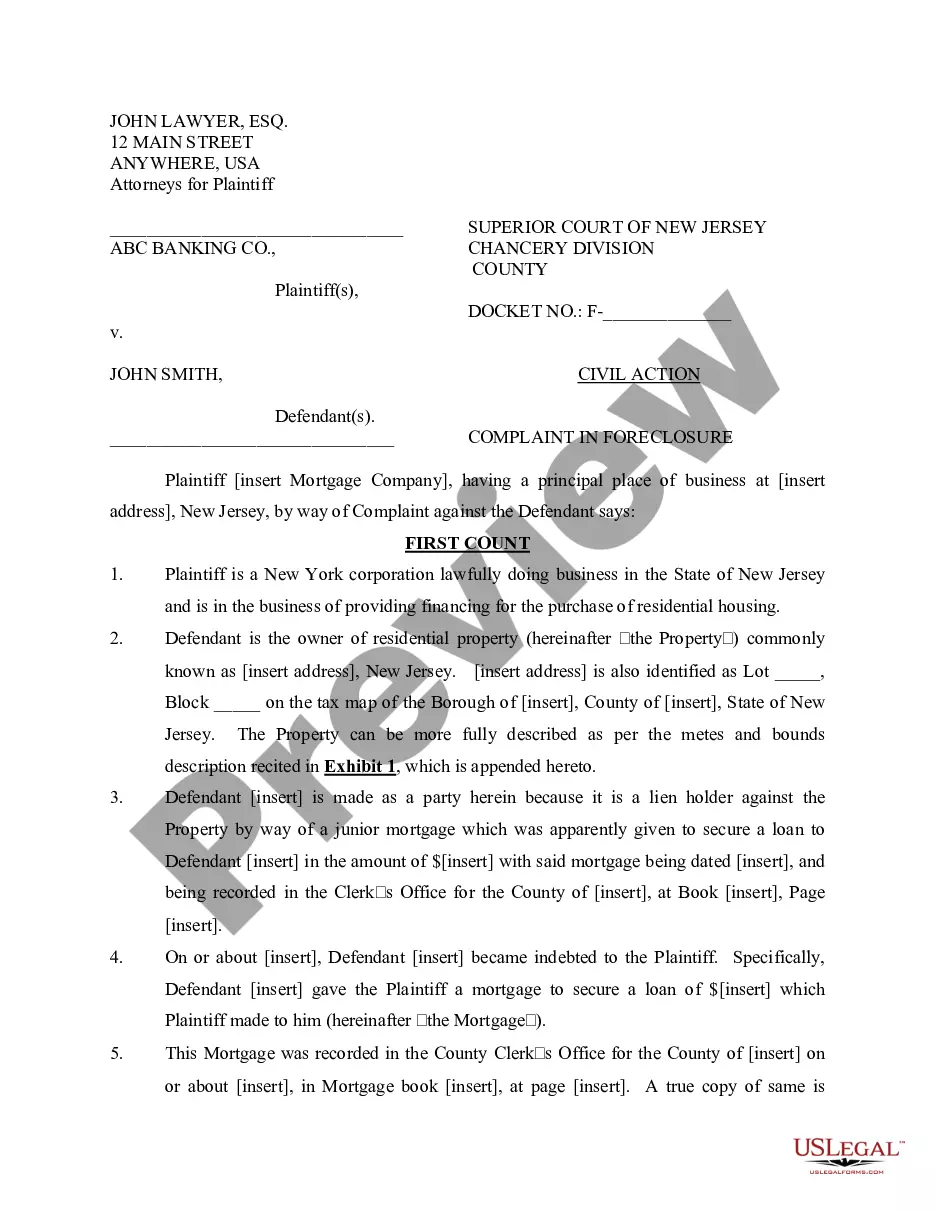
The Complaint for Foreclosure Commercial is a legal document used in civil proceedings in New Jersey to initiate the foreclosure process on a commercial property. This form specifically outlines the plaintiff's claims against the defendant for failing to meet mortgage obligations, and it seeks to recover amounts owed as well as the sale of the mortgaged property. It is distinct from residential foreclosure forms due to its focus on commercial properties and the legal implications surrounding such real estate transactions.
Key parts of this document
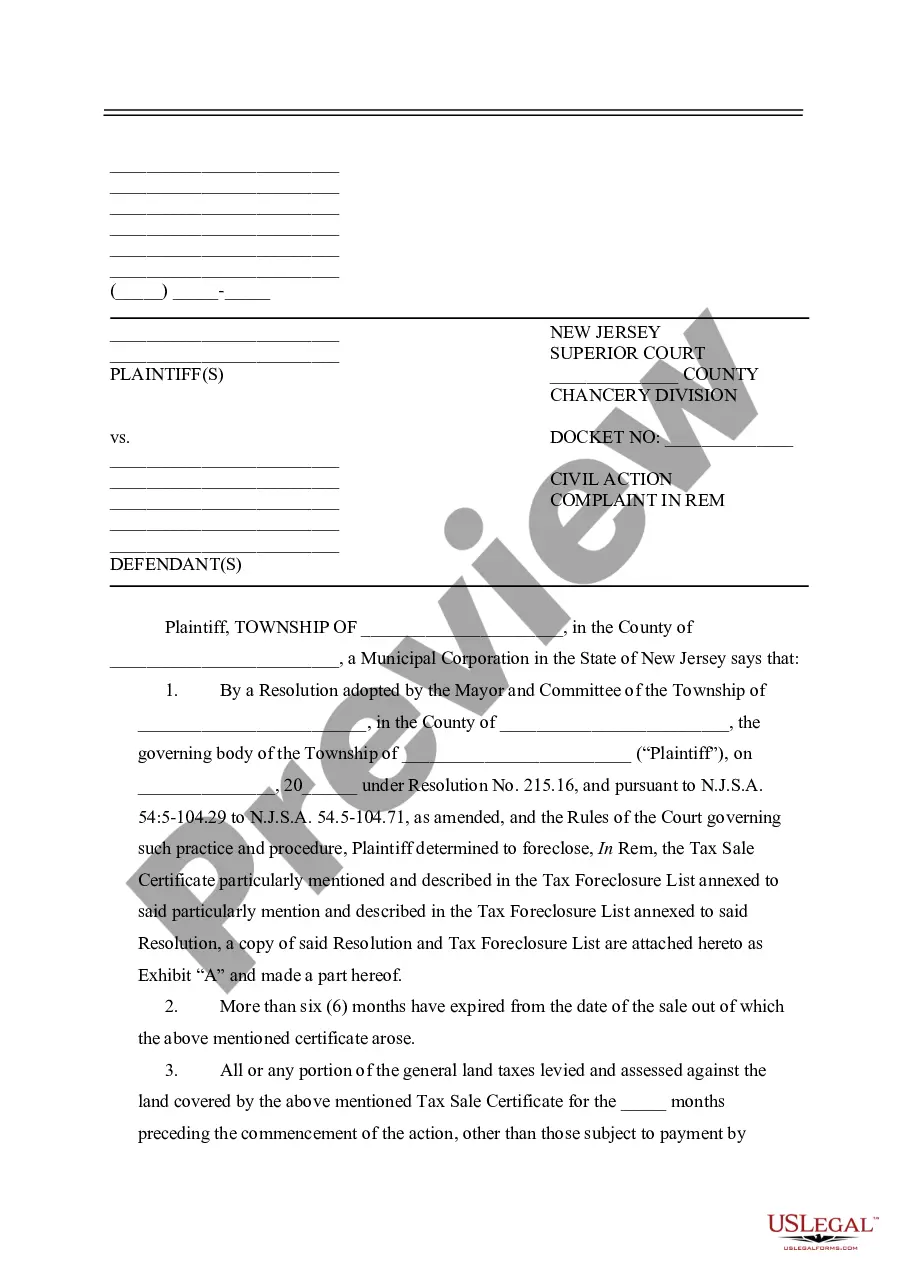
- Information about the plaintiff and defendant, including addresses and roles.
- Details of the loan and mortgage agreements, including amounts and payment terms.
- Statement of default, including dates and amounts due.
- Request for judgment specifying how much is owed and actions to be taken against the defendant.
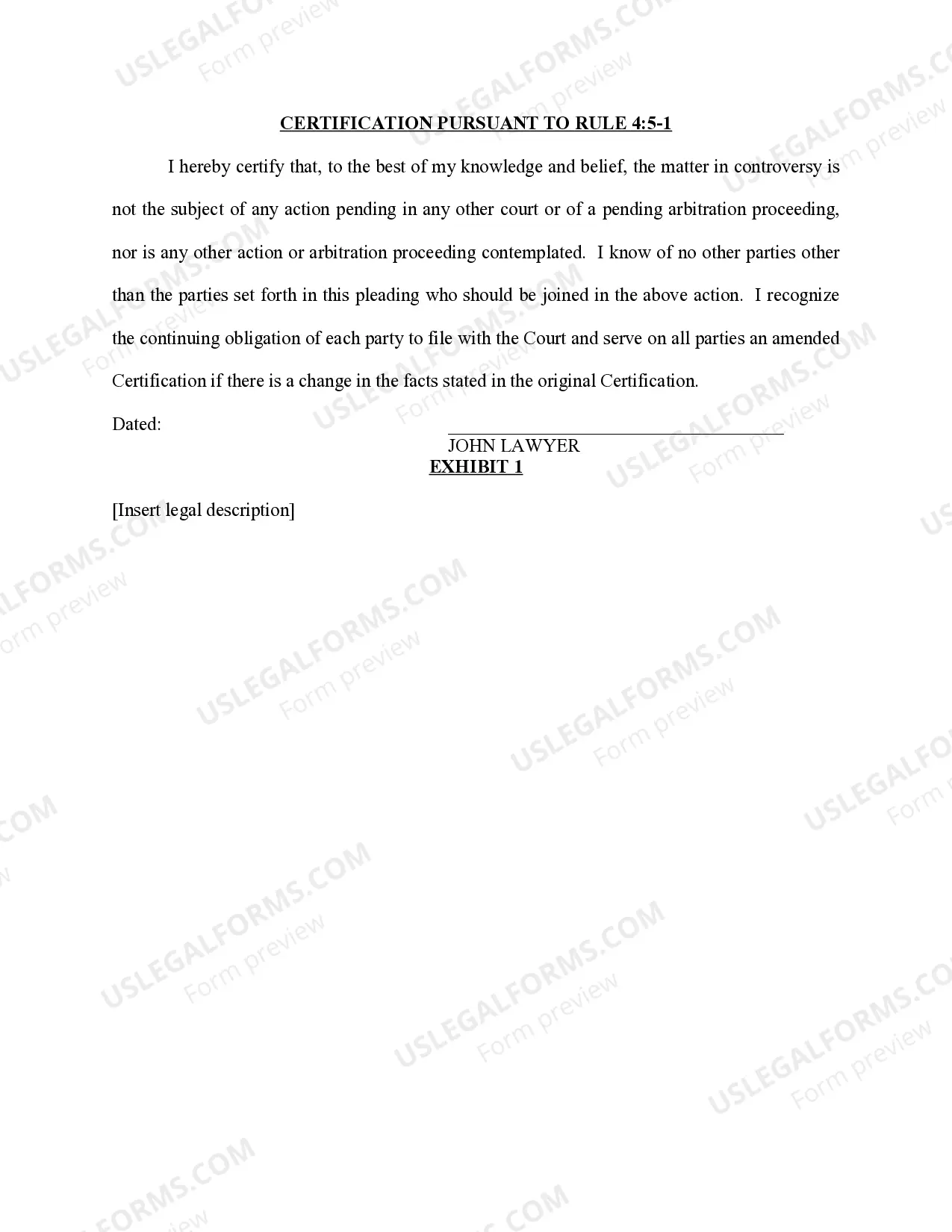
- Trial counsel designation for legal representation in court.
Situations where this form applies
This form is necessary when a lender or an administratrix of an estate, such as Jane Doe in the example, seeks to initiate foreclosure proceedings due to non-payment on a commercial mortgage. It is appropriate to use this form when the loan default occurs, and the lender wishes to reclaim the property secured by the mortgage in accordance with New Jersey's foreclosure laws.
Intended users of this form
This form is intended for:
- Administrators of estates pursuing foreclosure on behalf of deceased borrowers.
- Lending institutions seeking to recover funds through property foreclosure.
- Attorneys representing plaintiffs in foreclosure actions involving commercial properties.
How to prepare this document
- Identify the parties involved, providing full names and addresses for both plaintiff and defendant.
- Specify the details of the loan agreement, including the principal amount, interest rates, and payment schedule.
- State the reasons for the default, including dates and outstanding amounts due.
- Detail the property being foreclosed, including its legal description and any relevant documentation.
- Sign and date the completed form, ensuring all required certifications and representations are included.
Does this document require notarization?
This form does not typically require notarization unless specified by local law. However, it is advisable to check with local legal counsel to ensure compliance with all requirements for filing.
Get your form ready online
Our built-in tools help you complete, sign, share, and store your documents in one place.
Make edits, fill in missing information, and update formatting in US Legal Forms—just like you would in MS Word.
Download a copy, print it, send it by email, or mail it via USPS—whatever works best for your next step.
Sign and collect signatures with our SignNow integration. Send to multiple recipients, set reminders, and more. Go Premium to unlock E-Sign.
If this form requires notarization, complete it online through a secure video call—no need to meet a notary in person or wait for an appointment.
We protect your documents and personal data by following strict security and privacy standards.

Make edits, fill in missing information, and update formatting in US Legal Forms—just like you would in MS Word.

Download a copy, print it, send it by email, or mail it via USPS—whatever works best for your next step.

Sign and collect signatures with our SignNow integration. Send to multiple recipients, set reminders, and more. Go Premium to unlock E-Sign.

If this form requires notarization, complete it online through a secure video call—no need to meet a notary in person or wait for an appointment.

We protect your documents and personal data by following strict security and privacy standards.
Mistakes to watch out for
- Failing to include accurate addresses for all parties involved.
- Neglecting to list all pertinent loan details and defaults.
- Omitting the legal description of the property being foreclosed.
Advantages of online completion
- Convenience of accessing and downloading the form at any time.
- Editability allowing users to fill in their specific details easily.
- Reliability, as the forms are created and reviewed by licensed attorneys.
What to keep in mind
- The Complaint for Foreclosure Commercial is essential for initiating foreclosure on commercial properties in New Jersey.
- Precise details about parties, loans, and property descriptions are critical for the form's effectiveness.
- Understanding common mistakes can help prevent issues during the filing process.
Looking for another form?
Form popularity
FAQ
You can stop the foreclosure process by informing your lender that you will pay off the default amount and extra fees. Your lender would prefer to have the money much more than they would have your home, so unless there are extenuating circumstances, this should work.
Notice of Intention to Foreclose The lender must send the notice at least 30 daysbut not more than 180 daysbefore filing a complaint. The notice notifies you that you are behind in your mortgage payments and gives you 30 days to cure the default.
A defendant may respond in an answer that admits or denies each of the plaintiff's allegations in the complaint. The answer will list defenses and counter-claims or cross-claims against the plaintiff or other defendants. The answer will state whether the defendant wants a jury trial. The case will then continue.
Create an Answer document. Respond to each issue of the Complaint. Assert your affirmative defenses. File one copy of the Answer document with the court and serve the plaintiff with another copy.
In most states, lenders are required to provide a homeowner with sufficient notice of default. The lender must also provide notice of the property owner's right to cure the default before the lender can initiate a foreclosure proceeding. Written proof of money owed under the mortgage.
You Can Stop Foreclosure Until the entry of final judgment against you, you may cure your default by catching up on missed payments and late fees. Until the sheriff's sale, you may redeem your property by paying off the loan, refinancing, or participating in a loan modification plan.
Repayment Plan: Getting Current on the Loan. Mortgage Modification: Adjusting Your Loan Agreement. Short Sale: Selling the Property for Less Than You Owe. Deed in Lieu of Foreclosure: Give the Property to the Lender.
You can file an answer to respond to the plaintiff's Complaint. An answer is a formal statement, in writing, of your defense to the lawsuit. You can say that what the plaintiff claims is not true. Or you can say it is true but give more information and reasons to defend your actions or explain the situation.
If you choose to file an answer, you must do so within 35 days from the date that you receive the summons and complaint; and you must include a completed Foreclosure Case Information Statement, a Certification Pursuant to Court Rule 4:5-1 and the $175.00 filing fee ($250 for Answers with Counter-Claim, Cross-Claim and/