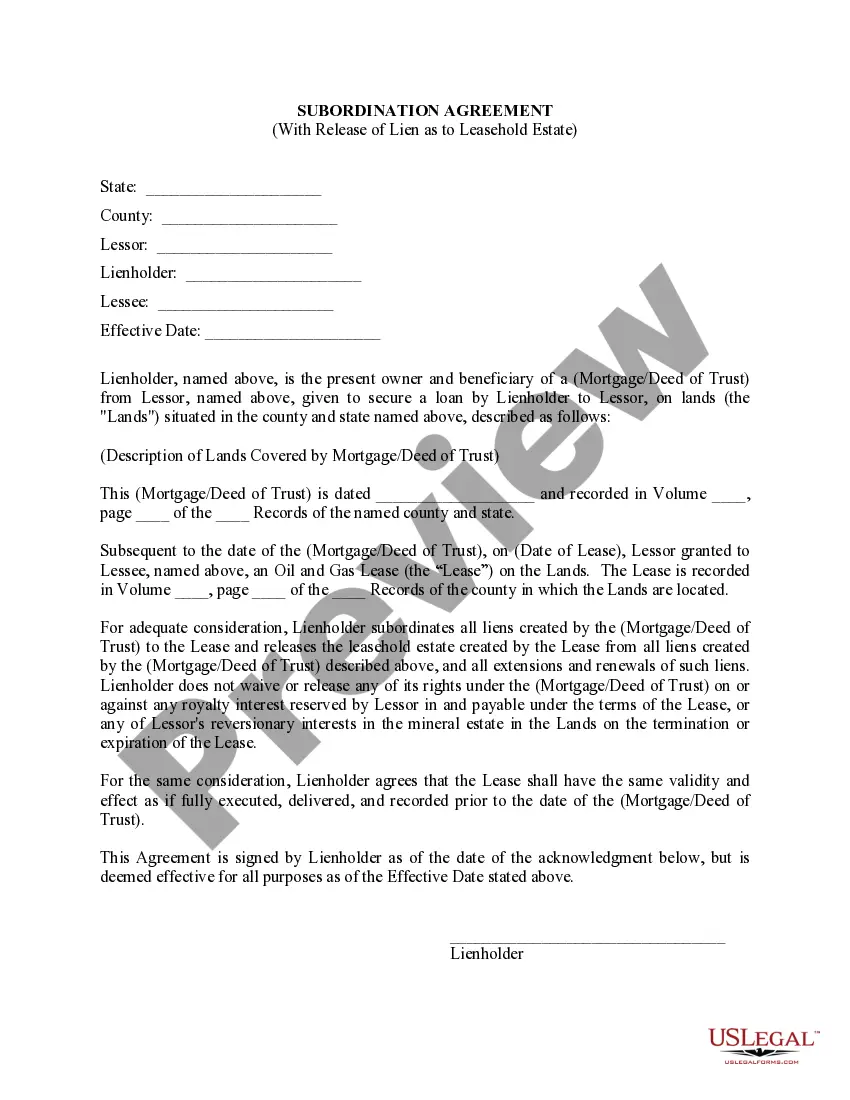
New Jersey Lease Subordination Agreement
What this document covers
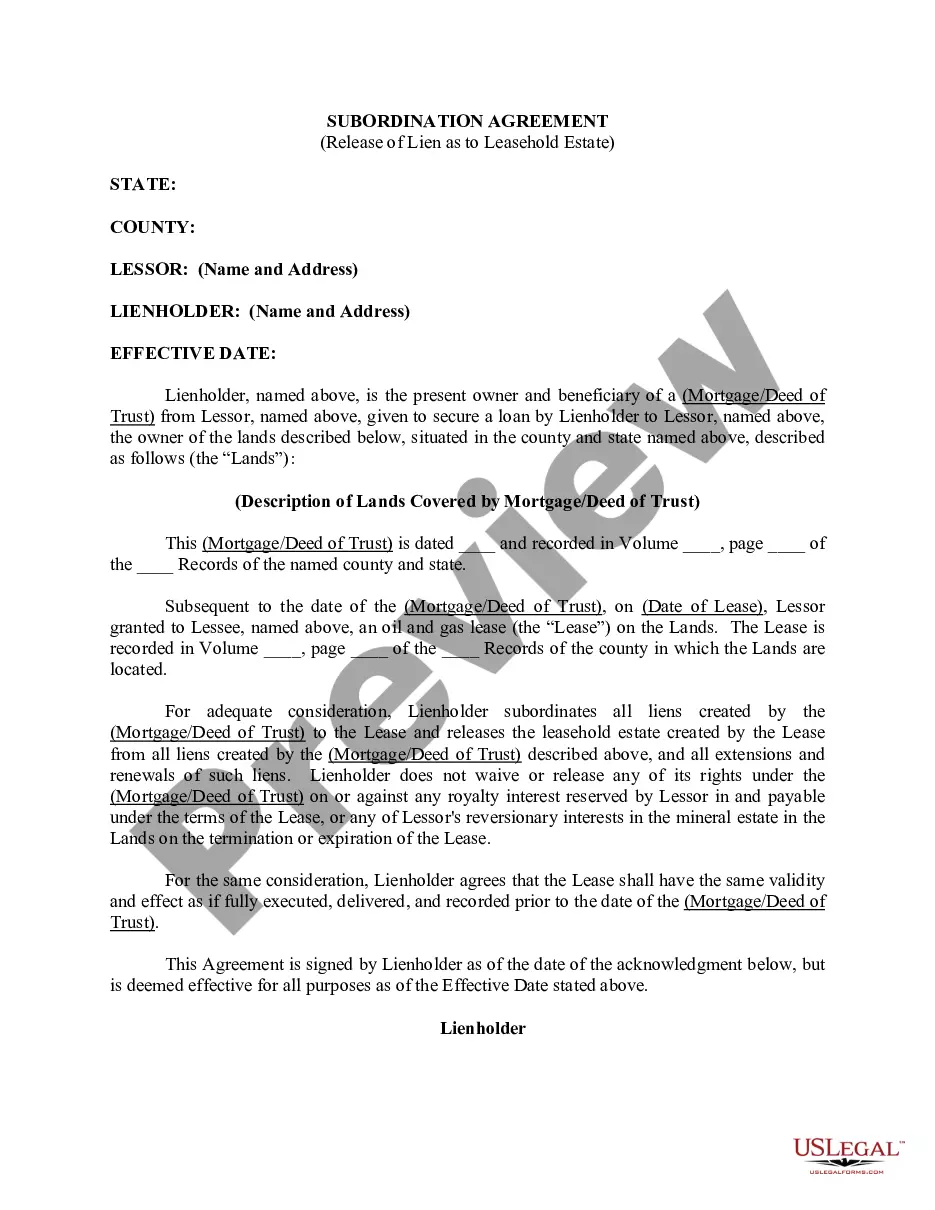
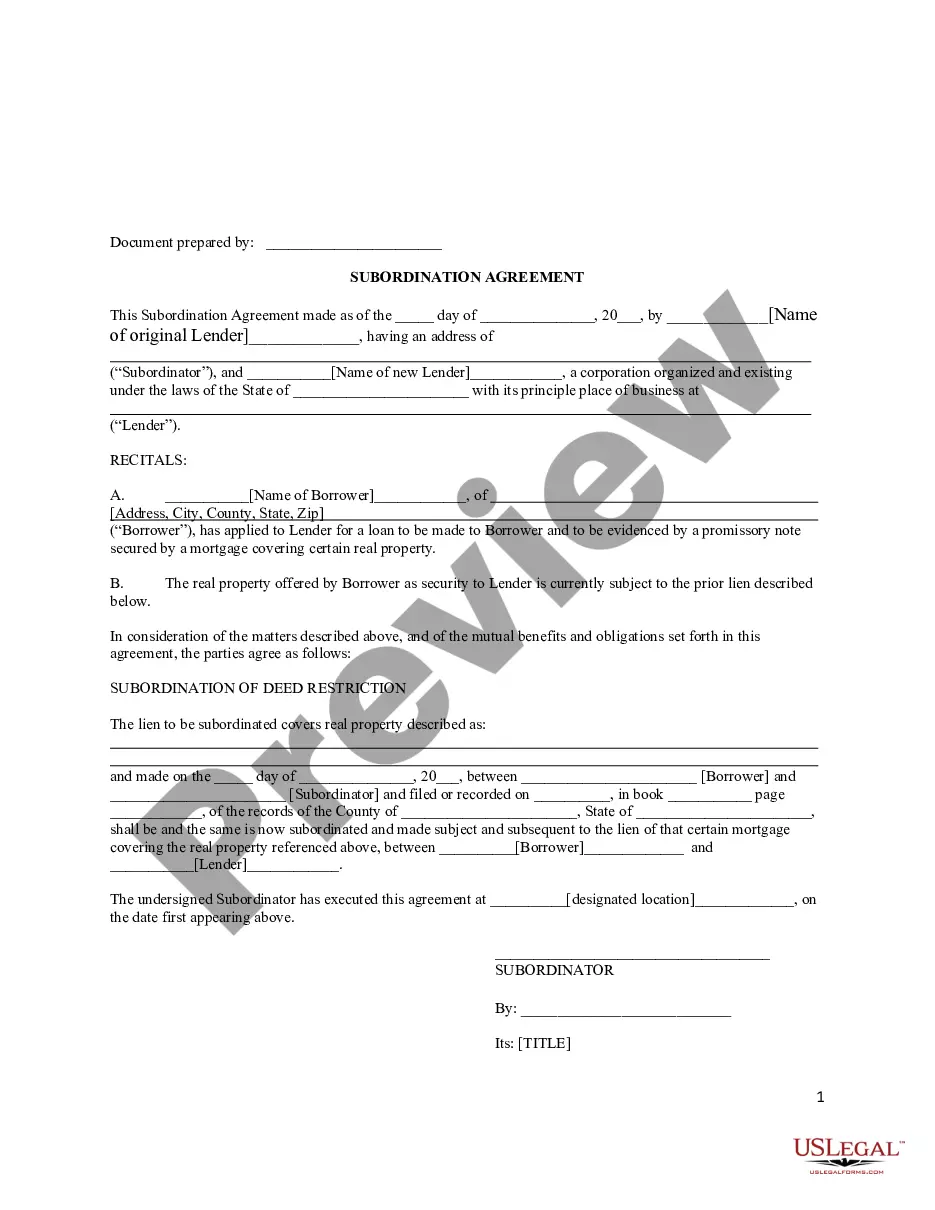
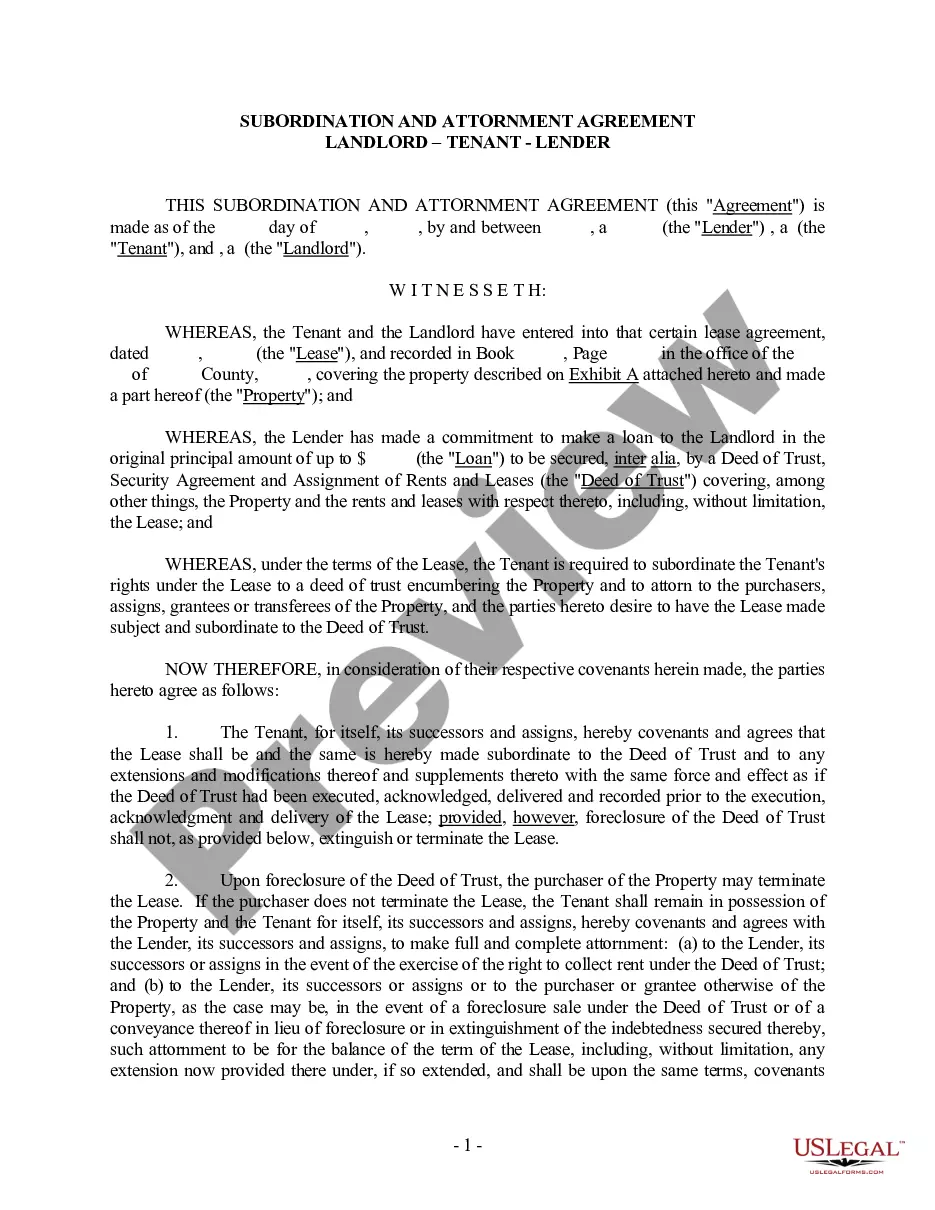
The Lease Subordination Agreement is a legal document that allows a lienholder to subordinate their mortgage or deed of trust to a mineral, oil, or gas lease. This agreement protects the rights of the lessee against existing liens and ensures that the lease functions independently from the mortgage. Unlike typical lease agreements, this form specifically addresses liens within the context of oil and gas leases, making it essential for property owners involved in similar transactions.
Key parts of this document
- Identification of parties: Lessor, Lienholder, and Lessee names and addresses.
- Property description: Detailed description of the land covered by the Mortgage or Deed of Trust.
- Effective date: The date the agreement becomes active.
- Subordination clause: Clearly states that the lienholder subordinates their rights to the leasehold estate.
- Retention clause: Specifies that the lienholder retains rights under the original mortgage against certain interests.
Situations where this form applies
This Lease Subordination Agreement should be used when a property owner with an existing mortgage wishes to enter into an oil or gas lease without the lease being jeopardized by the mortgage. It is particularly important in scenarios where the property owner seeks additional funding or wants to assure potential lessees that their lease is secure from existing loans.
Who can use this document
- Property owners who have an existing mortgage secured by the property.
- Lienholders who need to clarify their rights in relation to new oil and gas leases.
- Lessee parties looking for assurance that their leasehold is free from competing claims.
Steps to complete this form
- Identify all parties involved: Ensure the full names and addresses of the Lessor, Lienholder, and Lessee are accurately entered.
- Provide a clear property description: Enter the legal description of the lands associated with the mortgage.
- Enter the effective date: Specify the date the subordination will take effect.
- Review the subordination clause: Confirm that it correctly subordinates liens to the leasehold estate.
- Sign and date the agreement: Ensure all parties sign the document for it to be valid.
Does this form need to be notarized?
This document requires notarization to meet legal standards. US Legal Forms provides secure online notarization powered by Notarize, allowing you to complete the process through a verified video call, available 24/7.
Get your form ready online
Our built-in tools help you complete, sign, share, and store your documents in one place.
Make edits, fill in missing information, and update formatting in US Legal Forms—just like you would in MS Word.
Download a copy, print it, send it by email, or mail it via USPS—whatever works best for your next step.
Sign and collect signatures with our SignNow integration. Send to multiple recipients, set reminders, and more. Go Premium to unlock E-Sign.
If this form requires notarization, complete it online through a secure video call—no need to meet a notary in person or wait for an appointment.
We protect your documents and personal data by following strict security and privacy standards.

Make edits, fill in missing information, and update formatting in US Legal Forms—just like you would in MS Word.

Download a copy, print it, send it by email, or mail it via USPS—whatever works best for your next step.

Sign and collect signatures with our SignNow integration. Send to multiple recipients, set reminders, and more. Go Premium to unlock E-Sign.

If this form requires notarization, complete it online through a secure video call—no need to meet a notary in person or wait for an appointment.

We protect your documents and personal data by following strict security and privacy standards.
Typical mistakes to avoid
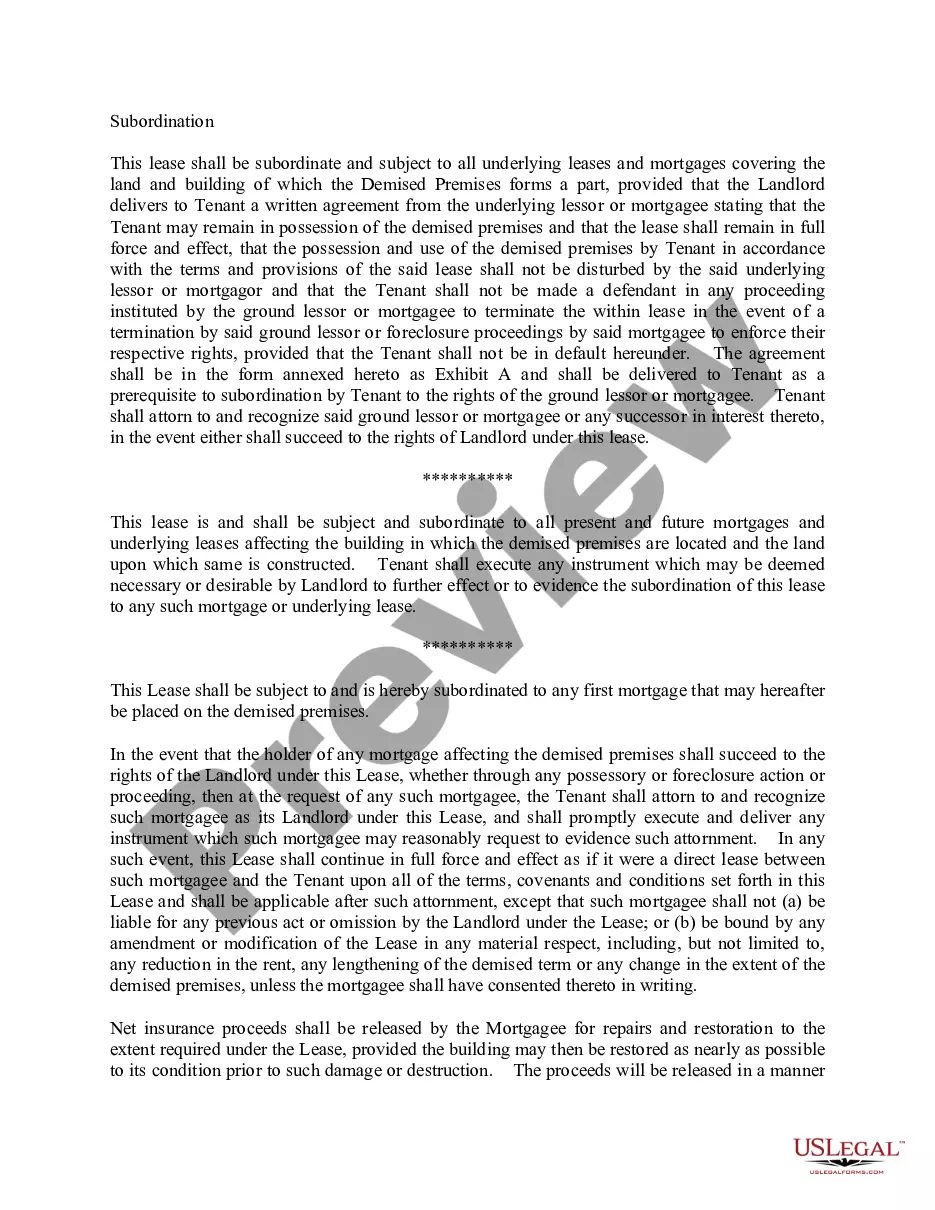
- Failing to provide complete property descriptions can lead to enforceability issues.
- Not accurately identifying all parties involved, which may cause complications later.
- Missing signatures or dates from any of the parties that could affect validation.
Advantages of online completion
- Convenience: Access and complete the form from anywhere, at any time.
- Editability: Make changes easily, ensuring all information is accurate before finalization.
- Reliability: Forms are drafted by licensed attorneys and updated to reflect current laws.
Looking for another form?


Form popularity
FAQ
Unless there is a subordination agreement, it is virtually impossible to refinance your first mortgage. The document agreeing to the subordination must be signed by the lender and the borrower and requires notarization.
Despite its technical-sounding name, the subordination agreement has one simple purpose. It assigns your new mortgage to first lien position, making it possible to refinance with a home equity loan or line of credit. Signing your agreement is a positive step forward in your refinancing journey.
But as property values are going up and the demand for refinance isn't as much, it seems that the subordination process has gotten a little easier. Typically, it takes two to three weeks to get the resubordination paperwork through, and it is likely to set you back $200 to $300.
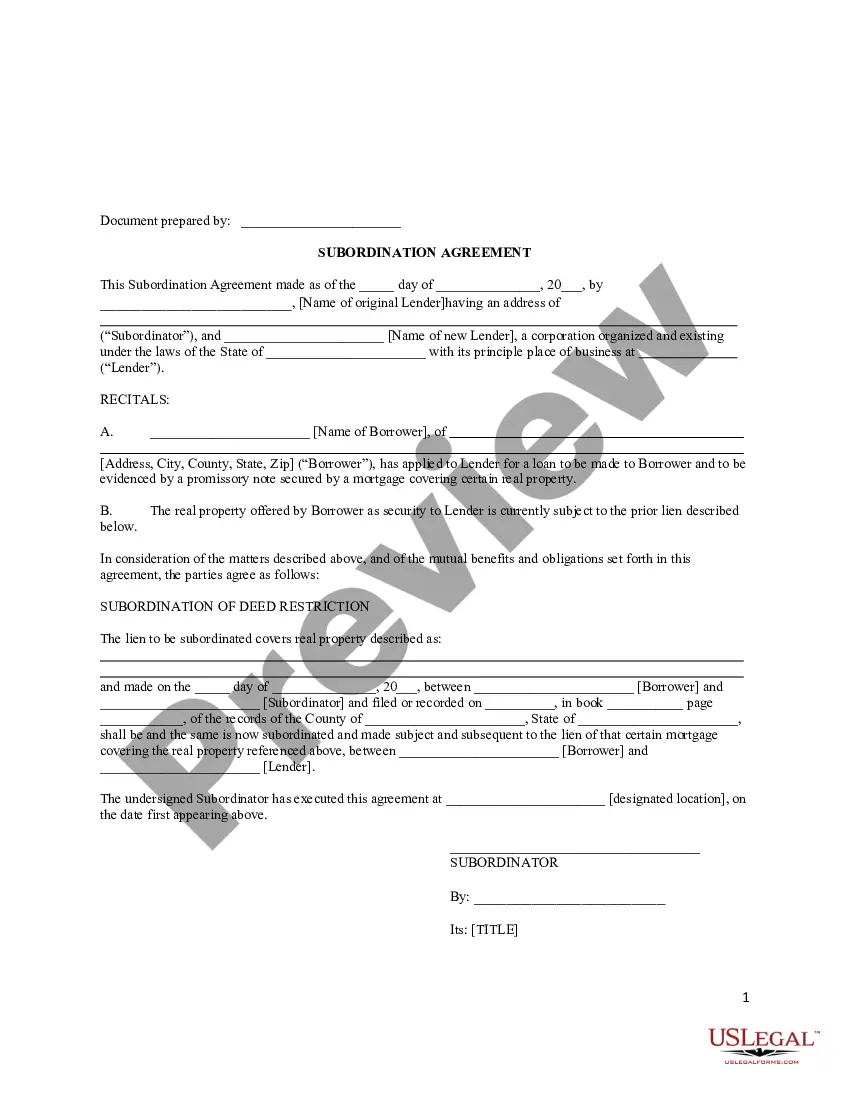
A written contract in which a lender who has secured a loan by a mortgage or deed of trust agrees with the property owner to subordinate its loan (accept a lower priority for the collection of its debt), thus giving the new loan priority in any foreclosure or payoff.
Subordination clauses in mortgages refer to the portion of your agreement with the mortgage company that says their lien takes precedence over any other liens you may have on your property.The primary lien on a house is usually a mortgage. However, it's also possible to have other liens.
But as property values are going up and the demand for refinance isn't as much, it seems that the subordination process has gotten a little easier. Typically, it takes two to three weeks to get the resubordination paperwork through, and it is likely to set you back $200 to $300.
The signed agreement must be acknowledged by a notary and recorded in the official records of the county to be enforceable.
When a Borrower wishes to refinance the property, they must request a subordination request to the Lender. The Lender will subordinate their loan only when there is no cash out as part of the refinance.