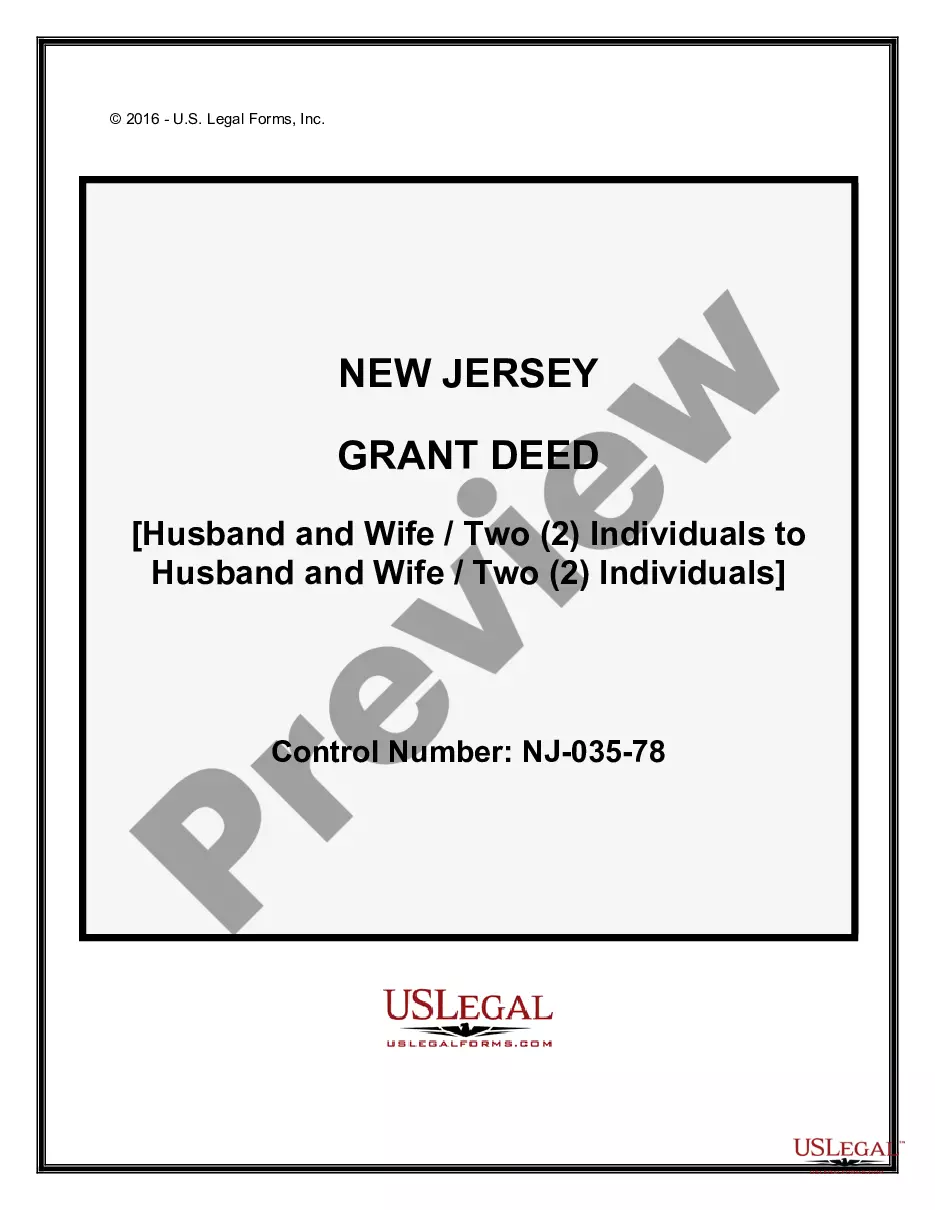
New Jersey Grant Deed from Husband and Wife / Two Individuals to Husband and Wife / Two Individuals
Overview of this form
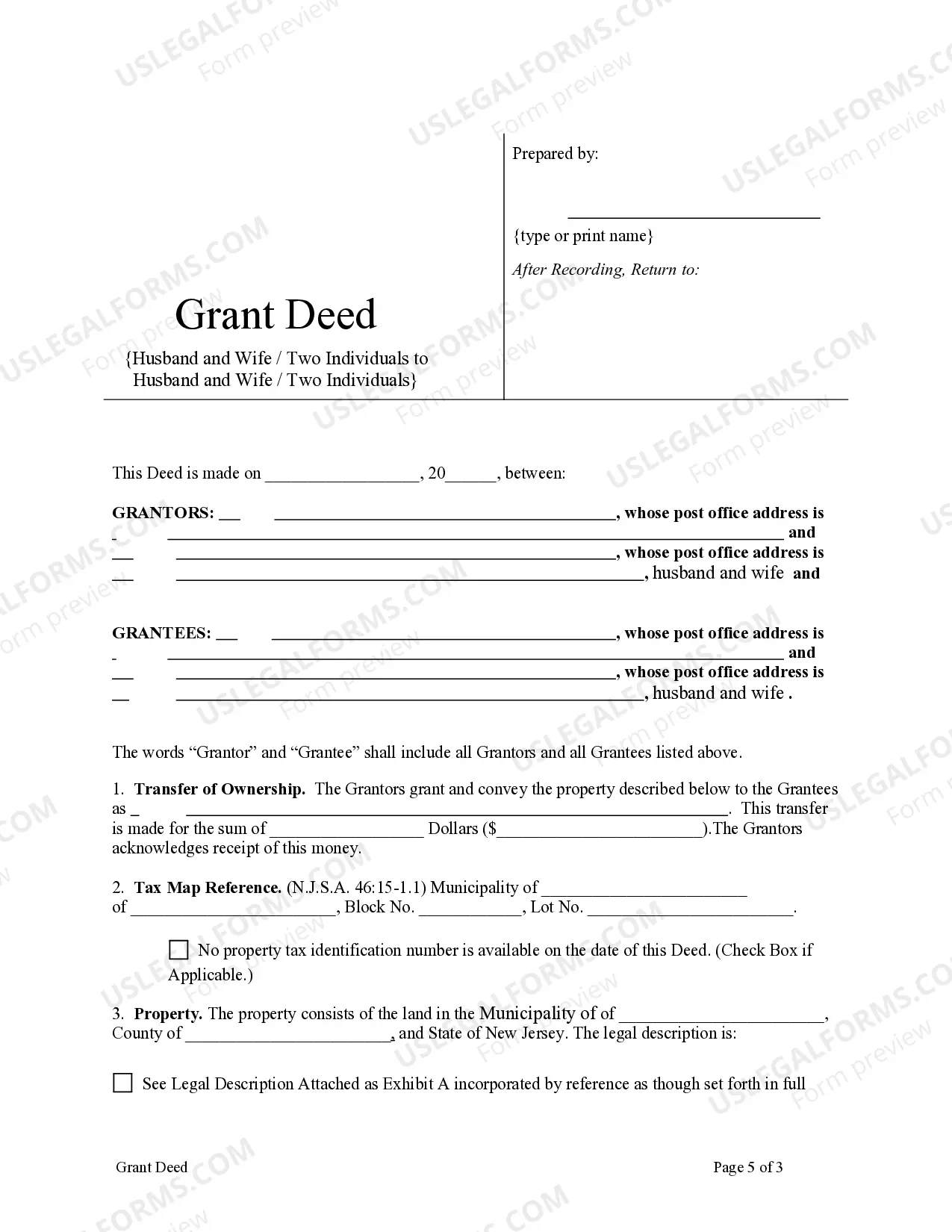
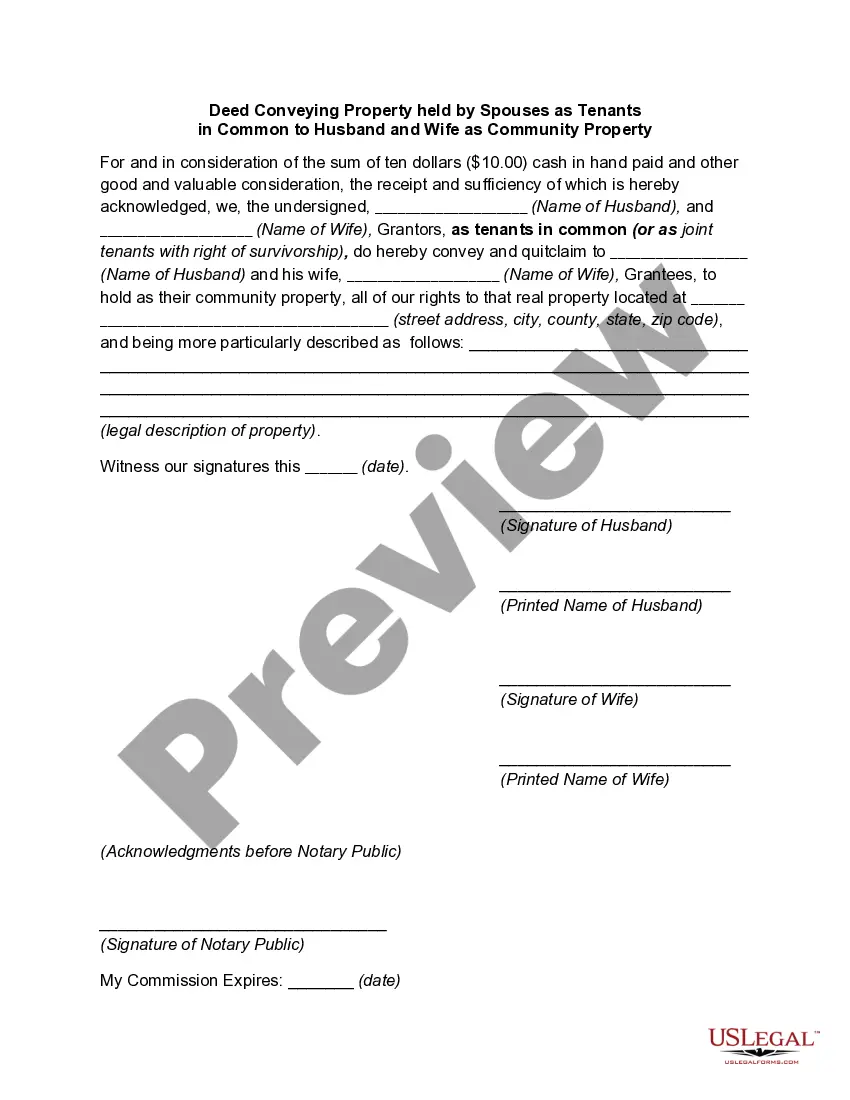
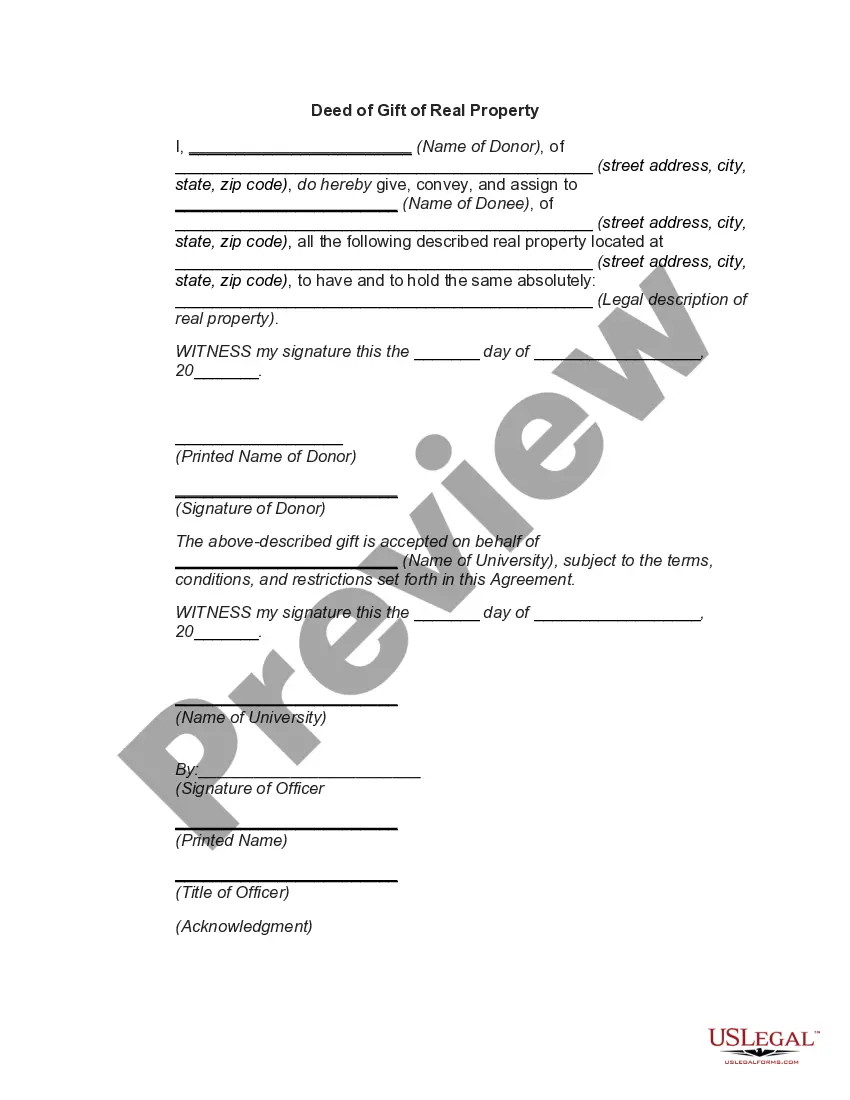
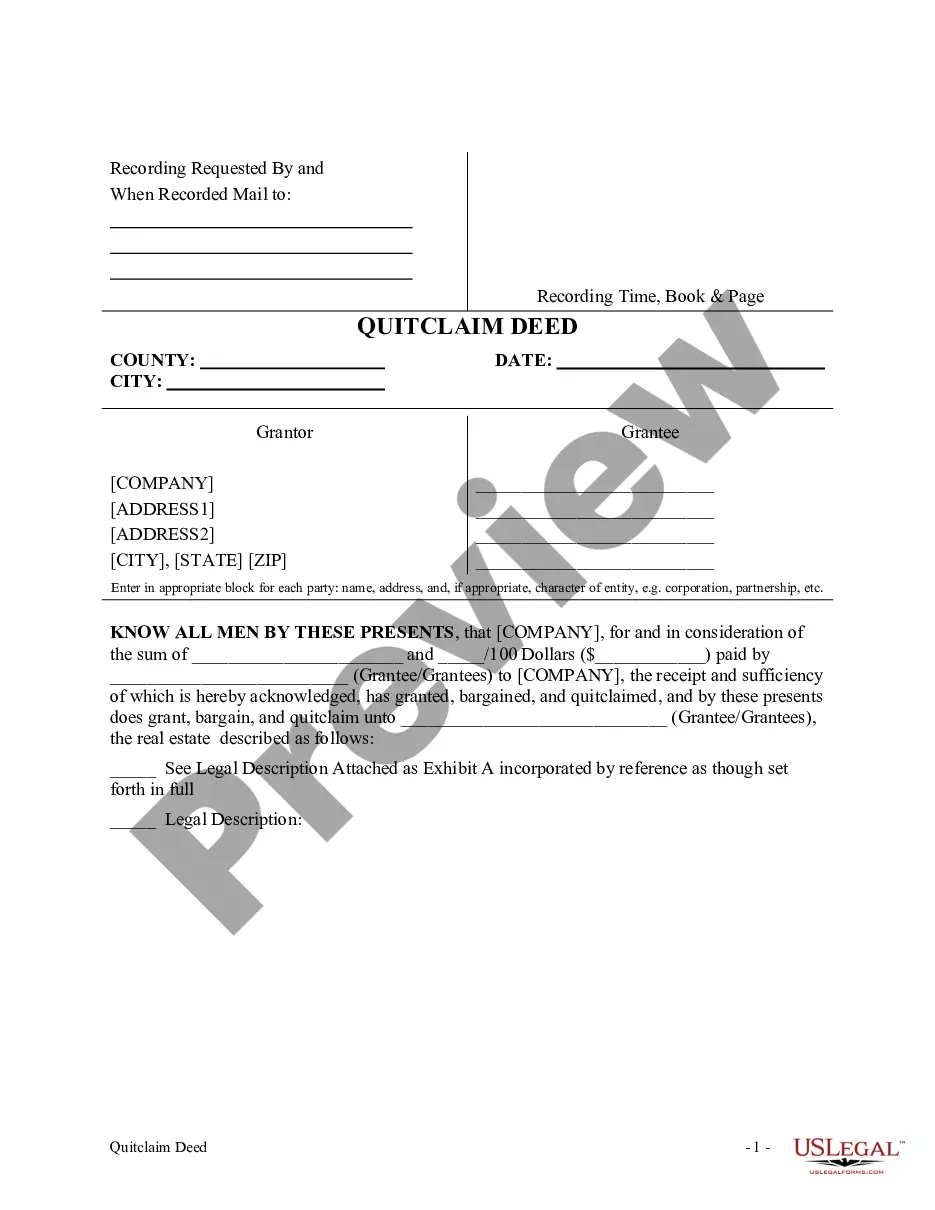
This Grant Deed is a legal document used to transfer ownership of real property from husband and wife or two individuals to another husband and wife or two individuals. It serves as proof of ownership and complies with state statutory laws, ensuring that the transfer adheres to legal requirements. Unlike other deeds, this specific form accommodates the unique needs of couples or joint owners, making it essential for those looking to formalize ownership arrangements.
Main sections of this form
- Identification of the Grantors (current owners) and Grantees (new owners).
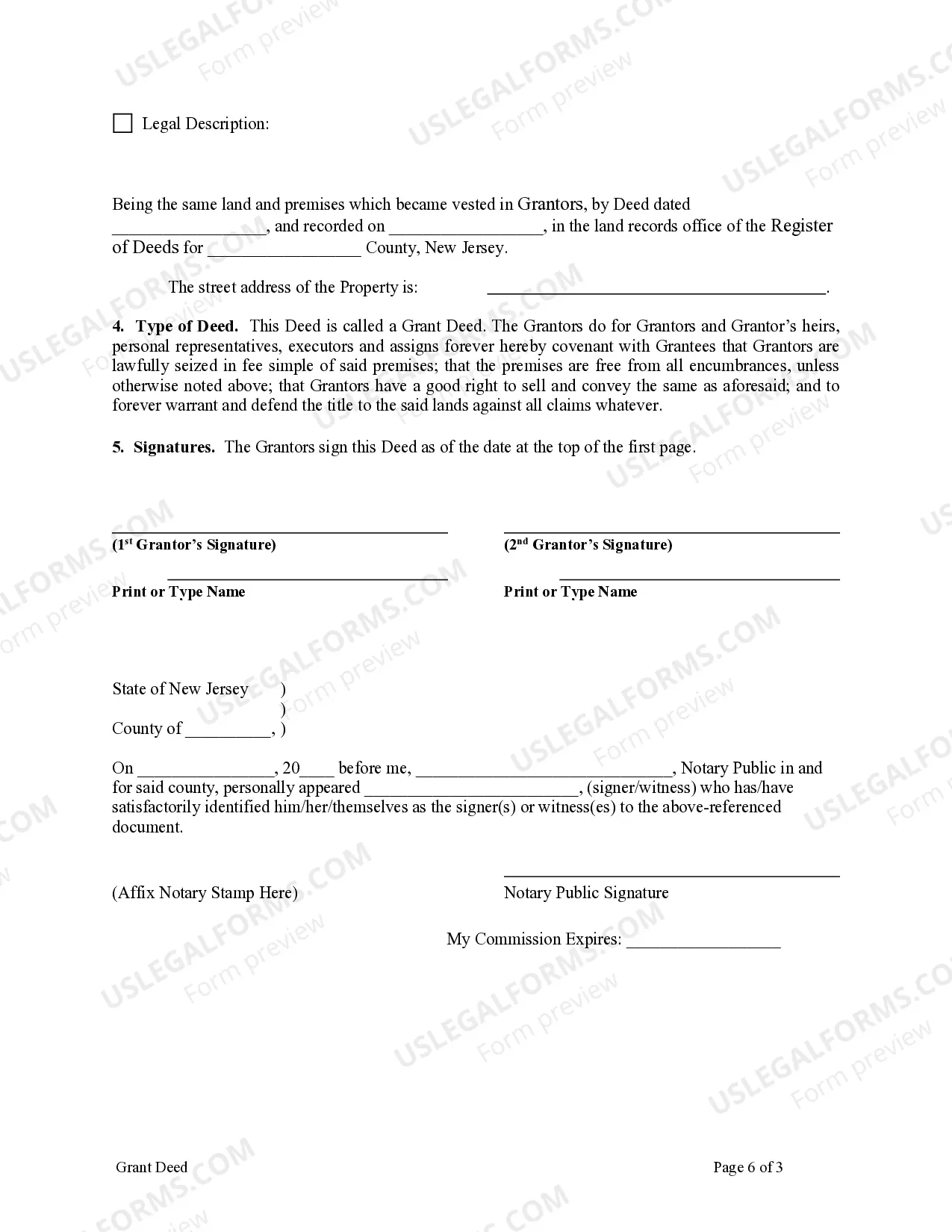
- Legal description of the property being transferred.
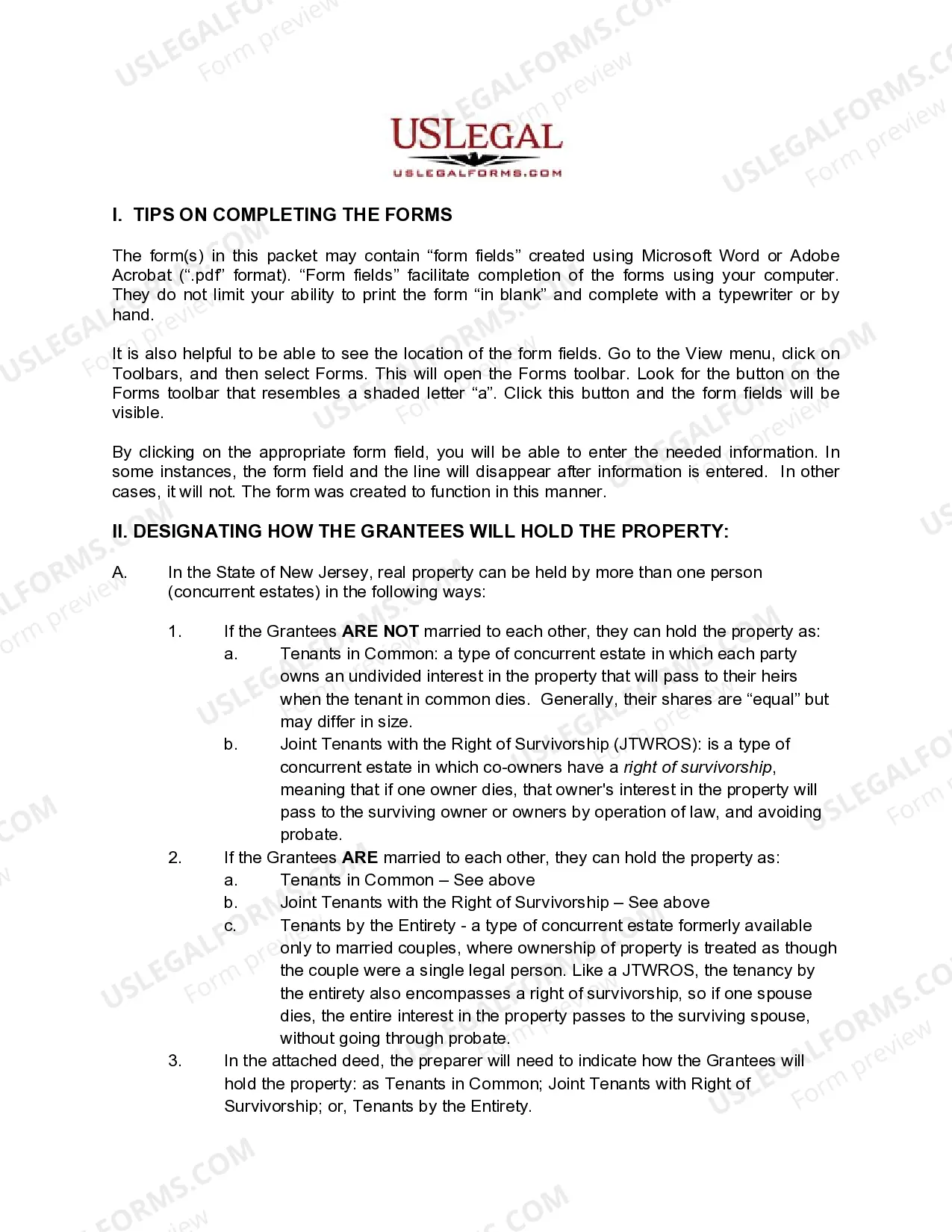
- Designating how the Grantees will hold the property (e.g., Tenants in Common, Joint Tenants with Right of Survivorship, or Tenants by the Entirety).
- Signature lines for the Grantors and notary public, if required.
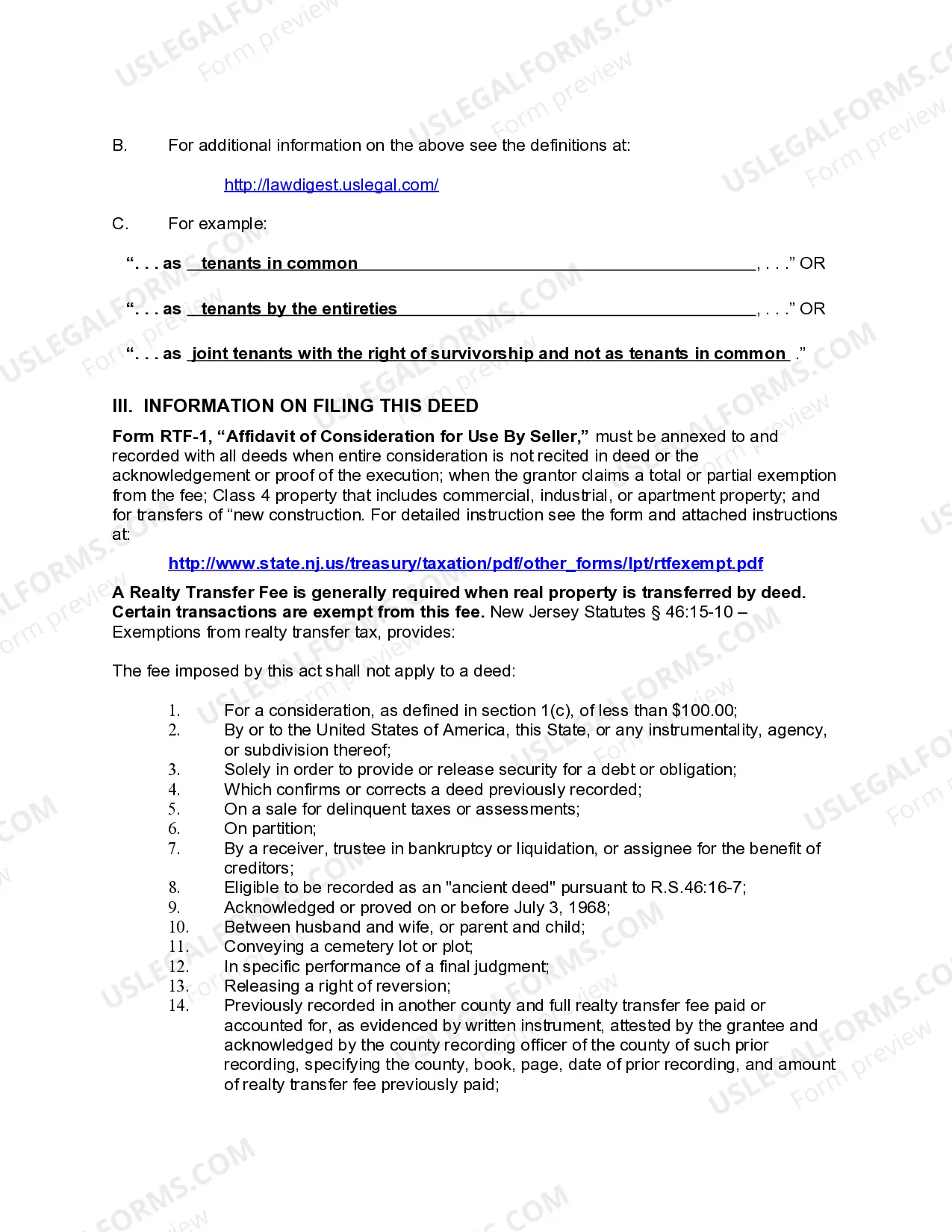
- Affidavit of Consideration for use by Seller, if applicable.

When to use this document
This Grant Deed is commonly used when married couples or two individuals wish to convey property ownership to each other. It is ideal for: - Couples purchasing a new home together. - Spouses transferring property as part of estate planning. - Individuals who want to clarify property ownership or include a partner on the title. - Couples who wish to add or change the title on their joint assets.
Intended users of this form
- Married couples looking to transfer their property to each other.
- Two individuals who want to share ownership of a property.
- Individuals involved in estate planning who seek to ensure smooth property transitions.
- Homebuyers who are entering into joint ownership arrangements.
Steps to complete this form
- Identify the Grantors (current owners) and Grantees (new owners).
- Provide a detailed legal description of the property being transferred.
- Indicate how the Grantees will hold the property (choose from options provided).
- Gather the necessary signatures from the Grantors.
- If applicable, attach the Affidavit of Consideration and any necessary proof of execution.
Is notarization required?
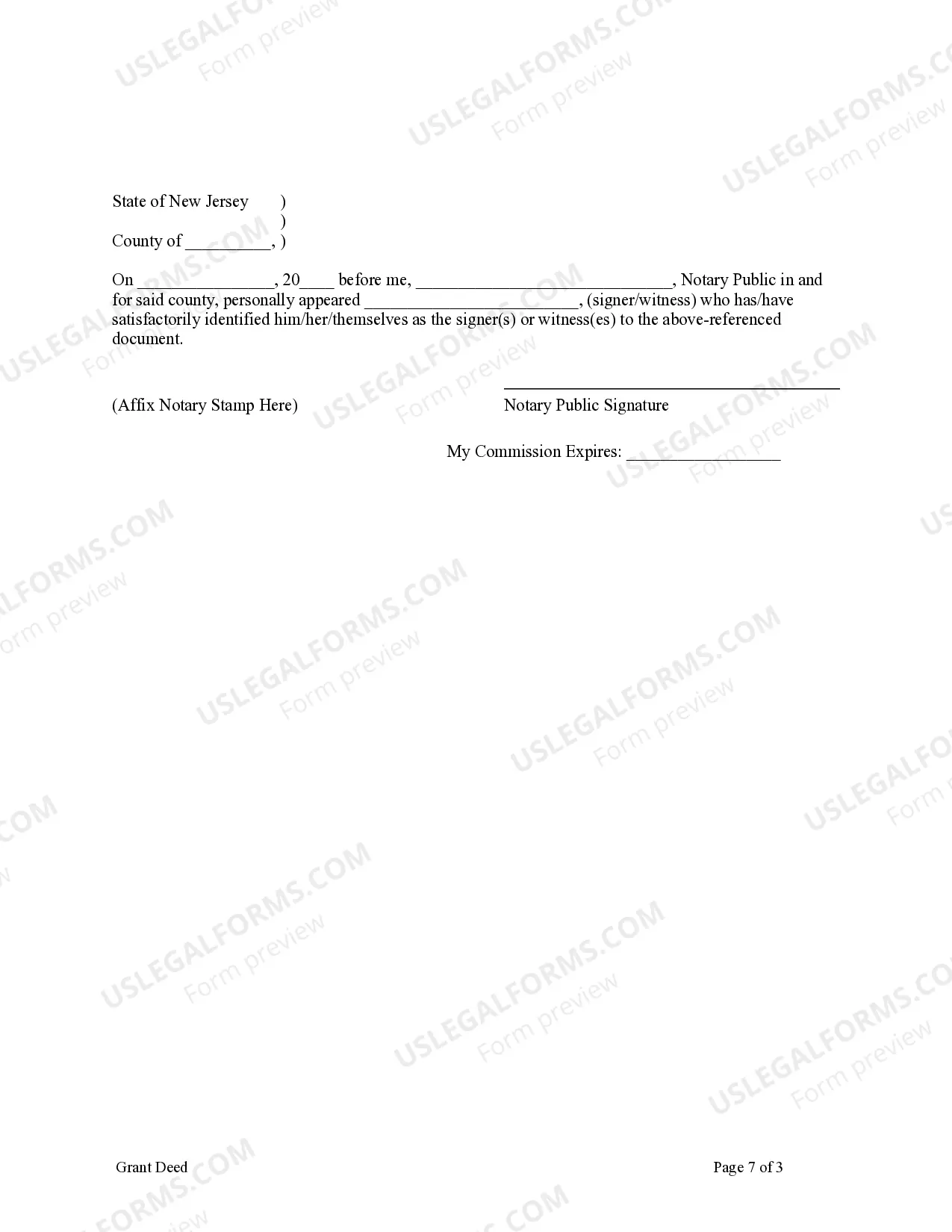
This form does not typically require notarization unless specified by local law. However, having the Grant Deed notarized can add an extra layer of authenticity to the document.
Get your form ready online
Our built-in tools help you complete, sign, share, and store your documents in one place.
Make edits, fill in missing information, and update formatting in US Legal Forms—just like you would in MS Word.
Download a copy, print it, send it by email, or mail it via USPS—whatever works best for your next step.
Sign and collect signatures with our SignNow integration. Send to multiple recipients, set reminders, and more. Go Premium to unlock E-Sign.
If this form requires notarization, complete it online through a secure video call—no need to meet a notary in person or wait for an appointment.
We protect your documents and personal data by following strict security and privacy standards.

Make edits, fill in missing information, and update formatting in US Legal Forms—just like you would in MS Word.

Download a copy, print it, send it by email, or mail it via USPS—whatever works best for your next step.

Sign and collect signatures with our SignNow integration. Send to multiple recipients, set reminders, and more. Go Premium to unlock E-Sign.

If this form requires notarization, complete it online through a secure video call—no need to meet a notary in person or wait for an appointment.

We protect your documents and personal data by following strict security and privacy standards.
Mistakes to watch out for
- Failing to include the propertyâs legal description.
- Incorrectly designating how Grantees will hold the property.
- Not obtaining the required signatures or notarization, if necessary.
- Omitting the Affidavit of Consideration when required.
Benefits of completing this form online
- Convenient access to legal documentation without the need for in-person consultations.
- Edit and customize the form to suit specific transaction needs.
- Reliable templates drafted by licensed attorneys to ensure compliance with state laws.
Summary of main points
- The Grant Deed securely transfers property ownership between couples or individuals.
- It is essential to designate how Grantees will hold the property in accordance with state law.
- Completing the deed correctly is vital to avoid legal issues in the future.
Looking for another form?

Form popularity
FAQ
California married couples generally have three options to take title to their community (vs separate) property real estate: community property, joint tenancy or Community Property with Right of Survivorship. The latter coming into play in California July of 2001.
In California, all property bought during the marriage with income that was earned during the marriage is deemed "community property." The law implies that both spouses own this property equally, regardless of which name is on the title deed.
Adding someone to your house deed requires the filing of a legal form known as a quitclaim deed. When executed and notarized, the quitclaim deed legally overrides the current deed to your home. By filing the quitclaim deed, you can add someone to the title of your home, in effect transferring a share of ownership.
The simplest way to add a spouse to a deed is through a quitclaim deed. This type of deed transfers whatever ownership rights you have so that you and your spouse now become joint owners. No title search or complex transaction is necessary. The deed will list you as the grantor and you and your spouse as grantees.
It's often easier to qualify for a joint mortgage, because both spouses can contribute income and assets to the application. However, if one spouse can qualify for a mortgage based on his own income and credit, the mortgage does not need to be in both spouses' names unless you live in a community property state.
When it comes to reasons why you shouldn't add your new spouse to the Deed, the answer is simple divorce and equitable distribution. If you choose not to put your spouse on the Deed and the two of you divorce, the entire value of the home is not subject to equitable distribution.
If you live in a common-law state, you can keep your spouse's name off the title the document that says who owns the property.You can put your spouse on the title without putting them on the mortgage; this would mean that they share ownership of the home but aren't legally responsible for making mortgage payments.
Yes you can. This is called a transfer of equity but you will need the permission of your lender. If you are not married or in a civil partnership you may wish to consider creating a deed of trust and a living together agreement which we can explain to you.
Split ownership costs fairly until the house sells until the property sells. The amount owed by each party is typically split by the percentage of ownership. If you own 50%, and your two co-owners each own 25%, then you'll need to cover half of all housing expenses while your co-owners split the remainder.