New Jersey Site Work Contract for Contractor
Understanding this form
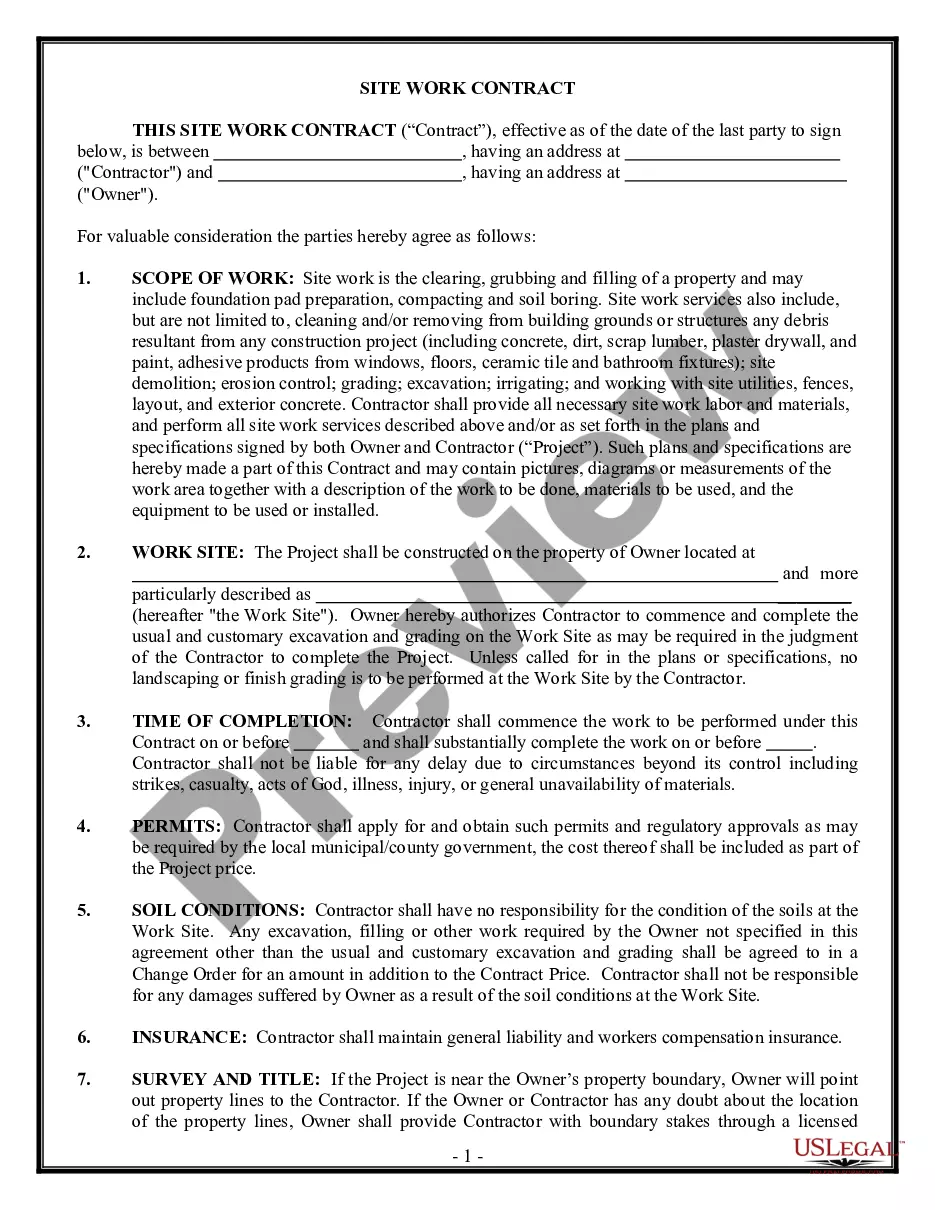
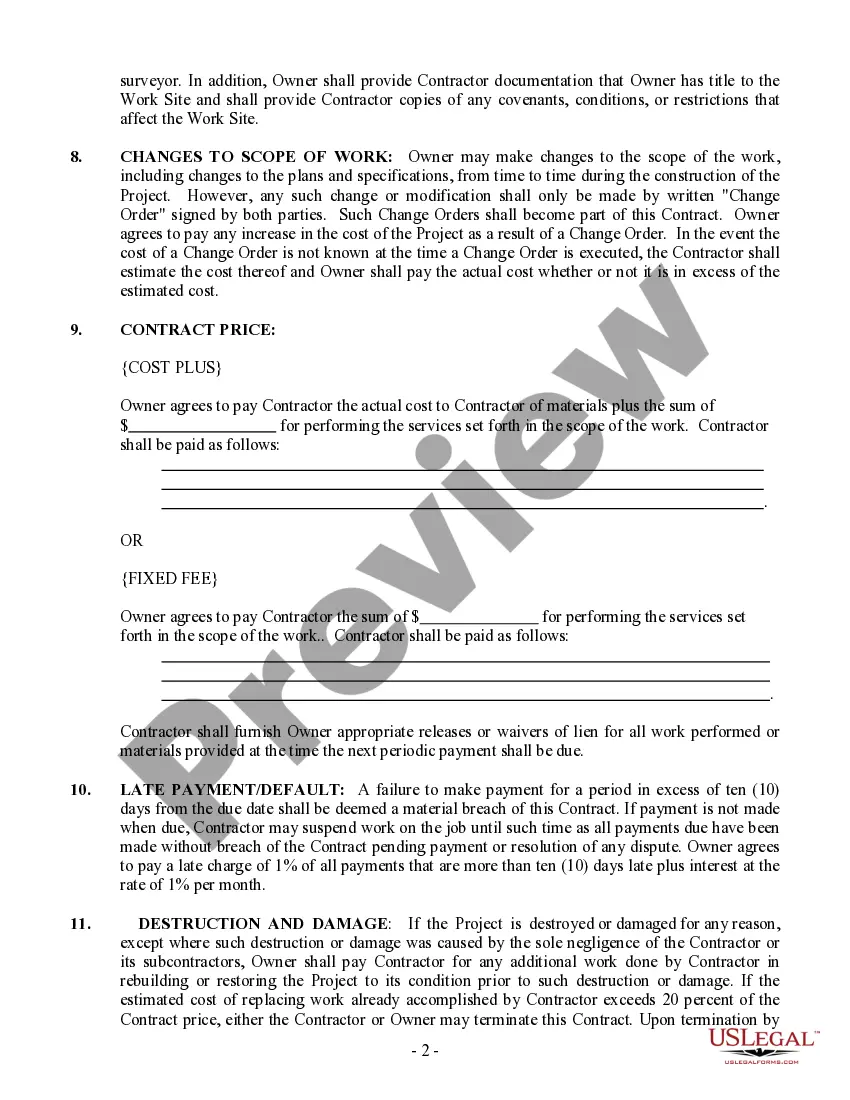
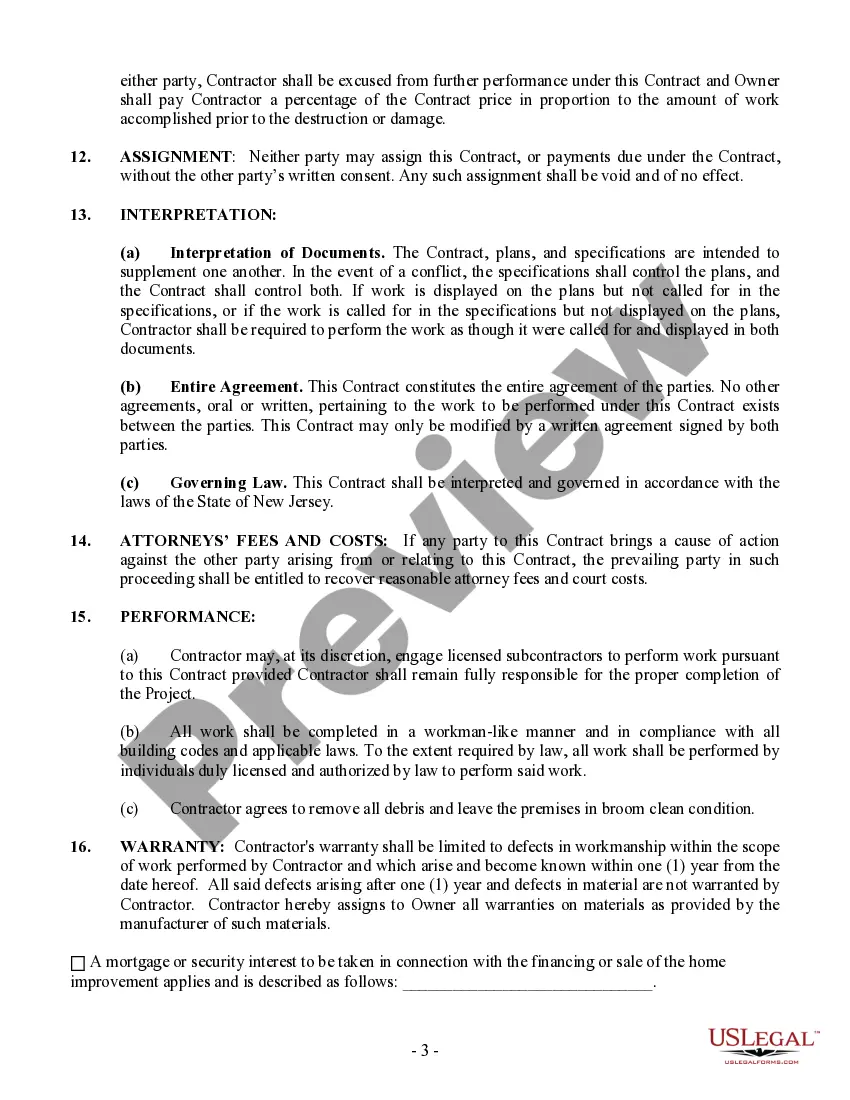
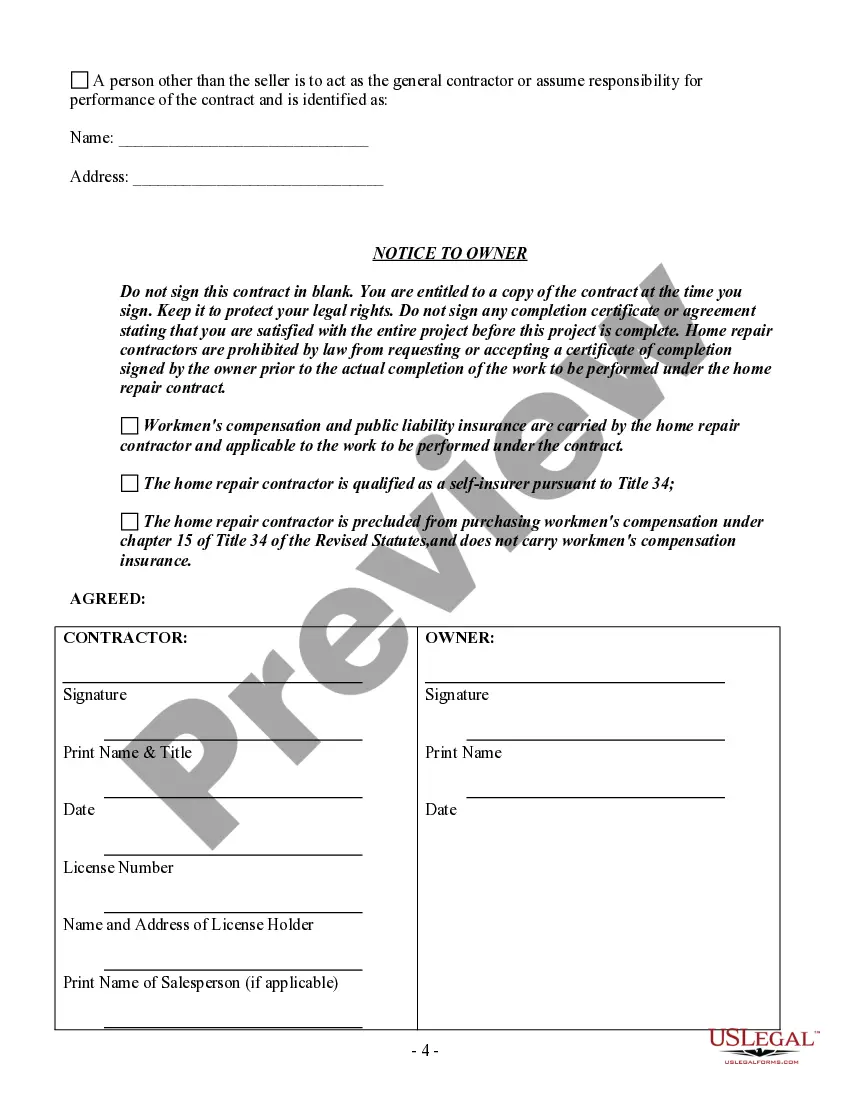
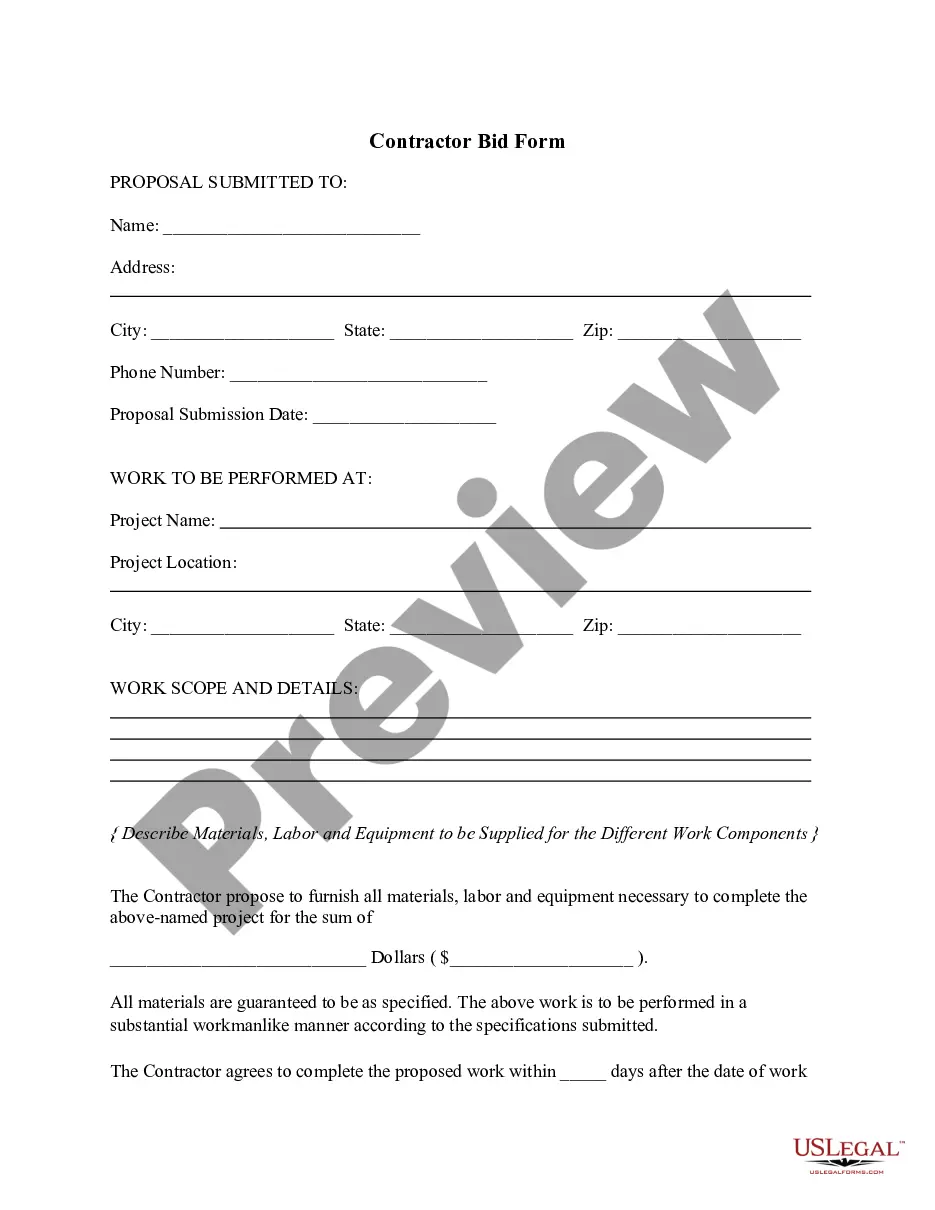
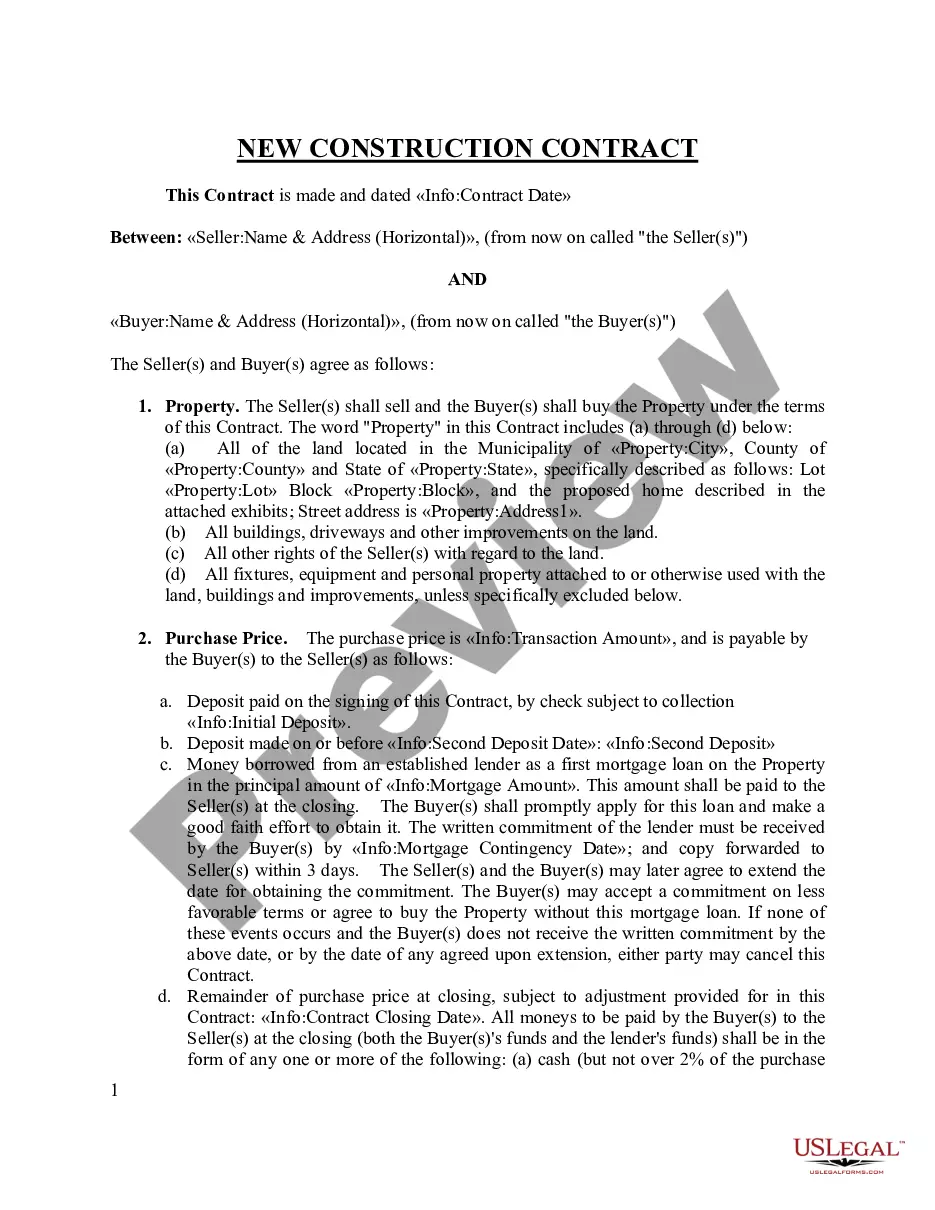
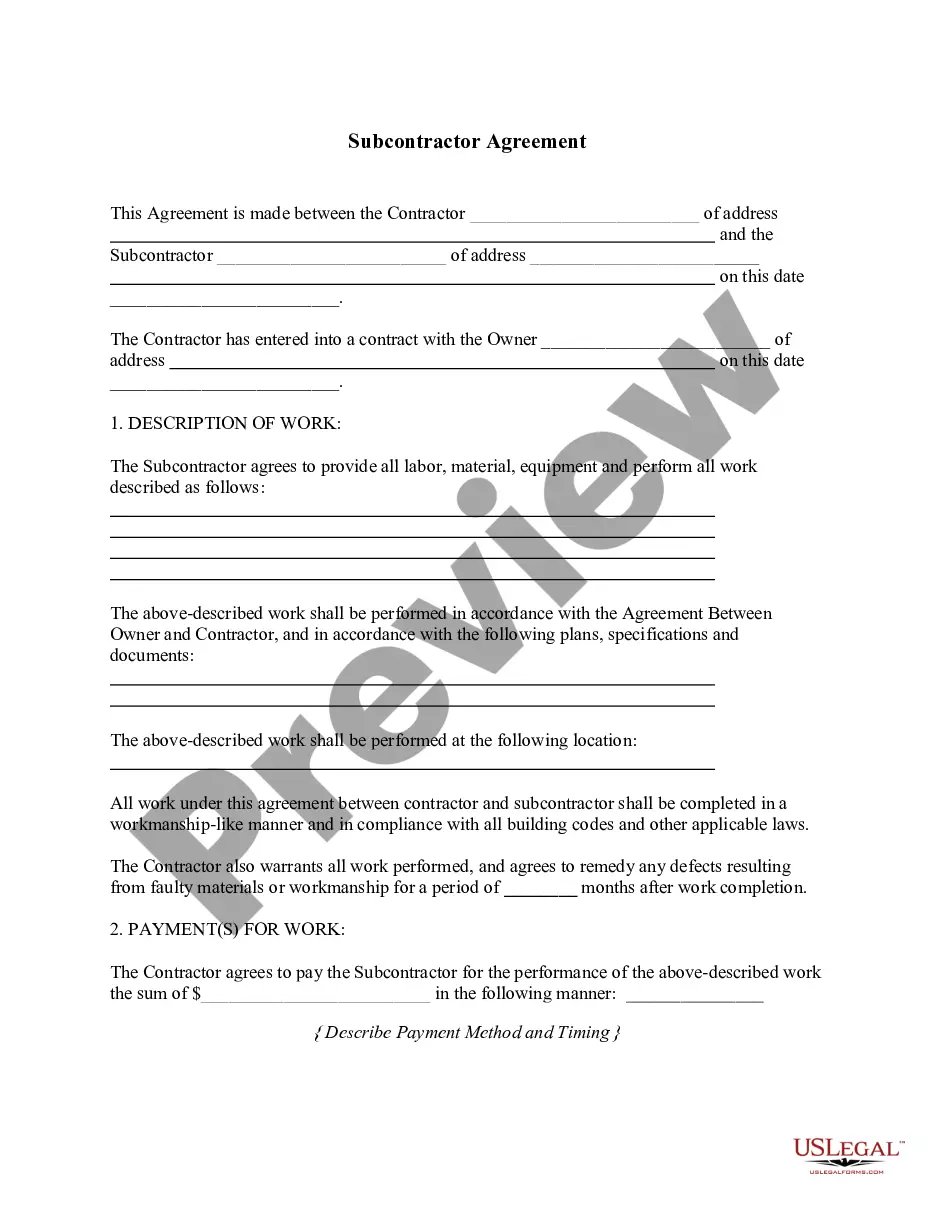
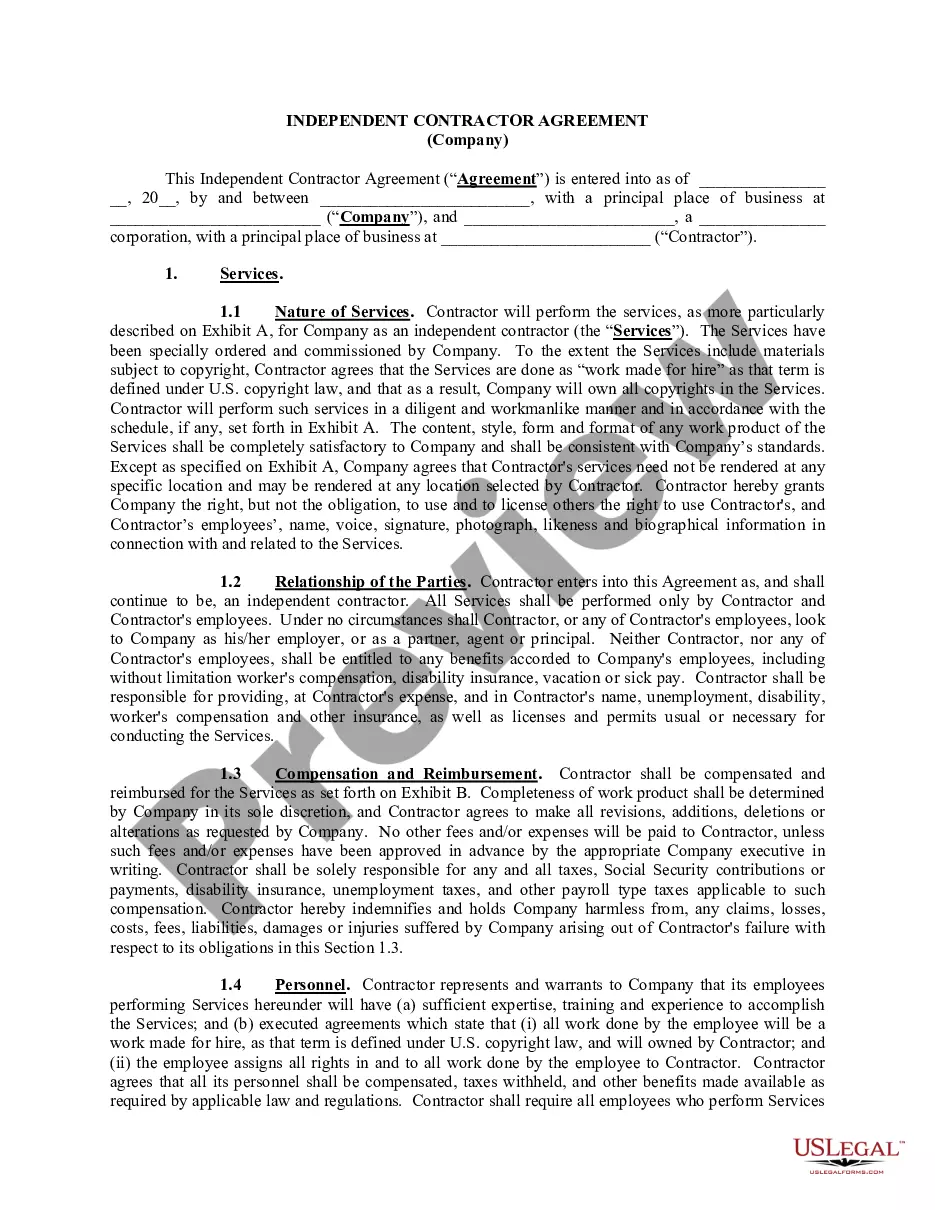
The Site Work Contract for Contractor is a legal document used between site work contractors and property owners. Its primary purpose is to clearly outline the terms of a construction project, including payment arrangements, responsibilities, and the specific scope of work to be conducted. This contract can be executed under either a cost-plus or fixed fee arrangement and ensures compliance with New Jersey state laws, making it distinct from other general contracts that may not address these specific legal requirements.
Key components of this form
- Work Site: Details the location and description of the project.
- Permits: Clarifies the contractor's responsibility to obtain necessary permits.
- Soil Conditions: States that the contractor is not liable for soil conditions at the site.
- Insurance: Requires the contractor to maintain general liability and worker's compensation insurance.
- Change Orders: Outlines how changes to the project scope must be documented and paid for.
- Warranty: Defines the contractor's warranty on workmanship and material defects.


When this form is needed
This form should be used when a property owner engages a contractor for site work, including excavation, grading, and other related services. It is particularly useful for ensuring that both parties have a clear understanding of their obligations, payment terms, and conditions under which changes can be made during the project. Use this contract to protect both the owner's and the contractor's rights and responsibilities through a legally binding agreement.
Who this form is for
- Property owners planning construction or site improvements.
- Site work contractors looking to formalize agreements with clients.
- Real estate developers managing multiple construction projects.
- Homeowners contracting for home improvement projects.
How to complete this form
- Identify the parties: Clearly state the names and contact information of both the contractor and the property owner.
- Specify the property: Include the address and description of the work site where the project will take place.
- Outline project details: Provide a detailed description of the work to be performed and any related specifications.
- Enter payment terms: Specify whether the payment will be made as a fixed fee or on a cost-plus basis.
- Sign and date the contract: Ensure both parties sign the contract to finalize the agreement, keeping copies for records.
Notarization guidance
This form usually doesn’t need to be notarized. However, local laws or specific transactions may require it. Our online notarization service, powered by Notarize, lets you complete it remotely through a secure video session, available 24/7.
Get your form ready online
Our built-in tools help you complete, sign, share, and store your documents in one place.
Make edits, fill in missing information, and update formatting in US Legal Forms—just like you would in MS Word.
Download a copy, print it, send it by email, or mail it via USPS—whatever works best for your next step.
Sign and collect signatures with our SignNow integration. Send to multiple recipients, set reminders, and more. Go Premium to unlock E-Sign.
If this form requires notarization, complete it online through a secure video call—no need to meet a notary in person or wait for an appointment.
We protect your documents and personal data by following strict security and privacy standards.

Make edits, fill in missing information, and update formatting in US Legal Forms—just like you would in MS Word.

Download a copy, print it, send it by email, or mail it via USPS—whatever works best for your next step.

Sign and collect signatures with our SignNow integration. Send to multiple recipients, set reminders, and more. Go Premium to unlock E-Sign.

If this form requires notarization, complete it online through a secure video call—no need to meet a notary in person or wait for an appointment.

We protect your documents and personal data by following strict security and privacy standards.
Common mistakes to avoid
- Failing to specify the detailed scope of work, which can lead to disputes.
- Not including adequate insurance coverage information in the agreement.
- Neglecting to sign the contract, which renders it invalid.
- Overlooking the importance of documented change orders, which can affect payment and project timelines.
Why complete this form online
- Convenience: Access and complete the form from anywhere at any time.
- Editability: Easily update the form as project circumstances change.
- Reliability: Use professionally drafted templates that comply with New Jersey laws.
Looking for another form?

Form popularity
FAQ
For most types of projects you hire an independent contractor (IC) to do, the law does not require you to put anything in writing. You can meet with the IC, agree on the terms of your arrangement, and have an oral contract or agreement that is legally binding. Just because you can doesn't mean you should, however.
Get it in writing. Keep it simple. Deal with the right person. Identify each party correctly. Spell out all of the details. Specify payment obligations. Agree on circumstances that terminate the contract. Agree on a way to resolve disputes.
For most types of projects you hire an independent contractor (IC) to do, the law does not require you to put anything in writing. You can meet with the IC, agree on the terms of your arrangement, and have an oral contract or agreement that is legally binding. Just because you can doesn't mean you should, however.
Generally, to be legally valid, most contracts must contain two elements: All parties must agree about an offer made by one party and accepted by the other. Something of value must be exchanged for something else of value. This can include goods, cash, services, or a pledge to exchange these items.
An agreement between private parties creating mutual obligations enforceable by law. The basic elements required for the agreement to be a legally enforceable contract are: mutual assent, expressed by a valid offer and acceptance; adequate consideration; capacity; and legality.
The Essential Provisions of an Enforceable Contract An acceptance. Competent parties who have the legal capacity to contract. Lawful subject matter. Mutuality of obligation.
In order for a contract to be considered binding, it must include the basic elements of a contract, including offer and acceptance, consideration, mutuality or intention, legality, and capacity. If a contract includes all of these elements, it is most likely a binding contract.
To do home construction and many types of substantial home repairs in New Jersey, an individual must be a licensed contractor. Obtaining an NJ contractor license requires the contractor to register with the New Jersey Division of Consumer Affairs, a process that involves multiple smaller steps.
To form a contract, one party must make an offer and the other party must accept the offer. Each party must give up something of value in order to create a legal contract. This is called consideration.Oral contracts, with some exceptions under the Statute of Frauds, are no less binding and enforceable.