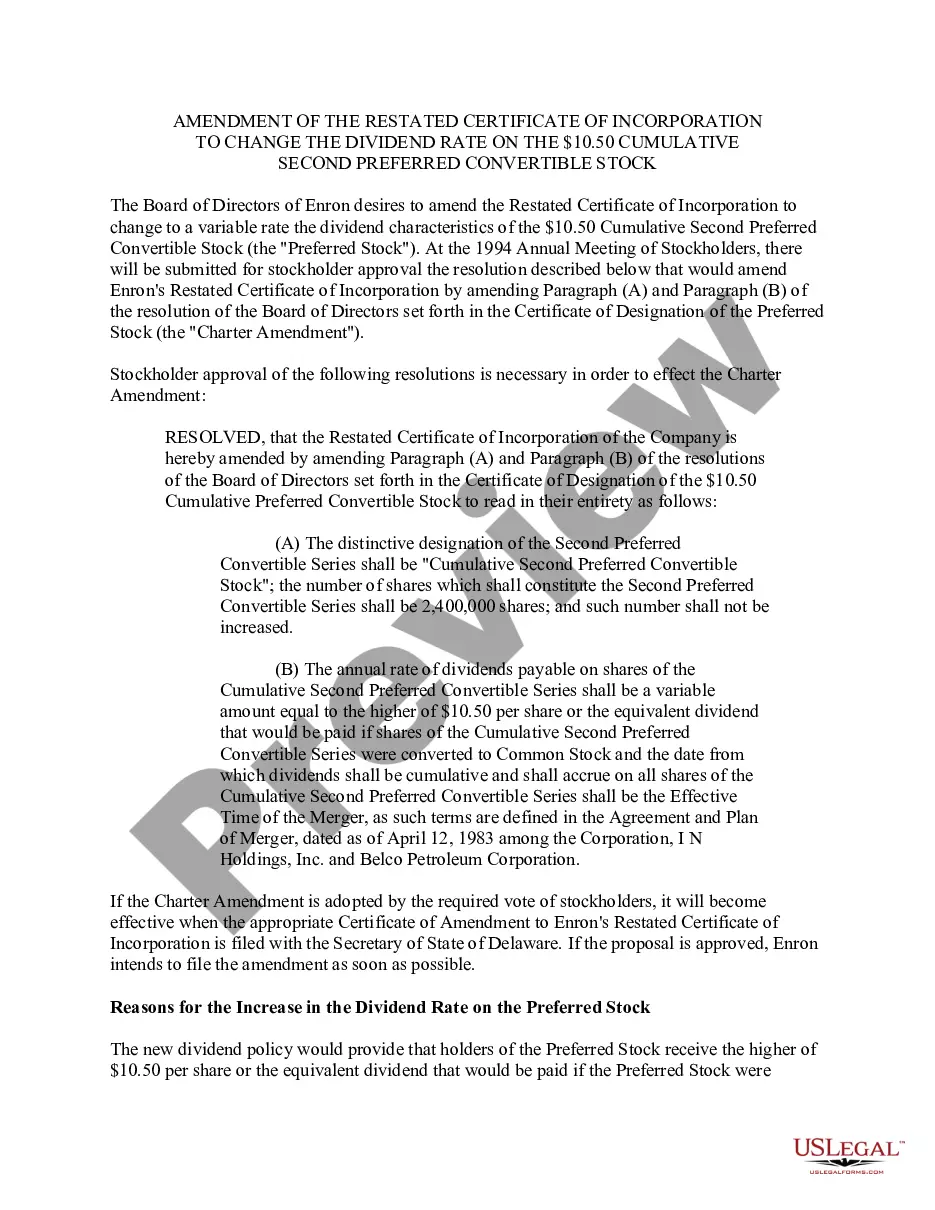
This is a Complaint pleading for use in litigation of the title matter. Adapt this form to comply with your facts and circumstances, and with your specific state law. Not recommended for use by non-attorneys.
New Hampshire Complaint For Wrongful Discharge of Physician - Jury Trial Demand
Category:
State:
Multi-State
Control #:
US-000287
Format:
Word;
Rich Text
Instant download
This website is not affiliated with any governmental entity
Public form
Description




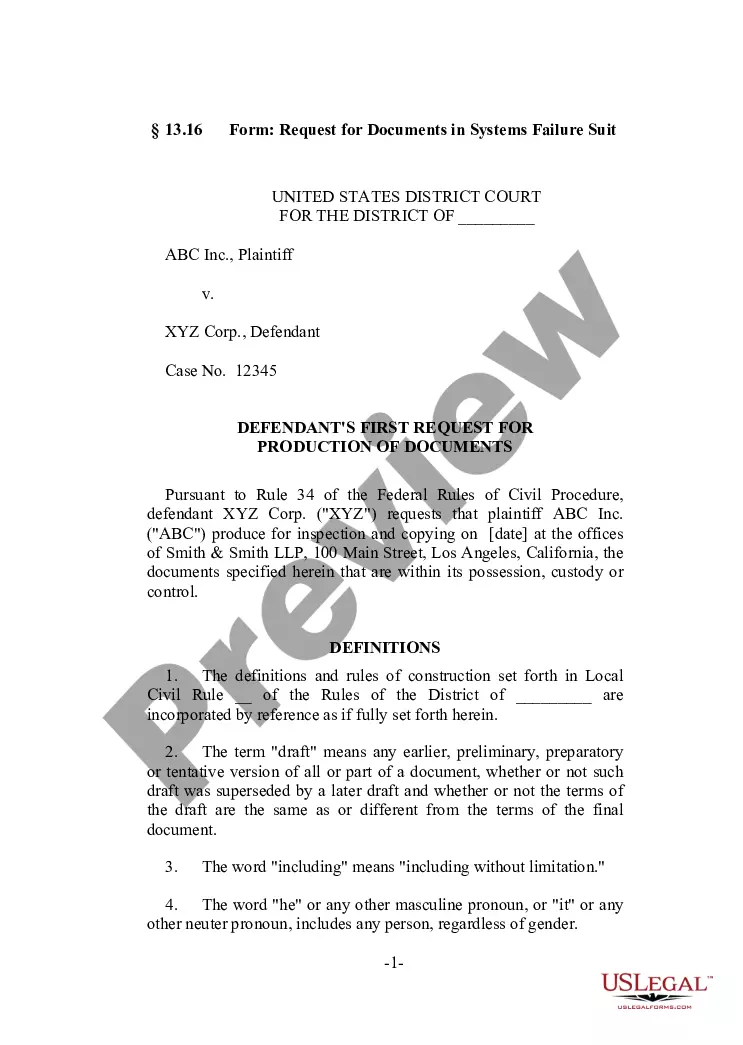

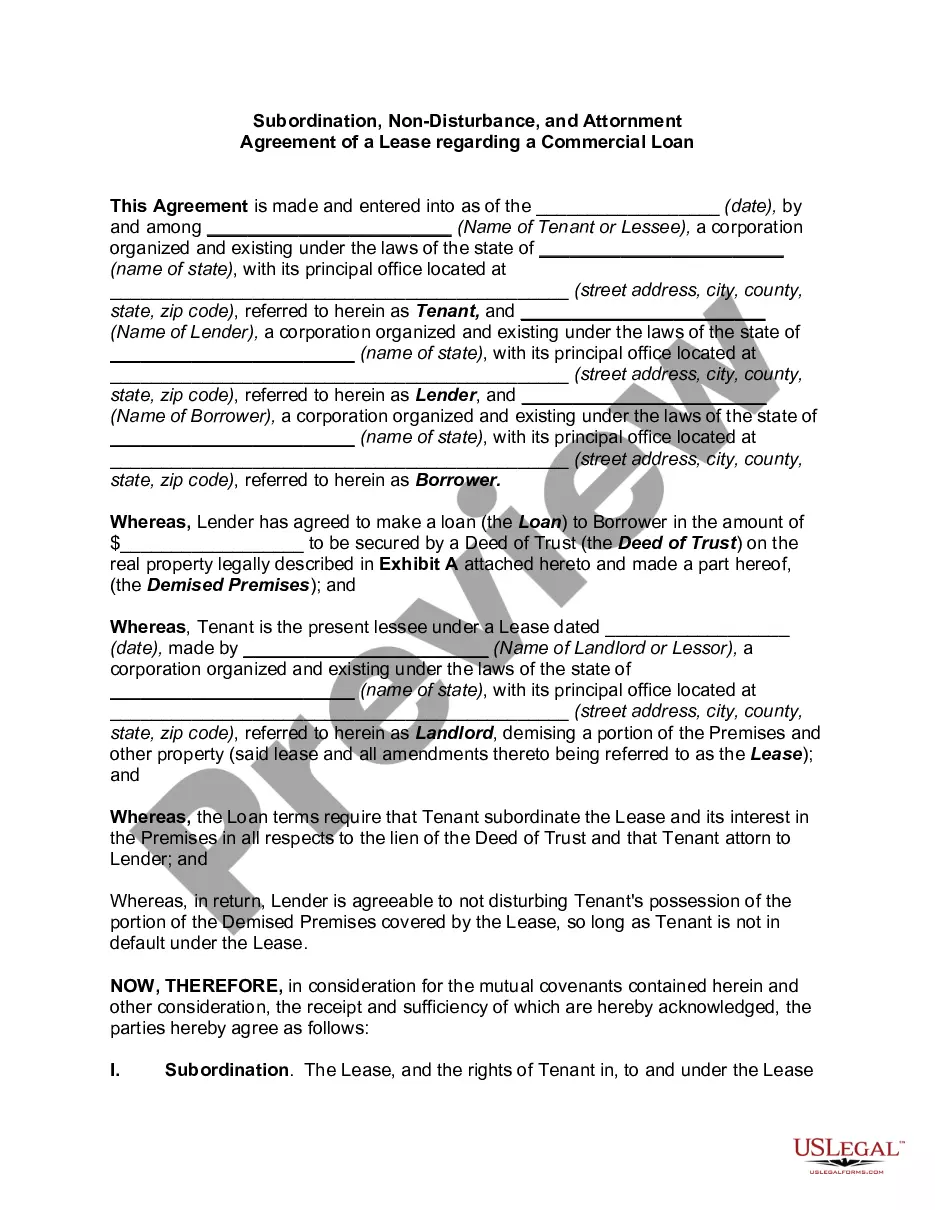
How to fill out Complaint For Wrongful Discharge Of Physician - Jury Trial Demand?
If you need to obtain, download, or print legal document templates, utilize US Legal Forms, the largest collection of legal forms available online.
Take advantage of the site's straightforward and user-friendly search to locate the documents you require.
Various templates for business and personal needs are categorized by groups and regions, or keywords.
Step 5. Complete the transaction. You can use your credit card or PayPal account to finalize the payment.
Step 6. Choose the format of your legal document and download it to your device. Step 7. Complete, edit, and print or sign the New Hampshire Complaint For Wrongful Discharge of Physician - Jury Trial Demand. Every legal document template you purchase is yours forever. You will have access to every form you downloaded in your account. Select the My documents section and choose a form to print or download again. Stay competitive and download, and print the New Hampshire Complaint For Wrongful Discharge of Physician - Jury Trial Demand with US Legal Forms. There are numerous professional and state-specific forms you can utilize for your business or personal needs.
- Use US Legal Forms to find the New Hampshire Complaint For Wrongful Discharge of Physician - Jury Trial Demand in just a few clicks.
- If you are already a US Legal Forms user, Log In to your account and click the Download option to retrieve the New Hampshire Complaint For Wrongful Discharge of Physician - Jury Trial Demand.
- You can also access forms you previously downloaded in the My documents section of your account.
- If you are using US Legal Forms for the first time, follow the instructions below.
- Step 1. Ensure you have selected the form for the correct city/state.
- Step 2. Utilize the Review feature to examine the form's details. Don’t forget to read the summary.
- Step 3. If you are not satisfied with the form, use the Search box at the top of the screen to find alternative versions of the legal document template.
- Step 4. Once you have located the form you need, click the Get now button. Select the payment plan you prefer and enter your information to create an account.
Form popularity
FAQ
Yes, you can look up New Hampshire court cases online through the New Hampshire Judicial Branch website. They provide a case lookup tool where you can access information about various cases, including those related to a New Hampshire Complaint For Wrongful Discharge of Physician - Jury Trial Demand. This resource can help you stay informed about your case and its proceedings.
In New Hampshire, certain factors may disqualify you from serving on a jury. These include being convicted of a felony, not being a resident of the county, or having a physical or mental disability that prevents you from performing jury duties. If you are involved in a New Hampshire Complaint For Wrongful Discharge of Physician - Jury Trial Demand, knowing your eligibility for jury duty is important for your case.
Supreme Court Rule 8 in New Hampshire pertains to the procedures for filing appeals. It outlines the requirements for timely filing and necessary documentation. Understanding these rules is crucial if you are involved in a New Hampshire Complaint For Wrongful Discharge of Physician - Jury Trial Demand, as adherence to these rules can affect your case outcome.
You can reach the New Hampshire court system by calling (603) 271-2646. This number connects you to the Administrative Office of the Courts. If you need assistance related to a New Hampshire Complaint For Wrongful Discharge of Physician - Jury Trial Demand, they can provide guidance on court processes and procedures.
Trial Procedure. (1) Opening Statements. Opening statements are not permitted in circuit court ? district division trials except with permission of the court for good cause shown.
Safekeeping Property. (a) A lawyer shall hold property of clients or third persons that is in a lawyer's possession in connection with a representation separate from the lawyer's own property, in ance with the provisions of the New Hampshire Supreme Court Rules.
Summary Disposition. (1) Except in a mandatory appeal, the supreme court may at any time, on its own motion and without notice or on such notice as it may order, dispose of a case, or any question raised therein, summarily.
Depositions. (a) A party may take as many depositions as necessary to adequately prepare a case for trial so long as the combined total of deposition hours does not exceed 20 unless otherwise stipulated by counsel or ordered by the court for good cause shown.
(A) Deposition of an Expert Who May Testify. A party may depose any person who has been identified as an expert whose opinions may be presented at trial. If Rule 26(a)(2)(B) requires a report from the expert, the deposition may be conducted only after the report is provided.
Absent full disclosure to and consent by the former client, Rule 1.9 prohibits an attorney who has represented a client in a matter from representing another person ?in the same or a substantially related matter? where the clients' interests in the matter are ?materially adverse,? unless the former client consents ? ...