Production of False Document
Overview of this form
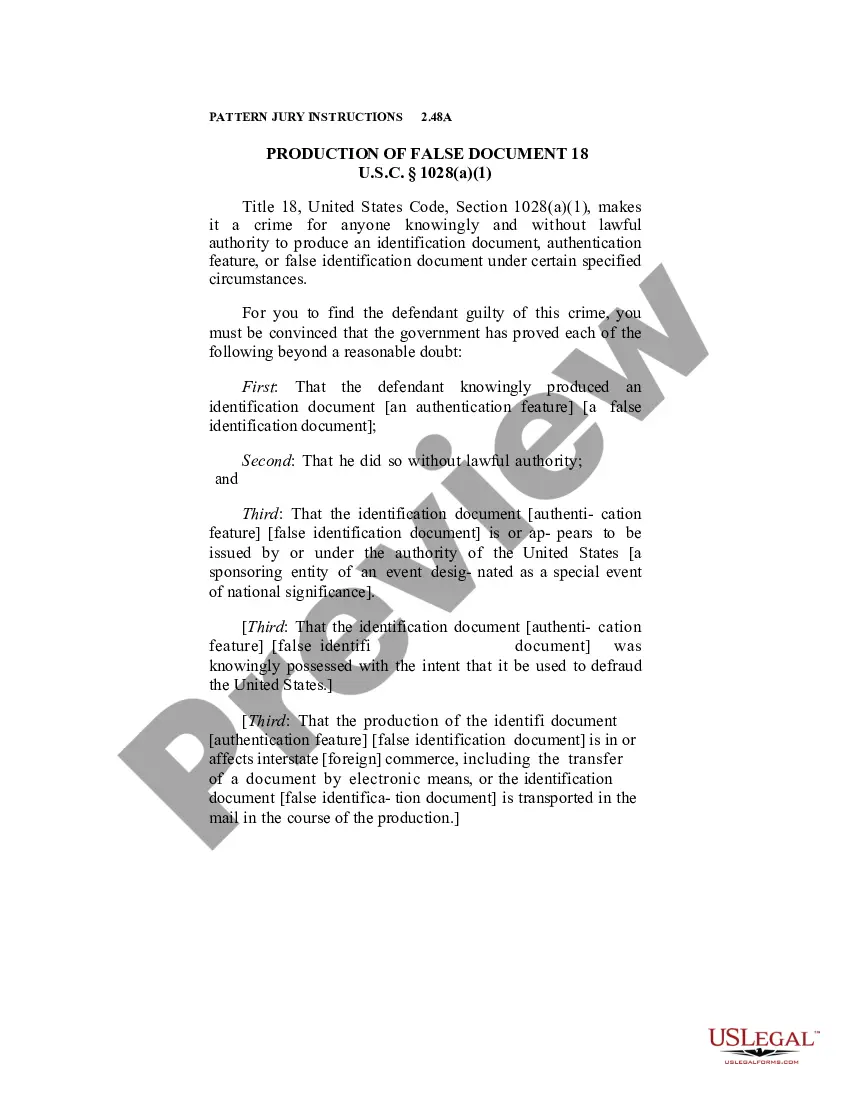
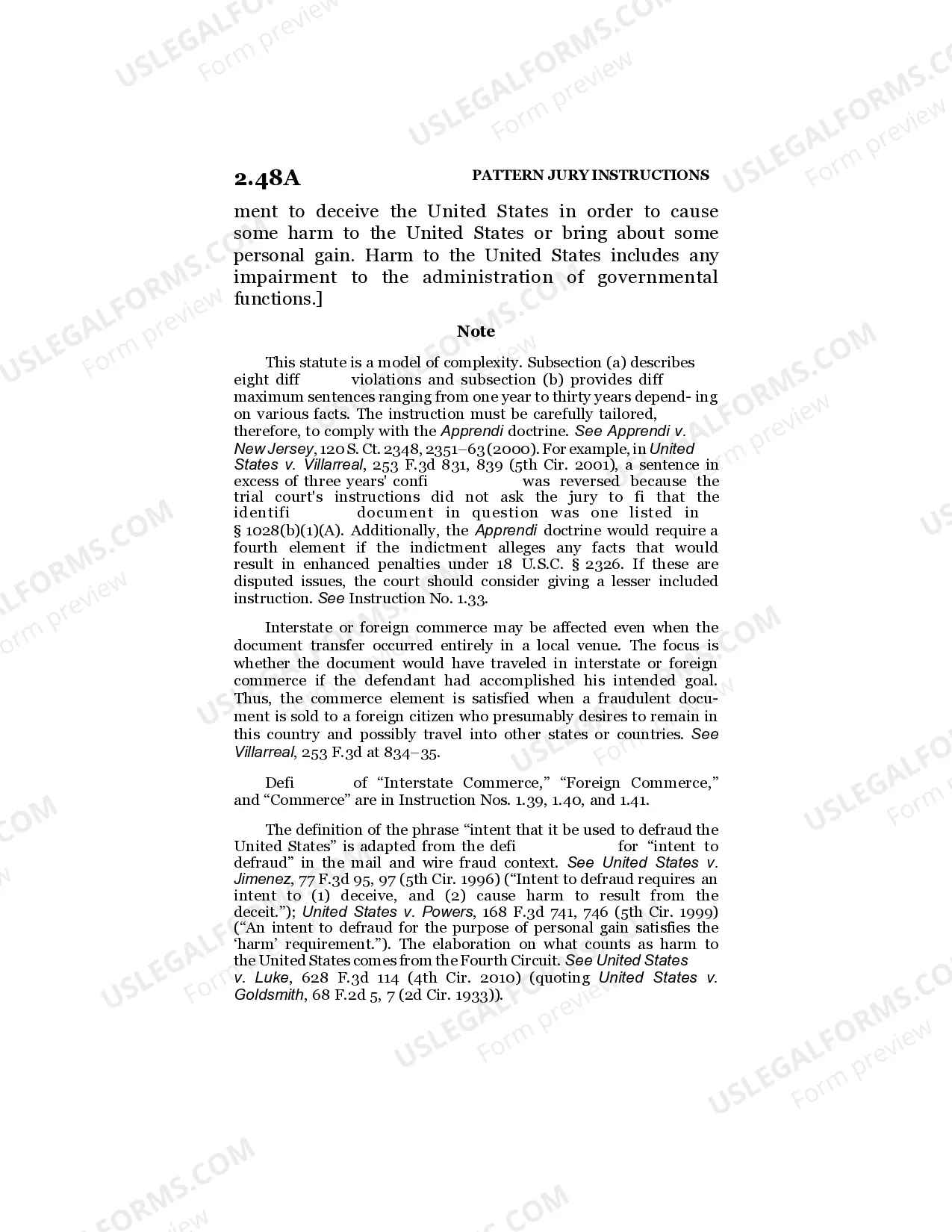
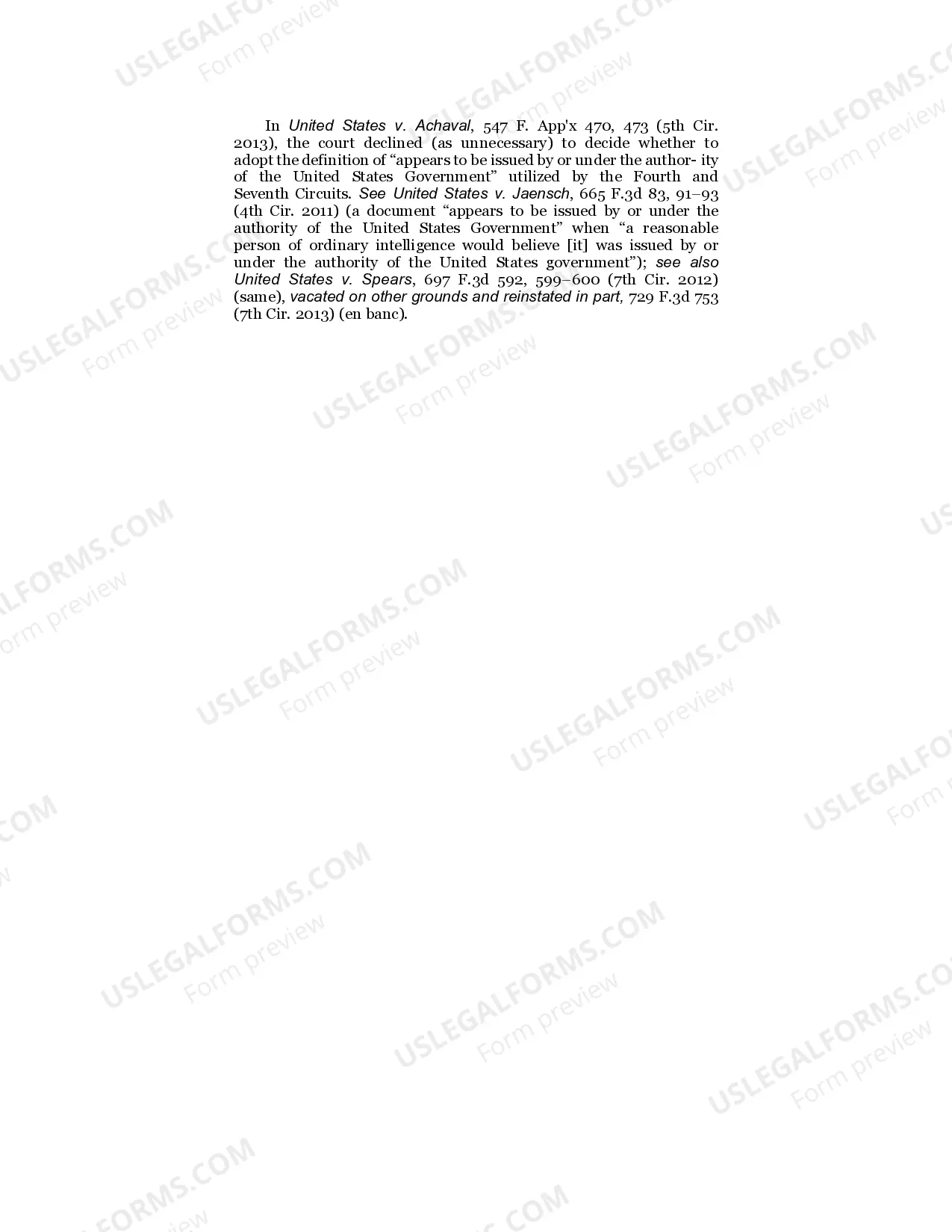
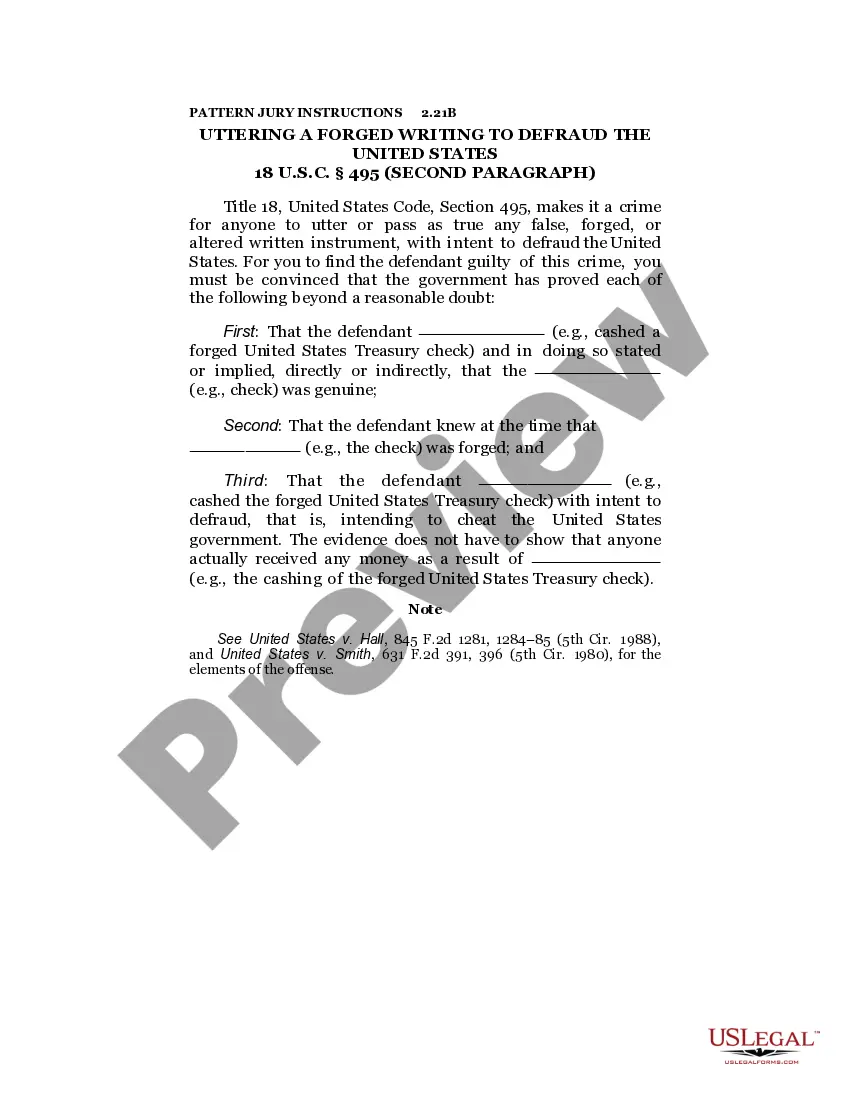
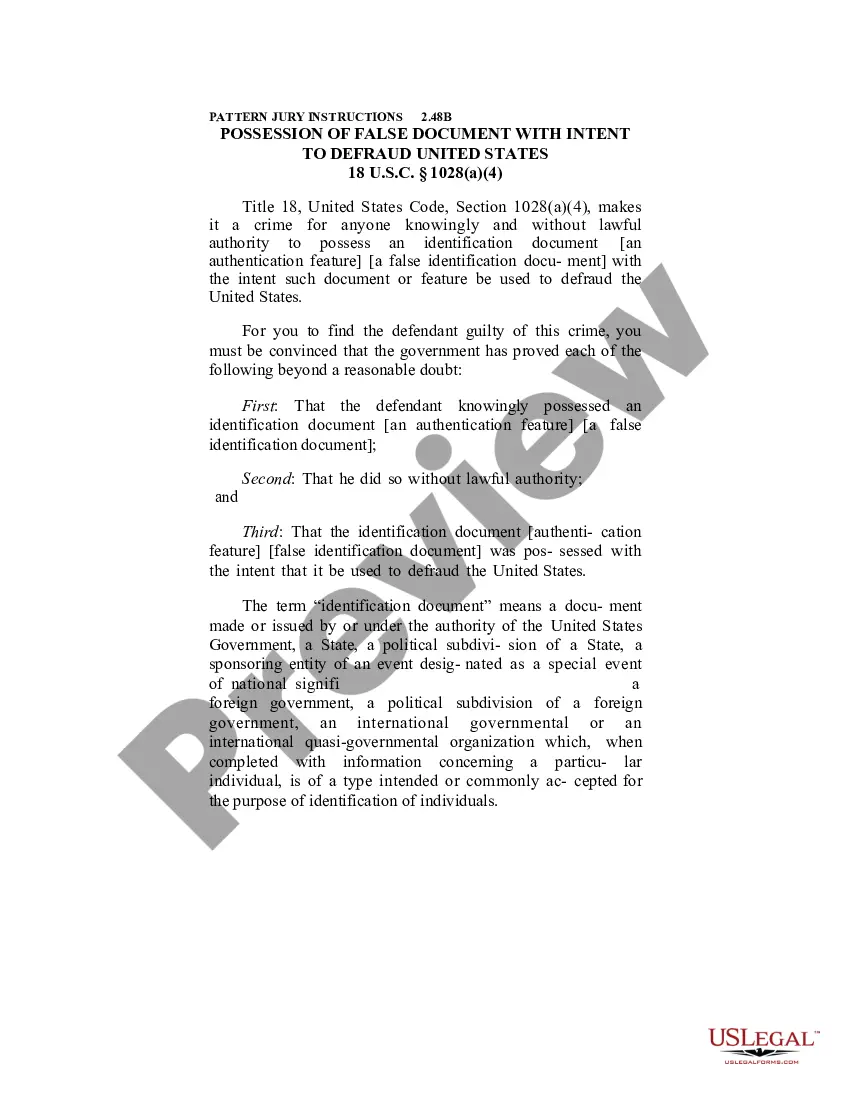
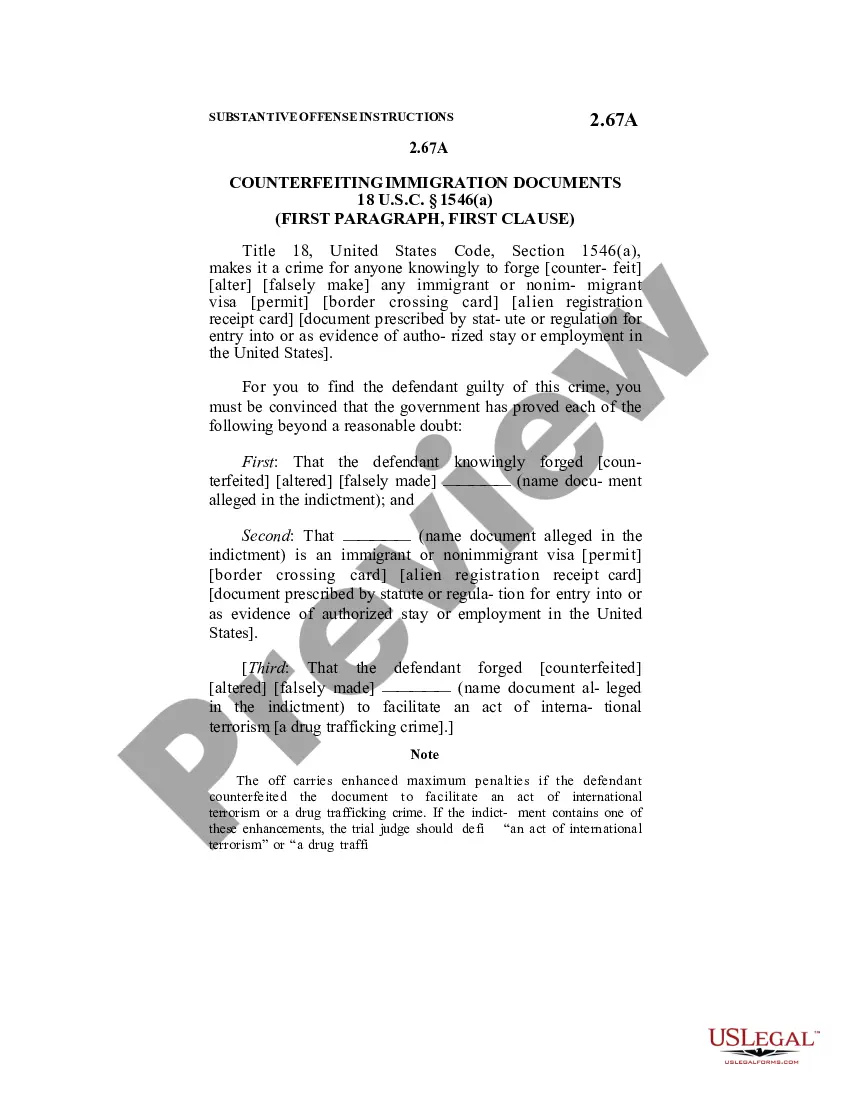
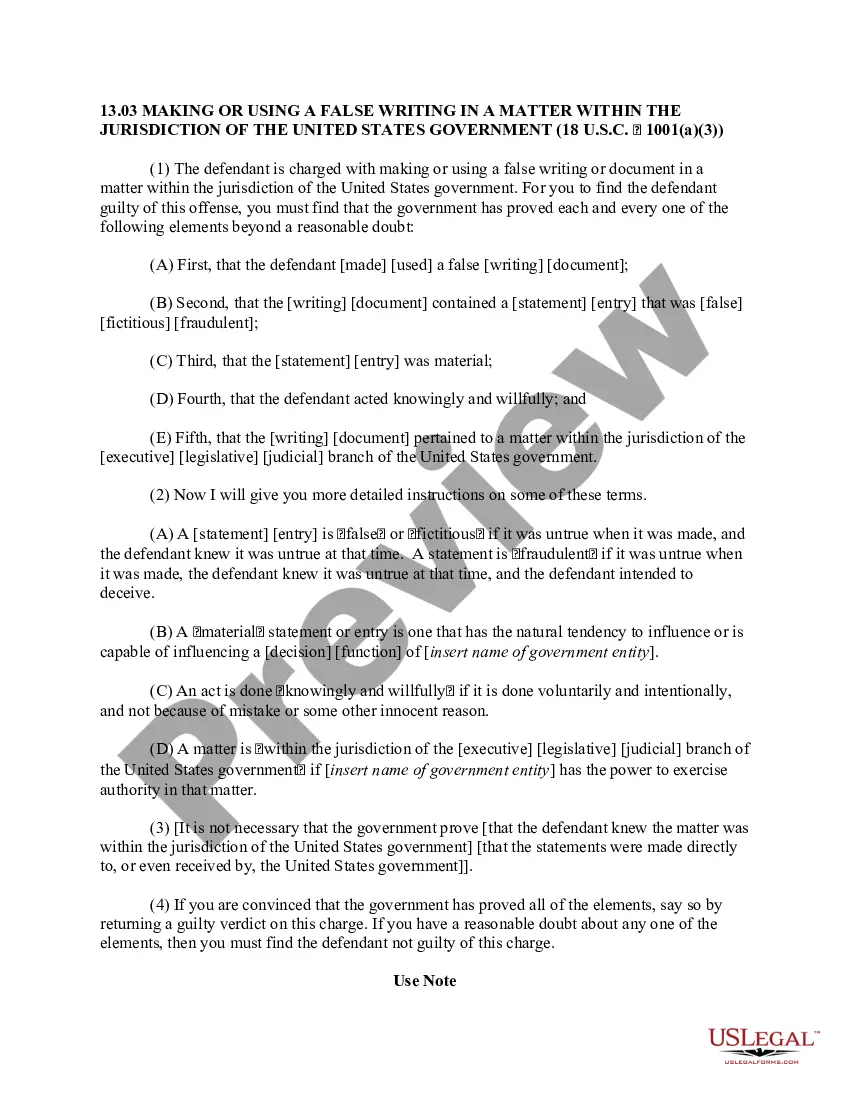
The Production of False Document form is a legal template used in cases involving the illegal production of false identification documents, under Title 18, United States Code, Section 1028(a)(1). This form outlines the criteria that must be proven for a defendant to be found guilty of knowingly producing an identification document without lawful authority. It serves as an important tool in legal cases related to fraud and helps clarify the complex legal definitions surrounding the crime.
Key components of this form
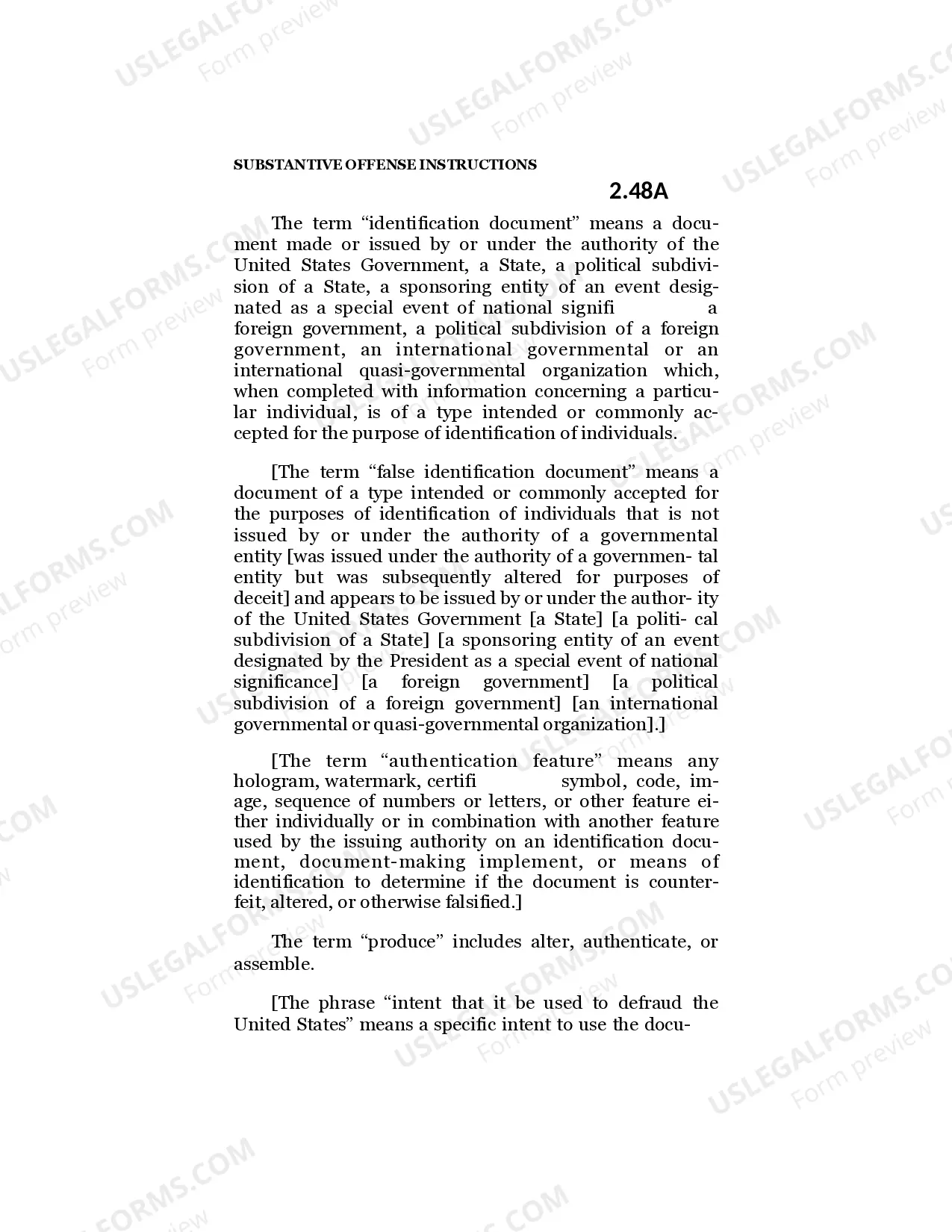
- Definition of "identification document" as one issued by governmental authorities.
- Criteria for "false identification document" and its intended use for deceit.
- Clear explanations of the terms such as "authentication feature" and "produce."
- Details on the requirement of intent to defraud the United States.
- Elements regarding the impact on interstate or foreign commerce.
When this form is needed
This form is necessary when a case involves accusations of creating or using false identification documents aimed at defrauding governmental entities. It is typically used in legal proceedings when a defendant is charged under the relevant U.S. Code. Utilizing this form helps establish the necessary legal framework and definitions required for the prosecution of such cases.
Who needs this form
- Legal professionals involved in criminal defense or prosecution.
- Individuals accused of producing false identification documents.
- Law enforcement agencies dealing with cases of document fraud.
- Students or professionals studying criminal law who need a clear understanding of this statute.
Instructions for completing this form
- Read through the entire form to understand the legal definitions and criteria.
- Identify the parties involved in the case, including the accused and the prosecuting entity.
- Document the specific actions taken by the defendant that led to the charges.
- Provide evidence and information that demonstrates intent to defraud.
- Ensure all relevant terms are defined as required by the statute.
Notarization requirements for this form
This form does not typically require notarization unless specified by local law. Users should check local regulations to confirm if notarization is necessary for submission in specific jurisdictions.
Get your form ready online
Our built-in tools help you complete, sign, share, and store your documents in one place.
Make edits, fill in missing information, and update formatting in US Legal Forms—just like you would in MS Word.
Download a copy, print it, send it by email, or mail it via USPS—whatever works best for your next step.
Sign and collect signatures with our SignNow integration. Send to multiple recipients, set reminders, and more. Go Premium to unlock E-Sign.
If this form requires notarization, complete it online through a secure video call—no need to meet a notary in person or wait for an appointment.
We protect your documents and personal data by following strict security and privacy standards.

Make edits, fill in missing information, and update formatting in US Legal Forms—just like you would in MS Word.

Download a copy, print it, send it by email, or mail it via USPS—whatever works best for your next step.

Sign and collect signatures with our SignNow integration. Send to multiple recipients, set reminders, and more. Go Premium to unlock E-Sign.

If this form requires notarization, complete it online through a secure video call—no need to meet a notary in person or wait for an appointment.

We protect your documents and personal data by following strict security and privacy standards.
Avoid these common issues
- Failing to adequately define technical terms essential to the case.
- Not providing enough evidence to demonstrate intent to defraud.
- Using outdated legal definitions or failing to reference the most current laws.
Benefits of using this form online
- Convenience of downloading and editing the form at any time.
- Access to templates drafted by licensed attorneys, ensuring legal accuracy.
- Availability of instant updates to stay compliant with changing laws.
Looking for another form?

Form popularity
FAQ
What Is Falsification of Documents? Falsification of documents or records involves the alteration or modification of a document that is done for an illegal purpose. It can also include passing such documents on to other parties.
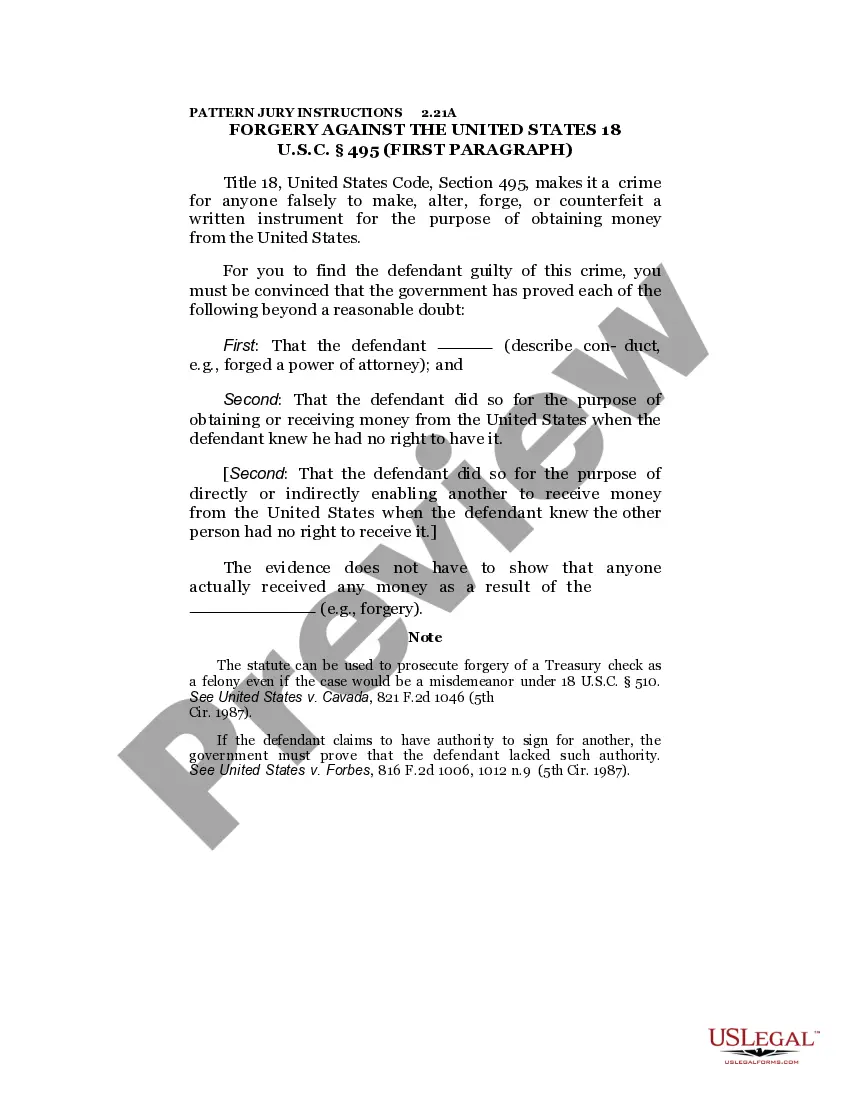
Forgery is the process of creating, adapting, or imitating objects or documents. The most common forgeries include money, works of art, documents, diplomas, and identification. Forgeries often accompany other fraud such as application, insurance, or check fraud, financial identity takeover, and so forth.
A textbook definition of forgery is the making of a false document with the intent that it should be used or acted upon as if it's genuine. Therefore, the falsification of document includes altering a genuine document in any material part.
Penal Code § 115 PC makes it a criminal offense in California knowingly to file, register, or record a false or forged document in any public office within the state. Doing so is a felony offense that is punishable by up to three years in jail or prison.
Faking a signature without permission, making a false document, or changing an existing document are all considered to be a forgery. Forgery is a crime and punishable by law. Although penalties will vary from state to state, all fifty states consider forgery to be a felony.
Forgery is the creation and fabrication of a document with intent to defraud, while uttering is the passing or publication of a forged document that someone else had made with the intent to defraud. Uttering is the publication of the forged document.
Forgery. n. 1) the crime of creating a false document, altering a document, or writing a false signature for the illegal benefit of the person making the forgery.