New Hampshire Heirship Affidavit - Descent

What is this form?
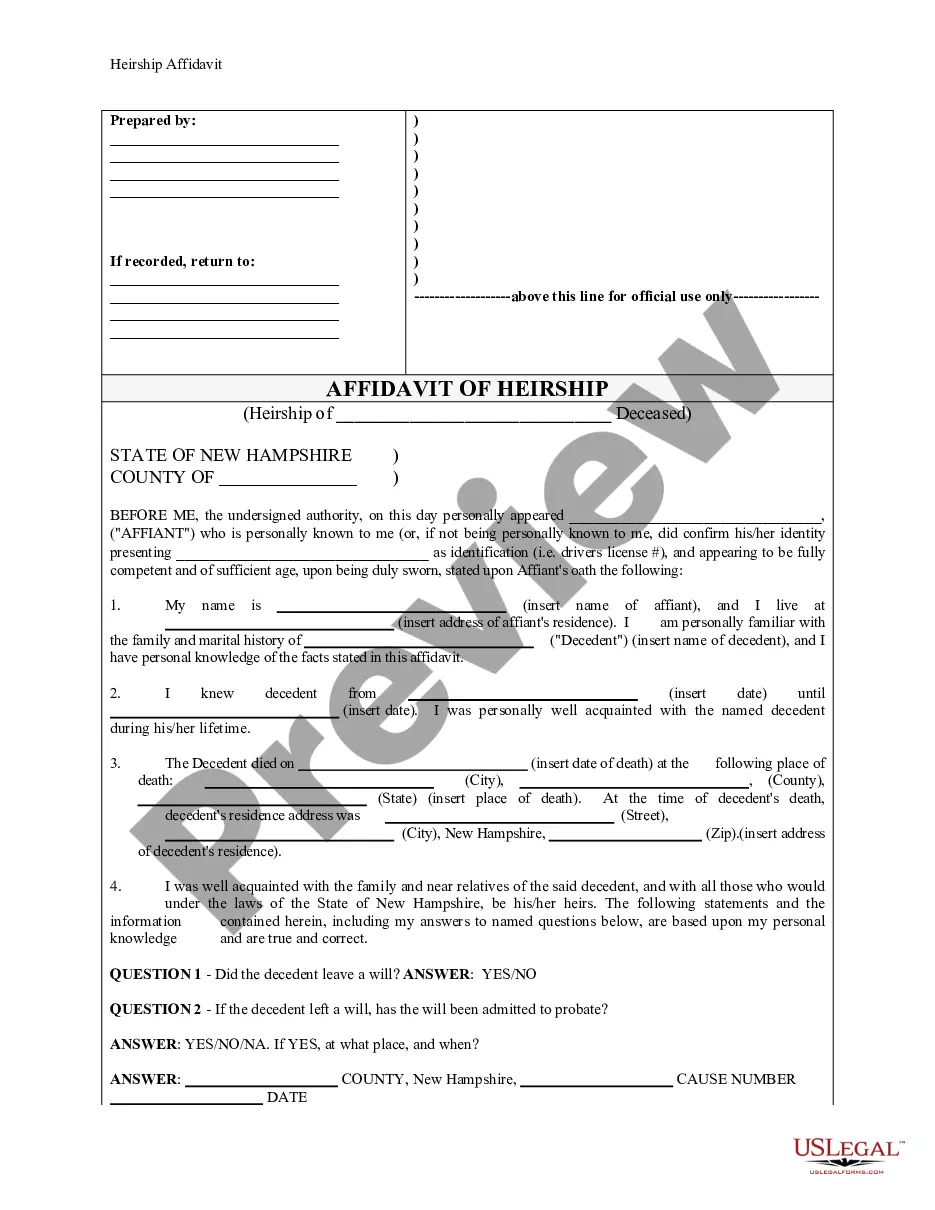
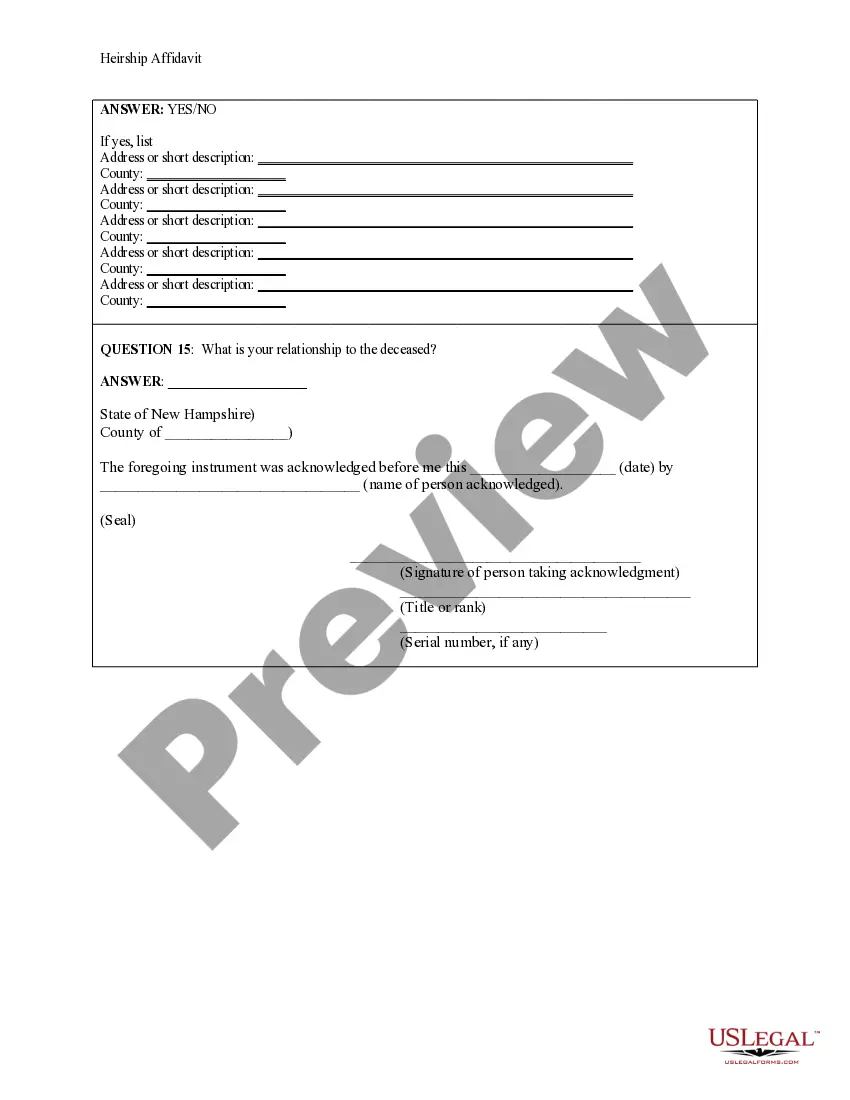
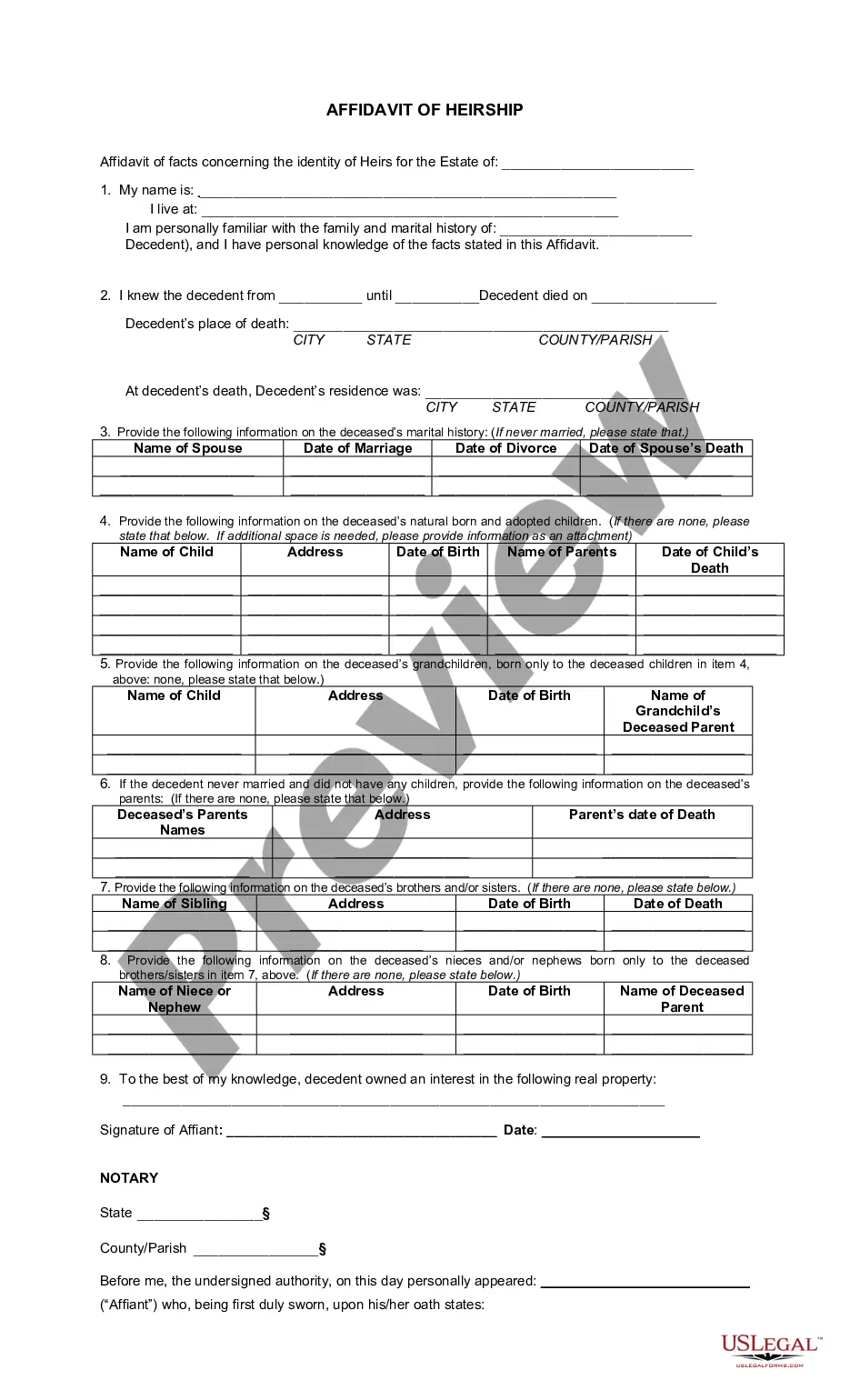
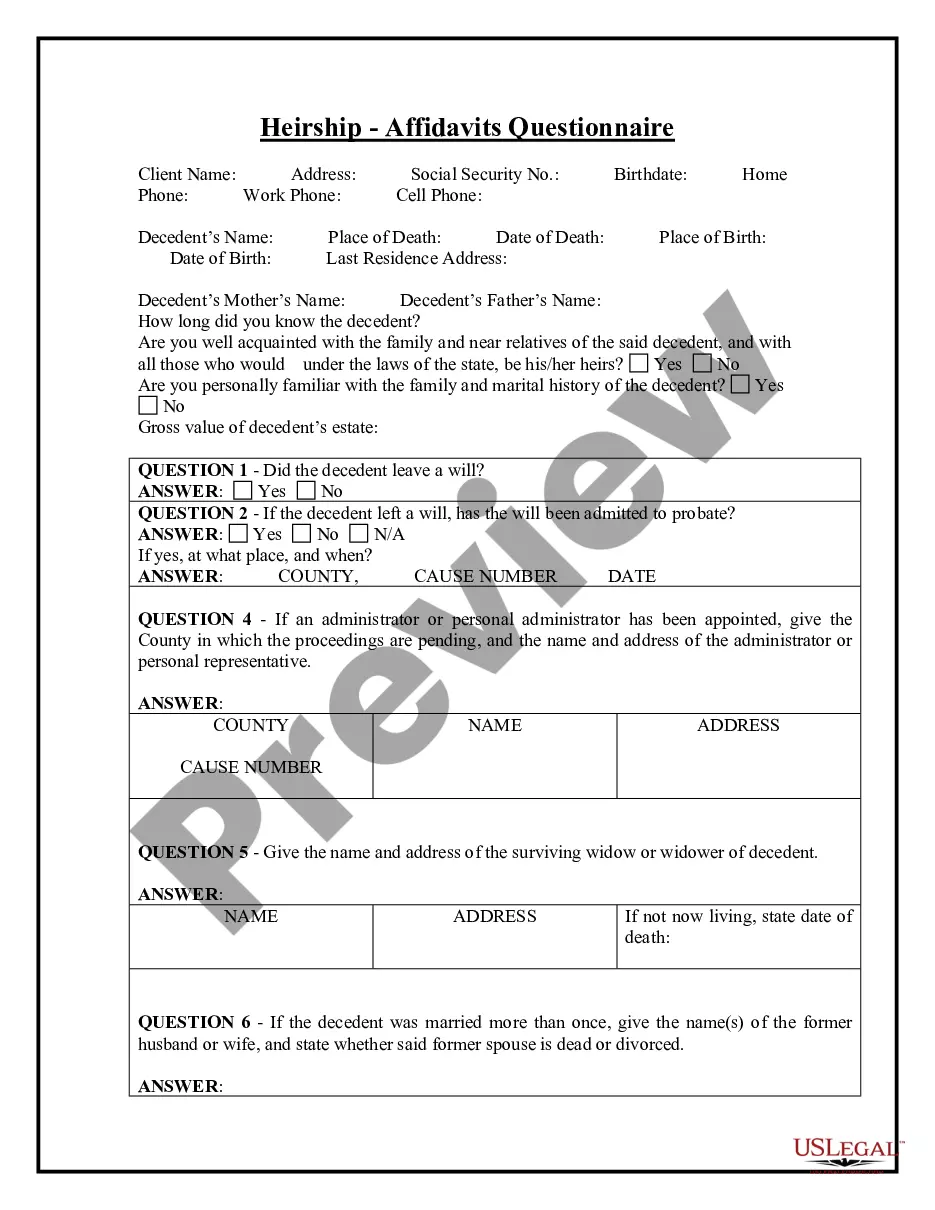
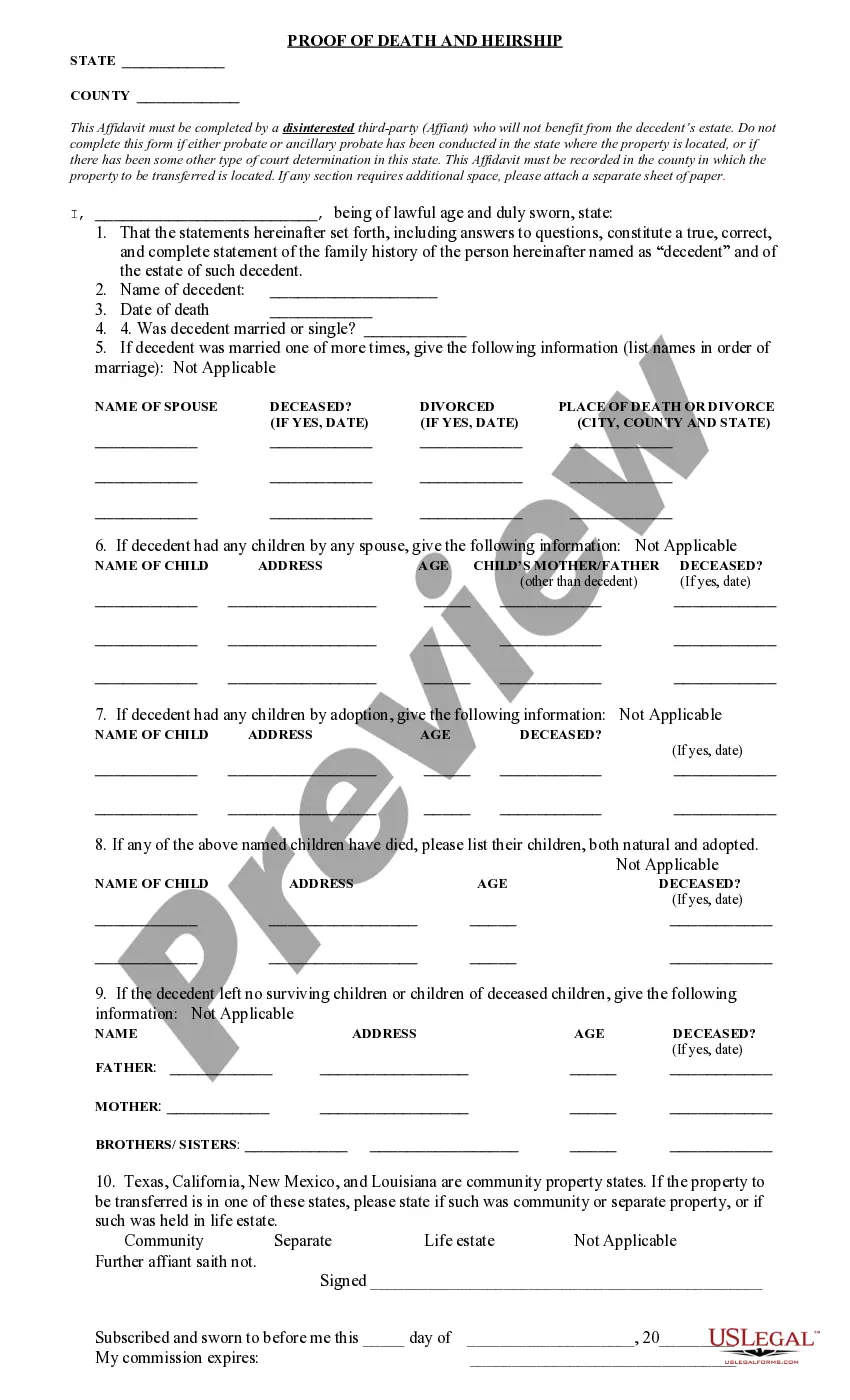
The Heirship Affidavit - Descent is a legal document used to declare the heirs of a deceased individual. This affidavit serves to establish the rightful ownership of personal and real property, particularly in situations where someone dies intestate, meaning without a will. The form can be recorded in official land records if necessary, streamlining the transfer of property ownership to the heirs.
What’s included in this form
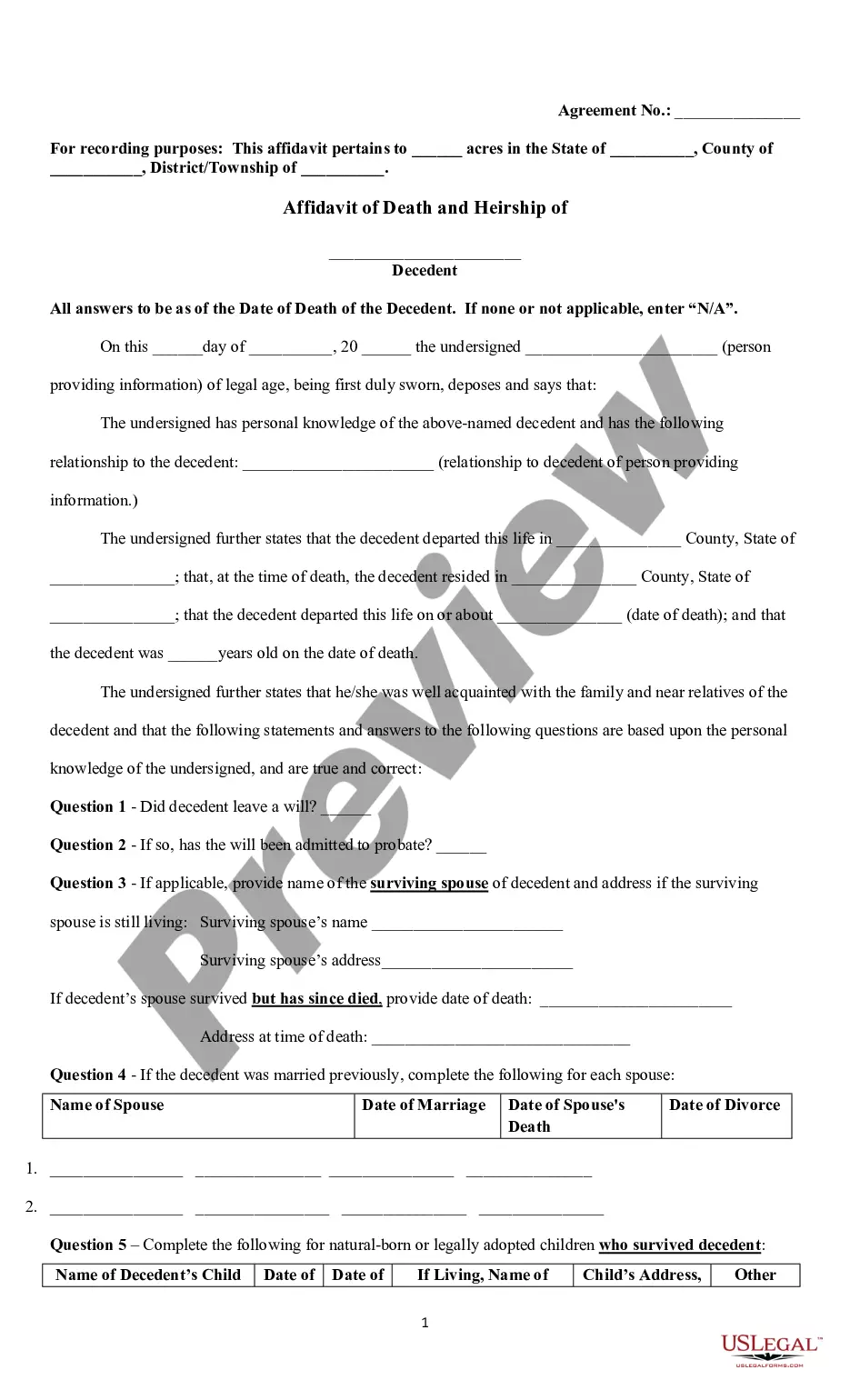
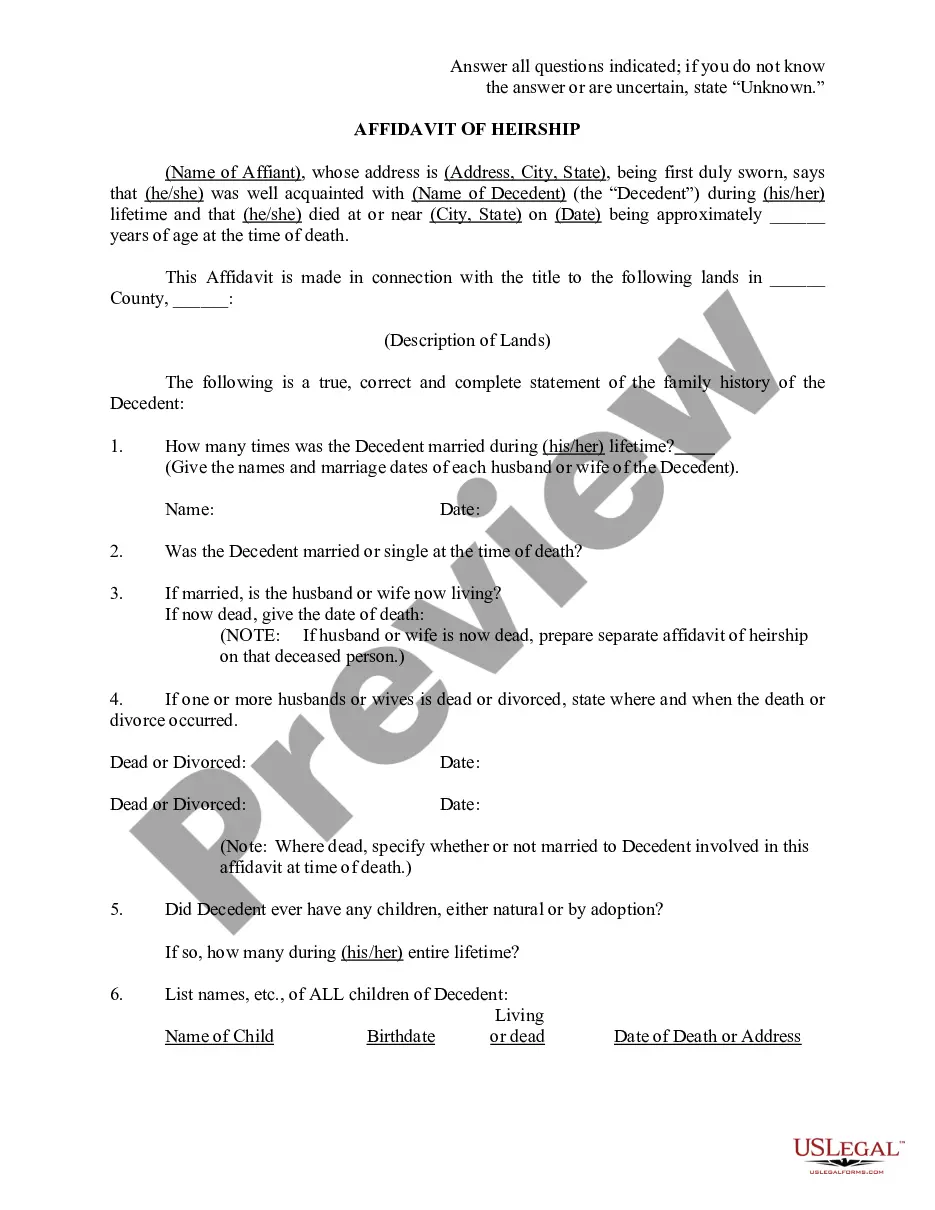
- Affiant's name and address
- Decedent's name and date of death
- Confirmation of family and marital history
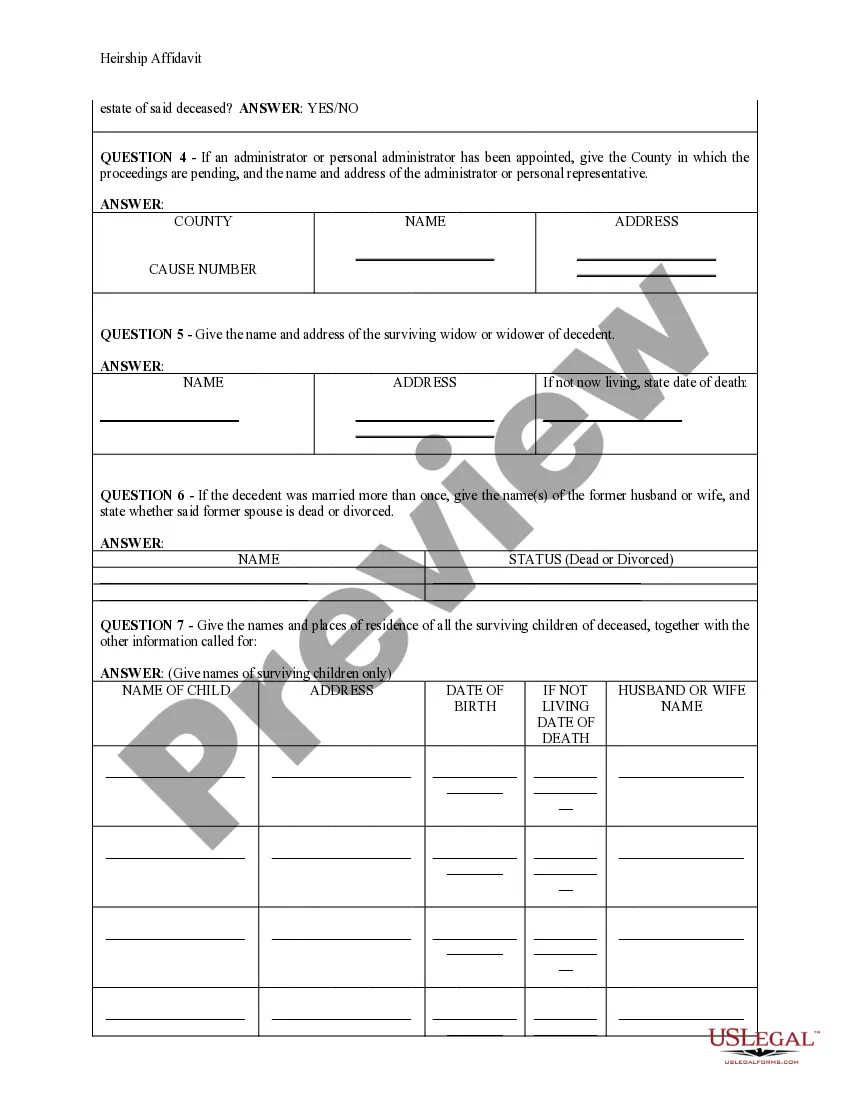
- Questions regarding the decedent's will and estate administration
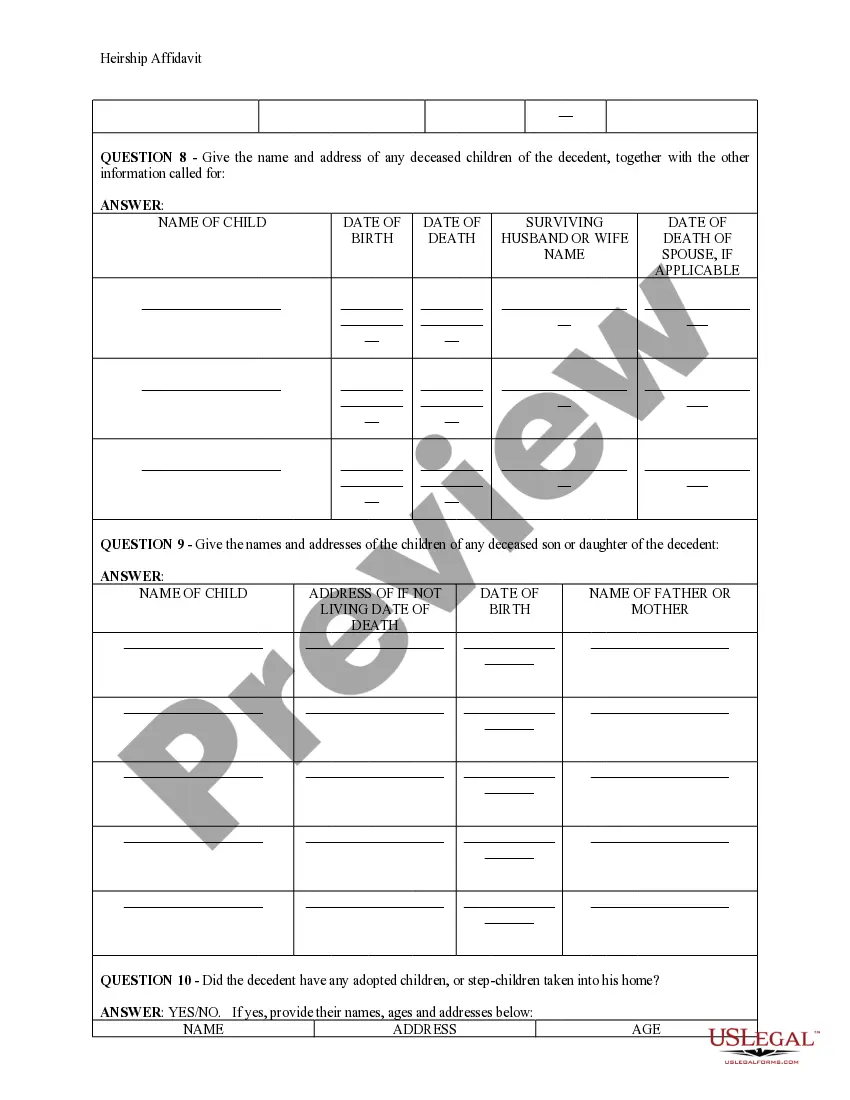
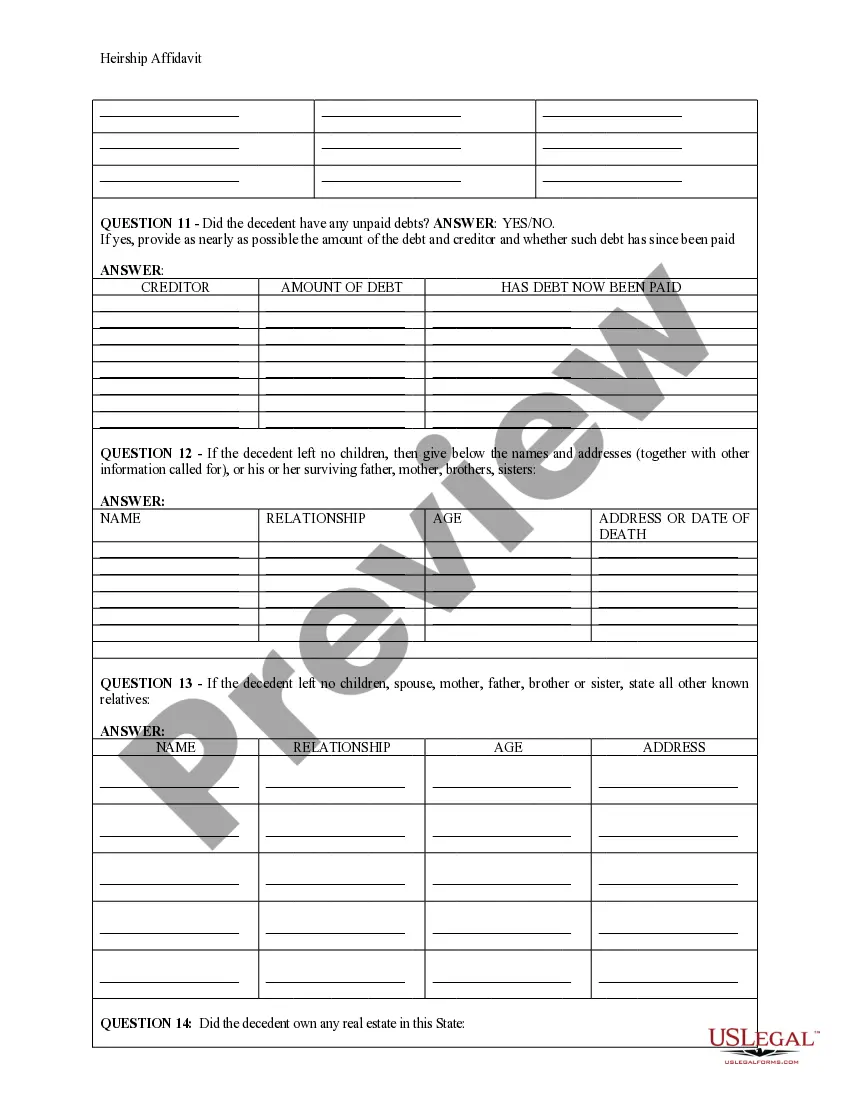
- List of surviving family members and their details
- Information about any real estate owned by the decedent
When to use this form
This form is typically used when a person dies without a will, and there is a need to establish the heirs for property transfer. For example, if a decedent has a son but no estate has been opened, the son can utilize the heirship affidavit when selling property. This document is essential for validating claims to property and ensuring a smooth transfer of ownership among heirs.
Intended users of this form
- Individuals seeking to establish rightful heirs of a deceased person
- Heirs needing to transfer property ownership
- Personal representatives or administrators of an estate dealing with intestacy issues
- Attorneys assisting clients with estate matters
How to complete this form
- Identify yourself as the affiant and provide your name and address.
- Enter the name of the decedent, along with the date and place of death.
- Answer questions regarding whether the decedent left a will and provide information about any probate actions.
- List surviving family members and their relationship to the decedent.
- Detail any real estate owned by the decedent and its location.
- Sign the affidavit in the presence of a notary public.
Does this form need to be notarized?
Yes, this form must be notarized to be legally valid. It is crucial for the affiant's signature to be witnessed by a notary public to ensure authenticity of the affidavit.
Get your form ready online
Our built-in tools help you complete, sign, share, and store your documents in one place.
Make edits, fill in missing information, and update formatting in US Legal Forms—just like you would in MS Word.
Download a copy, print it, send it by email, or mail it via USPS—whatever works best for your next step.
Sign and collect signatures with our SignNow integration. Send to multiple recipients, set reminders, and more. Go Premium to unlock E-Sign.
If this form requires notarization, complete it online through a secure video call—no need to meet a notary in person or wait for an appointment.
We protect your documents and personal data by following strict security and privacy standards.

Make edits, fill in missing information, and update formatting in US Legal Forms—just like you would in MS Word.

Download a copy, print it, send it by email, or mail it via USPS—whatever works best for your next step.

Sign and collect signatures with our SignNow integration. Send to multiple recipients, set reminders, and more. Go Premium to unlock E-Sign.

If this form requires notarization, complete it online through a secure video call—no need to meet a notary in person or wait for an appointment.

We protect your documents and personal data by following strict security and privacy standards.
Common mistakes to avoid
- Failing to provide complete information about the decedent's family.
- Not answering questions regarding the will or probate incorrectly.
- Missing the affiant's signature or proper notarization.
- Omitting details about real estate ownership.
Advantages of online completion
- Convenience of completing the affidavit from home.
- Editability allows for easy corrections and adjustments.
- Access to attorney-drafted forms ensures legal accuracy and compliance.
Summary of main points
- The Heirship Affidavit is essential for establishing heirs when a person dies without a will.
- Accurate and truthful completion of this form aids in the legal processes pertaining to the estate.
- Ensure notarization for the affidavit to be recognized legally in court or during property transactions.
Looking for another form?
Form popularity
FAQ
It is an affidavit used to identify the heirs to real property when the deceased died without a will (that is, intestate).The legal effect of the affidavit of heirship is that it creates a clean chain of title transfer to the decedent's heirs. An affidavit of heirship should be signed by two disinterested witnesses.
1. This form should be completed by someone other than an Heir. This person should be someone who is familiar with the family history of the deceased (decedent), and who will obtain no benefit from the Estate. The person who fills out the form is referred to as the AFFIANT.
When a person dies without a will, their estate is called an intestate estate. It is the Administrator's responsibility, under the court's supervision, to ensure that the debts and assets of the estate are managed and distributed in accordance with New Hampshire law.
An affidavit of heirship is needed to transfer a deceased person's interest in real or personal property to his or her heirs when the decedent dies without leaving a last will and testament or without disposing of all of his or her property in a will.