New Hampshire Amendment to Postnuptial Property Agreement
Overview of this form
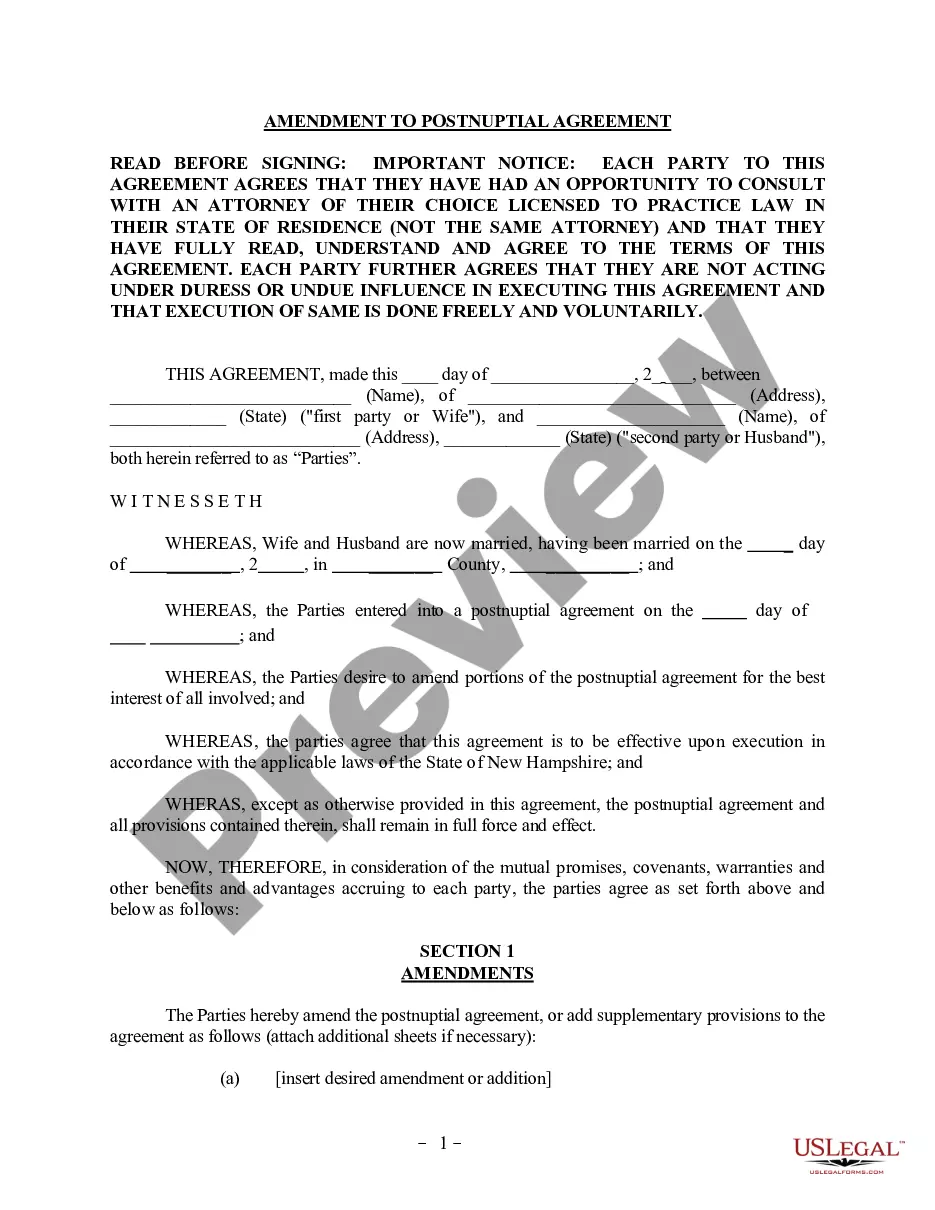
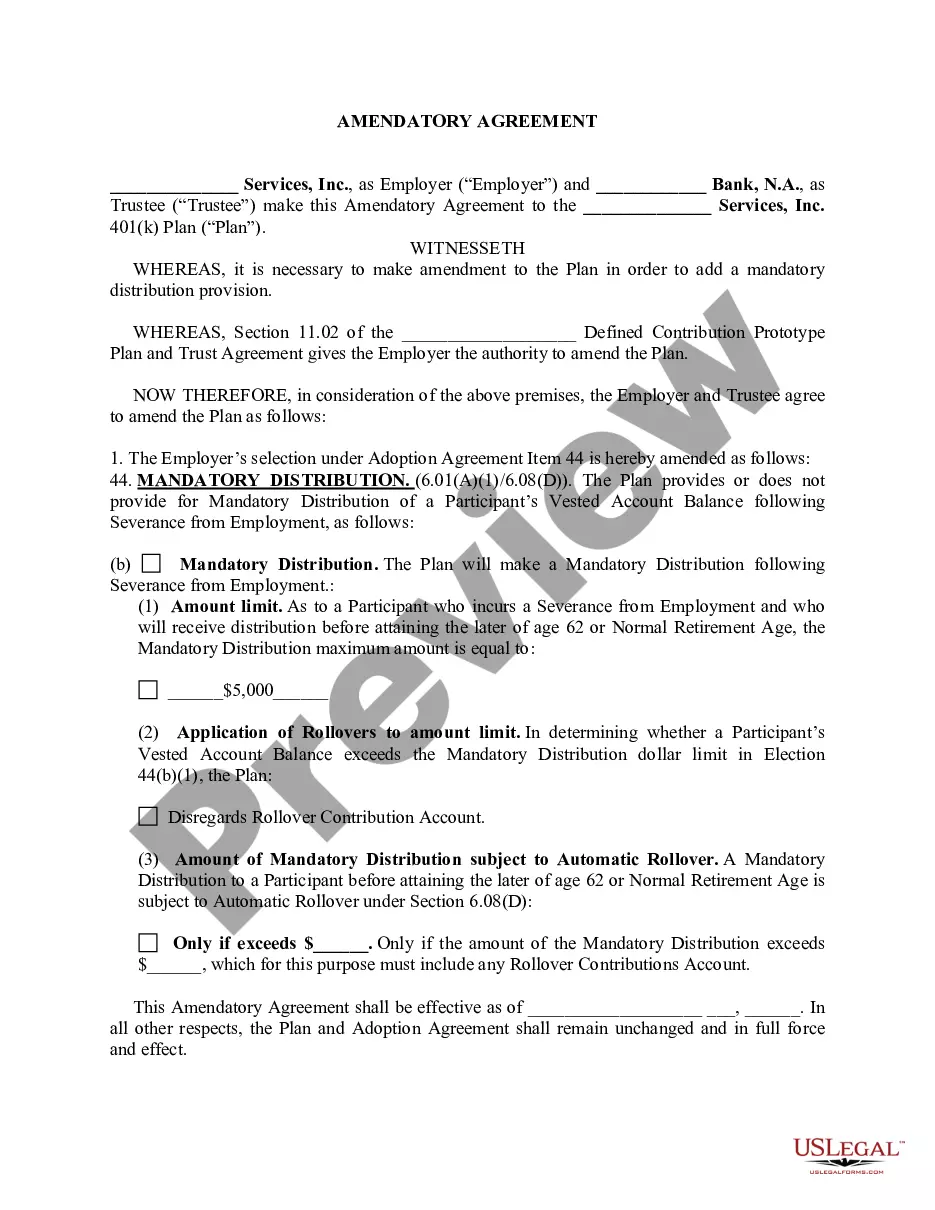
The Amendment to Postnuptial Property Agreement form allows parties to modify or add provisions to an existing postnuptial agreement. Unlike a new postnuptial agreement, this amendment specifically addresses changes to previously established terms, ensuring that both parties can adjust their property arrangements as needed during their marriage.
Key parts of this document
- Identification of the parties involved and the effective date of the amendment.
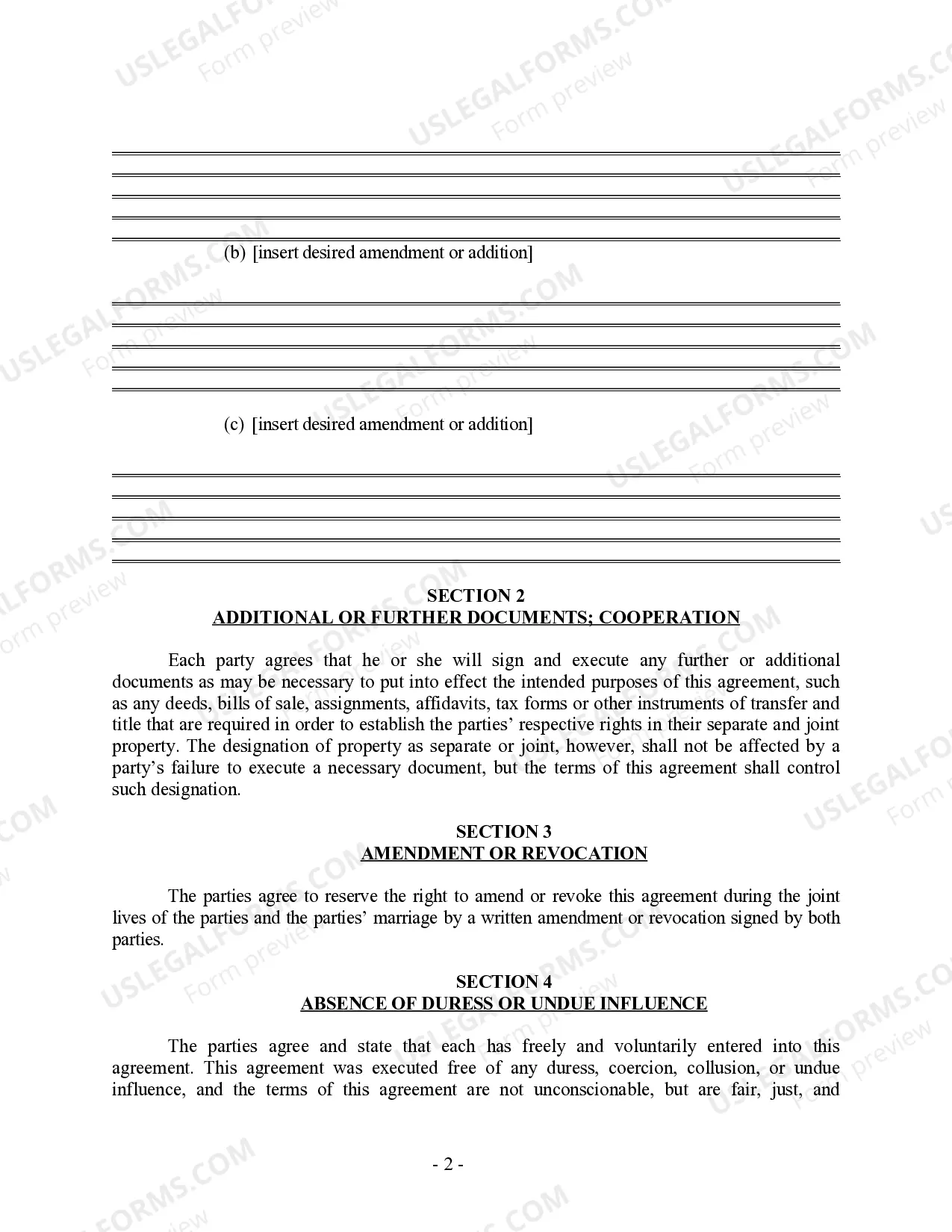
- Spaces to insert the desired amendments or additions to the original agreement.
- Cooperation clause requiring both parties to sign further necessary documents.
- Provisions for amendment or revocation of the agreement.
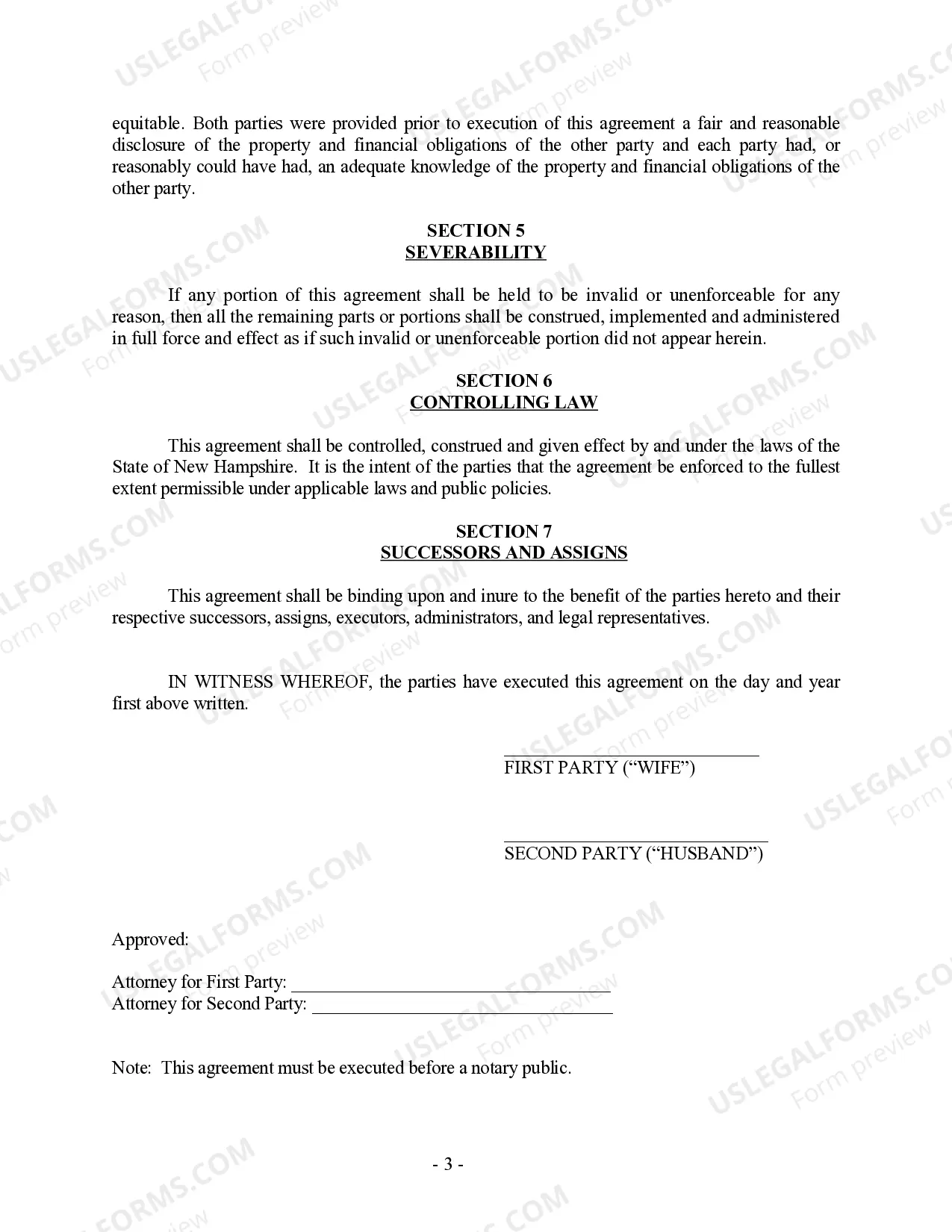
- Declaration that both parties entered into the agreement voluntarily and without coercion.
- Governing law stipulating that the agreement is governed by the laws of New Hampshire.

Situations where this form applies
Use this amendment form when you need to make changes to an existing postnuptial agreement. Common situations include changes in financial circumstances, the addition of new assets, or updates related to children or other dependencies. This amendment ensures that both parties agree to the new terms and helps maintain clarity in your financial arrangements.
Who this form is for
This form is intended for married couples who have previously established a postnuptial property agreement and seek to modify specific terms. It is suitable for both spouses and is especially useful when significant changes in circumstances or assets occur.
How to complete this form
- Identify both parties by full names and indicate the date of the amendment.
- Clearly state the amendments or additions to the existing agreement in the designated section.
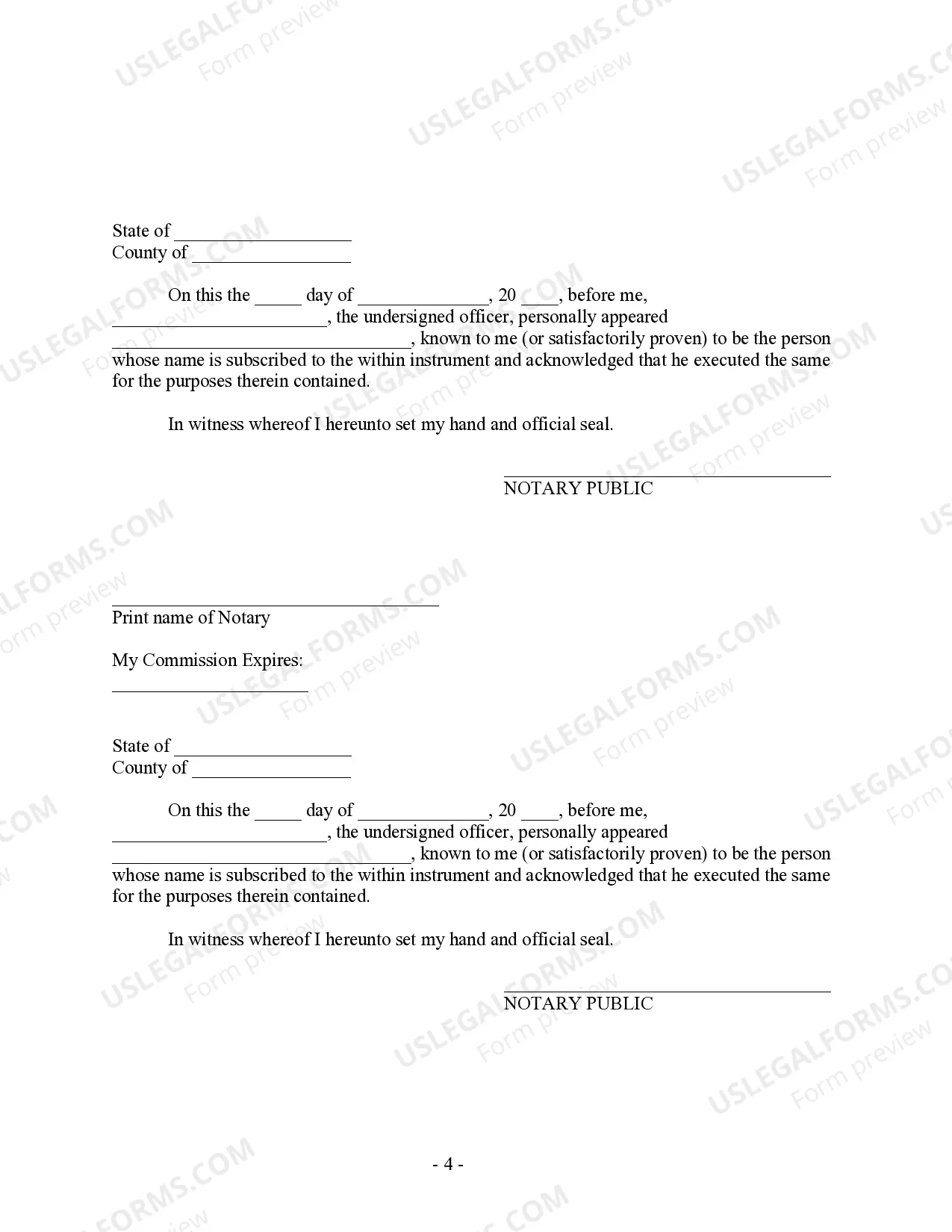
- Ensure that both parties sign the document in front of a notary public.
- Complete any required notary section to validate the signatures.
- Keep a copy for each party's records after notarization.
Does this form need to be notarized?
To make this form legally binding, it must be notarized. Our online notarization service, powered by Notarize, lets you verify and sign documents remotely through an encrypted video session.
Get your form ready online
Our built-in tools help you complete, sign, share, and store your documents in one place.
Make edits, fill in missing information, and update formatting in US Legal Forms—just like you would in MS Word.
Download a copy, print it, send it by email, or mail it via USPS—whatever works best for your next step.
Sign and collect signatures with our SignNow integration. Send to multiple recipients, set reminders, and more. Go Premium to unlock E-Sign.
If this form requires notarization, complete it online through a secure video call—no need to meet a notary in person or wait for an appointment.
We protect your documents and personal data by following strict security and privacy standards.

Make edits, fill in missing information, and update formatting in US Legal Forms—just like you would in MS Word.

Download a copy, print it, send it by email, or mail it via USPS—whatever works best for your next step.

Sign and collect signatures with our SignNow integration. Send to multiple recipients, set reminders, and more. Go Premium to unlock E-Sign.

If this form requires notarization, complete it online through a secure video call—no need to meet a notary in person or wait for an appointment.

We protect your documents and personal data by following strict security and privacy standards.
Common mistakes
- Failing to properly identify all parties involved in the agreement.
- Not clearly specifying the amendments or additions, leading to ambiguity.
- Neglecting to sign the document in front of a notary public.
- Overlooking the need for both parties to receive independent legal advice before signing.
Why complete this form online
- Convenience of immediate access from anywhere, at any time.
- Edit and tailor the document to suit your specific needs before downloading.
- Reliability, ensuring that the form meets legal standards and requirements.
Summary of main points
- This form allows couples to amend their existing postnuptial agreements.
- It's important for both parties to agree on the changes and understand the implications.
- Notarization is required for the amendment to be legally binding.
Looking for another form?

Form popularity
FAQ
Reasons a Judge Can Overturn a Prenuptial Agreement There are no specific rules that state what will overturn a prenup.Neither person should be in a state of duress or under any pressure to sign the prenup. Any indication of coercion or lack of willingness can give way for a divorce judge to overturn the agreement.
California has specific requirements for creating postnuptial agreements. The first three requirements are relatively simple. The postnuptial agreement must be written (preferably typed), signed by both spouses and properly notarized.
Postnuptial agreements are generally enforceable if the parties of the document adhere to all state laws regarding inheritance, child custody, visitation and monetary support if a divorce does occur.This may also come with a will or other legal document.
Attorneys will charge on average $1,000 for a simple postnuptial document and the costs can rise to around $3,000. Postnuptial agreements that are complicated in nature and require ongoing and prolonged negotiations and especially when substantial provisions and assets are involved, costs can start at around $10,000.
Postnuptial agreements are generally enforceable if the parties of the document adhere to all state laws regarding inheritance, child custody, visitation and monetary support if a divorce does occur.If any state laws are in violation within the postnuptial, the judge may throw out the entire document.
The three most common grounds for nullifying a prenup are unconscionability, failure to disclose, or duress and coercion.Duress and coercion can also invalidate a prenup. If the prenup was signed the day before your wedding, it may appear that the parties didn't have much time to fully review the agreement.
If a spouse is able to prove non-disclosure of all previous assets or property, then the prenuptial agreement can be considered void. Second, if a spouse is able to prove that he or she was compelled to sign the prenuptial agreement under stressful circumstances, then the prenup can be invalidated.
Postnuptial agreements must be in writing. Voluntary Both parties to a postnuptial agreement must have signed the agreement voluntarily and intentionally.Generally speaking, to make a postnuptial agreement valid, both parties' signatures need to be notarized.
Per , since postnuptial agreements generally handle the same issues that prenuptial agreements address, the same circumstances that can cause a court to void part or all of a prenuptial agreement also apply to a postnuptial. Like a prenuptial, a postnuptial agreement should be in written form.