New Hampshire Plumbing Contract for Contractor
About this form
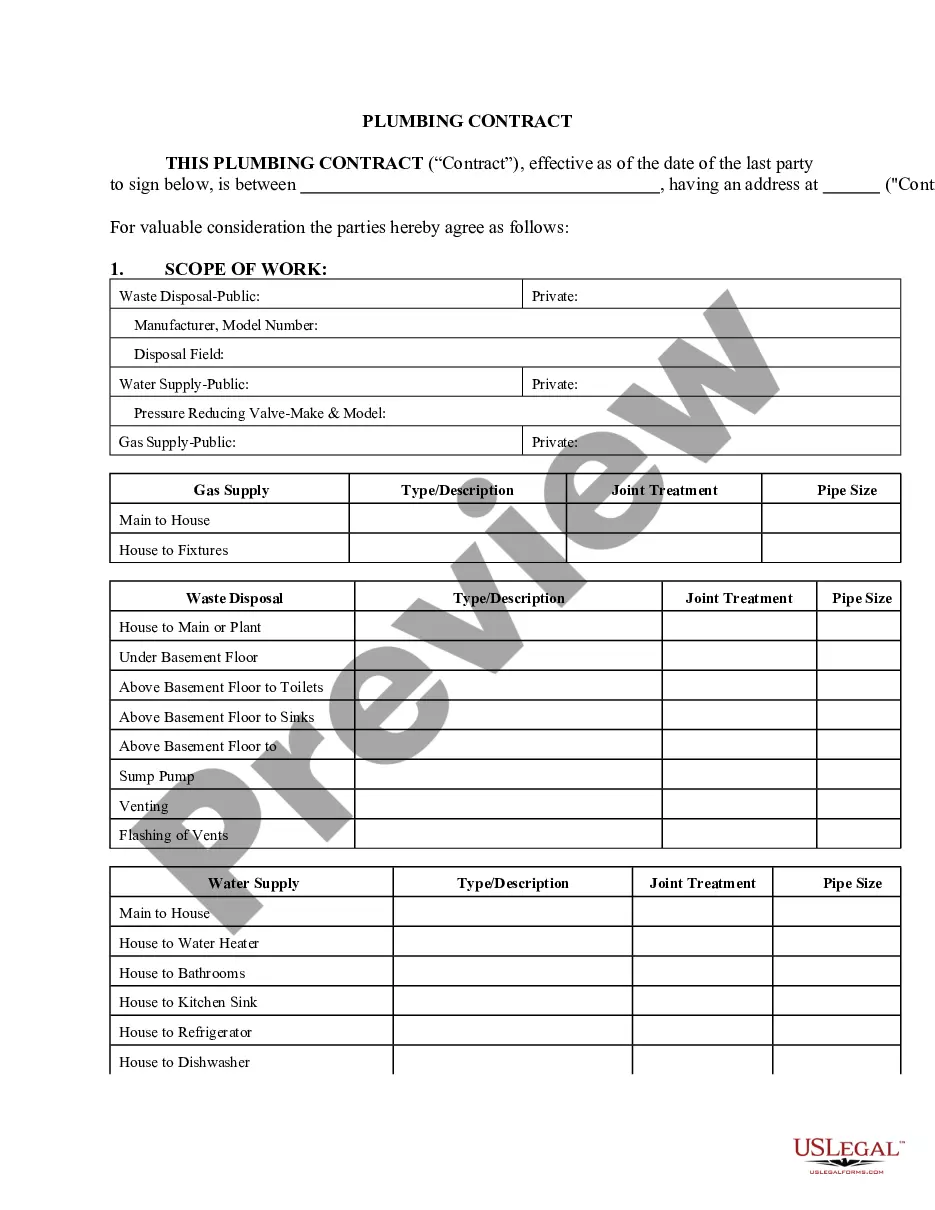
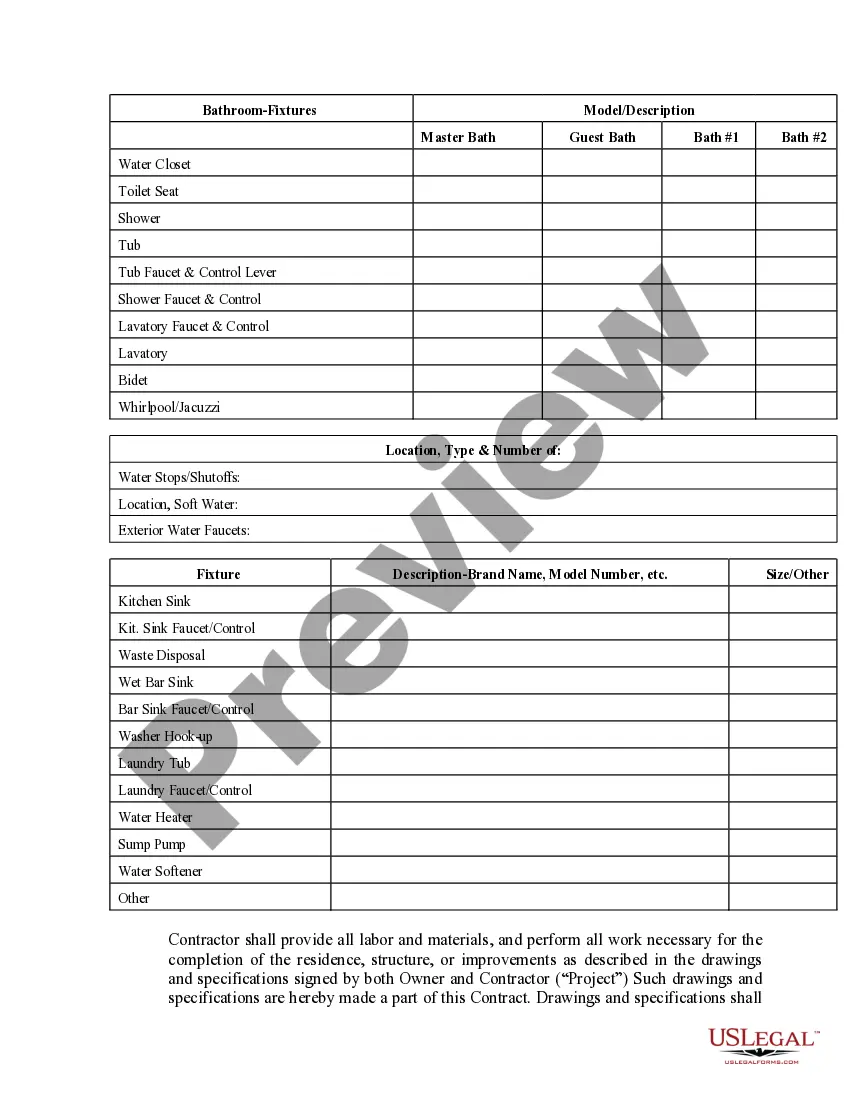
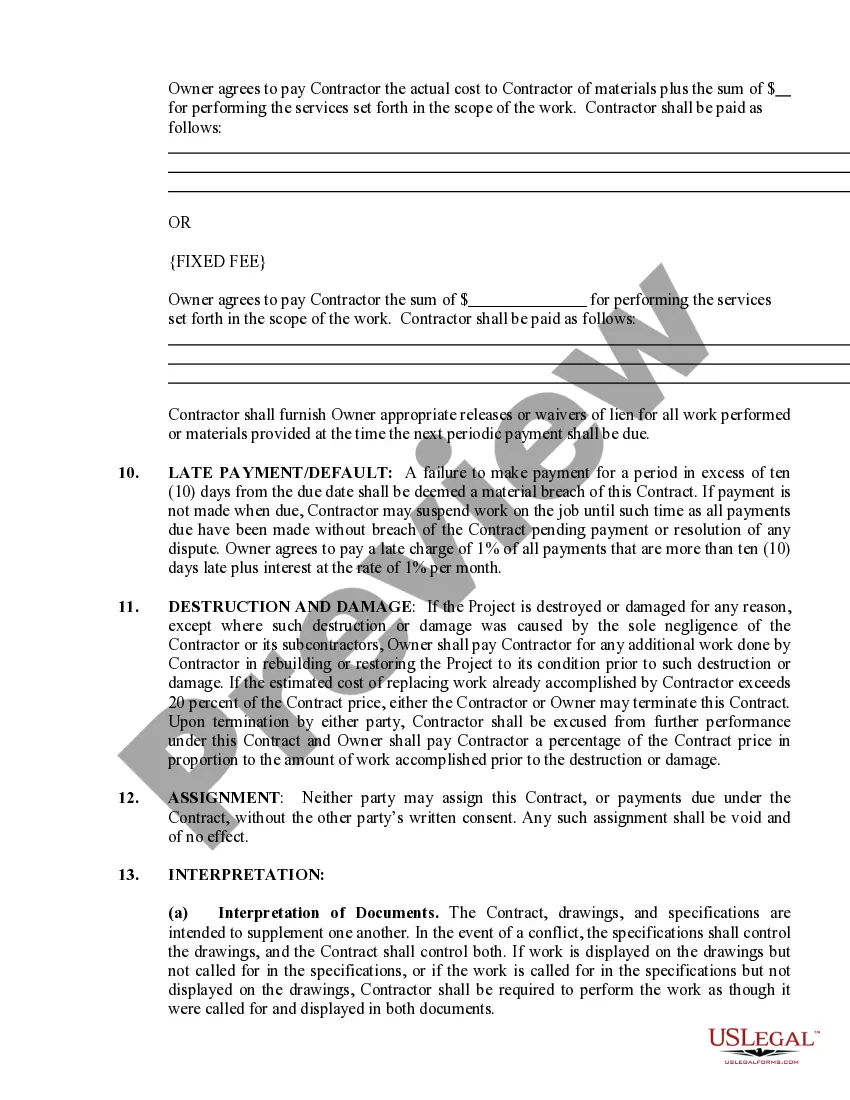
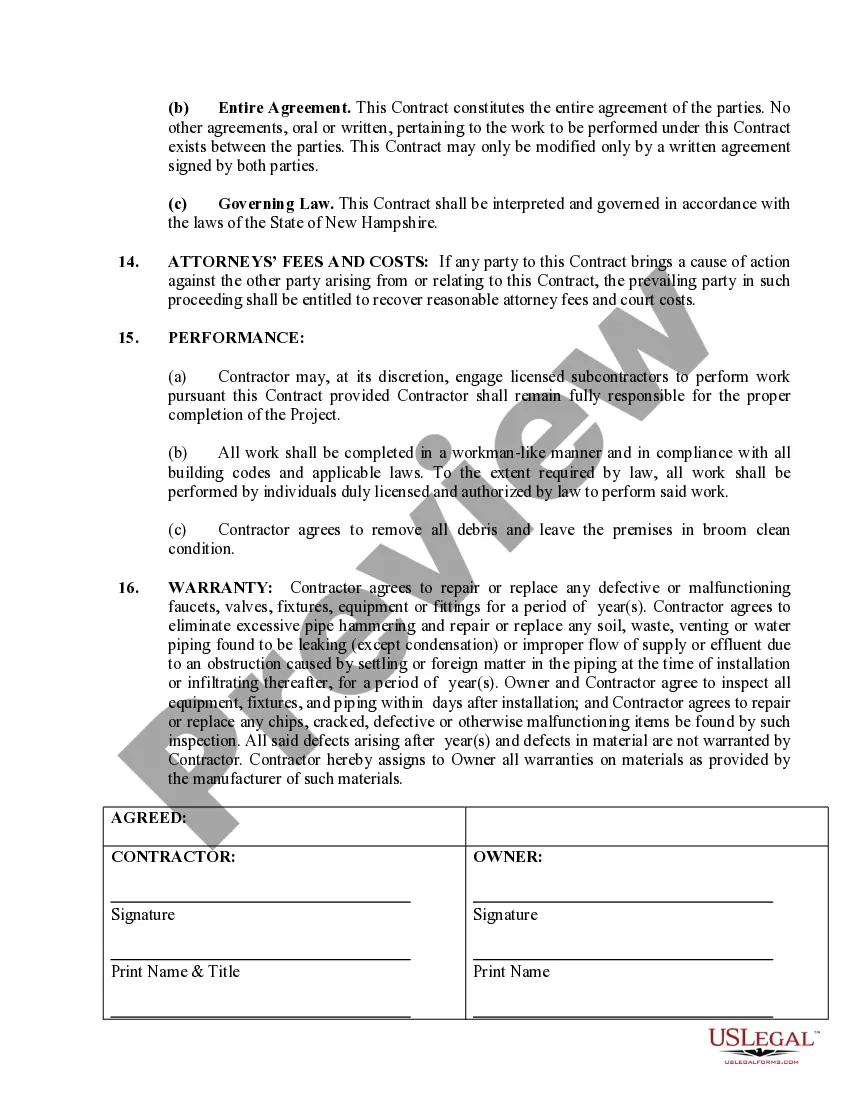
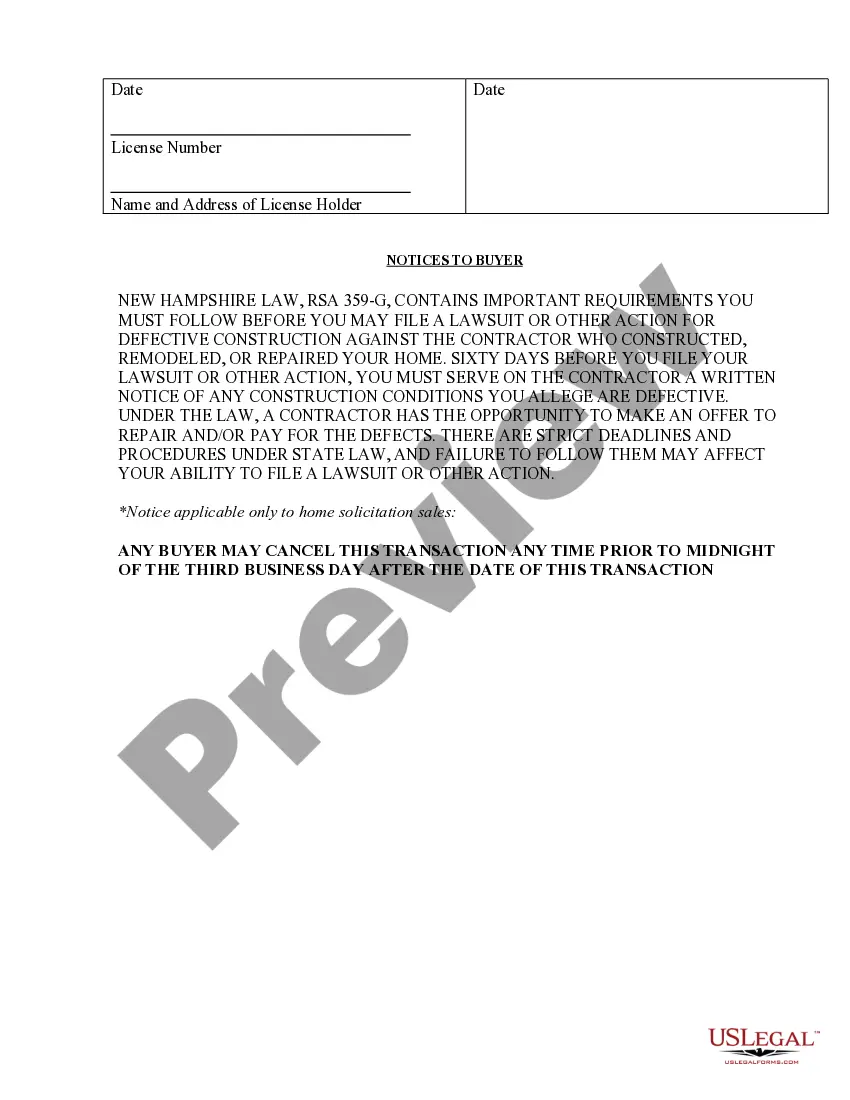
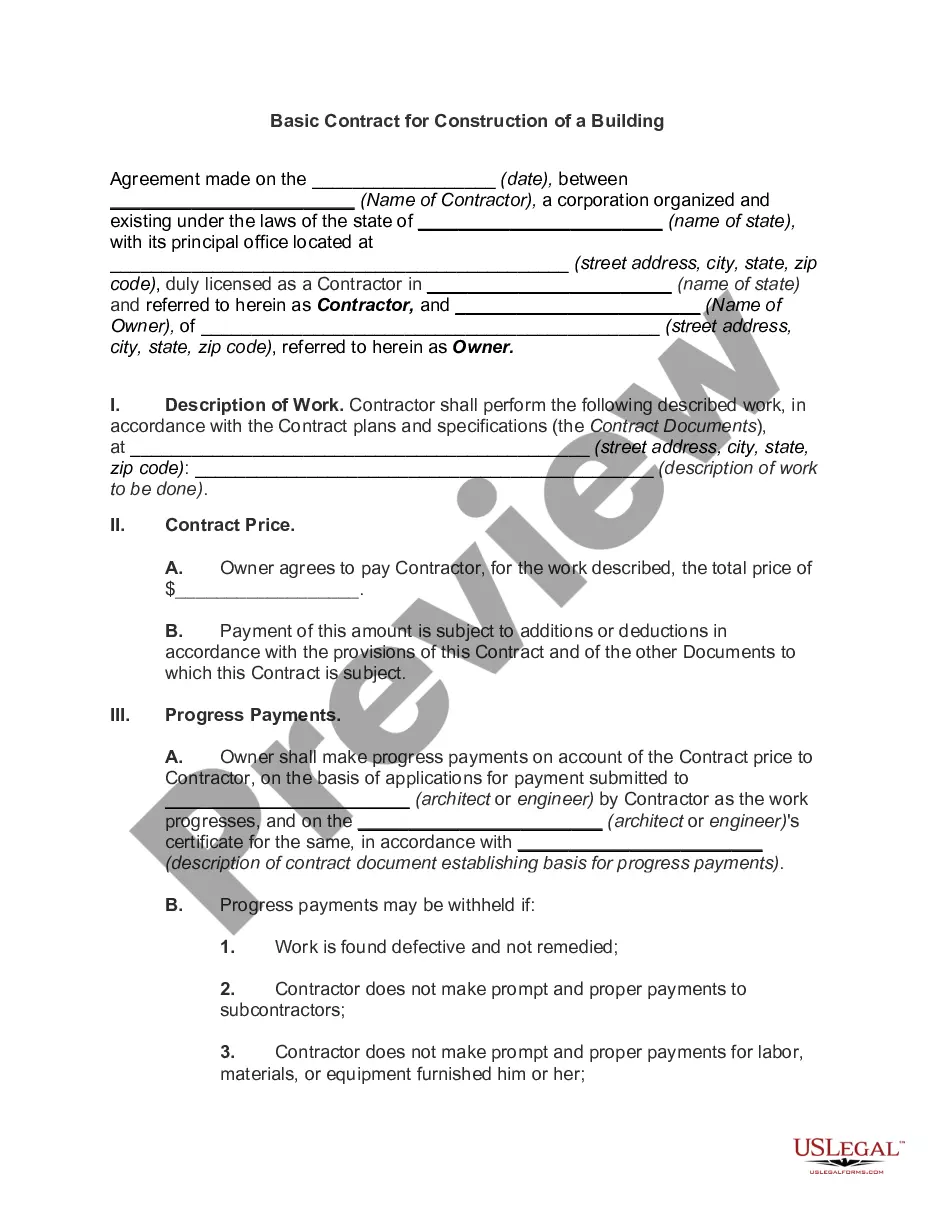
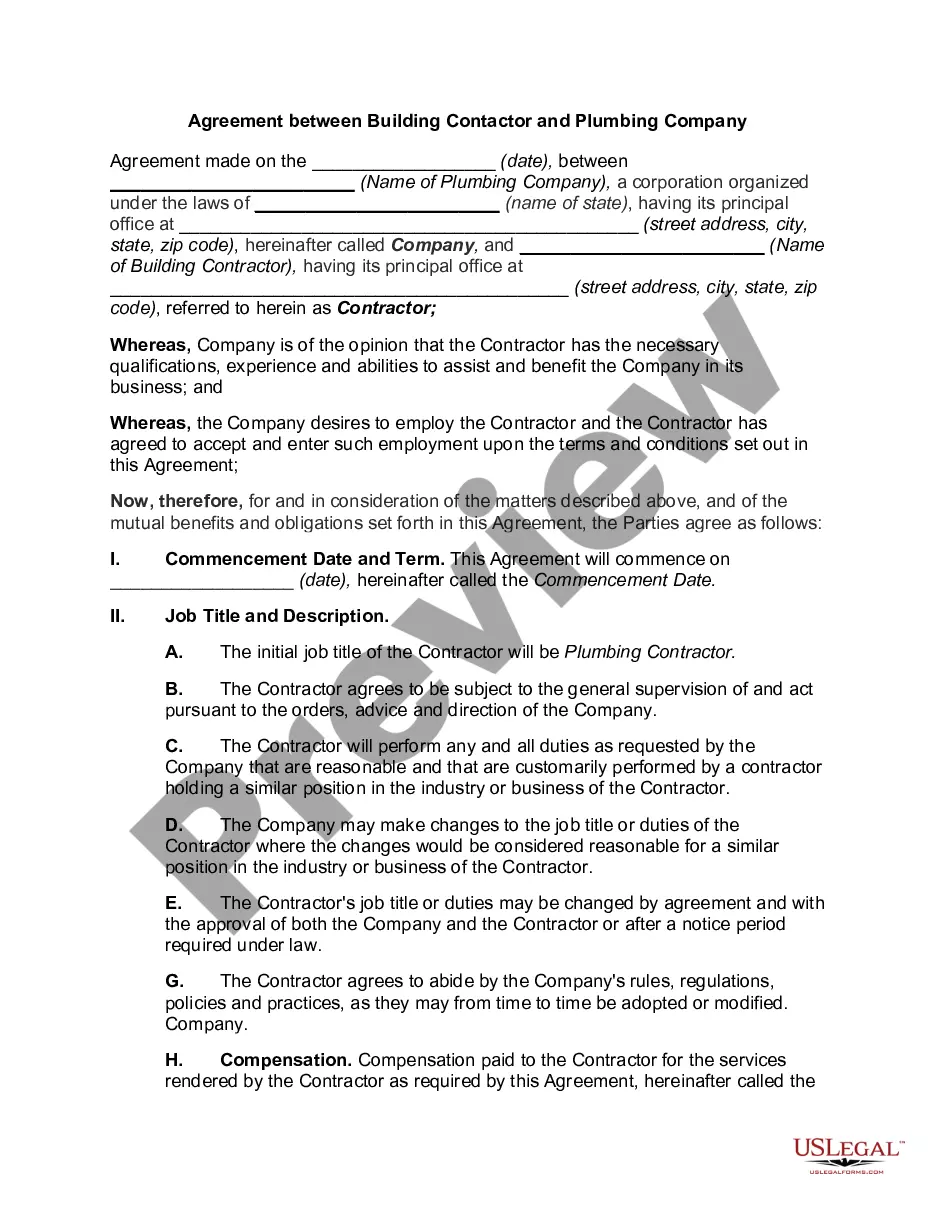
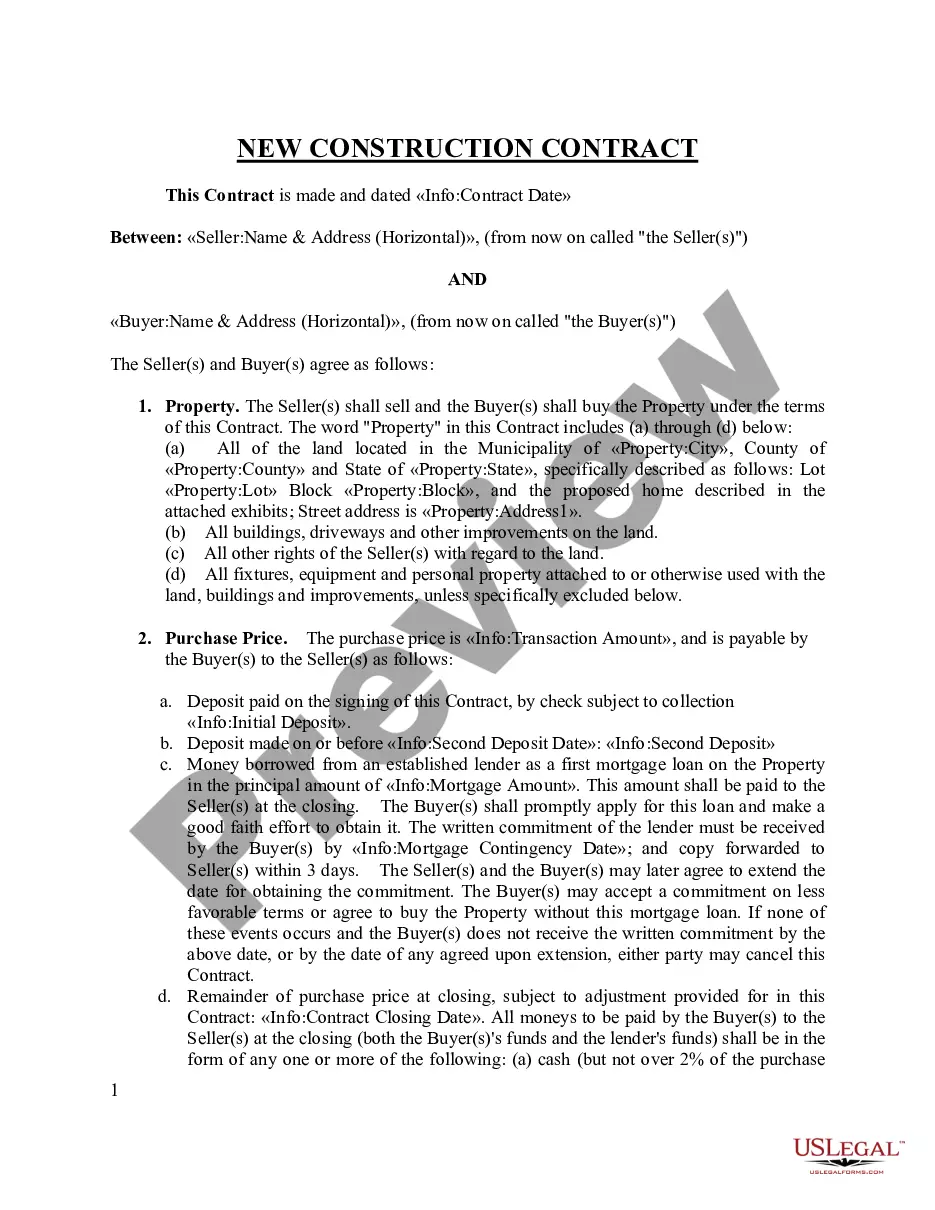
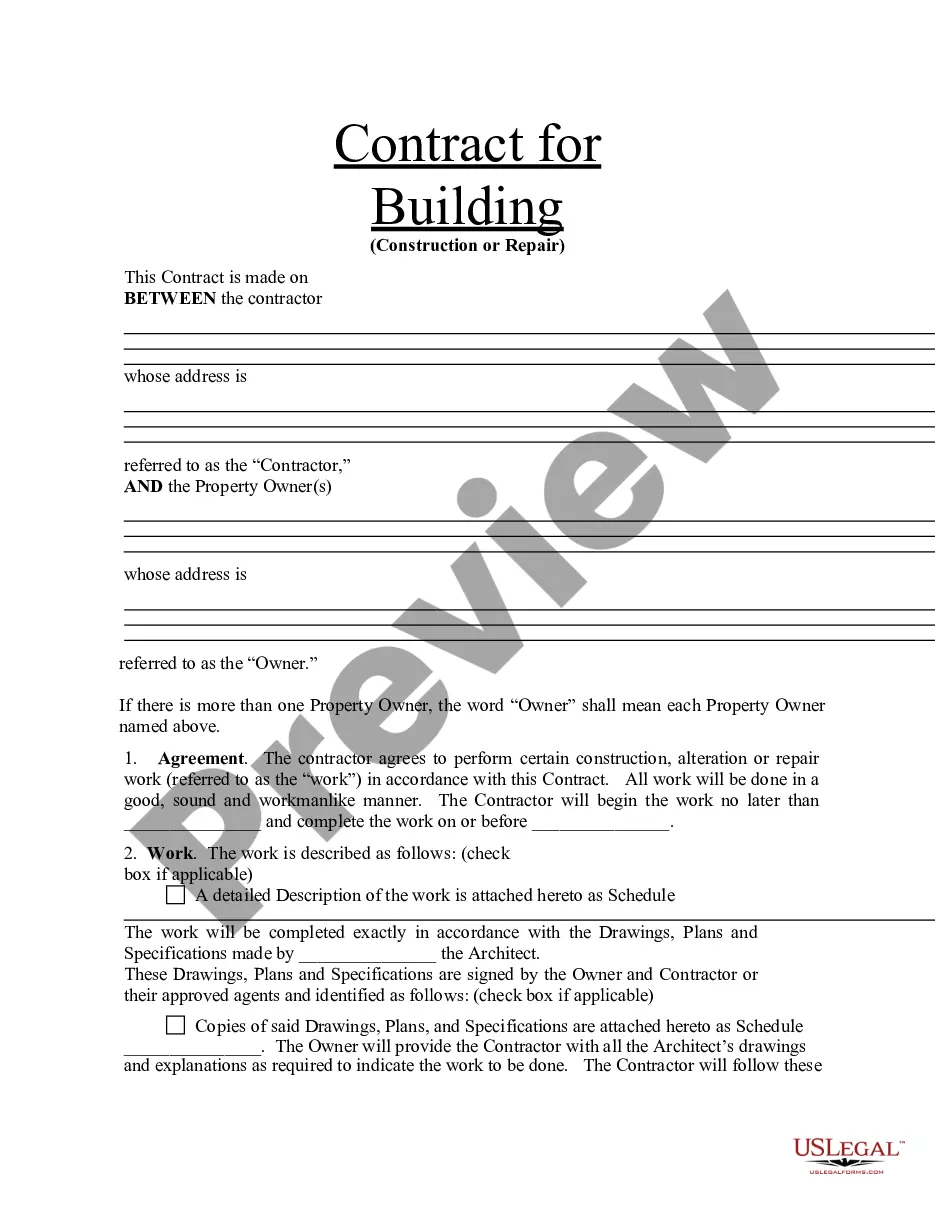
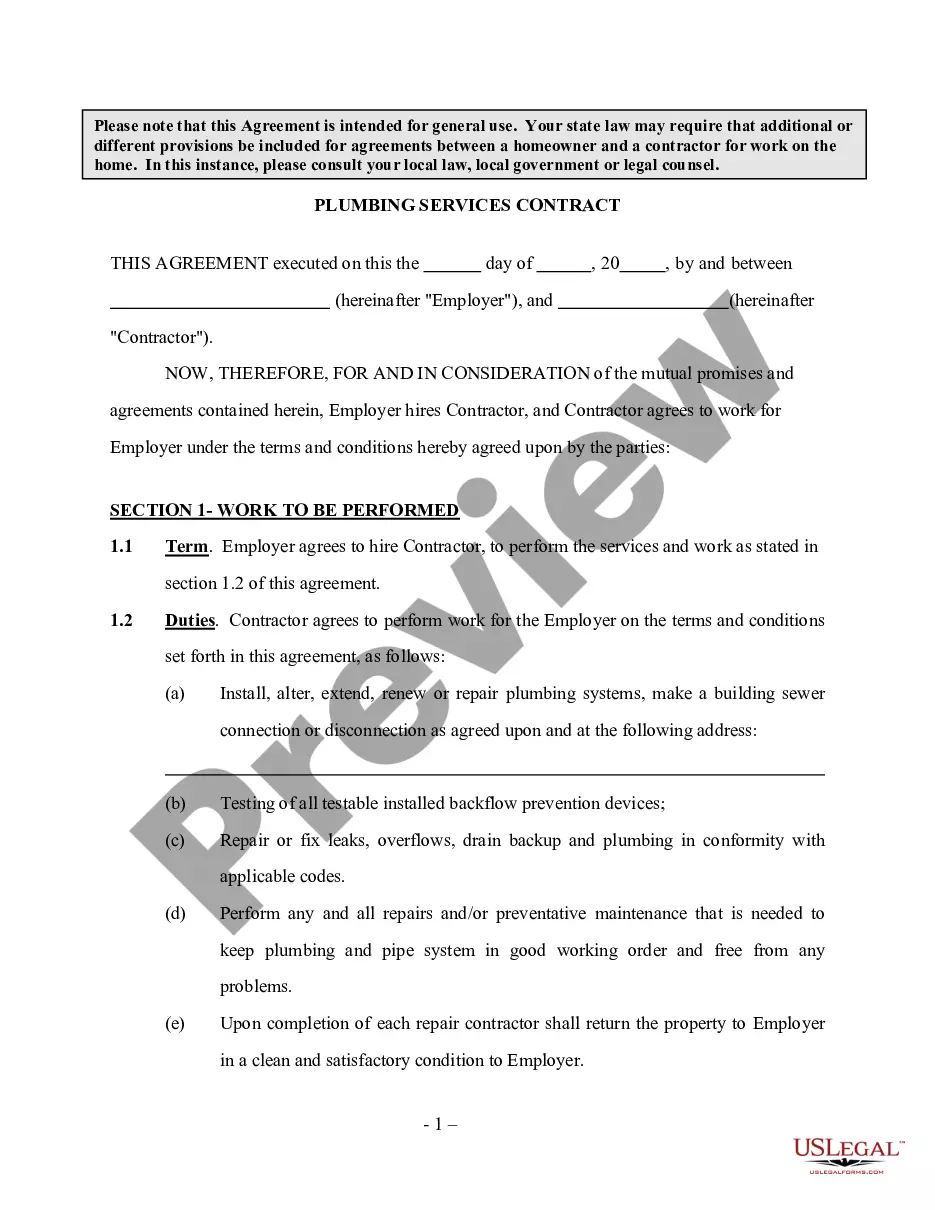
The Plumbing Contract for Contractor is a legal agreement used between plumbing contractors and property owners. This contract facilitates a clear understanding of the scope of work, payment arrangementsâeither cost plus or fixed feeâand critical elements such as change orders, warranties, and insurance details. It is specifically tailored to comply with New Hampshire state laws, distinguishing it from generic plumbing contracts.
Main sections of this form
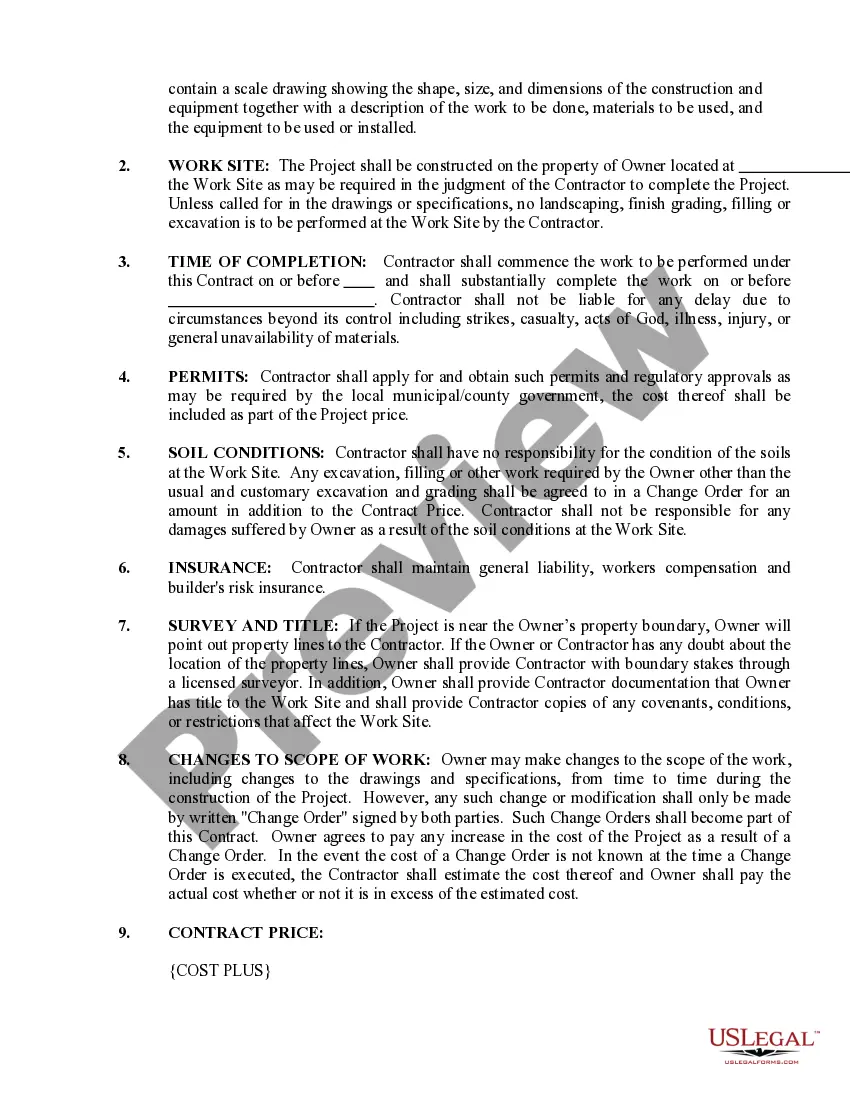
- Permits: The contractor is responsible for applying for and obtaining necessary permits as part of the project price.
- Soil conditions: The contractor is not liable for soil issues at the work site; additional work may require a change order.
- Insurance: The contractor must maintain specific types of insurance, including general liability and workers' compensation.
- Survey and title: The owner must provide documentation regarding property boundaries and title to the work site.
- Changes to scope of work: Any changes must be documented in writing through change orders, detailing costs and approval from both parties.
Situations where this form applies
This Plumbing Contract is necessary when a property owner hires a plumbing contractor for work on a residential or commercial property. It ensures that all parties are aware of their responsibilities and the terms of engagement, particularly when changes occur or additional costs arise during the project execution.
Who needs this form
- Property owners looking to hire a plumbing contractor for specific projects.
- Plumbing contractors seeking a formal agreement to outline project expectations and payment terms.
- Anyone involved in home or property renovations that require plumbing work and expertise.
How to prepare this document
- Identify the parties involved: Enter the legal names and addresses of both the contractor and the property owner.
- Specify the property: Clearly describe the work site, including its address and any pertinent property details.
- Detail the scope of work: Outline the specific plumbing services to be performed.
- Agree on payment terms: Select either a cost plus or fixed fee arrangement and specify the total project price.
- Include necessary signatures: Ensure both the contractor and the property owner sign and date the contract.
Does this form need to be notarized?
This form does not typically require notarization unless specified by local law. Ensure that both parties sign the contract to form a legally binding agreement.
Get your form ready online
Our built-in tools help you complete, sign, share, and store your documents in one place.
Make edits, fill in missing information, and update formatting in US Legal Forms—just like you would in MS Word.
Download a copy, print it, send it by email, or mail it via USPS—whatever works best for your next step.
Sign and collect signatures with our SignNow integration. Send to multiple recipients, set reminders, and more. Go Premium to unlock E-Sign.
If this form requires notarization, complete it online through a secure video call—no need to meet a notary in person or wait for an appointment.
We protect your documents and personal data by following strict security and privacy standards.

Make edits, fill in missing information, and update formatting in US Legal Forms—just like you would in MS Word.

Download a copy, print it, send it by email, or mail it via USPS—whatever works best for your next step.

Sign and collect signatures with our SignNow integration. Send to multiple recipients, set reminders, and more. Go Premium to unlock E-Sign.

If this form requires notarization, complete it online through a secure video call—no need to meet a notary in person or wait for an appointment.

We protect your documents and personal data by following strict security and privacy standards.
Typical mistakes to avoid
- Failing to specify the scope of work clearly, leading to misunderstandings.
- Not documenting changes via change orders after the initial agreement.
- Neglecting to verify property boundaries before commencing work.
- Overlooking the need for permits, which can result in legal issues.
Why use this form online
- Convenience: Download the form instantly from anywhere, at any time.
- Editability: Tailor the document to fit specific project needs without hassle.
- Reliability: Use a form drafted by licensed attorneys, ensuring legal soundness.
Main things to remember
- The Plumbing Contract for Contractor establishes clear terms between property owners and plumbing contractors.
- It outlines key components such as permits, soil conditions, insurance, and change orders.
- This contract is specially designed to meet New Hampshire's legal requirements, ensuring its enforceability.
Looking for another form?
Form popularity
FAQ
General Contractor without Residential Contractor Endorsement - Can undertake commercial work or residential remodel work less than 25% of the value of the structure. No exam is required.
Successful general contractors often have a degree in construction management or civil engineering, along with several years in the construction industry. Regardless of your approach, start planning three to five years in advance to become a general contractor. At a minimum, you need to: Be at least 18 years old.
Florida, Louisiana, Colorado, Connecticut, Kansas, Indiana, Kansas, Missouri, New Hampshire, New York, Ohio, Pennsylvania and Wyoming don't require a specific state license for contractors. Before starting a project, though, check local ordinances to see what licenses you need from your city or county.
New Hampshire does not require general contractors to be licensed with the state. You should however check with your local city or county to ensure there are no additional requirements. Licensure at the state level is required for some specialty trades, including electrical and plumbing.
To become a general contractor, you need at least a high school diploma, but there is an increase in a need for a bachelor's degree or at least an associate degree, plus years of construction industry experience. Regardless of education though, experience in the industry is the most important requirement.
Florida, Louisiana, Colorado, Connecticut, Kansas, Indiana, Kansas, Missouri, New Hampshire, New York, Ohio, Pennsylvania and Wyoming don't require a specific state license for contractors. Before starting a project, though, check local ordinances to see what licenses you need from your city or county.
The most important difference between a plumber and a master plumber is that master plumbers have much more experience and usually are familiar with business management and related subjects, while plumbers, also called "journeyman plumbers," tend to have less experience and focus only on the plumbing aspects of their
Generally speaking, a general contractor is someone who manages a team of subcontractors to help do various types of construction projects in your home. A custom home builder, however, is specialized in building custom homes and is able to complete this specific type of project start to finish on their own.
The state of New Hampshire defines a journeyman plumber as someone who customarily performs the work of installing plumbing and drainage under the direction of a Master Plumber. To become one, you must be at least 18 years old, have completed a four-year apprenticeship (or have a license from another state), have