Nebraska Notice of Suit
Overview of this form
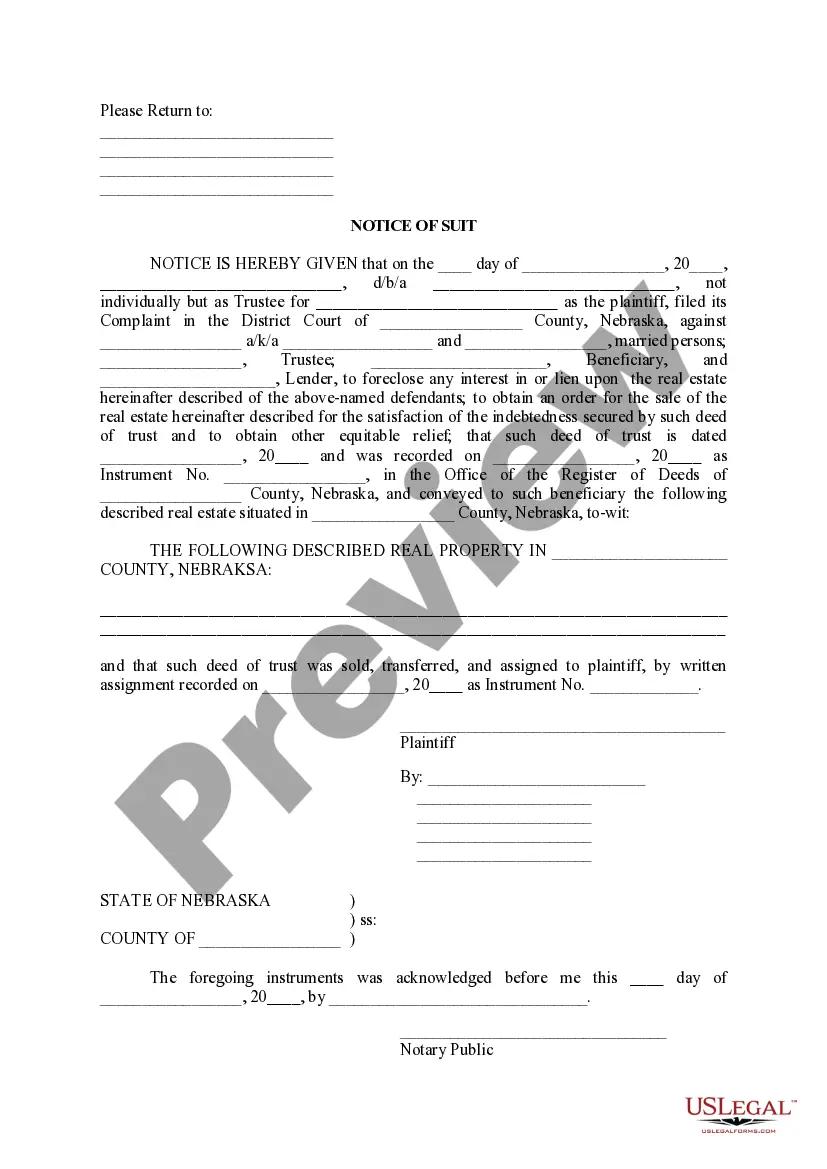
The Notice of Suit is a legal document that formally informs specified individuals about a lawsuit filed against them, particularly concerning the foreclosure of a lien or interest on real estate. This form is essential for notifying defendants of the legal action taken regarding property matters, ensuring compliance with legal procedures, and protecting the rights of the plaintiff. Unlike other legal notices, this form specifically addresses foreclosure actions and details the associated legal claims against real property interests.
Key components of this form
- Notice details specifying the date and court where the lawsuit was filed.
- Identification of the parties involved, including the plaintiff and defendants.
- Information about the property subject to the foreclosure action.
- Details of the deed of trust, including its recording date and instrument number.
- Signature block for the plaintiff and acknowledgment by a notary public.
When to use this document
You should use the Notice of Suit form when you are initiating a foreclosure action against a property due to unpaid debts or default on a loan secured by real estate. This document serves to inform the involved parties about the legal proceedings and their rights, and it must be filed in compliance with jurisdictional rules. It's also necessary when fulfilling requirements to formally begin the legal process of reclaiming property interests.
Intended users of this form
- Trustees or beneficiaries who need to foreclose on a property due to a default on a loan.
- Attorneys representing clients in foreclosure actions.
- Property owners or lenders seeking legal recourse against parties failing to meet financial obligations.
How to complete this form
- Identify the date of filing and the district court where the complaint is submitted.
- List the names of all parties involved, including the plaintiff and defendants.
- Describe the real estate by providing its legal description, including the county and any pertinent details.
- Enter information regarding the deed of trust, including its date, recording details, and instrument number.
- Include the plaintiff's signature and the acknowledgment section for notarization.
Does this document require notarization?
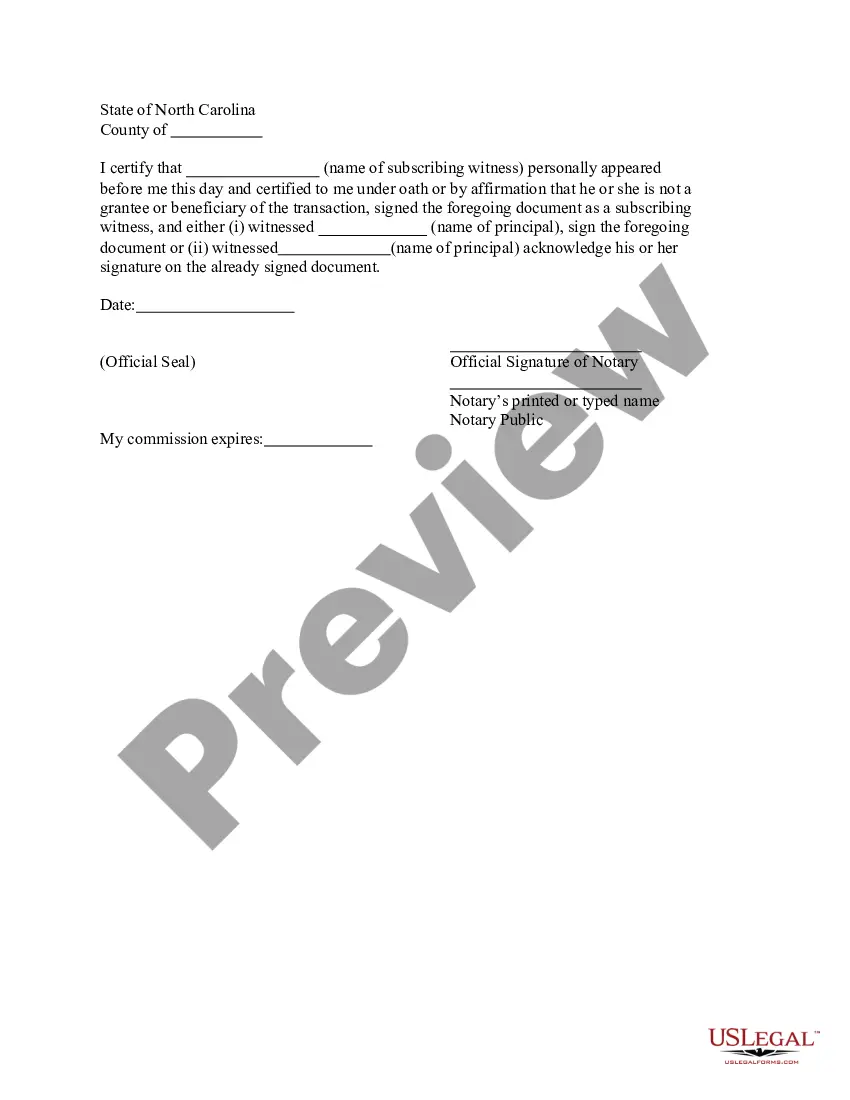
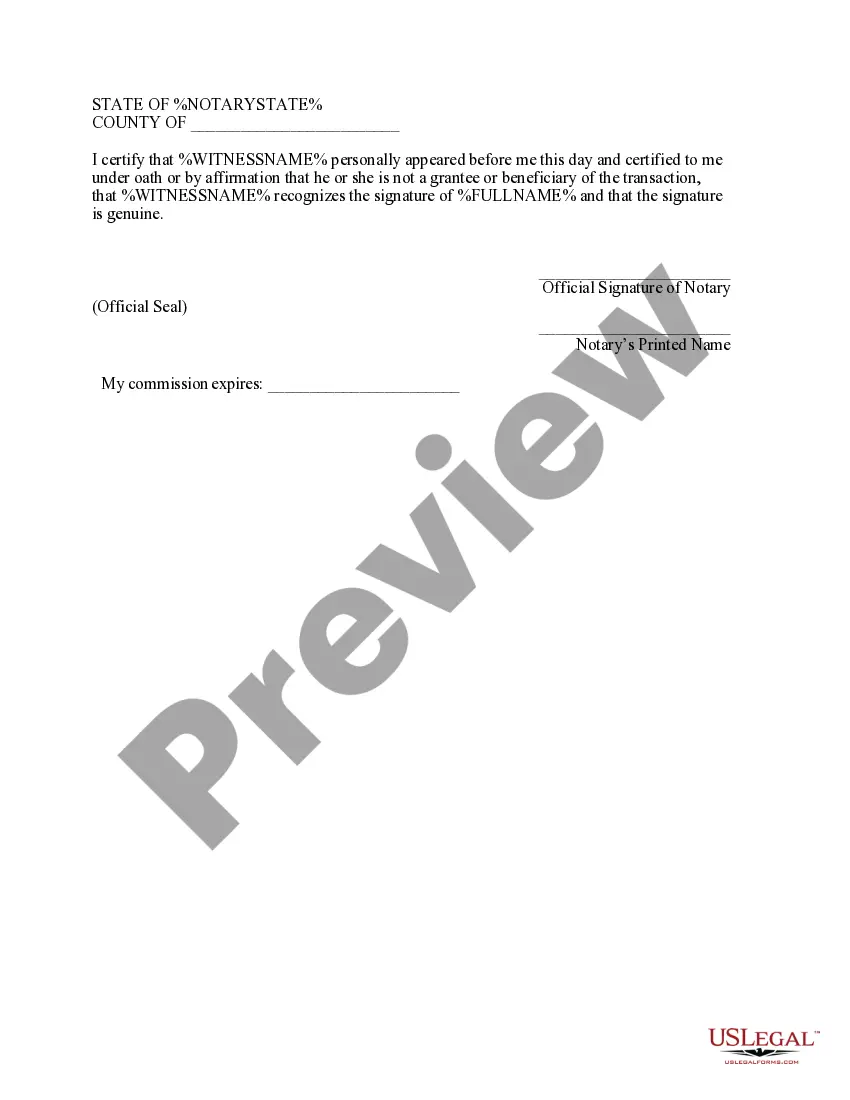
Yes, this form must be notarized to be legally valid. It is essential to have the signature of the plaintiff acknowledged before a notary public to ensure the authenticity of the document. US Legal Forms provides integrated online notarization services that are available 24/7 through secure video calls, ensuring your documents are valid without the need for travel.
Get your form ready online
Our built-in tools help you complete, sign, share, and store your documents in one place.
Make edits, fill in missing information, and update formatting in US Legal Forms—just like you would in MS Word.
Download a copy, print it, send it by email, or mail it via USPS—whatever works best for your next step.
Sign and collect signatures with our SignNow integration. Send to multiple recipients, set reminders, and more. Go Premium to unlock E-Sign.
If this form requires notarization, complete it online through a secure video call—no need to meet a notary in person or wait for an appointment.
We protect your documents and personal data by following strict security and privacy standards.

Make edits, fill in missing information, and update formatting in US Legal Forms—just like you would in MS Word.

Download a copy, print it, send it by email, or mail it via USPS—whatever works best for your next step.

Sign and collect signatures with our SignNow integration. Send to multiple recipients, set reminders, and more. Go Premium to unlock E-Sign.

If this form requires notarization, complete it online through a secure video call—no need to meet a notary in person or wait for an appointment.

We protect your documents and personal data by following strict security and privacy standards.
Typical mistakes to avoid
- Failing to include the legal description of the property.
- Not properly identifying all parties involved in the foreclosure.
- Incorrectly filling out dates or instrument numbers related to the deed of trust.
- Omitting notarization if required by local law.
Advantages of online completion
- Convenience of downloading and completing the form at your convenience.
- Editability allows you to customize the form to fit your specific needs.
- Reliability of using templates drafted by licensed attorneys to ensure accuracy.
Looking for another form?
Form popularity
FAQ
You can file an answer or a general denial. Filing an answer. You can file a motion In certain situations, you can respond to the lawsuit by filing a motion (a request) that usually tells the court that the plaintiff made a mistake in the lawsuit. Talk to a lawyer!
Go to the Nebraska Judicial Branch website for more information on collecting your Small Claims Court judgment: https://supremecourt.nebraska.gov/self-help/small-claims/collecting-your-money-after-judgment-information-judgment-debtor.
Prepare your case in writing before your court date. Come into court in neat, clean clothes; always be respectful to the judge and call him "Your Honor." Be prepared to tell the judge why you should win. The plaintiff will have already told his or her story. USE YOUR RIGHT OF CROSS-EXAMINATION.
Fill out the form. Fill out the beginning of the Response Family Law Act form (PDF, 0.1 MB). Fill out your Reply Statements. Copy your documents. File your forms. Serve your forms. File the affidavit with the court. Go to court.
Try to settle the dispute outside of court. Contact the county clerk in the small claims court district closest to the residence or business of the person you are suing. Fill out a complaint form, otherwise known as a "Statement of Claim" at the clerk's office, and pay the filing fee.
Small claims court provides a prompt and inexpensive way to resolve minor disputes. Legal procedures are held to a minimum and lawyers may not participate. Small claims court is a division of county court and the hearings are conducted by a county judge.Judgments in small claims court may not exceed $3,900.
In New South Wales claims of less than $10,000 are heard in the Small Claims Division of the Local Court. The purpose of the small claims division is to deal with minor legal matters in a way that is more accessible to the ordinary person.
To start a Small Claims Court lawsuit you must go to the County Courthouse and complete a petition form, sign it before the clerk, and pay the filing fee and service costs. You may mail a completed petition form to the clerk if you have signed it before a Nebraska Notary Public.