North Dakota General Partnership Package
About this form package
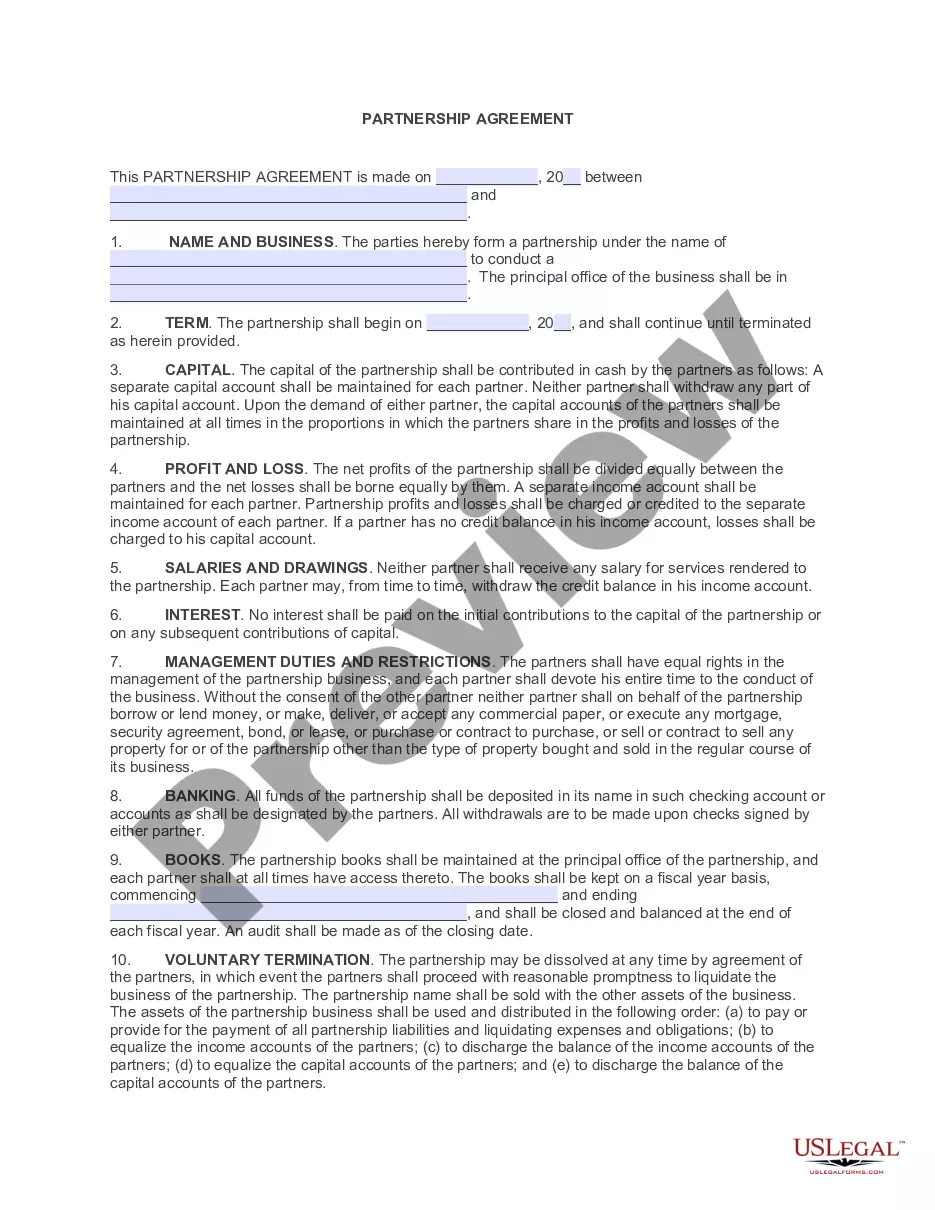
The North Dakota General Partnership Package includes essential legal forms needed for the formation, management, and dissolution of a general partnership. Unlike other legal form packages, these forms are specifically tailored for partnerships in North Dakota, ensuring compliance with state laws. You can modify these forms to fit your specific business situation and requirements.
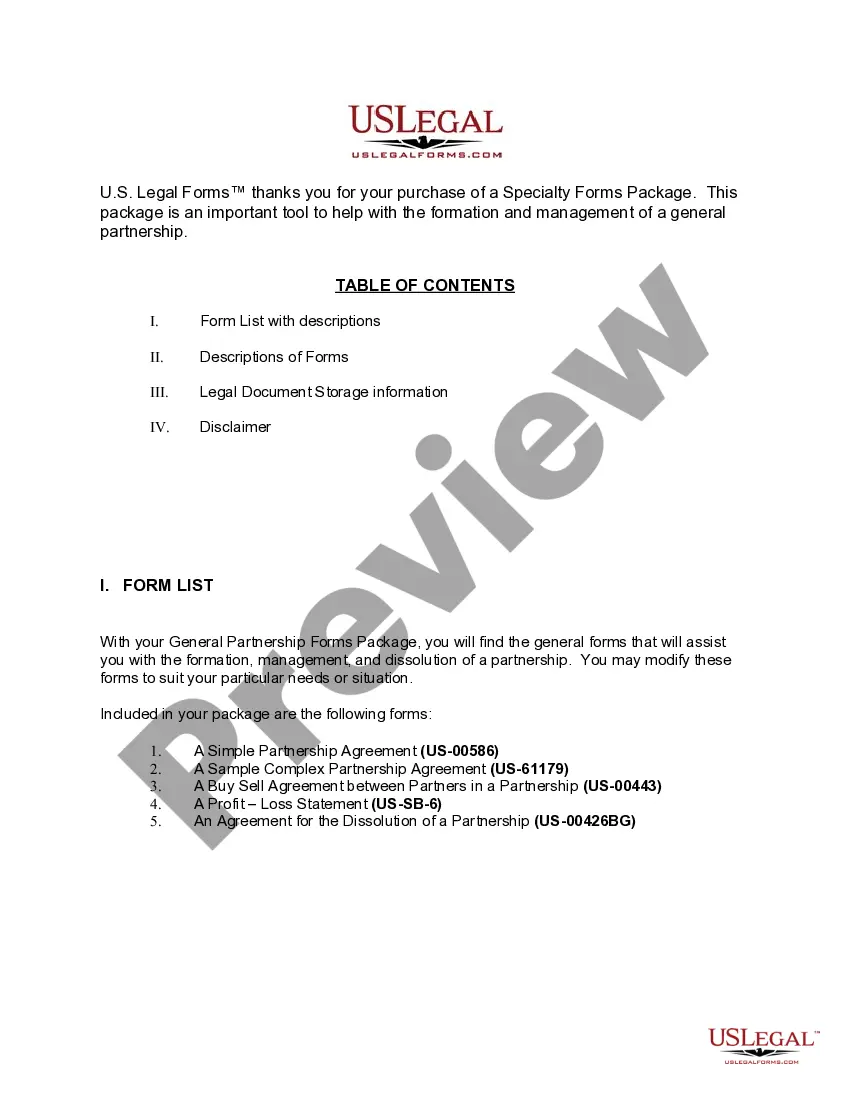
Forms you’ll find in this package
- Trade Name Registration Application
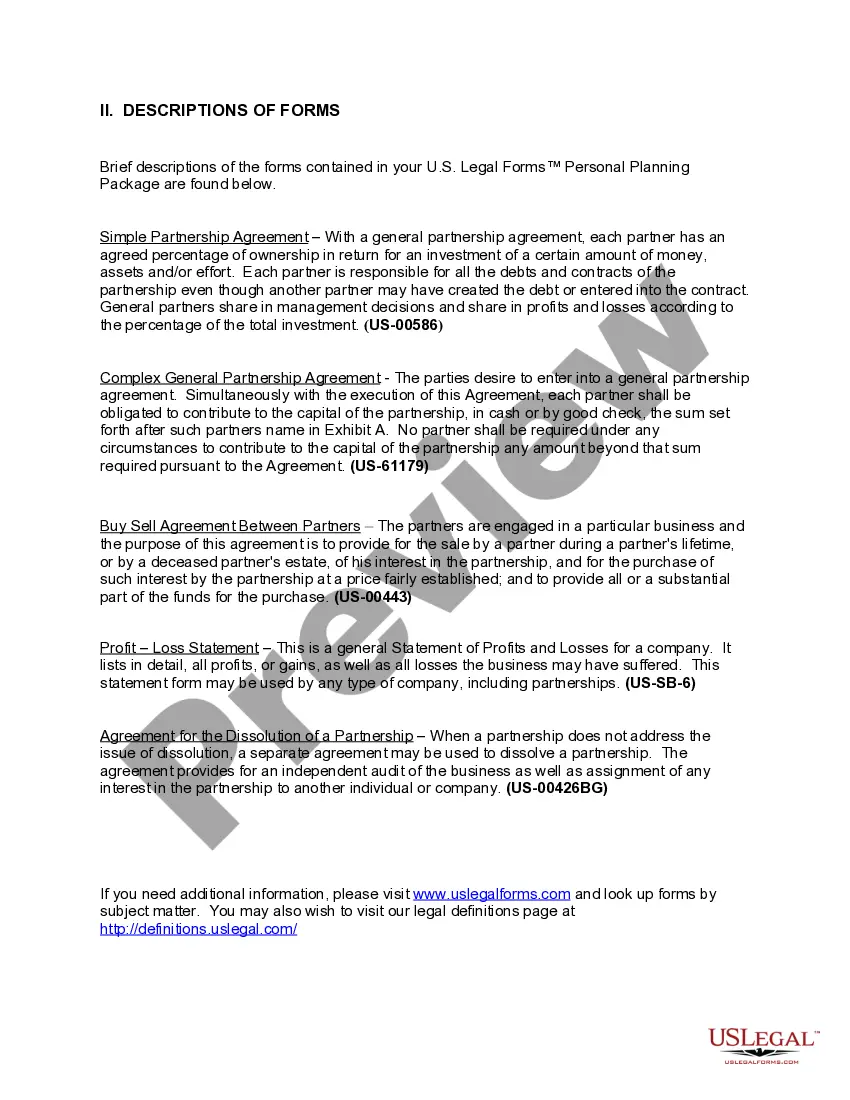
- Agreement for the Dissolution of a Partnership
- Buy Sell Agreement Between Partners of a Partnership
- I.R.S. Form SS-4 (to obtain your federal identification number)
- Sample Business Plan Template
- Simple Partnership Agreement
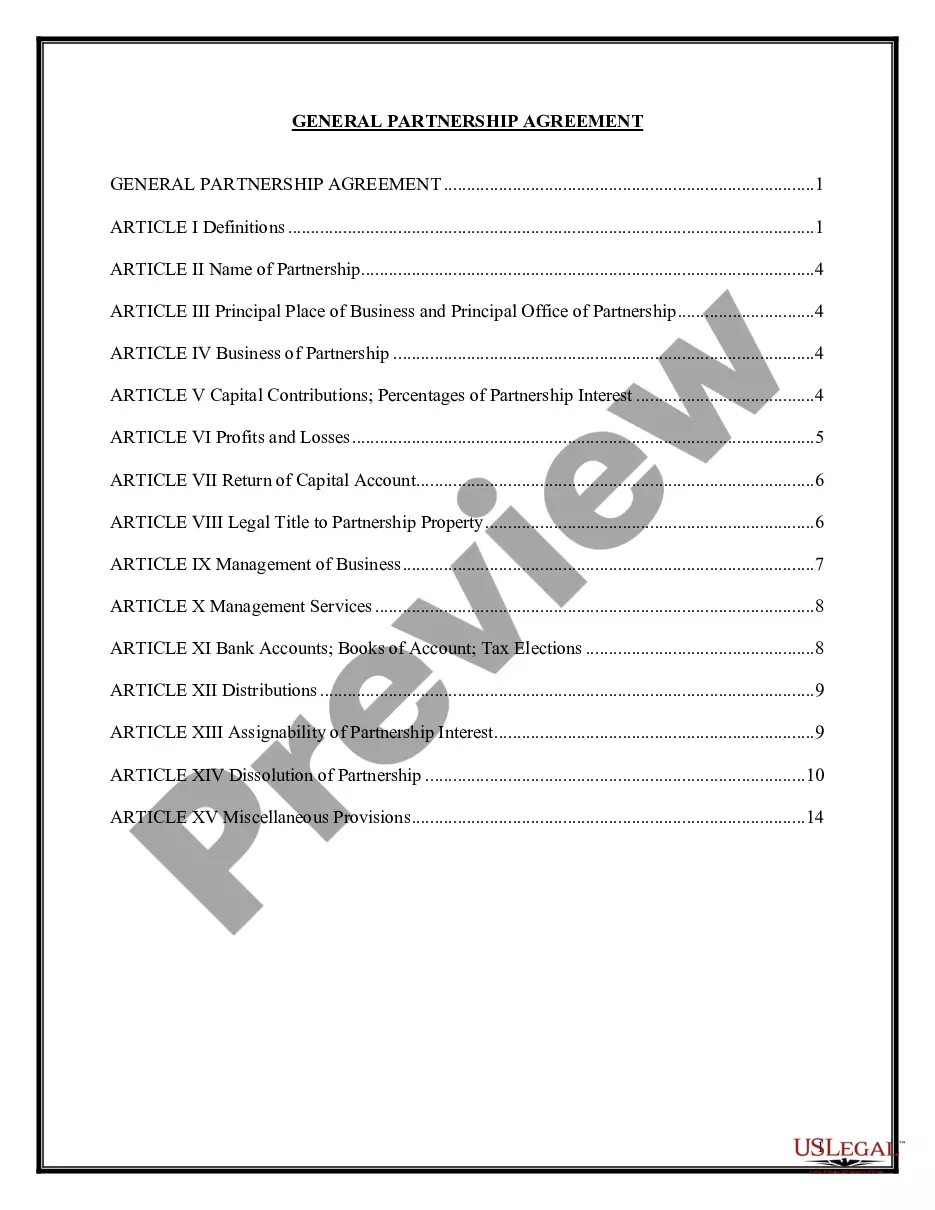
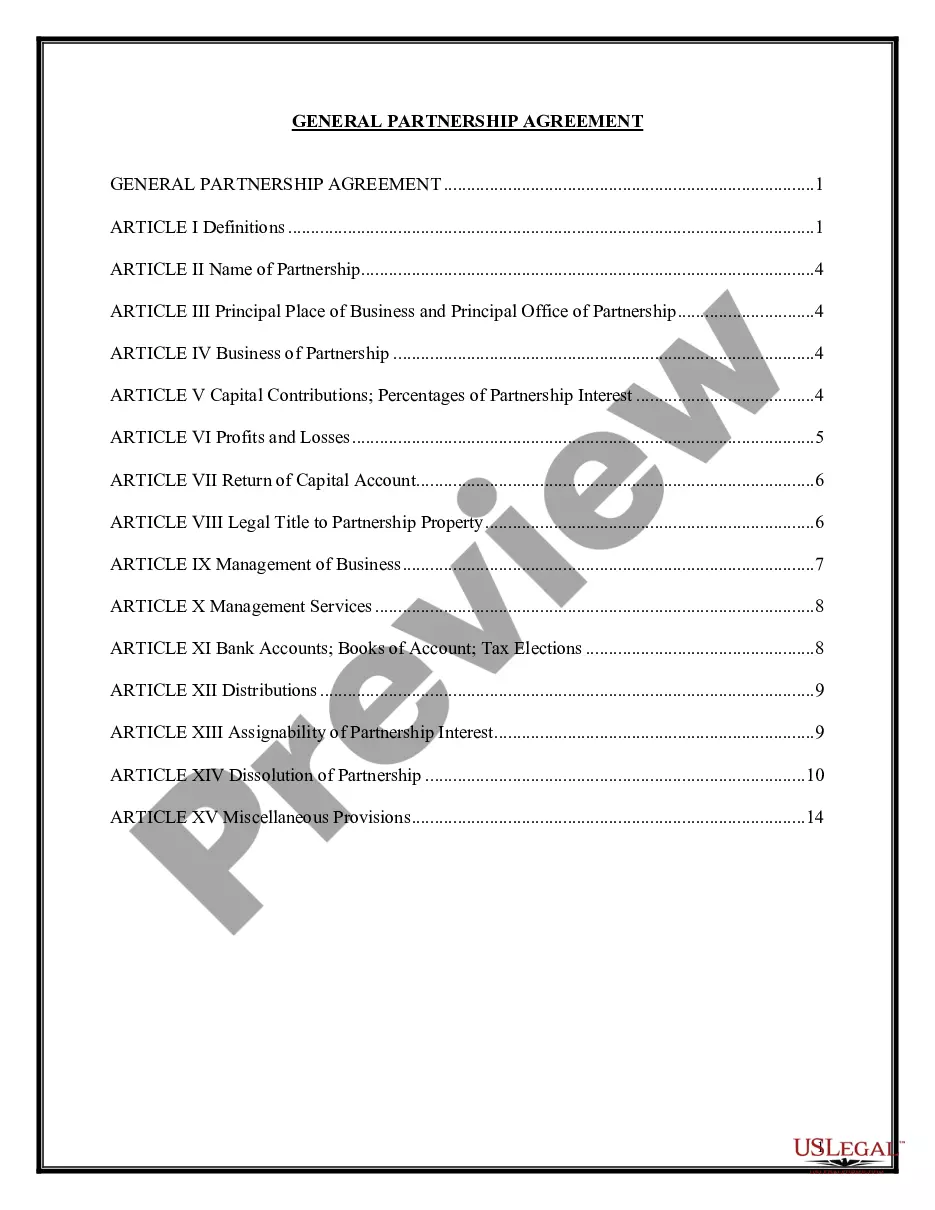
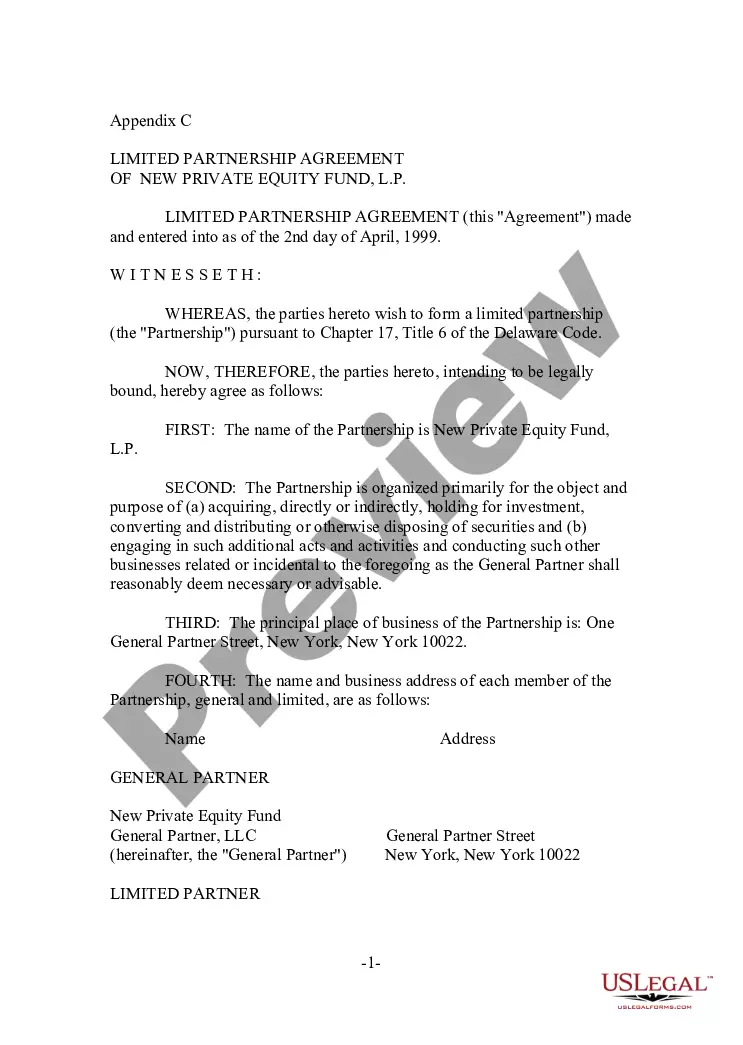
- General Partnership Agreement - Complex
- Checklist for Starting Up a New Business
- Profit and Loss Statement
- Business Startup Costs
- Employment or Work Application - General
- Stand Alone Confidentiality and Noncompetition Agreement with Employee
- Self-Employed Independent Contractor Employment Agreement - General
When this form package is needed
This package is particularly useful in various situations, such as:
- Starting a new general partnership and needing to establish clear agreements among partners.
- Managing a partnership by keeping well-documented agreements on profit distribution and responsibilities.
- Dissolving an existing partnership in a legally sound manner, ensuring all parties' interests are addressed.
Who this form package is for
- Business partners looking to formalize their partnership agreement.
- Individuals or groups forming a new partnership in North Dakota.
- Partnerships needing to manage internal operations more effectively.
- Partnerships that are planning to dissolve and require a formal dissolution agreement.
Instructions for completing these forms
- Review all included forms to understand your partnership's needs.
- Identify and list all partners involved in the partnership.
- Enter the relevant details such as partnership name, contributions, and profit-sharing terms.
- Have all partners review and sign the necessary agreements.
- Store completed documents in a secure location for future reference.
Notarization requirements for forms in this package
Forms in this package typically do not require notarization unless required by local law. However, it is advisable to check with a legal professional to ensure compliance with specific requirements pertaining to your partnership.
Get your form ready online
Our built-in tools help you complete, sign, share, and store your documents in one place.
Make edits, fill in missing information, and update formatting in US Legal Forms—just like you would in MS Word.
Download a copy, print it, send it by email, or mail it via USPS—whatever works best for your next step.
Sign and collect signatures with our SignNow integration. Send to multiple recipients, set reminders, and more. Go Premium to unlock E-Sign.
If this form requires notarization, complete it online through a secure video call—no need to meet a notary in person or wait for an appointment.
We protect your documents and personal data by following strict security and privacy standards.

Make edits, fill in missing information, and update formatting in US Legal Forms—just like you would in MS Word.

Download a copy, print it, send it by email, or mail it via USPS—whatever works best for your next step.

Sign and collect signatures with our SignNow integration. Send to multiple recipients, set reminders, and more. Go Premium to unlock E-Sign.

If this form requires notarization, complete it online through a secure video call—no need to meet a notary in person or wait for an appointment.

We protect your documents and personal data by following strict security and privacy standards.
Typical mistakes to avoid
- Failing to clearly define each partner's contributions and responsibilities.
- Not including a procedure for resolving disputes among partners.
- Neglecting to address the process for dissolution in the partnership agreement.
Benefits of completing this package online
- Convenience of immediate download without waiting for physical copies.
- Editable forms allow customization to fit specific partnership needs.
- Reliability, as the forms are drafted by licensed attorneys to ensure they meet legal standards.
Looking for another form?
Form popularity
FAQ
No Separate Business Entity from Partners. Partners' Personal Assets Unprotected. Partners Liable for Each Others' Actions. Partnership Terminated Upon Death or Withdrawal of One of the Partners.
Unlike other states, court orders for marriage between underage persons are not given.Common law marriage is not recognized in North Dakota. This is when a couple lives together as man and wife without the benefit of a legal marriage. Cousins are not allowed to marry in North Dakota.
A North Dakota partnership (domestic partnership) is composed of two or more partners. A foreign partnership is a partnership created under laws other than the laws of North Dakota. More information regarding the types of partnerships is available through the links below: General Partnership.
Under the California Insurance Equity Act, carriers can only require documentation of domestic partnership if they also require proof of marriage.Employers may allow employees to add their domestic partner to their coverage outside of the open enrollment period when they enter into a new domestic partnership mid-year.
A partnership is created by default, unless the business is specifically formed as some other type of business entity, such as a corporation, a limited liability company, or a limited partnership. A general partnership is one in which all of the partners have the ability to actively manage or control the business.
To determine whether a partnership exists, the three essential elements are 1) sharing of profit or losses, 2) joint ownership of the business, and 3) an equal right to be involved in the management of the business. Joint ownership of property does not in and of itself create a partnership, as intentions are key.
There are three essential elements to a general partnership: a sharing of profits and losses, a joint ownership of the business, and. an equal right in the management of the business.
Five states allow for civil unions: Colorado, Hawaii, Illinois, Vermont and New Jersey. California, District of Columbia, Maine, Nevada, Oregon, Washington and Wisconsin allow for domestic partnerships while Hawaii allows for a similar relationship known as reciprocal beneficiaries.
Common ownership of a car or other property (joint deed or mortgage agreement) Driver's licenses listing a common address. Proof of joint bank accounts or credit card accounts and loans.