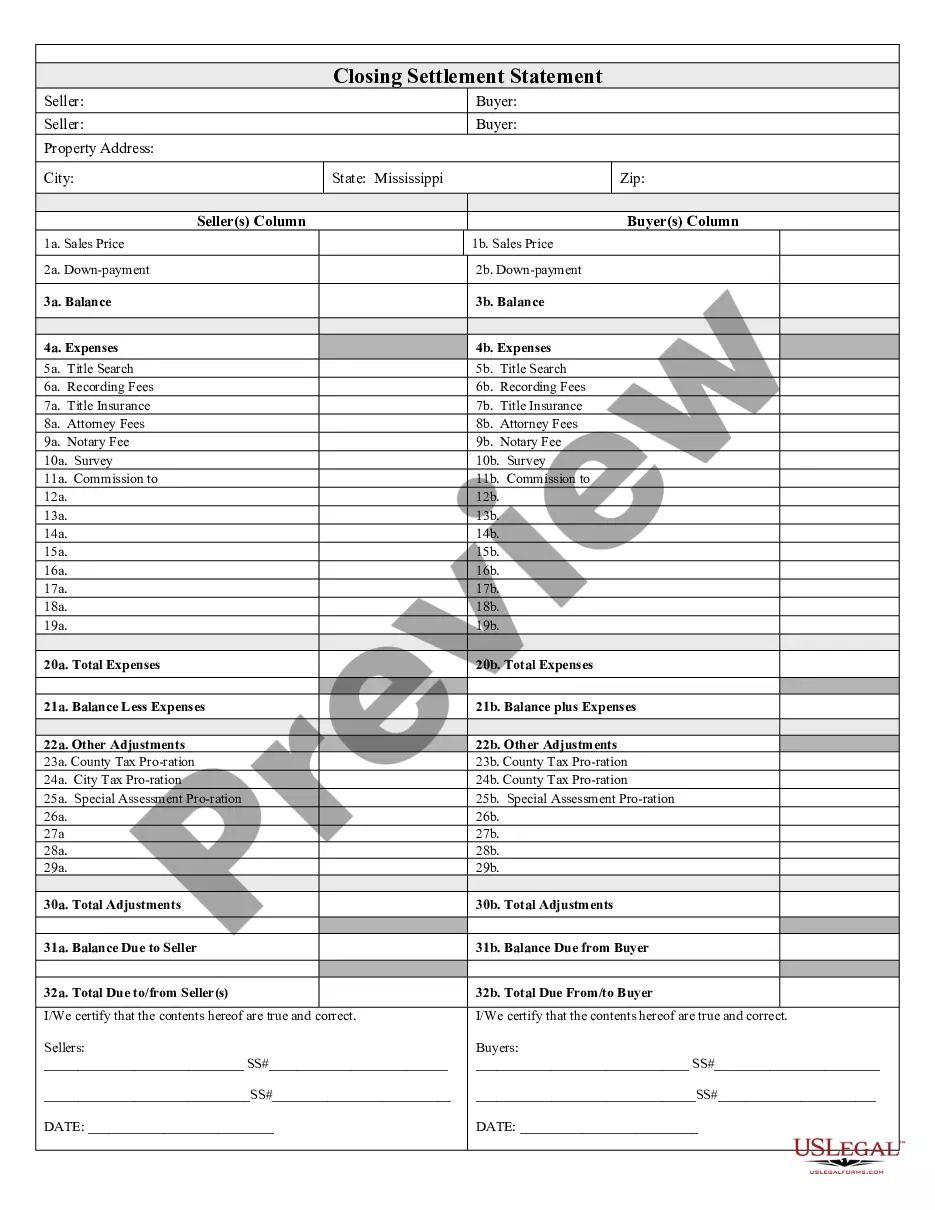
North Dakota Amendment to Living Trust

About this form
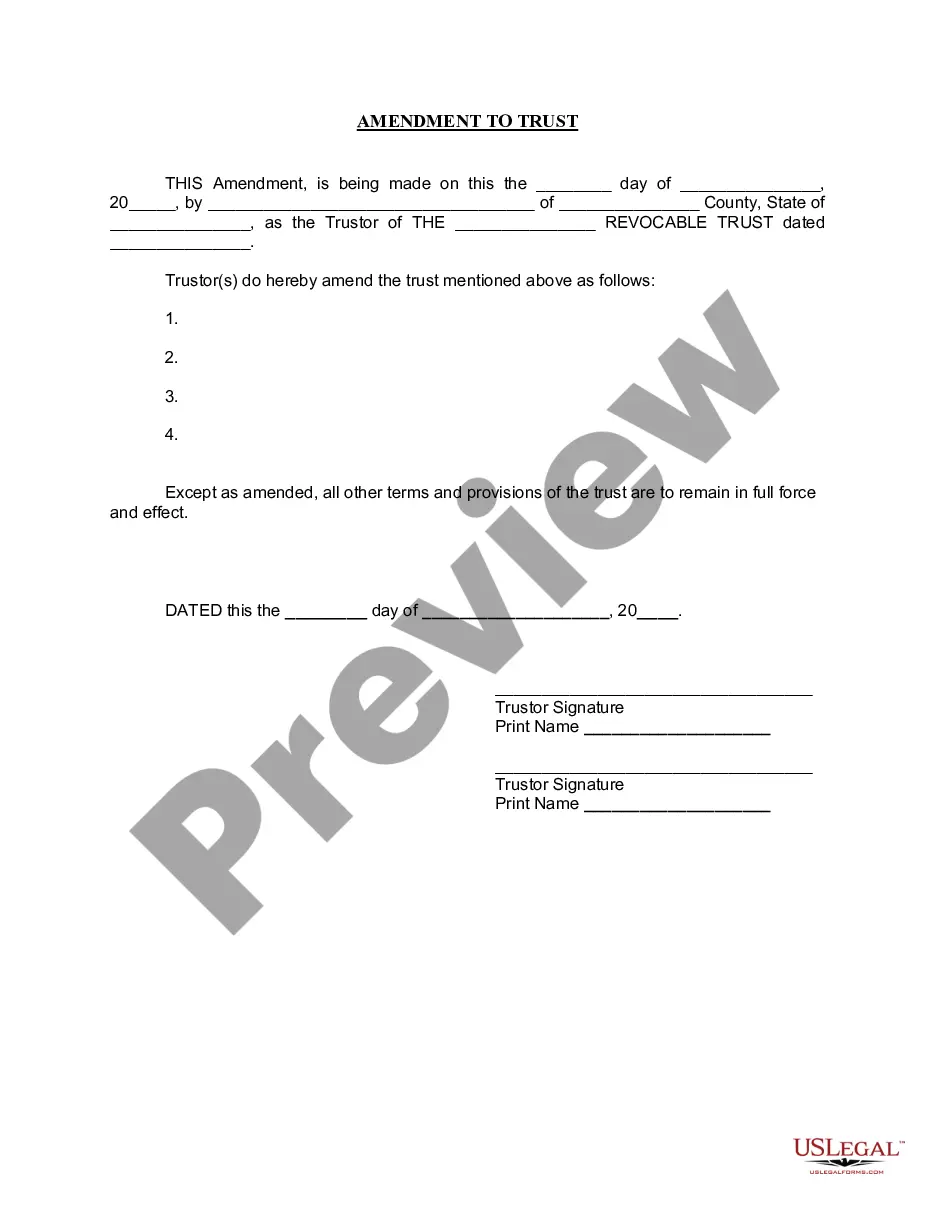
The Amendment to Living Trust is a legal document used to modify the terms of an existing living trust. A living trust is created during a person's lifetime to manage their assets and facilitate estate planning. This amendment allows the Trustor to update certain provisions of the trust while keeping the overall structure intact. Importantly, aside from the amended provisions, all other terms of the trust remain effective.
Key parts of this document
- Trustor's name and details, including date of amendment.
- A clear indication of the living trust being amended.
- Specific amendments to the trust's provisions.
- Signatures of the Trustor(s) with printed names.
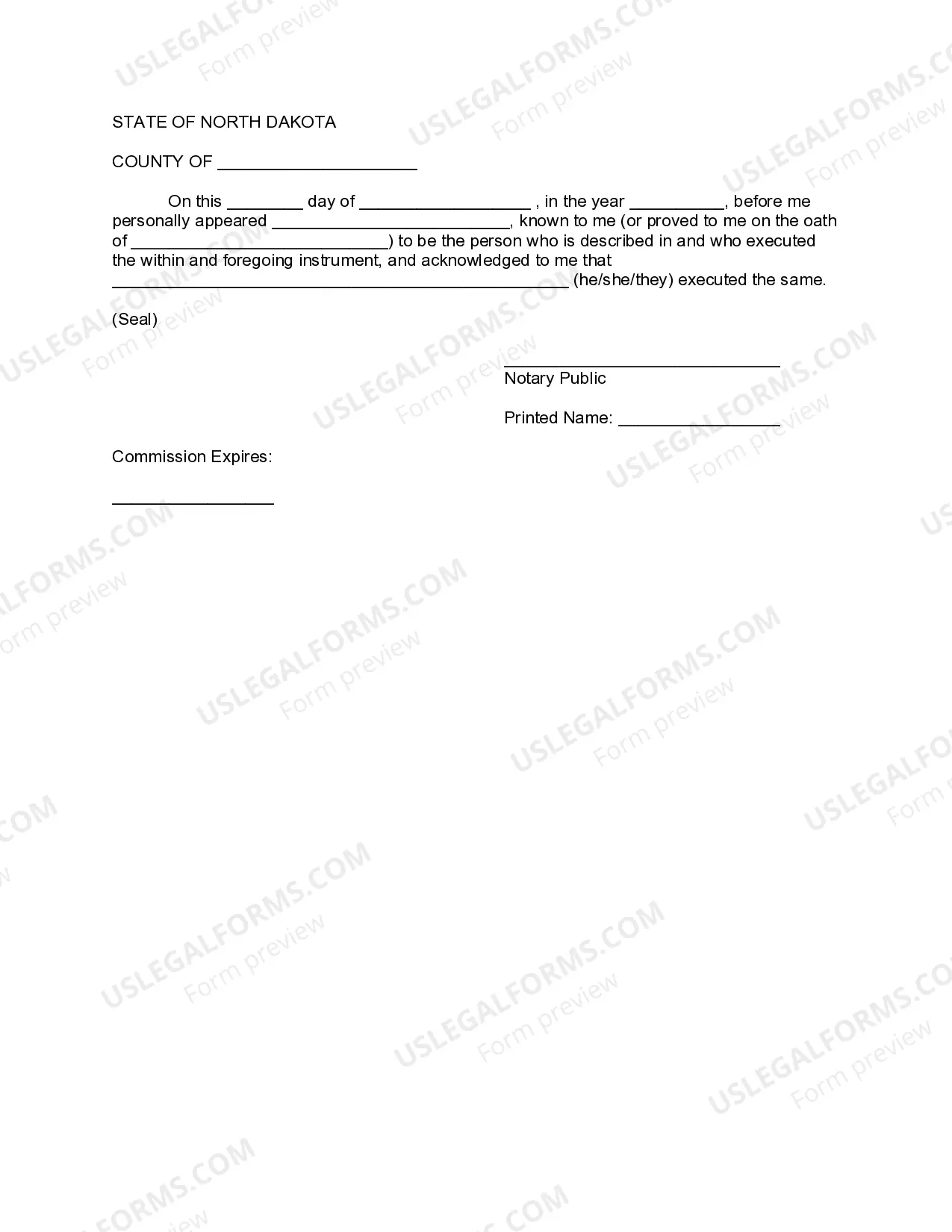
- Notary acknowledgment section for legal validation.
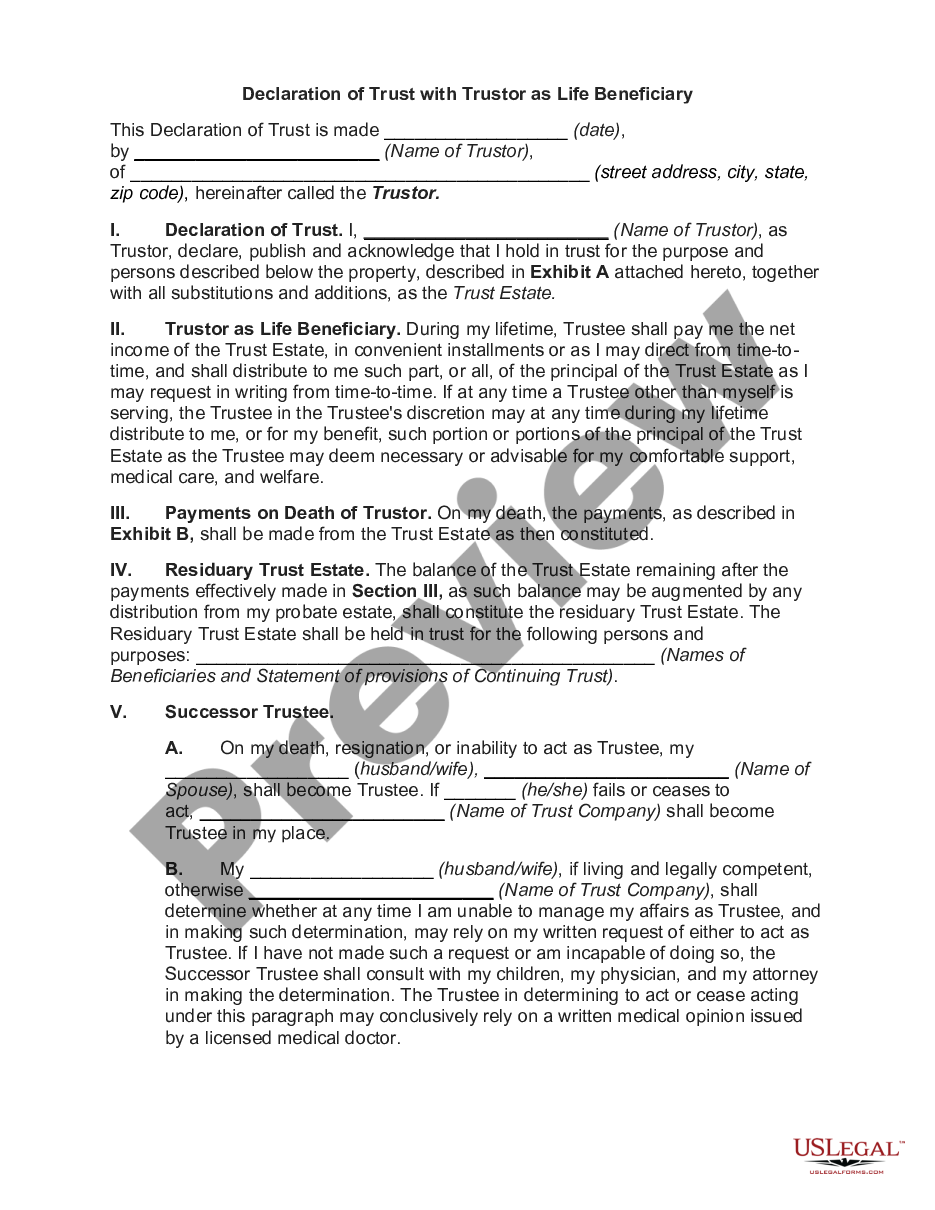

Common use cases
This form is necessary when the Trustor wishes to change specific terms or beneficiaries of their living trust without creating an entirely new document. Common situations include adding or removing beneficiaries, changing asset allocations, or updating the terms of trust management due to life changes such as marriage, divorce, or the birth of a child.
Who needs this form
- Individuals who have established a living trust and need to make amendments.
- Those looking to update their estate plan in response to changing life circumstances.
- Trustors who want to modify the structure or provisions of their existing trust.
How to complete this form
- Enter the date of the amendment at the top of the form.
- Provide the Trustor's name and county of residence.
- Identify the living trust being amended, including its name and date of establishment.
- Clearly state the specific amendments being made to the trust.
- Have all Trustors sign the form, including printed names beneath each signature.
- Complete the notary section to verify the signatures, ensuring it is signed in the presence of a notary public.
Is notarization required?
To make this form legally binding, it must be notarized. Our online notarization service, powered by Notarize, lets you verify and sign documents remotely through an encrypted video session.
Get your form ready online
Our built-in tools help you complete, sign, share, and store your documents in one place.
Make edits, fill in missing information, and update formatting in US Legal Forms—just like you would in MS Word.
Download a copy, print it, send it by email, or mail it via USPS—whatever works best for your next step.
Sign and collect signatures with our SignNow integration. Send to multiple recipients, set reminders, and more. Go Premium to unlock E-Sign.
If this form requires notarization, complete it online through a secure video call—no need to meet a notary in person or wait for an appointment.
We protect your documents and personal data by following strict security and privacy standards.

Make edits, fill in missing information, and update formatting in US Legal Forms—just like you would in MS Word.

Download a copy, print it, send it by email, or mail it via USPS—whatever works best for your next step.

Sign and collect signatures with our SignNow integration. Send to multiple recipients, set reminders, and more. Go Premium to unlock E-Sign.

If this form requires notarization, complete it online through a secure video call—no need to meet a notary in person or wait for an appointment.

We protect your documents and personal data by following strict security and privacy standards.
Common mistakes to avoid
- Failing to specify all amendments clearly within the form.
- Not having the form signed in front of a notary public.
- Leaving any required fields blank, such as signatures or dates.
- Using incorrect terminology when referencing the living trust.
Advantages of online completion
- Convenient access and immediate download of the form.
- Editable templates ensure you can customize the form to suit your needs.
- Reliability and accuracy ensured by licensed legal professionals who draft the forms.
Key takeaways
- The Amendment to Living Trust allows you to modify an existing trust without starting from scratch.
- Proper notarization is essential for the form to be legally recognized.
- Consult with a legal professional if you're unsure about specific state requirements before completing the form.
Looking for another form?

Form popularity
FAQ
You can change your living trust, usually without incurring lawyer bills.Because you and your spouse made the trust together, you should both sign the amendment, and when you sign it, get your signatures notarized, just like the original. Another way to go is to create a "restatement" of your trust.
Find living trust forms online. Be as clear as possible. Include specific language. Have the amendment notarized. Keep your trust document and amendment together in a safe place. Alternatively, do what is called a restatement of the trust. Revoke your trust.
Of course you can, however, "Codicil" is an amendment to a will. Amending a trust called "Amendment" to the trust, even if it is just amending a trustee's name. It needs to be notarized and some specific language to be sufficient.
An amendment to a trust is not required to be notarized or witnessed unless the terms of the original trust require it.
Locate the original trust. The grantor must locate the original trust documents and identify the specific provisions that require amendment. Prepare an amendment form. Get the amendment form notarized. Attach amendment form to original trust.
The process of funding your living trust by transferring your assets to the trustee is an important part of what helps your loved ones avoid probate court in the event of your death or incapacity. Qualified retirement accounts such as 401(k)s, 403(b)s, IRAs, and annuities, should not be put in a living trust.
List Your Assets and Decide Which You'll Include in the Trust. Gather the Paperwork. Decide Whether You Will Be the Sole Grantor. Choose Beneficiaries. Choose a Successor Trustee. Choose Someone to Manage Property for Minor Children. Prepare the Trust Document. Sign and Notarize.
Just about any writing will suffice to make a valid Trust amendment. Having the writing typed is not legally required. That's really the point of Trust amendments, to allow a Settlor to express his or her intent as easily as possible. As long as the Trust terms are followed, any writing will do.