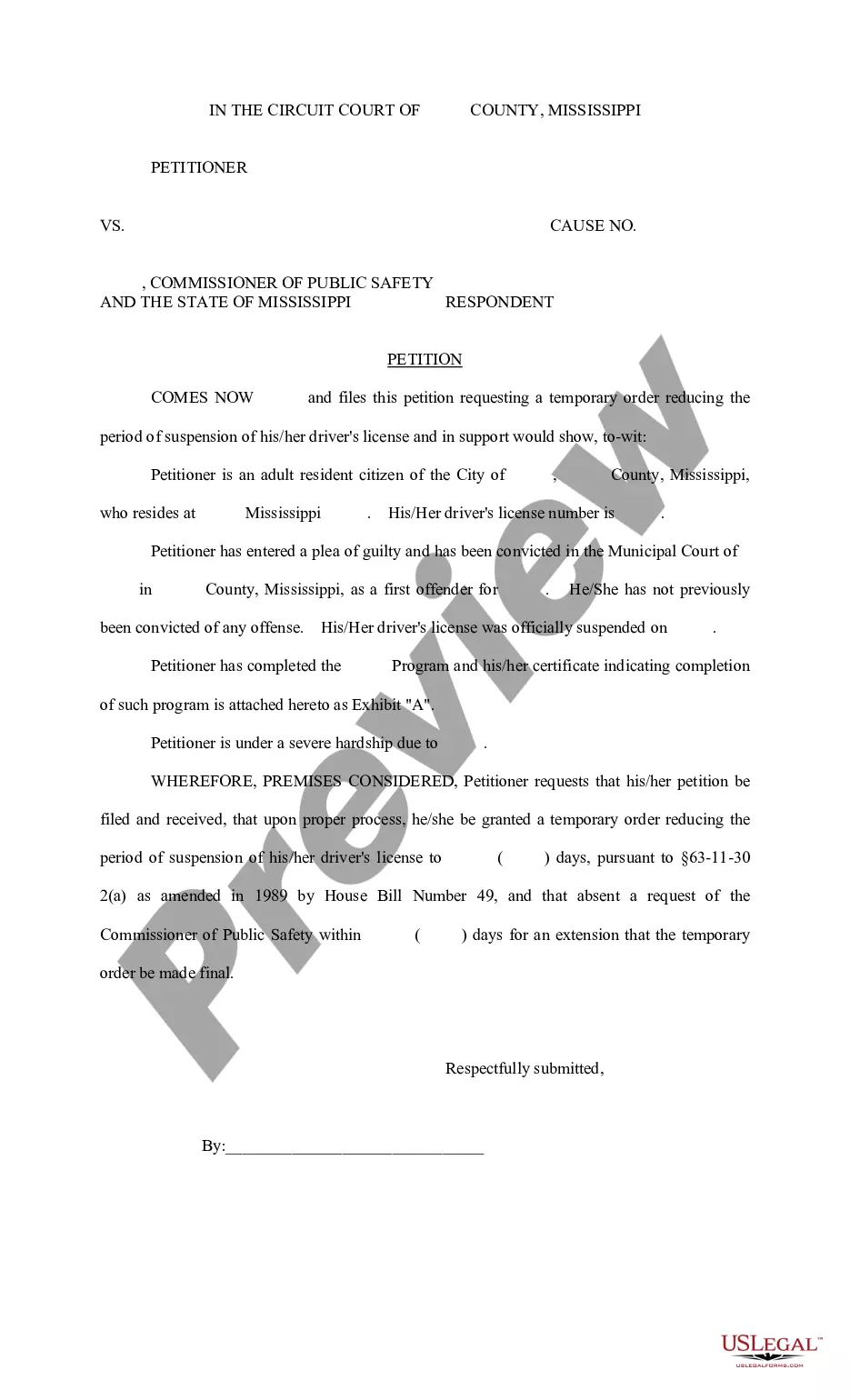
North Dakota Living Trust for Individual Who is Single, Divorced or Widow or Widower with No Children
What this document covers
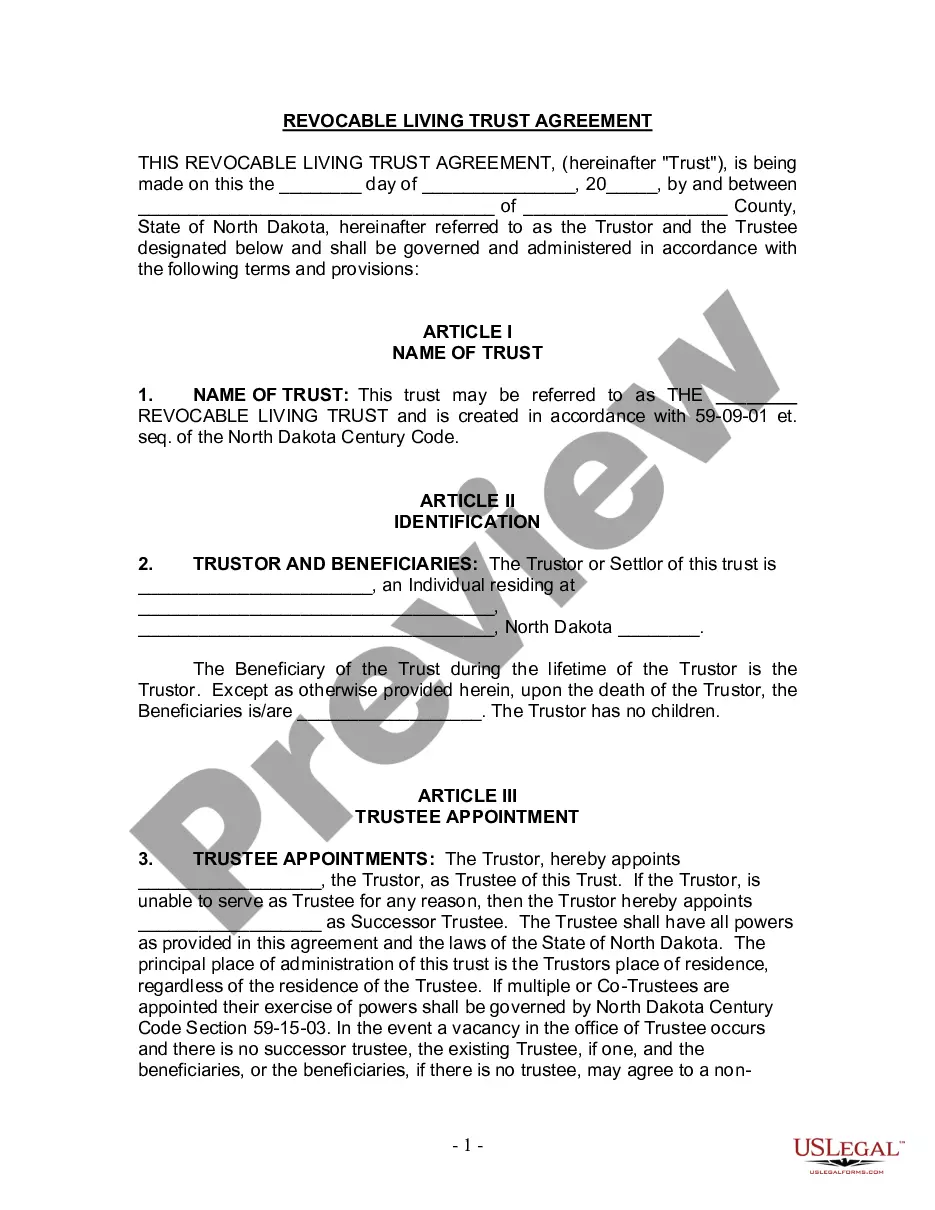
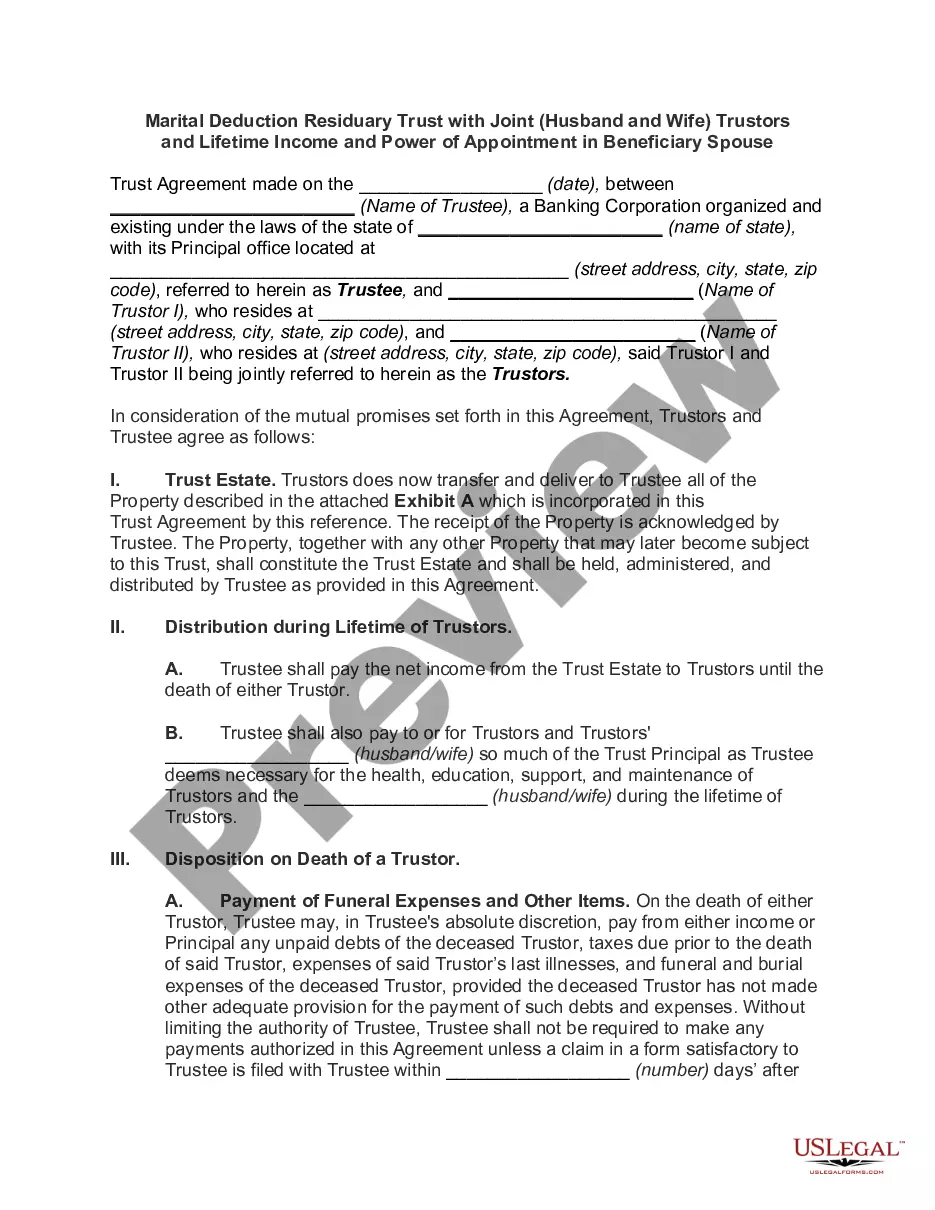
This Living Trust for Individual Who is Single, Divorced or Widow or Widower with No Children is a legal document designed for individuals who are single, divorced, or widowed and do not have children. Unlike a Last Will and Testament, a living trust allows you to manage your assets during your lifetime while ensuring that they are distributed according to your wishes after your death, without going through the probate process.
Key parts of this document
- Name of Trust: Designates the specific name of the trust.
- Identification of Trustor: Identifies the creator of the trust and their residence.
- Trustee Appointment: Names the trustee responsible for managing the trust.
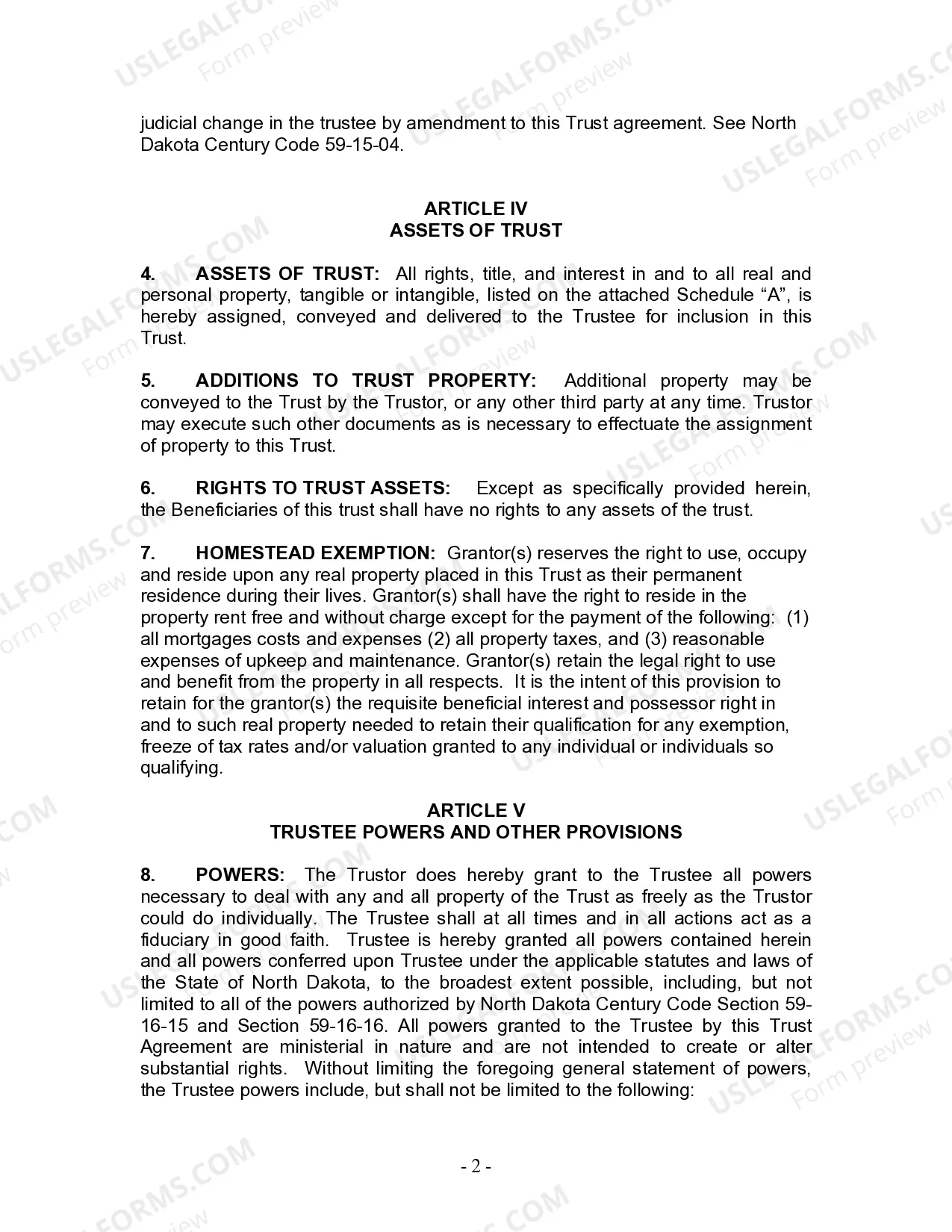
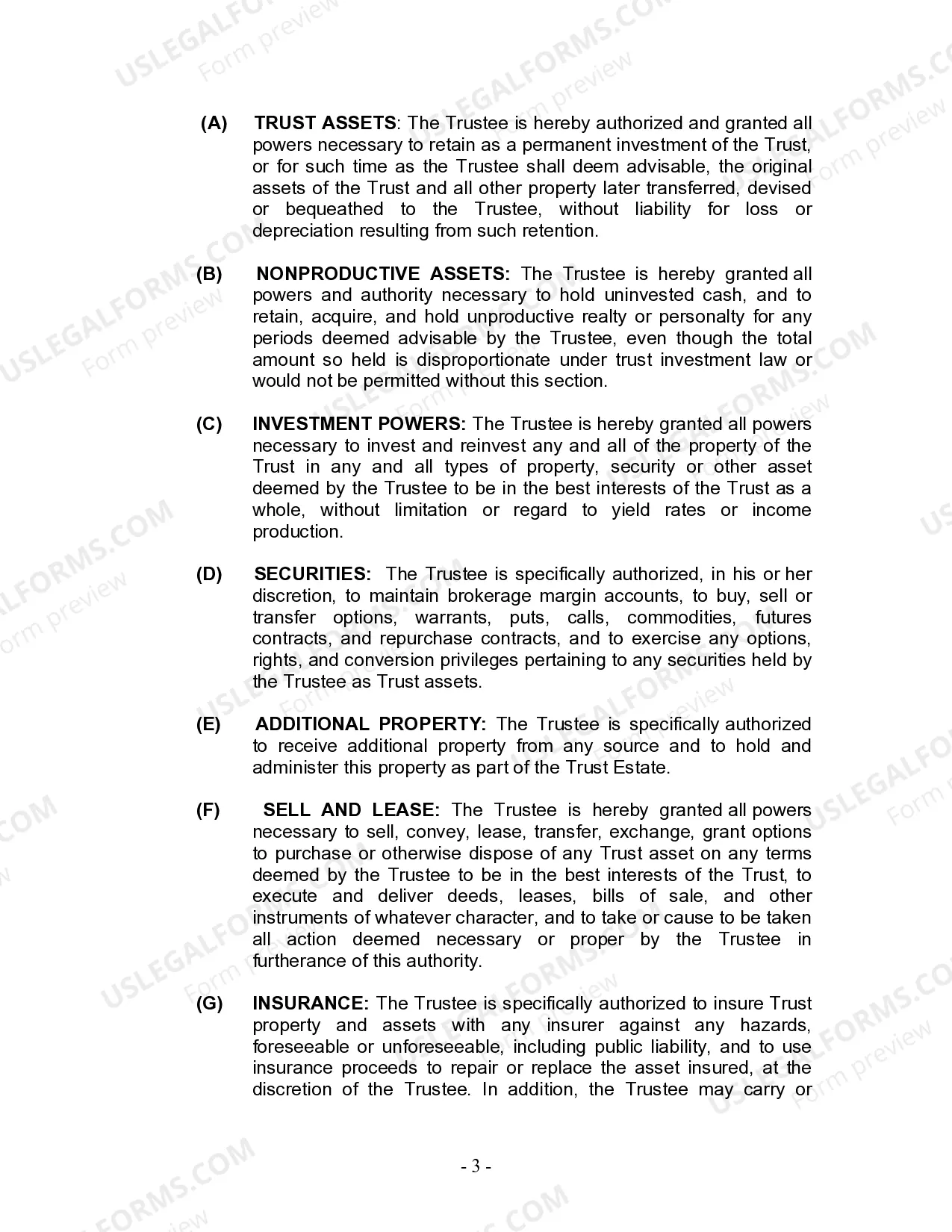
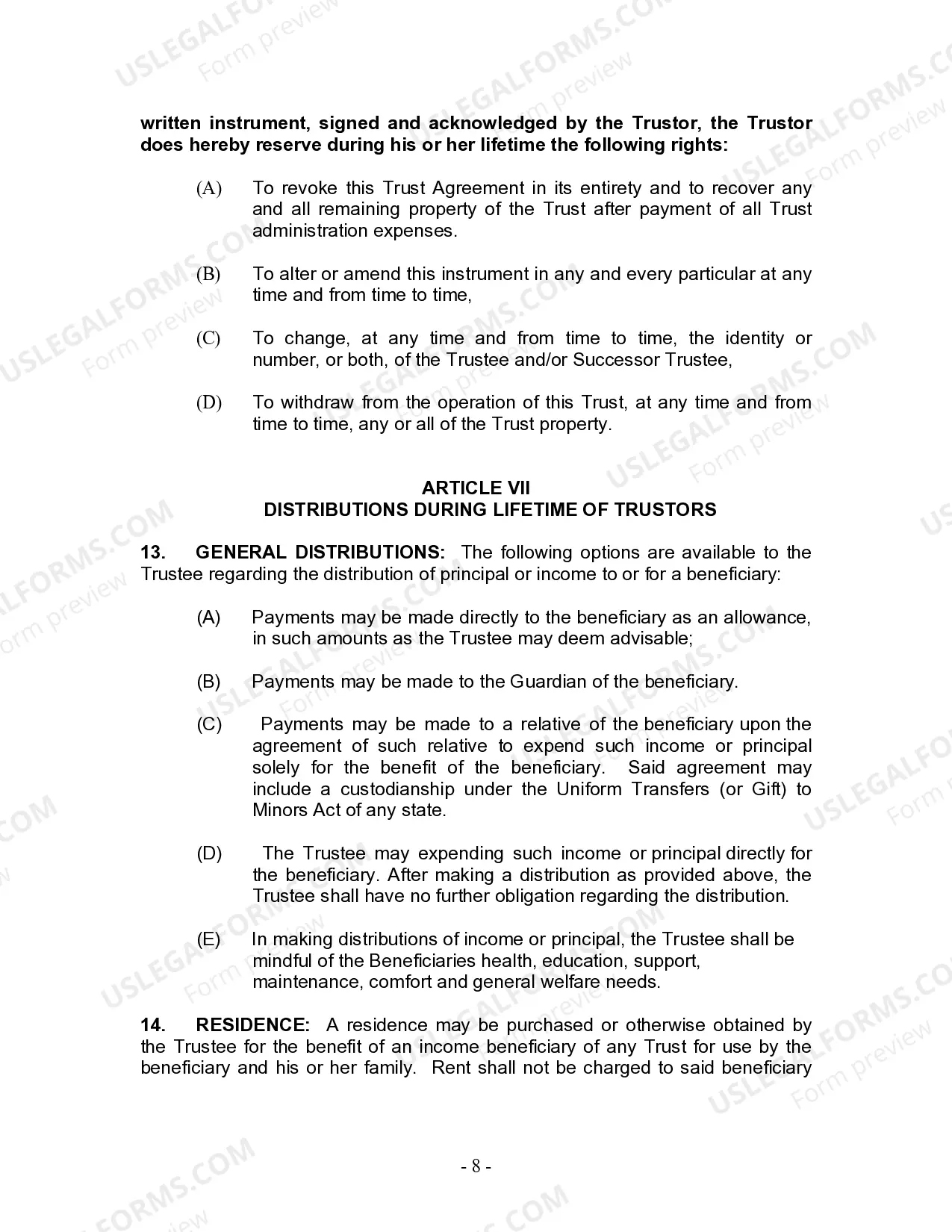
- Assets of the Trust: Outlines the property included in the trust and how it can be managed or transferred.
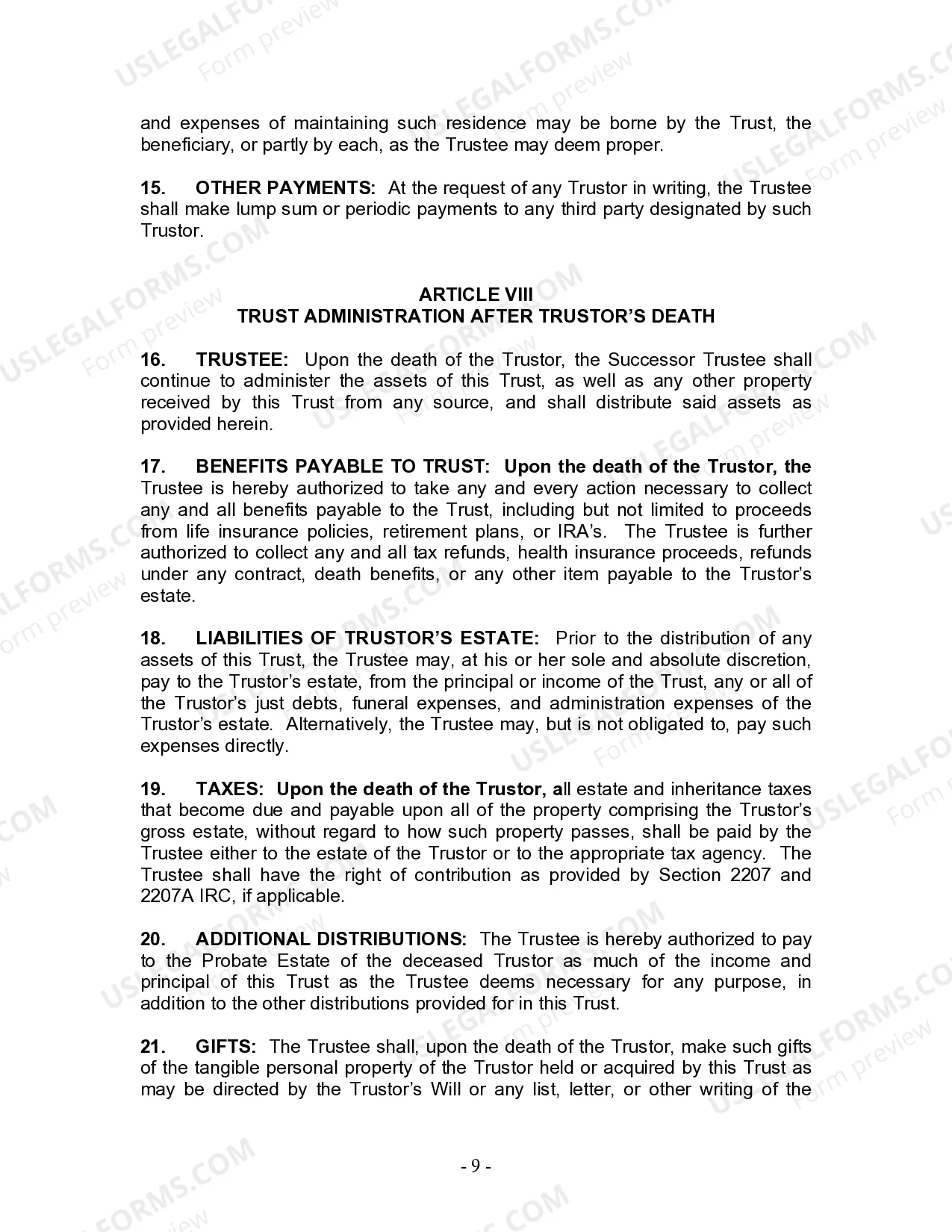
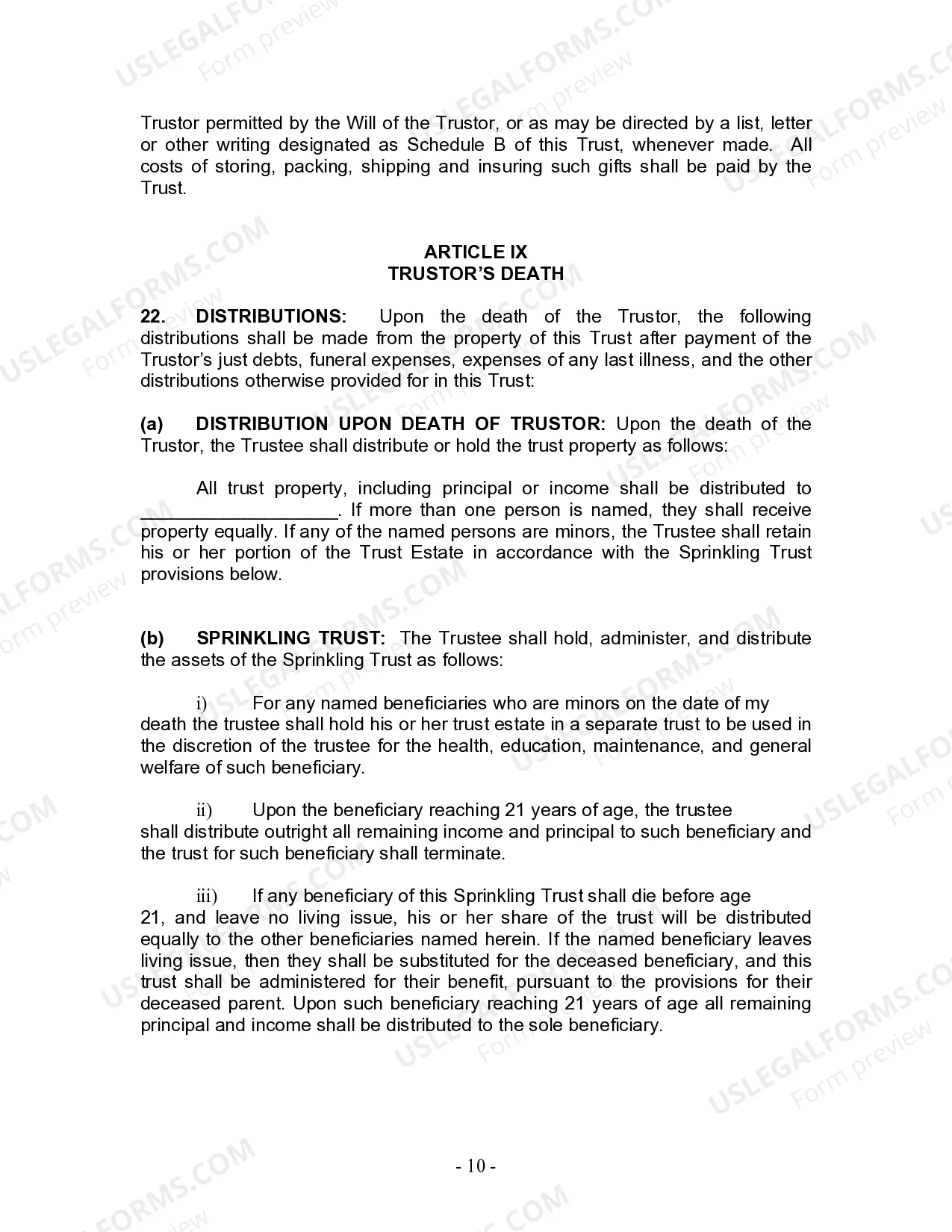
- Distributions: Details how and when assets will be distributed upon the death of the Trustor.




When to use this document
This form is particularly useful if you want to ensure that your assets are easily transferred to your chosen beneficiaries upon your death without the complications of probate. It's suitable for individuals who may have unique asset management needs or preference for how their estate should be handled posthumously.
Who should use this form
This form is intended for:
- Individuals who are single, divorced, or widowed.
- People who do not have children.
- Individuals looking to manage their assets during their lifetime and simplify the process for their beneficiaries after death.
How to prepare this document
- Identify the parties involved: Fill in the name and address of the Trustor.
- Name the trust: Choose a unique name for your revocable living trust.
- Appoint the trustee: Designate yourself or another person as the trustee.
- List the assets: Clearly specify all assets to be included in the trust in the attached Schedule A.
- Review terms: Ensure all terms regarding distributions and powers of the trustee are clear and correct.
Notarization requirements for this form
This form needs to be notarized to ensure legal validity. US Legal Forms provides secure online notarization powered by Notarize, allowing you to complete the process through a verified video call, available anytime.
Get your form ready online
Our built-in tools help you complete, sign, share, and store your documents in one place.
Make edits, fill in missing information, and update formatting in US Legal Forms—just like you would in MS Word.
Download a copy, print it, send it by email, or mail it via USPS—whatever works best for your next step.
Sign and collect signatures with our SignNow integration. Send to multiple recipients, set reminders, and more. Go Premium to unlock E-Sign.
If this form requires notarization, complete it online through a secure video call—no need to meet a notary in person or wait for an appointment.
We protect your documents and personal data by following strict security and privacy standards.
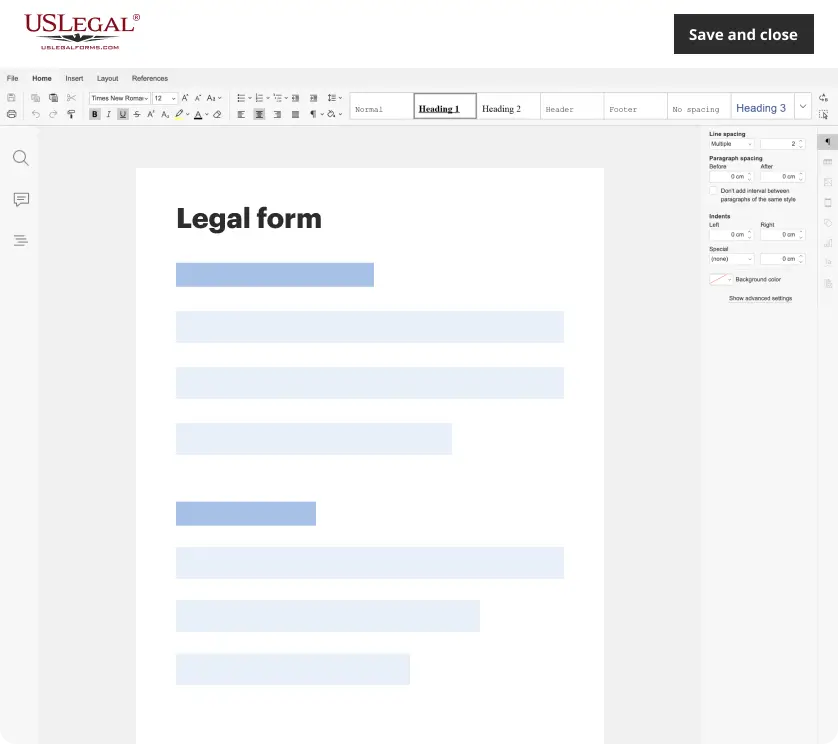
Make edits, fill in missing information, and update formatting in US Legal Forms—just like you would in MS Word.
Download a copy, print it, send it by email, or mail it via USPS—whatever works best for your next step.
Sign and collect signatures with our SignNow integration. Send to multiple recipients, set reminders, and more. Go Premium to unlock E-Sign.

If this form requires notarization, complete it online through a secure video call—no need to meet a notary in person or wait for an appointment.
We protect your documents and personal data by following strict security and privacy standards.
Common mistakes
- Failing to list all assets intended for the trust.
- Not naming a successor trustee in case the primary trustee cannot serve.
- Incomplete or incorrect information about the Trustor's identity or residence.
Benefits of using this form online
- Convenience of downloading and completing at your own pace.
- Editability allows for easy modifications as your circumstances change.
- Access to professionals in case you need assistance with legal terms or specific sections.
Looking for another form?
Form popularity
FAQ
A land trust offers many advantages. Privacy of ownership and the possible avoidance of a probate are its two main advantages. In addition, a land trust can help protect against judgments and liens, prevent land partition, facilitate estate planning, and ease real estate title transfer.
One of the most common misconceptions about trusts is that they are only a tool for the ultra-wealthy. This is quite simply incorrect. Trusts can be established to achieve a variety of goals, and although some trusts are quite complex, the majority are likely used for pragmatic everyday estate planning.
A land trust is a type of living trust. However, unlike a living trust, which holds any type of asset, a land trust can only hold real estate or related assets.With a land trust, the property owner is the beneficiary. Because of this, they are able to direct the management of the property.
The rich use laws to protect their assets. They use legal entities created under the different laws, trust laws, corporate laws, partnership laws, and tax loopholes available to all, not just the rich. The rich use laws to protect their assets.The average guy wants to own assets.
Most trusts can be irrevocable. This type of trust can help protect your assets from creditors and lawsuits and reduce your estate taxes. If you file bankruptcy or default on a debt, assets in an irrevocable trust won't be included in bankruptcy or other court proceedings.
According to independent rankings, the top states with the best trust laws are South Dakota trust law and Nevada in the US.
Trusts have many varied uses and benefits, primary among them: 1) ongoing professional management of assets; 2) reduction of tax liabilities and probate costs; 3) keeping assets out of a surviving spouse's estate while providing income for life; 4) care for special needs individuals; 4) protecting individuals from poor
To protect assets held in trust from beneficiaries' creditors. To hold, preserve and manage unique assets such as timberland, art, mineral interests and vacation properties. To hold life insurance policies, pay premiums and hold insurance payoffs to care for beneficiaries.
Land trusts can provide asset protection benefits by providing you with privacy of ownership for real property. Each piece of real estate can be placed into a separate land trust. If a lawsuit is associated with one piece of real estate, other properties titled to different trusts are not automatically encumbered.