North Dakota Mutual Wills or Last Will and Testaments for Man and Woman living together, not Married with Minor Children
What this document covers
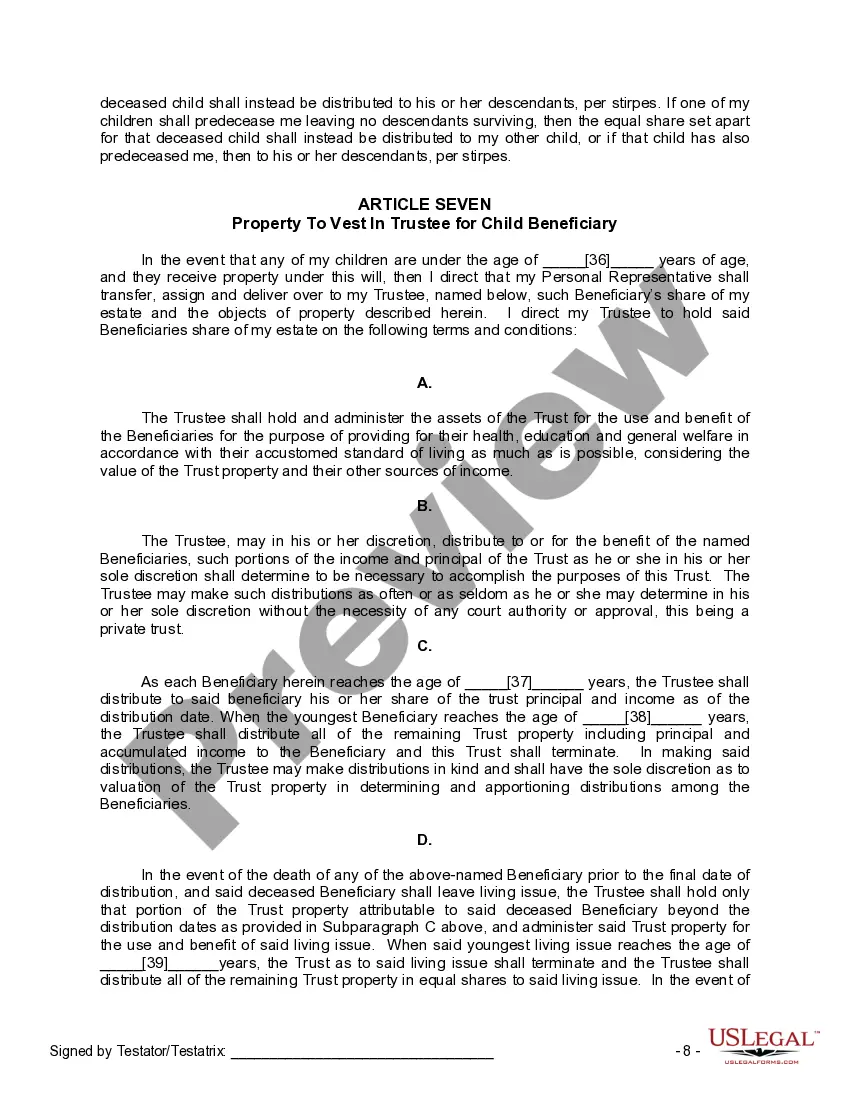
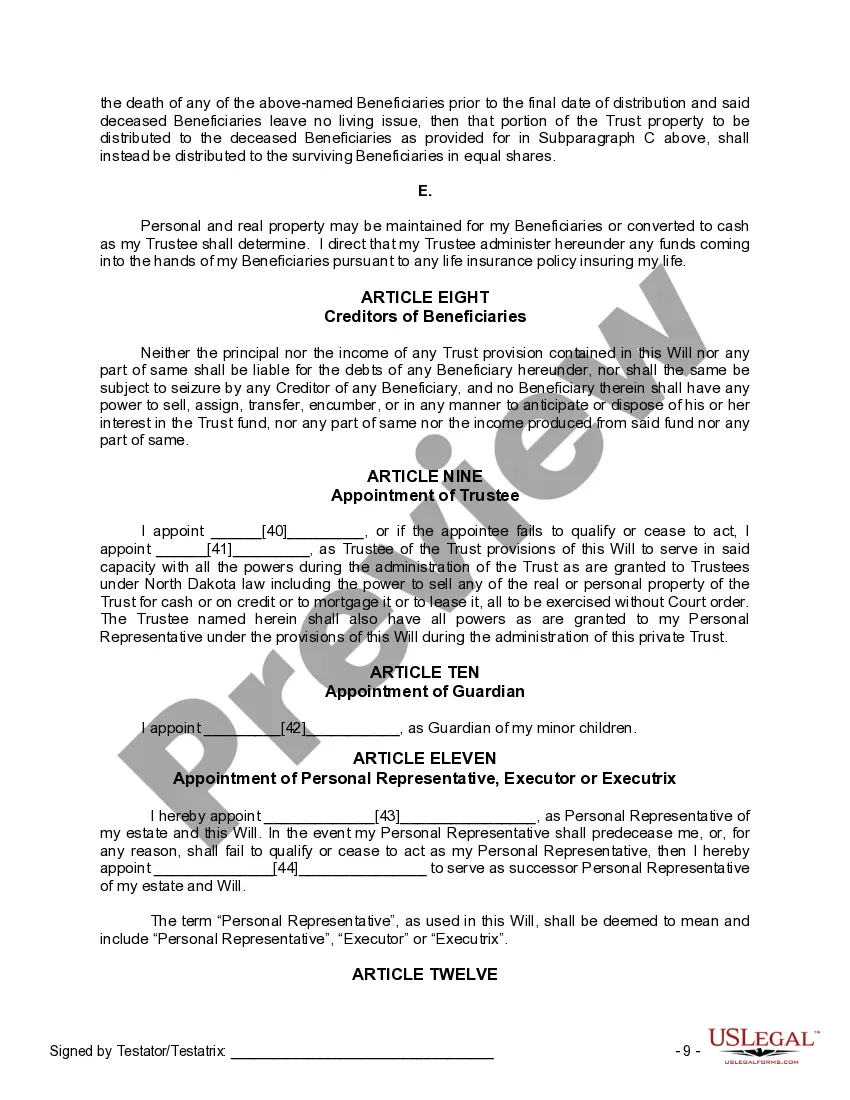
This form package includes Mutual Wills or Last Will and Testaments specifically designed for a man and woman living together who are not married and have minor children. Unlike other wills, this package allows partners to mutually designate each other as beneficiaries while ensuring that their children are also provided for. This specific arrangement is crucial for couples seeking to establish clear intentions regarding asset distribution after their passing.
What’s included in this form
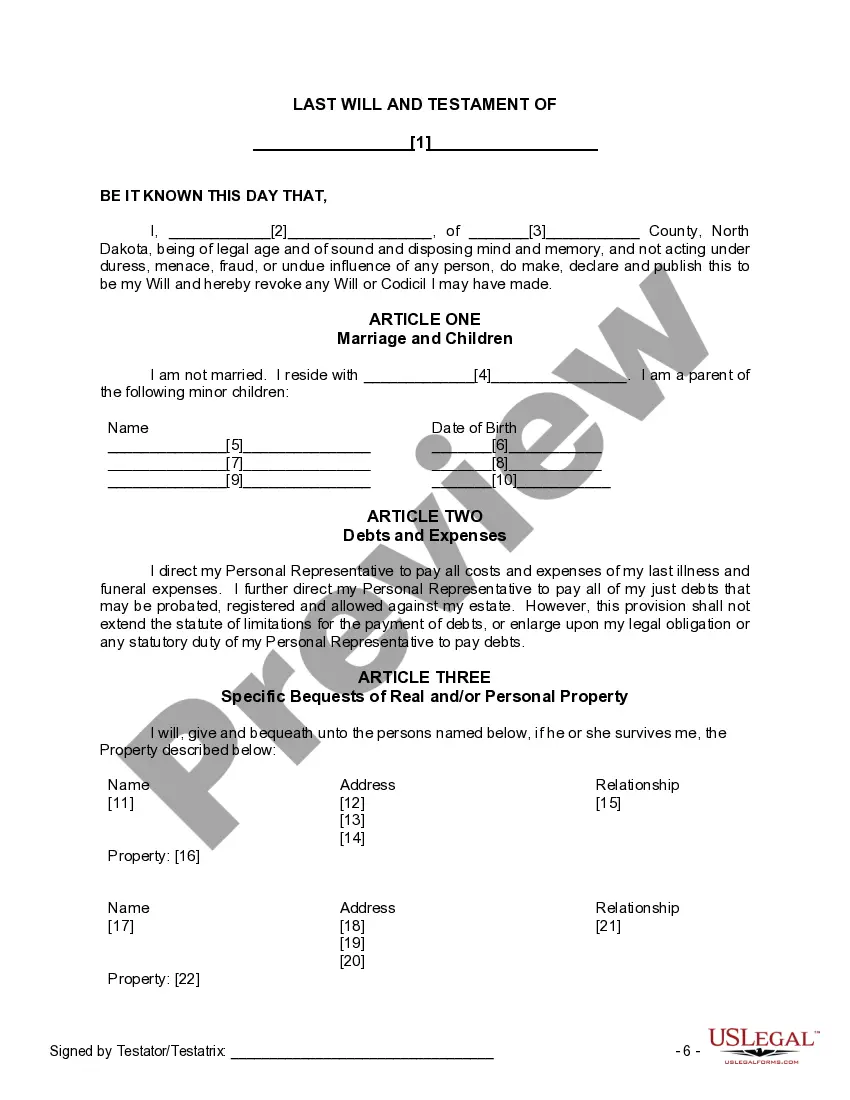
- Identification of the testators and their relationship
- Details of each partner's minor children, including names and birth dates
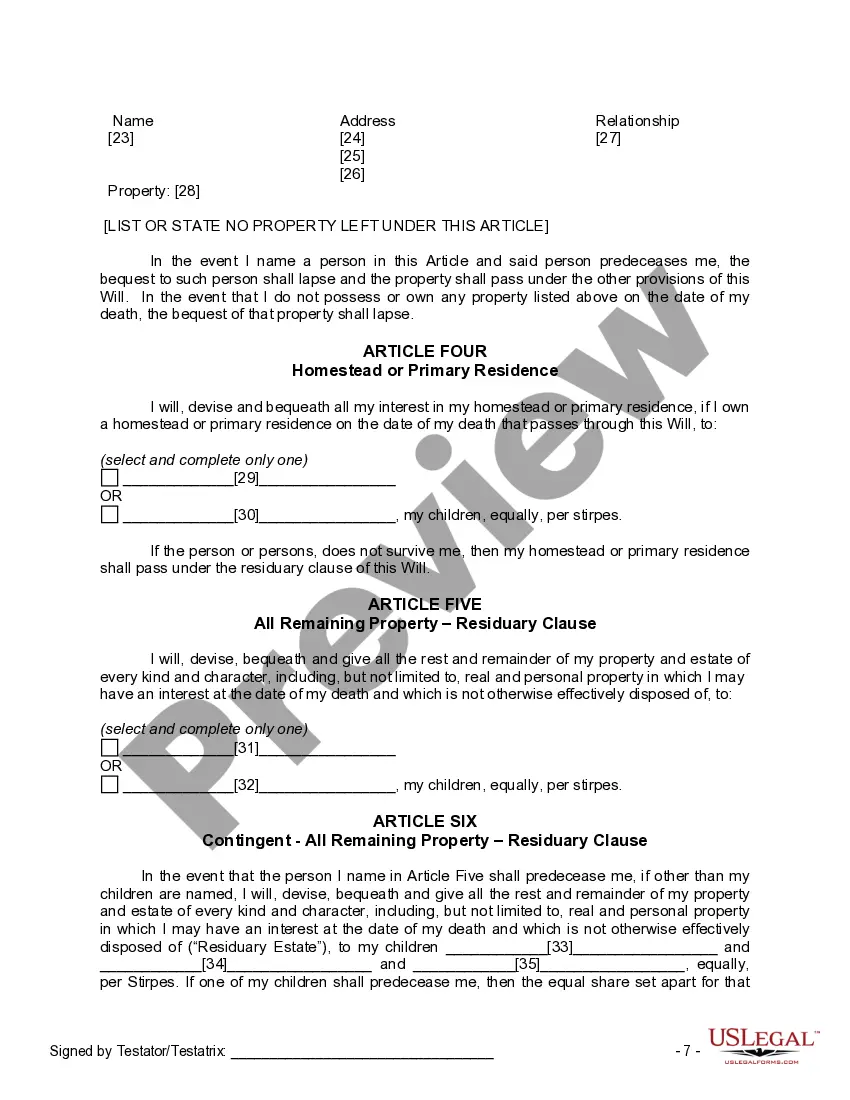
- Specific bequests of personal property and homesteads
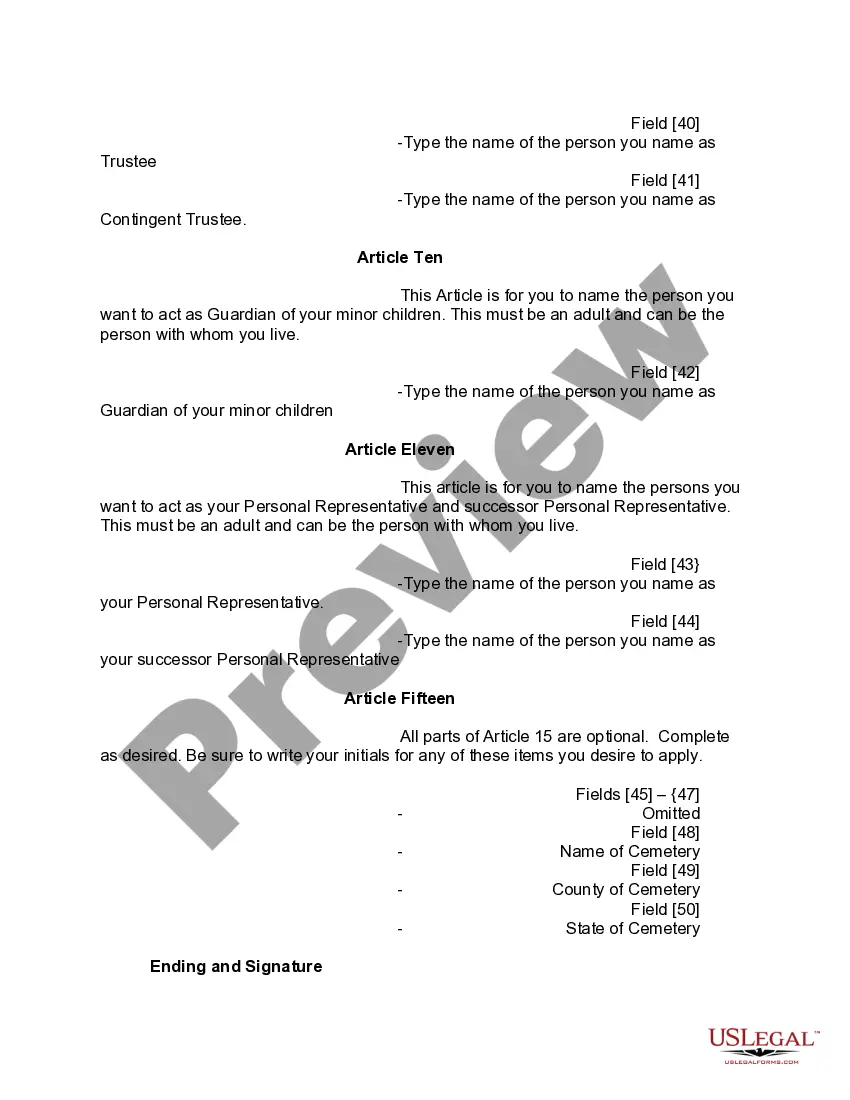
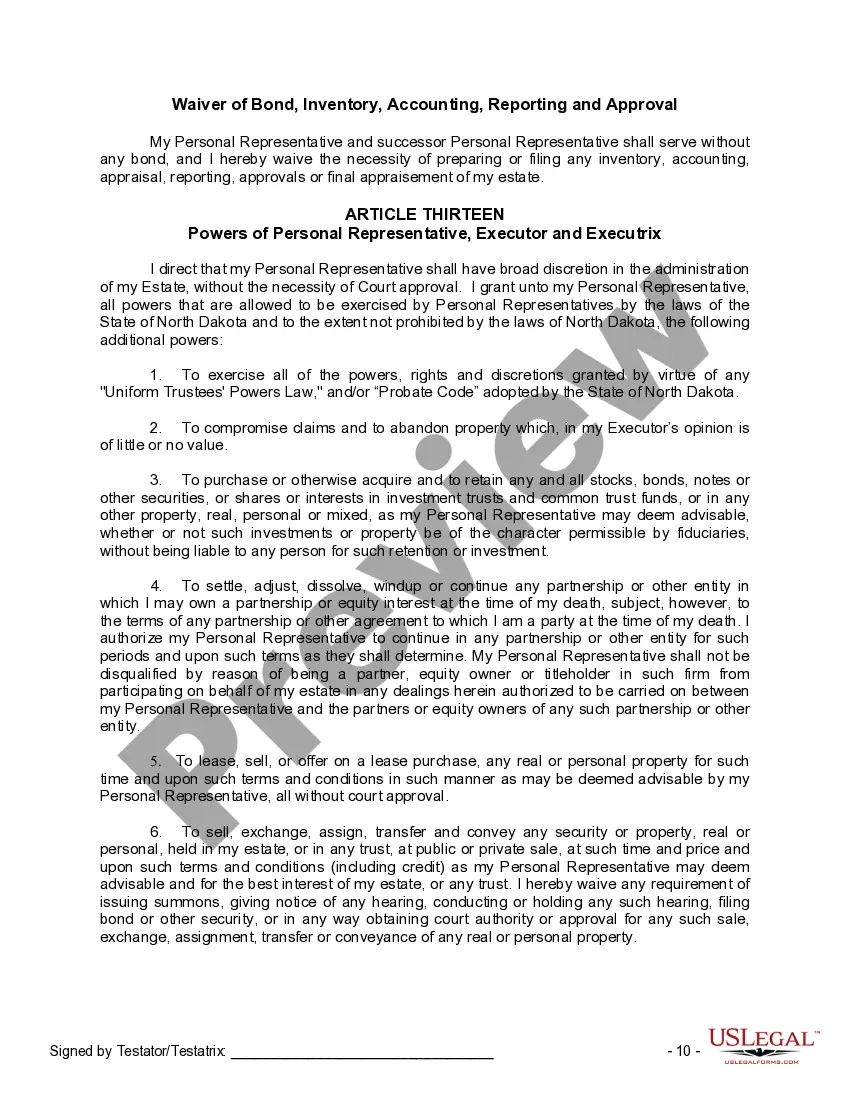
- Designations for trustees and guardians for the minor children
- Provisions for the distribution of the remaining estate
- Signature requirements including witnesses and notarization



Situations where this form applies
This form is ideal for couples who are living together and wish to ensure that their assets are transferred according to their mutual wishes upon death. It is especially significant for those with minor children who need guardianship and support. Use this form when you want to specify what happens to your property and who will care for your children in the unfortunate event of both parents passing away.
Who can use this document
- Unmarried couples living together with minor children
- Partners who want to ensure each other's financial security after death
- Individuals looking to establish legal guardianship for their children
- Those who wish to clearly outline the distribution of their estate
Completing this form step by step
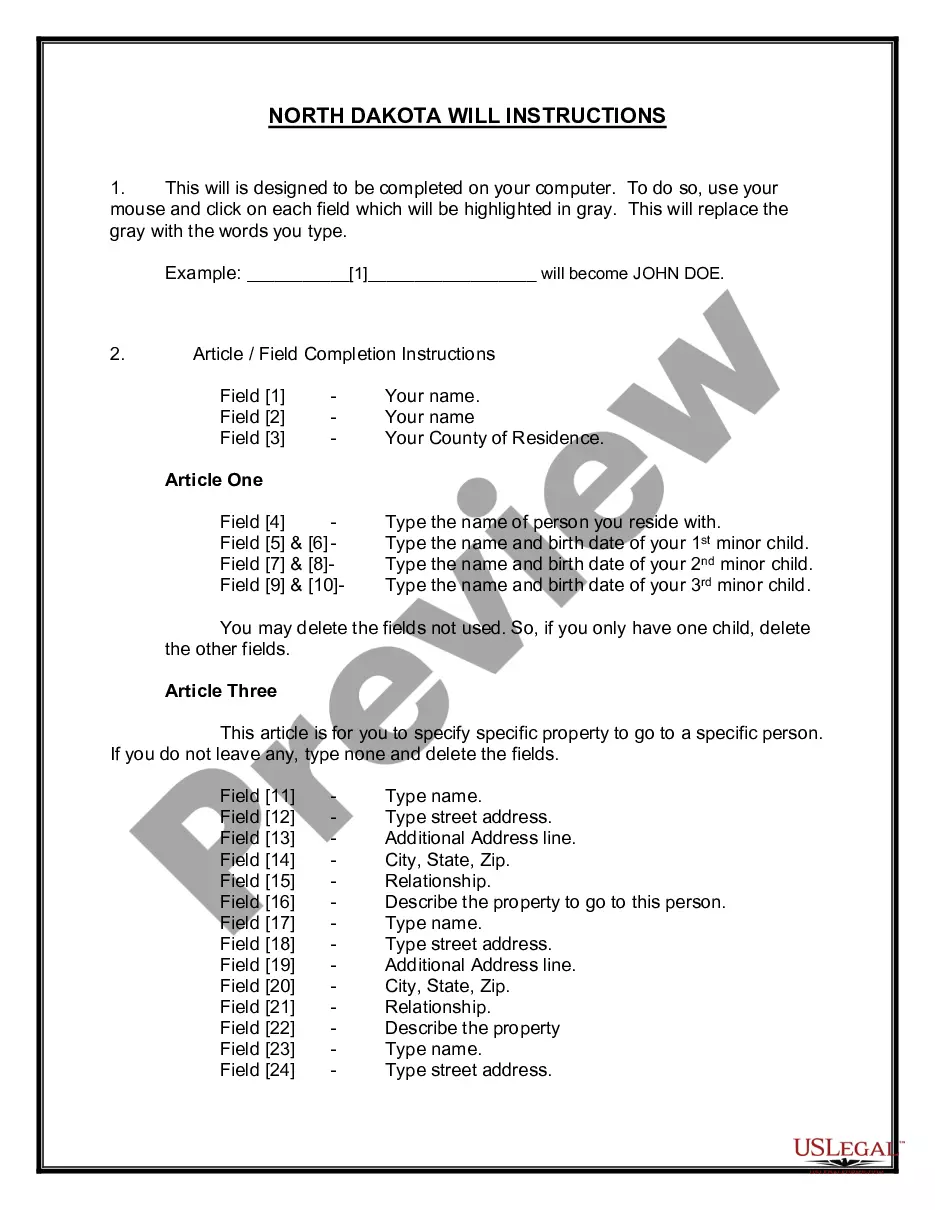
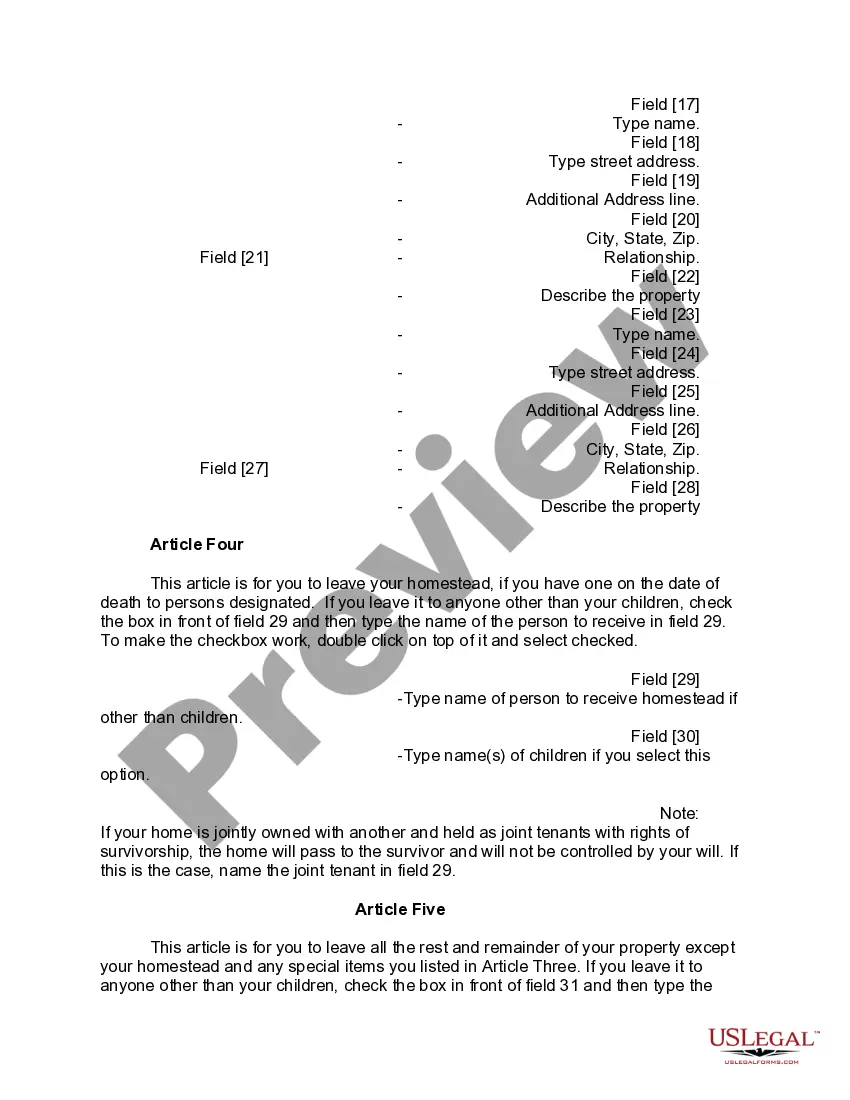
- Enter the names and county of residence of both partners in the designated fields.
- List the names and birth dates of all minor children.
- Specify any bequests of property to individuals or entities.
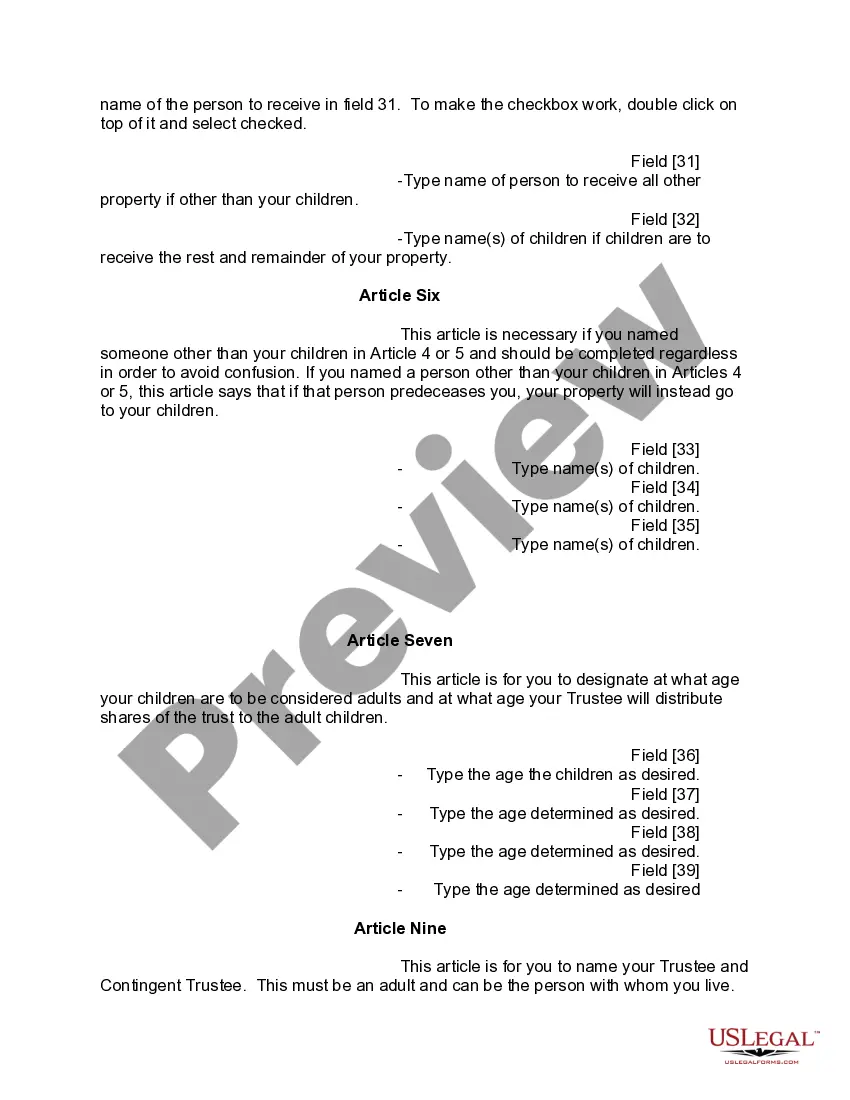
- Designate guardians for your minor children and a trustee if applicable.
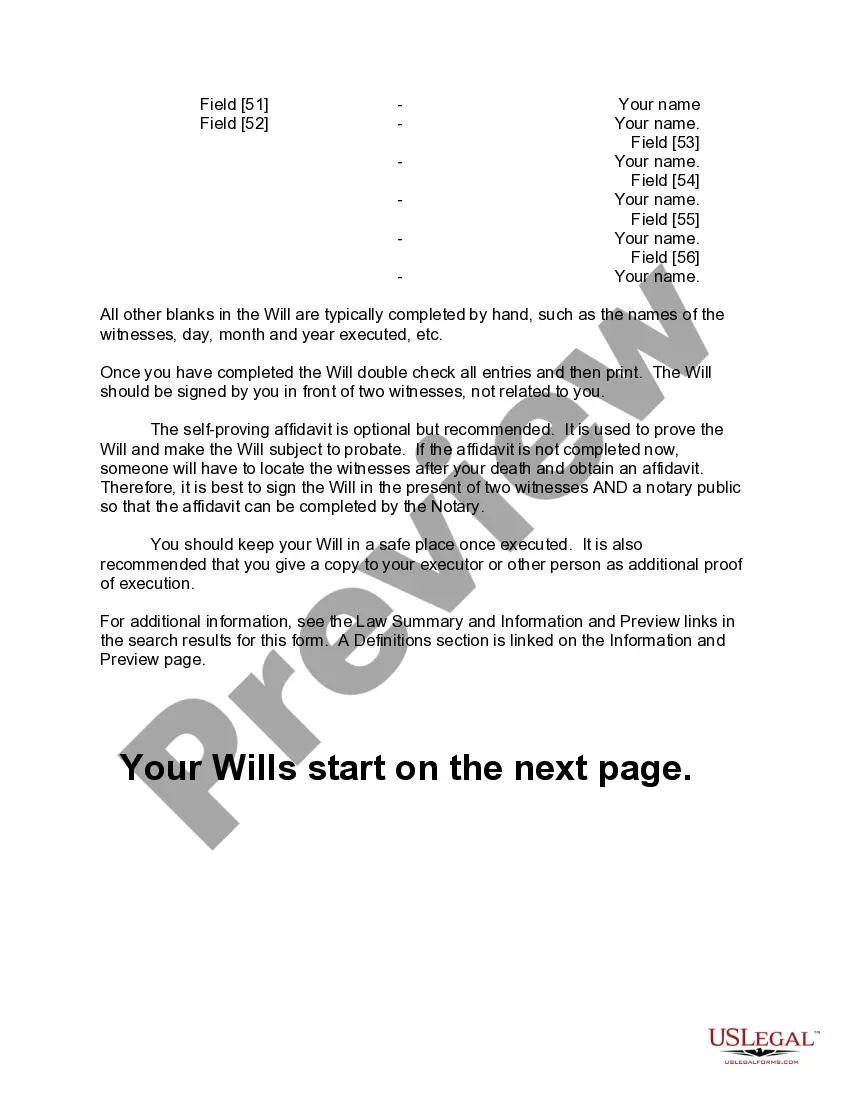
- Ensure the document is signed in the presence of two witnesses who are not related to you.
- Consider having the form notarized to simplify the probate process.
Is notarization required?
Notarization is required for this form to take effect. Our online notarization service, powered by Notarize, lets you verify and sign documents remotely through an encrypted video session, available 24/7.
Get your form ready online
Our built-in tools help you complete, sign, share, and store your documents in one place.
Make edits, fill in missing information, and update formatting in US Legal Forms—just like you would in MS Word.
Download a copy, print it, send it by email, or mail it via USPS—whatever works best for your next step.
Sign and collect signatures with our SignNow integration. Send to multiple recipients, set reminders, and more. Go Premium to unlock E-Sign.
If this form requires notarization, complete it online through a secure video call—no need to meet a notary in person or wait for an appointment.
We protect your documents and personal data by following strict security and privacy standards.

Make edits, fill in missing information, and update formatting in US Legal Forms—just like you would in MS Word.

Download a copy, print it, send it by email, or mail it via USPS—whatever works best for your next step.

Sign and collect signatures with our SignNow integration. Send to multiple recipients, set reminders, and more. Go Premium to unlock E-Sign.

If this form requires notarization, complete it online through a secure video call—no need to meet a notary in person or wait for an appointment.

We protect your documents and personal data by following strict security and privacy standards.
Common mistakes to avoid
- Failing to properly notarize the will where required.
- Not having two unrelated witnesses sign the will.
- Leaving out essential information about minor children or property.
- Not reviewing and updating the will as life circumstances change.
Benefits of using this form online
- Convenience of completing the form at your own pace in a secure environment.
- Editable fields allow you to customize the form easily.
- Access to legal templates drafted by licensed attorneys ensures reliability.
- Immediate download means you can start the process right away.
Key takeaways
- This Mutual Will form is designed for unmarried couples with minor children, ensuring both partners' estate wishes are respected.
- It includes essential provisions for children and property allocation.
- Proper execution, including witness signatures and notarization, is critical for validity.
- Utilizing online forms offers convenience and legal compliance tailored to your needs.
Looking for another form?

Form popularity
FAQ
A joint will is a legal document executed by two (or more) people, which merges their individual wills into a single, combined last will and testament. Like most wills, a joint will lets the will-makers name who will get their property and assets after they die. Joint wills are usually created by married couples.
When property is left directly to a minor beneficiary, such as through joint ownership of property or a payable-on-death account, the minor won't have the legal authority to take control of it because of their age.Typically, the closest kin will inherit the property.
Fraud or Undue Influence A nonfamily caregiver forcing the testator to leave them an inheritance. A family member getting the testator to sign a will by pretending it is just a general legal document that needs a signature.
Minors to inherit at age 18 (or younger) In a bare trust situation, the only issue preventing the minor from taking their inheritance at your death is their minority. At 18, the minor would be able to call for their inheritance. In addition, the inheritance would belong to the minor in all senses from your death.
For many people, creating a will can be a difficult process. Some couples think that they can have one joint will together, but this is not a sound approach.Even if the majority of the information in your wills is nearly identical, you still need to each have your own.
A will can also be declared invalid if someone proves in court that it was procured by undue influence. This usually involves some evil-doer who occupies a position of trust -- for example, a caregiver or adult child -- manipulating a vulnerable person to leave all, or most, of his property to the manipulator instead
If your child inherits property or money of substantial value, the court may appoint a guardian or custodian to hold and manage the inheritance for the child until they reach the age of majority.However, in some states the age of majority could be 21 years old, depending on the amount of the inheritance.
Children who are under the age of 18 are deemed to lack legal capacity to receive a gift. Where a gift in your will is going to a child under 18 (which may be a child of a deceased beneficiary), you can give your executors and trustees the option to make the gift to the child's parent or guardian.
What happens to the death benefit if you name a minor as a beneficiary? If your beneficiary is under the age of majority when you die, the death benefit will be given to a custodian of the funds to hold on to. This guardian can be court-appointed, but the court will most likely choose the surviving parent.