North Dakota Letter from Tenant to Landlord responding to Notice to Terminate for Noncompliance - Noncompliant condition caused by Landlord's own deliberate or negligent act
Overview of this form
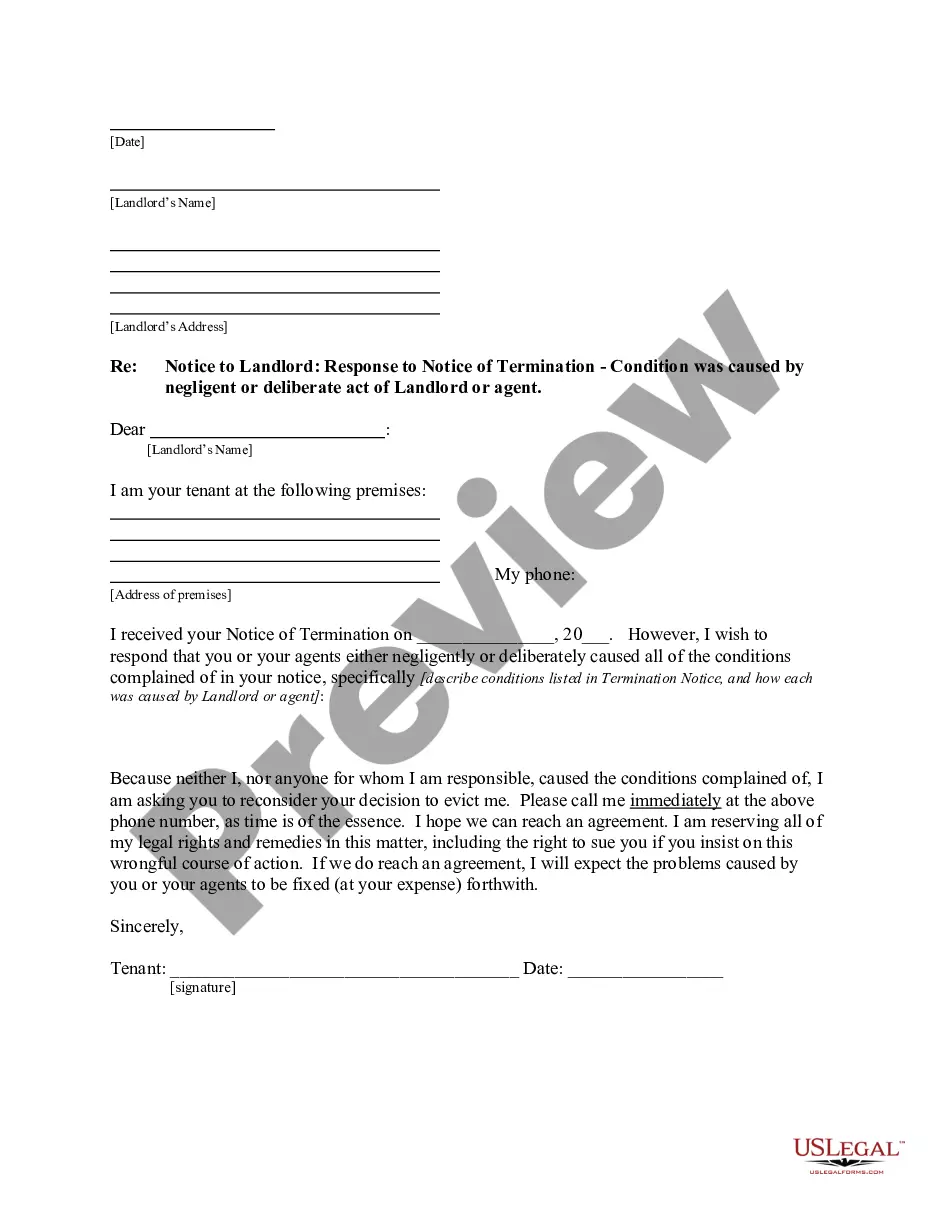
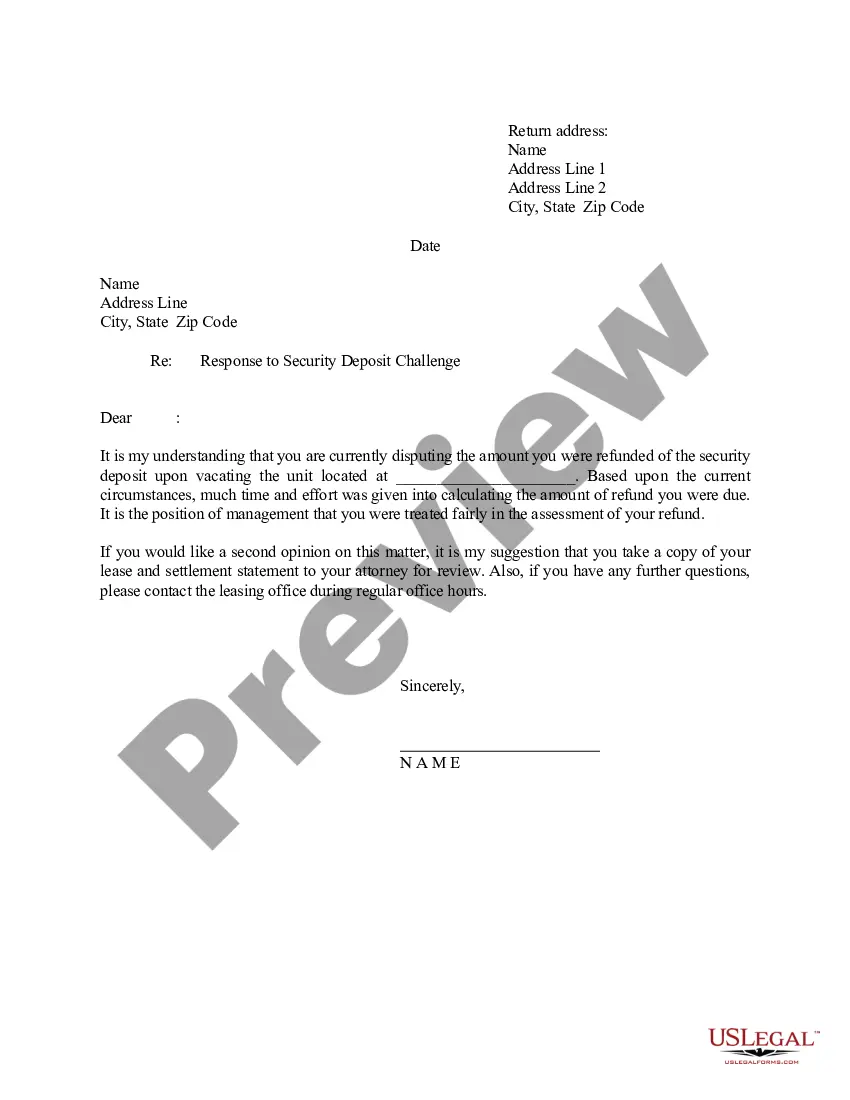
This form is a Letter from Tenant to Landlord responding to a Notice to Terminate for Noncompliance. It is specifically designed for tenants who have received an eviction notice due to noncompliance issues that stem from the landlord's own actions, whether deliberate or negligent. The purpose of this letter is for the tenant to assert that the conditions leading to the eviction are not their fault and to request necessary repairs and non-eviction. This form serves to protect the tenant's legal rights while advocating for immediate rectification of the issues at hand.
Form components explained
- Tenant's statement of response to the landlord's eviction notice.
- Assertion that the noncompliant conditions were caused by the landlord or their agent.
- Request for non-eviction and immediate repairs to the property.
- Reservation of legal rights to pursue further action if necessary.
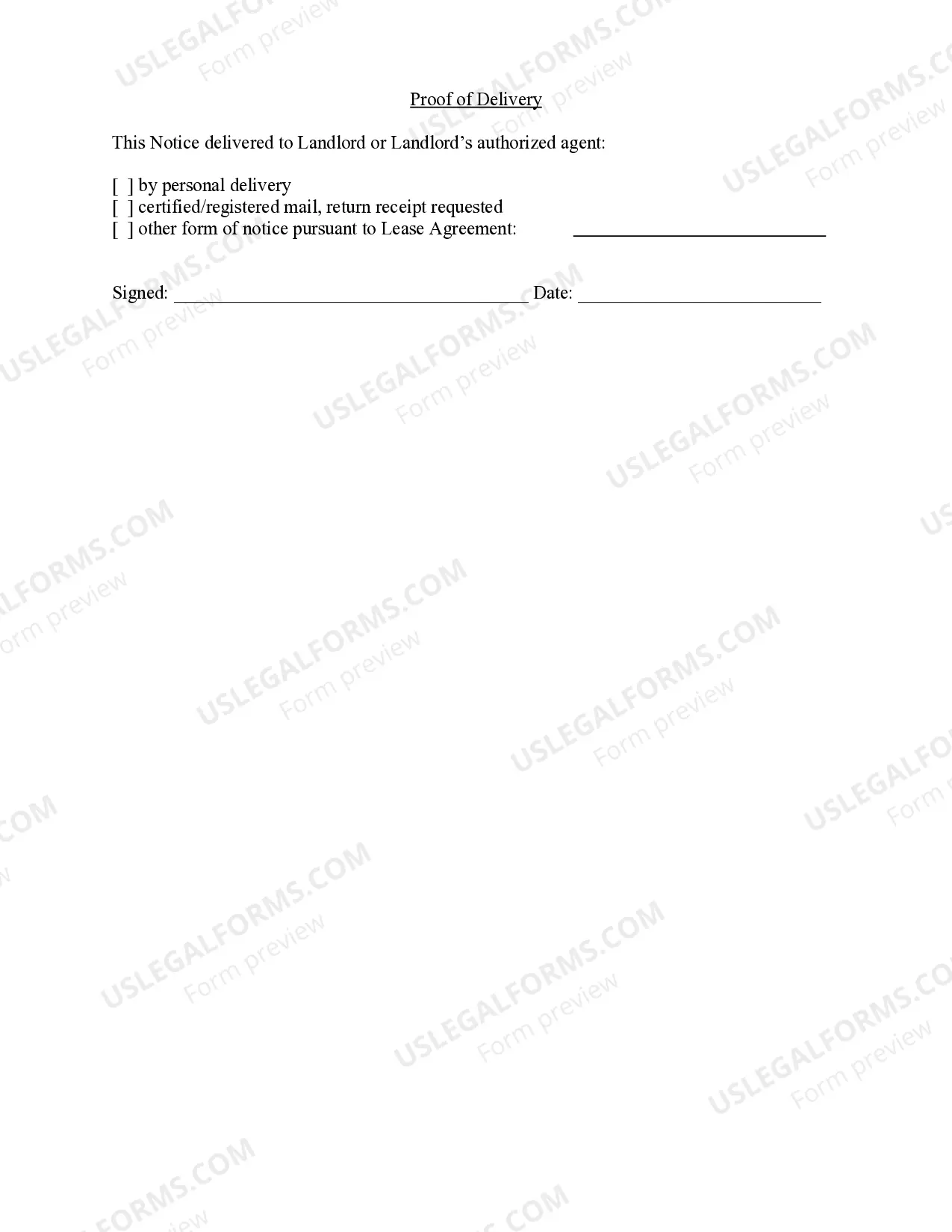
- Proof of delivery options to confirm the notice has been received by the landlord.




When to use this document
This form should be used in situations where a tenant receives a notice of eviction from their landlord due to alleged noncompliance. It is appropriate when the tenant believes that the reason for the eviction is not their own fault but rather due to issues created by the landlord or their agents. Using this form can help tenants formally communicate their stance, request necessary repairs, and protect their rights in the eviction process.
Who this form is for
- Tenants who have received an eviction notice for noncompliance.
- Individuals living in rental properties facing issues caused by the landlord's actions.
- Tenants seeking to assert their rights in response to unfair eviction attempts.
- Any tenant looking to formally request repairs to their rental property.
Completing this form step by step
- Identify the parties involved: fill in your name as the tenant and your landlord's name.
- Clearly state the reason for your response, specifying the landlord's actions that led to the eviction notice.
- Request immediate repairs and state your desire to remain in the property without eviction.
- Include the date and sign the letter to formalize your response.
- Choose a method of delivery for the notice to ensure the landlord receives it, and document this proof.
Notarization guidance
This form does not typically require notarization unless specified by local law. However, it is advisable to check your state's specific regulations to ensure compliance.
Get your form ready online
Our built-in tools help you complete, sign, share, and store your documents in one place.
Make edits, fill in missing information, and update formatting in US Legal Forms—just like you would in MS Word.
Download a copy, print it, send it by email, or mail it via USPS—whatever works best for your next step.
Sign and collect signatures with our SignNow integration. Send to multiple recipients, set reminders, and more. Go Premium to unlock E-Sign.
If this form requires notarization, complete it online through a secure video call—no need to meet a notary in person or wait for an appointment.
We protect your documents and personal data by following strict security and privacy standards.

Make edits, fill in missing information, and update formatting in US Legal Forms—just like you would in MS Word.

Download a copy, print it, send it by email, or mail it via USPS—whatever works best for your next step.

Sign and collect signatures with our SignNow integration. Send to multiple recipients, set reminders, and more. Go Premium to unlock E-Sign.

If this form requires notarization, complete it online through a secure video call—no need to meet a notary in person or wait for an appointment.

We protect your documents and personal data by following strict security and privacy standards.
Mistakes to watch out for
- Failing to include specific details about the landlord's noncompliant actions.
- Not providing a formal request for repairs.
- Overlooking the need to document proof of delivery.
- Not signing the letter, which makes it less official.
- Sending the letter without keeping a copy for personal records.
Benefits of completing this form online
- Immediate access to a legally vetted template tailored to your state.
- Easy editing options to customize the letter to your specific situation.
- Convenient download options for quick use and distribution.
- Ensures accuracy and compliance by using language drafted by licensed attorneys.
Legal use & context
- This letter serves as an official response to a landlord's eviction notice.
- It can help establish evidence of the tenant's claims in case of further legal proceedings.
- Using this form can facilitate communication between the tenant and landlord regarding required repairs.
Quick recap
- The form helps tenants respond to eviction notices based on landlord negligence.
- It is critical for tenants to preserve their legal rights while addressing property issues.
- The letter needs to be completed accurately to be effective in legal disputes.
Looking for another form?


Form popularity
FAQ
A landlord cannot evict a tenant without an adequately obtained eviction notice and sufficient time. A landlord cannot retaliate against a tenant for a complaint. A landlord cannot forego completing necessary repairs or force a tenant to do their own repairs.A landlord cannot remove a tenant's personal belongings.
If you're seeking damages for emotional distress caused by a landlord's discrimination, or punitive damages for especially blatant and intentional discrimination, a lawsuit may well be your best bet. Understand what's involved in suing your landlord. You may file a lawsuit in either federal or state court.
Yes, a landlord can tell tenants how clean to keep the house. Most times, there's a clause on the tenancy or lease agreement about cleanliness. Always ensure you read and understand the agreement before signing to avoid any disagreement during your stay at the apartment.
This includes keeping the property clean, safe and habitable. The landlord must adhere to all building codes, perform necessary repairs, maintain common areas, keep all vital services, such as plumbing, electricity, and heat, in good working order, must provide proper trash receptacles and must supply running water.
Unlawful North Dakota Eviction A tenant can be evicted during the winter months for nonpayment of rent or for other material violations of the lease agreement.
If you think your landlord is violating the Fair Housing Act, you can get that landlord in trouble by filing a complaint at HUD.gov. Your remedy for breach of quiet enjoyment is to terminate the lease and move or sue in small claims court.
Fundamental responsibilities of landlords include: providing and maintaining the property in a clean and reasonable standard; giving proper receipts and maintaining records of all transactions pertaining to the tenancy; paying council rates and taxes; maintaining locks to ensure the property's security; and lodging the
Notice to terminate a week-to-week lease. One-week written notice (§ 47-16-15(1)) Notice to terminate a month-to-month lease. Notice to terminate a yearly lease with no end date.
In California, a prospective landlord cannot ask about race, color, religion, sex, gender, gender identity, gender expression, sexual orientation, marital status, national origin, ancestry, familial status, disability, or genetic information.