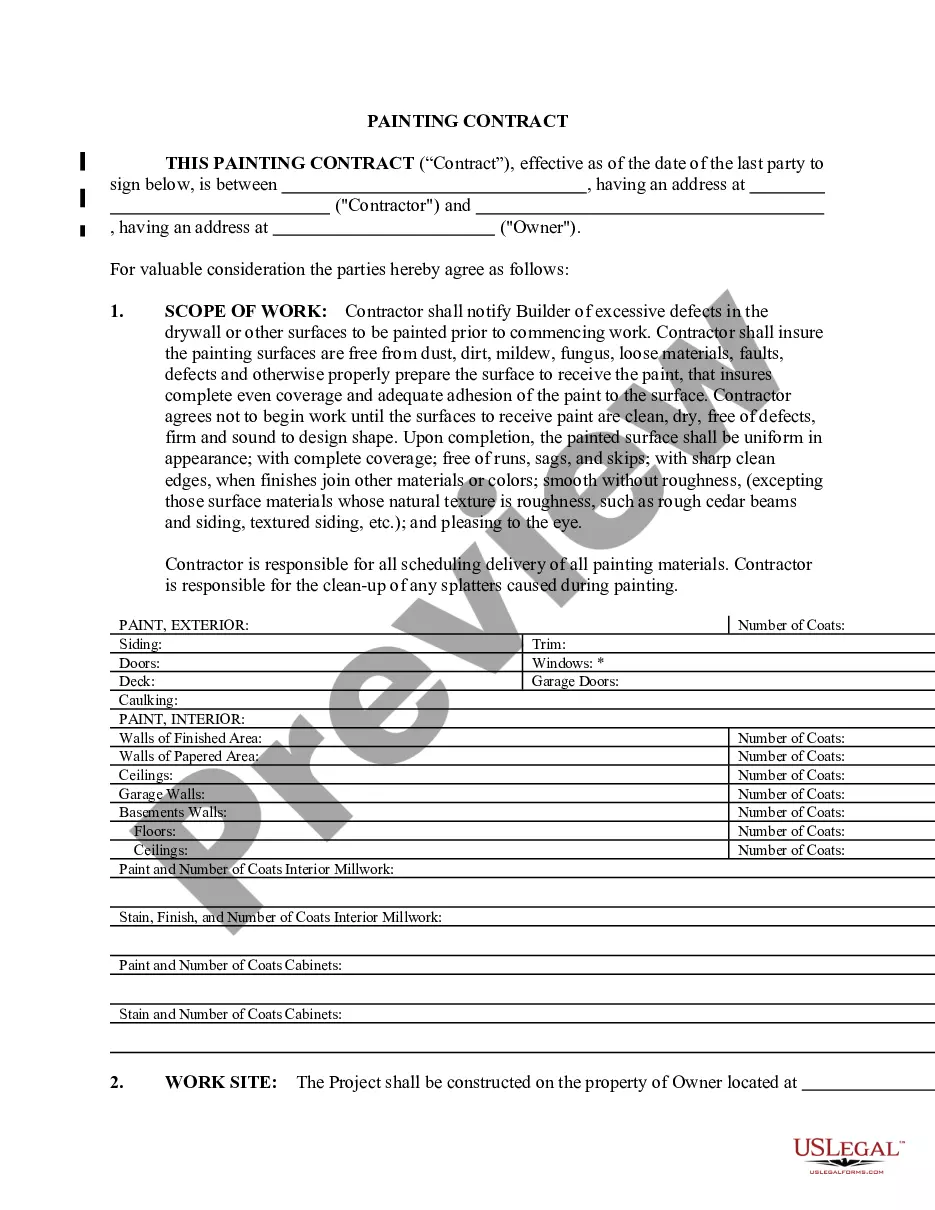
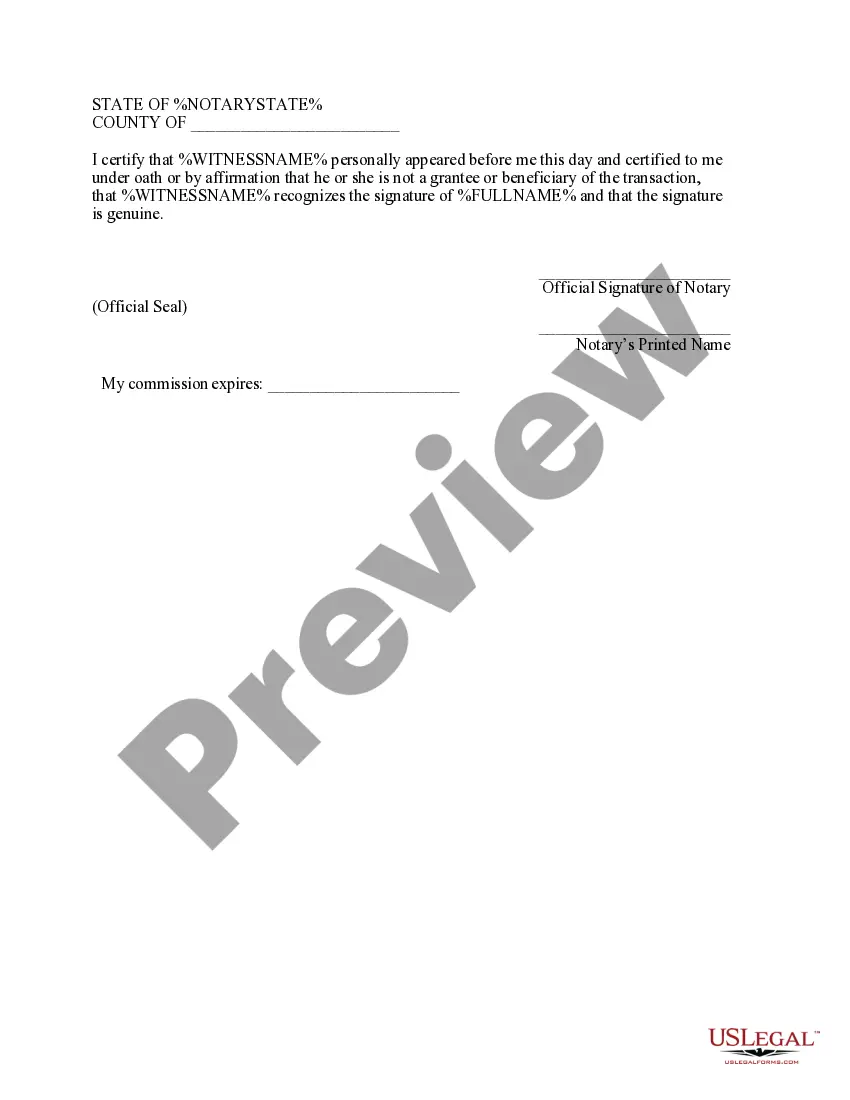
North Carolina Acknowledgment for Verification of Nonsubscribing Witness
What is this form?
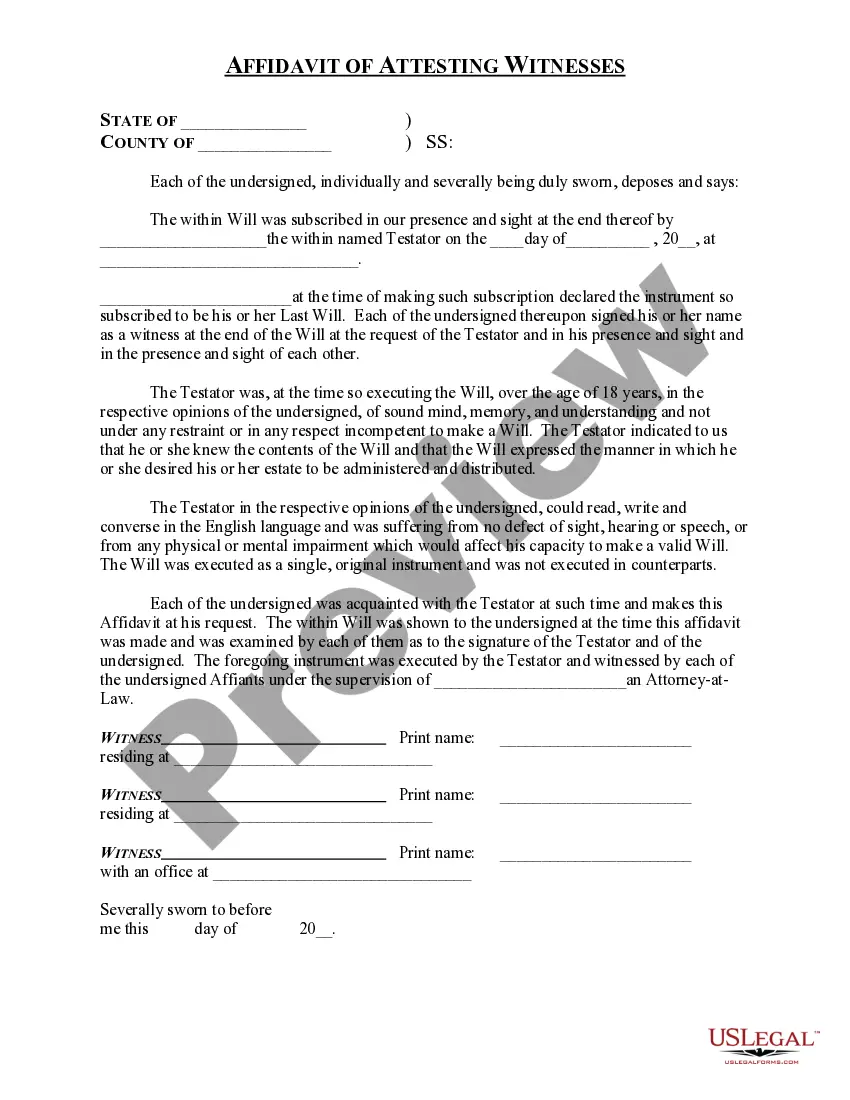
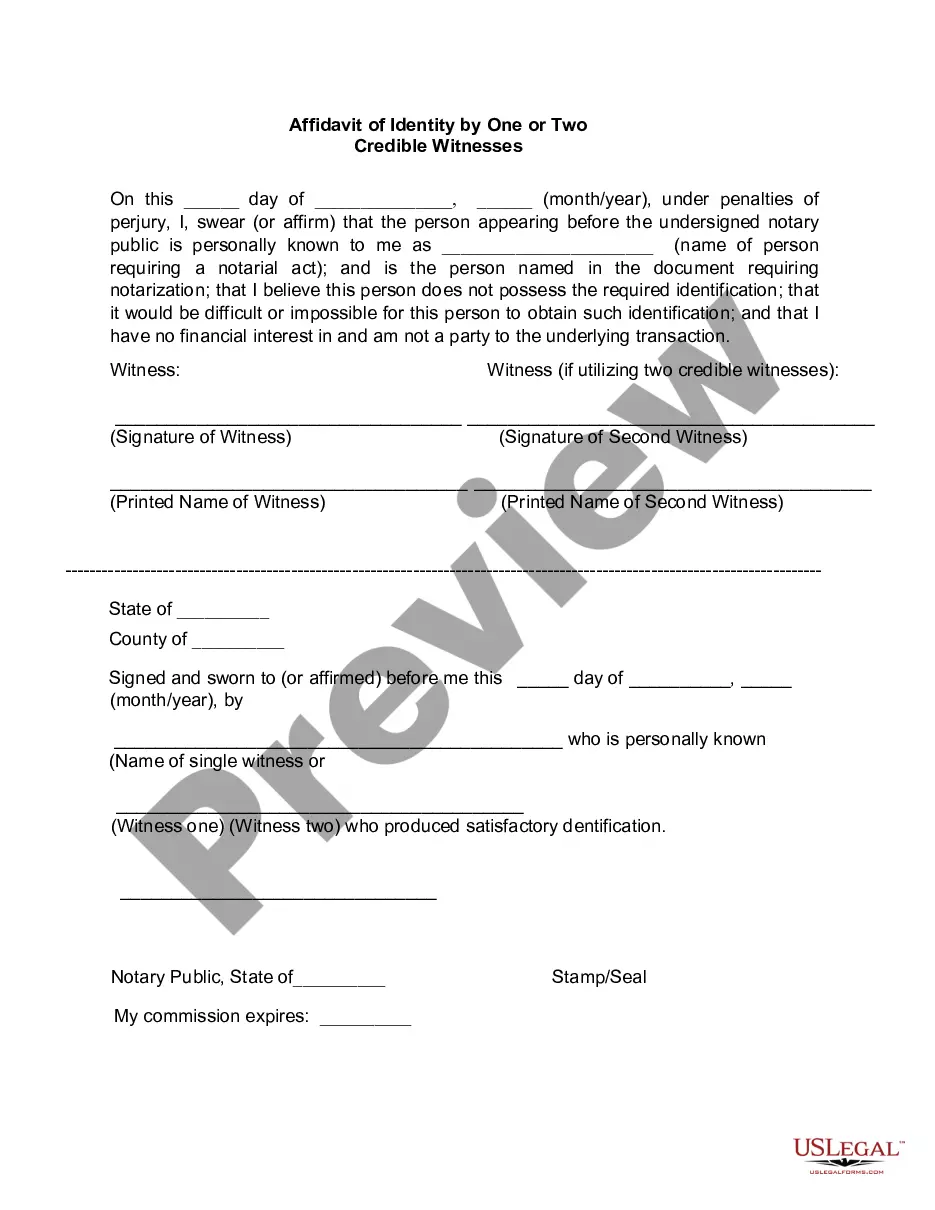
The Acknowledgment for Verification of Nonsubscribing Witness is a legal document used to certify the identity and impartiality of a witness who does not have a stake in the transaction being documented. This form serves as a formal acknowledgment that the witness has verified the identity of the principal and attested to the authenticity of their signature, thus providing a level of assurance in legal processes. It differs from other notarial forms by focusing specifically on nonsubscribing witnesses, making it essential in contexts where witness neutrality is vital.
Key components of this form
- Name of the nonsubscribing witness: Identifies the person who will attest to the signature.
- Certification statement: A declaration confirming the witness's impartiality and the authenticity of the principal's signature.
- Date of acknowledgment: States when the acknowledgment was made.
- Official seal: A space for the notary's seal to validate the document.
- Notary signature: The signature of the notary public, affirming the legitimacy of the acknowledgment.
- Commission expiration: The date when the notary's commission expires.

When to use this form
This form is necessary when you need a witness to confirm a signature without being involved in the transaction itself. For instance, if a property deed or contract requires a third party to confirm that they have witnessed the signing of the document, this form provides the legal acknowledgment needed. It is particularly useful in real estate transactions or any legal dealings where the acknowledgment of a disinterested witness is required to ensure the integrity of the document.
Who can use this document
- Anyone involved in a legal transaction requiring witness verification.
- Individuals and businesses needing third-party verification of signatures.
- Notaries public performing witness acknowledgment in various legal contexts.
- Attorneys or legal representatives ensuring documentation integrity.
Completing this form step by step
- Identify the parties: Clearly state the name of the nonsubscribing witness and the principal whose signature is being verified.
- Fill out the certification statement: Complete the section where the witness affirms their lack of interest in the transaction.
- Enter the date: Document the date when the acknowledgment is made.
- Apply the official seal: The notary should affix their seal in the designated area.
- Sign the document: The notary public must sign the form to validate the acknowledgment.
Does this form need to be notarized?
This form needs to be notarized to ensure legal validity. US Legal Forms provides secure online notarization powered by Notarize, allowing you to complete the process through a verified video call, available anytime.
Get your form ready online
Our built-in tools help you complete, sign, share, and store your documents in one place.
Make edits, fill in missing information, and update formatting in US Legal Forms—just like you would in MS Word.
Download a copy, print it, send it by email, or mail it via USPS—whatever works best for your next step.
Sign and collect signatures with our SignNow integration. Send to multiple recipients, set reminders, and more. Go Premium to unlock E-Sign.
If this form requires notarization, complete it online through a secure video call—no need to meet a notary in person or wait for an appointment.
We protect your documents and personal data by following strict security and privacy standards.

Make edits, fill in missing information, and update formatting in US Legal Forms—just like you would in MS Word.

Download a copy, print it, send it by email, or mail it via USPS—whatever works best for your next step.

Sign and collect signatures with our SignNow integration. Send to multiple recipients, set reminders, and more. Go Premium to unlock E-Sign.

If this form requires notarization, complete it online through a secure video call—no need to meet a notary in person or wait for an appointment.

We protect your documents and personal data by following strict security and privacy standards.
Mistakes to watch out for
- Failing to properly identify the nonsubscribing witness or principal.
- Omitting the date of the acknowledgment.
- Not securing the notary's signature or seal.
- Assuming notarization is unnecessary; check local requirements.
What to keep in mind
- The Acknowledgment for Verification of Nonsubscribing Witness ensures impartial verification of signatures.
- It is required in legal contexts where witness neutrality is essential.
- Proper completion and notarization are necessary for the document's validity.
- Understanding state-specific requirements is important for compliance.
Looking for another form?
Form popularity
FAQ
There is no legal requirement for a North Carolina notary public to use a journal to record notarial acts. It is, however, recommended by most to keep one.
As long as the signer is personally present before the notary and acknowledges the signature, then the notary can proceed with performing the notarial act. A notary's certificate of acknowledgment should always reflect the date on which the signer personally appeared before the notary.
For your reference, according to the Notary Public Section of the National Association of Secretaries of State, the following states, and District of Columbia, require notaries to maintain records of notarial acts: Arizona, California, Colorado, Hawaii, Louisiana, Maryland, Massachusetts, Mississippi, Missouri, Montana
In NC, notary publics cannot attest that something is a true copy, the most they can do is attest that you acknowledge or swear the document is a true copy.North Carolina notaries cannot certify that a copy is a true copy.
Should Every Notary Keep A Journal? Yes. Most states require or strongly recommend that Notaries own and maintain a journal or record book of the acts they perform.The Notary's journal record provided evidence that the loan documents had been notarized and helped keep the signers from losing their home.
Only you, as the notary, may make corrections to the notary certificate. Illegible/ Expired Notary Seal: Stamp impressions that are too dark, too light, incomplete, smudged, or in any way unreadable may cause an otherwise acceptable document to be rejected for its intended use.
Bring any witnesses with you who may also be required to sign the document so that they may do so in the presence of the notary. Meet with the notary at his office or another mutually agreeable location and present the document to him for notarization.
In general, a contract does not need to be notarized or witnessed to be binding.But for most contracts, we do not generally require them to be witnessed or notarized, to be "legal." The notary removes the issue as to the identity of the parties signing the contract.
It depends. You may notarize a document that does not have pre-printed notarial wording as long as the signer tells you what type of notarization is needed.As nonattorneys, Notaries cannot decide the type of notarization to perform on a document because the choice can have important legal ramifications.