Arizona Acceptance of Service
What this document covers
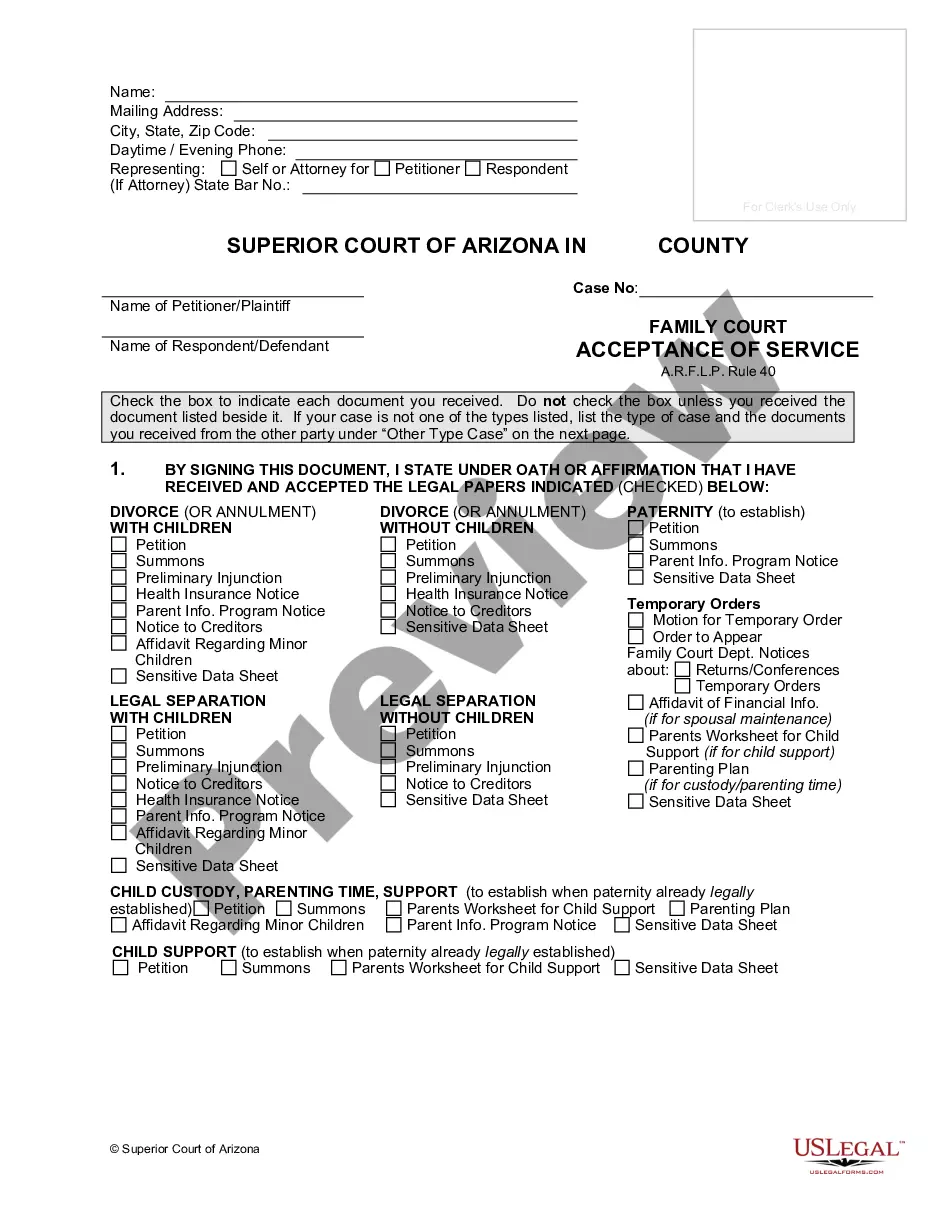
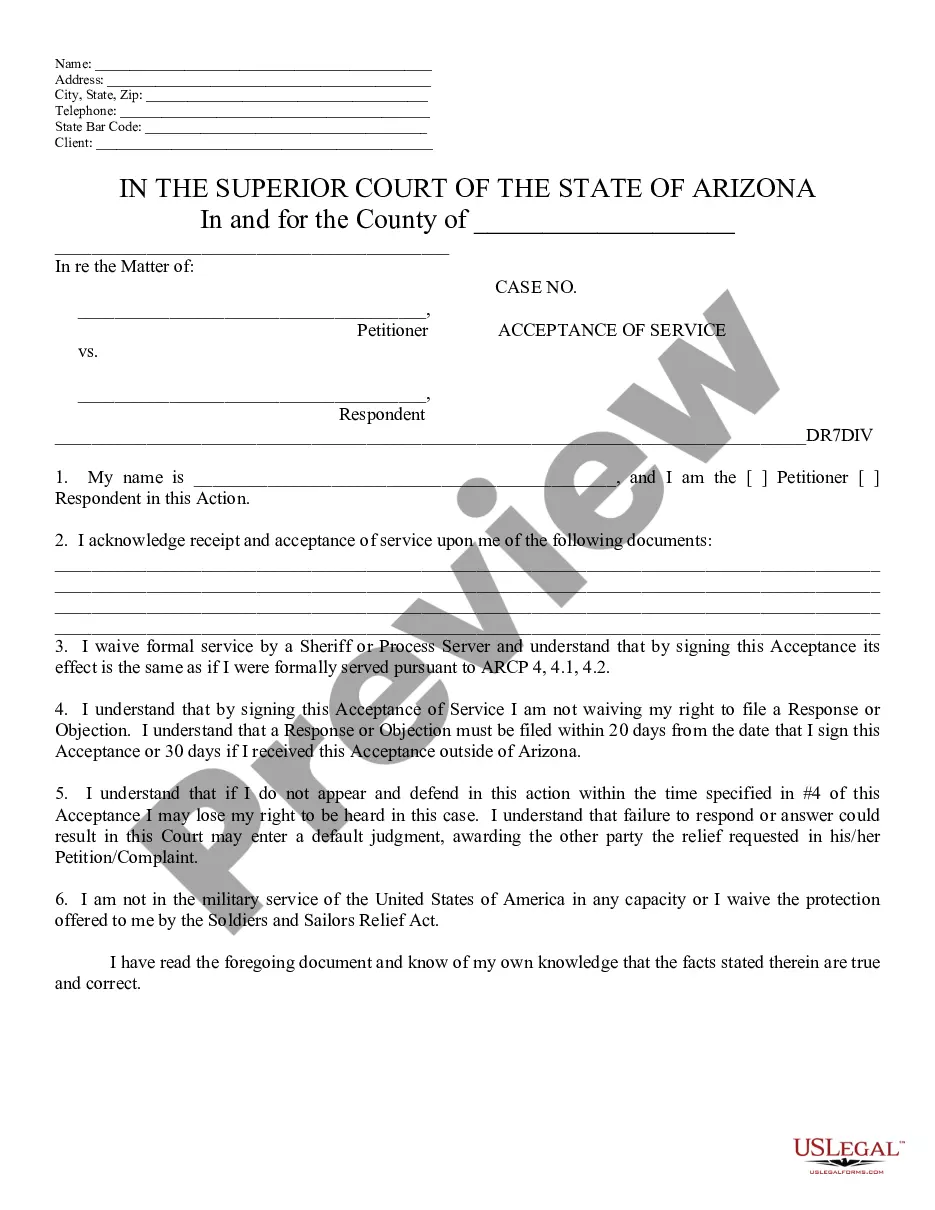
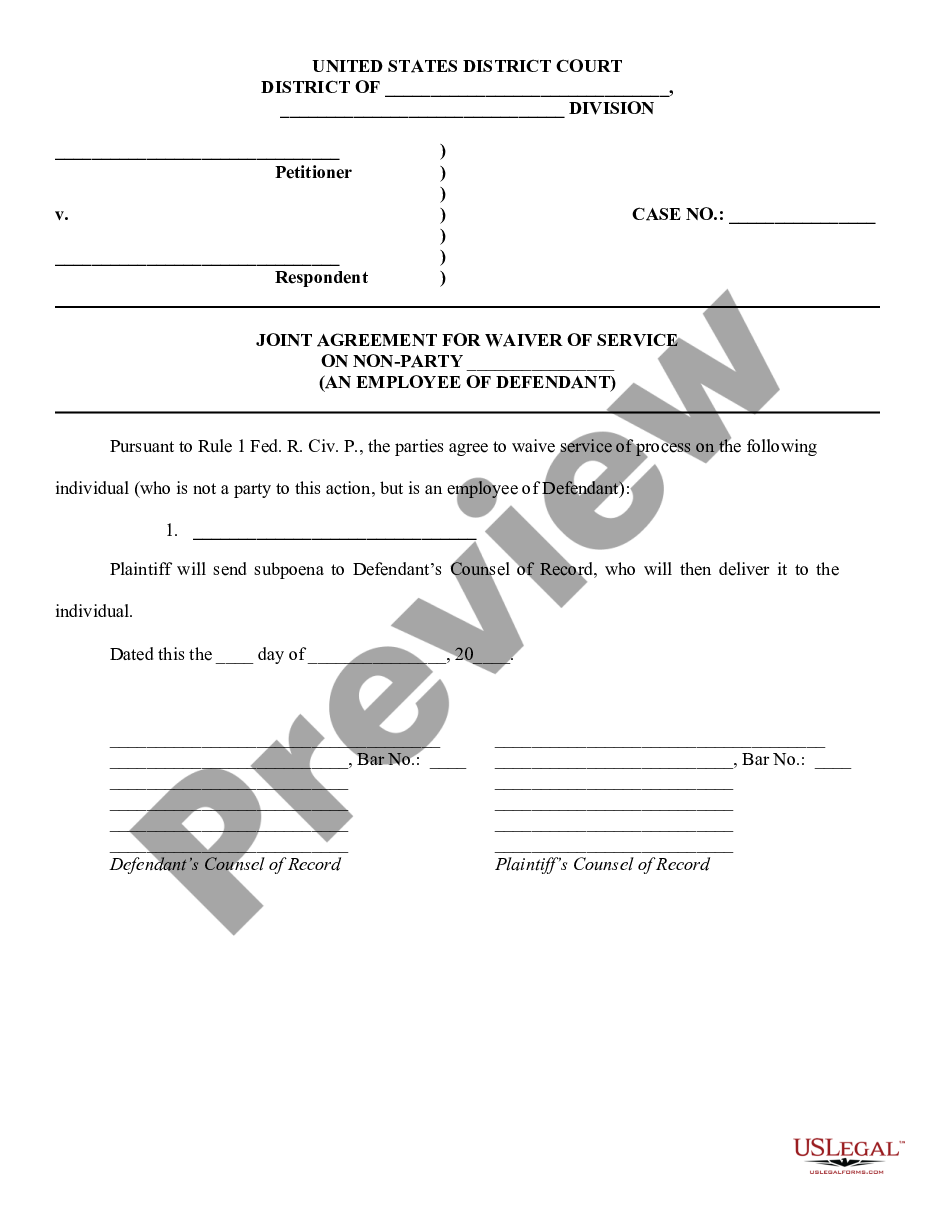
The Acceptance of Service form is a legal document that allows a spouse to acknowledge the receipt of divorce or legal separation papers. This form serves as a simplified method to accept court documents without the need for a process server or sheriff, thereby bypassing formal service requirements. By using this form, you confirm that you have received the legal papers necessary for your case, which helps streamline the divorce or legal separation process.
Form components explained
- Name and contact information of the parties involved.
- Checkboxes to indicate which legal documents have been received.
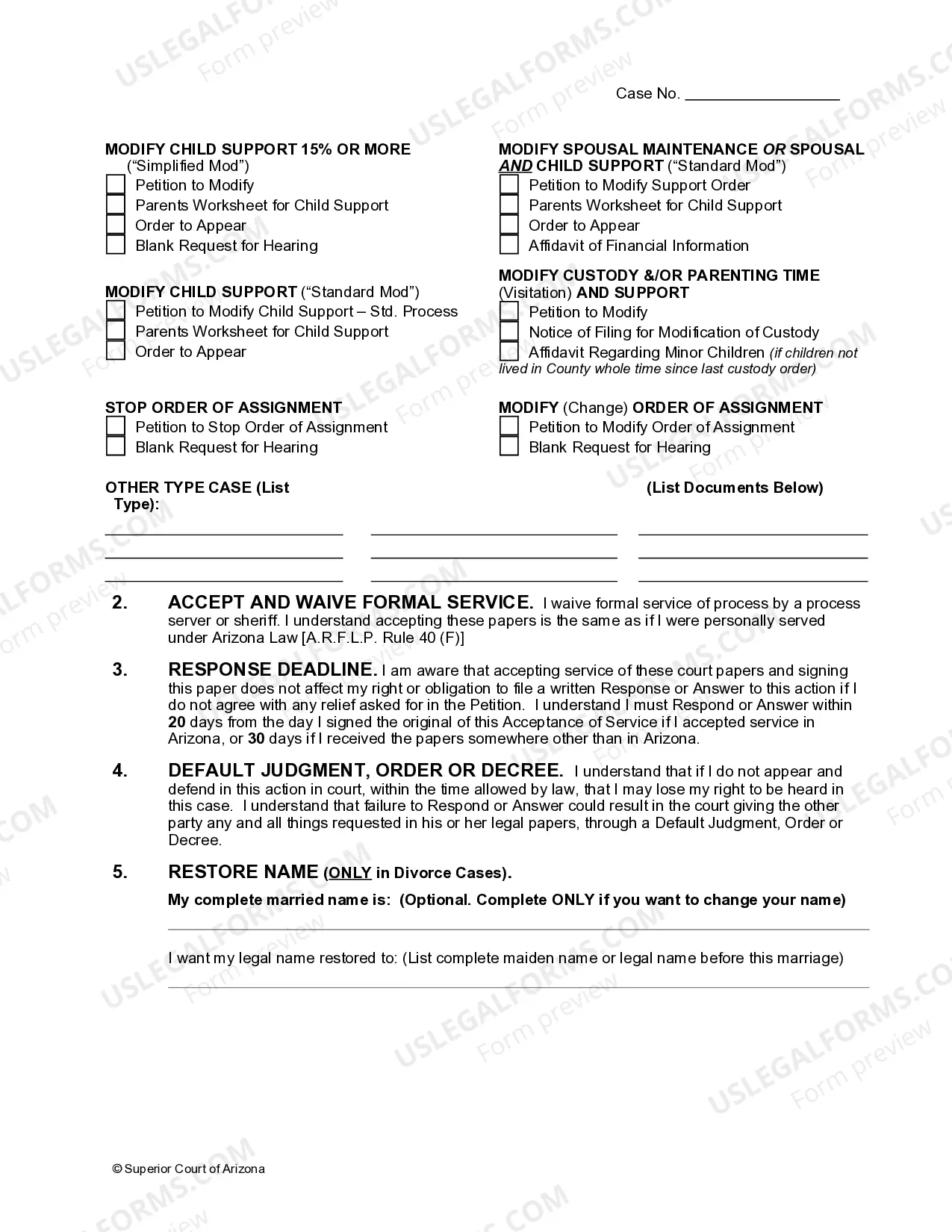
- Statement waiving formal service of process.
- Information regarding response deadlines to the court action.
- Optional section to restore a married name in divorce cases.
Common use cases
This form is used when a spouse wants to formally accept service of court documents related to divorce or legal separation. It is appropriate in cases where the other spouse has delivered the legal papers, and it eliminates the need for further confirmation of service. This form may also be utilized when parties wish to make the process less adversarial.
Who can use this document
- Individuals who are involved in a divorce or legal separation.
- Spouses who have been served legal documents and wish to acknowledge receipt.
- Respondents who want to simplify the process by waiving formal service.
Completing this form step by step
- Provide your name and contact information at the top of the form.
- Select the appropriate checkboxes for the legal documents you have received.
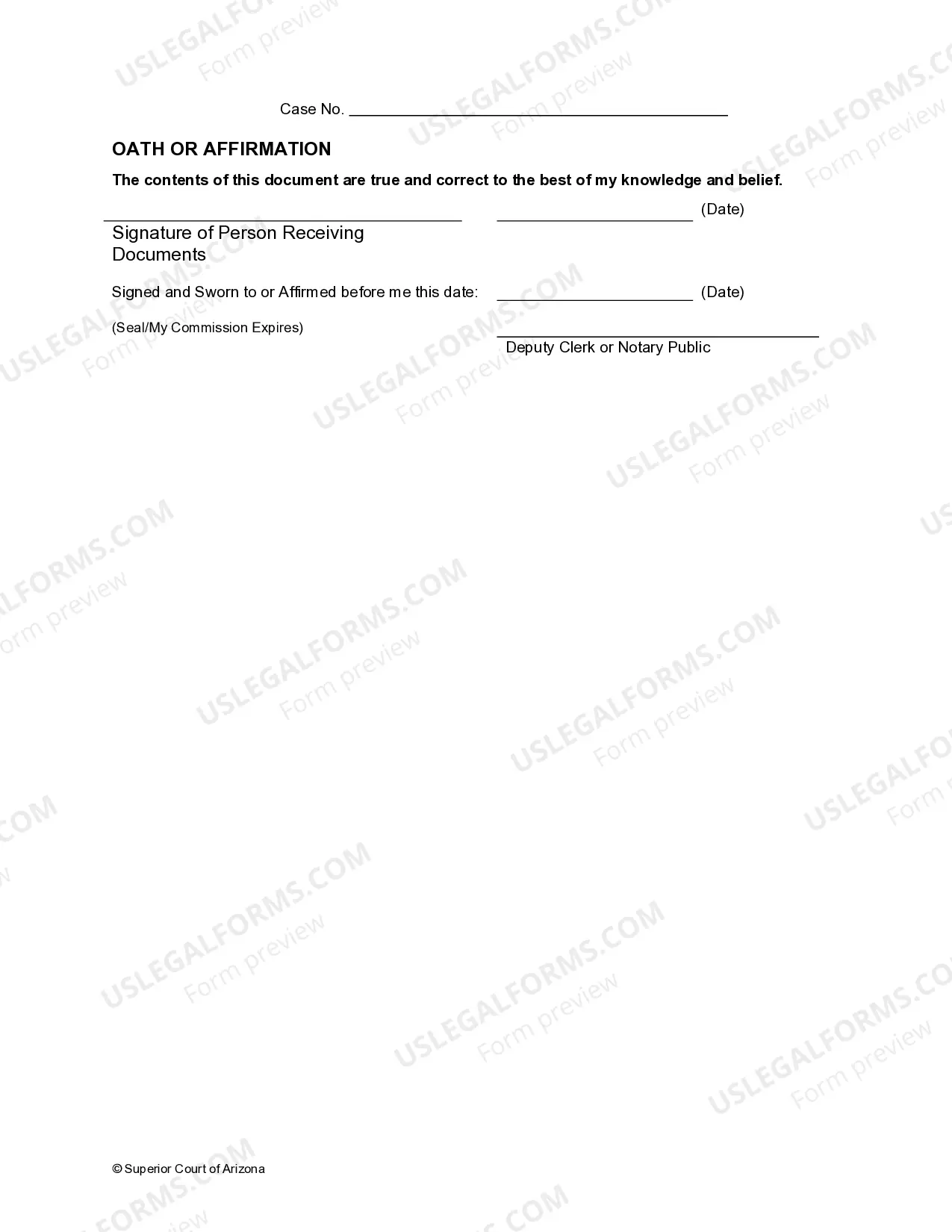
- Sign the form to acknowledge the acceptance of service.
- Note the response deadline indicated to ensure compliance with court requirements.
- If applicable, fill out the optional section for restoring your married name.
Does this document require notarization?
This form does not typically require notarization unless specified by local law.
Get your form ready online
Our built-in tools help you complete, sign, share, and store your documents in one place.
Make edits, fill in missing information, and update formatting in US Legal Forms—just like you would in MS Word.
Download a copy, print it, send it by email, or mail it via USPS—whatever works best for your next step.
Sign and collect signatures with our SignNow integration. Send to multiple recipients, set reminders, and more. Go Premium to unlock E-Sign.
If this form requires notarization, complete it online through a secure video call—no need to meet a notary in person or wait for an appointment.
We protect your documents and personal data by following strict security and privacy standards.

Make edits, fill in missing information, and update formatting in US Legal Forms—just like you would in MS Word.

Download a copy, print it, send it by email, or mail it via USPS—whatever works best for your next step.

Sign and collect signatures with our SignNow integration. Send to multiple recipients, set reminders, and more. Go Premium to unlock E-Sign.

If this form requires notarization, complete it online through a secure video call—no need to meet a notary in person or wait for an appointment.

We protect your documents and personal data by following strict security and privacy standards.
Common mistakes to avoid
- Failing to check all relevant documents received.
- Neglecting to sign and date the form.
- Missing the response deadline after accepting service.
Benefits of completing this form online
- Immediate access to a legally vetted form created by licensed attorneys.
- Convenient download and filing process, saving time and effort.
- Editable fields allow for personalized information input, reducing errors.
Legal use & context
- Legal enforceability of the Acceptance of Service depends on proper completion and filing with the court.
- Failure to respond within the specified timeframe can lead to unfavorable decisions by the court.
Main things to remember
- The Acceptance of Service facilitates a smoother divorce process by bypassing formal service requirements.
- Complete all necessary fields accurately to avoid delays in court proceedings.
- Be aware of deadlines to ensure your rights are protected during legal proceedings.
Looking for another form?

Form popularity
FAQ
Arizona Acceptance of Service lets a spouse acknowledge receipt of divorce or legal separation papers and waive formal service, so no process server or sheriff is needed. It confirms you’ve received the papers and keeps the case moving by outlining who is involved, which documents were received, and any response deadlines, with an optional name-restoration section.
Acceptance of service means you acknowledge you've received the court papers and agree to forego formal service. In Arizona, the Arizona Acceptance of Service form provides a simple, official way to confirm receipt for divorce or legal separation without further service steps, while still informing the court of your response obligations.
Using the Arizona Acceptance of Service waives formal service, so there is typically no separate response required to a process server. However, the court action still has deadlines, so it’s important to follow the specified response timetable to avoid default or other court actions.
The form notes response deadlines to the court action, so if a deadline is missed after using this form, the case may proceed without your input. Always aim to respond by the court’s deadline, and consider consulting an attorney if you need help meeting deadlines.
Generally, the Arizona Acceptance of Service provides an alternative to answering the door by allowing formal acknowledgment of receipt in writing. If you still receive court papers, you should follow the document’s instructions and meet the court’s deadlines; consult an attorney if you have questions about your obligations.
It is a simplified method to acknowledge receipt of divorce or legal separation papers without formal service by a process server or sheriff. The form records who is involved, which documents were received, includes a waiver of formal service, outlines response deadlines, and even offers an optional name-restoration section.