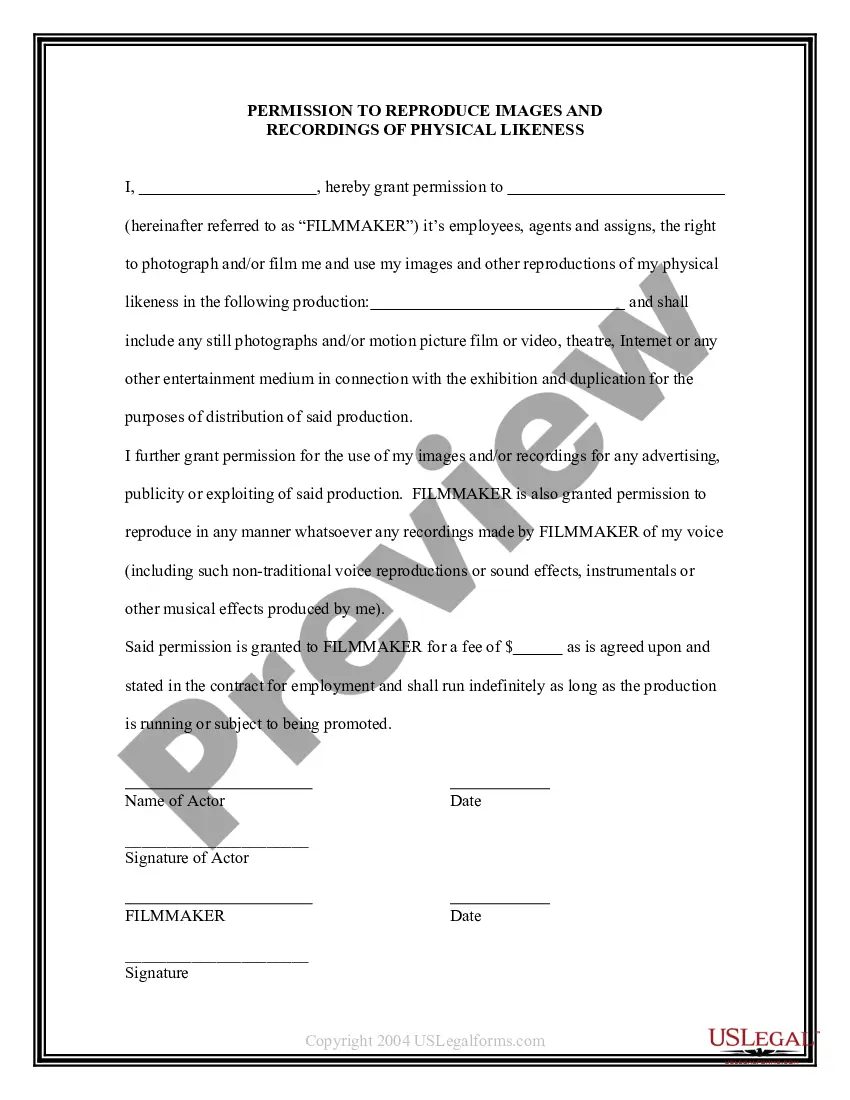
This is a form signed by an actor authorizing a filmmaker to use the actor's image or likeness in a movie production as well as for advertising and publicity reasons.
North Carolina Permission To Reproduce Images And Recordings Of Physical Likeness
State:
Multi-State
Control #:
US-PRM-25
Format:
Word;
Rich Text
Instant download
Description
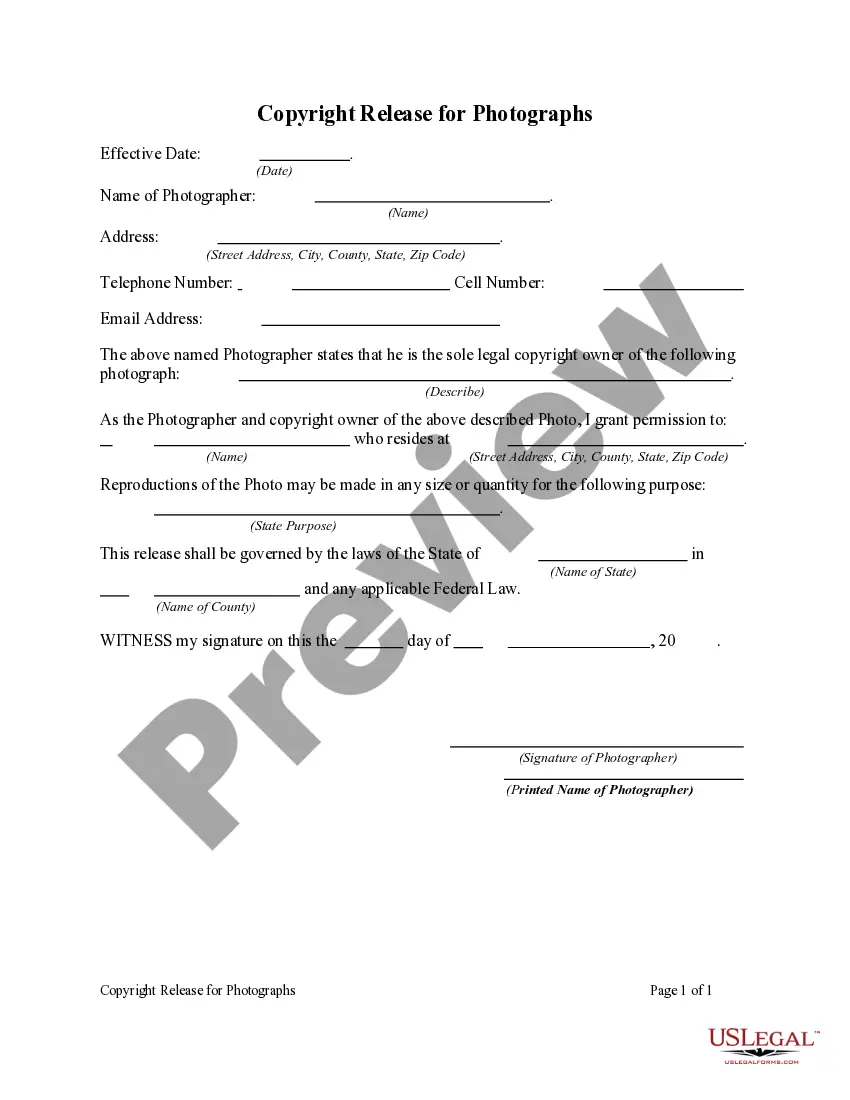
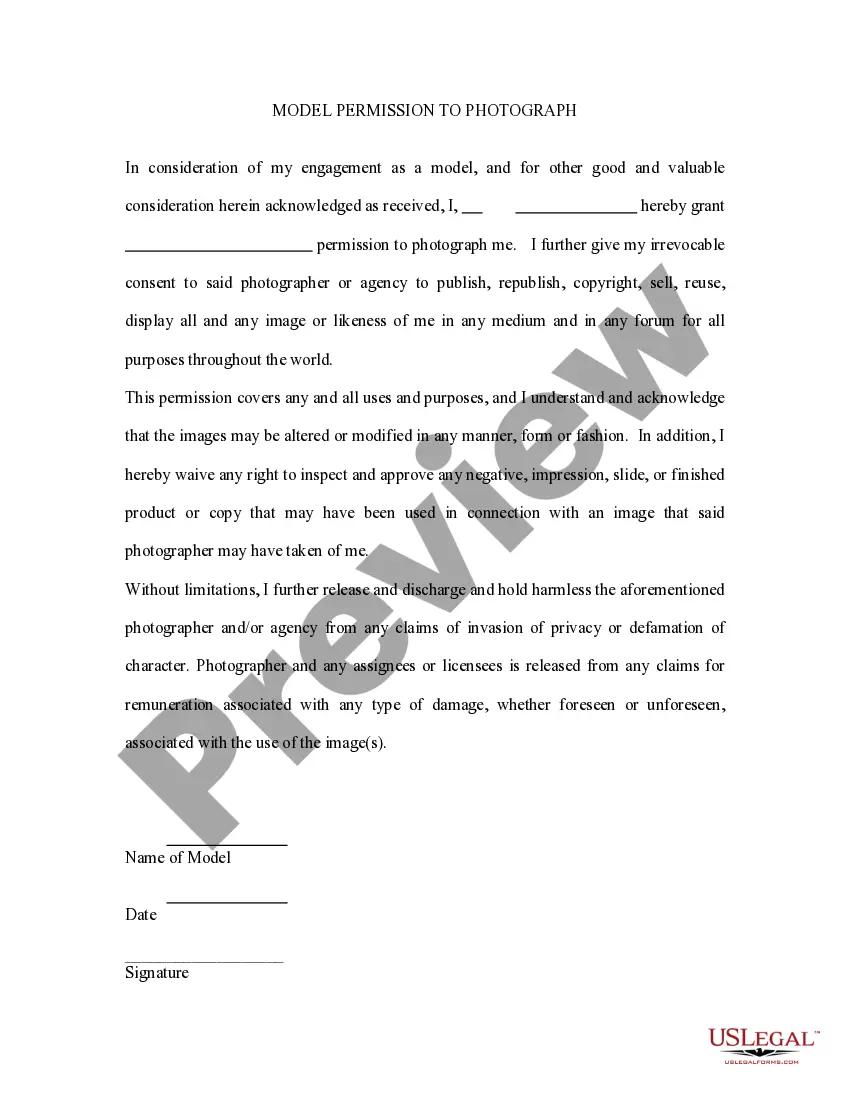
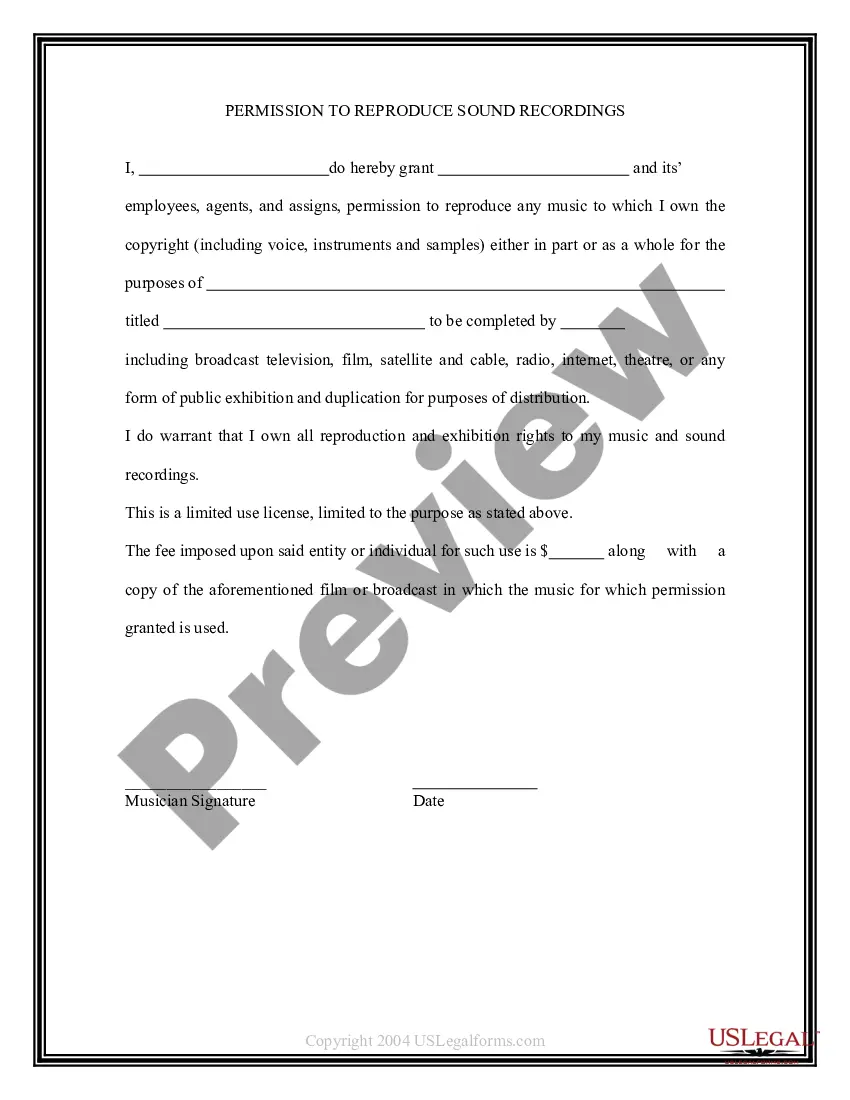
How to fill out Permission To Reproduce Images And Recordings Of Physical Likeness?
You might spend numerous hours online attempting to locate the legal document template that meets the state and federal requirements you need.
US Legal Forms provides a vast array of legal documents that are evaluated by professionals.
You can easily download or print the North Carolina Permission To Reproduce Images And Recordings Of Physical Likeness from the platform.
If available, utilize the Review button to preview the document template as well. To find another version of the form, use the Search field to locate the template that fits your requirements. Once you have identified the template you need, click on Get now to proceed. Select the payment plan you desire, enter your details, and register for an account on US Legal Forms. Complete the transaction. You can use your credit card or PayPal account to pay for the legal document. Choose the format of the document and download it to your device. Make modifications to your document if necessary. You can complete, edit, sign, and print the North Carolina Permission To Reproduce Images And Recordings Of Physical Likeness. Download and print a multitude of document templates using the US Legal Forms website, which offers the largest collection of legal documents. Utilize professional and state-specific templates to meet your business or personal needs.
- If you have a US Legal Forms account, you can Log In and click the Download button.
- After that, you can complete, modify, print, or sign the North Carolina Permission To Reproduce Images And Recordings Of Physical Likeness.
- Every legal document template you purchase is yours indefinitely.
- To obtain another copy of a purchased form, visit the My documents section and click the corresponding button.
- If you are accessing the US Legal Forms website for the first time, follow the simple steps below.
- First, ensure that you have selected the correct document template for your jurisdiction/area of interest.
- Check the form description to confirm that you have chosen the right form.
Form popularity
FAQ
Permission to use your likeness refers to the legal consent required to reproduce images or recordings of your physical appearance. In the context of North Carolina Permission To Reproduce Images And Recordings Of Physical Likeness, this consent is crucial for any commercial application. Without your permission, others may not have the right to use your image for advertising or promotional purposes. To ensure compliance, you can utilize platforms like uslegalforms to understand and formalize these permissions.
In North Carolina, it is generally legal to take pictures of people in public spaces without their consent. However, the North Carolina Permission To Reproduce Images And Recordings Of Physical Likeness becomes important if you intend to use those images commercially. Using someone's likeness for profit without permission can lead to legal issues. Therefore, always consider obtaining consent, especially for commercial use.
Yes, you can sue someone for video recording you without your permission in North Carolina, especially if it involves commercial use. The state's laws protect your rights regarding privacy and likeness, making it important to understand your options. If you're facing such an issue, consider using the US Legal Forms platform to find the necessary legal resources and support related to North Carolina Permission To Reproduce Images And Recordings Of Physical Likeness.
The 14.51 3 law in North Carolina addresses the unauthorized use of an individual's name or likeness for commercial purposes without consent. This law reinforces the importance of obtaining permission before reproducing images and recordings. Familiarity with this statute is crucial for anyone involved in North Carolina Permission To Reproduce Images And Recordings Of Physical Likeness, ensuring compliance and protection of rights.
Yes, North Carolina does recognize the tort of appropriation of name or likeness. This legal concept protects individuals from unauthorized commercial use of their identity. By understanding this tort, you can better navigate the complexities surrounding North Carolina Permission To Reproduce Images And Recordings Of Physical Likeness and take appropriate actions if your likeness is misused.
The Connor Act in North Carolina governs the permission to reproduce images and recordings of an individual's likeness. This law ensures that individuals maintain control over their personal image and prevents unauthorized usage that could harm their reputation. Understanding the Connor Act is essential for anyone looking to navigate North Carolina Permission To Reproduce Images And Recordings Of Physical Likeness, as it outlines the legal framework you must consider.
North Carolina recognizes only two of the four common-law claims for invasion of privacy: appropriation of one's likeness and intrusion upon seclusion. Public disclosure of private facts and publicity that places another in a false light to the public eye are not recognized.
Summary: At present, North Carolina does not have a general privacy act or any general constitutional right to privacy. In addition, North Carolina common law only recognises two of the four traditional common law claims for invasion of privacy: appropriation of one's likeness and intrusion upon seclusion.
You send a letter to the holder asking for permission and stating how you intend to use the image. The holder sends a letter back granting you permission. Your request should be as specific as possible in describing the intended use of the image.
The tort of invasion of privacy by intrusion into seclusion has been recognized in North Carolina and is defined as the intentional intrusion 'physically or otherwise, upon the solitude or seclusion of another or his private affairs or concerns 2024