Missouri Grant of Easement
Overview of this form
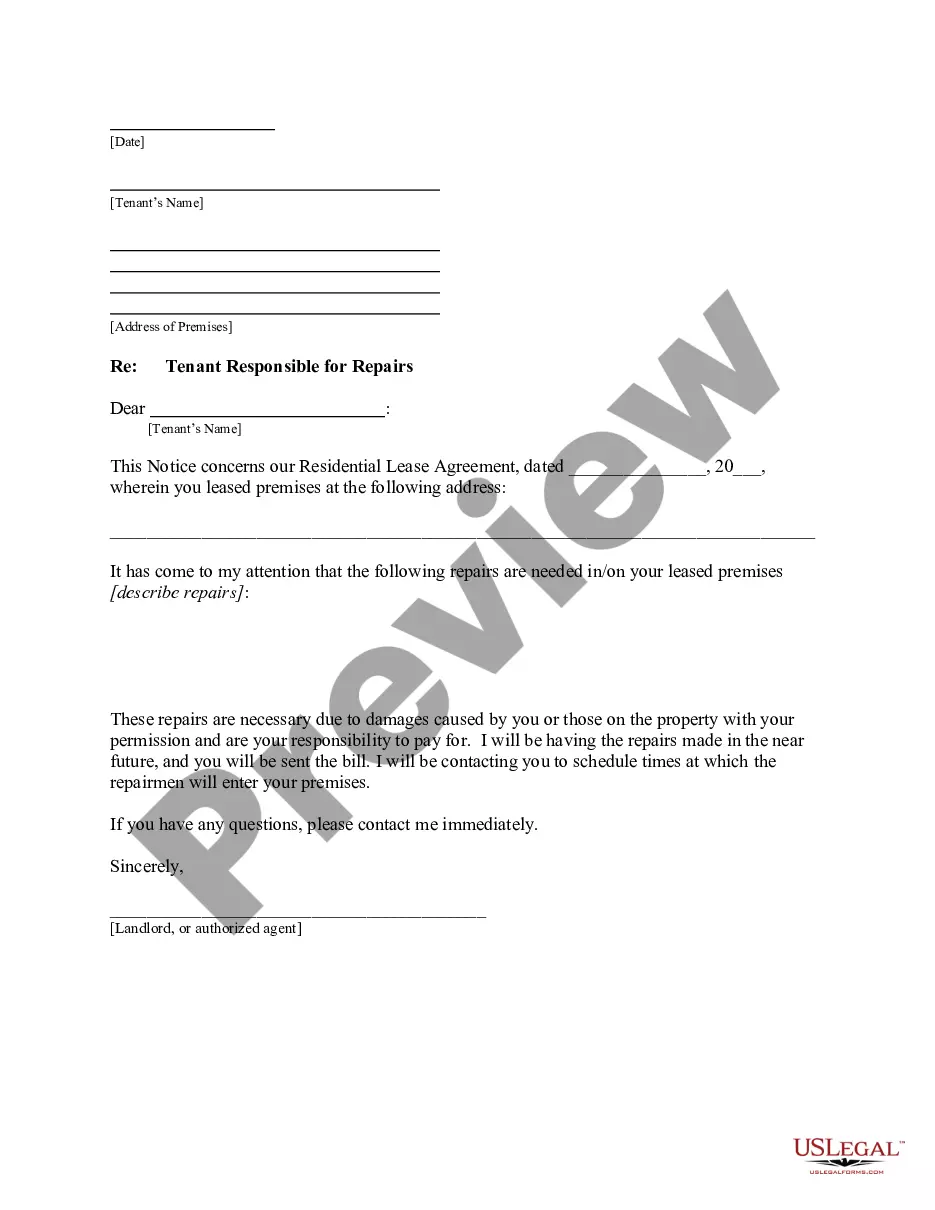
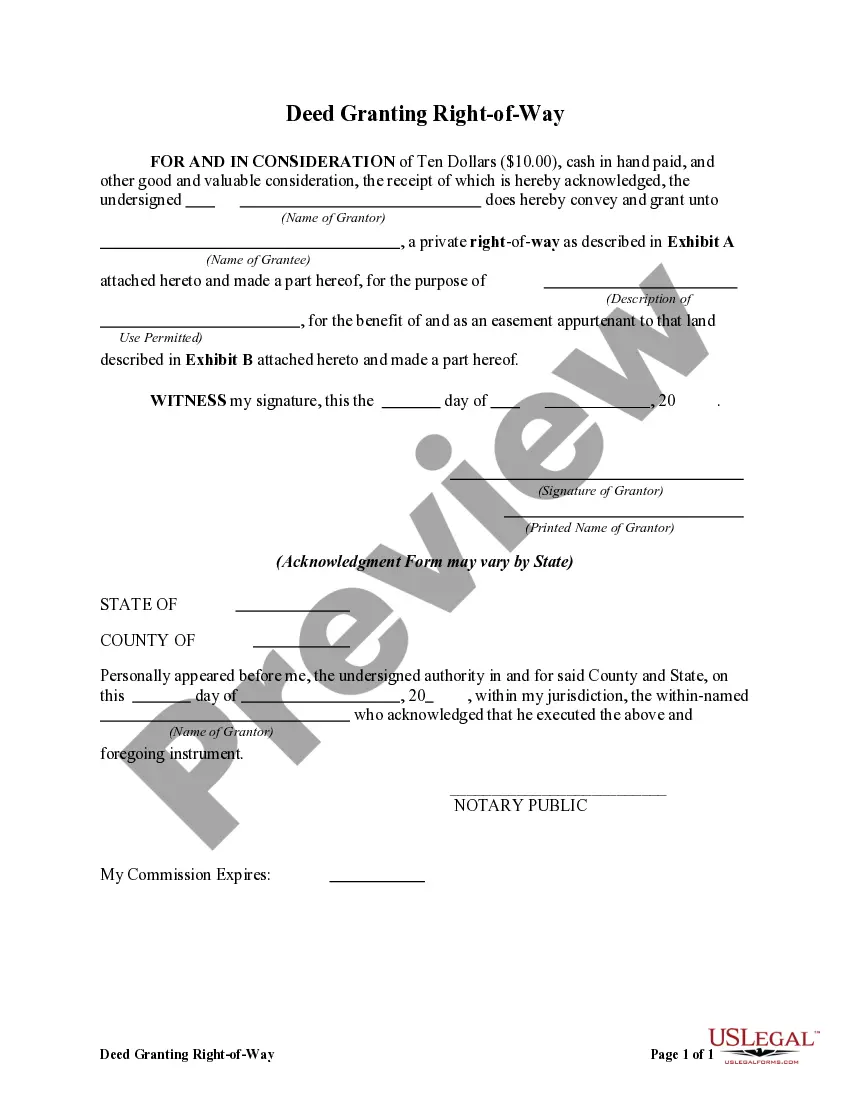
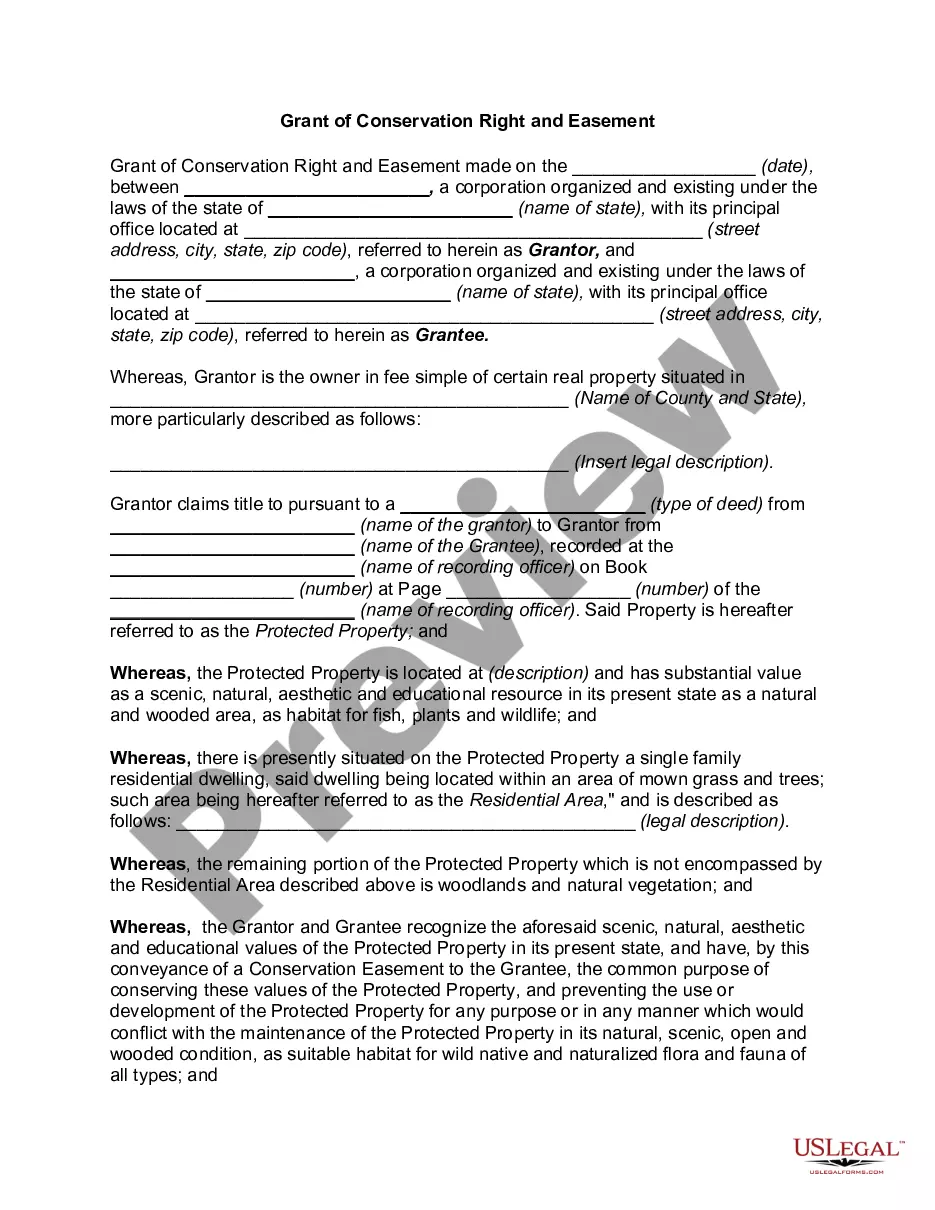
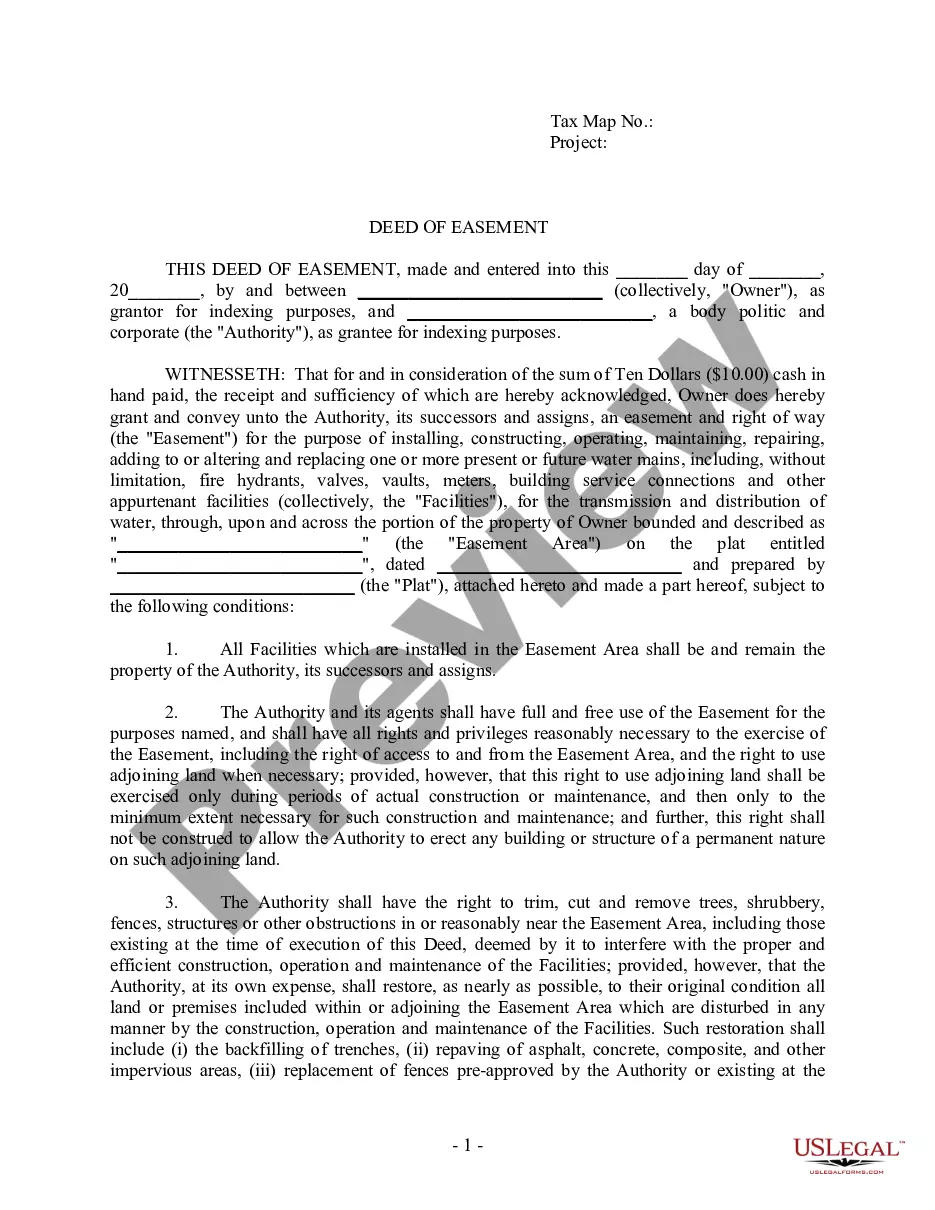
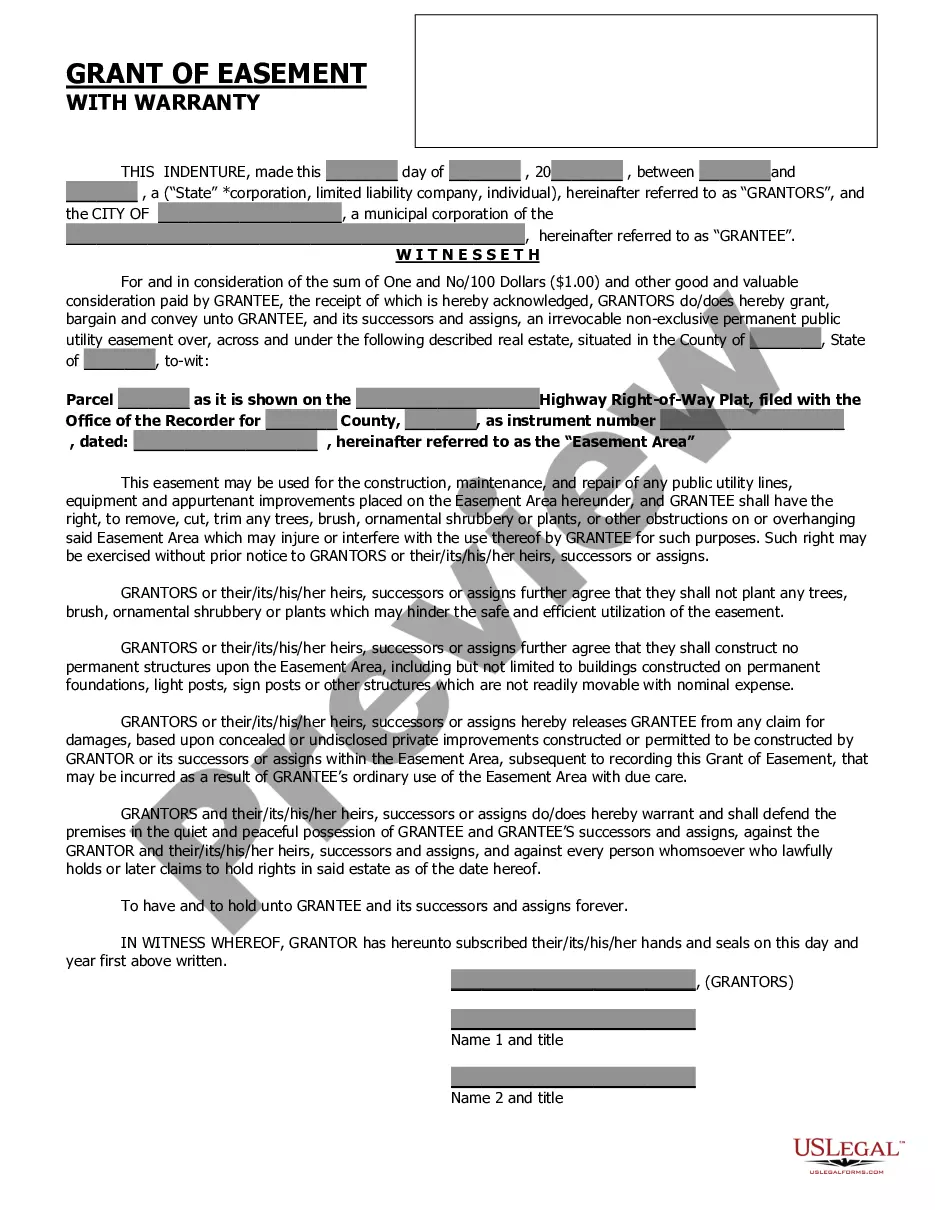
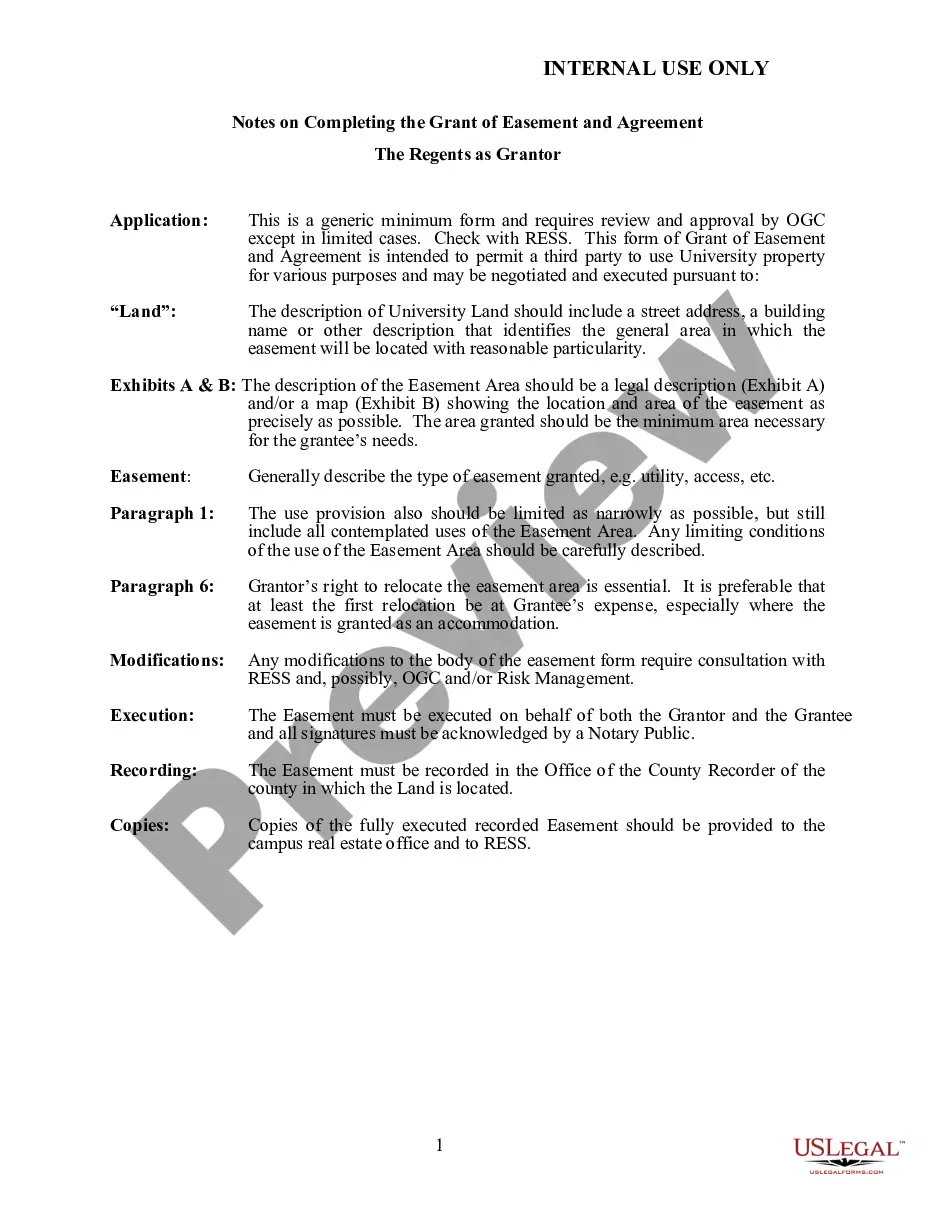
The Grant of Easement is a legal document that allows one party to use a portion of another party's property for a specific purpose. This form is critical for establishing rights for utilities, access paths, or other services across private or commercial land. It differs from similar forms like a Lease Agreement, which typically involves compensation for the use of the property rather than a granted right.
Key components of this form
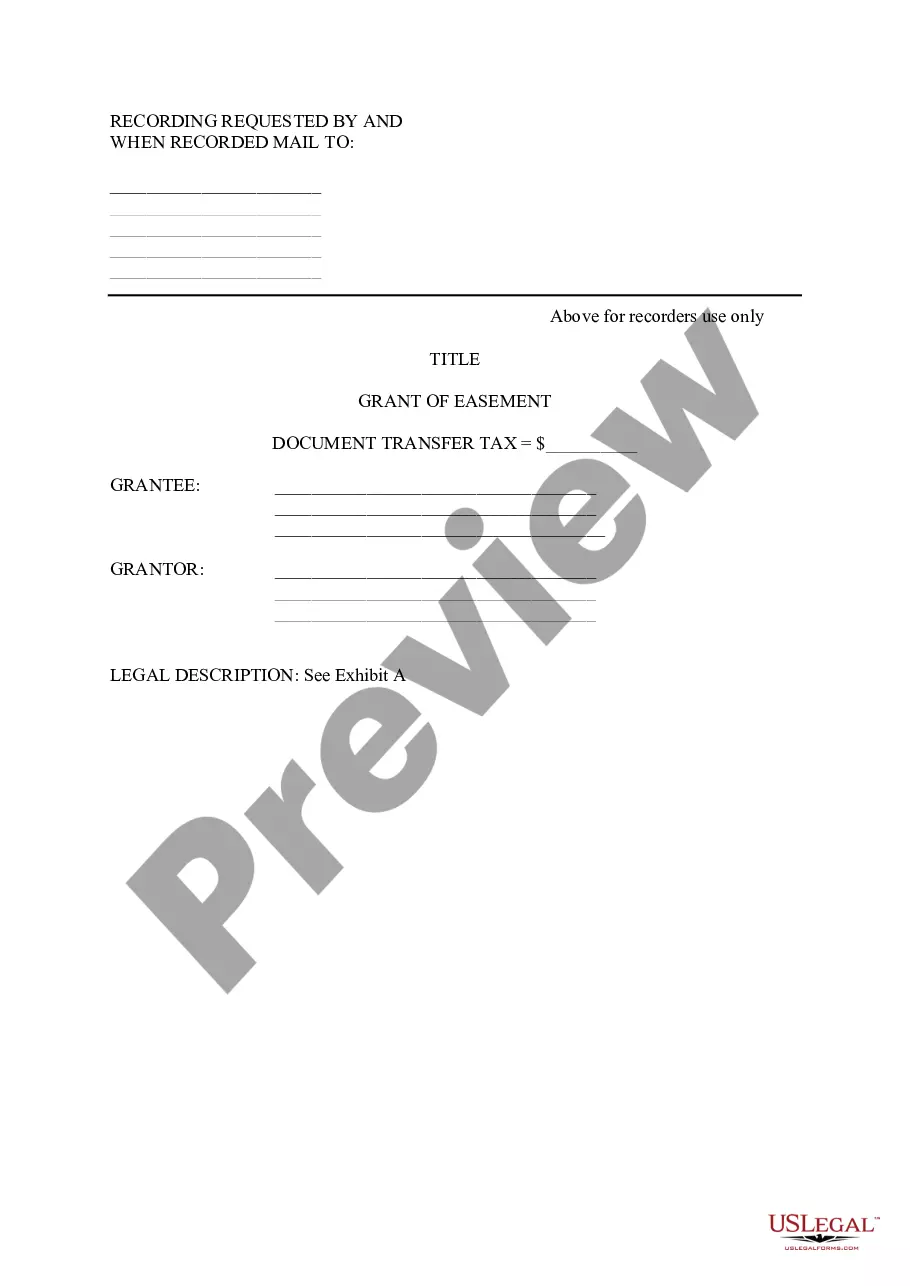
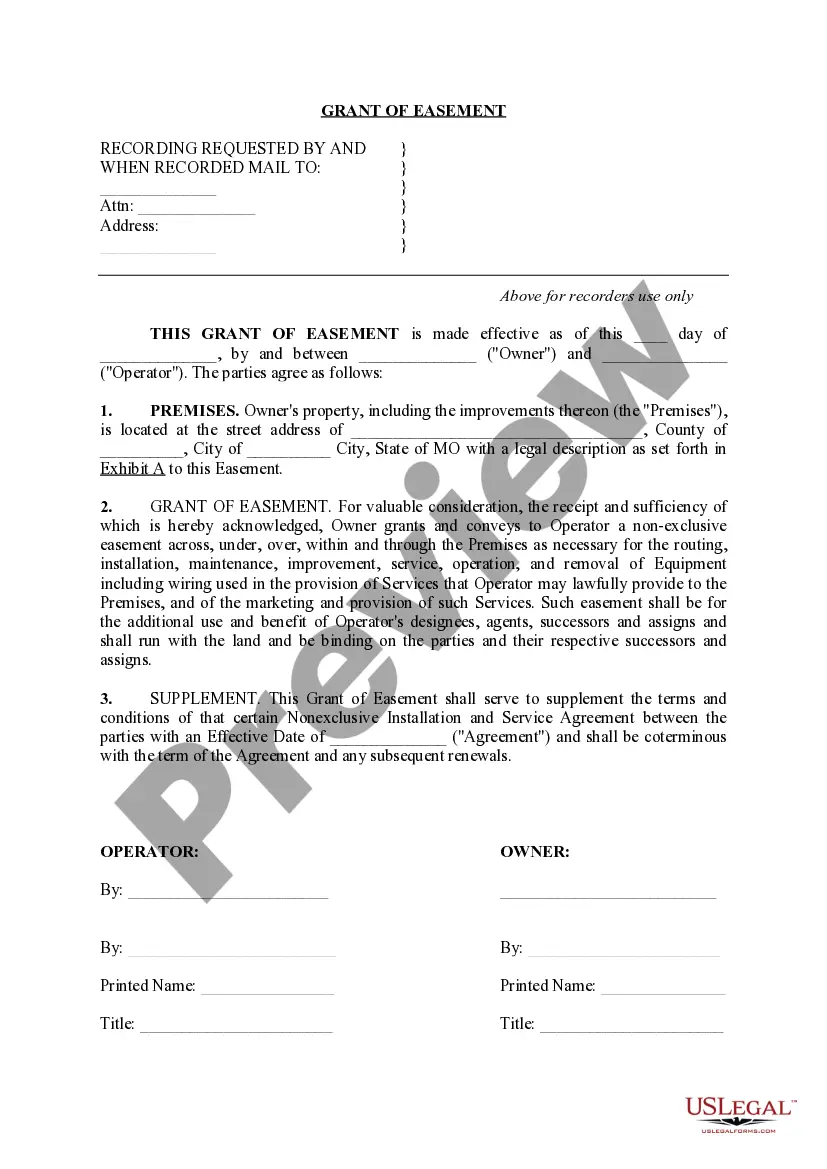
- Grantor and Grantee: The form identifies the property owner (Grantor) and the party receiving the easement (Grantee).
- Legal Description: It includes a detailed description of the property, usually attached as Exhibit A.
- Easement Terms: The document outlines the scope and limitations of the easement granted.
- Effective Date: The form specifies when the easement takes effect.
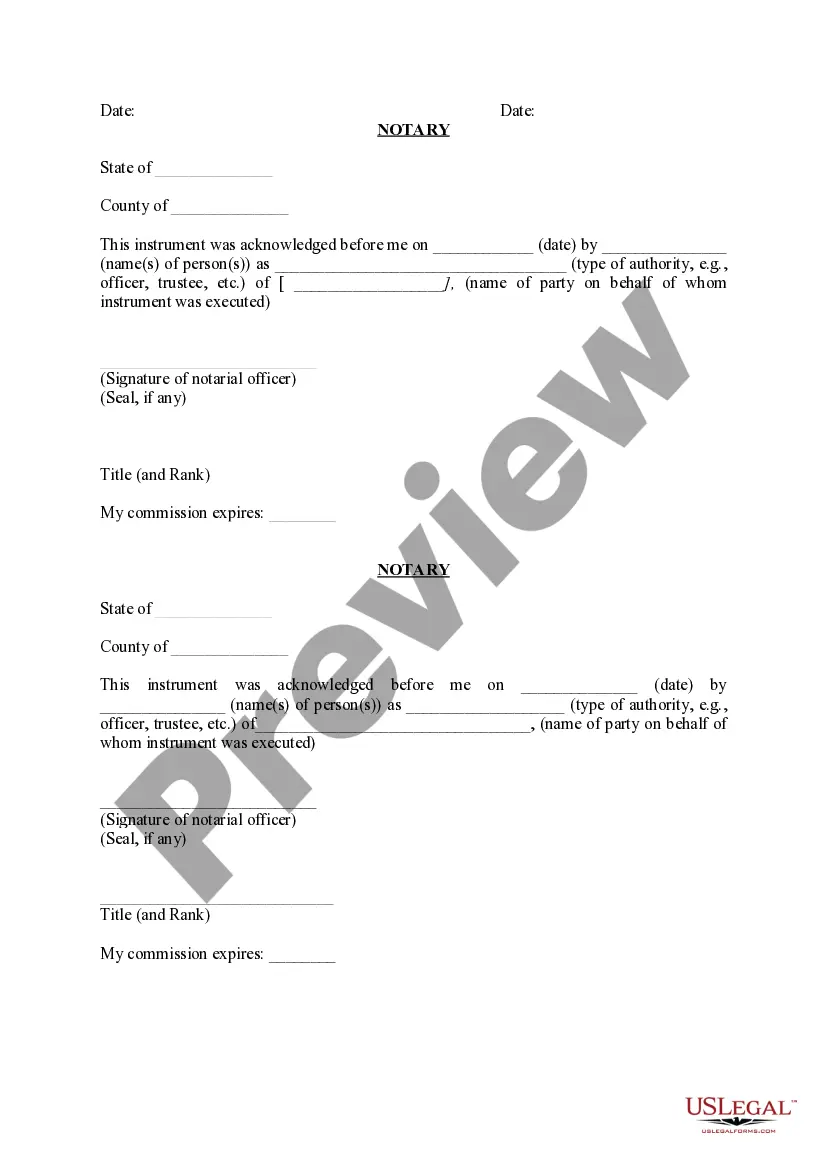
- Signatures: Required signatures from both parties, accompanied by notarization if necessary.
Situations where this form applies
This form is needed when a property owner wishes to grant specific rights to another party to use their property. Common scenarios include allowing utility companies to install and maintain lines, permitting access for a neighbor to cross private property, or providing access for public services. The form helps avoid disputes by clearly stating the rights and limitations associated with the easement.
Who can use this document
- Property owners who need to grant access rights to another party.
- Business entities seeking to install and maintain services that require use of private land.
- Individuals negotiating access paths with neighbors or public services.
How to prepare this document
- Identify the parties involved: the Grantor (property owner) and the Grantee (party receiving the easement).
- Provide the legal description of the property and attach any necessary additional documents as Exhibit A.
- Specify the terms of the easement, including the purpose and duration.
- Enter the effective date of the agreement.
- Ensure both parties sign the document in the presence of a notary, if required.
Does this form need to be notarized?
Yes, this form must be notarized to be legally valid. Notarization ensures the authenticity of the signatures and the agreement. US Legal Forms offers integrated online notarization, providing secure video calls that meet legal standards, making the process straightforward without the need for travel.
Get your form ready online
Our built-in tools help you complete, sign, share, and store your documents in one place.
Make edits, fill in missing information, and update formatting in US Legal Forms—just like you would in MS Word.
Download a copy, print it, send it by email, or mail it via USPS—whatever works best for your next step.
Sign and collect signatures with our SignNow integration. Send to multiple recipients, set reminders, and more. Go Premium to unlock E-Sign.
If this form requires notarization, complete it online through a secure video call—no need to meet a notary in person or wait for an appointment.
We protect your documents and personal data by following strict security and privacy standards.

Make edits, fill in missing information, and update formatting in US Legal Forms—just like you would in MS Word.

Download a copy, print it, send it by email, or mail it via USPS—whatever works best for your next step.

Sign and collect signatures with our SignNow integration. Send to multiple recipients, set reminders, and more. Go Premium to unlock E-Sign.

If this form requires notarization, complete it online through a secure video call—no need to meet a notary in person or wait for an appointment.

We protect your documents and personal data by following strict security and privacy standards.
Common mistakes to avoid
- Failing to provide a complete legal description of the property.
- Not specifying the boundaries or limitations of the easement clearly.
- Neglecting to have the form notarized, if required by state law.
- Forgetting to keep a copy of the signed Grant of Easement for personal records.
Key takeaways
- The Grant of Easement allows one party to use another's property under specific conditions.
- Clearly define the rights and limitations to avoid future disputes.
- Notarization may be required for validity, depending on local laws.
- This form can be easily completed and downloaded for personal use.
Looking for another form?


Form popularity
FAQ
The most common way to create a Missouri Grant of Easement is through an express agreement between the property owner and the party seeking the easement. This agreement outlines the terms and conditions, ensuring both parties understand their rights and responsibilities. It's important to draft this document clearly, and using a service like US Legal Forms can help you create a comprehensive agreement that meets all legal standards.
Obtaining a Missouri Grant of Easement involves several steps that you should follow carefully. First, identify the property and the type of easement you need. Next, approach the property owner to negotiate terms, possibly drafting a formal agreement. For a smoother process, consider using US Legal Forms to access templates and legal advice tailored to your specific situation.
To establish a Missouri Grant of Easement, several requirements must be met. First, there must be a clear intention to grant the easement, along with a defined purpose, such as access or utility use. Additionally, the easement must be recorded properly to ensure it is legally enforceable. Using US Legal Forms can help you understand and fulfill these requirements efficiently.
Securing a Missouri Grant of Easement by necessity can be challenging, but it is achievable with the right approach. Generally, you must demonstrate that access to your property is essential for its use and that no alternative routes are available. This often involves gathering evidence and possibly entering legal negotiations. US Legal Forms can assist you in preparing the necessary paperwork to strengthen your case.
Ask him to grant you a formal easement by deed. Your neighbor the servient, or burdened landowner can give the easement of his own accord, but he is not obligated to do this. The chances are, you will have to negotiate a price; an easement is, after all, an interest in land, which has a value attached to it.
When you're buying a house, you might find out that the property has an easement on it. Essentially this means that someone other than you could have access to the land. This isn't necessarily a bad thing. For example, utility companies typically hold easements in case they need to access pipes or cables.
An easement can decrease the value of a real estate, increase the value of the real estate or it can have no impact on the value of the real estate at all. The most important fact is that each property and situation should be evaluated on individual basis, taking into account all the circumstances.
The Good Relationship. The person with the property often has a working or good relationship with neighbors.The easement is sometimes a necessity because of restrictions of the land the other person owns or is leasing such as a company or organizational situation.
If an authority has an easement registered over your land, they have the right to access the easement to maintain or repair the easement land or their equipment on the land.
The measure and impact (value) of an easement is the loss in value to the remainder property after imposition of the easement. This diminution is comprised of both the easement acquisition and damage (if any) to the remainder.