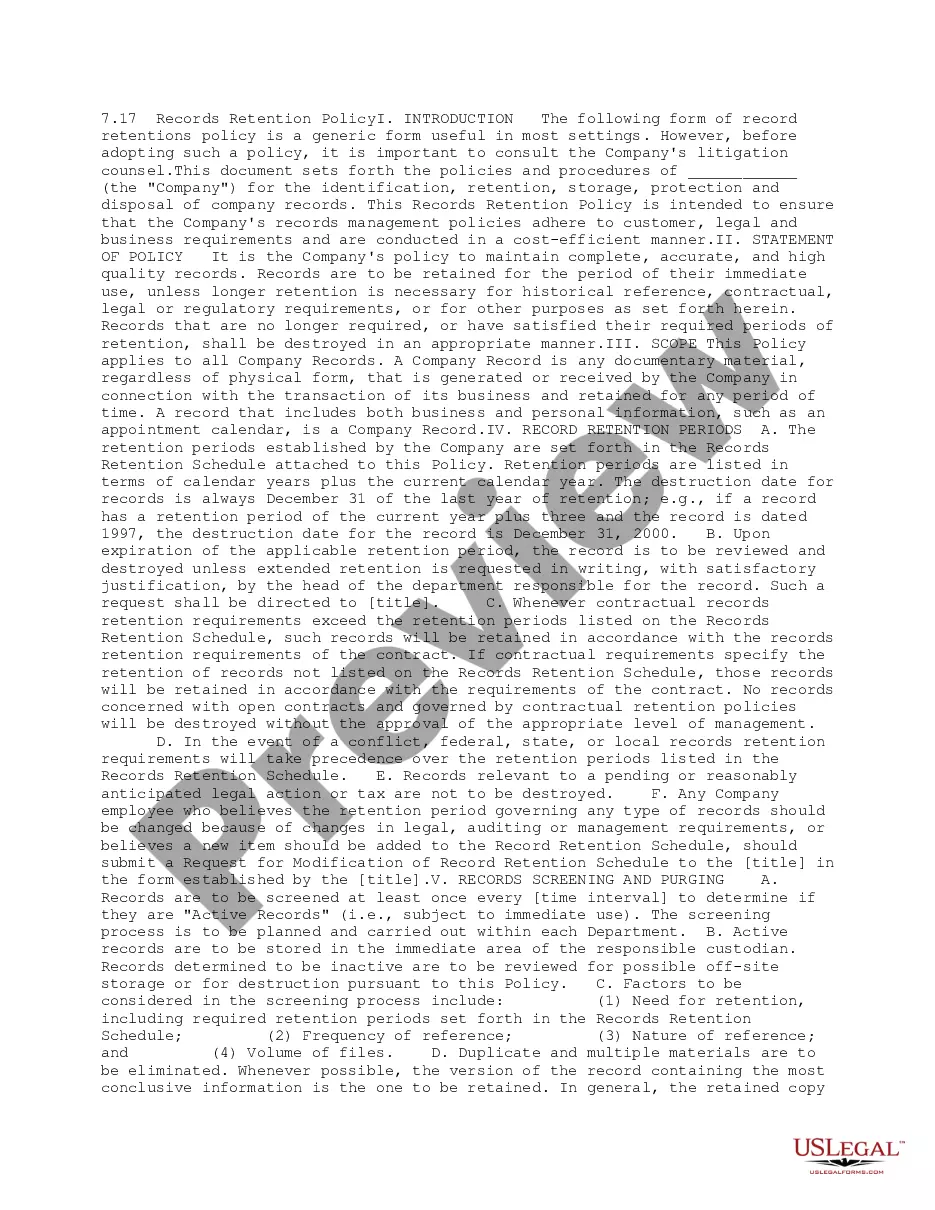
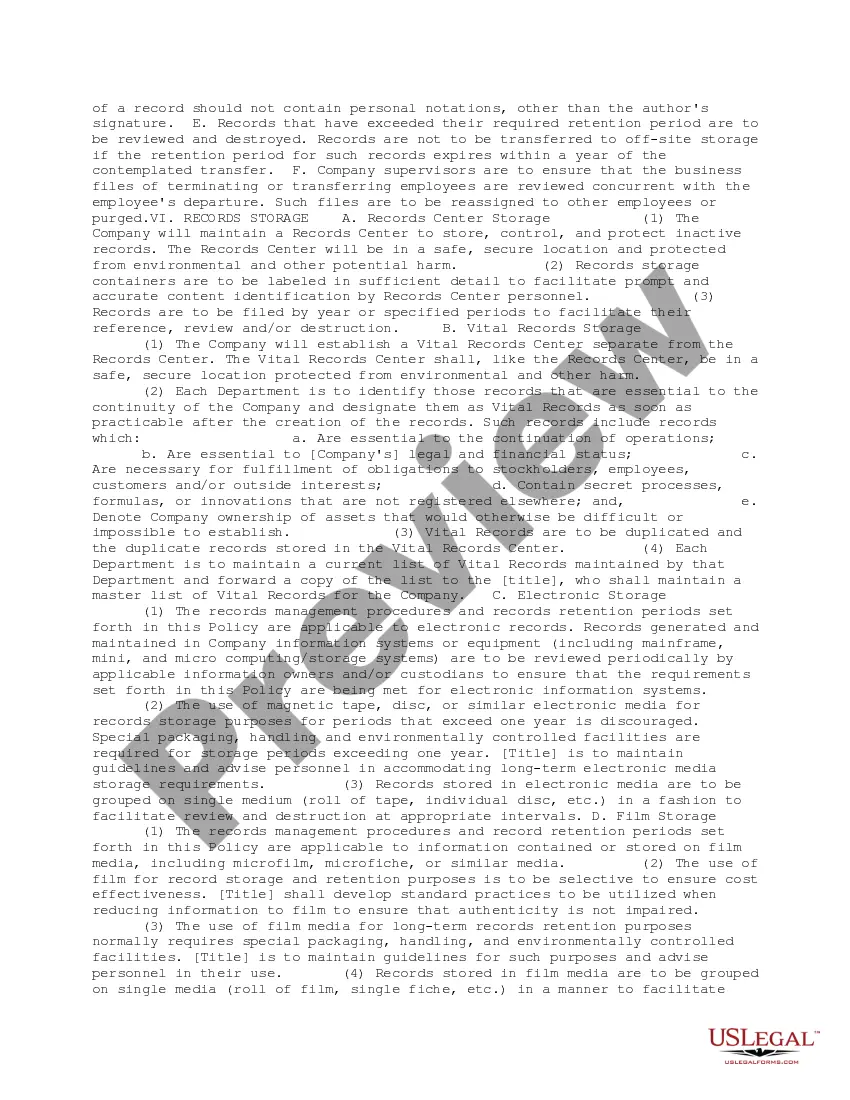
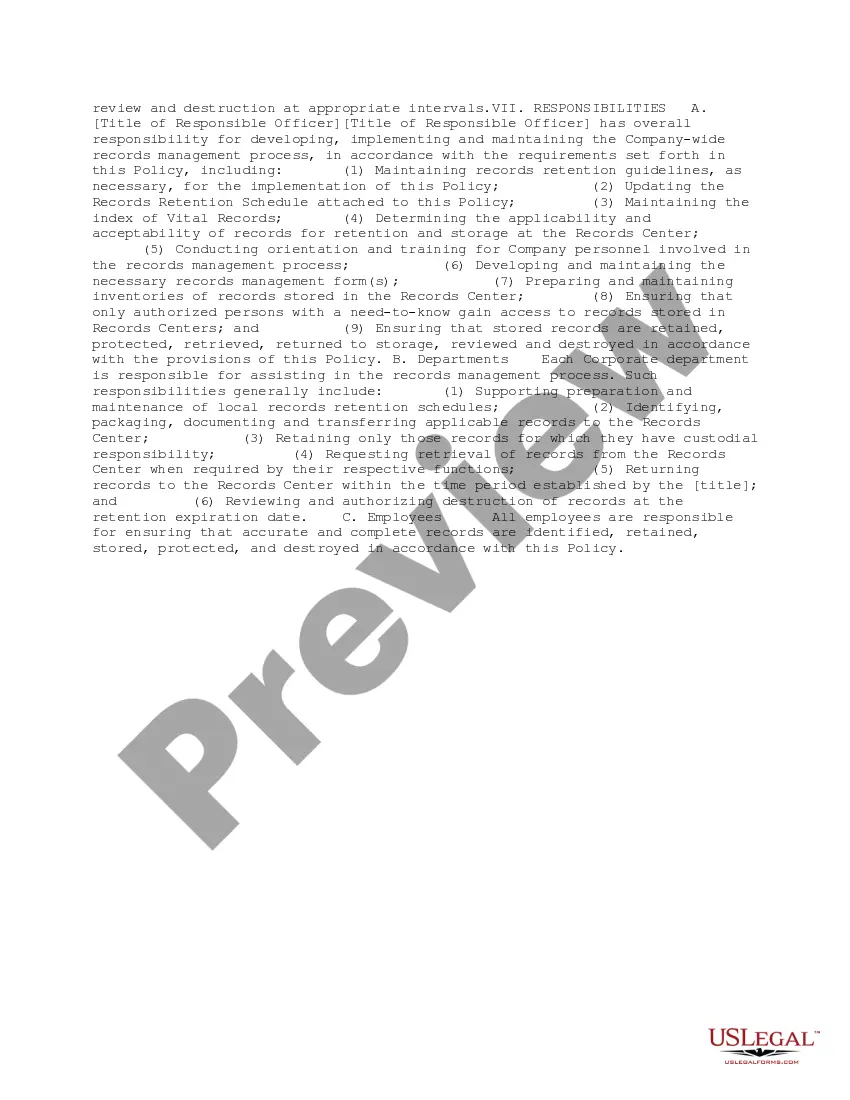
This due diligence form entails policies and procedures for the identification, retention, storage, protection and disposal of company records. This Records Retention Policy is intended to ensure that the company's records management policies adhere to customer, legal and business requirements and are conducted in a cost-efficient manner.
North Carolina Records Retention Policy
Category:
State:
Multi-State
Control #:
US-DD0717
Format:
Word;
PDF;
Rich Text
Instant download
Description
Free preview
Get your form ready online
Our built-in tools help you complete, sign, share, and store your documents in one place.
Built-in online Word editor
Make edits, fill in missing information, and update formatting in US Legal Forms—just like you would in MS Word.
Export easily
Download a copy, print it, send it by email, or mail it via USPS—whatever works best for your next step.
E-sign your document
Sign and collect signatures with our SignNow integration. Send to multiple recipients, set reminders, and more. Go Premium to unlock E-Sign.
Notarize online 24/7
If this form requires notarization, complete it online through a secure video call—no need to meet a notary in person or wait for an appointment.
Store your document securely
We protect your documents and personal data by following strict security and privacy standards.

Make edits, fill in missing information, and update formatting in US Legal Forms—just like you would in MS Word.

Download a copy, print it, send it by email, or mail it via USPS—whatever works best for your next step.

Sign and collect signatures with our SignNow integration. Send to multiple recipients, set reminders, and more. Go Premium to unlock E-Sign.

If this form requires notarization, complete it online through a secure video call—no need to meet a notary in person or wait for an appointment.

We protect your documents and personal data by following strict security and privacy standards.
Looking for another form?



How to fill out Records Retention Policy?
You may spend hours online attempting to locate the official document template that meets the federal and state requirements you have.
US Legal Forms provides thousands of legal forms that are assessed by experts.
You can easily download or print the North Carolina Records Retention Policy from the service.
If available, utilize the Preview button to review the document template as well. If you wish to find another version of the form, use the Search area to locate the template that meets your needs and requirements.
- If you have a US Legal Forms account, you can Log In and click on the Acquire button.
- After that, you can complete, edit, print, or sign the North Carolina Records Retention Policy.
- Every legal document template you obtain is yours permanently.
- To retrieve another copy of a purchased form, go to the My documents tab and click the corresponding button.
- If you are using the US Legal Forms site for the first time, follow the simple instructions below.
- First, ensure that you have chosen the correct document template for the state/town of your choice.
- Read the form description to ensure you have selected the appropriate form.
Form popularity
FAQ
A record retention policy typically includes the types of records to be retained, their retention periods, and guidelines for their secure disposal. In line with the North Carolina Records Retention Policy, it should also address compliance requirements and outline procedures for audits. Additionally, effective policies often contain roles and responsibilities for employees to enhance accountability and ensure consistent implementation.
When writing a data retention policy, begin with an introduction that outlines its purpose and importance. Reference the North Carolina Records Retention Policy to establish necessary legal frameworks. Include sections on records classification, retention periods, and the responsibilities of staff members regarding adherence. Finally, make sure to review and update the policy regularly to reflect changes in laws and organizational needs.
An example of a data retention policy could include specific timelines for retaining financial records, such as keeping tax documents for seven years as suggested by the North Carolina Records Retention Policy. The policy may also specify shorter retention periods for internal communications, like emails, which could be retained for three years. These guidelines ensure compliance while allowing for efficient data management.
To create a retention policy, start by identifying the types of records your organization handles. Next, determine the legal requirements for retaining these records based on the North Carolina Records Retention Policy. It is crucial to involve stakeholders to ensure the policy meets both operational needs and compliance standards. Finally, draft the policy with clear guidelines on retention periods and disposal methods.
The first step in developing a record retention program is conducting a comprehensive needs assessment. This involves understanding your organization's specific record types and how they align with the North Carolina Records Retention Policy. Once you have identified the records, you can evaluate what needs to be retained and for how long. This step is crucial for creating a tailored and effective program.
The 7 year retention rule refers to the guideline that many types of business records, including tax-related documents, should be kept for at least seven years. This rule aligns with the North Carolina Records Retention Policy, ensuring compliance for financial records. Keeping records for this duration helps prepare for potential audits and disputes. Organizations should regularly review their records for relevance and compliance with this rule.
The first step in establishing a records retention program is to assess your current record-keeping practices. This assessment should include identifying all types of records your organization holds in relation to the North Carolina Records Retention Policy. After inventorying records, you can begin to align your practices with applicable legal requirements. This foundational step sets the stage for developing an effective program.
In North Carolina, the general rule is to retain medical records for at least 11 years from the last treatment date. This time frame is consistent with the North Carolina Records Retention Policy. However, certain types of records, such as those involving minors, may have different retention periods. It is crucial to consult the relevant guidelines to ensure compliance.
The record retention process involves categorizing records, determining how long they should be kept, and deciding when to dispose of them. Under the North Carolina Records Retention Policy, each record type has specific legal and operational guidelines to follow. Organizations need to regularly review their records to ensure compliance with these policies. This systematic approach helps protect sensitive information and reduces liability.
To create a robust records retention schedule under the North Carolina Records Retention Policy, begin by identifying the types of records your organization generates. Next, assess the legal requirements for each type of record. After that, determine retention periods based on regulatory guidelines and operational needs. Finally, document the schedule and ensure it is communicated clearly to all relevant stakeholders.