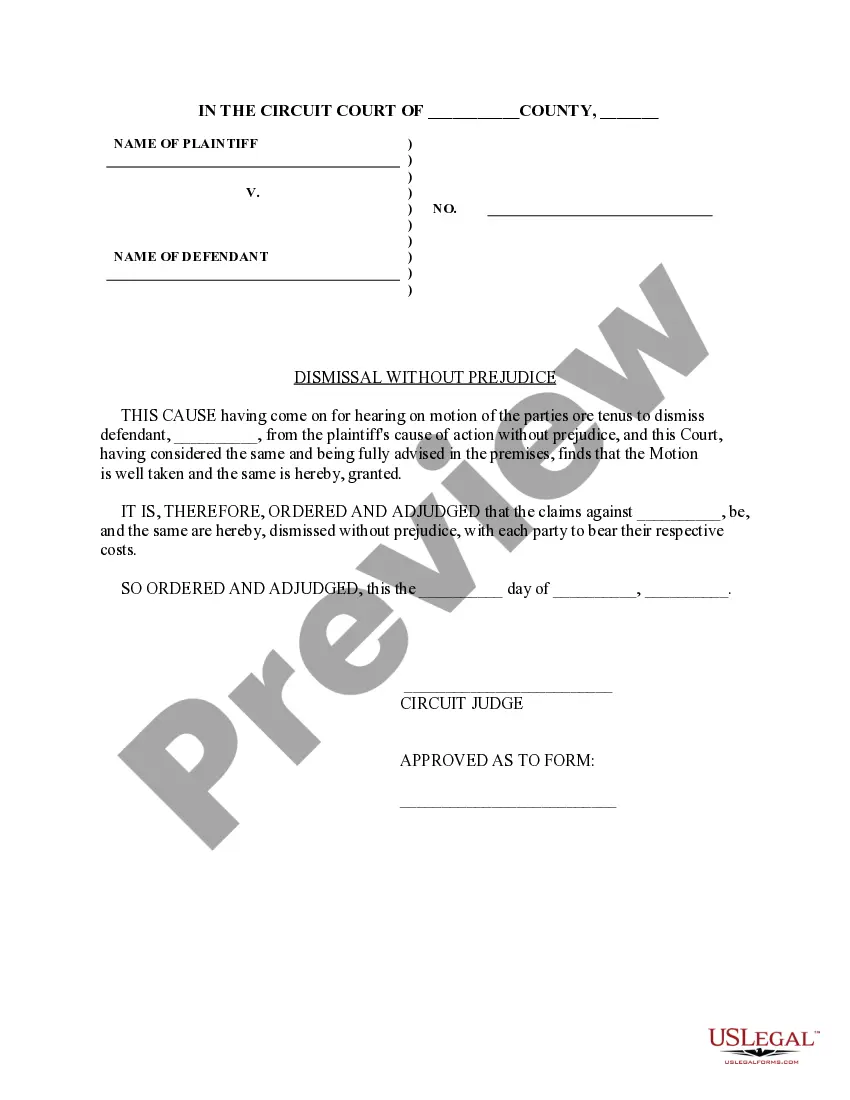
North Carolina Dismissal Without Prejudice
Description
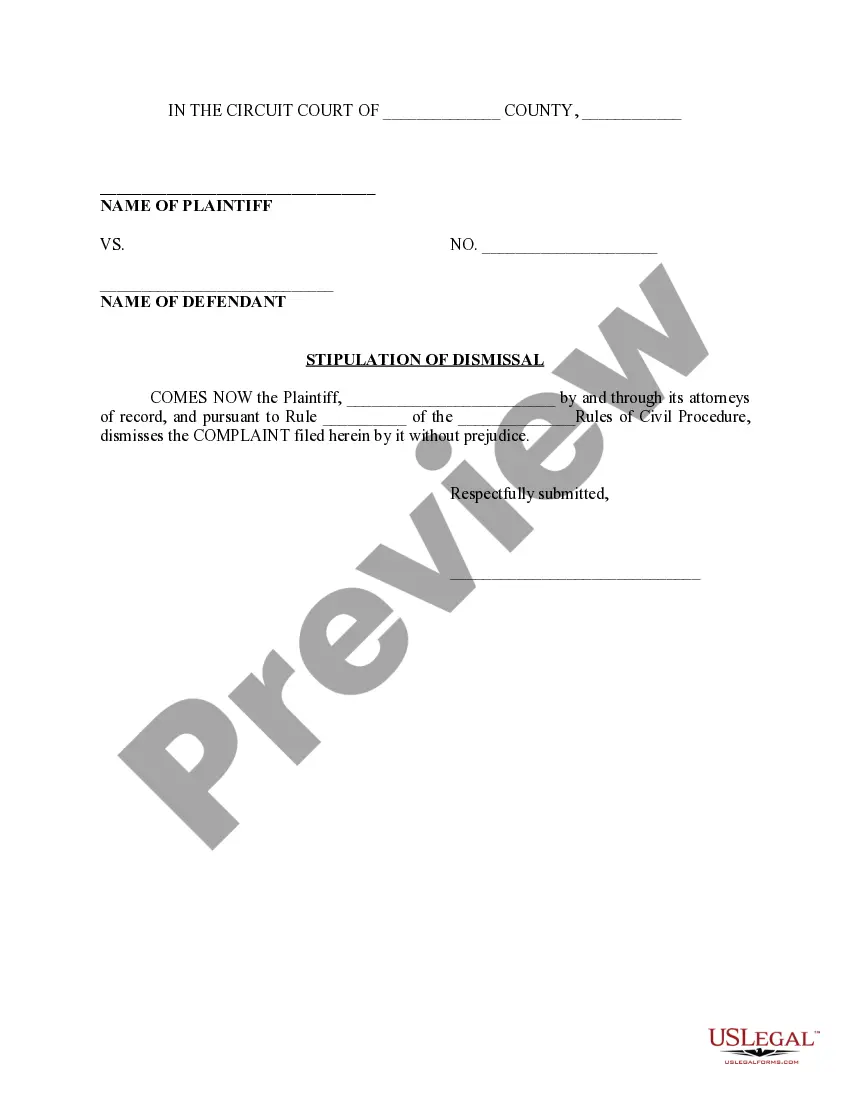
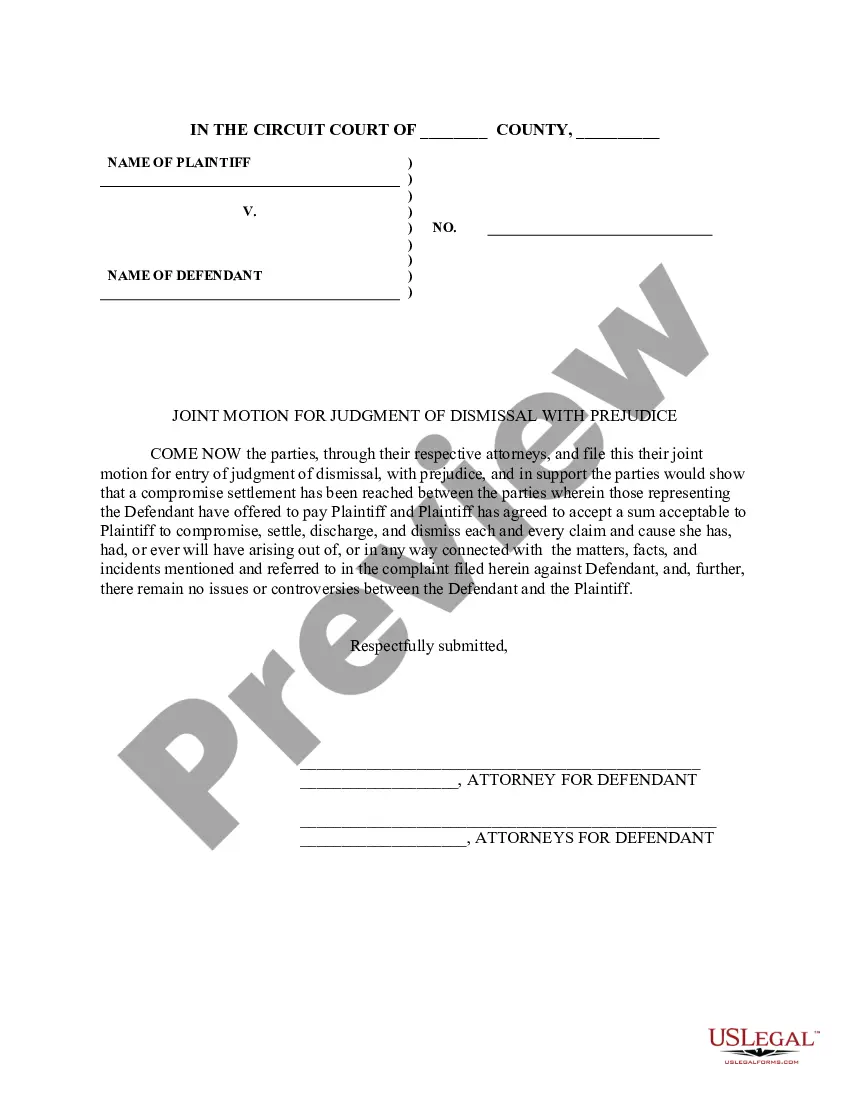
Get your form ready online
Our built-in tools help you complete, sign, share, and store your documents in one place.
Make edits, fill in missing information, and update formatting in US Legal Forms—just like you would in MS Word.
Download a copy, print it, send it by email, or mail it via USPS—whatever works best for your next step.
Sign and collect signatures with our SignNow integration. Send to multiple recipients, set reminders, and more. Go Premium to unlock E-Sign.
If this form requires notarization, complete it online through a secure video call—no need to meet a notary in person or wait for an appointment.
We protect your documents and personal data by following strict security and privacy standards.

Make edits, fill in missing information, and update formatting in US Legal Forms—just like you would in MS Word.

Download a copy, print it, send it by email, or mail it via USPS—whatever works best for your next step.

Sign and collect signatures with our SignNow integration. Send to multiple recipients, set reminders, and more. Go Premium to unlock E-Sign.

If this form requires notarization, complete it online through a secure video call—no need to meet a notary in person or wait for an appointment.

We protect your documents and personal data by following strict security and privacy standards.
Looking for another form?
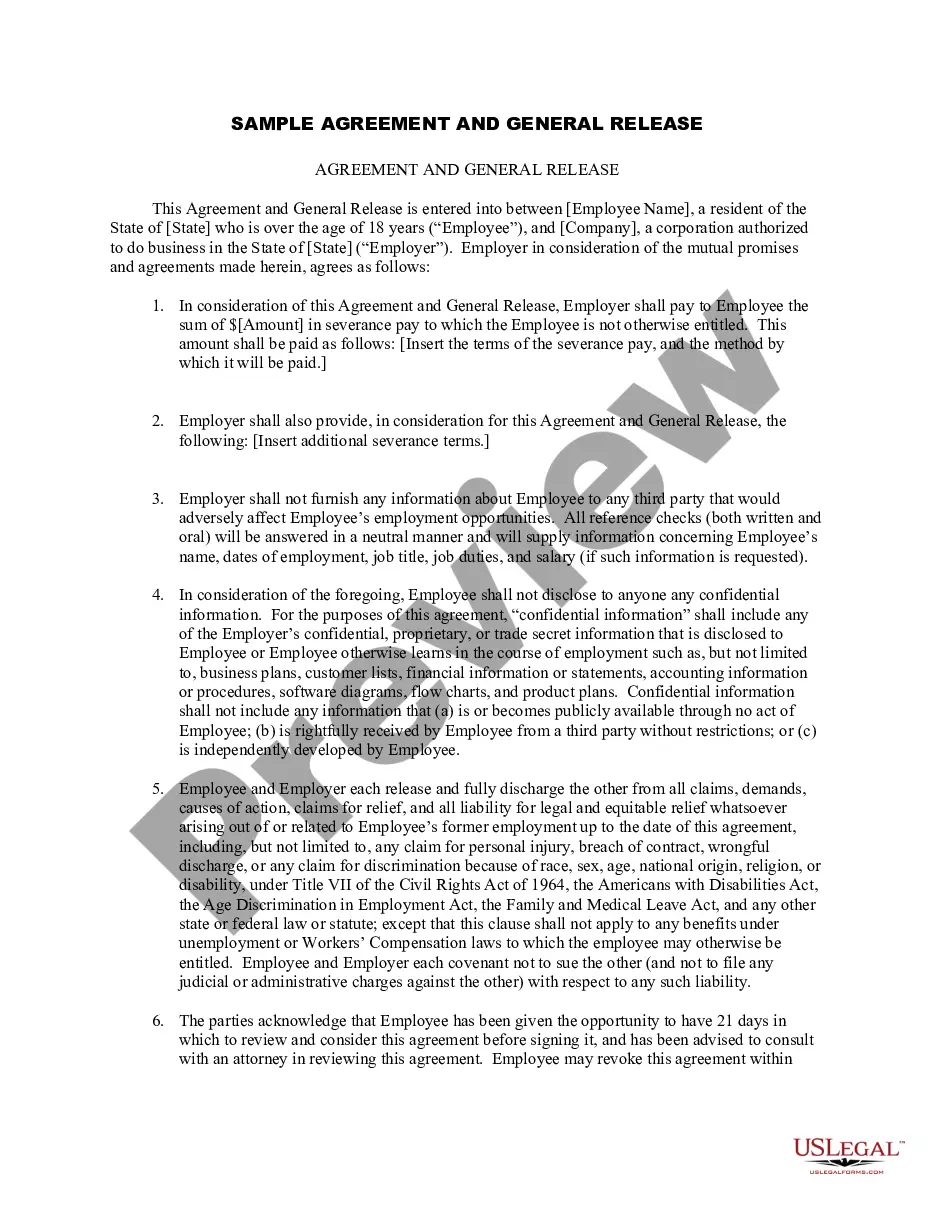

How to fill out Dismissal Without Prejudice?
US Legal Forms - one of the largest repositories of legal documents in the United States - offers a vast array of legal document templates that you can download or create. By using the website, you will find thousands of forms for business and personal purposes, organized by categories, states, or keywords. You can obtain the latest versions of documents like the North Carolina Dismissal Without Prejudice in just a few minutes.
If you have a monthly subscription, Log In and download North Carolina Dismissal Without Prejudice from your US Legal Forms collection. The Download button will appear on every form you view. You can access all previously downloaded documents in the My documents tab of your account.
If you wish to use US Legal Forms for the first time, here are simple steps to get you started: Ensure you have selected the correct form for your city/region. Click the Preview button to review the form’s details. Check the form description to confirm that you have chosen the right document. If the form doesn’t meet your requirements, use the Search field at the top of the screen to find one that does. When you are satisfied with the form, confirm your selection by clicking the Buy Now button. Then, select the payment plan you prefer and provide your information to register for an account. Complete the purchase. Use your credit card or PayPal account to finalize the transaction. Choose the format and download the form to your device. Make modifications. Fill out, edit, and print and sign the downloaded North Carolina Dismissal Without Prejudice. Every template you added to your account has no expiration date and is yours permanently. Therefore, if you wish to download or print another copy, simply go to the My documents section and click on the form you need.
US Legal Forms provides a comprehensive library of legal document templates, making it easy to find the forms you need for various purposes.
With user-friendly navigation and a wide selection of documents, you can efficiently access and manage your legal paperwork.
- Access the North Carolina Dismissal Without Prejudice with US Legal Forms, the largest collection of legal document templates.
- Utilize a multitude of professional and state-specific templates that cater to your business or personal requirements.
- Easily navigate through categories, states, or keywords to find the forms you need.
- Enjoy the convenience of downloading the latest versions of legal forms within minutes.
- Manage your account and access your downloaded forms anytime from the My documents section.
- Ensure you select the correct form and review its details before proceeding with your purchase.
Form popularity
FAQ
?With prejudice? means the decision is final. ?Without prejudice? means it's not final and subject to future inquiry. If the judge announces a case is dismissed with prejudice, that means it's permanently dismissed and can't be retried.
Rule 41 of the North Carolina Rules of Civil Procedure allows a judge to grant a motion to dismiss a case without prejudice. Where a judge grants the motion to dismiss without prejudice, the dismissal does not count as a dismissal that the plaintiff has filed, for purposes of the two-limit filing.
Dismiss refers to the court's decision to terminate a court case without imposing liability on the defendant.
Whereas a case that is dismissed ?with prejudice? is dismissed permanently, a case that is dismissed ?without prejudice? is only dismissed temporarily. This temporary dismissal means that the plaintiff is allowed to re-file charges, alter the claim, or bring the case to another court.
Usually, a dismissed charge on your record will say ?dismissal without leave,? meaning your case has been dismissed and the State cannot reopen it for further litigation. As soon as your charge has been dismissed, you are eligible to have it expunged.
Reasons for dismissal without prejudice The parties came to an agreement and the plaintiff wants to end the case. The person the plaintiff sued paid you the money he or she owed you. The plaintiff cannot locate the defendant to serve him or her, but wants to reserve the right to sue at a later date.
For example, an employer might admit in a without prejudice communication that it had failed to carry out certain procedures which might otherwise render a dismissal unfair, but the employee would normally not be able to show that admission to an Employment Tribunal to try and prove their claim.
A dismissal with prejudice means that the ruling is the final judgment in the case. The dismissal prohibits the prosecutor from refiling the charges. In a dismissal without prejudice, the prosecutor can refile the charges (or file new charges based on the same circumstances) at some future time.