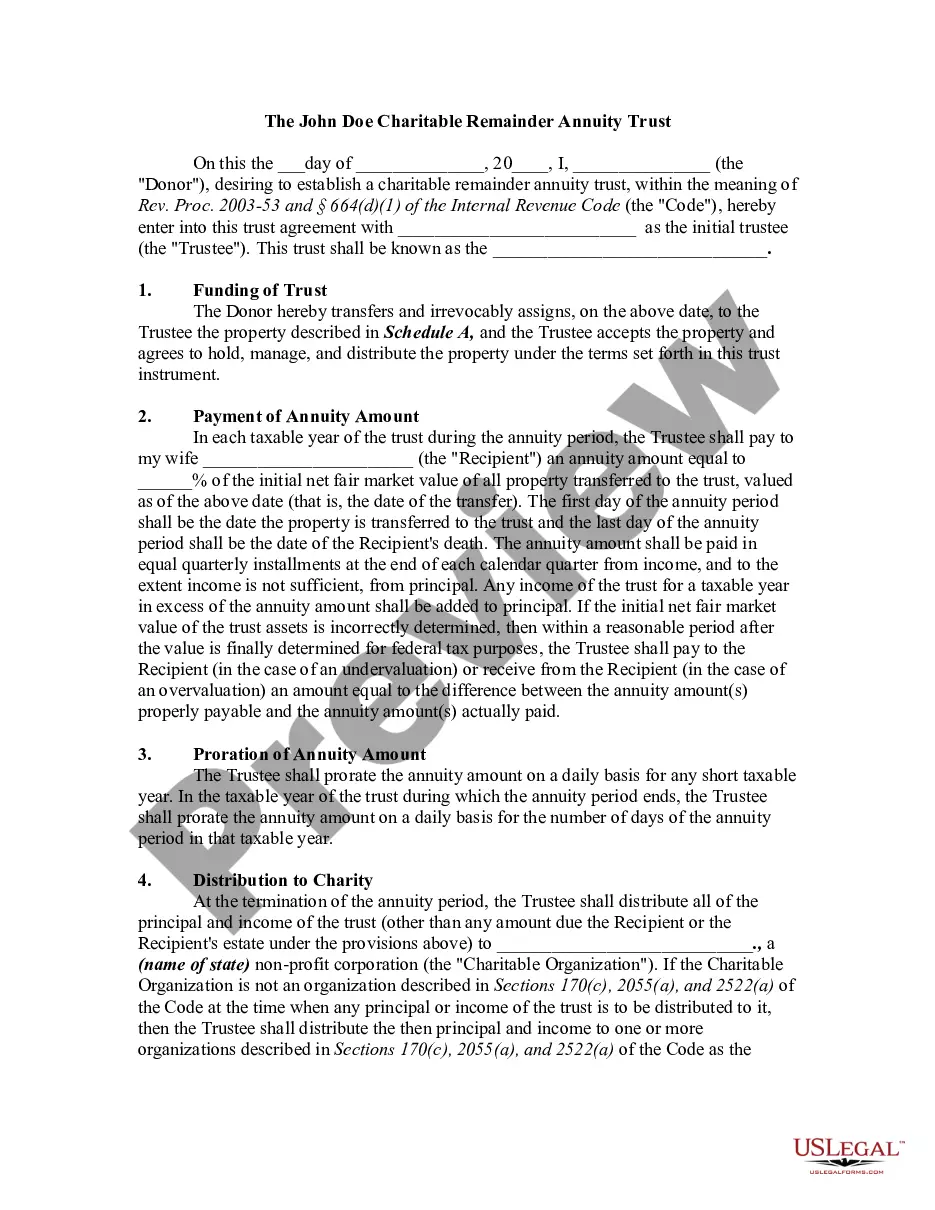
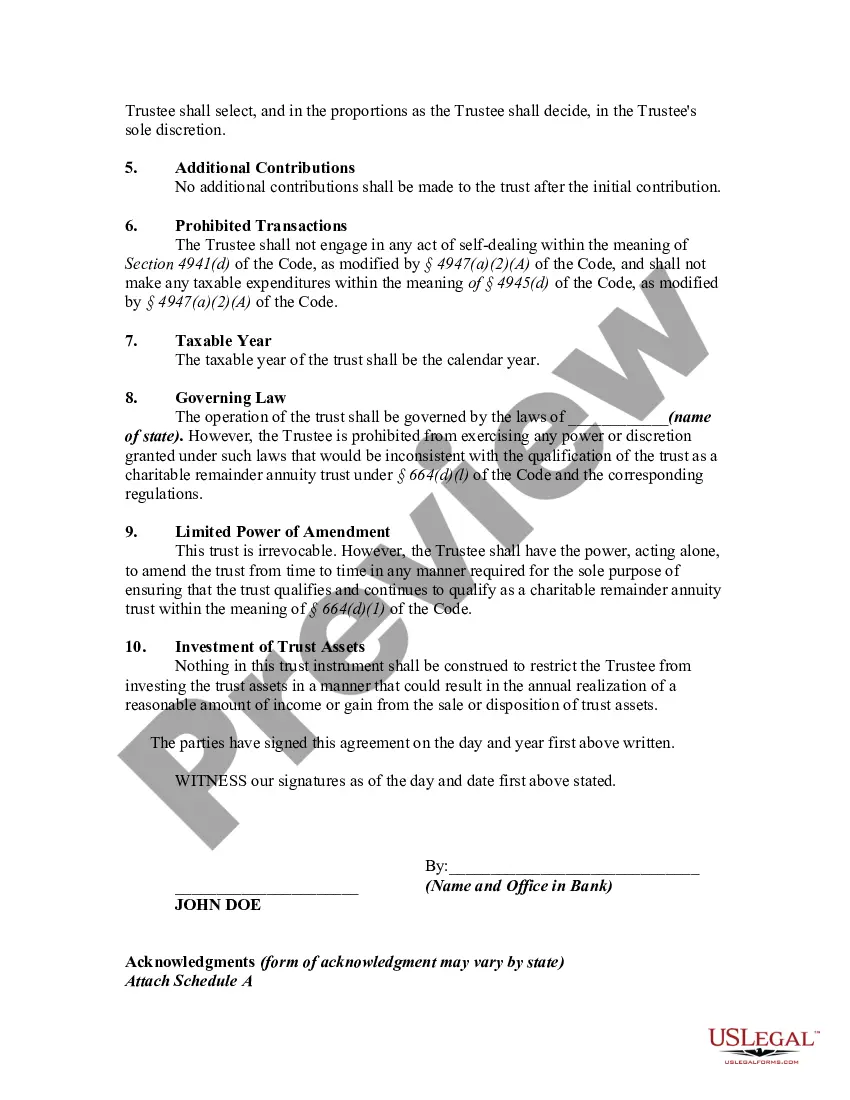
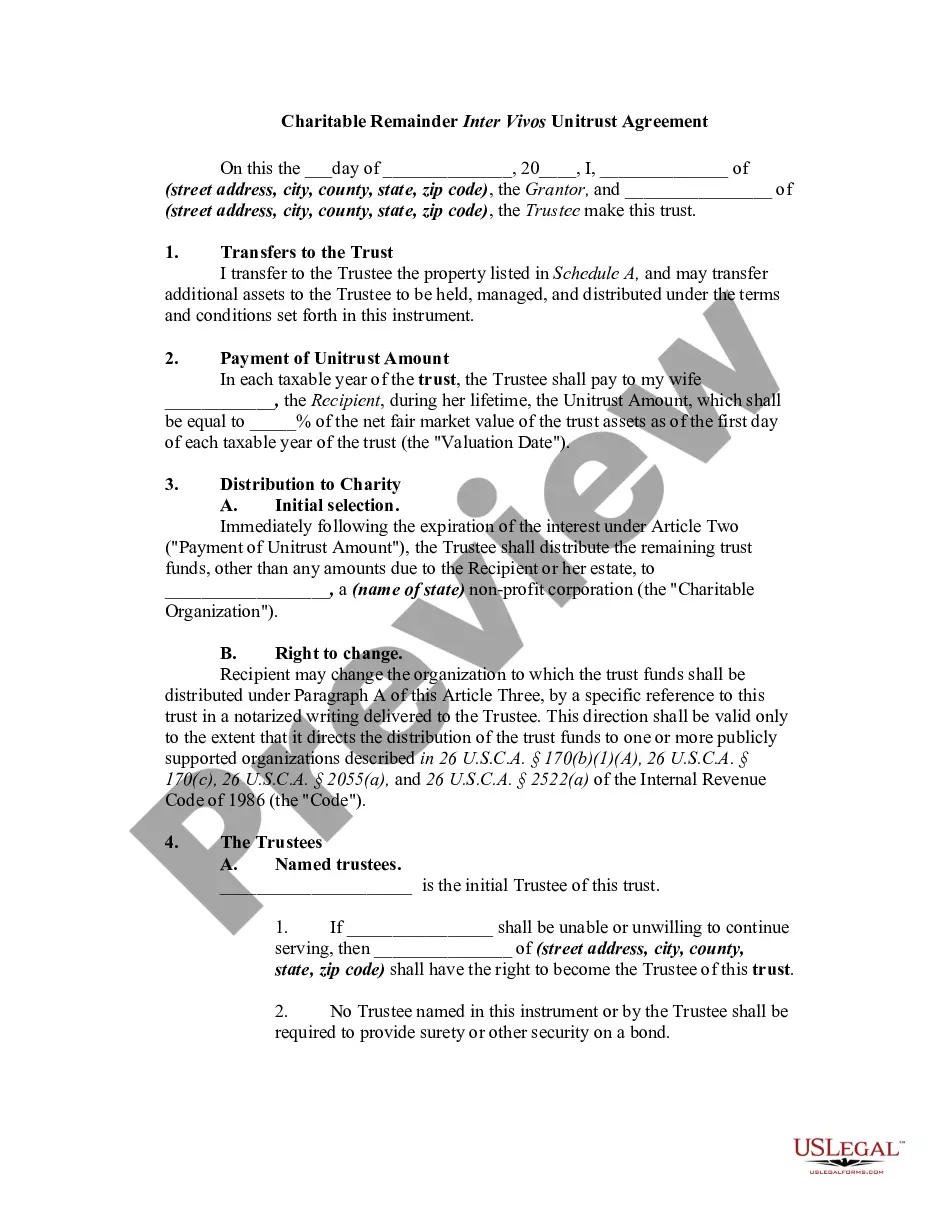
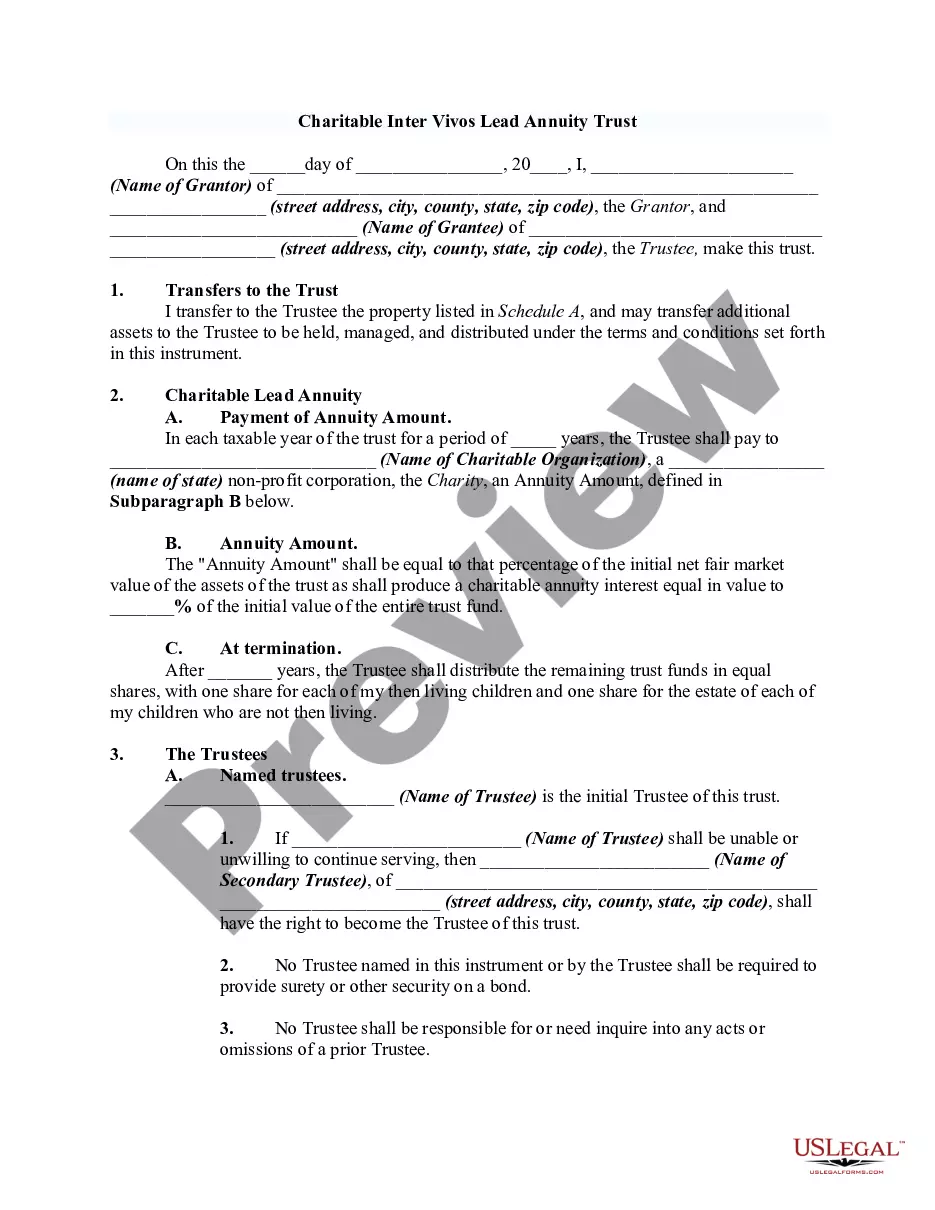
North Carolina Charitable Remainder Inter Vivos Annuity Trust
Description
Get your form ready online
Our built-in tools help you complete, sign, share, and store your documents in one place.
Make edits, fill in missing information, and update formatting in US Legal Forms—just like you would in MS Word.
Download a copy, print it, send it by email, or mail it via USPS—whatever works best for your next step.
Sign and collect signatures with our SignNow integration. Send to multiple recipients, set reminders, and more. Go Premium to unlock E-Sign.
If this form requires notarization, complete it online through a secure video call—no need to meet a notary in person or wait for an appointment.
We protect your documents and personal data by following strict security and privacy standards.

Make edits, fill in missing information, and update formatting in US Legal Forms—just like you would in MS Word.

Download a copy, print it, send it by email, or mail it via USPS—whatever works best for your next step.

Sign and collect signatures with our SignNow integration. Send to multiple recipients, set reminders, and more. Go Premium to unlock E-Sign.

If this form requires notarization, complete it online through a secure video call—no need to meet a notary in person or wait for an appointment.

We protect your documents and personal data by following strict security and privacy standards.
Looking for another form?





How to fill out Charitable Remainder Inter Vivos Annuity Trust?
It is feasible to devote multiple hours online looking for the legal document template that meets the state and federal requirements you seek.
US Legal Forms provides a vast array of legal forms that are reviewed by experts.
You can effortlessly download or generate the North Carolina Charitable Remainder Inter Vivos Annuity Trust using my assistance.
If available, utilize the Review option to browse through the document template as well.
- If you already have a US Legal Forms account, you can Log In and select the Download option.
- After that, you can complete, modify, print, or sign the North Carolina Charitable Remainder Inter Vivos Annuity Trust.
- Every legal document template you purchase is yours to keep permanently.
- To obtain another copy of a purchased form, go to the My documents tab and select the appropriate option.
- If you are using the US Legal Forms website for the first time, follow the simple instructions below.
- First, ensure that you have selected the correct document template for the area/city of your choice.
- Read the form description to confirm that you have chosen the right form.
Form popularity
FAQ
Setting up a charitable remainder trust, like the North Carolina Charitable Remainder Inter Vivos Annuity Trust, involves several key steps. First, choose the assets you want to place in the trust and decide on a charitable organization to benefit. Then, you should draft the trust document, which outlines income distributions, the charitable remainder, and the terms of the trust. Utilizing platforms like UsLegalForms can simplify this process, providing templates and guidance tailored to your specific needs, ensuring compliance with North Carolina laws.
The purpose of an inter vivos trust, such as the North Carolina Charitable Remainder Inter Vivos Annuity Trust, is to manage and protect your assets during your lifetime while providing income and tax benefits. This type of trust allows you to donate a portion of your estate to charity while retaining the right to receive income from those assets. It effectively balances your personal financial goals with your philanthropic wishes. By using this trust, you can ensure that your loved ones benefit from your assets even as you fulfill charitable intentions.
Yes, North Carolina does recognize irrevocable trusts. An irrevocable trust generally cannot be modified or revoked once established, which offers certain benefits, such as asset protection and potential tax advantages. A North Carolina Charitable Remainder Inter Vivos Annuity Trust can be set up as an irrevocable trust to provide income during your lifetime while benefiting a charity. To navigate this complex process, consider utilizing uslegalforms for comprehensive resources and legal forms.
Placing your house in a trust in North Carolina can be a strategic option for asset management. A North Carolina Charitable Remainder Inter Vivos Annuity Trust allows you to retain income during your lifetime while also benefiting a charity after your passing. This method can provide tax benefits and help with estate planning. It's wise to consult with a legal expert to ensure it aligns with your financial goals.
An inter vivos charitable remainder trust is created during the lifetime of the donor, unlike a testamentary trust that takes effect after death. This type of trust allows for income distribution to the donor or beneficiaries while supporting charitable organizations. Understanding the mechanics of a North Carolina Charitable Remainder Inter Vivos Annuity Trust can provide valuable benefits in your estate planning.
A potential downside often overlooked is the restriction on access to principal once assets are placed in the trust. While a charitable remainder trust offers tax deductions and fixed income, the inability to withdraw the principal may not fit everyone's financial strategy. Carefully consider these aspects when evaluating a North Carolina Charitable Remainder Inter Vivos Annuity Trust.
Establishing a charitable remainder trust involves several steps. First, you need to draft a trust agreement, specifying the terms and conditions. After that, you can fund the trust with allowable assets, ensuring you meet North Carolina regulations concerning the North Carolina Charitable Remainder Inter Vivos Annuity Trust. Seeking guidance from professionals can simplify this process.
You cannot directly place an existing annuity into a charitable remainder trust. However, you can assign the income generated by the annuity to the North Carolina Charitable Remainder Inter Vivos Annuity Trust, allowing you to benefit from tax advantages. This strategy requires careful planning to align with your financial goals.
Generally, you cannot add assets to a charitable remainder trust after its establishment. Once you have created a North Carolina Charitable Remainder Inter Vivos Annuity Trust, it becomes a separate entity with its assets. Thus, any growth or income will only be from the original assets placed in the trust.
Some potential pitfalls of a charitable remainder trust include complex tax rules and regulations, which can be challenging to navigate. Additionally, once assets are transferred, you can't reclaim them, which may limit your financial flexibility. Understanding these factors is crucial when considering a North Carolina Charitable Remainder Inter Vivos Annuity Trust.