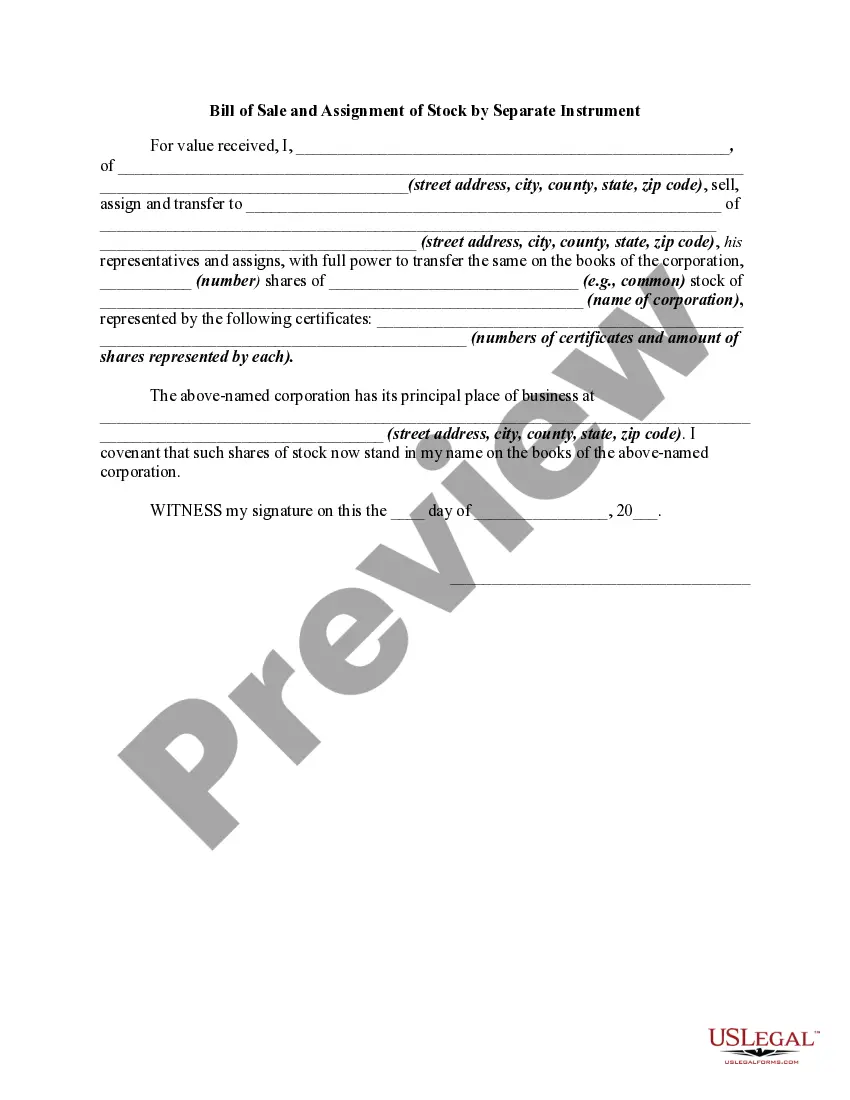
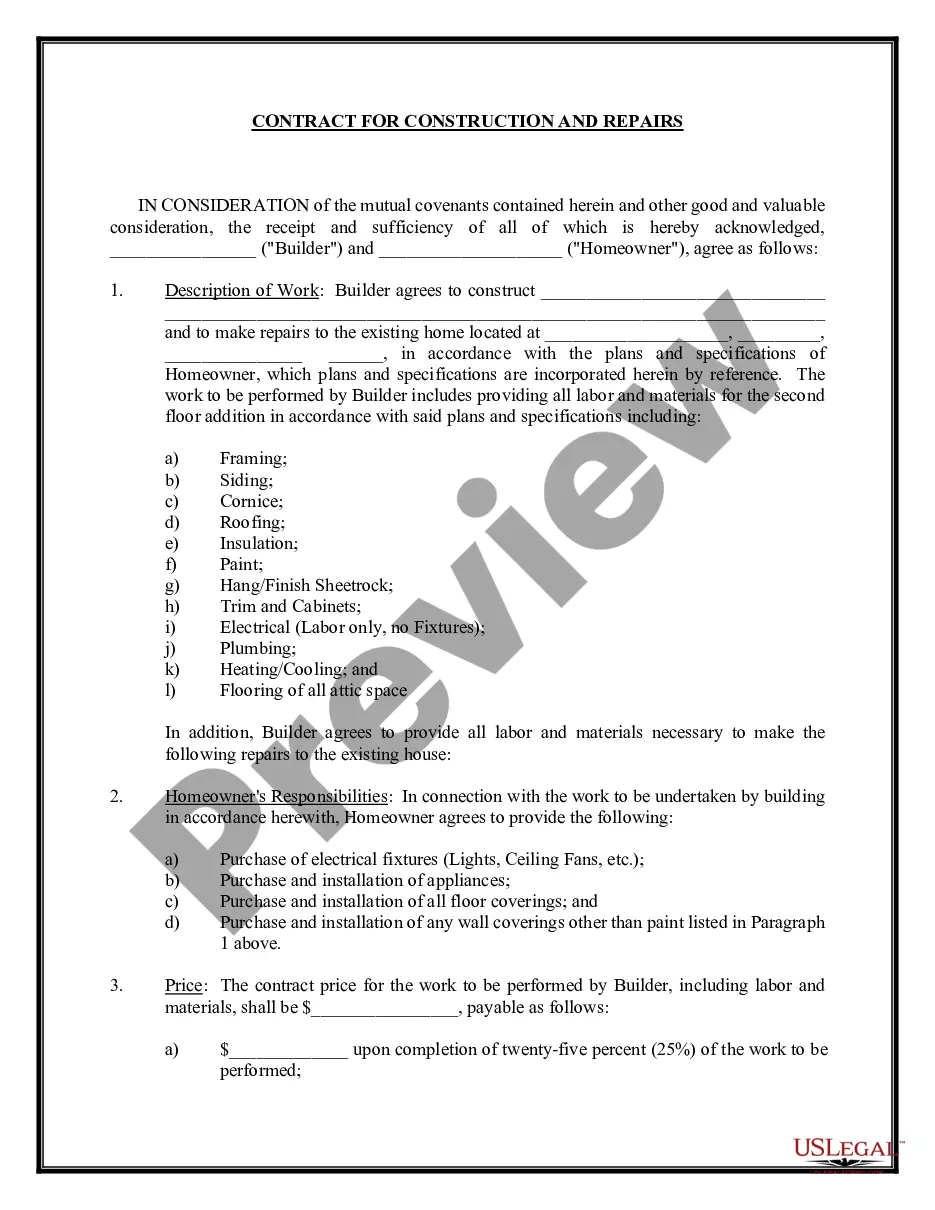
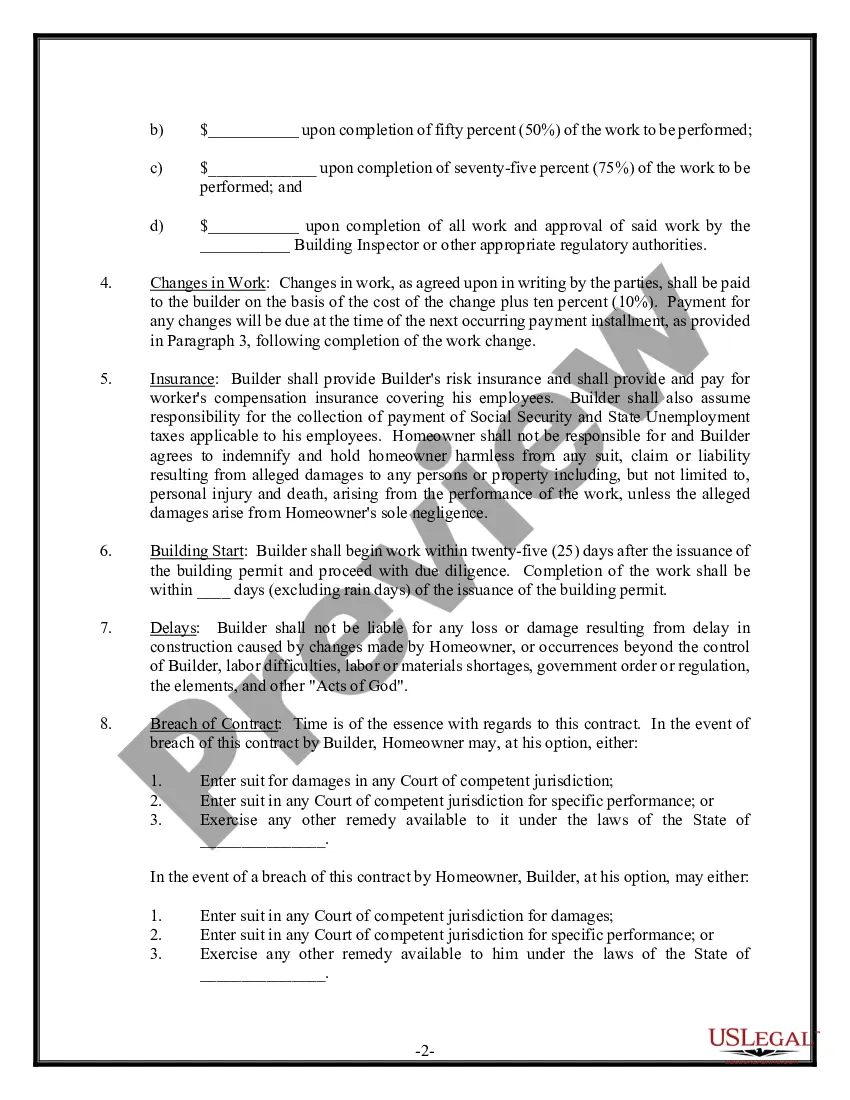
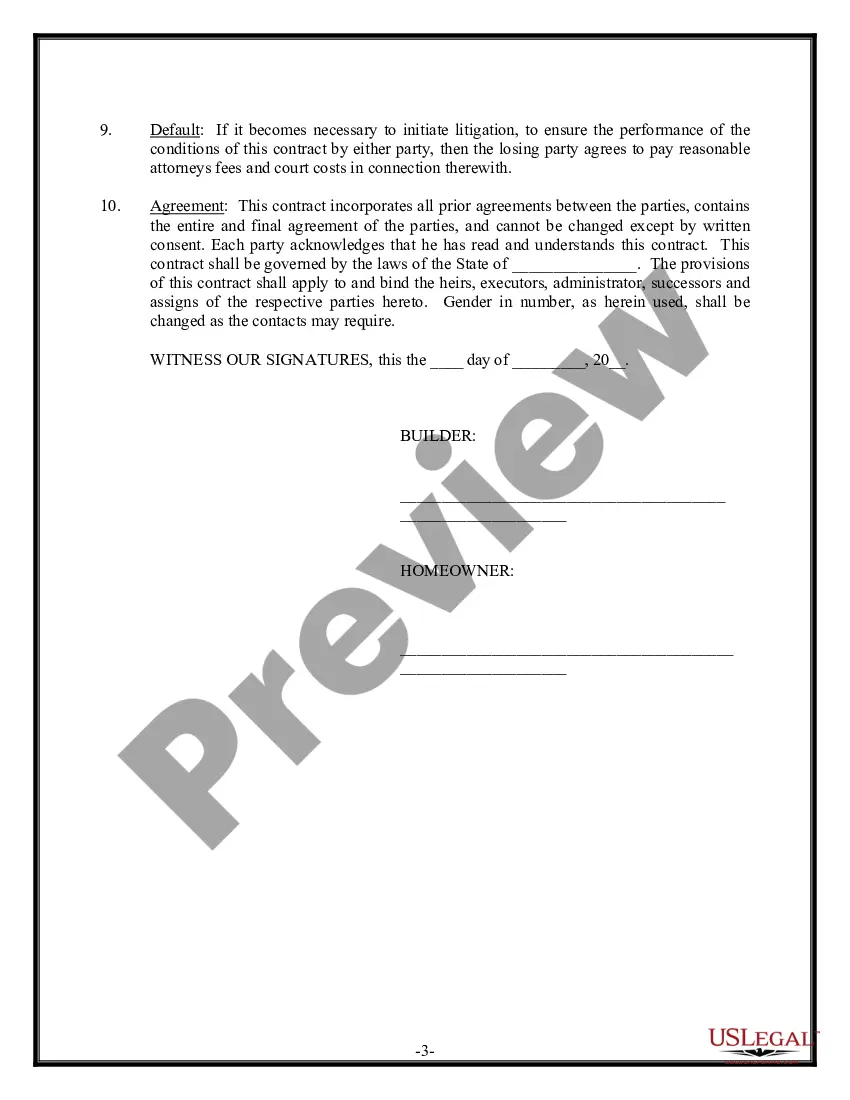
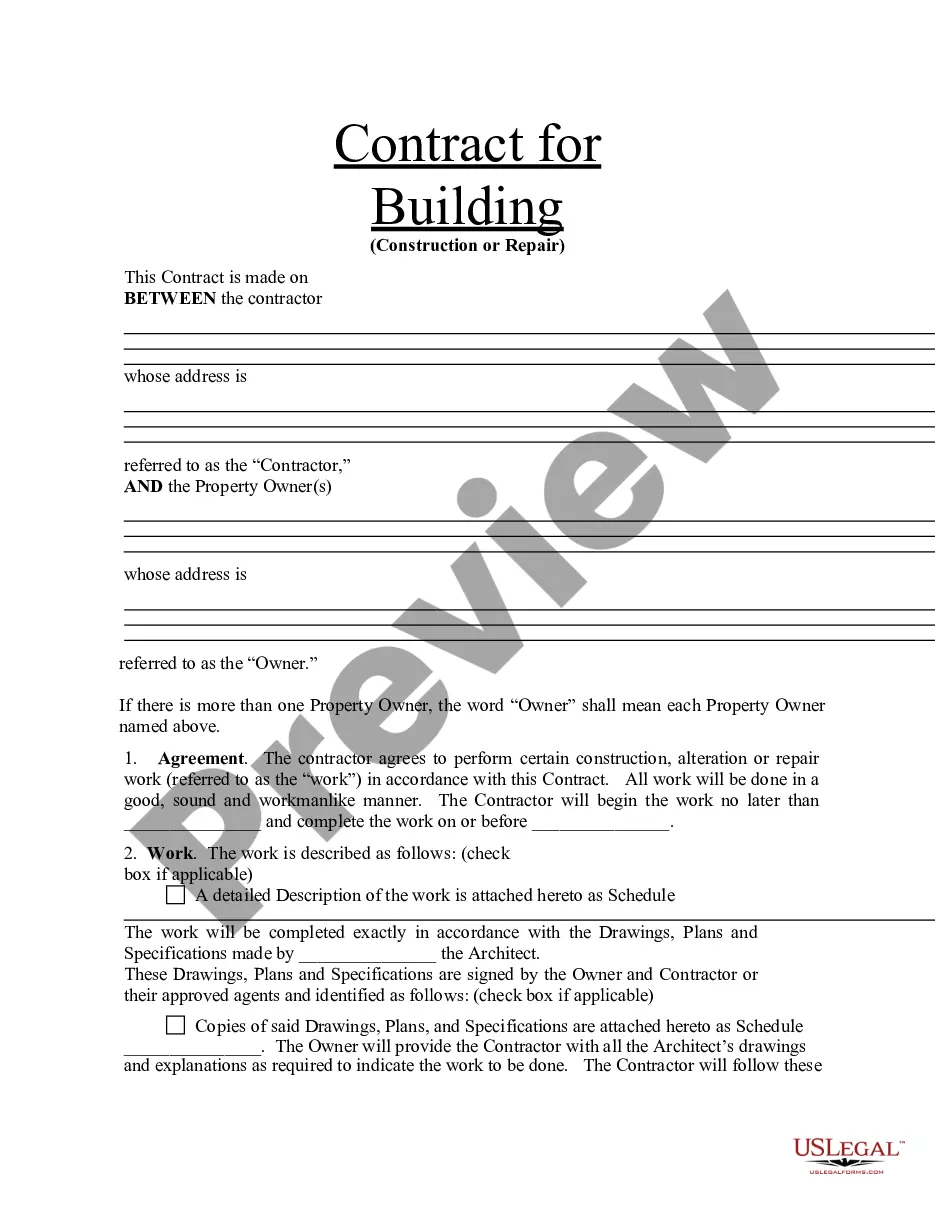
North Carolina Construction Contract for Repairs
Description
Get your form ready online
Our built-in tools help you complete, sign, share, and store your documents in one place.
Make edits, fill in missing information, and update formatting in US Legal Forms—just like you would in MS Word.
Download a copy, print it, send it by email, or mail it via USPS—whatever works best for your next step.
Sign and collect signatures with our SignNow integration. Send to multiple recipients, set reminders, and more. Go Premium to unlock E-Sign.
If this form requires notarization, complete it online through a secure video call—no need to meet a notary in person or wait for an appointment.
We protect your documents and personal data by following strict security and privacy standards.

Make edits, fill in missing information, and update formatting in US Legal Forms—just like you would in MS Word.

Download a copy, print it, send it by email, or mail it via USPS—whatever works best for your next step.

Sign and collect signatures with our SignNow integration. Send to multiple recipients, set reminders, and more. Go Premium to unlock E-Sign.

If this form requires notarization, complete it online through a secure video call—no need to meet a notary in person or wait for an appointment.

We protect your documents and personal data by following strict security and privacy standards.
Looking for another form?


How to fill out Construction Contract For Repairs?
Selecting the optimal legal document template can be a challenge.
Naturally, there are numerous designs accessible online, but how will you locate the legal form you need.
Leverage the US Legal Forms website. This service offers a vast array of templates, including the North Carolina Construction Agreement for Repairs, that can be utilized for both business and personal purposes.
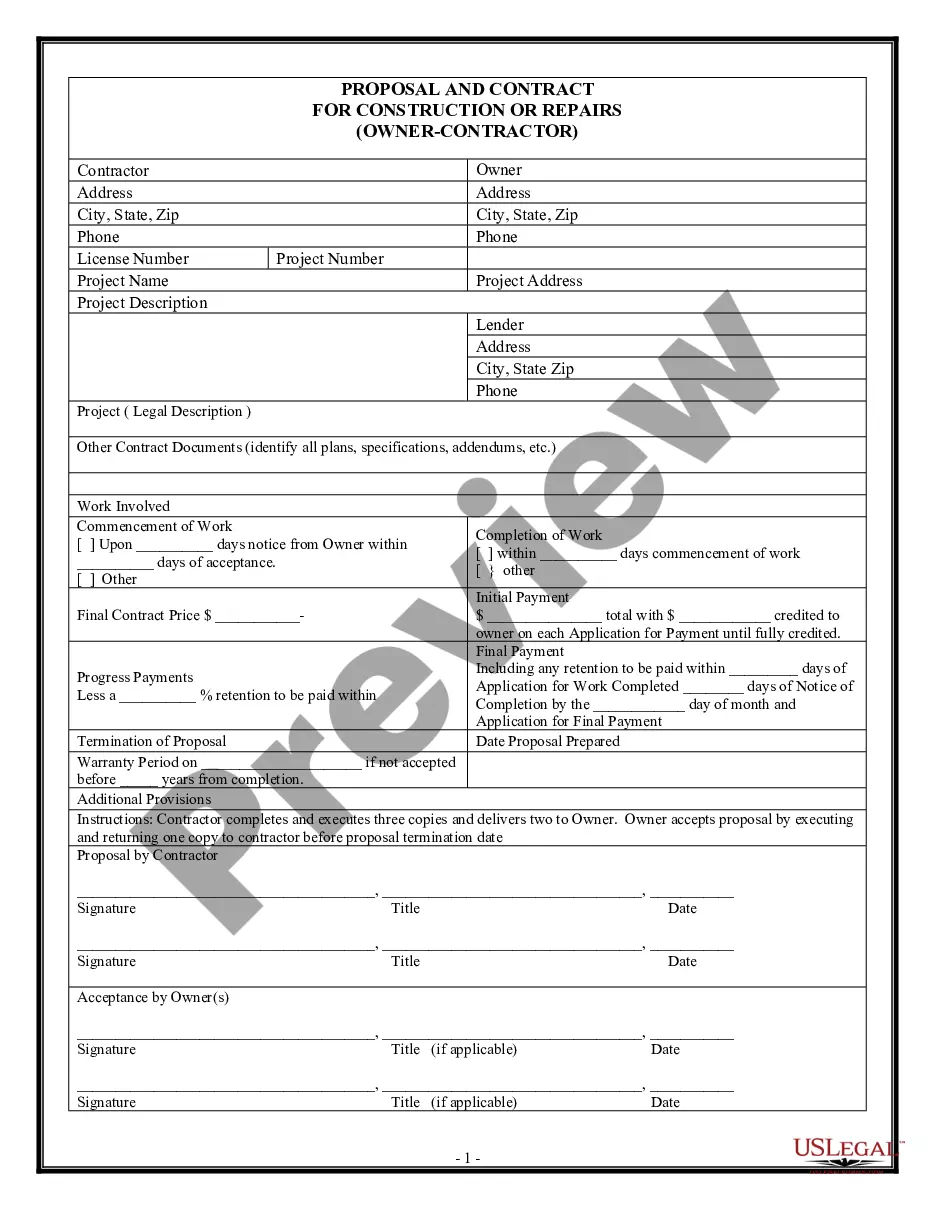
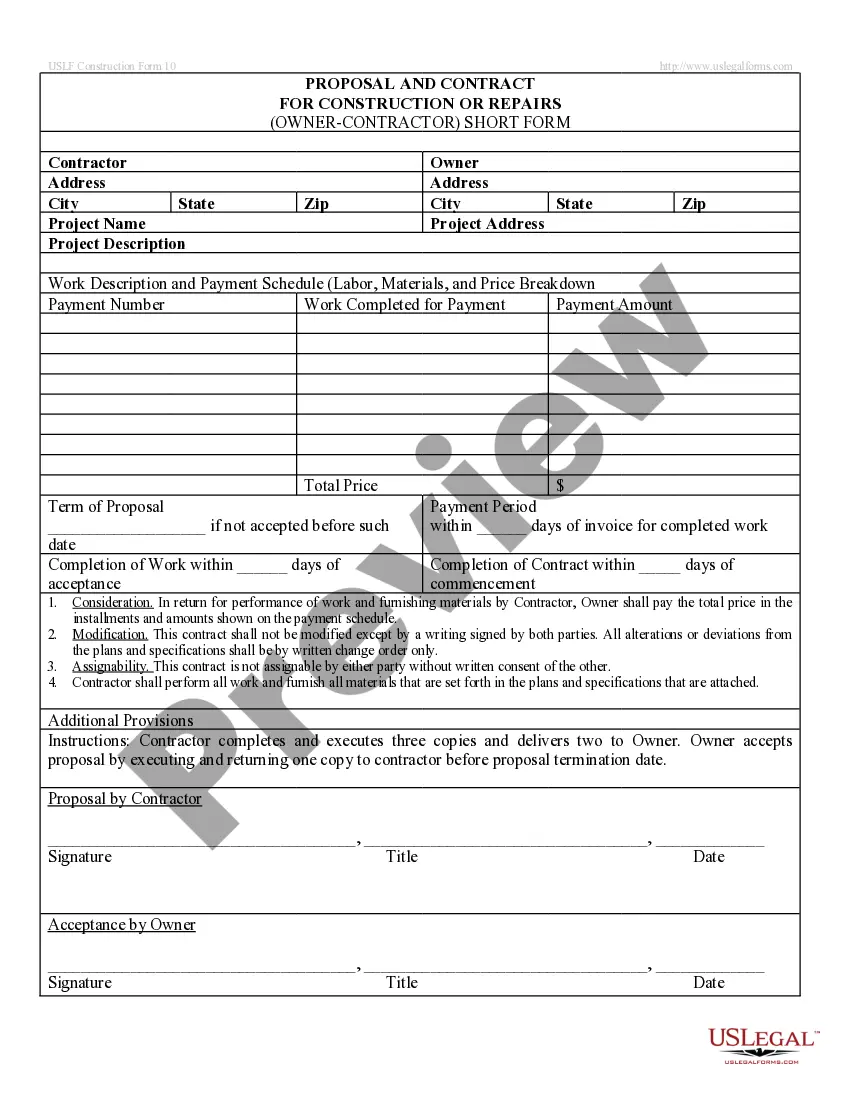
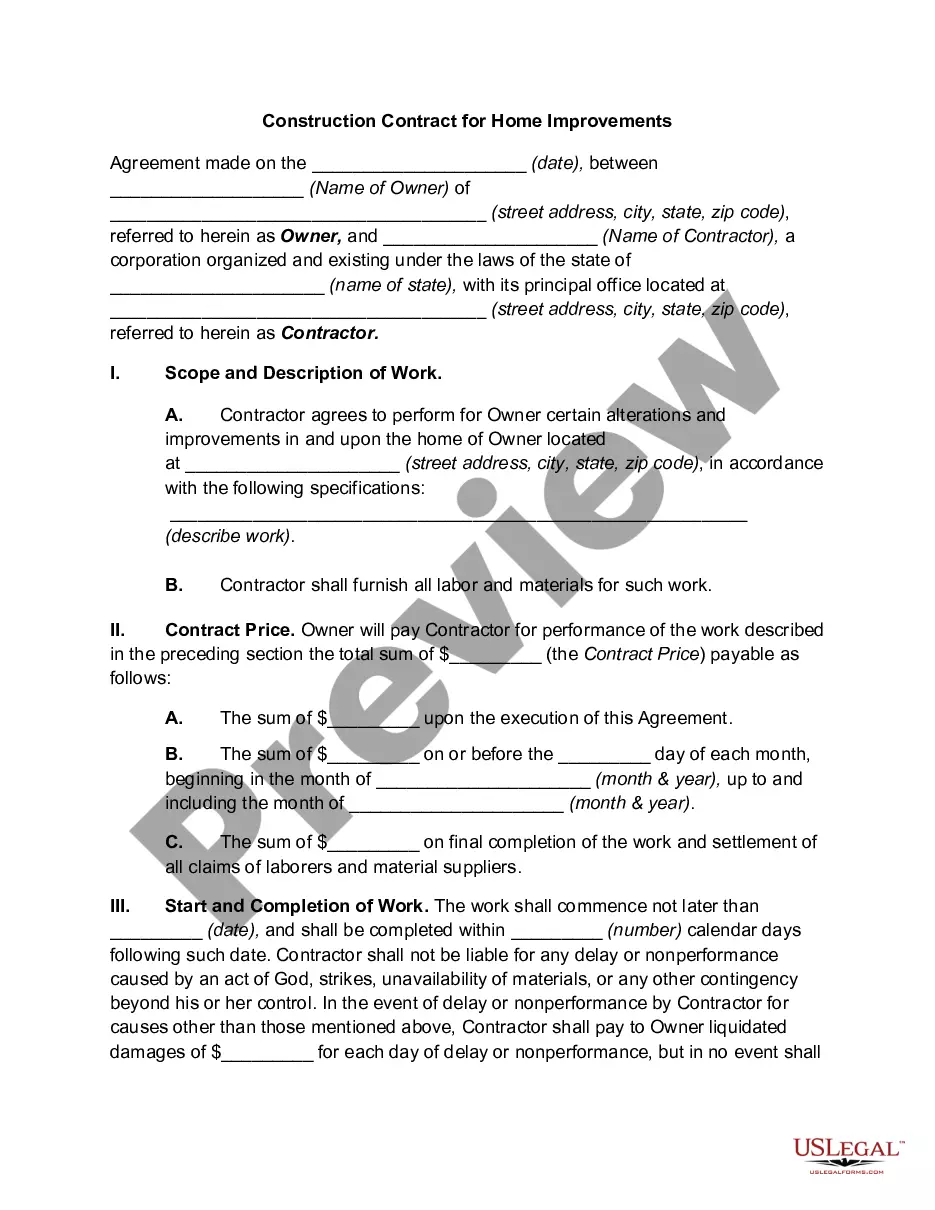
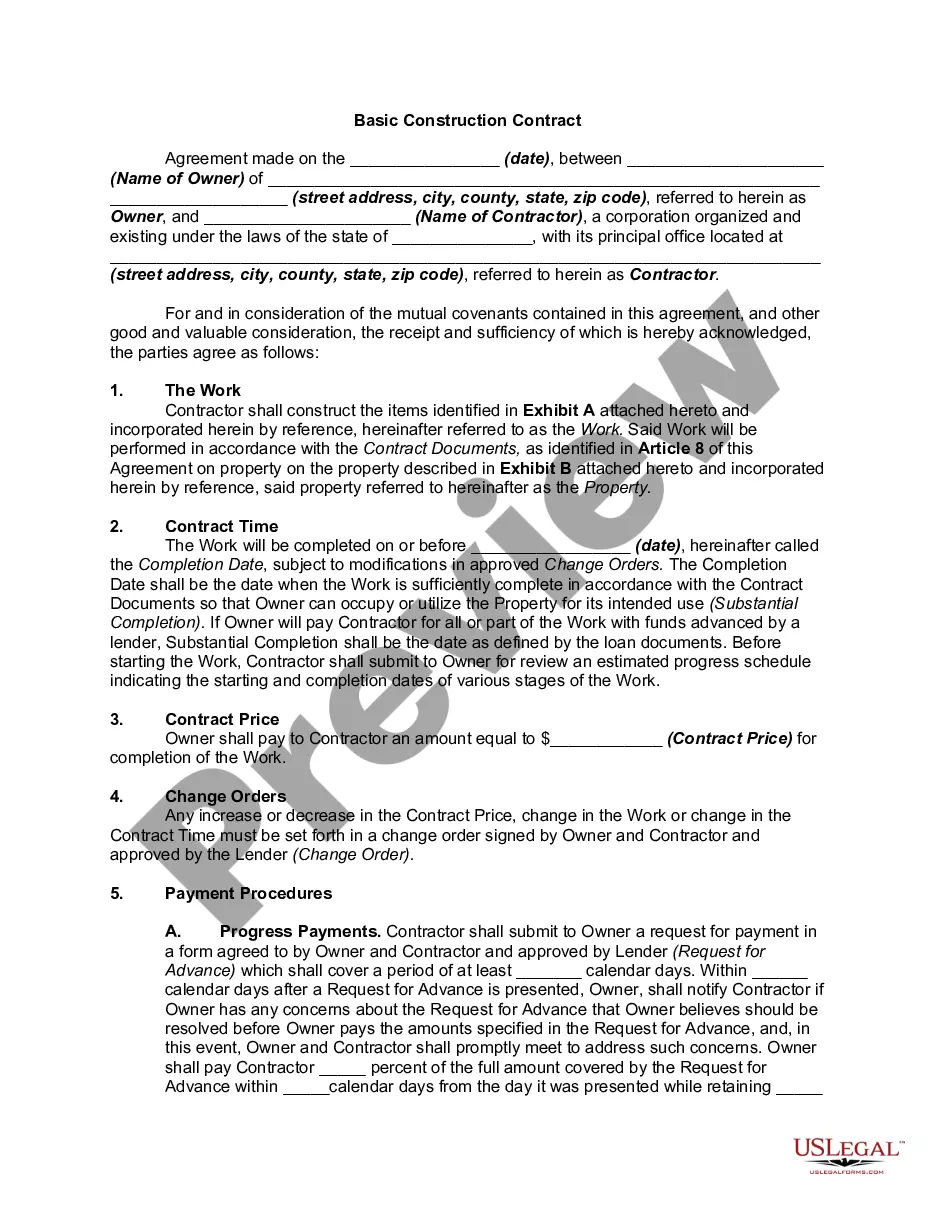
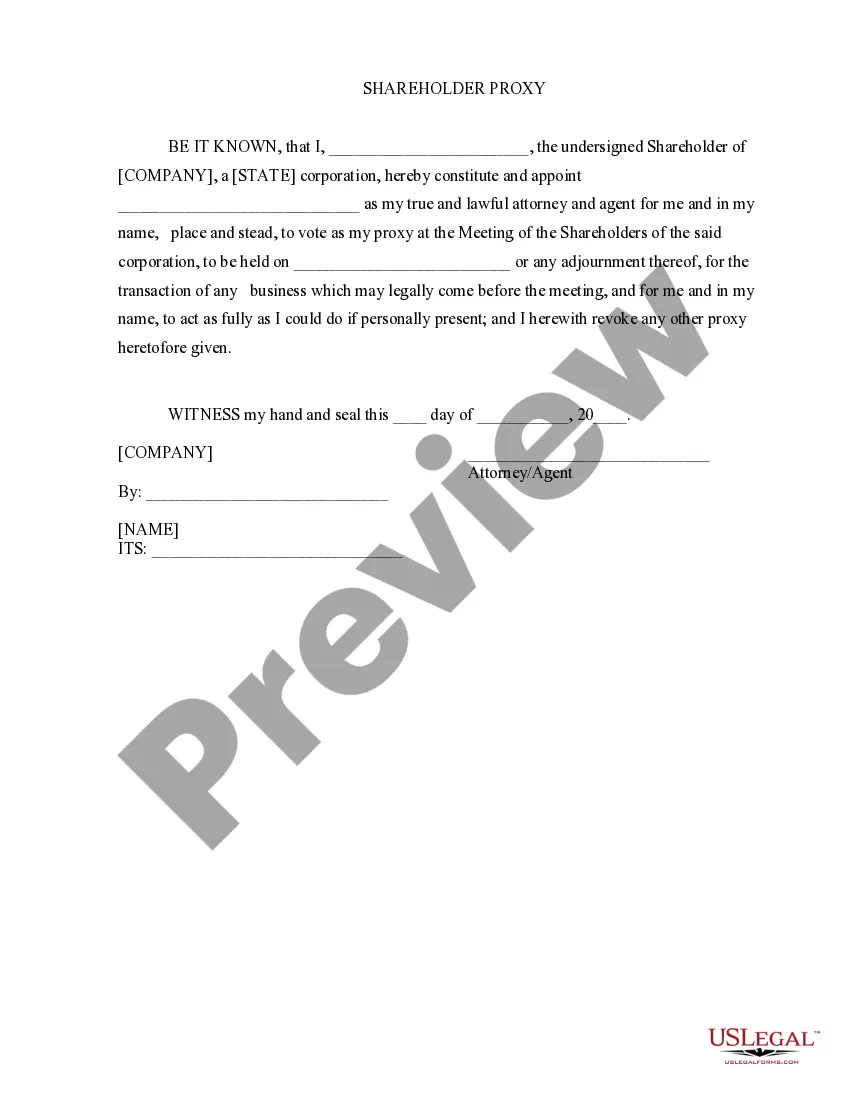
You can view the form using the Preview button and review the form details to ensure this is suitable for you.
- All forms are vetted by experts and comply with state and federal regulations.
- If you are already registered, Log In to your account and click on the Download button to acquire the North Carolina Construction Agreement for Repairs.
- Use your account to search the legal forms you have previously obtained.
- Visit the My documents section of your account to retrieve another copy of the document you need.
- If you are a new user of US Legal Forms, here are straightforward instructions you should follow.
- First, ensure you have selected the correct form for your city/county.
Form popularity
FAQ
Who will pay for the repair and damages of the Contractor? 4. What if the Contractor fails to repair and pay claims? The Owner may repair the same and pay the claims, and deduct the entire cost of such repairs and claims from the payments due the Contractor.
Payment Schedule In Your Contract Before any work begins, a contractor will ask a homeowner to secure the job with a down payment. It shouldn't be more than 10-20 percent of the total cost of the job. Homeowners should never pay a contractor more than 10-20% before they've even stepped foot in their home.
If you have a complaint about home construction or home improvement contact us for help or call toll free within North Carolina at 1-877-5-NO-SCAM.
Asking for more than half of the project cost up front, though, is a big red flag. A reputable and established contractor should have the wherewithal to purchase enough materials to get the job started without relying on your down payment. I recommend tying payments to progress made during the job.
Set a payment schedule in the contract. You never want to pay a contractor more than 50% up front. Depending on the size of the job, your initial payment is ideally going to be no more than roughly 30% of the total cost of the project.
Where a defect amounts to a breach of contract (which will usually be the case), the default limitation period for bringing a claim against the contractor is 6 years from the date of practical completion. However, if the contract is executed as a deed, that period is extended to 12 years.
If you are having problems with building work and think your statutory rights have been breached you need to complain to the builder. Try to keep things cordial and offer them the opportunity to remedy the problem. Make it clear what you would want them to do and when in order to resolve the issue.
A unique facet of construction defect litigation in North Carolina is the Statute of Repose for improvements to real property, N.C. Gen. Stat. §1-50(a)(5)(a). This law says homeowners have six years from the substantial completion (or the last specific act or omission of the builder) to file suit.
Defects are aspects of the works that are not in accordance with the contract. Defects may occur because of: Design deficiencies.
While the specific terms of the express warranty may vary, one can usually expect that the builder agrees to make repairs, if needed, for a period of one year after completion of the work. This warranty usually applies to defective plumbing, electrical, HVAC, painting, doors, windows, and the general construction.