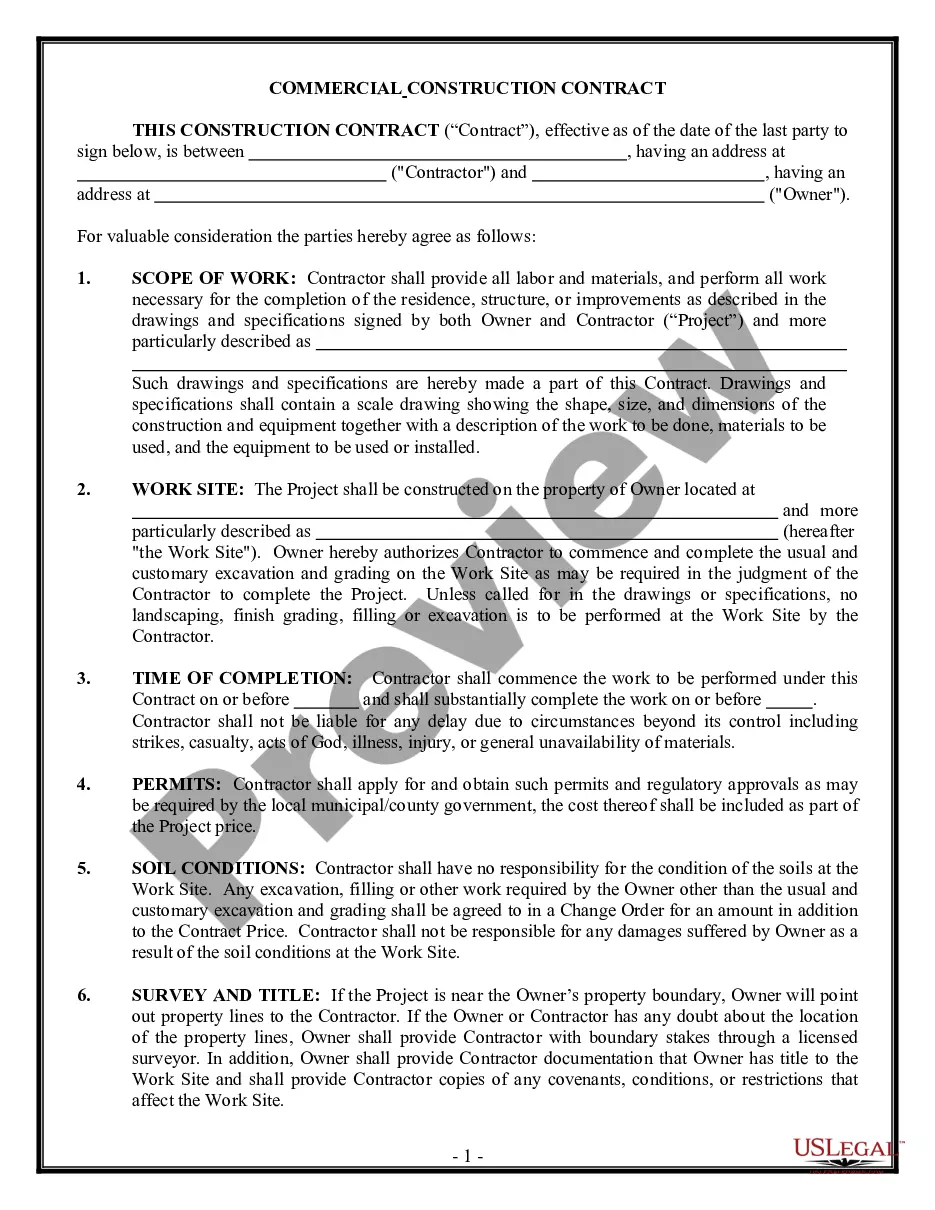
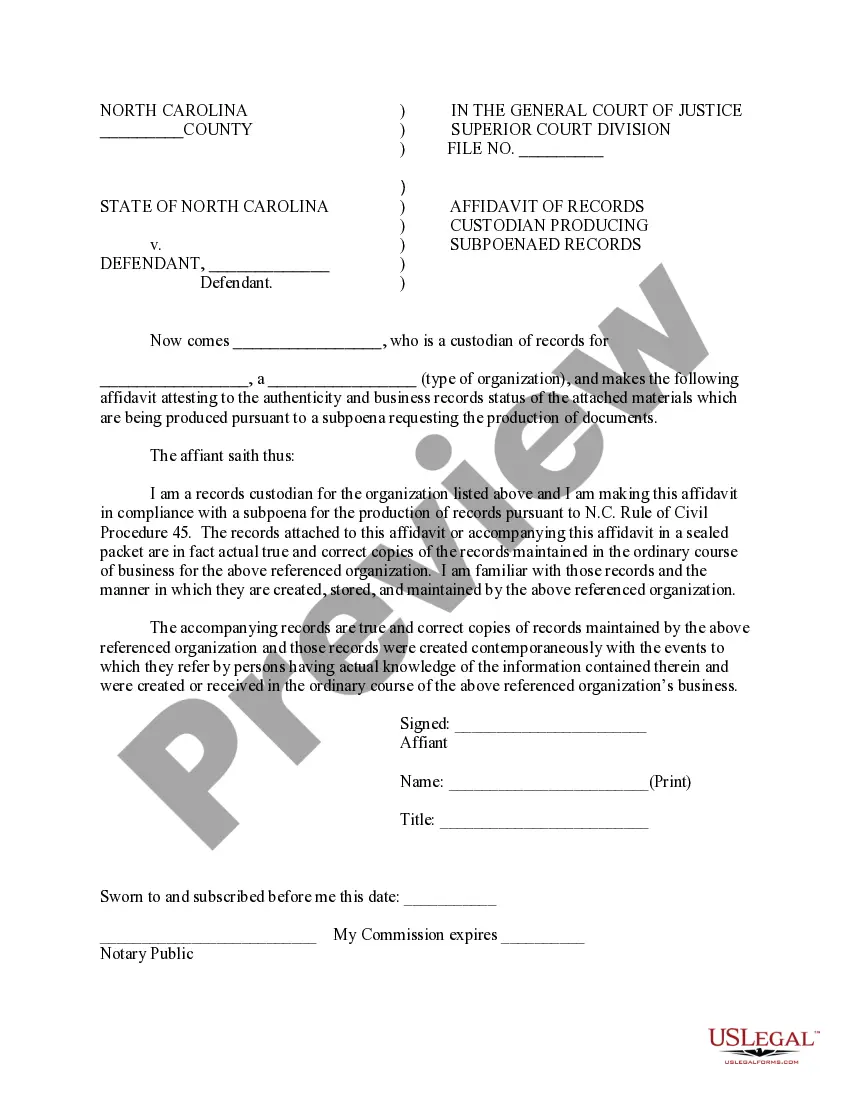
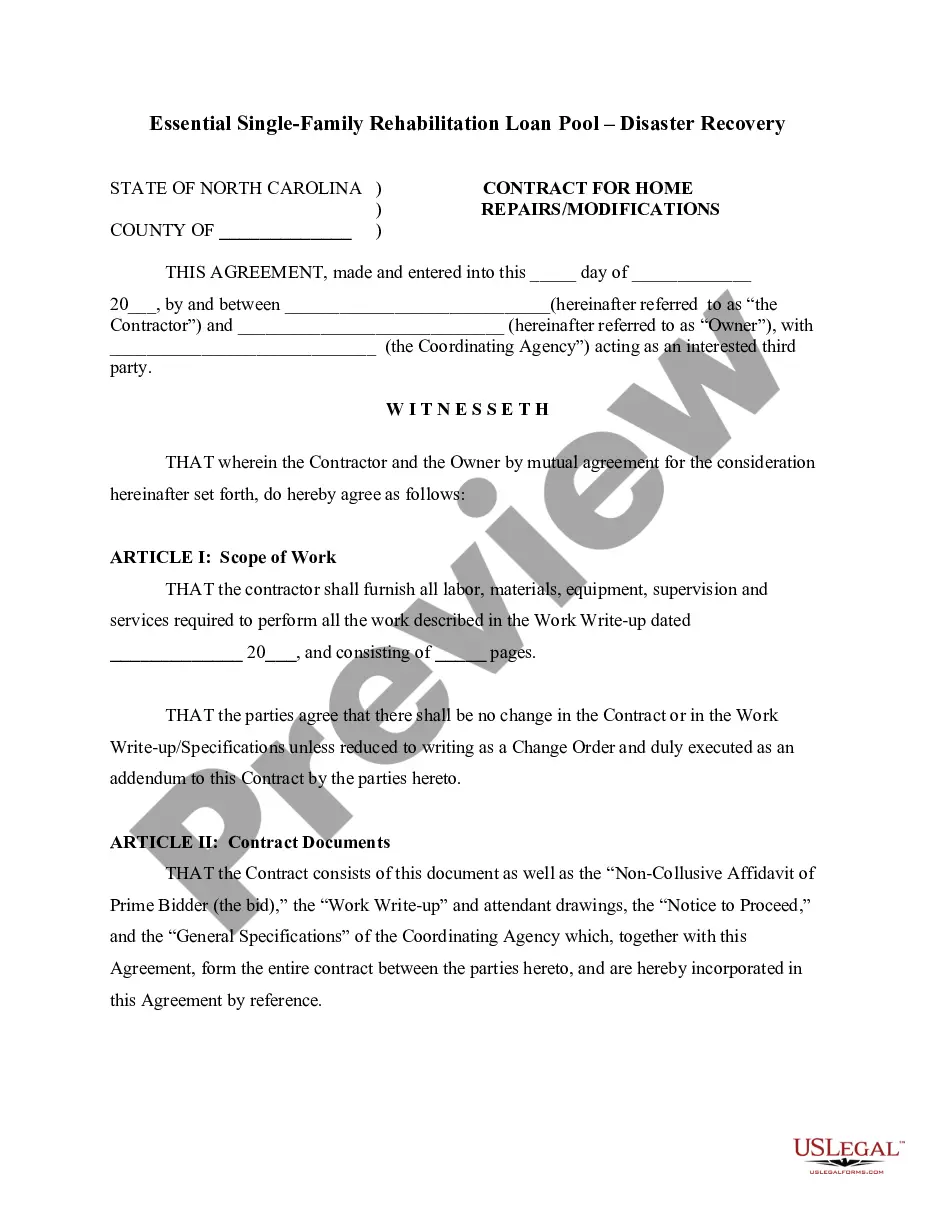
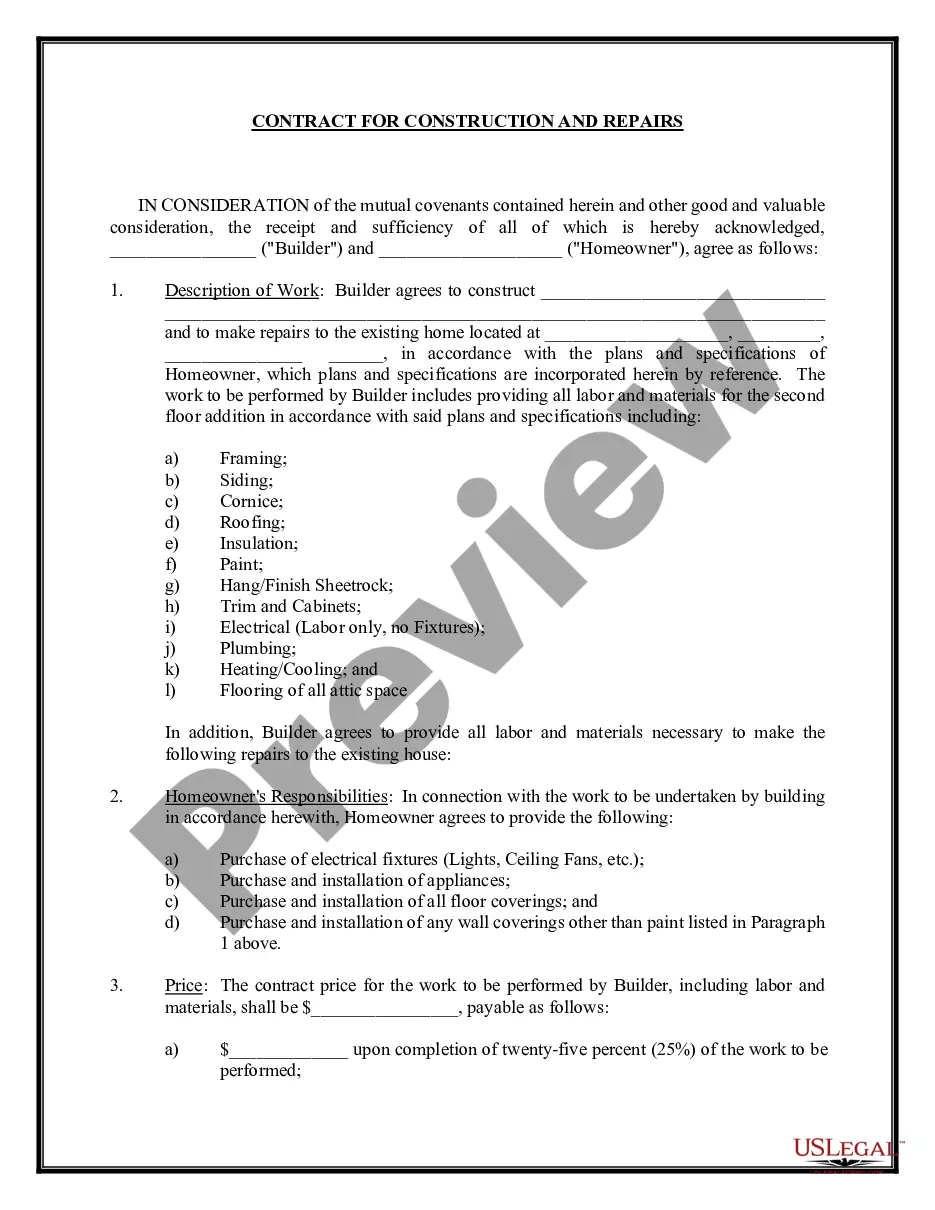
North Carolina Contract for Home Repairs/Modifications
About this form
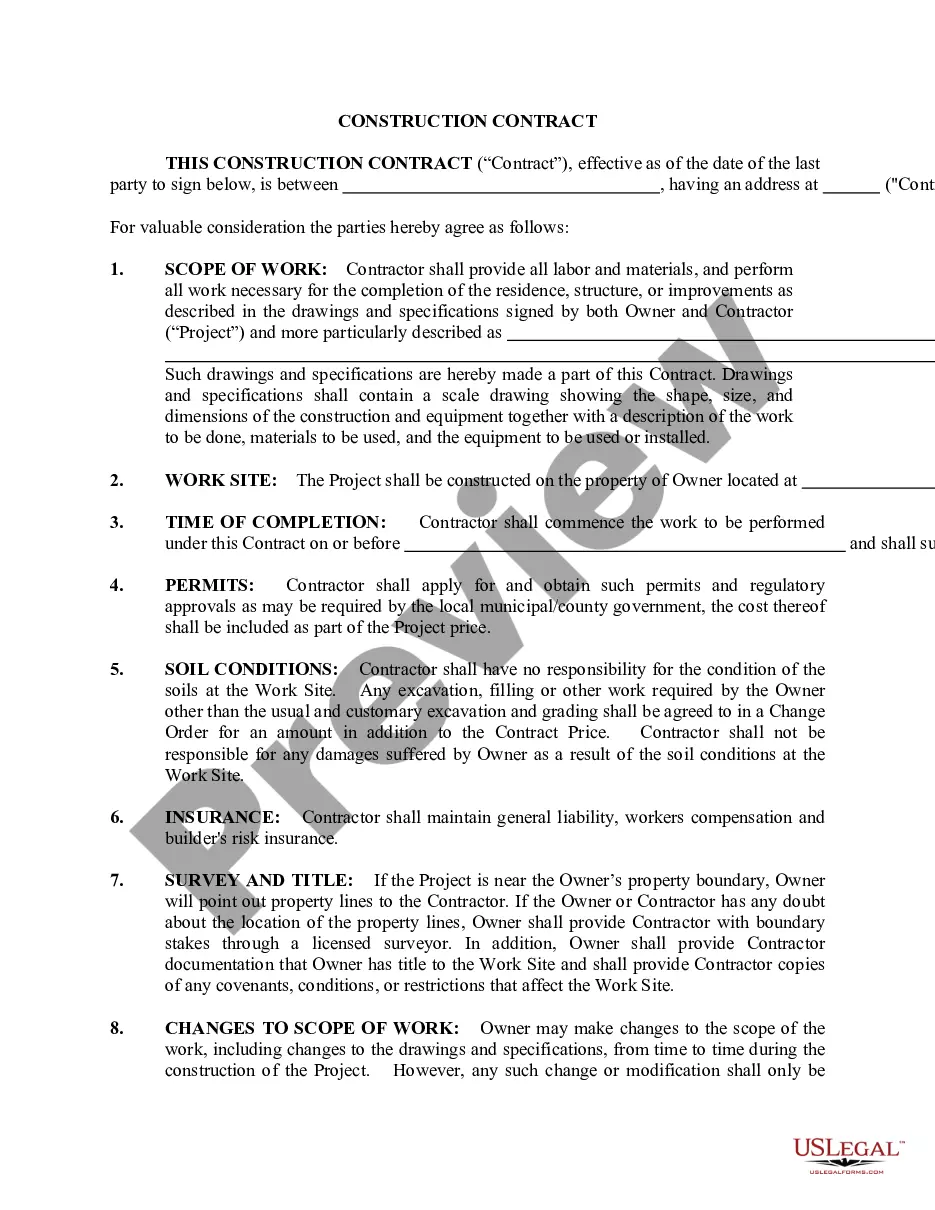
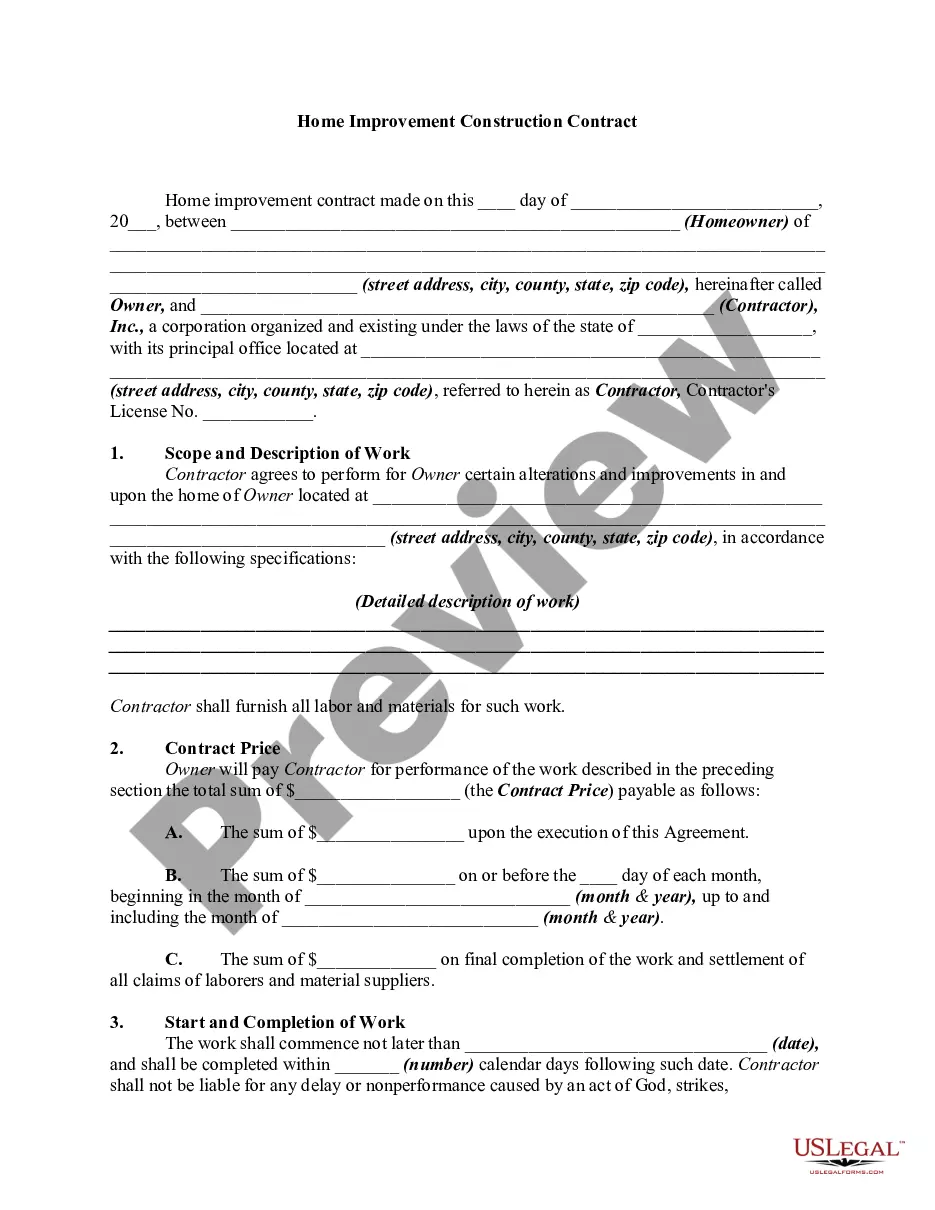
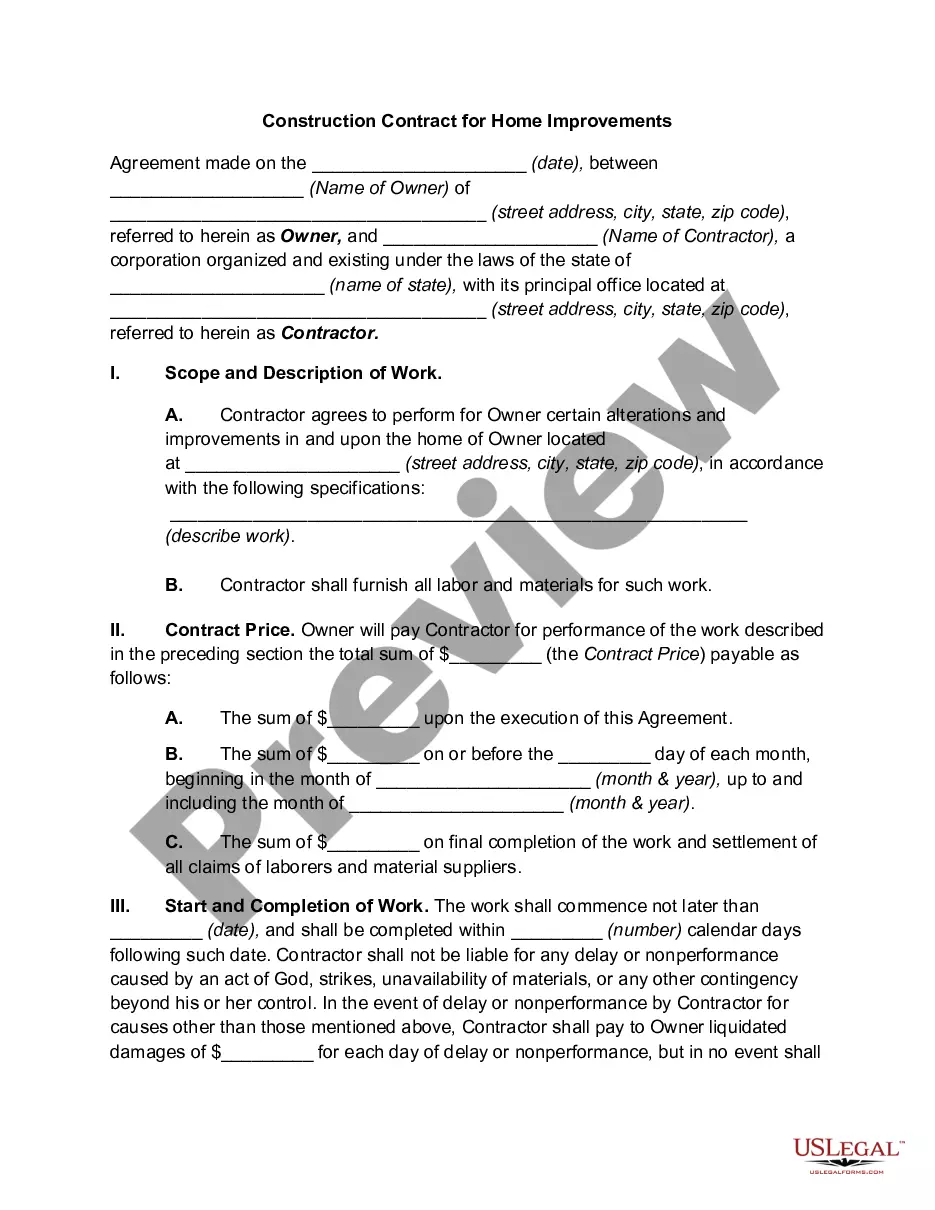
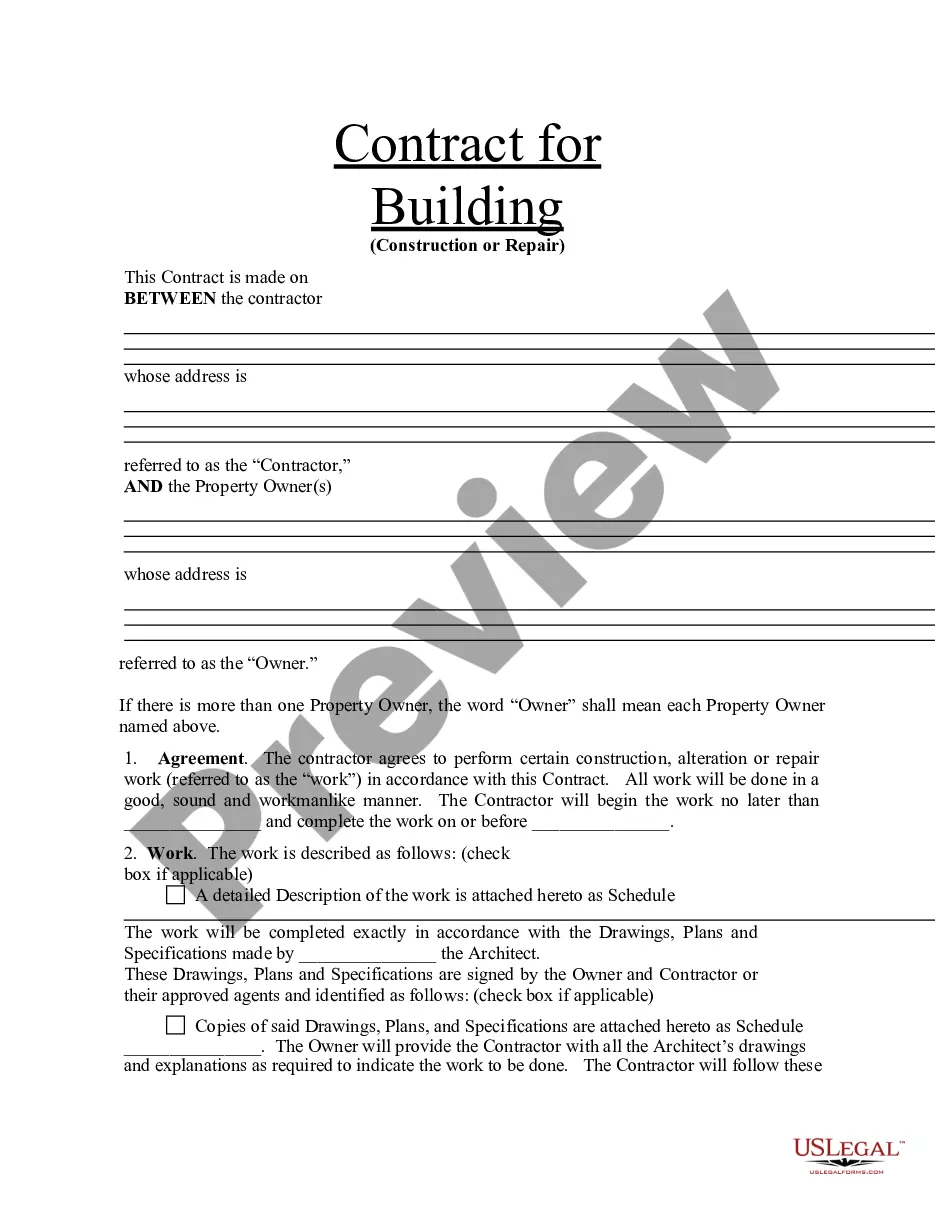
The Contract for Home Repairs/Modifications is a legal document that formalizes an agreement between a homeowner and an independent contractor for general home repairs. This contract outlines the specific repairs or modifications to be made, ensuring that both parties understand their obligations and expectations. Unlike verbal agreements or informal arrangements, this written contract provides protection and clarity, reducing the likelihood of disputes or misunderstandings.
Form components explained
- Parties involved: Identifies the homeowner and contractor.
- Description of work: Details the specific repairs or modifications to be completed.
- Timeline: States the expected start and completion dates for the work.
- Payment terms: Outlines the cost of services and payment schedule.
- Warranties: Addresses any warranties or guarantees for the work performed.

When this form is needed
This form is useful in various situations involving home repairs, such as when hiring a contractor for renovations, electrical work, plumbing, or any general maintenance tasks. It is particularly important when the scope of work is extensive or requires specific materials and labor, ensuring both parties agree on the project specifics before any work commences.
Who can use this document
- Homeowners seeking to make repairs or modifications to their property.
- Independent contractors or tradespeople offering home repair services.
- Property managers overseeing repairs on rental properties.
Steps to complete this form
- Identify the parties: Fill in the names and addresses of the homeowner and contractor.
- Specify the scope of work: Clearly outline the repairs or modifications to be performed.
- Enter the timeline: Provide start and completion dates for the project.
- Outline payment terms: Indicate the total cost and schedule for payments.
- Sign and date the contract: Ensure both parties sign the document to make it effective.
Notarization guidance
This form does not typically require notarization unless specified by local law. It is advisable to check with local regulations or consult a legal professional to ensure all requirements are met.
Get your form ready online
Our built-in tools help you complete, sign, share, and store your documents in one place.
Make edits, fill in missing information, and update formatting in US Legal Forms—just like you would in MS Word.
Download a copy, print it, send it by email, or mail it via USPS—whatever works best for your next step.
Sign and collect signatures with our SignNow integration. Send to multiple recipients, set reminders, and more. Go Premium to unlock E-Sign.
If this form requires notarization, complete it online through a secure video call—no need to meet a notary in person or wait for an appointment.
We protect your documents and personal data by following strict security and privacy standards.

Make edits, fill in missing information, and update formatting in US Legal Forms—just like you would in MS Word.

Download a copy, print it, send it by email, or mail it via USPS—whatever works best for your next step.

Sign and collect signatures with our SignNow integration. Send to multiple recipients, set reminders, and more. Go Premium to unlock E-Sign.

If this form requires notarization, complete it online through a secure video call—no need to meet a notary in person or wait for an appointment.

We protect your documents and personal data by following strict security and privacy standards.
Common mistakes to avoid
- Failing to clearly define the scope of work, leading to misunderstandings.
- Not including a payment schedule, which can cause financial disputes later.
- Neglecting to sign the document, making it unenforceable.
Advantages of online completion
- Convenience: Easily accessible from home and can be completed at your own pace.
- Editability: Customize the form to fit your specific needs and circumstances.
- Reliability: Drawn up by licensed attorneys to ensure compliance with legal standards.
Looking for another form?
Form popularity
FAQ
A construction permit must be obtained by the person that is legally authorized to perform the work. Generally, the North Carolina General Statutes require that construction work be performed by an appropriately State licensed contractor who is responsible for obtaining the permit.
A: There is no limit by law, but it should be a negotiated sum between the homeowner and contractor. Generally, deposits should be limited to around 10% of the contract price, but this also depends on the remaining pay schedule. Contractors typically ask for deposits for material costs.
How do I file a complaint against a contractor? You can request a complaint form by visiting .nclbgc.org/complaints. You can also request a complaint form by calling the Licensing Board at 919-571-4813.
Does the contractor need a license? The N.C.G.S. 87-1 defines a general contractor as a person, firm or corporation who manages or oversees construction projects where the cost of the project is $30,000 or greater. The State General Contractors License is not required if a project is under $30,000.
Under North Carolina law (G.S. 87-1), the construction of any building, highway, public utilities, grading or any improvement or structure where the cost of the construction is $30,000 or more must be superintended (supervised and managed) by a general contractor who is licensed in this state.
North Carolina grants owners an exemption to act as their own general contractor if they meet the following requirements. The property MUST be listed in your name. The property CANNOT be for rent, lease or sale for one year after the project is completed.
North Carolina requires that any general contractors working on contracts in excess of $30,000 obtain a license.