North Carolina New Resident Guide
About this form
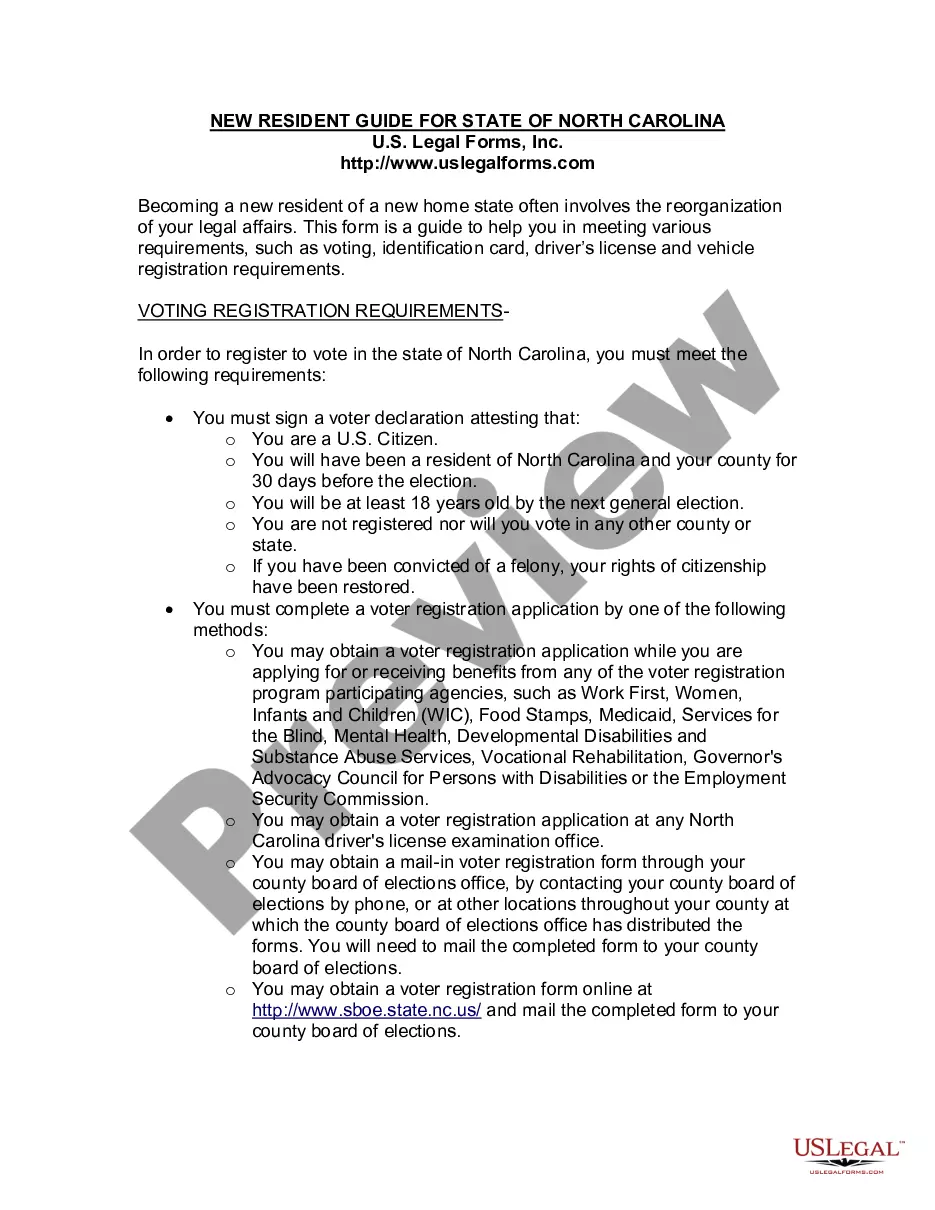
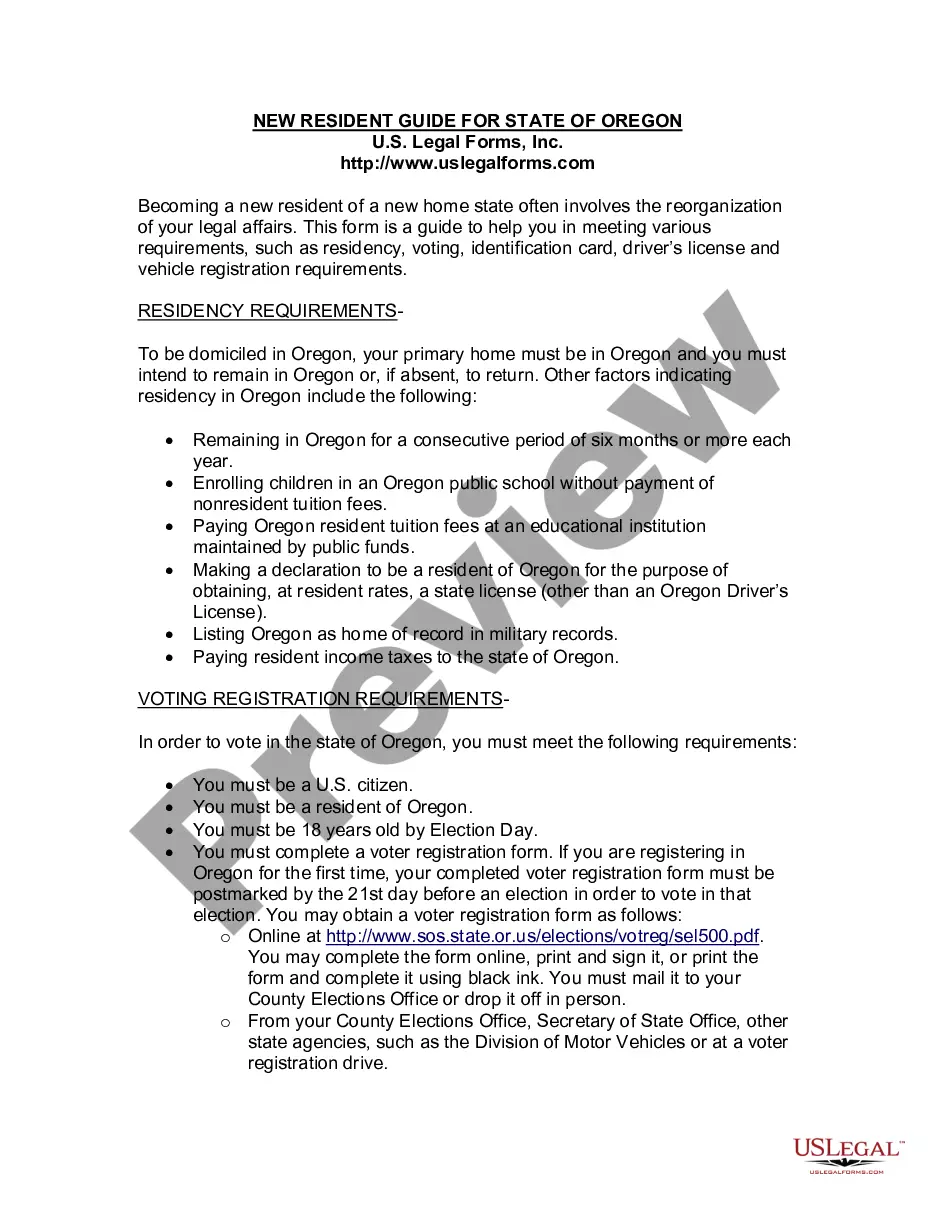
The New Resident Guide is a valuable resource designed for individuals relocating to a new state in the U.S. It provides detailed information regarding residency requirements, voter registration, identification cards, driver's licenses, and vehicle title and registration processes specific to the new state. This guide helps new residents navigate their legal obligations more easily compared to generic relocation resources.
What’s included in this form
- Voting registration requirements in your new state
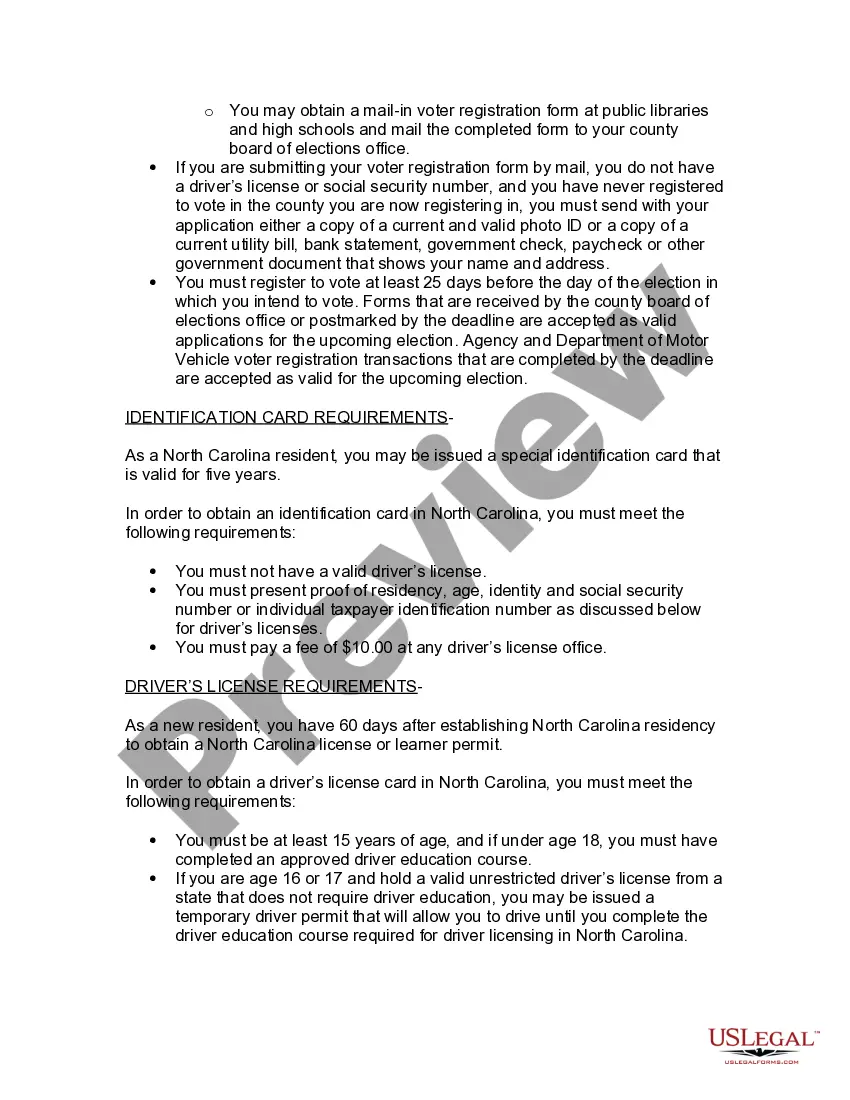
- Identification card eligibility and application process
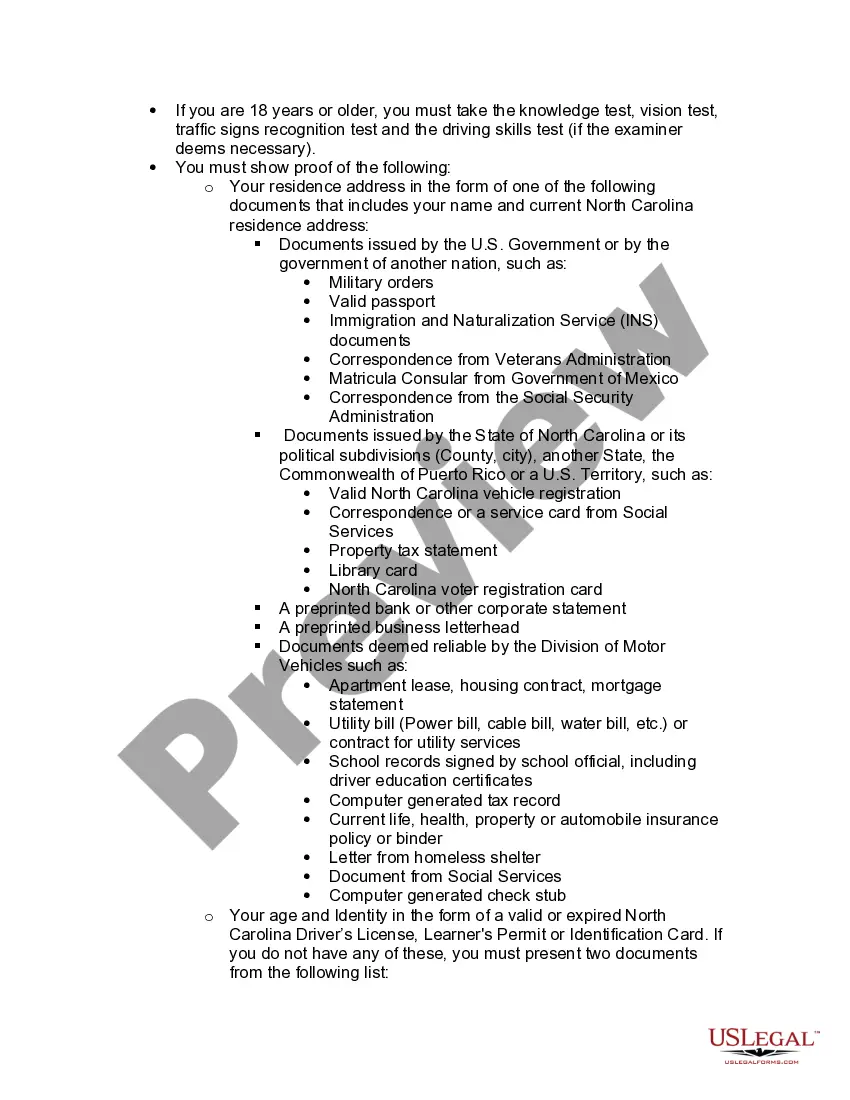
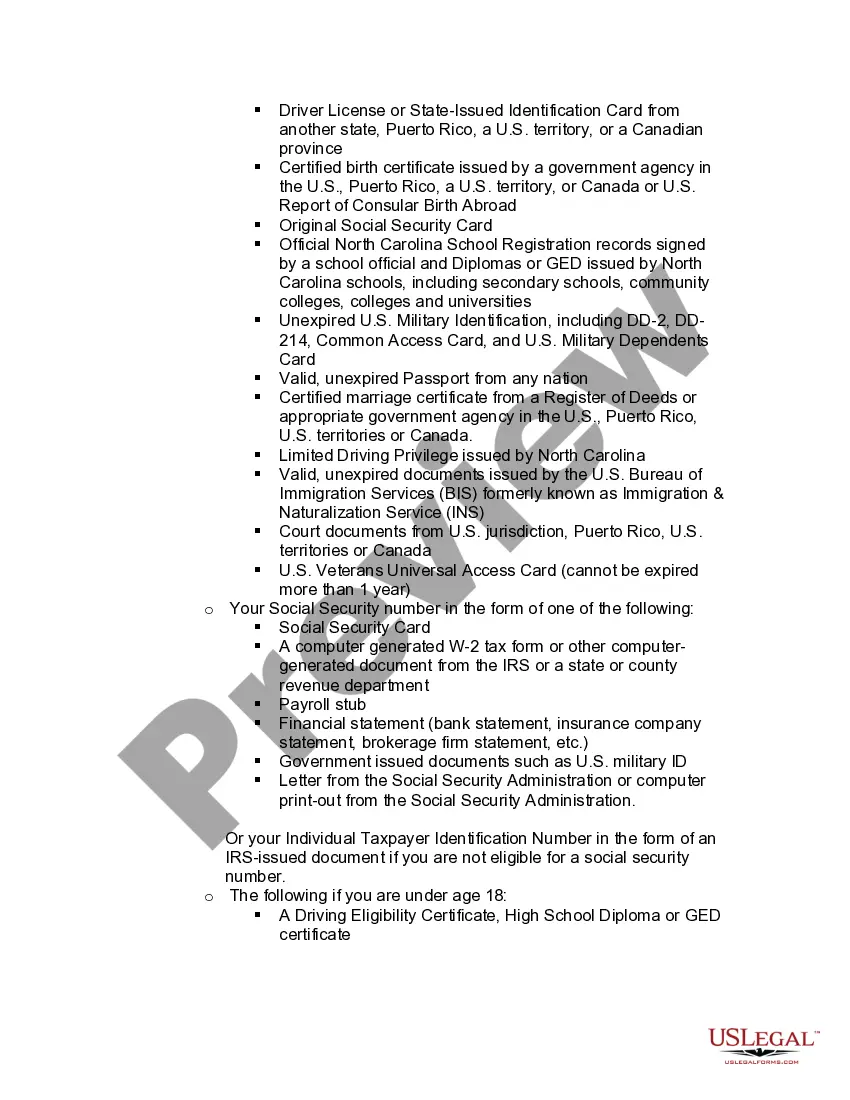
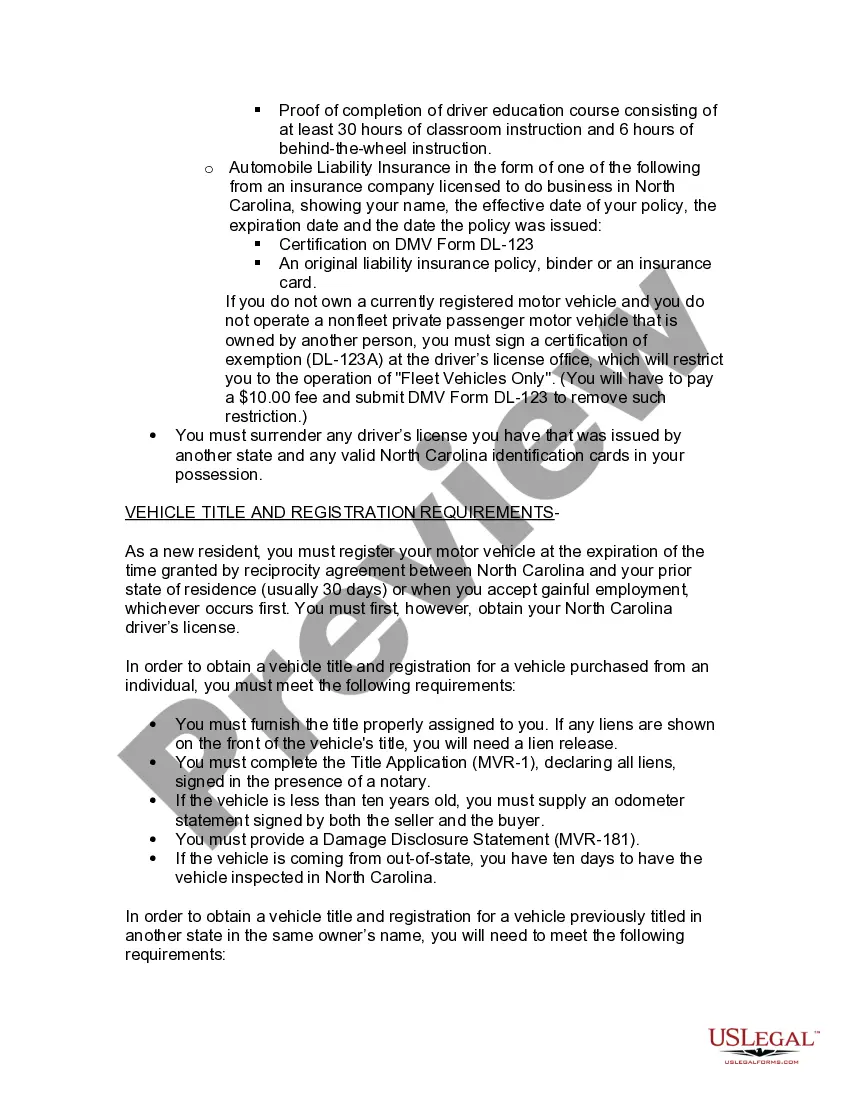
- Driverâs license application requirements and timeline
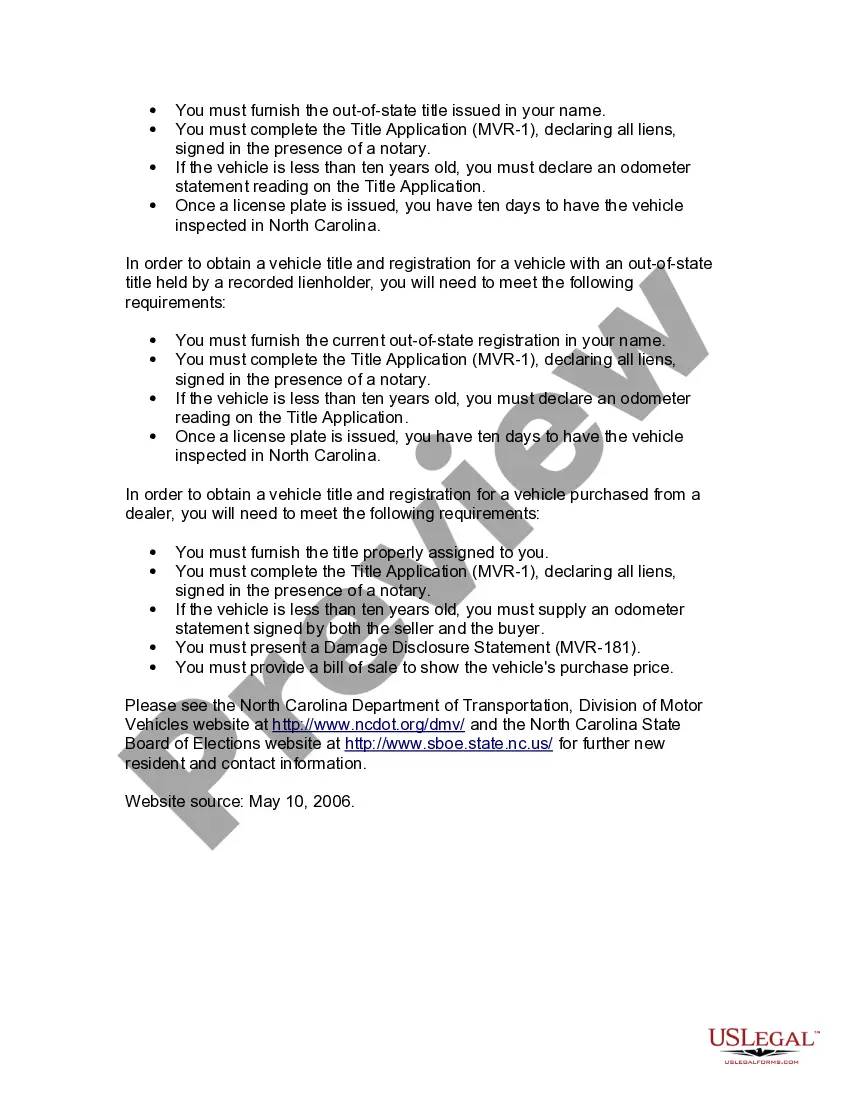
- Vehicle title and registration procedures
- Links to official state resources for further information
When to use this document
This form is useful when you are moving to a new state and need to establish residency. It is essential for managing tasks such as registering to vote, applying for a state identification card, obtaining a driverâs license, and registering your vehicle. Using this guide ensures you meet all legal requirements promptly after your move.
Who this form is for
- Individuals moving to a new state
- First-time voters seeking to register
- Residents needing a state identification card or driverâs license
- Vehicle owners relocating with their cars
- Anyone unfamiliar with the legal requirements for residency in their new state
How to prepare this document
- Review the residency requirements in your new state.
- Collect necessary documents such as proof of identity, residency, and social security number.
- Complete the voter registration application online or at designated locations.
- Apply for a driver's license within 60 days of moving, providing all required documents.
- Register your vehicle after obtaining your driver's license and following local regulations.
Does this document require notarization?
This form does not typically require notarization unless specified by local law. However, certain applications, such as vehicle title transfers, may need a notarized signature. Always check your specific state's requirements for any document that may require notarization.
Get your form ready online
Our built-in tools help you complete, sign, share, and store your documents in one place.
Make edits, fill in missing information, and update formatting in US Legal Forms—just like you would in MS Word.
Download a copy, print it, send it by email, or mail it via USPS—whatever works best for your next step.
Sign and collect signatures with our SignNow integration. Send to multiple recipients, set reminders, and more. Go Premium to unlock E-Sign.
If this form requires notarization, complete it online through a secure video call—no need to meet a notary in person or wait for an appointment.
We protect your documents and personal data by following strict security and privacy standards.

Make edits, fill in missing information, and update formatting in US Legal Forms—just like you would in MS Word.

Download a copy, print it, send it by email, or mail it via USPS—whatever works best for your next step.

Sign and collect signatures with our SignNow integration. Send to multiple recipients, set reminders, and more. Go Premium to unlock E-Sign.

If this form requires notarization, complete it online through a secure video call—no need to meet a notary in person or wait for an appointment.

We protect your documents and personal data by following strict security and privacy standards.
Mistakes to watch out for
- Failing to register to vote at least 25 days before the election.
- Not providing adequate proof of residency and identity when applying for essential documents.
- Forgetting to surrender an out-of-state driverâs license when obtaining a new one.
- Missing deadlines for vehicle registration after moving.
Advantages of online completion
- Easy access to up-to-date information tailored to your state's requirements.
- Ability to download and print the form for convenience.
- Editable content allows you to customize your information before printing.
- Friendly format for users with no legal background.
Key takeaways
- The New Resident Guide helps simplify the transition to a new state.
- Understanding state-specific requirements is crucial for compliance.
- Stay ahead of deadlines for voter registration, driver's licenses, and vehicle registration.
- Utilize online resources to make the process easier and more reliable.
Looking for another form?


Form popularity
FAQ
Social Security card or other document proving Social Security number. One document verifying physical address in North Carolina (two are required if getting an NC REAL ID) For individuals not born in the U.S., one document (with full name) proving legal presence/lawful status.
Have established your legal residence (domicile) in North Carolina, and. Have maintained that domicile for at least twelve (12) consecutive months before the beginning of the term, and. Have a residentiary presence in the state, and.
Vehicle Information. The Owner's Information. Title Holder's Information. Fill in the Cost and Operation Information. The Owner's Signature. The Owner's Second Signature. Recheck the Vehicle Information. Verify Proper Assignation of the title.
@tonyrgreen Yes, Owner ID# is your Driver License #.
A valid North Carolina drivers' license or other identification card issued by the North Carolina Division of Motor Vehicles. A current lease, rent, mortgage payment receipt, or current utility bill in the name of the applicant, showing a North Carolina address.
The CDL Handbook is available from the Federal Motor Carrier Safety Administration. You may also obtain the CDL, Regular and Motorcycle handbooks on the DMV website and at the local driver license offices. Visit the DMV website at MyNCDMV.gov.
Sign the title with the seller and make sure to have it notarized. Get a lien release from the seller. Make sure that the seller provides you with an Eligible Risk Statement for Registration and Certificate of Title, a Damage Disclosure Statement and an Odometer Disclosure Statement. Complete the Title Application.
You not need both parties to be physically present at the time of notarization, but you can only notarize for the person who is appearing before you. The other person can have their signature notarized at another time.
Meet the requirements and provide the proper documentation, including proof of liability insurance. Complete the appropriate forms. Pay the relevant fees.