North Carolina Acknowledgment by Attorney in Fact
Understanding this form
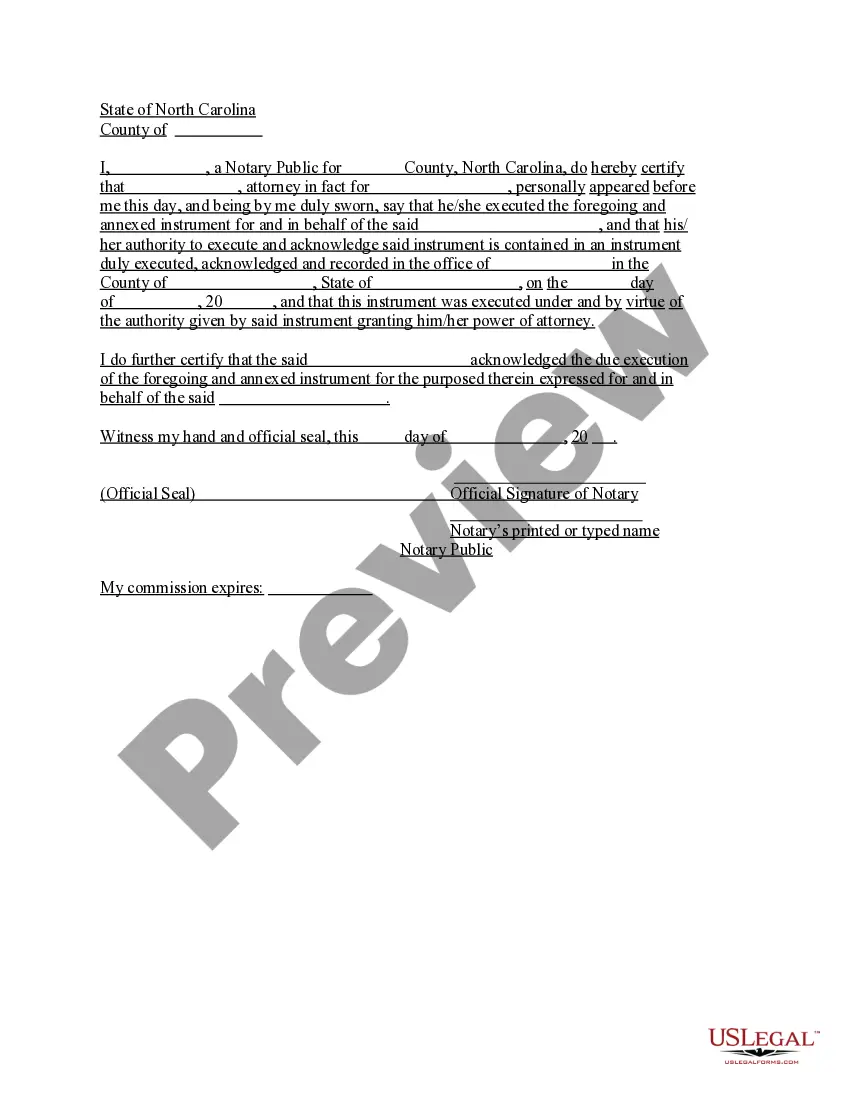
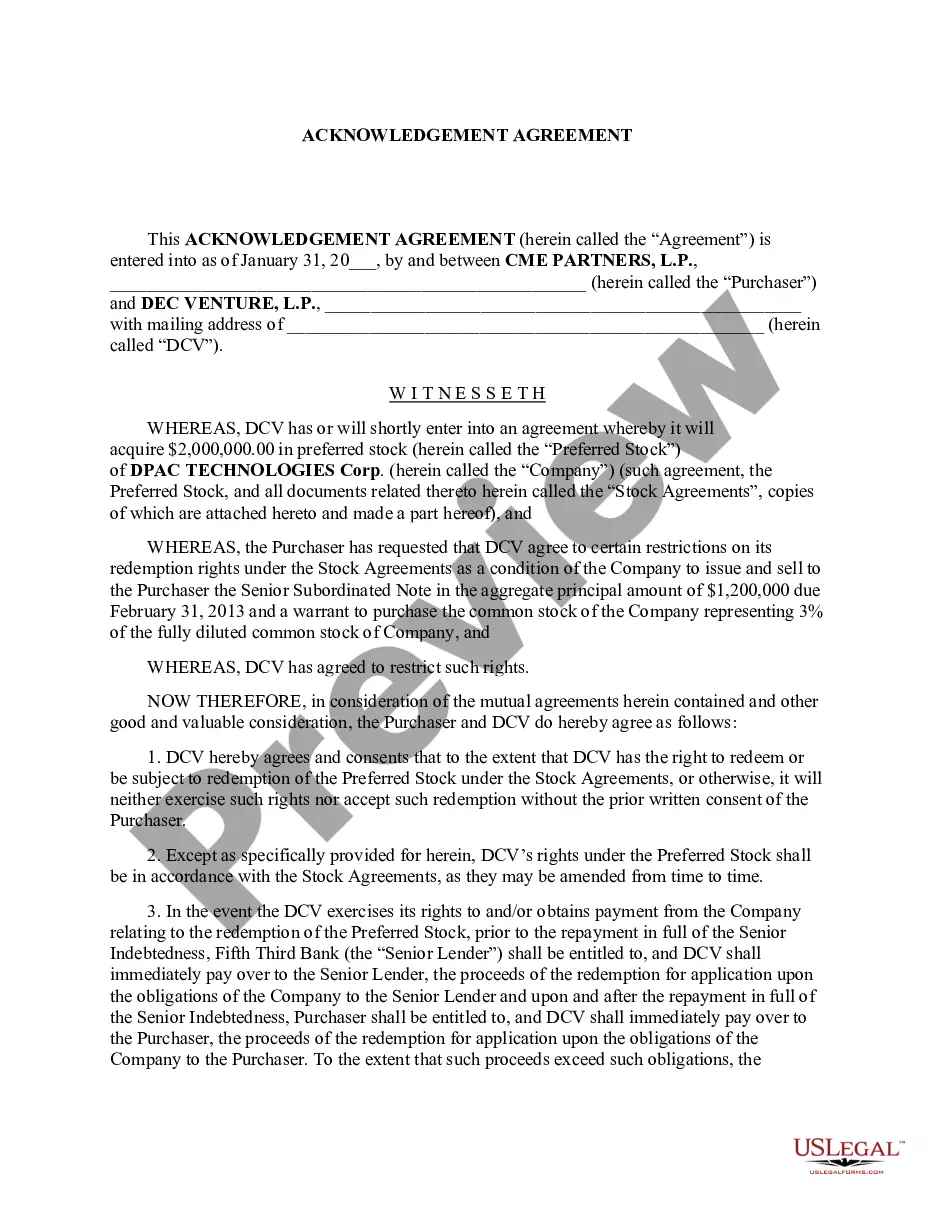
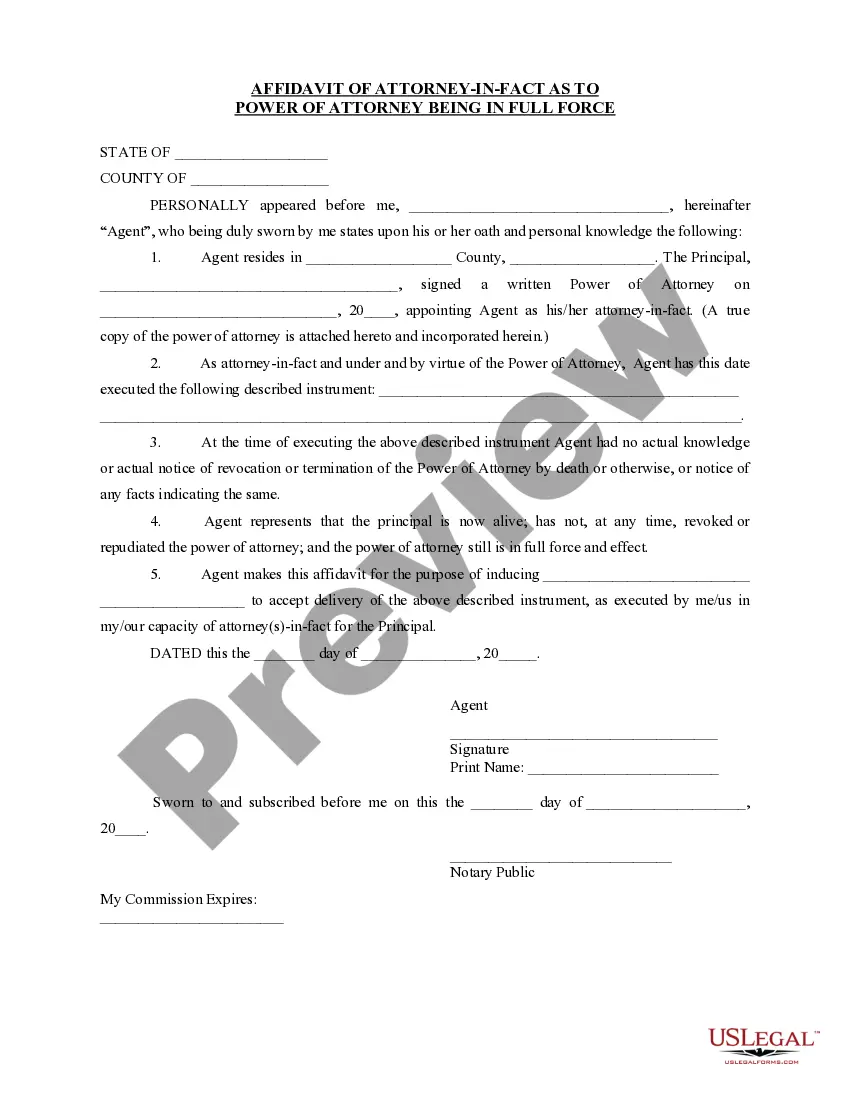
The Acknowledgment by Attorney in Fact is a legal document that certifies an attorney in fact's authority to act on behalf of another individual. This form is essential when someone grants someone else the power to manage specific duties or make decisions on their behalf, typically in financial or legal matters. It differs from general or durable power of attorney forms by specifically emphasizing the acknowledgment of the attorney in fact by a notary public, which provides a layer of legitimacy and legal recognition to the actions taken by the attorney in fact.
Main sections of this form
- Name and address of the principal granting authority.
- Name and address of the attorney in fact.
- Date of execution of the power of attorney.
- Certification by the notary public.
- Signature of the notary public and official seal.

When to use this form
This form should be used when an individual has appointed someone else as their attorney in fact and needs to formalize that appointment with a recognized acknowledgment. Common scenarios include handling real estate transactions, managing financial accounts, or making medical decisions when the principal is unable to do so. It may also be necessary for legal proceedings where the authority of the attorney in fact needs to be clearly established and recognized by third parties.
Who this form is for
- Individuals granting authority to someone else as their attorney in fact.
- Attorneys in fact acting on behalf of a principal.
- Notaries public certifying the acknowledgment in North Carolina.
Instructions for completing this form
- Identify and enter the name and address of the principal.
- Specify the name and address of the attorney in fact.
- Provide the date when the power of attorney was executed.
- Have the attorney in fact appear before the notary public to verify the signature.
- Ensure the notary public signs and affixes their seal to validate the acknowledgment.
Does this document require notarization?
To make this form legally binding, it must be notarized. Our online notarization service, powered by Notarize, lets you verify and sign documents remotely through an encrypted video session.
Get your form ready online
Our built-in tools help you complete, sign, share, and store your documents in one place.
Make edits, fill in missing information, and update formatting in US Legal Forms—just like you would in MS Word.
Download a copy, print it, send it by email, or mail it via USPS—whatever works best for your next step.
Sign and collect signatures with our SignNow integration. Send to multiple recipients, set reminders, and more. Go Premium to unlock E-Sign.
If this form requires notarization, complete it online through a secure video call—no need to meet a notary in person or wait for an appointment.
We protect your documents and personal data by following strict security and privacy standards.

Make edits, fill in missing information, and update formatting in US Legal Forms—just like you would in MS Word.

Download a copy, print it, send it by email, or mail it via USPS—whatever works best for your next step.

Sign and collect signatures with our SignNow integration. Send to multiple recipients, set reminders, and more. Go Premium to unlock E-Sign.

If this form requires notarization, complete it online through a secure video call—no need to meet a notary in person or wait for an appointment.

We protect your documents and personal data by following strict security and privacy standards.
Avoid these common issues
- Failing to complete all fields related to the principal and attorney in fact.
- Not having the document notarized, which can render it ineffective in legal scenarios.
- Incorrectly stating the date of execution.
Benefits of completing this form online
- Convenient access to legal forms anytime and anywhere.
- Editable templates that allow customization to meet specific needs.
- Reliable formats created by licensed attorneys for legal accuracy.
Looking for another form?
Form popularity
FAQ
After the principal's name, write by and then sign your own name. Under or after the signature line, indicate your status as POA by including any of the following identifiers: as POA, as Agent, as Attorney in Fact or as Power of Attorney.
This means you verify the identity of the attorney in fact not the principal and write only the attorney in fact's name in the notarial certificate wording. The attorney in fact signing your journal entry should sign only his or her name.
The lawyer has asked you to sign for them, above their name and position title at the end of the letter. You write 'p. p' in the signature space and sign your name after it. This validates the letter, in informing the reader the letter has been signed on behalf of the lawyer with authorisation.
An attorney in fact is a person authorized to sign documents on someone else's behalf, but is not necessarily a practicing lawyer.When an attorney in fact signs a document, the signature should include the name of the principal he or she represents.
3 attorney answers Sign his name and then add underneath "by your name, attorney in fact".
After the principal's name, write by and then sign your own name. Under or after the signature line, indicate your status as POA by including any of the following identifiers: as POA, as Agent, as Attorney in Fact or as Power of Attorney.
When the document goes into effect, you become that person's attorney in fact, which means you act as their agent. Generally, to sign documents in this capacity, you will sign the principal's name first, then your name with the designation "attorney in fact" or "power of attorney."