North Carolina Application for Sublease
Understanding this form
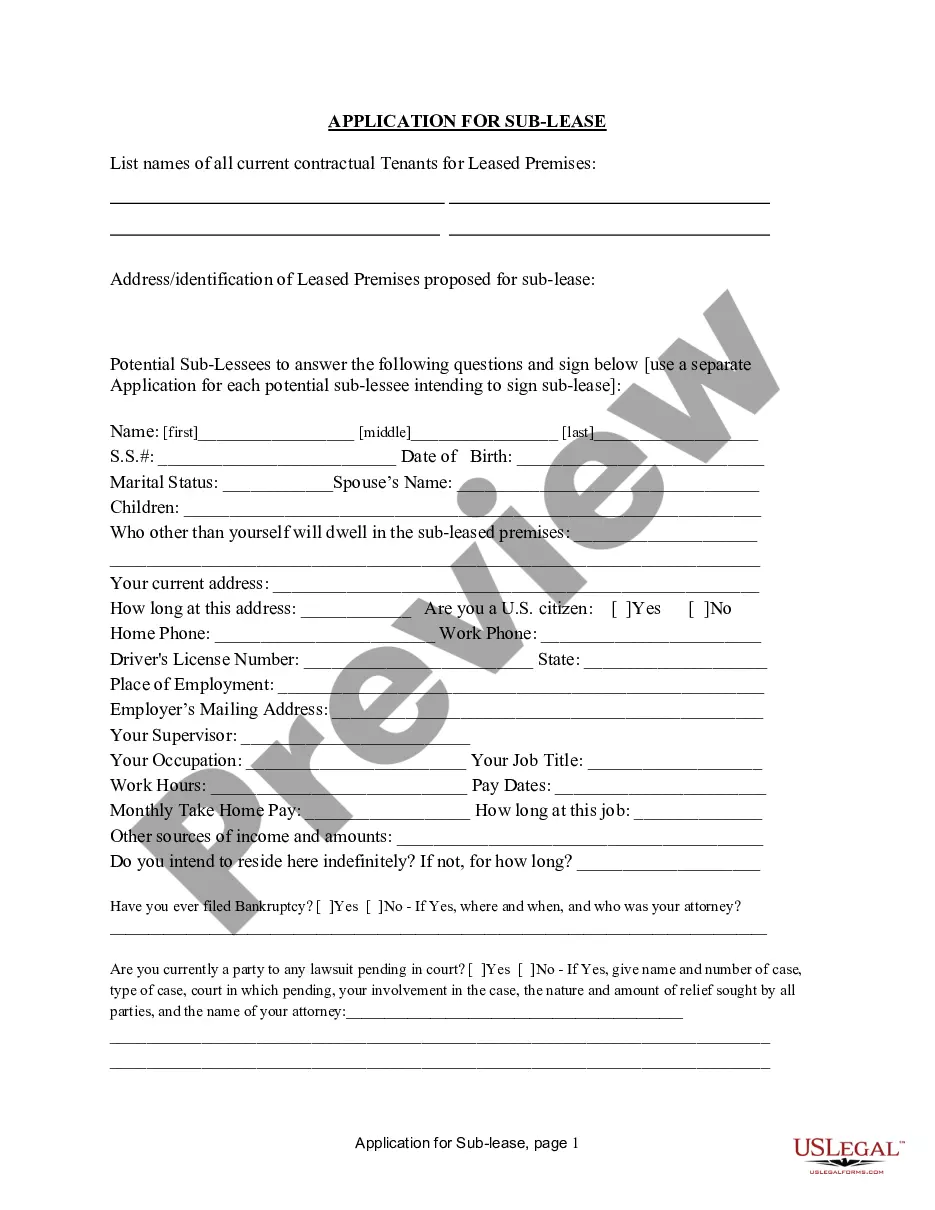
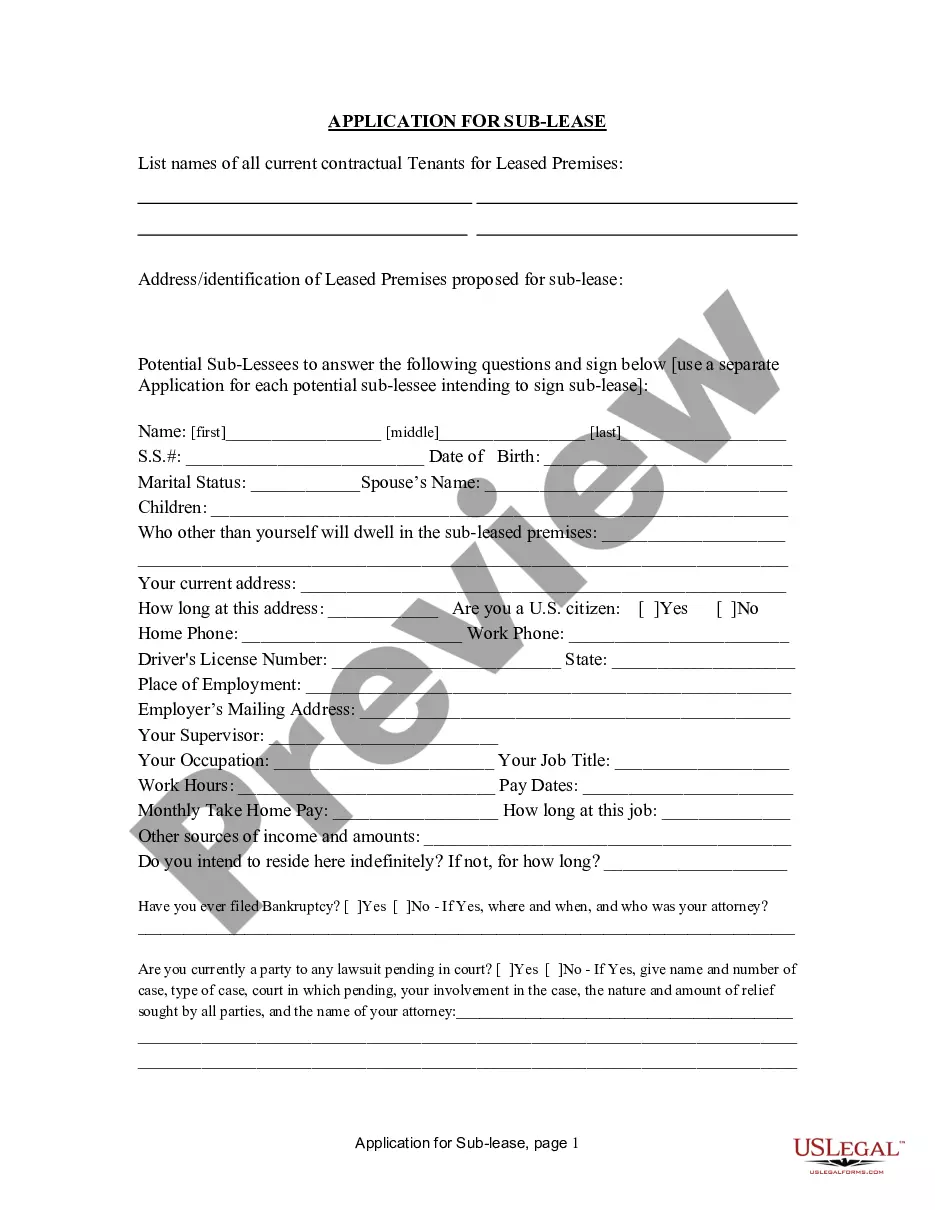
The Application for Sublease is a formal request submitted by a potential sub-tenant to the landlord for permission to sublet a rental property. This document helps landlords evaluate the eligibility and reliability of the sub-tenant. Unlike a standard rental application, this form specifically addresses the subleasing situation, ensuring that all parties understand their rights and obligations under the original lease agreement.
Form components explained
- Personal information: Includes marital status, name, and current address.
- Employment details: Requires current employer information, job title, and income.
- Subleasing intentions: Questions about the length of intended stay and residency plans.
- Financial disclosures: Bankruptcy history and any pending legal actions.
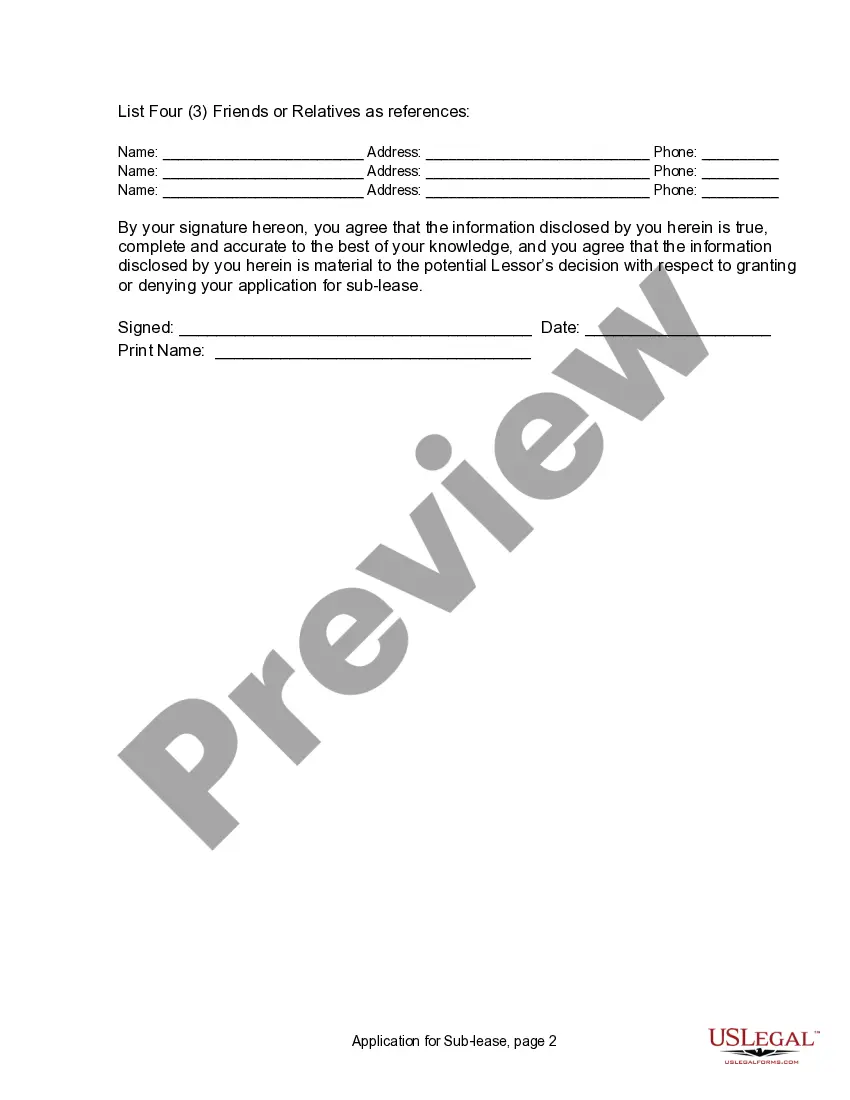
- References: Contact information for friends or relatives as character references.
- Certification: A signature affirming the truthfulness of the provided information.
When this form is needed
This form is essential when a tenant wishes to sublet their rental property and needs to obtain approval from the landlord. Use this application if you are looking to temporarily transfer your occupancy rights to another person while still retaining your lease obligations. It is particularly useful in situations where you need to move for a job, personal reasons, or financial necessity but want to avoid breaking your lease.
Who should use this form
This form is intended for:
- Current tenants who want to sublease their rental property.
- Potential sub-tenants seeking approval from landlords to take over the lease.
- Landlords looking to gather necessary information from a prospective sub-tenant.
Steps to complete this form
- Fill in personal details, including full name, address, and marital status.
- Provide your employment information, including employer details and income sources.
- Indicate your plans regarding residency duration and any other individuals who will live in the sub-leased unit.
- List any relevant financial information, including bankruptcy status and pending lawsuits, if applicable.
- Complete the reference section by providing contact details for three individuals who can vouch for your character.
- Sign and date the application, confirming that all information is accurate and complete.
Notarization guidance
This form usually doesn’t need to be notarized. However, local laws or specific transactions may require it. Our online notarization service, powered by Notarize, lets you complete it remotely through a secure video session, available 24/7.
Get your form ready online
Our built-in tools help you complete, sign, share, and store your documents in one place.
Make edits, fill in missing information, and update formatting in US Legal Forms—just like you would in MS Word.
Download a copy, print it, send it by email, or mail it via USPS—whatever works best for your next step.
Sign and collect signatures with our SignNow integration. Send to multiple recipients, set reminders, and more. Go Premium to unlock E-Sign.
If this form requires notarization, complete it online through a secure video call—no need to meet a notary in person or wait for an appointment.
We protect your documents and personal data by following strict security and privacy standards.

Make edits, fill in missing information, and update formatting in US Legal Forms—just like you would in MS Word.

Download a copy, print it, send it by email, or mail it via USPS—whatever works best for your next step.

Sign and collect signatures with our SignNow integration. Send to multiple recipients, set reminders, and more. Go Premium to unlock E-Sign.

If this form requires notarization, complete it online through a secure video call—no need to meet a notary in person or wait for an appointment.

We protect your documents and personal data by following strict security and privacy standards.
Avoid these common issues
- Failing to provide complete and accurate information.
- Not including all necessary supporting documentation.
- Missing required signatures, both from the applicant and the landlord.
- Submitting the form without proper review of the original lease terms.
Why use this form online
- Convenience of instant access and forms that can be downloaded at any time.
- Editability allows you to tailor the application to your specific needs.
- Reliability of attorney-drafted templates ensures you are using industry-standard language and formats.
Looking for another form?
Form popularity
FAQ
The Tenant Doesn't Make Enough Income. The Tenant Smokes. The Tenant Has a Pet. The Tenant's Income Isn't Verified. The Tenant Has Been Convicted of a Crime. The Tenant Does Not Have Rental History. The Tenant Has a History of Damaging Property and Not Paying Rent. The Tenant Provides False Information.
North Carolina law says that your landlord must keep your housing fit and safe. It also says that you, the tenant, must pay your rent, keep your home clean, and not damage your home. To make the law work, both the tenant and the landlord must do their part.
Get organized before you start searching. Provide verifiable references. Submit a resume with your application. Address problems and offer solutions. Treat the inspection as an interview.
Unless the lease prohibits subleasing, a landlord may not unreasonably withhold permission to sublet. In North Carolina, subleasing is only allowed if the landlord consents.
You lack references or have poor references Not providing any references, or having someone give you a poor reference, could cause the apartment manager or landlord to deny your application.
Is Subletting Illegal? In most cases, subletting is legal if the tenant obtains the landlords permission to let out the rental property. However, if the tenant sublets without written permission, they could come into legal difficulties.
A subtenant is someone who has the right to use and occupy rental property leased by a tenant from a landlord. A subtenant has responsibilities to both the landlord and the tenant.The tenant still remains responsible for the payment of rent to the landlord and any damages to the property caused by the subtenant.
In the state of North Carolina, if tenants hold over, or stay in the rental unit after the rental term has expired, then the landlord must give tenants notice before evicting them. This can include tenants without a written lease and week-to-week and month-to-month tenants.
No, residential lease agreements do not need to be notarized in North Carolina. As long as the contract exists and both parties have agreed to it, it is legally binding and it does not have to be notarized.