Louisiana Will and Trust Provisions
Understanding this form
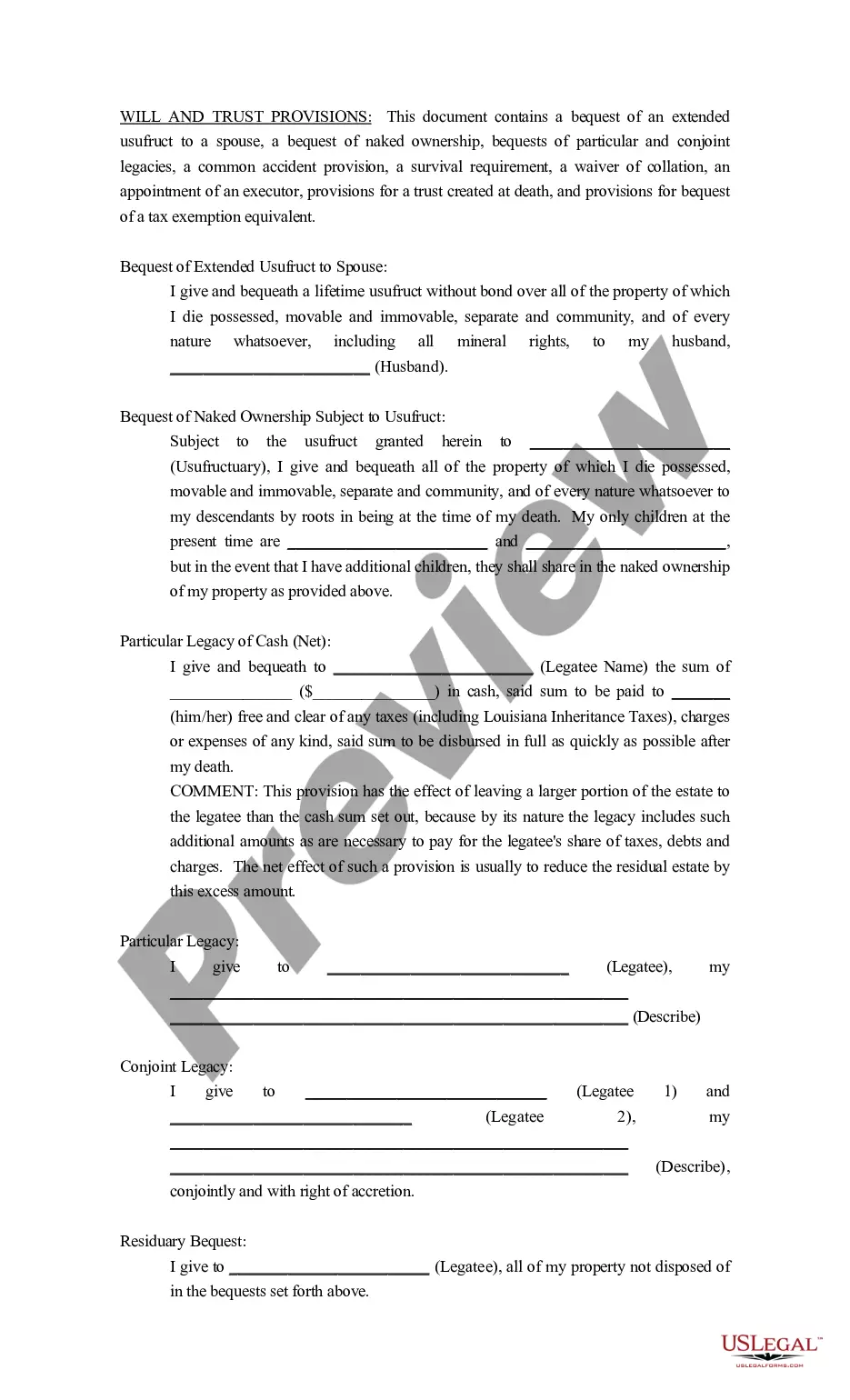
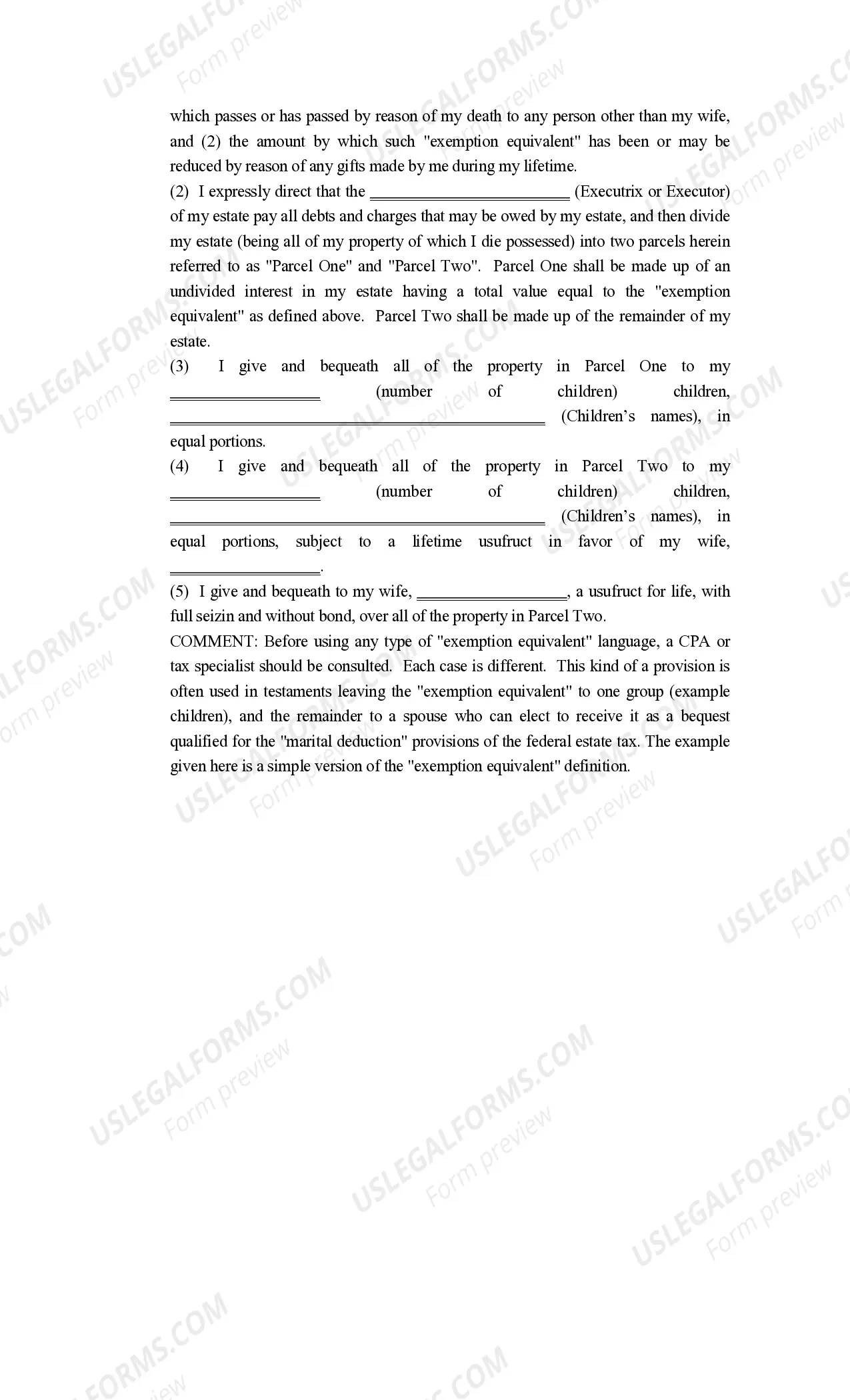
The Will and Trust Provisions form is a legal document that outlines the distribution of your assets after your death. This comprehensive template includes essential clauses for bequests, trust management, and appointment of an executor, differentiating it from simpler wills. It helps ensure that your wishes regarding property distribution and care for beneficiaries are clearly stated and legally enforceable.
Main sections of this form
- Bequest of extended usufruct to a spouse, allowing lifetime use of assets.
- Provisions for bequests of naked ownership to descendants.
- Specific legacies to particular individuals, including cash bequests.
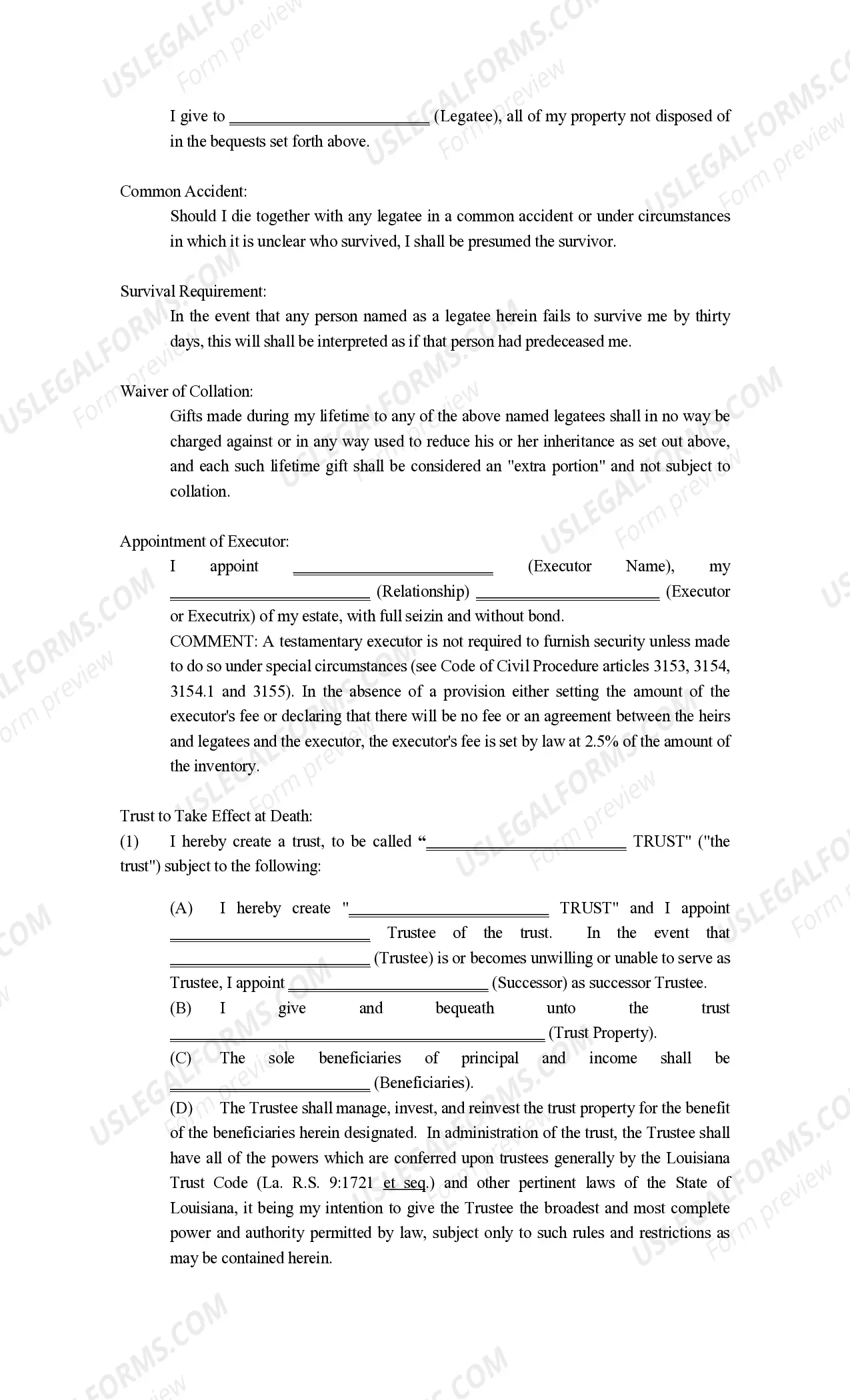
- Common accident provision ensuring clarity in the event of simultaneous death.
- Appointment of an executor to manage estate distribution.
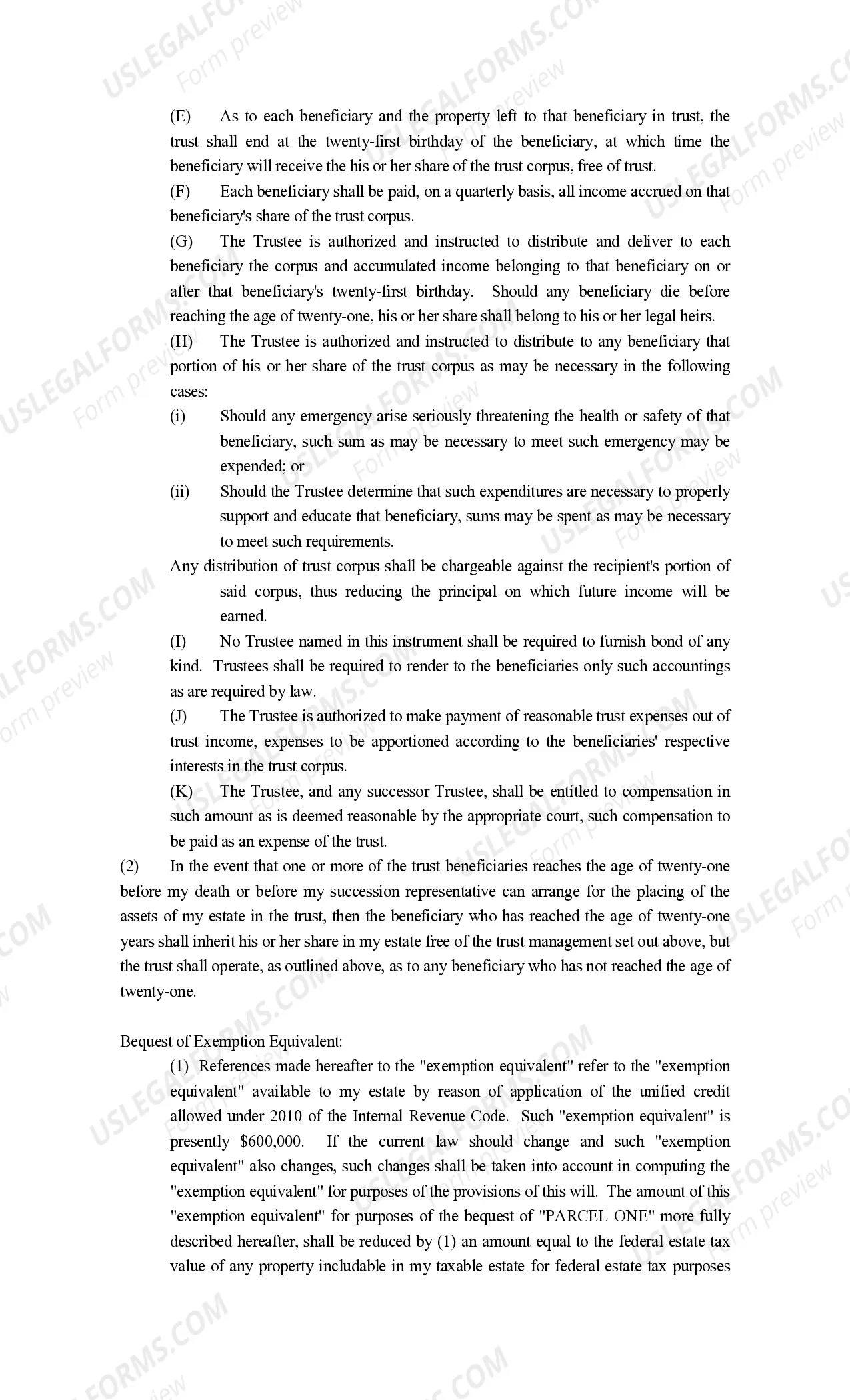
- Establishment of a trust to manage assets for beneficiaries after death.




When to use this document
This form is suitable for individuals who want to specify how their assets will be divided after their death. It is especially useful if you have a spouse, children, or other beneficiaries, and wish to provide for them through bequests or a trust. Additionally, it is applicable if you want to set conditions for distributions, such as age requirements for beneficiaries or handle the situation of common accidents among legatees.
Who can use this document
- Individuals planning their estate and asset distribution.
- Parents who want to provide for their children or other dependents.
- Spouses seeking to ensure the financial support of their partner after death.
- Those looking to create a trust for beneficiaries, with specified conditions.
- Anyone wanting clear legal documentation of their last wishes.
How to prepare this document
- Identify the parties involved, including your spouse and beneficiaries.
- Specify the property and assets you wish to bequeath.
- Detail any particular legacies, including cash amounts and descriptions of items.
- Appoint an executor responsible for managing the estate.
- Set up a trust if desired, clearly indicating the trustee and beneficiaries.
Is notarization required?
Notarization is required for this form to take effect. Our online notarization service, powered by Notarize, lets you verify and sign documents remotely through an encrypted video session, available 24/7.
Get your form ready online
Our built-in tools help you complete, sign, share, and store your documents in one place.
Make edits, fill in missing information, and update formatting in US Legal Forms—just like you would in MS Word.
Download a copy, print it, send it by email, or mail it via USPS—whatever works best for your next step.
Sign and collect signatures with our SignNow integration. Send to multiple recipients, set reminders, and more. Go Premium to unlock E-Sign.
If this form requires notarization, complete it online through a secure video call—no need to meet a notary in person or wait for an appointment.
We protect your documents and personal data by following strict security and privacy standards.

Make edits, fill in missing information, and update formatting in US Legal Forms—just like you would in MS Word.

Download a copy, print it, send it by email, or mail it via USPS—whatever works best for your next step.

Sign and collect signatures with our SignNow integration. Send to multiple recipients, set reminders, and more. Go Premium to unlock E-Sign.

If this form requires notarization, complete it online through a secure video call—no need to meet a notary in person or wait for an appointment.

We protect your documents and personal data by following strict security and privacy standards.
Typical mistakes to avoid
- Failing to assign a clear executor, which can complicate the estate distribution.
- Not specifying contingencies for beneficiaries who do not survive you.
- Leaving out key details about property that can lead to disputes.
- Forgetting to review and update the form after major life events.
Advantages of online completion
- Convenience of downloading and completing the form at your own pace.
- Editability to customize sections according to your personal circumstances.
- Access to legally drafted forms that ensure compliance with relevant laws.
Looking for another form?
Form popularity
FAQ
The choice between a will and a trust often hinges on your personal situation and goals. A will is simpler, while a trust can provide more control over your assets and can help your heirs avoid probate. Familiarizing yourself with Louisiana Will and Trust Provisions can help clarify which option best suits your estate planning needs.
A will and a living trust are both part of a comprehensive estate plan, that sometimes are inconsistent with one another. When there are conflicts, the trust takes precedence. A will has no power to decide who receives a living trust's assets, such as cash, equities, bonds, real estate, and jewelry.
Another advantage of a trust is that it gives you more control over the distribution of your assets than a will does. With a will, if the person to inherit property is a minor, the probate court must name a conservator to manage the money until the minor reaches 18.
Inter vivos (living) trusts are created while an individual is still alive in order to name the beneficiaries of property and assets upon death while avoiding probate.Testamentary (will) trusts are established when an individual dies and the trust is detailed in their last will and testament.
Make a List of All Your Assets. Be sure to include make a list of your assets that includes everything you own. Find the Paperwork for Your Assets. Choose Beneficiaries. Choose a Successor Trustee. Choose a Guardian for Your Minor Children.
A will can be used to create a testamentary trust. You can also create a trust for the primary purpose of avoiding probate court, called a revocable living trust.
Personal trusts are further divided into either 1) Under Declaration of Trust (U/D/T) meaning the grantor and the trustee are the same person and the grantor controls the trust assets, and 2) Trust Under Agreement (U/A) meaning the grantor and the trustee are different persons and the trustee controls the trust assets.
While a will determines how your assets will be distributed after you die, a trust becomes the legal owner of your assets the moment the trust is created.
If you make a living trust, you might well think that you don't need to also make a will. After all, a living trust basically serves the same purpose as a will: it's a legal document in which you leave your property to whomever you choose.But even if you make a living trust, you should make a will as well.