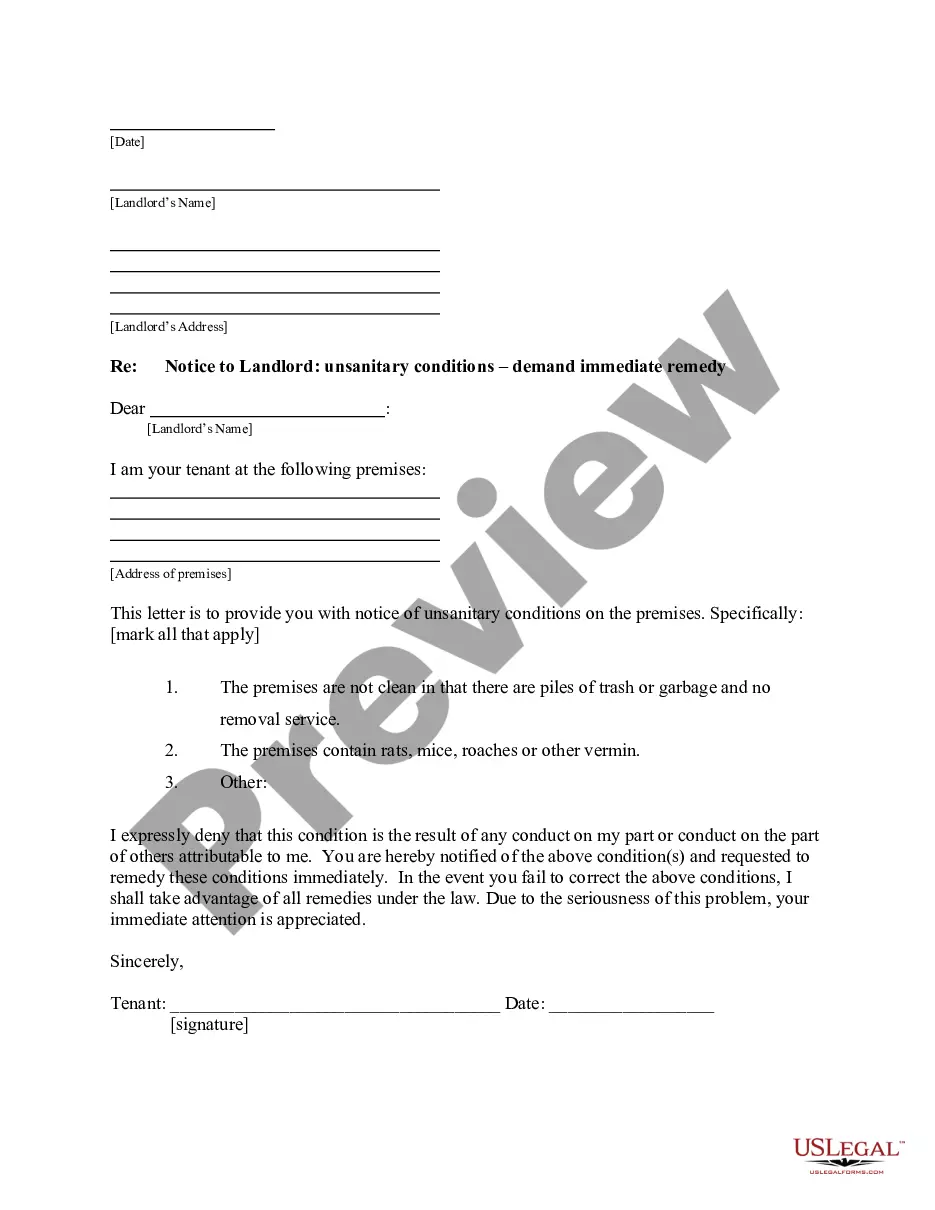
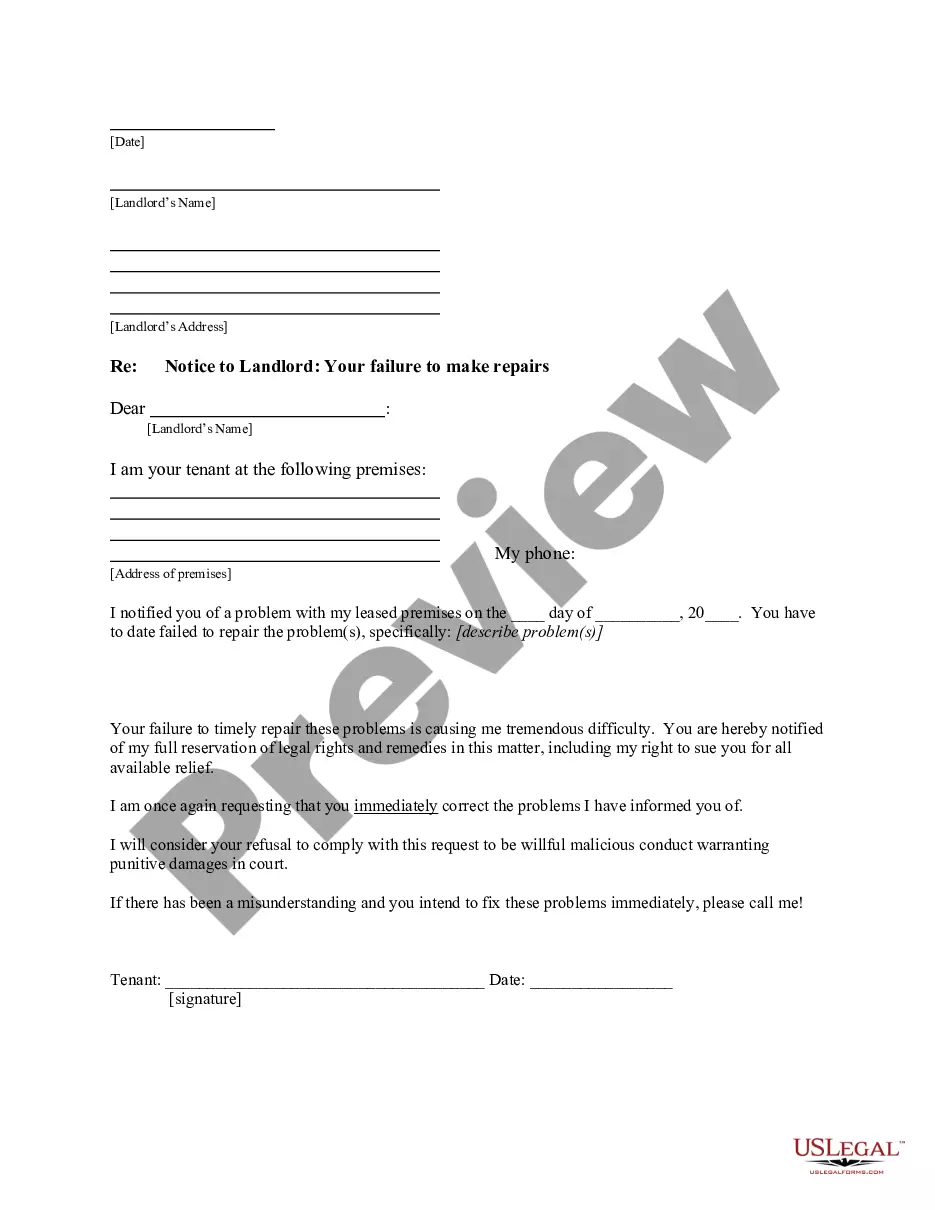
North Carolina Divorce Worksheet and Law Summary for Contested or Uncontested Case of over 25 pages - Ideal Client Interview Form
Understanding this form
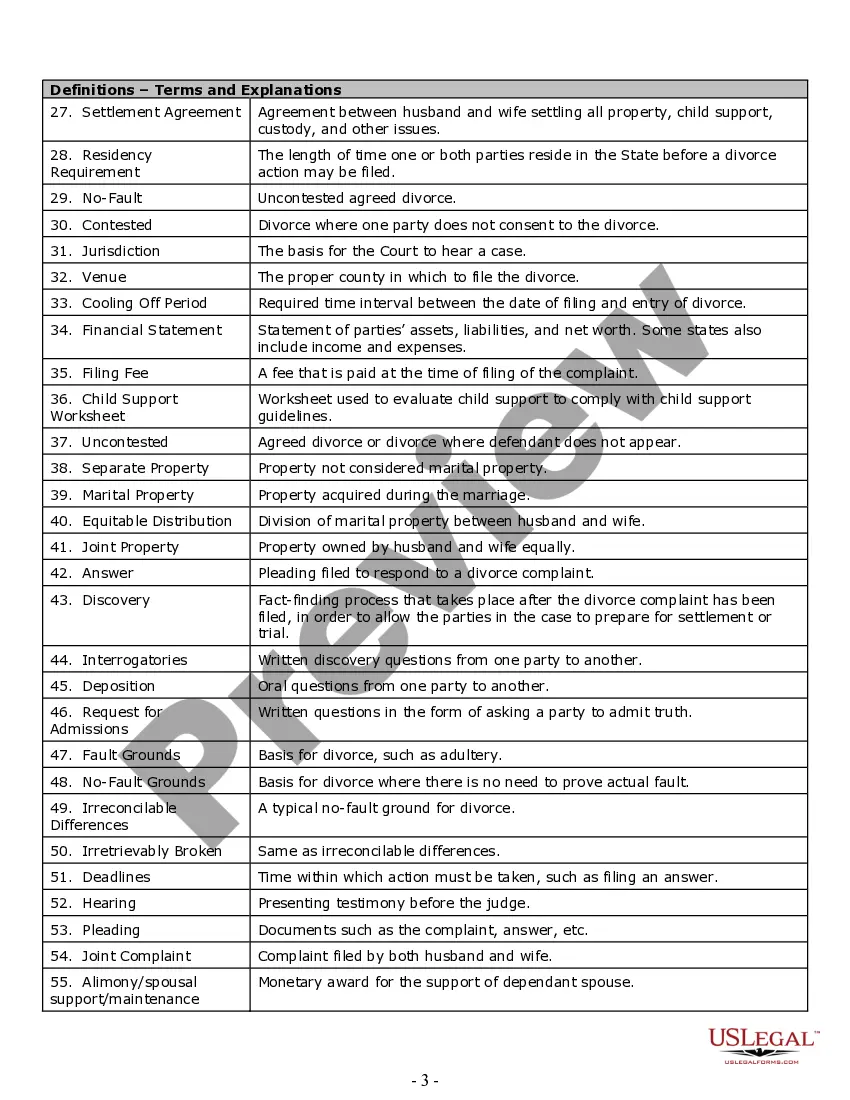
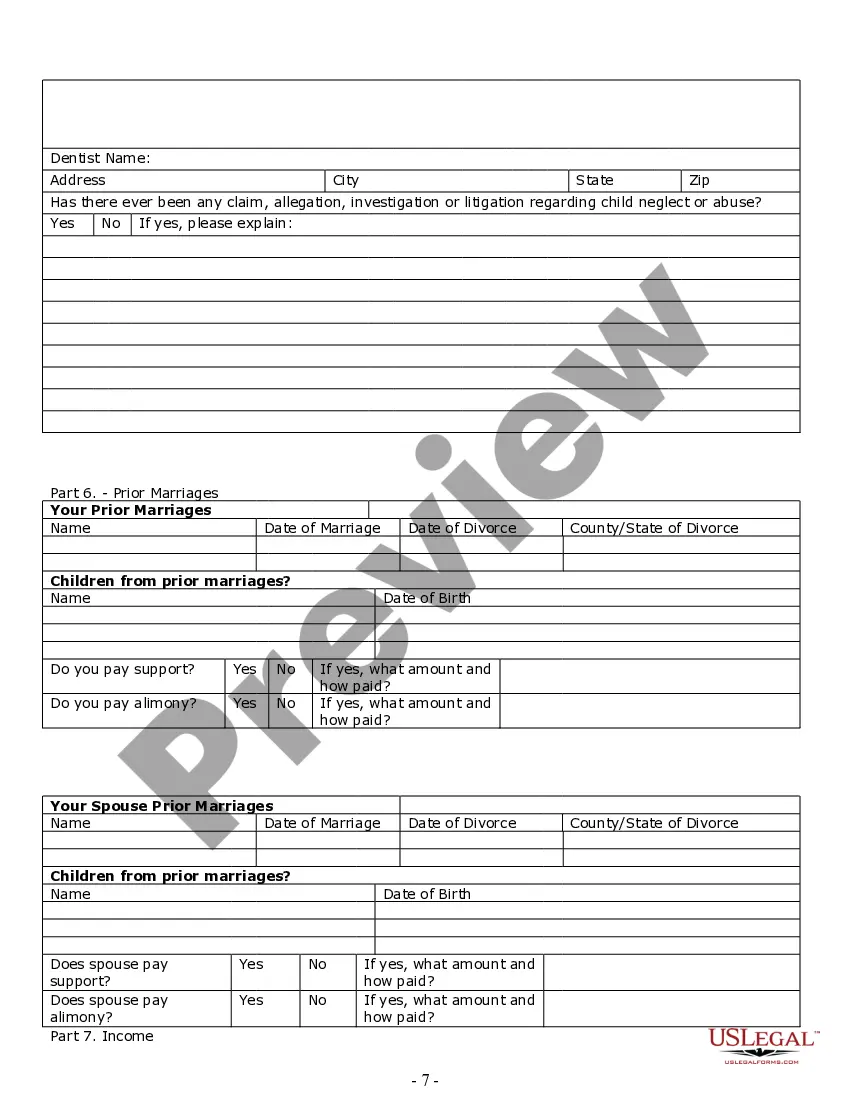
The Divorce Worksheet and Law Summary is a comprehensive resource designed for individuals contemplating a divorce, whether contested or uncontested. This form provides essential information about divorce processes, including visitation, child support, and custody arrangements. It differs from other forms by offering worksheets and detailed financial forms, making it ideal for preliminary client interviews or for personal use before consulting with an attorney.
Key components of this form
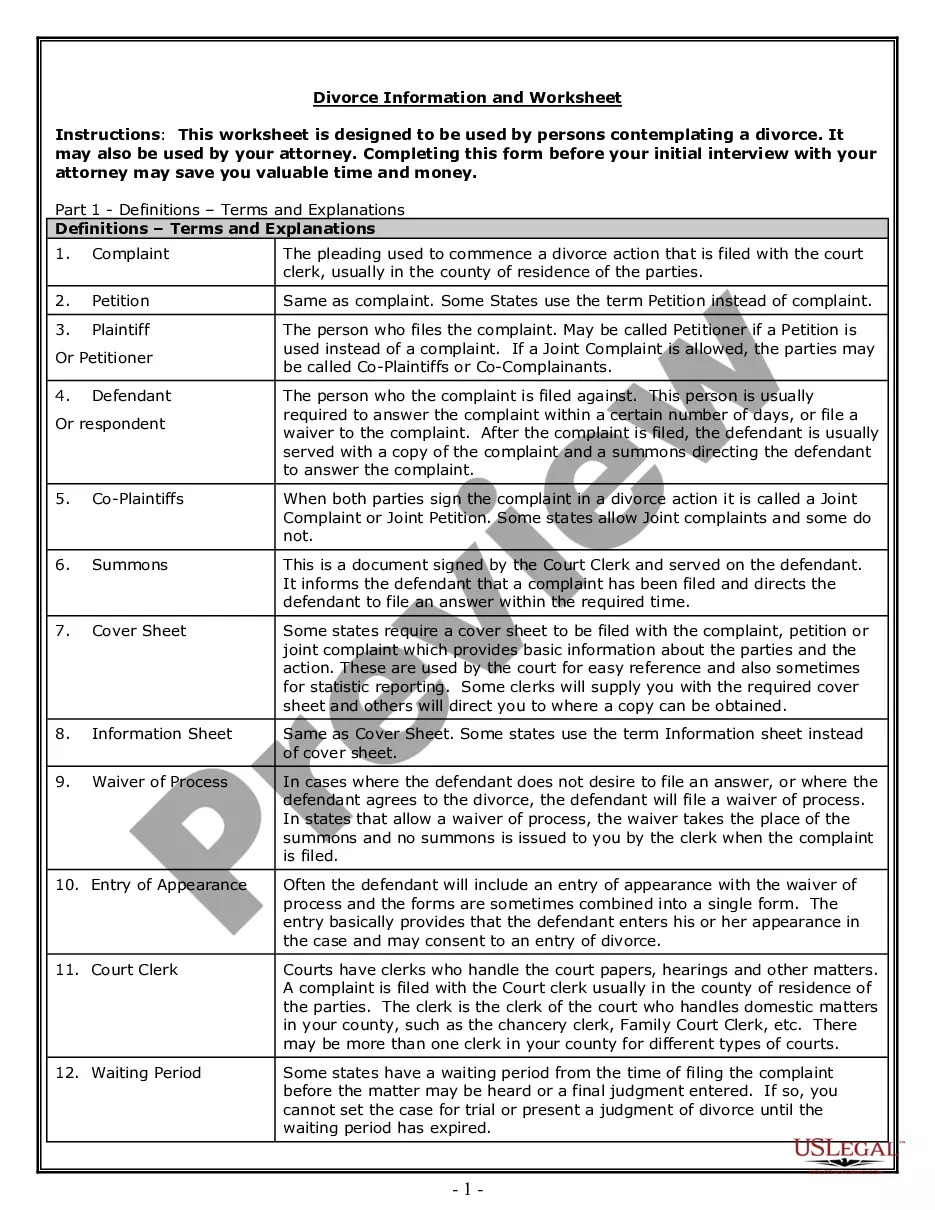
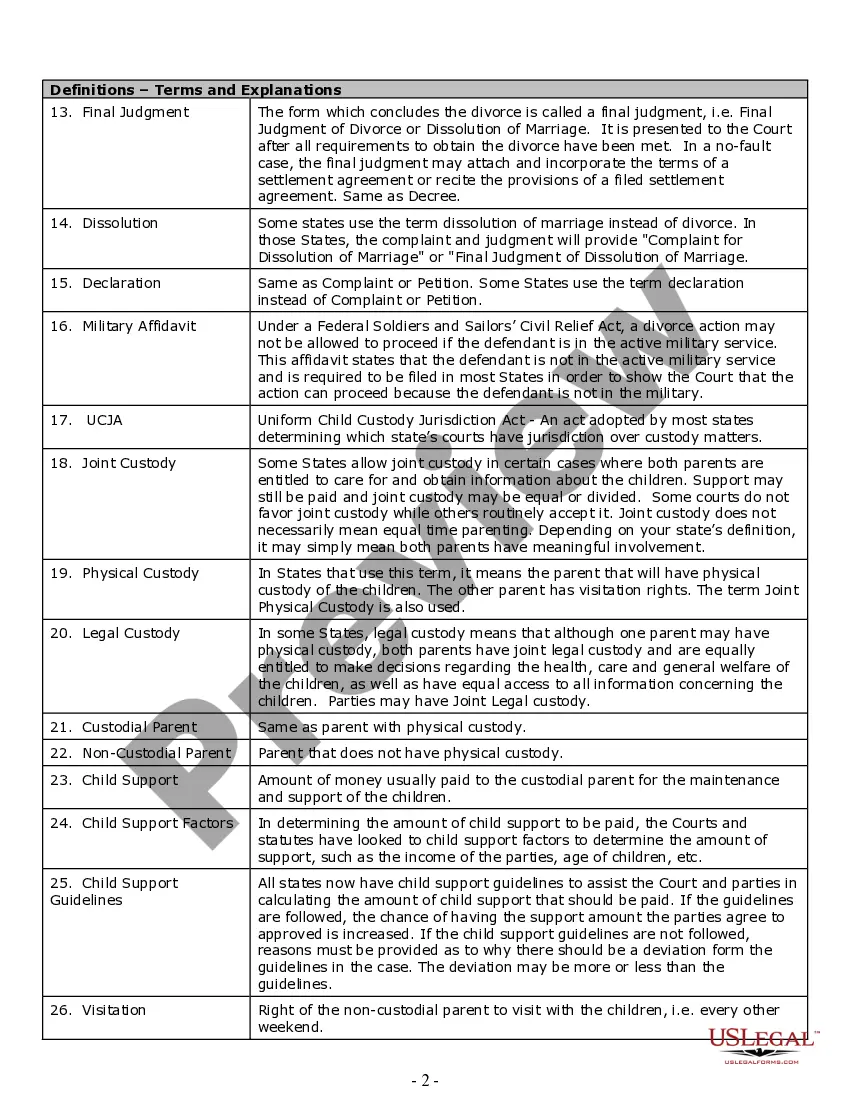
- Definitions of key legal terminology related to divorce
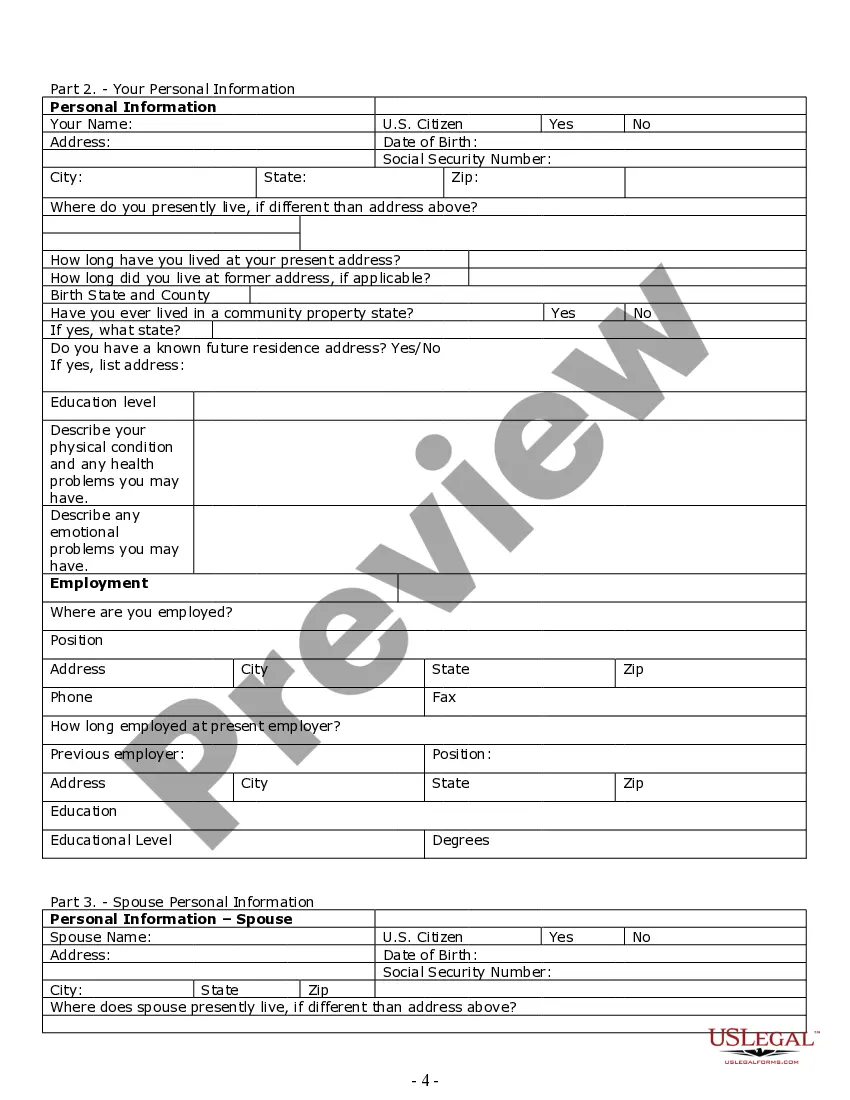
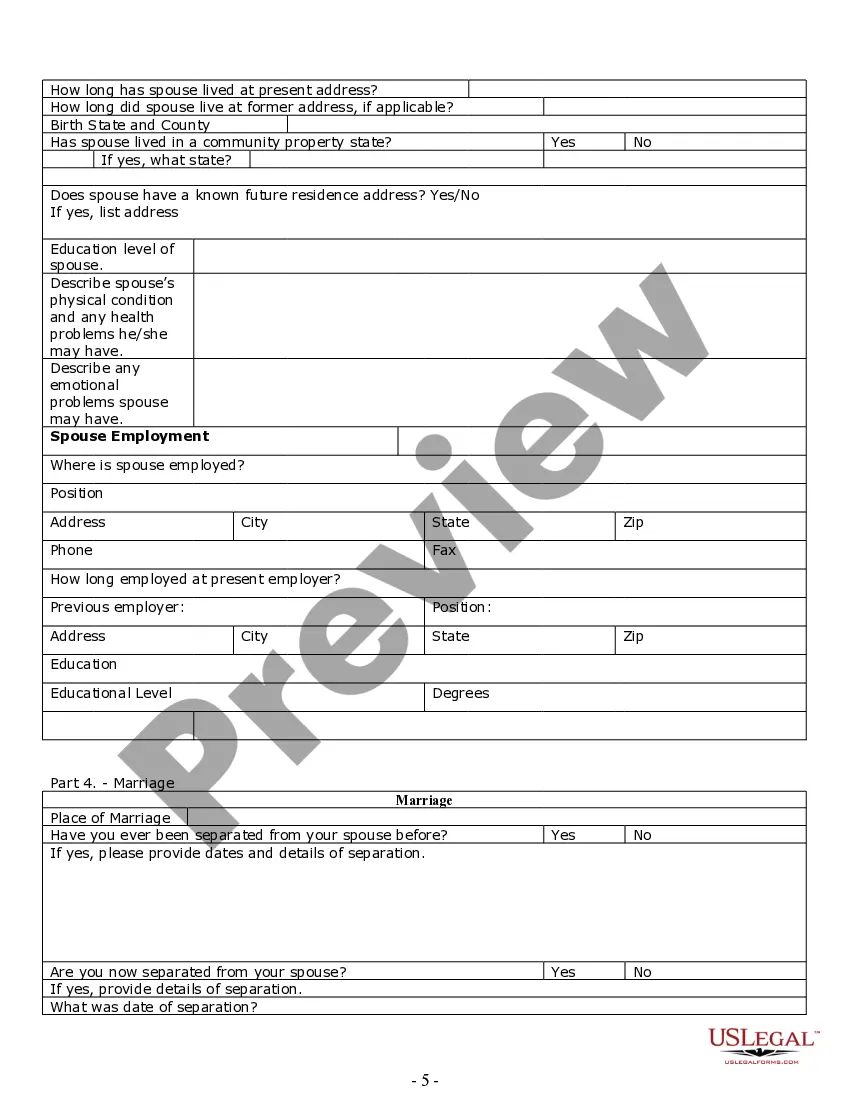
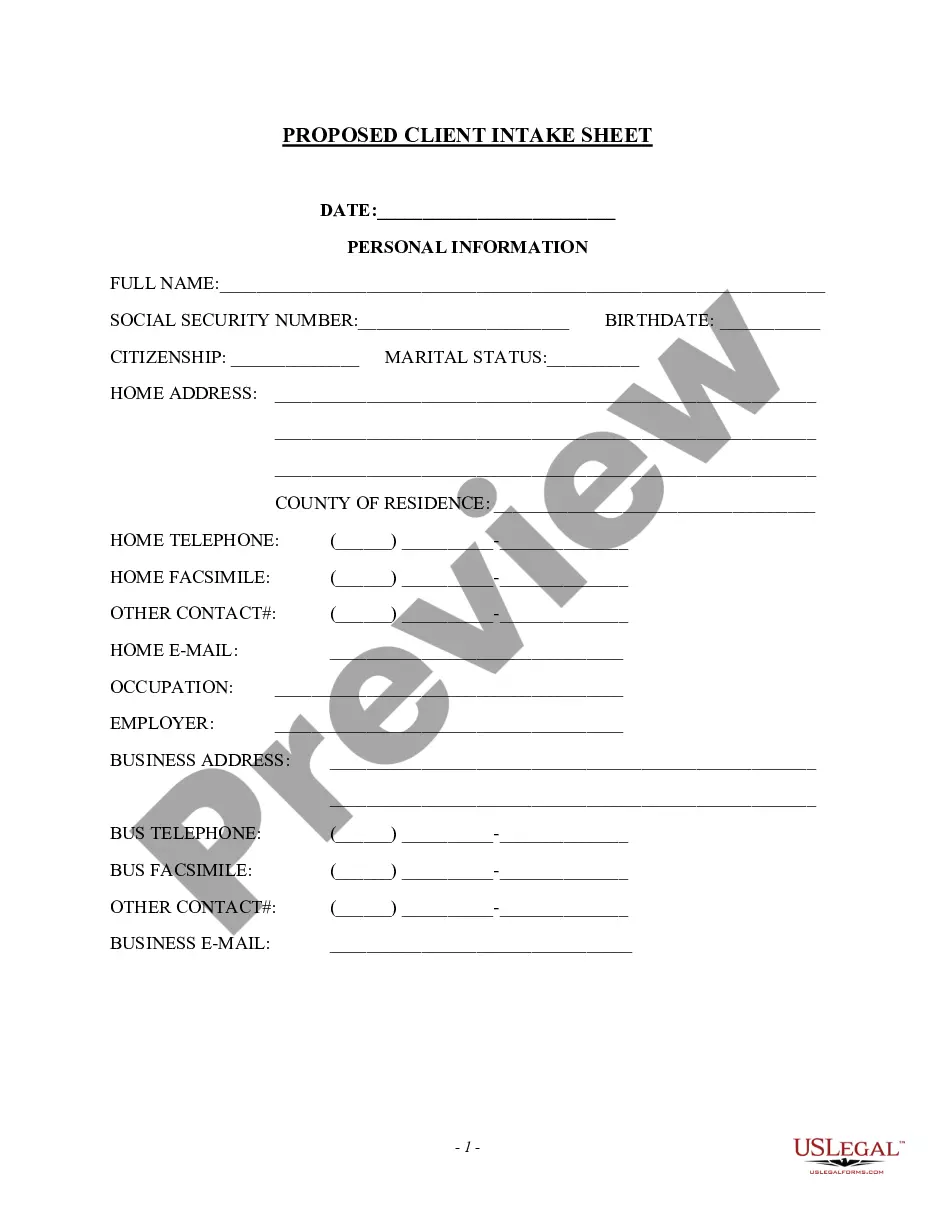
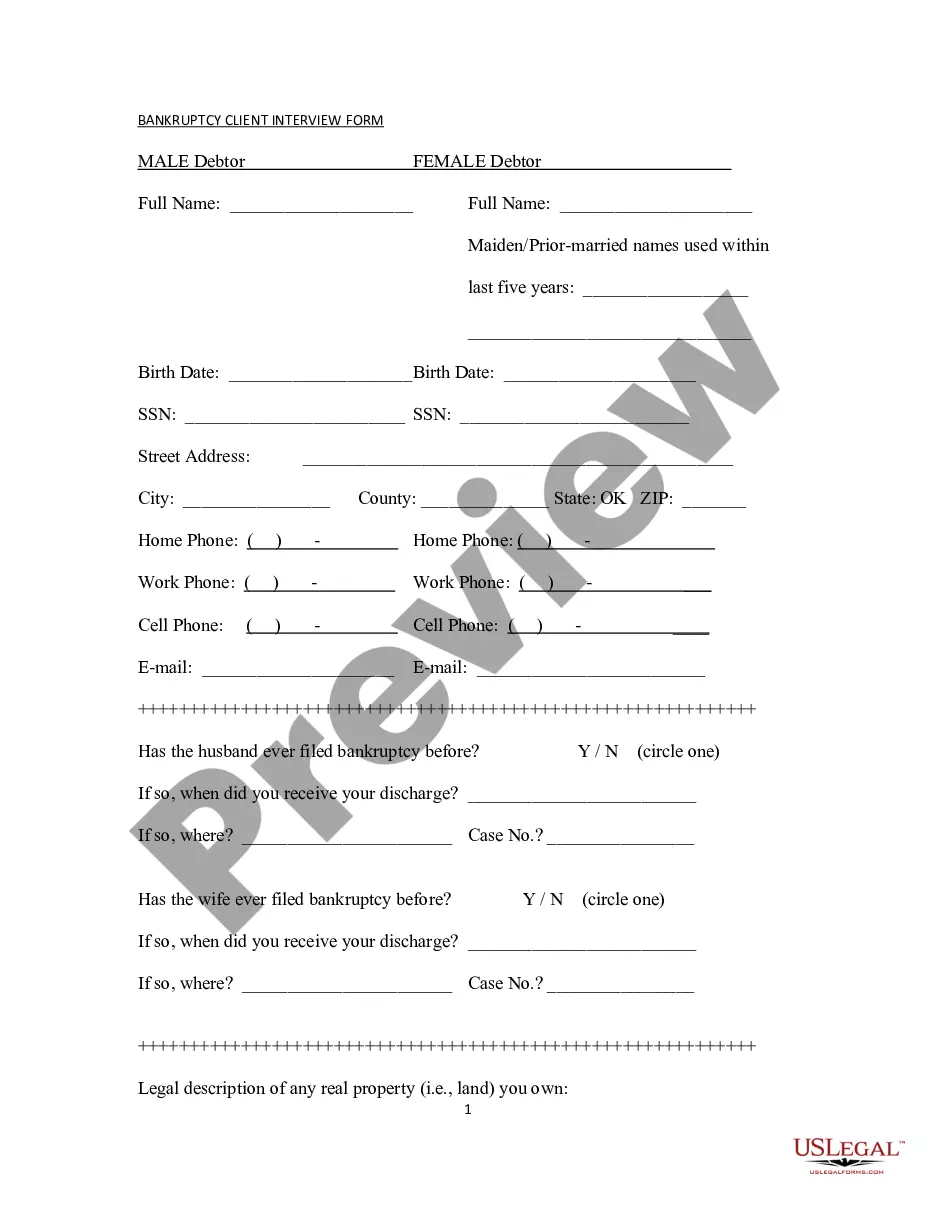
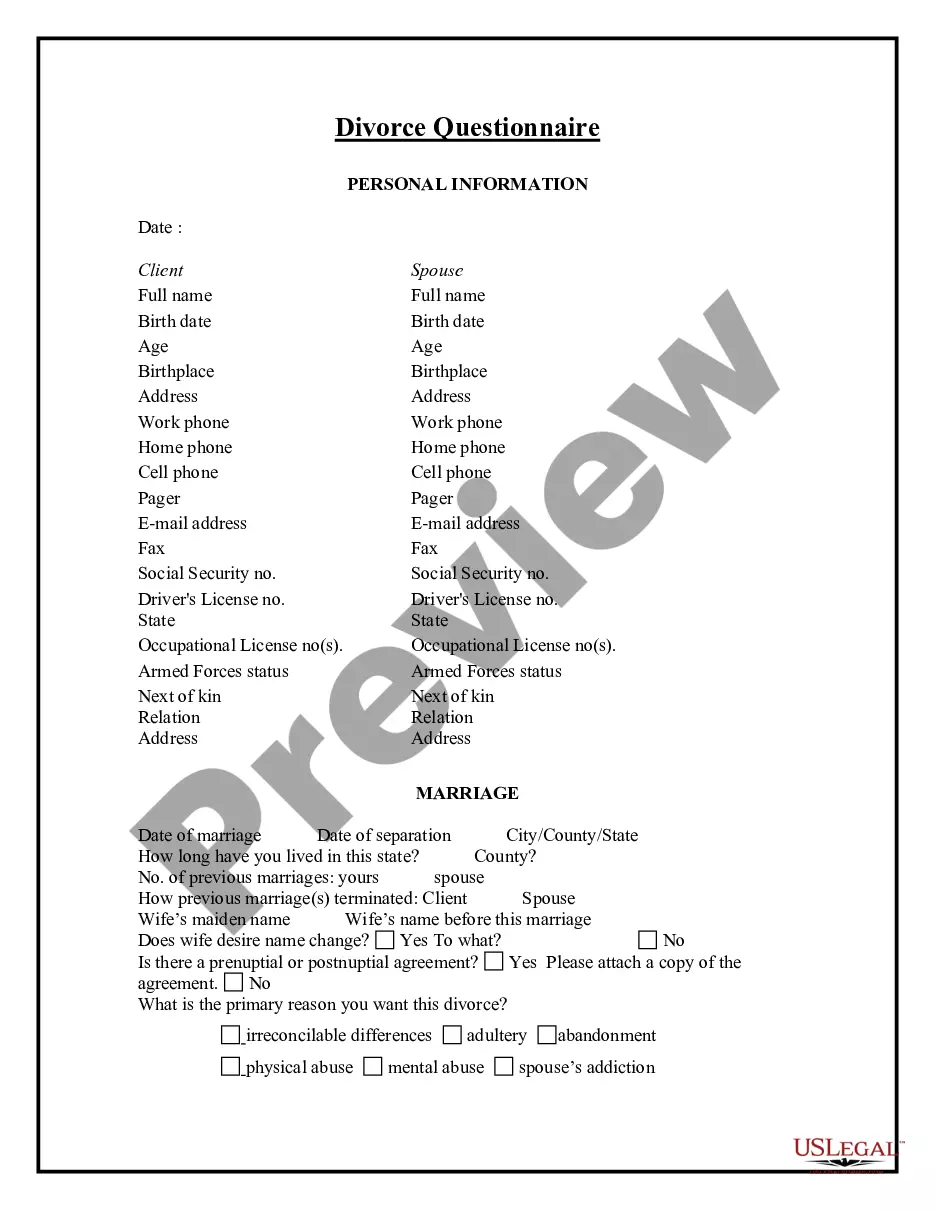
- Personal information sections for both spouses
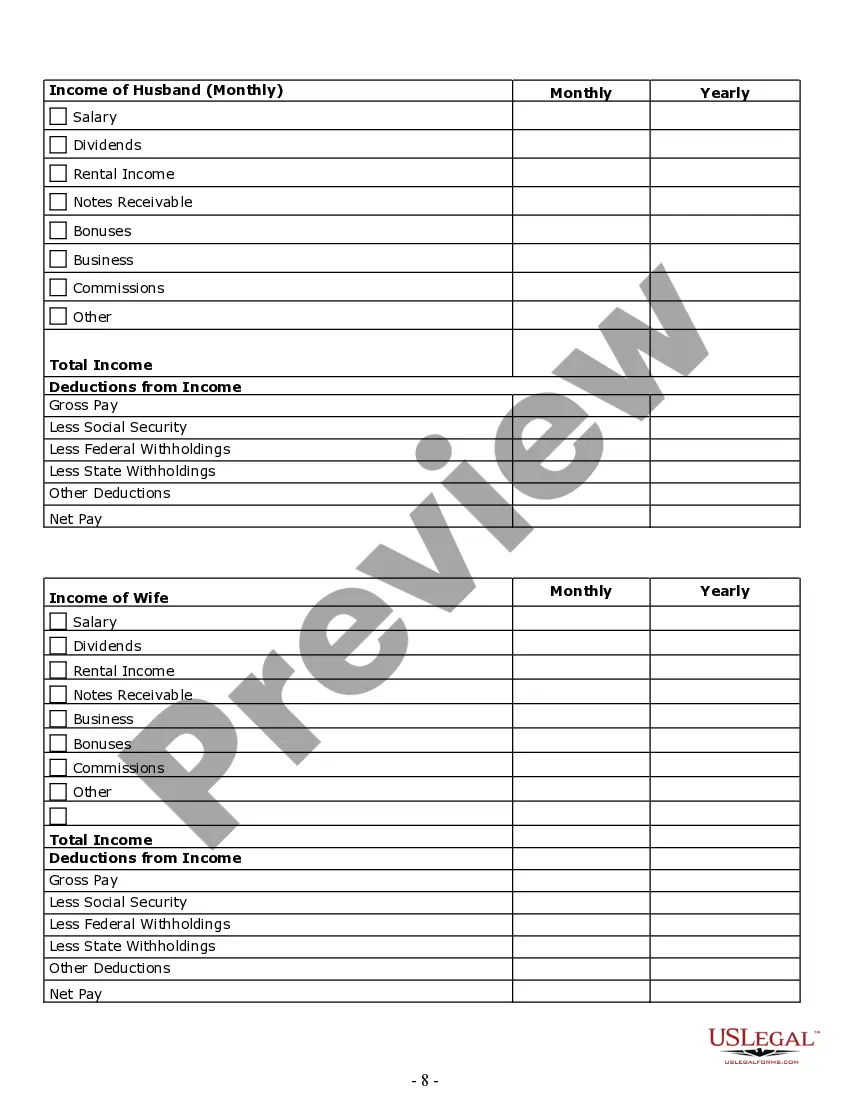
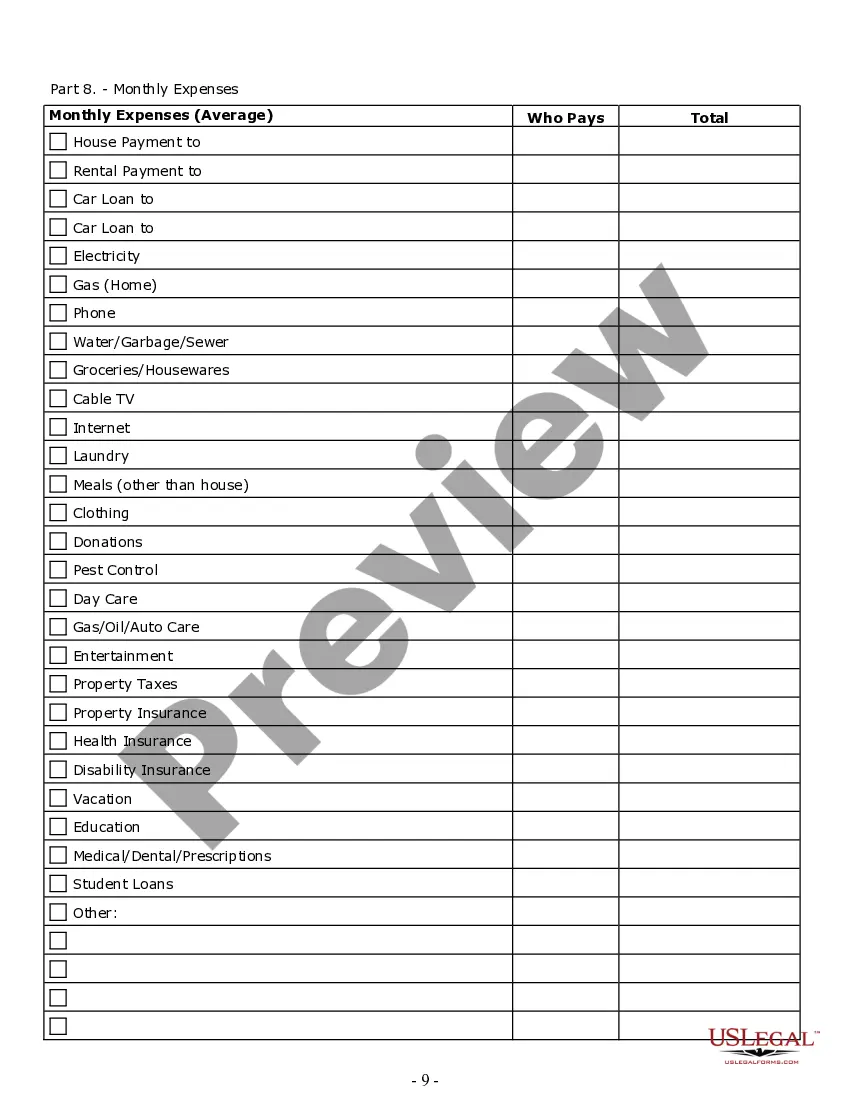
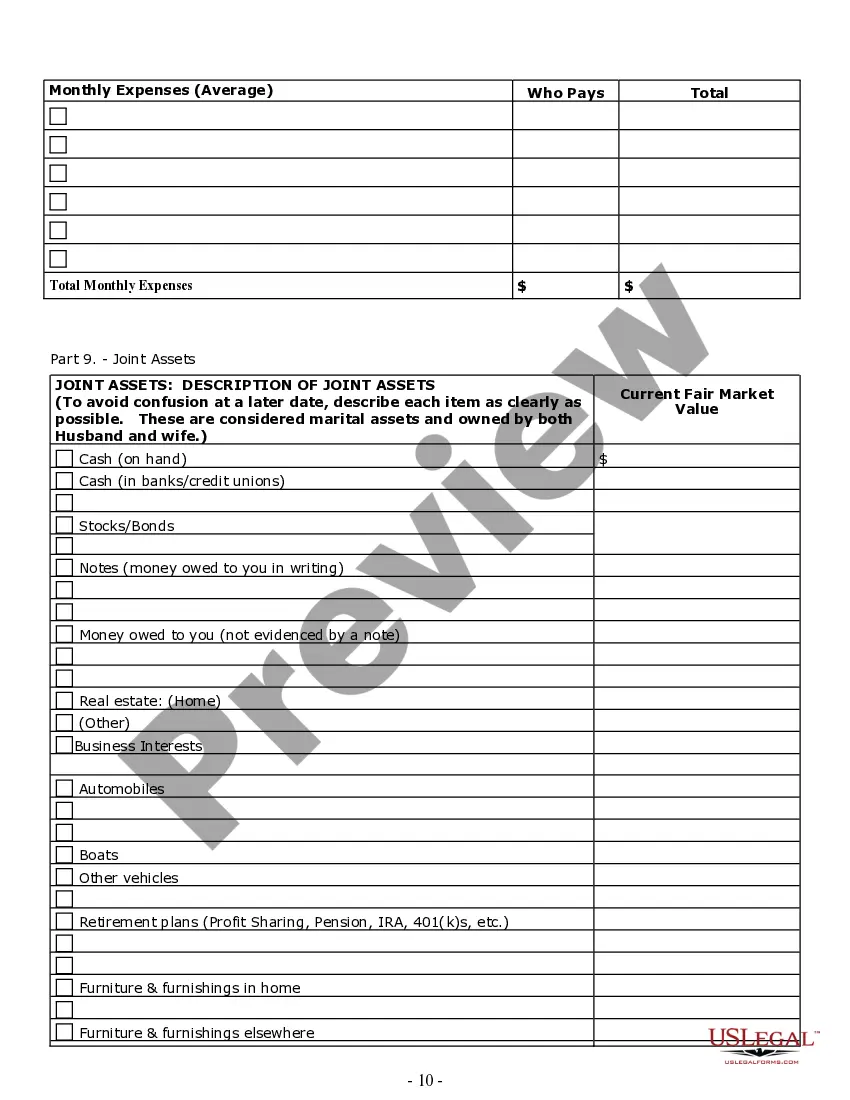
- Financial disclosure worksheets for income, expenses, and assets
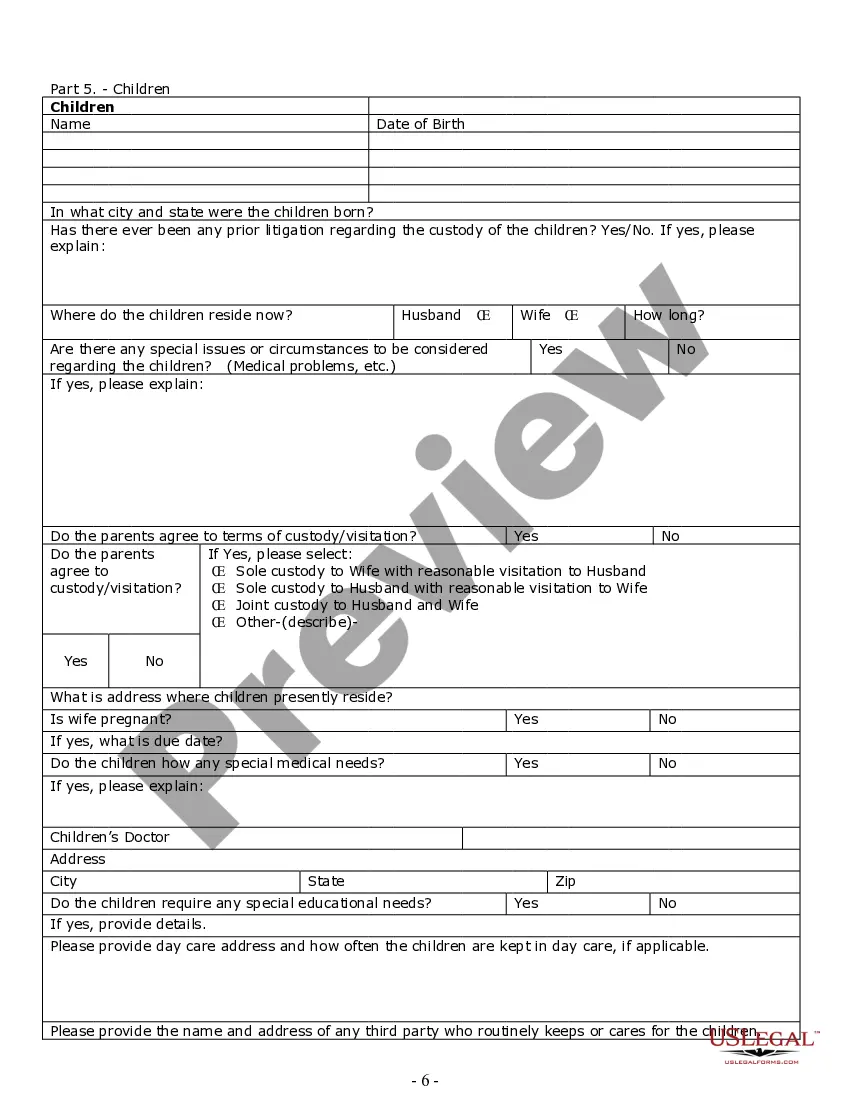
- Child custody and support considerations
- Settlement worksheets to outline asset division and other terms
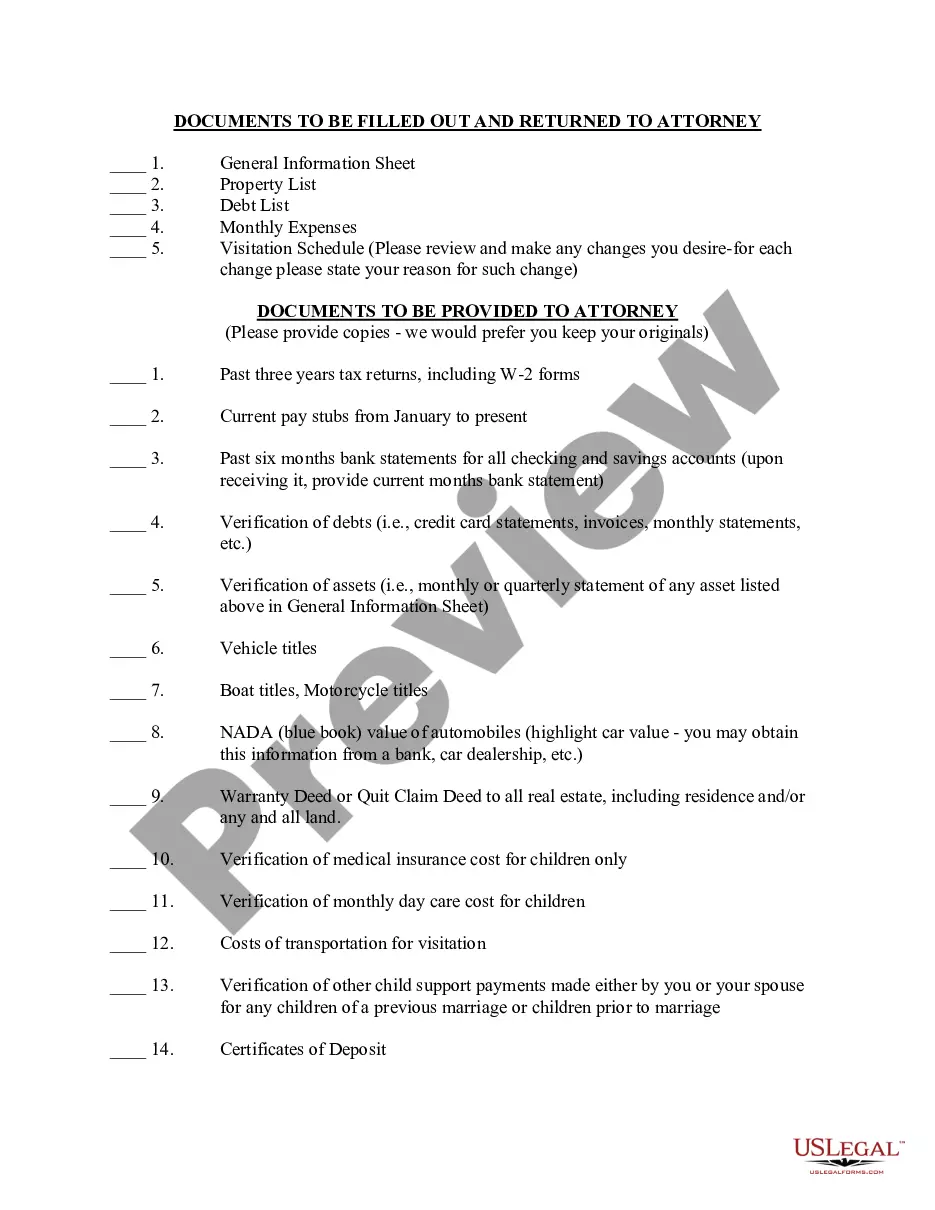
- Checklists for documents that may be needed throughout the divorce process


Common use cases
This form is useful prior to initiating a divorce, whether you plan to proceed on a contested or uncontested basis. It serves as a valuable tool for gathering essential information, which can help both the individual and attorney during initial consultations. Completing this worksheet can streamline the process and ensure all relevant details are considered.
Who should use this form
- Individuals considering divorce
- Couples seeking a mutual understanding before separation
- Attorneys looking for a structured format for client interviews
- Anyone wanting to prepare for their own divorce proceedings
Completing this form step by step
- Fill out your personal information, including your name, address, and date of birth.
- Provide your spouse's details in the specified section, including employment and health information.
- Complete sections regarding children, including custody arrangements and any special considerations.
- Disclose financial information, including income, expenses, and complete the financial statement.
- Review and summarize previous marriages if applicable, along with any children from those unions.
- Gather any necessary documents listed at the end of the form that may support your case.
Notarization requirements for this form
This form usually doesn’t need to be notarized. However, local laws or specific transactions may require it. Our online notarization service, powered by Notarize, lets you complete it remotely through a secure video session, available 24/7.
Get your form ready online
Our built-in tools help you complete, sign, share, and store your documents in one place.
Make edits, fill in missing information, and update formatting in US Legal Forms—just like you would in MS Word.
Download a copy, print it, send it by email, or mail it via USPS—whatever works best for your next step.
Sign and collect signatures with our SignNow integration. Send to multiple recipients, set reminders, and more. Go Premium to unlock E-Sign.
If this form requires notarization, complete it online through a secure video call—no need to meet a notary in person or wait for an appointment.
We protect your documents and personal data by following strict security and privacy standards.

Make edits, fill in missing information, and update formatting in US Legal Forms—just like you would in MS Word.

Download a copy, print it, send it by email, or mail it via USPS—whatever works best for your next step.

Sign and collect signatures with our SignNow integration. Send to multiple recipients, set reminders, and more. Go Premium to unlock E-Sign.

If this form requires notarization, complete it online through a secure video call—no need to meet a notary in person or wait for an appointment.

We protect your documents and personal data by following strict security and privacy standards.
Mistakes to watch out for
- Failing to fully disclose all financial assets or liabilities.
- Overlooking important documentation that may be required later.
- Not discussing custody arrangements adequately before submitting the form.
- Misunderstanding legal definitions that could affect the divorce process.
Why use this form online
- Easy access and download at your convenience.
- Editability allows for adjustments as you gather more information.
- Reliable structure ensures no critical aspects are overlooked.
- Cost-effective way to prepare for divorce without immediate legal fees.
Looking for another form?


Form popularity
FAQ
Most states do not require any type of waiting period or separation prior to filing or getting a divorce. North Carolina, however, is not in the majority. Here, the law requires you and your spouse to be separated for one year before you can get a divorce. To fulfill this obligation, you must live separately and apart.
The divorce judgment will be signed at the hearing. The entire process usually takes 90 days. Immediate filing for divorce is not a requirement in North Carolina, and you may want to remain married while being separated due to beneficial reasons such as social security and health insurance.
Average Cost of Divorce in North Carolina The filing fee for divorce in North Carolina is currently $225 (with an additional $10.00 for filing a Resumption of Maiden Name). However, this fee can be waived for indigent filers, through a Petition to Proceed as an Indigent.
The fee for filing a case for divorce is currently $225.00. If you are including a claim for Resumption of Maiden Name, there may be an additional $10.00 fee. These fees are subject to change. If you cannot afford the filing fee, also take the Petition to Proceed as an Indigent and ask to speak with a Clerk.
As a general rule, a simple divorce can take about 45-90 days to finalize after it has been filed with the courts. Divorces in which spouses cannot agree on issues such as child support or child custody will naturally take longer.
Requirements for Filing for an Uncontested Divorce In North Carolina, either spouse must have resided in the state for a period of 6 months or more to file for a divorce. In addition, the spouses must be living separately from each other for at least a year and intend to remain permanently separated.
Couples who wish to pursue an uncontested (simple) divorce can do so by filing "no-fault" grounds. In a no-fault divorce, the law doesn't require either spouse to prove that the other person caused the breakdown of the marriage.