North Carolina Flooring Contract for Contractor
What is this form?
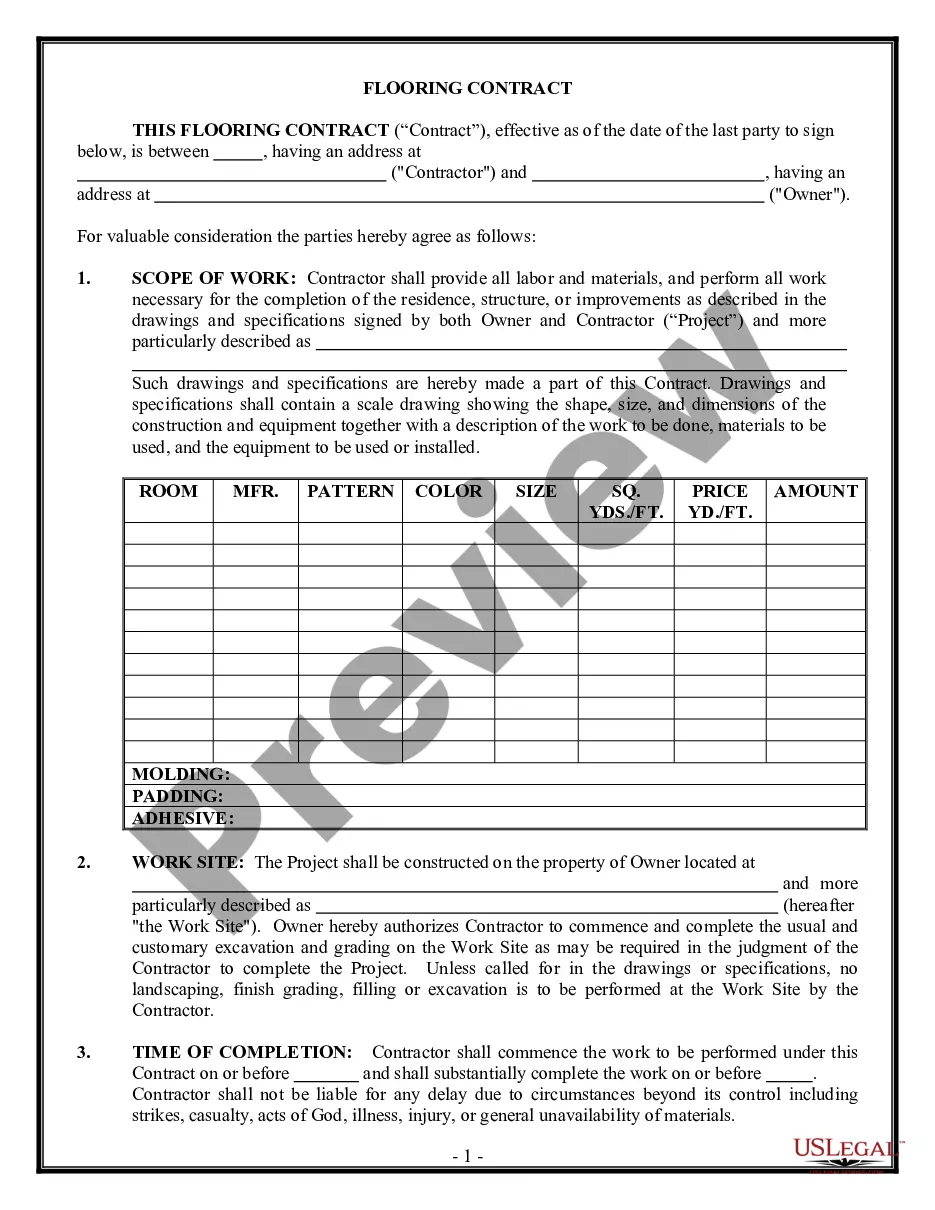
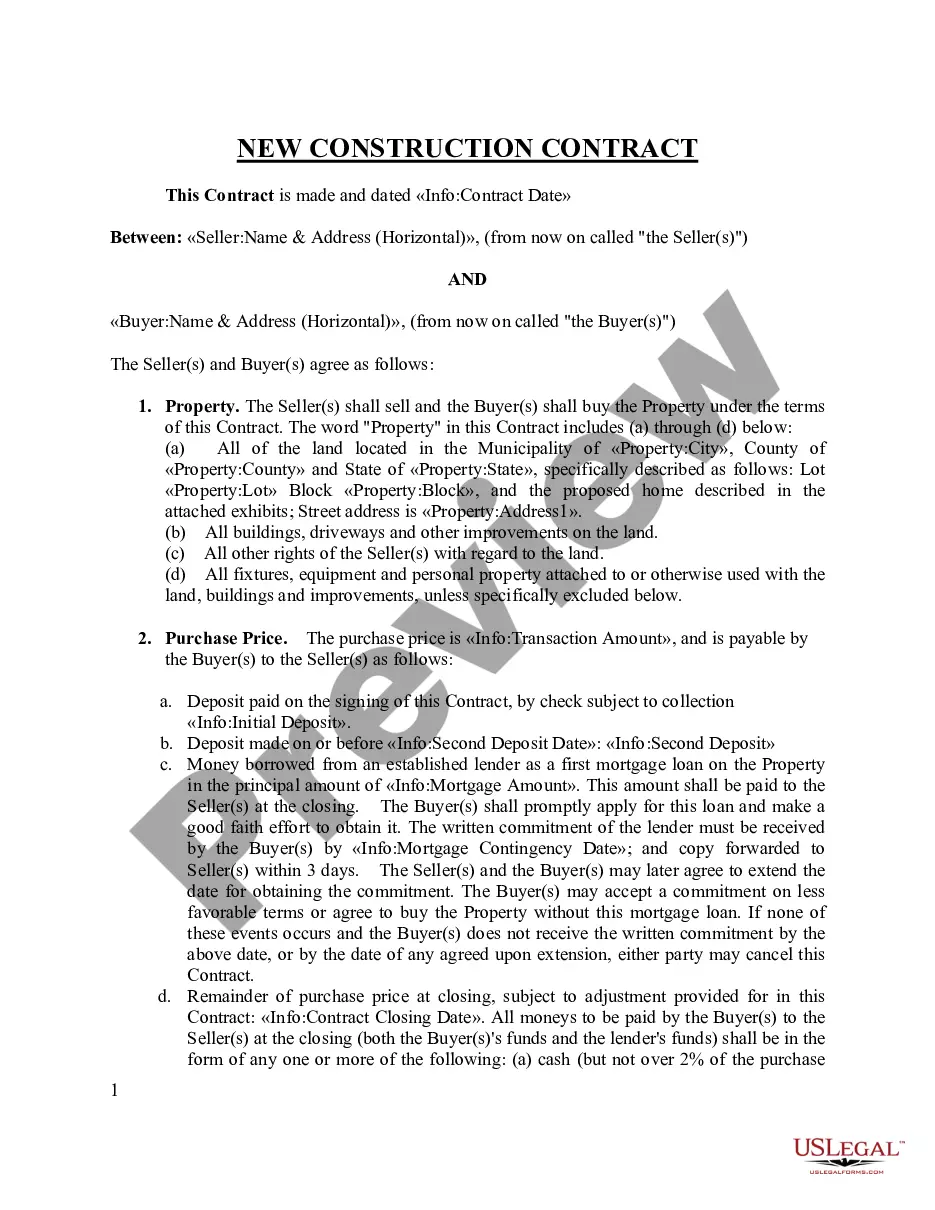
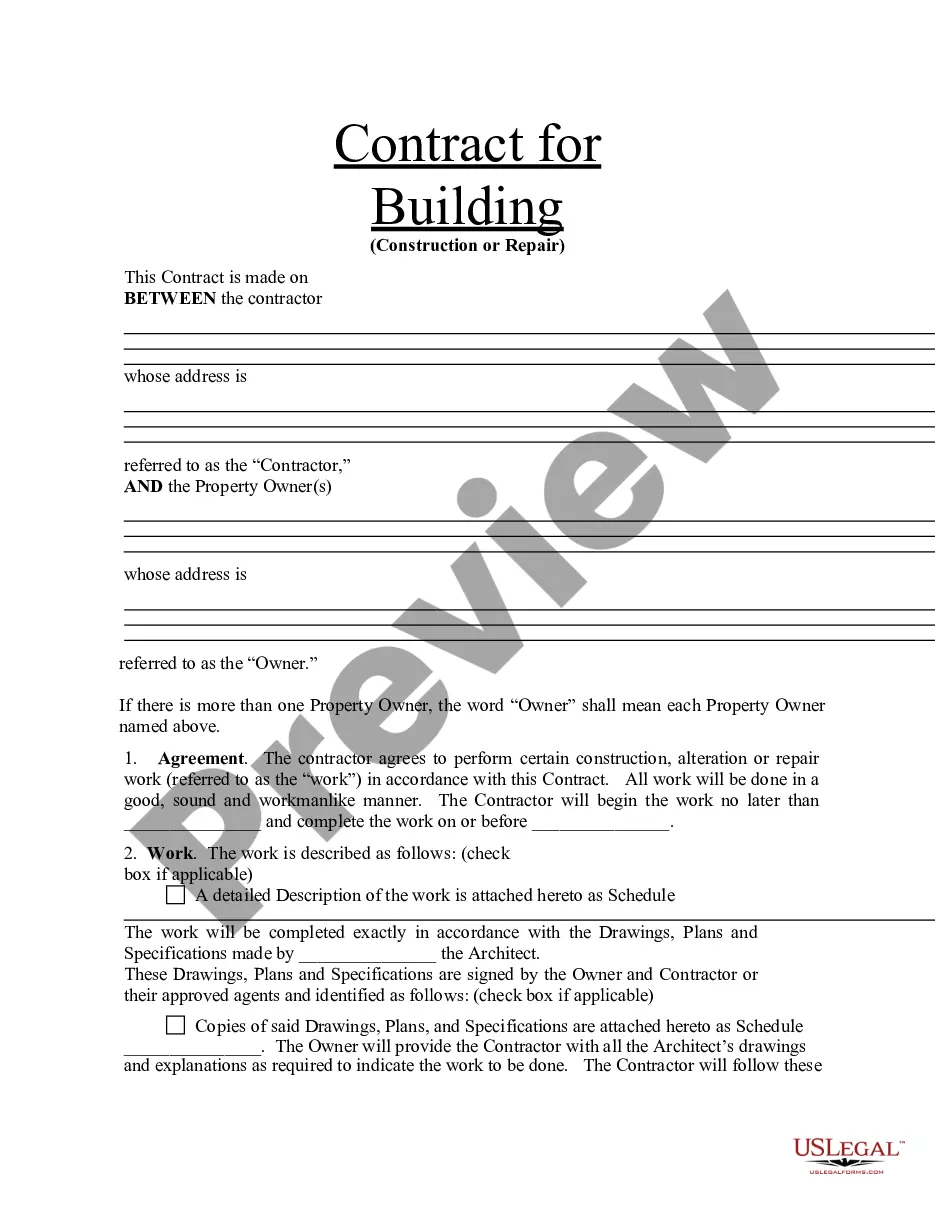
This Flooring Contract for Contractor is a legally binding agreement between flooring contractors and property owners. It outlines the terms and conditions governing the flooring project, including payment arrangements, warranties, insurance requirements, and procedures for making changes to the scope of work. This contract is specifically tailored to comply with North Carolina laws, making it distinct from similar forms in other jurisdictions.
Key components of this form
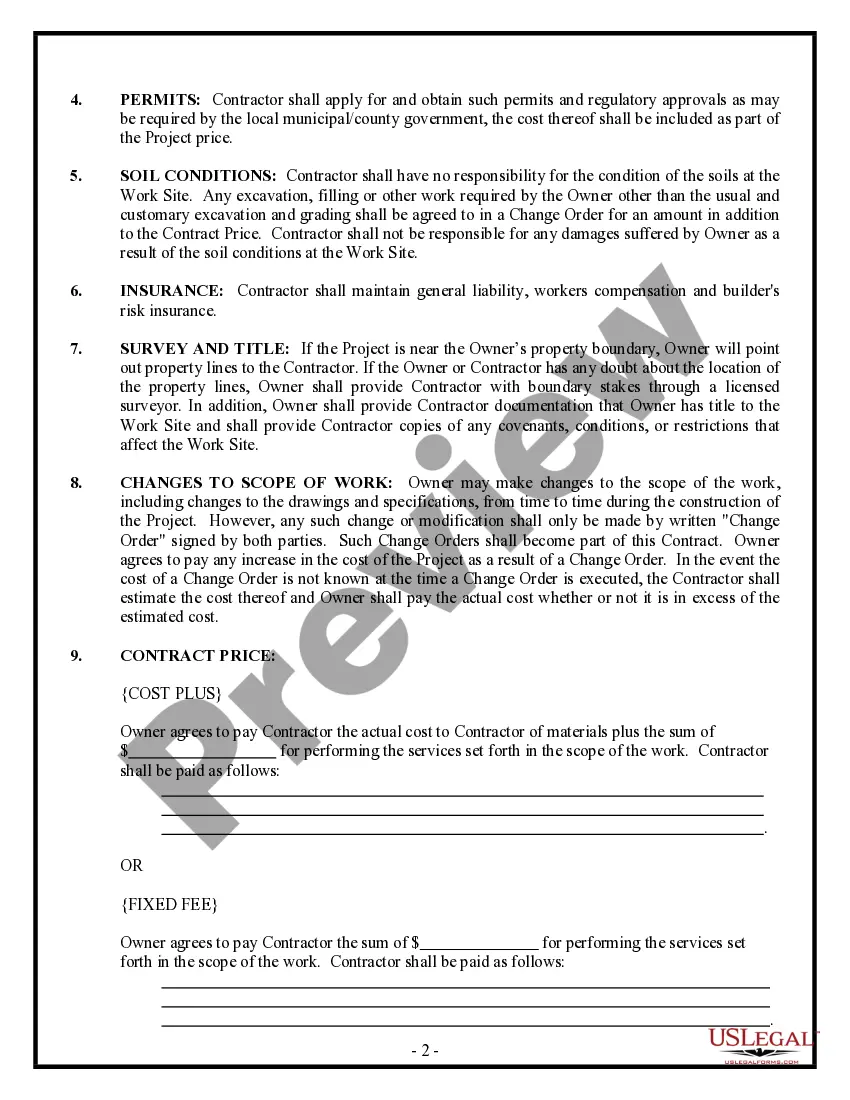
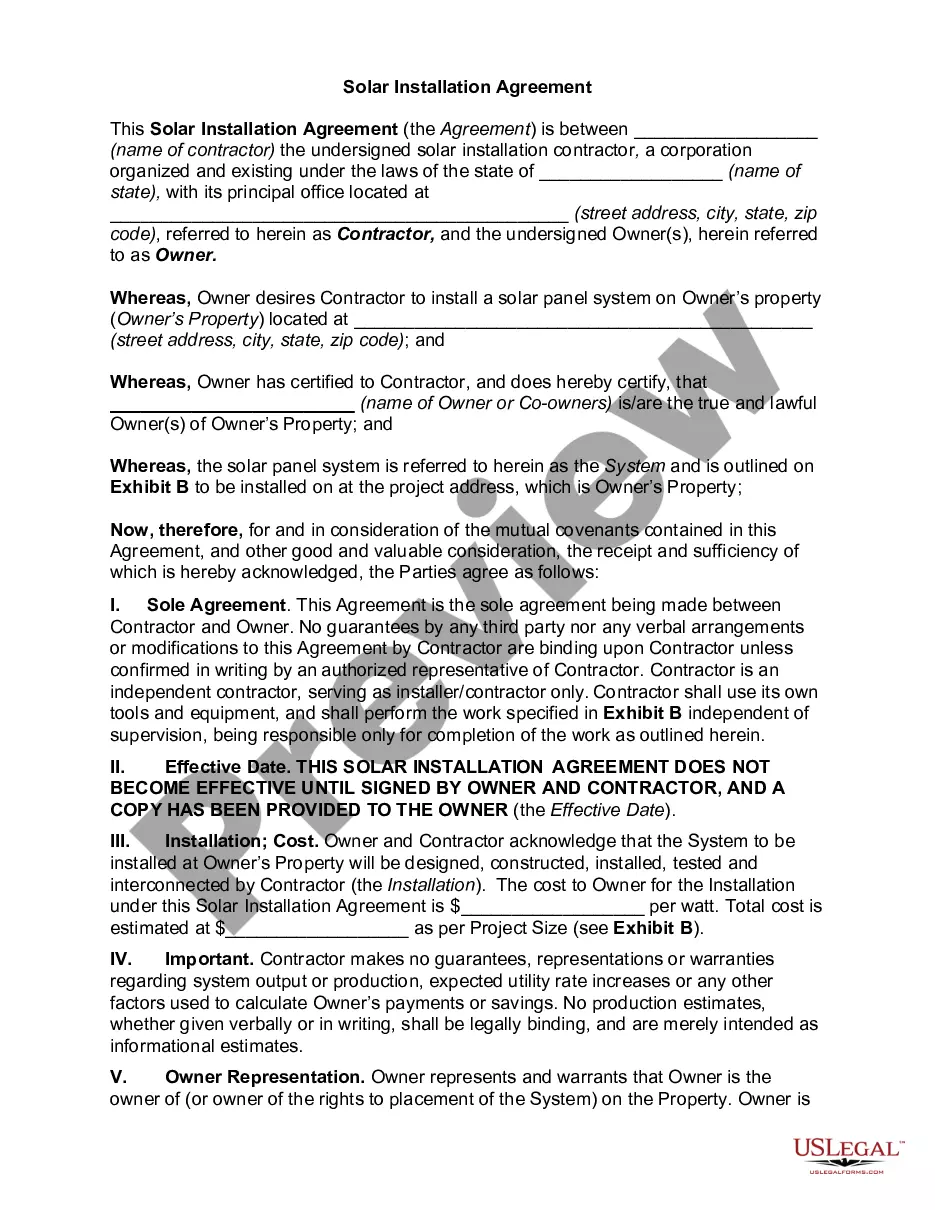
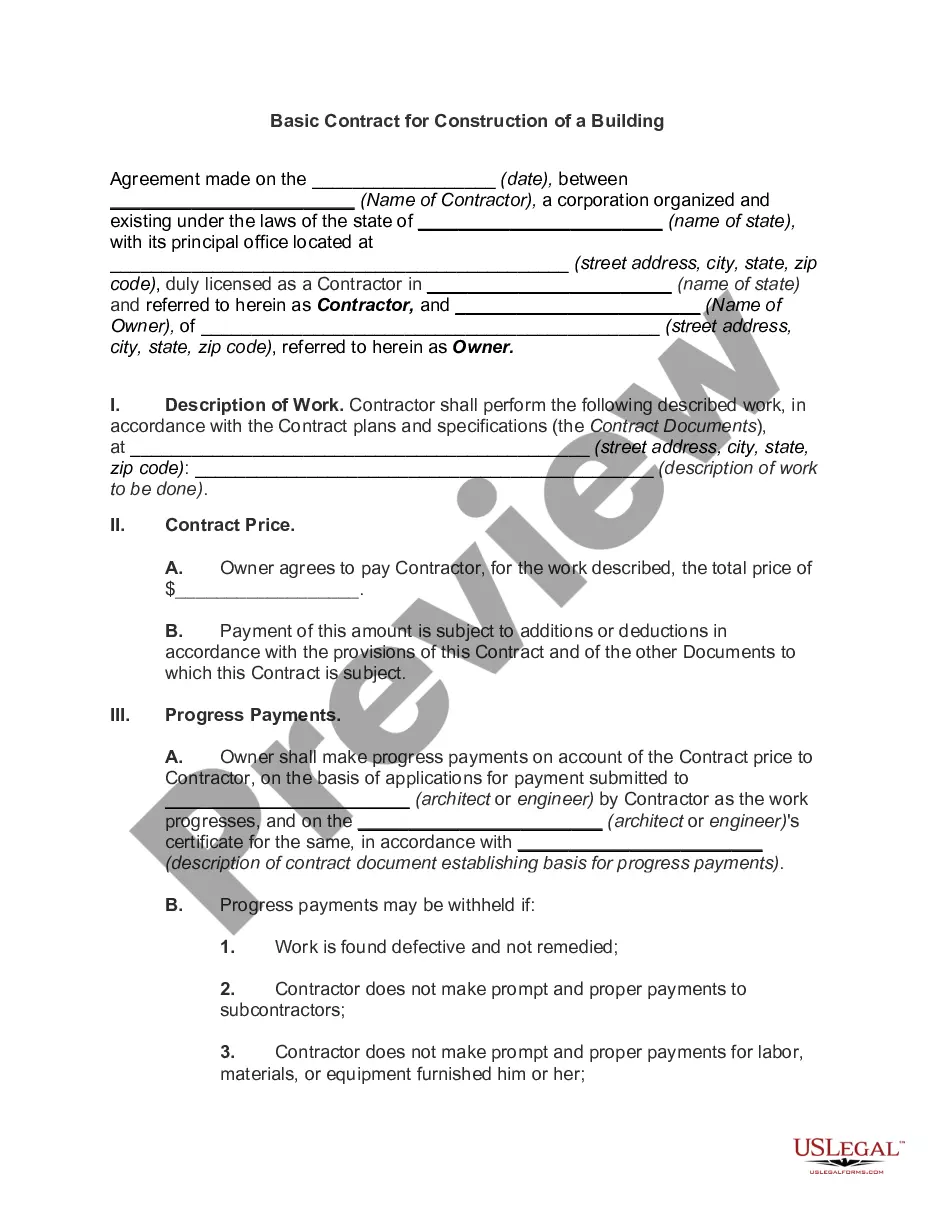
- Payment terms: Options for cost plus or fixed fee arrangements.
- Permits: Contractor responsibility for obtaining necessary permits.
- Soil conditions: Clarification of contractor liability concerning site conditions.
- Insurance requirements: Specification of required insurance coverage.
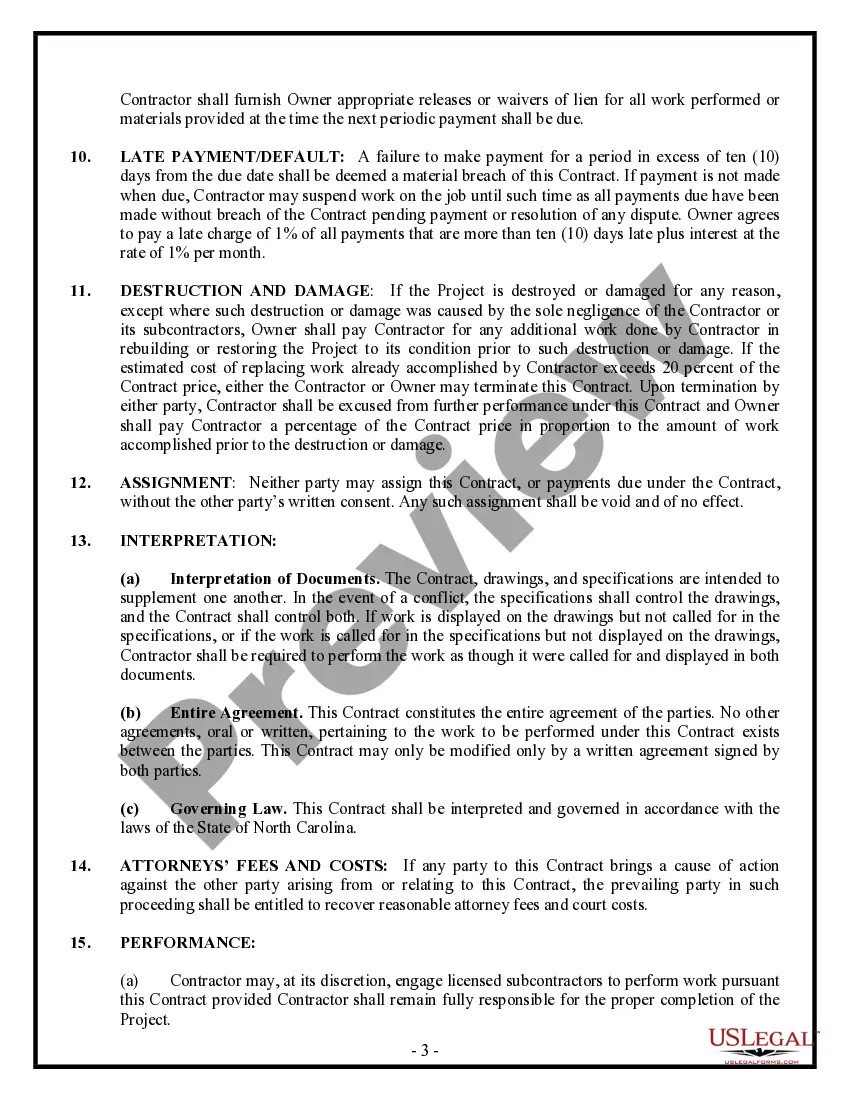
- Change orders: Guidelines for making amendments during the project.
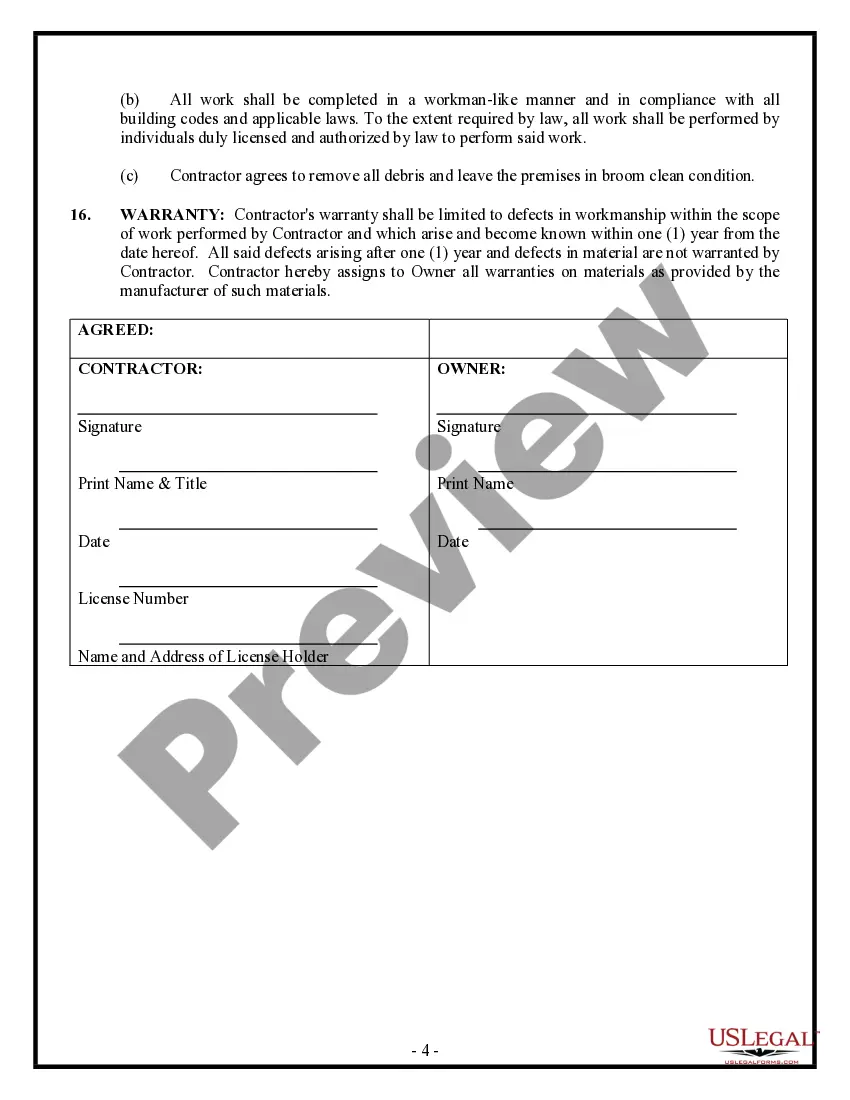
- Warranty provisions: Details of contractor warranty for workmanship.
When to use this form
This Flooring Contract is essential when property owners engage flooring contractors for installation or remodeling projects. It is particularly useful for defining project scope, payment terms, and responsibilities to prevent misunderstandings. This form should be used for both residential and commercial flooring jobs in North Carolina.
Who this form is for
- Property owners hiring a flooring contractor.
- Flooring contractors looking for a structured agreement.
- Real estate professionals involved in property renovations.
Instructions for completing this form
- Identify the parties involved: Enter the names and contact information of the property owner and the contractor.
- Specify the scope of work: Clearly describe the flooring project and any specific requirements.
- Detail the payment structure: Choose between cost plus or fixed fee and outline payment terms.
- Include any permits and insurance: Ensure that necessary permits are obtained and that insurance requirements are met.
- Sign and date the contract: Both parties should sign and date the agreement to make it legally binding.
Does this form need to be notarized?
This form does not typically require notarization unless specified by local law. Always consult local regulations to ensure compliance.
Get your form ready online
Our built-in tools help you complete, sign, share, and store your documents in one place.
Make edits, fill in missing information, and update formatting in US Legal Forms—just like you would in MS Word.
Download a copy, print it, send it by email, or mail it via USPS—whatever works best for your next step.
Sign and collect signatures with our SignNow integration. Send to multiple recipients, set reminders, and more. Go Premium to unlock E-Sign.
If this form requires notarization, complete it online through a secure video call—no need to meet a notary in person or wait for an appointment.
We protect your documents and personal data by following strict security and privacy standards.

Make edits, fill in missing information, and update formatting in US Legal Forms—just like you would in MS Word.

Download a copy, print it, send it by email, or mail it via USPS—whatever works best for your next step.

Sign and collect signatures with our SignNow integration. Send to multiple recipients, set reminders, and more. Go Premium to unlock E-Sign.

If this form requires notarization, complete it online through a secure video call—no need to meet a notary in person or wait for an appointment.

We protect your documents and personal data by following strict security and privacy standards.
Typical mistakes to avoid
- Not detailing the scope of work clearly, which can lead to disputes later.
- Failing to include all necessary signatures or dates, rendering the contract invalid.
- Overlooking permits required for the flooring project.
- Neglecting to discuss and document potential change orders.
Benefits of using this form online
- Convenience: Easily download and complete the form from anywhere.
- Editability: Modify the form as needed to fit specific project requirements.
- Reliability: Assurance that the contract includes all essential legal elements.
Legal use & context
- This contract is enforceable under North Carolina law, ensuring that both parties uphold their obligations.
- It provides a framework for resolving disputes related to payment or work scope changes.
- Failure to comply with the terms may result in legal repercussions for either party.
Main things to remember
- The Flooring Contract for Contractor clarifies the relationship between property owners and contractors.
- Understanding key sections can enhance communication and prevent legal pitfalls.
- Proper completion of the form is crucial for its validity and enforceability.
Looking for another form?
Form popularity
FAQ
In actuality the North Carolina construction license exam is more difficult to pass than similar closed book exams due to the fact that you have books available as a resource during the contractor exam. You are permitted to bring certain reference materials into the builder test.
Acquire 4 years of experience in the trade for which you plan to get the license for. After this, you will have to take two exams: the California Law and Business Exam and the Flooring & Floor Covering C-15 exam.
You need a general contractor license in North Carolina if you want to bid, construct, superintend or manage the construction of buildings, highways, public utilities and other types of projects over $30,000. To get licensed, you must apply to the North Carolina Licensing Board for General Contractors (NCLBGC).
Get a business registration. Complete your license application. Get a contractor license surety bond. Pass a licensing exam. Pay an application and/or licensing fee. License renewal.
North Carolina requires that anyone who contracts with another person or entity to construct or make improvements to any building, highway, or public utilities, including grading, or who undertakes to superintend or manage such activities, be licensed as a general contractor if the work costs $30,000 or more.
You need a general contractor license in North Carolina if you want to bid, construct, superintend or manage the construction of buildings, highways, public utilities and other types of projects over $30,000. To get licensed, you must apply to the North Carolina Licensing Board for General Contractors (NCLBGC).
The North Carolina Licensing Board does not have full reciprocity with any other state. We currently have examination waiver agreements with South Carolina, Tennessee, Louisiana, Georgia, and Mississippi (see details regarding exam waivers).
Get a business registration. You will need to get a business registration at the Office of the Secretary of State. Complete your license application. Get a contractor license surety bond. Pass a licensing exam. Pay an application and/or licensing fee. License renewal.
To become licensed in North Carolina, a general contractor must pass a qualifying exam and submit an application and the required fee to the Board. Currently, the fees are $75 for a limited license, $100 for an intermediate license, and $125 for an unlimited license.